5 min read

Lilith at the Throne and the Mother's Door

After the Temple falls, Lilith takes a stolen seat in the ruined house, then enters a mother's room in Kurdish Jewish memory and is trapped.

Curated by Arthur · Told by Maggid ·
Table of Contents
  1. The Maidservant Takes the Seat
  2. The Bride Waits in Exile
  3. The Milk Draws Her Near
  4. The Midwife Seals the Jug
  5. The House Keeps Watch

The first house had burned.

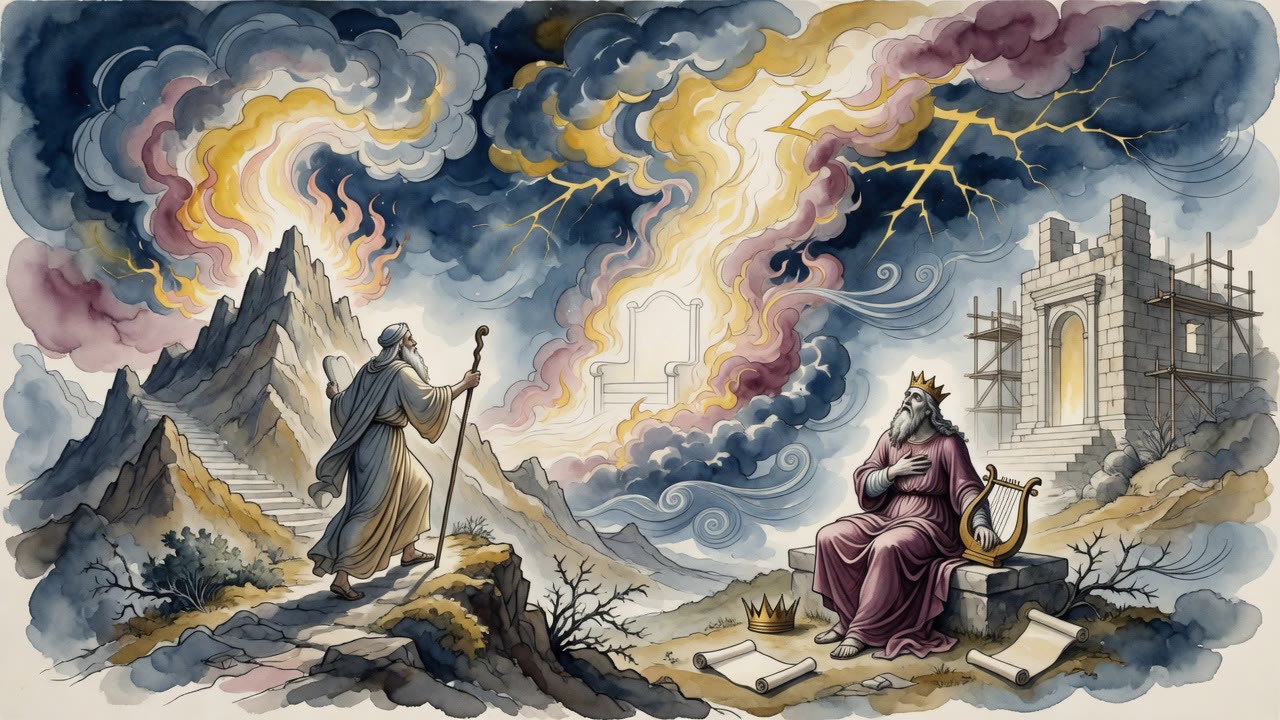
Smoke rose where the Temple had stood, and the Shekhinah (שכינה), God's indwelling presence, went into exile. The rooms of holiness did not stay empty. Empty rooms invite intruders.

The Maidservant Takes the Seat

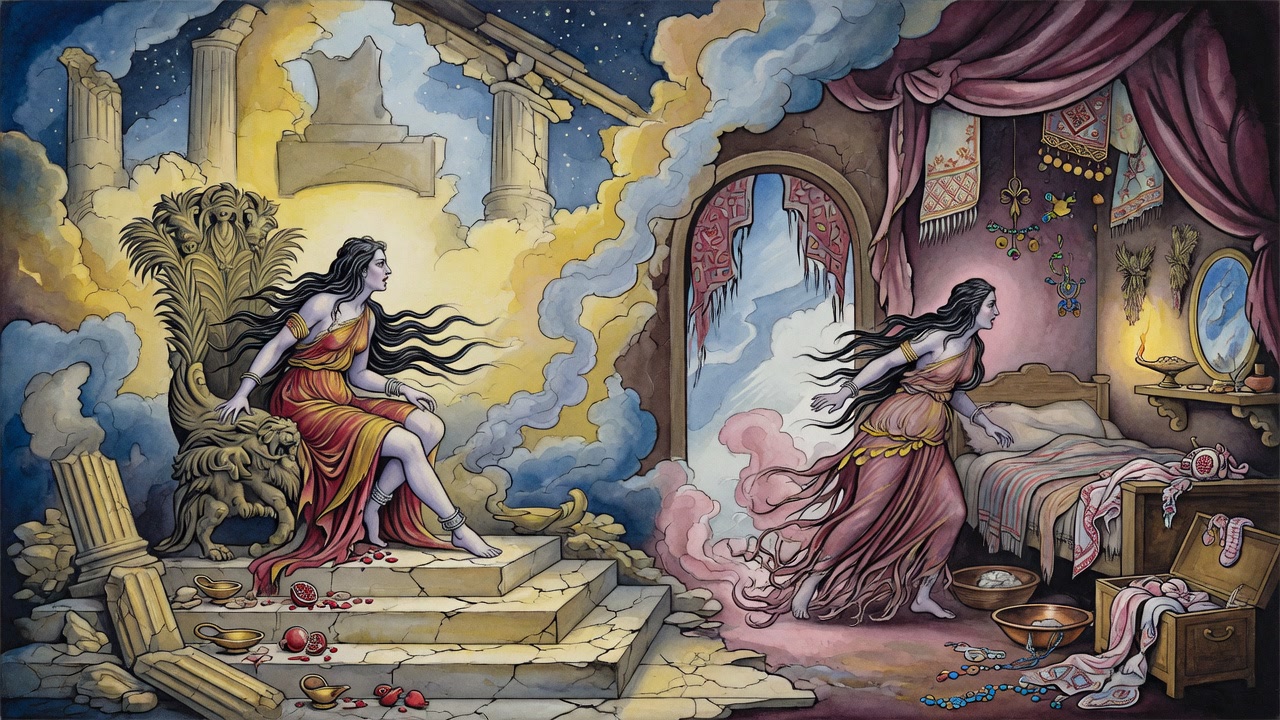
Lilith entered the breach like a servant who had watched the mistress leave and decided the chair was hers now.

She did not need to conquer a full house. Ruin had already opened the door. The Bride had been driven away from her own place, and the maidservant slipped into the space where glory had rested. In the Holy Land, where the Shekhinah had once been at home, another presence sat down and began to rule from absence.

This was not the Lilith of a single cradle yet. She was larger here, a shadow cast by catastrophe. When the sanctuary stood, order had a center. When the center burned, the wrong figure could wear the posture of command. Lilith's danger was not only that she hated children or hunted in darkness. Her danger was occupation. She made exile visible by sitting where she did not belong.

The Bride Waits in Exile

The Shekhinah did not disappear. She was shut away, grieving, cut off from the light that should have reached her. The true mistress remained alive, which made the usurpation worse. A dead queen can be mourned. An imprisoned queen can be mocked from her own doorway.

Lilith mocked.

She had once belonged to margins and hidden places, behind the mill, near dust, near labor, near the low places where servants grind and vanish from noble sight. Now she had crossed from the edge into the center. The movement itself was the wound. A figure from behind the mill sat in the place of the Bride.

Nothing in that image is peaceful. It is a house where the wrong woman holds the keys while the rightful one weeps beyond reach. The repair of the world waits on eviction. Until the Shekhinah returns to her place, Lilith's seat remains an accusation.

The Milk Draws Her Near

In another Jewish house, far from the ruined courts of Jerusalem, Lilith came smaller and closer.

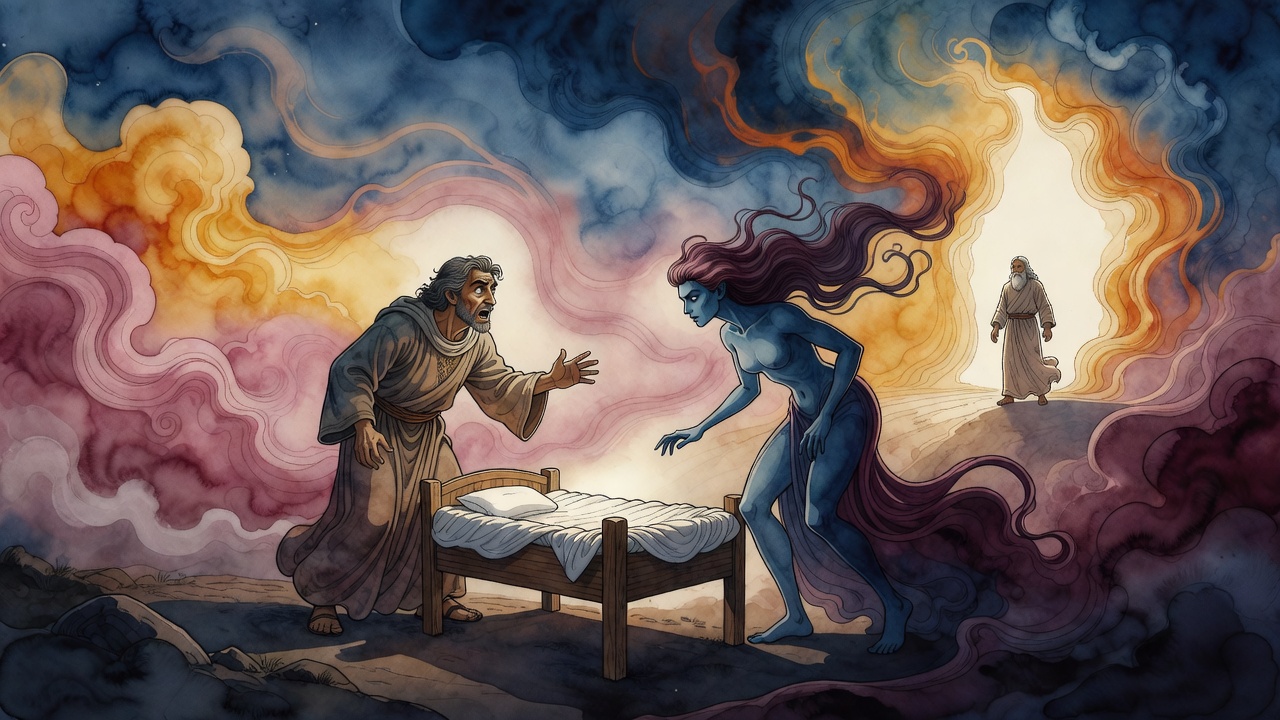
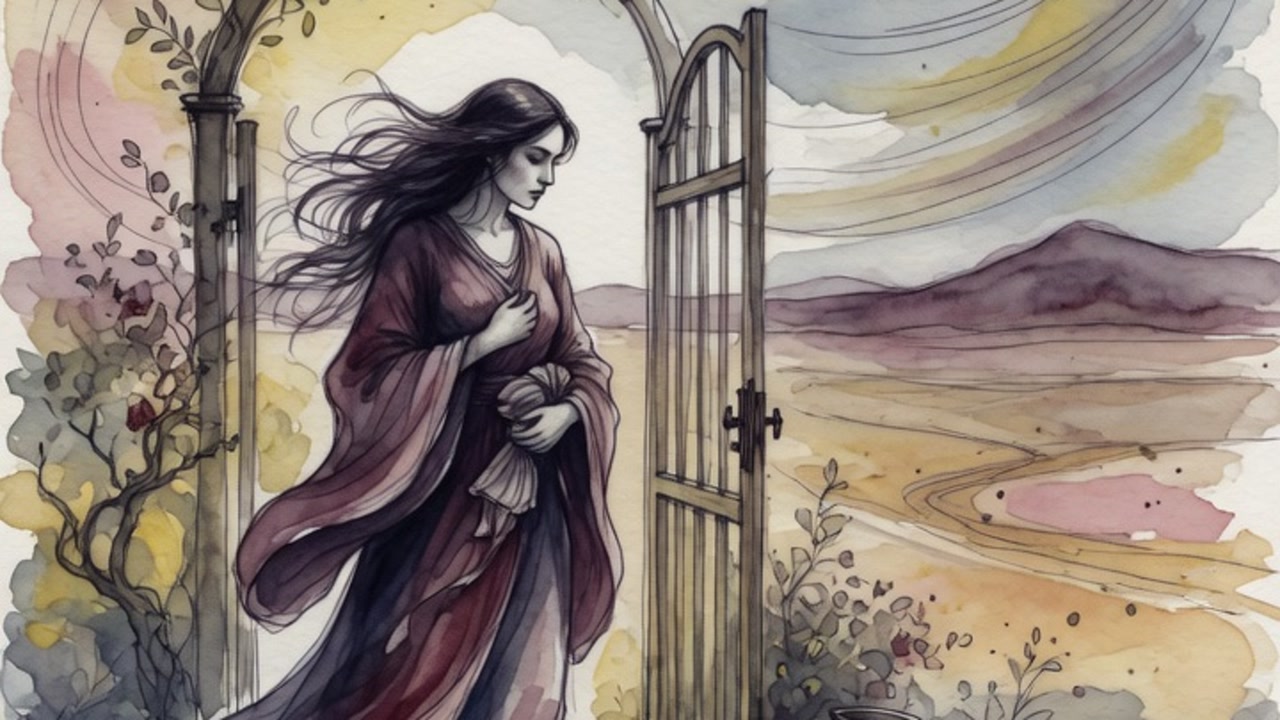
A new mother lay behind walls that were supposed to protect her. Milk scented the room. A child breathed in the cradle. The danger was no longer a throne in the Holy Land, but a crack under a door, a shadow at the window, a thing that could become ordinary enough to escape notice.

Lilith knew how to shrink. She could pass as a black cat, silent against the floor. She could stand as a broom in the corner, thin and domestic. She could hide as a single hair fallen into milk, so small that disgust might notice what fear missed.

Her hunger followed birth. She wanted the infant. She wanted the afterbirth, the remnant of new life, to feed her own brood of shedim (שדים), harmful spirits. The room that should have smelled only of milk and recovery became a border post. On one side, mother and child. On the other, the night pressing its face to the cracks.

The Midwife Seals the Jug

The midwife did not meet Lilith with speeches.

Women who guard a birth room cannot afford grand gestures. They watch small things. A misplaced broom. A cat that should not be inside. A hair where no hair should be. The midwife saw the danger in its smallest costume and moved before the room could lose the child.

She trapped Lilith in a jug.

The vessel that should have held water or milk became a prison. The hunter became the thing sealed. The spirit that entered through cracks found herself narrowed to clay walls and a closed mouth. Inside the jug, Lilith had no throne, no stolen chair, no dark corner large enough for flight.

Then came the bargain. A trapped danger can be destroyed, but sometimes it is made to serve the house it tried to ruin. Lilith, who had come for the child, was forced into the work of protection. The room did not become harmless. It became guarded by the memory of a capture.

The House Keeps Watch

After that, every ordinary thing in the room had to be read twice.

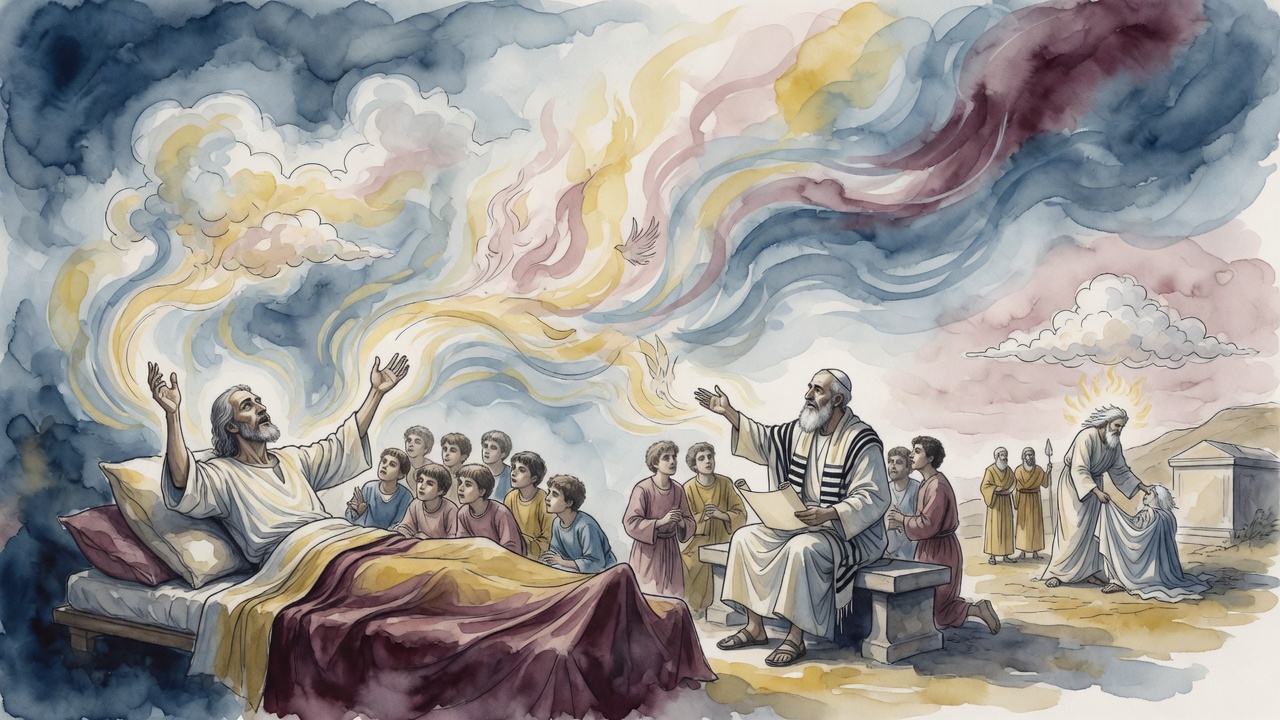
A broom was not only a broom. Milk was not only milk. A crack in the wall was not only bad plaster. Birth opened a gate, and the household answered with charms, names, vigilance, and women who knew that danger often arrives disguised as something too small for men to fear.

The two houses answer each other. In the burned sanctuary, Lilith becomes large enough to sit in a stolen place while the Shekhinah waits in exile. In the birth room, Lilith becomes small enough to hide in milk and still threaten a life. Both houses are about occupation. Both are about a rightful presence pushed aside.

The repair begins when the intruder is named, cornered, and removed from the seat she seized.


← All myths

From the tradition

Sources

2 sources

The texts this telling draws on, in full. Open a card to read inline, or expand it for a wider, quieter read.

Shishim Sippurei AmFolk Tales

Tonight,

The folklore surrounding Lilith paints a vivid picture of a creature of darkness, forever prowling, forever hungry. According to tradition, she doesn't just wander aimlessly. Oh no. As preserved in Jewish folklore, Lilith flies over homes, her senses keenly attuned to the scent of mother's milk. And when she finds it? She'll find a way in. Any crack, any crevice, a weakness in the defenses of the home.

She's a shapeshifter, you see. A master of disguise. She might slip in as a black cat, silent and sleek. Or perhaps as something utterly mundane, like a broom leaning in the corner. Even… a hair in the milk.

What does she want? Some say she comes to strangle infants in their cribs. Others believe she seeks the afterbirth, that potent symbol of new life, to feed to her own demonic brood. Only an amulet, a protective charm specifically designed to ward off Lilith's evil, can keep a child safe.

But Lilith has a formidable adversary: the old midwife. The woman wise in the ways of birth, death, and the things that dwell in between. The midwife who knows all her tricks.

There's a Kurdish tale, "The Hair in the Milk," preserved in Jewish folklore anthologies, that perfectly illustrates this struggle. Professor Dov Noy suggests that this story is a prime example of a woman's tale, containing secrets of how to defeat the enemy, Lilith.

Imagine this: Lilith, drawn by the scent of fresh milk, transforms herself into a long, black hair, falling into a glass prepared for the new mother. But the mother notices the hair and faints. The midwife, instantly recognizing the demonic presence, doesn't panic. She pours the milk, hair and all, into a jug and seals it tight.

Can you hear it? Trapped inside, Lilith begs, pleads, bargains. The midwife, unwavering, extracts a vow. Not only must Lilith spare the woman and her child, but she must serve them for three years, protecting them from other evil forces. And here's the thing about Lilith: once she swears an oath, she is bound to it.

Now, it's important to notice a key difference here. The way Lilith is portrayed in this story of the midwife is quite different from the male myths about her. As we find in Shishim Sippurei Am, IFA4563, the male attitude toward Lilith is often a mix of fear and… well, let's just say sexual fantasy. From a woman's perspective, however, Lilith is just bad news. Plain and simple. A threat to both the marital bed and the very lives of their children.

This dynamic makes you wonder… Does Lilith hold more power over men than women? Perhaps it’s because men are ambivalent toward Lilith, seeing her as something forbidden and tempting, while fearing her destructive abilities. For women, Lilith is a husband-stealing, child-destroying witch they fear and loathe more than anything else. And unlike the men, they are willing to struggle against her, here defeating her.

So, what are we to make of Lilith? Is she merely a terrifying boogeyman, a figure to be feared and loathed? Or is there something more to her story? It makes you think about the things that haunt us, the fears that prey on our deepest vulnerabilities, and the strength we find, often in unexpected places, to confront them.

Full source
Zohar 2:118a-118b, 3:69a, 3:97aZohar

It all starts, as many intense stories do, with a separation. Specifically, the separation of God and the Shekhinah (שכינה), God's Divine Presence, often seen as the feminine aspect of the Divine, and His Bride. The Zohar, a foundational text of Kabbalah, tells us that this split happened after the destruction of the Temple. God, in His grief or perhaps something else entirely, dismisses the Shekhinah. So, what does God do? According to this myth, He brings in… a maidservant.

Who is this maidservant? None other than Lilith. Yes, the Lilith of legend. The one who, in some tales, was Adam's first wife, who refused to be subservient and flew away. Now, she's stepping into the Shekhinah's shoes. The story goes that she once lived "behind the mill," a detail that comes from a verse about a slave girl in (Exodus 11:5). Folk tradition associates Lilith with ruins and hidden places, like behind a mill. Now, this figure of the margins is suddenly at the center.

It's a startling image, isn't it? As (Proverbs 30:23) says, "A slave girl who supplants her mistress." This isn't just a change of roles; it's a complete upheaval. Lilith now rules over the Holy Land, a place once presided over by the Shekhinah. The true Bride, the Shekhinah, is imprisoned, exiled with Her children, bound and suffering. It's a time of immense sorrow. The Shekhinah weeps because God's light no longer shines upon Her, and she sees Lilith, Her rival, mocking Her in Her own house.

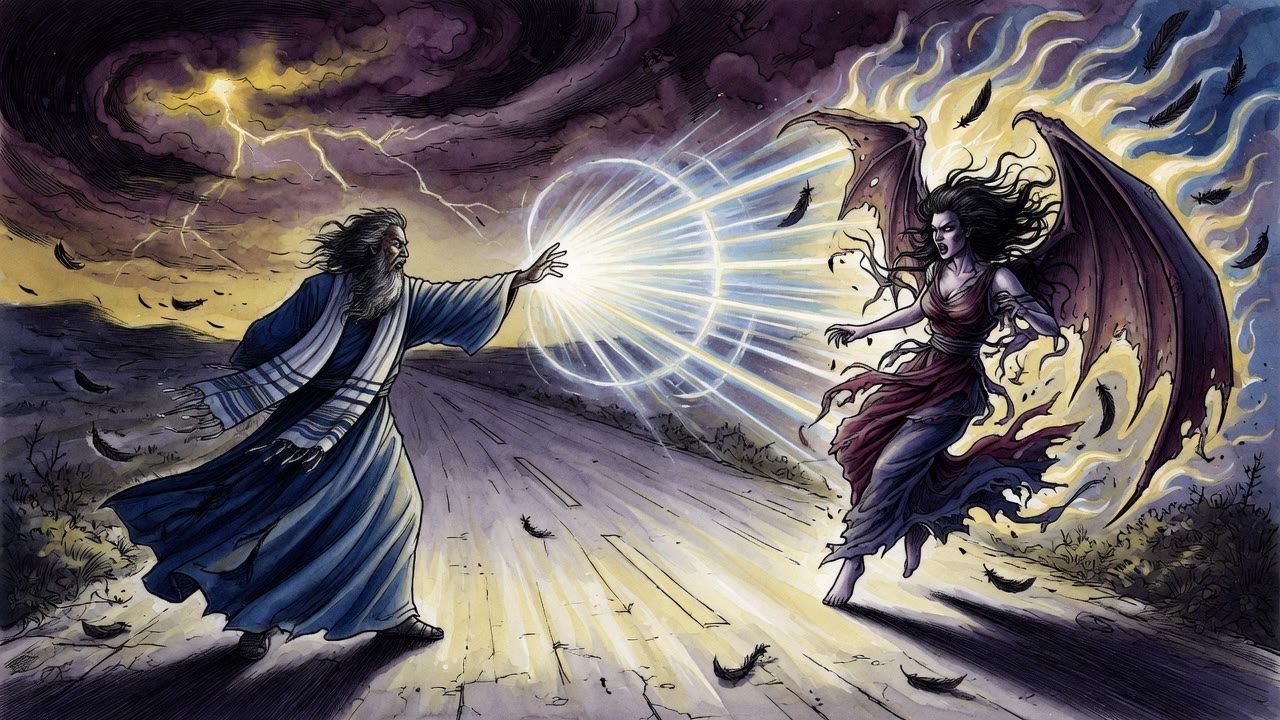
The pain, the injustice. But the story doesn't end there. When God sees His true Bride suffering, He, too, is filled with bitterness. He will descend to save Her from those who are violating Her. The myth promises that a message will come to Lilith, telling her that her time is up. She, "who plays the harlot," will flee from the sanctuary, because her presence cannot stand in the face of the "woman of worth."

Then, God will restore the Shekhinah to Her rightful place. God and His true Bride will reunite in joy. As for Lilith? God will no longer dwell with her, and she will cease to exist. It’s quite a dramatic end, isn’t it?

But what does it all mean? This myth, as explained in Tree of Souls by Howard Schwartz, represents the ultimate fulfillment of Lilith's ambitions. But it's crucial to remember that her position is presented as temporary, lasting only until the coming of the Messiah and the return of the Shekhinah.

The Zohar (3:97a) even offers a fascinating explanation for the connection between Lilith and the Shekhinah, calling them "two sisters." In Kabbalistic thought, the Shekhinah embodies the feminine aspect of holiness, while Lilith embodies the feminine aspect of evil. They are two sides of the same coin, eternally linked.

This whole narrative also echoes the story of Abraham, Sarah, and Hagar. Hagar, Sarah's maidservant, conceives Ishmael with Abraham when Sarah is barren. (Genesis 16:4) tells us that after conceiving, Hagar "was lowered in her esteem." The animosity between Sarah and Hagar mirrors the conflict between God's Bride and Lilith.

The myth serves to explain the long exile of the Jewish people after the destruction of the Temple. The demonic Lilith's rule over the Holy Land symbolizes this period of darkness. Some sources suggest that God dismissed the Shekhinah, while others, like the Zohar (l:202b-203a), depict a confrontation where the Shekhinah leaves on her own accord due to the fate of the Temple and the exile of Israel.

This myth is a powerful reminder that even in the divine realm, relationships can be complex, fraught with jealousy, and subject to dramatic shifts. But it also offers a message of hope: that even in the darkest of times, the true connection between God and His Shekhinah will be restored, and balance will be brought back to the cosmos. It makes you wonder, doesn't it, about the nature of good and evil, holiness and darkness, and how they intertwine in the most unexpected ways.

Full source