Lilith Rises From the Deep and Rules in Fire
Earrings swung at her face. The traveler drank from the cup she held. Then the drink turned bitter, and the woman at the fork of the road drew a sword.
Table of Contents
The water split at the bottom of the world, and Lilith rose with the deep still clinging to her hair.
 Click for full size
The Crevice Opened Under the World
She was not shaped from garden dust. She was not drawn from the side of Adam while he slept. She came from lower than Eden, from the place where sealed waters press against the underworld. When the first transgression cracked what had been closed, the abyss gave up a female spirit made for harm.
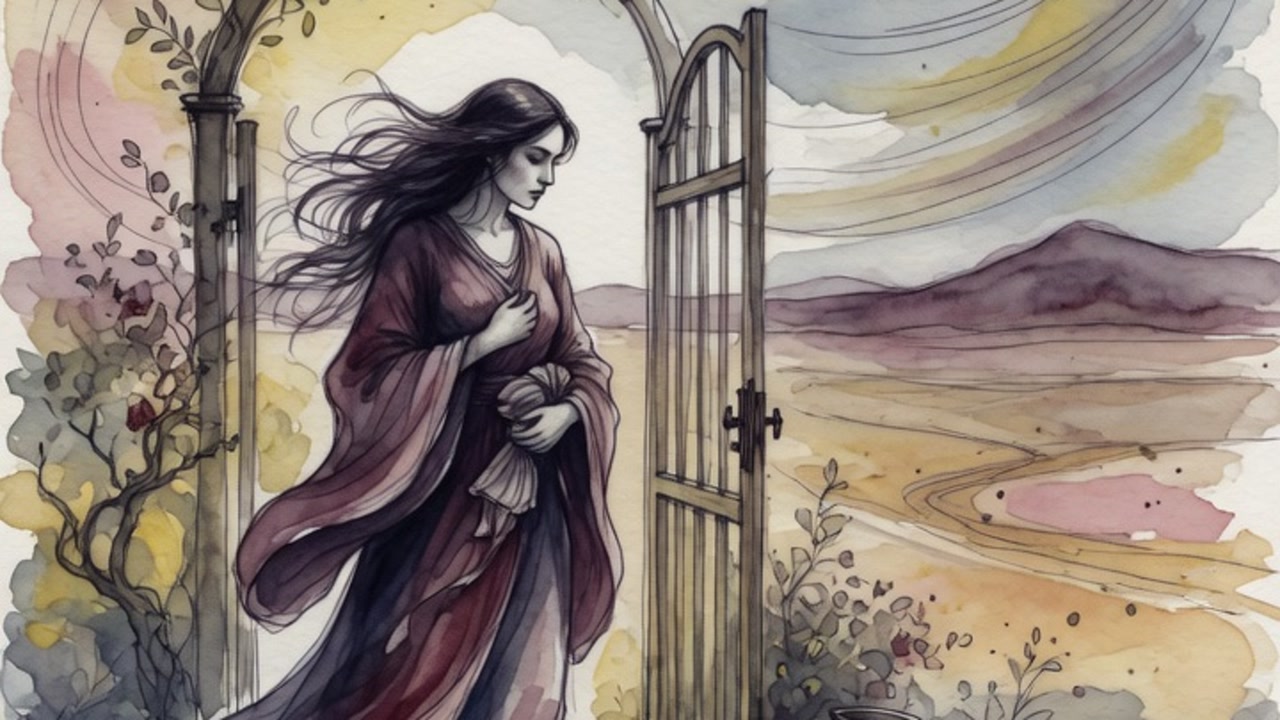
By day she hid. Caves held her. Broken ground received her. When the sun fell, she dressed for the road. Earrings swung at her face. Jewels rested at her throat. Her hair moved loose around her shoulders. Her mouth looked small, a doorway that might admit only sweetness.
The tongue behind that doorway was sharp as a blade.
The Cup at the Forked Road
She stood where a traveler had to choose a road. A man walking alone met beauty before he met danger. Her face was pale and flushed at once. Her words ran smoother than oil. She did not need to strike first. She needed him to step closer, to drink from the cup she offered, to lower himself onto fine linen and forget the path that had brought him there.
He drank.
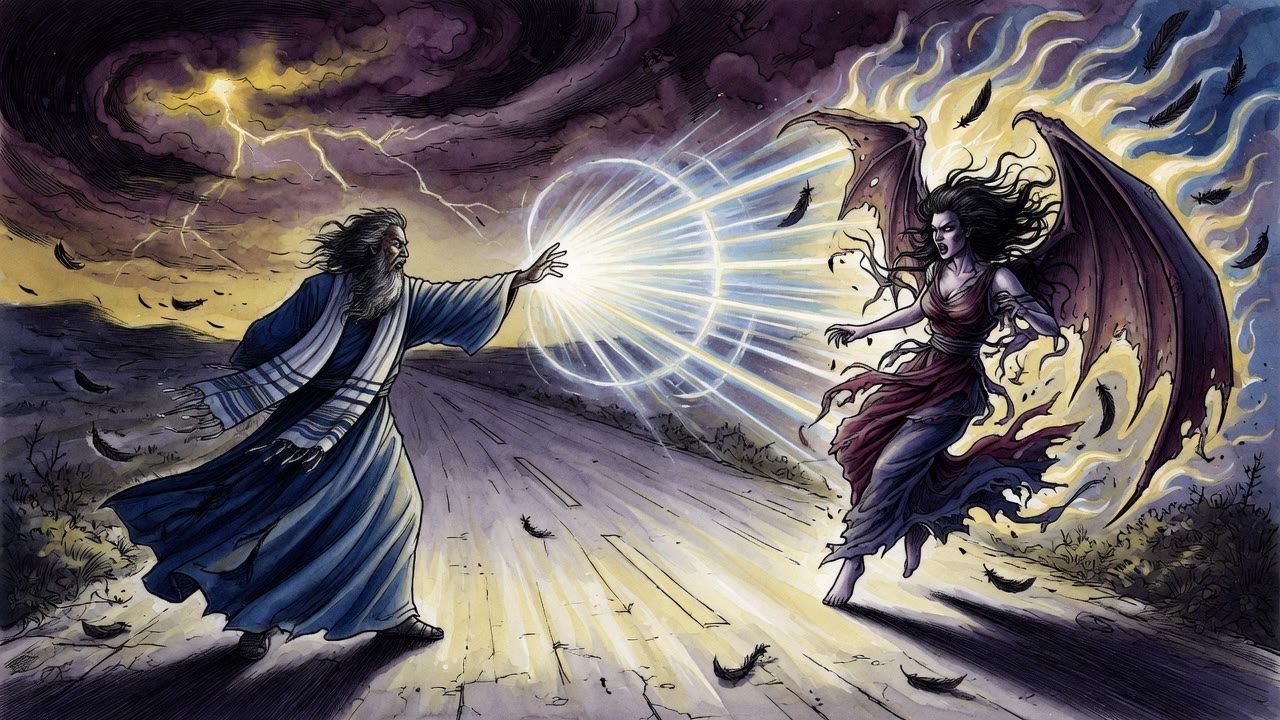
Then the ornaments stopped lying. The woman at the roadside became a warrior clothed in flame. Her eyes hardened. The cup turned bitter in his mouth. A sword came into her hand, dark with the taste of poison. By the time the blade showed itself, he had already crossed from road to bed to pit. The mouth that had promised sweetness now opened over a depth with no handhold.
Night had a queen, and she did not reign by shouting.
Fire From the Waist Down
In another hour she did not wait at the roadside. She ruled. Zemargad was her city. From her head to her navel she was beautiful enough to stop speech. Below the waist there were no ordinary legs. There was fire.
The flames were the lower half of her body. Approach itself could consume. Armies moved at her command. Houses broke open. Young men died by the sword. One survivor ran from the wreckage to tell Job what had fallen on his children.
"Lilith, queen of Zemargad, fell at once, and she led them, and her young ones. Her troops killed by the edge of the sword, and I alone was left."
God had made a world of borders. Lilith moved where borders failed.
Two Kings Fought Over Her
The quarrel did not stop with human houses. Samael and Lilith stood bound together in the dark of the Other Side, Sitra Ahra (סִטְרָא אָחְרָא), paired like a damaged reflection of first beginnings. They stood back to back, joined before separation, the way Adam and Eve were once a single form. Destroyer and queen at the edge of creation's order.
Then Ashmedai, king over destructive spirits, entered the chamber and laid a claim. Around Lilith the Younger, jealousy caught like dry thorn. Samael burned because Ashmedai had a share in her. Ashmedai did not release his hold. Lilith delighted in the fracture. Conflict itself was one of her kingdoms. A queen of fire did not need peace among her lovers. Peace would have weakened the work.
From that union came Alefpeneash, a prince with rage in his face and eighty thousand destroyers beneath his command. Had the force in him been completed without restraint, the world would not have endured the birth. Heaven held something back. The child of that burning court arrived limited, and even limited he was terrible.
The Ruins Took Her Last
When the city fell, she did not flee with the living. She walked into the broken streets and sat among the stones. Wild things moved in the gaps. The fire that was her lower body found a kingdom already burned, and she rested there as if the ruin had been built for her.
The traveler's cup still lay in the dust at the fork of a road somewhere else. The survivor who had run to Job was still running. In the heights, Alefpeneash turned a face of rage that heaven had not allowed to finish. Lilith, in the ruins, did not need any of them to be near. The deep had given her up. The ruins took her back.
No cradle stayed safe merely because the danger had taken a beautiful shape. The road still forked. The earrings still swung. The sword still waited until the cup was empty. Lilith still rises from the deep. She still rules in fire.
← All myths