Samael Rides the Serpent and Fathers Cain in Eden
Adam came back from the far paths of Eden to find an infant crying in the grass. He asked Eve whose child it was. She said it was the son of Samael.
Table of Contents
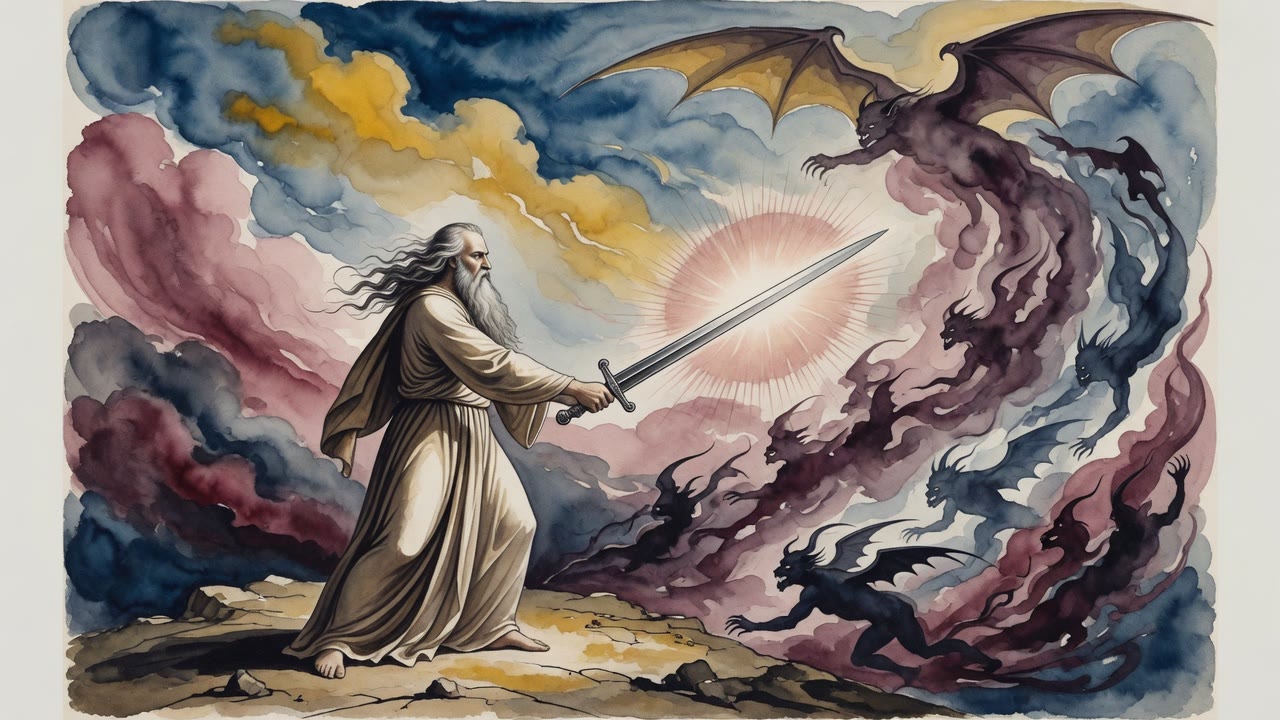
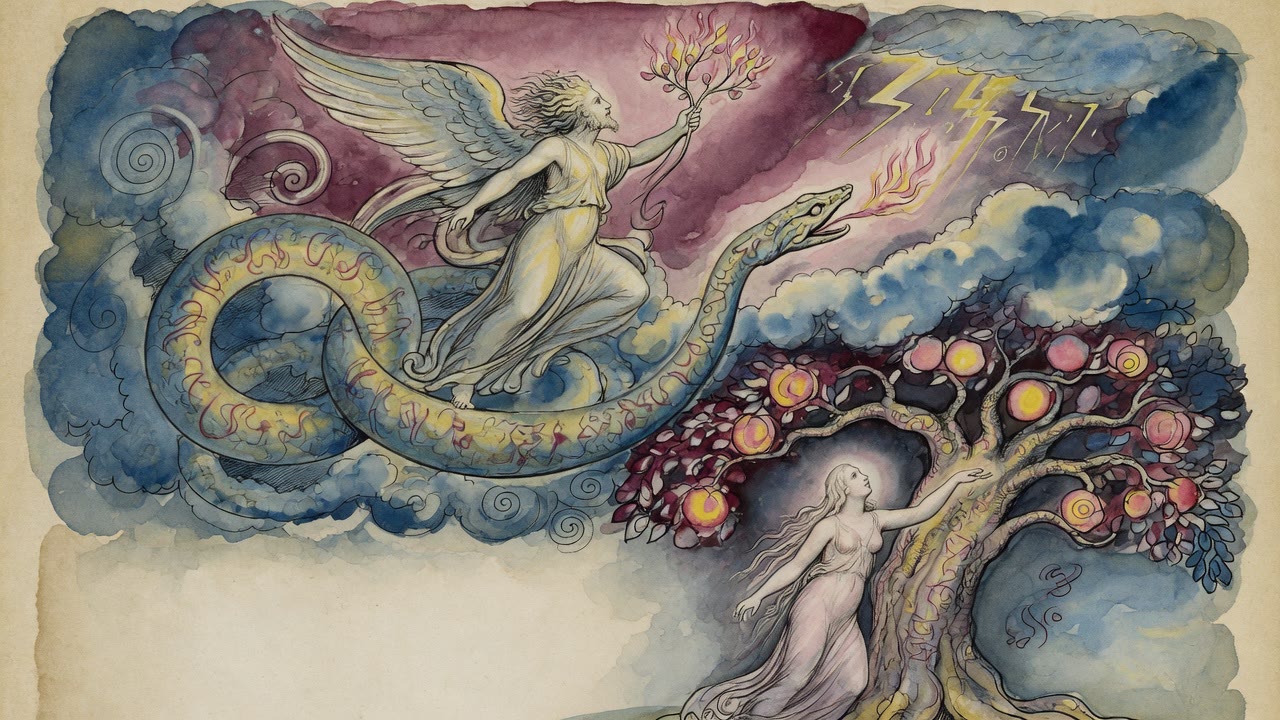
The serpent still walked on legs the morning it carried its rider toward Eve. From the head of the creature, where no one in the Garden thought to look, a great prince leaned forward and watched a woman move among the trees. He had a name built from two halves. Sam, the word for poison, and El, the word for God. Samael did not break the gate of Eden. He chose a mouth that already lived inside it, and he aimed that mouth at the softest place in the world.
 Click for full size
A Prince Borrows a Mouth
He was no rival to heaven and no power loose outside it. He held rank among the angels, a great one, a servant sent where servants are sent. So he did not arrive with thunder. He arrived on the back of an animal that could speak, and he kept himself small, because the danger he carried was small enough to slip into an ordinary choice.
The command sat in the woman's memory like a stone in still water. Do not eat. The voice from the serpent leaned against that stone. It questioned, it softened, it turned the warning into a riddle with teeth. The fruit did not move. The branch did not bend. Everything in the Garden waited on a hand. Then the hand reached, and the mouth opened, and appetite did what no blade could have done.
The Crying Child in the Garden
The serpent paid for the crossing. It was cursed to drag its belly through the dust (Genesis 3:14). The rider was not cursed with it. Samael had come for more than a stolen bite, and when he rode the serpent toward Eve, he left his seed in her. She conceived. A child grew, and the child was his.
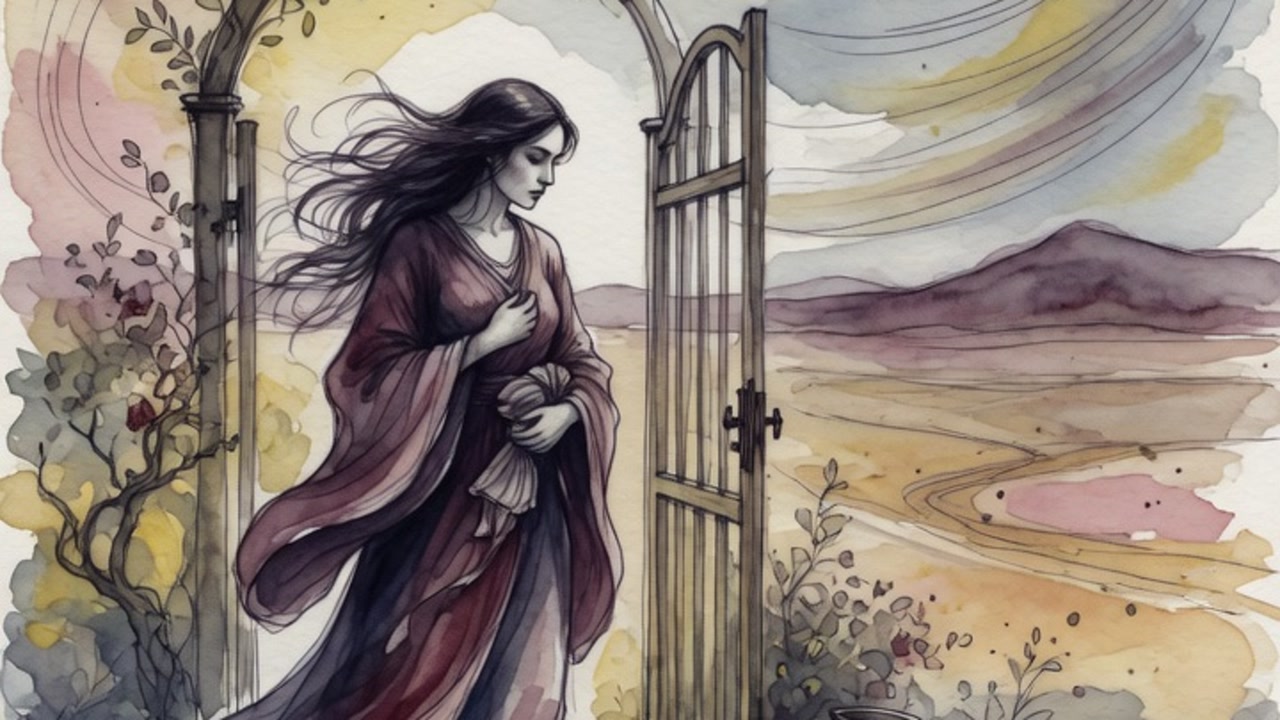
Adam had been walking the far paths of Eden. He came back to find an infant crying in the grass, a baby he had not made. He looked at the woman and asked the only question a man can ask in that moment. "Who is this." Eve did not soften it. "This is the son of Samael," she said. And Adam, staring at the thing the poison-prince had planted in his home, answered with the flattest words ever spoken in the Garden. "Why do we need this trouble here."
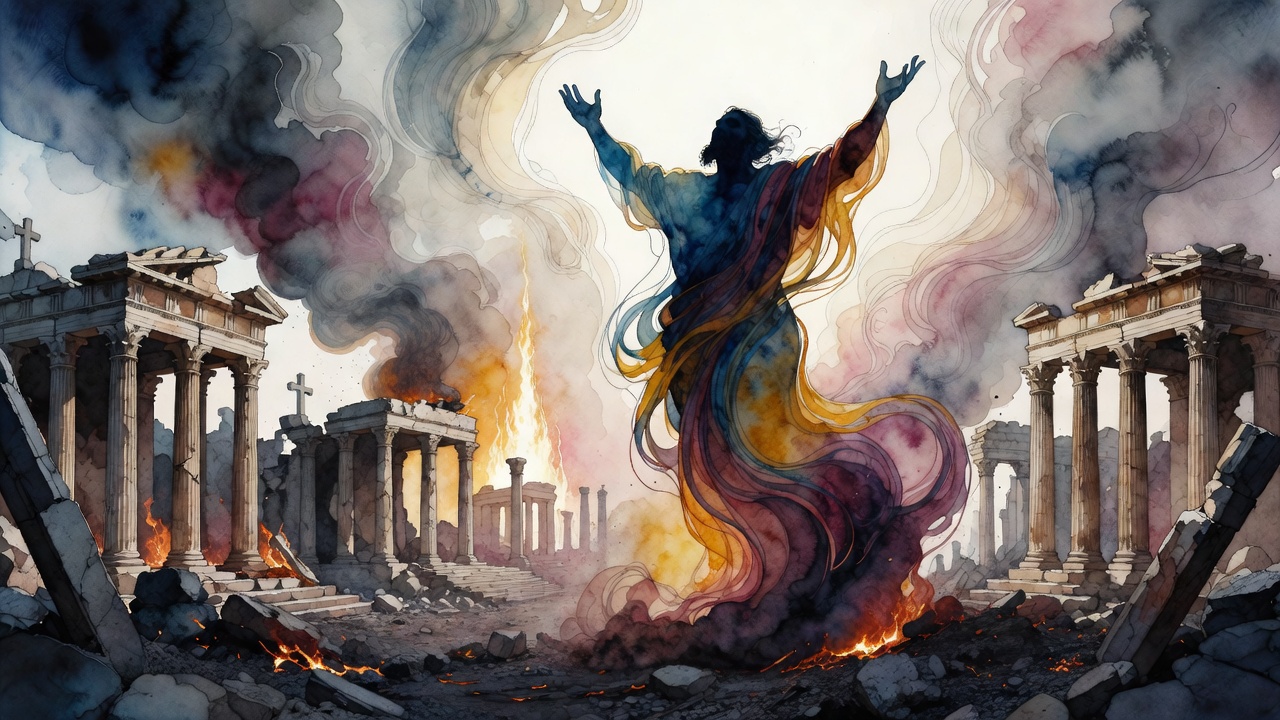
The boy would not stop. He cried and he writhed and he seemed to push at Adam on purpose, the way only a wound can push. And Adam did not bear it well. He took the child apart. The Garden that had held rivers and trees and one quiet commandment now held a father with blood to the wrist, and the first death in the world had come not from the eating but from the seed the eating let in.
Cain, the Firstborn With the Strange Light
The seed did not end in the grass. In the older telling, the line held, and Eve bore Cain, and Cain was not entirely a son of Adam. Something of the rider was in him. At his birth he carried a glow that did not belong to an ordinary infant, a near-burning brightness, as though the fire of his true father had been folded under the skin. He was the firstborn, and he was the first to carry wickedness into the generations.
From Adam to Noah ran ten generations, ten long stretches of patience spent and provoked, and the rot at the head of that line traced back to the firstborn with the seraphic shine. Cain rose against his brother and opened the ground to receive blood (Genesis 4:8). The poison that entered through a question in Eden now moved through a man, through jealousy and appetite and the breath of accusation, exactly the channels its father loved.
Born Beside the Burning Woman
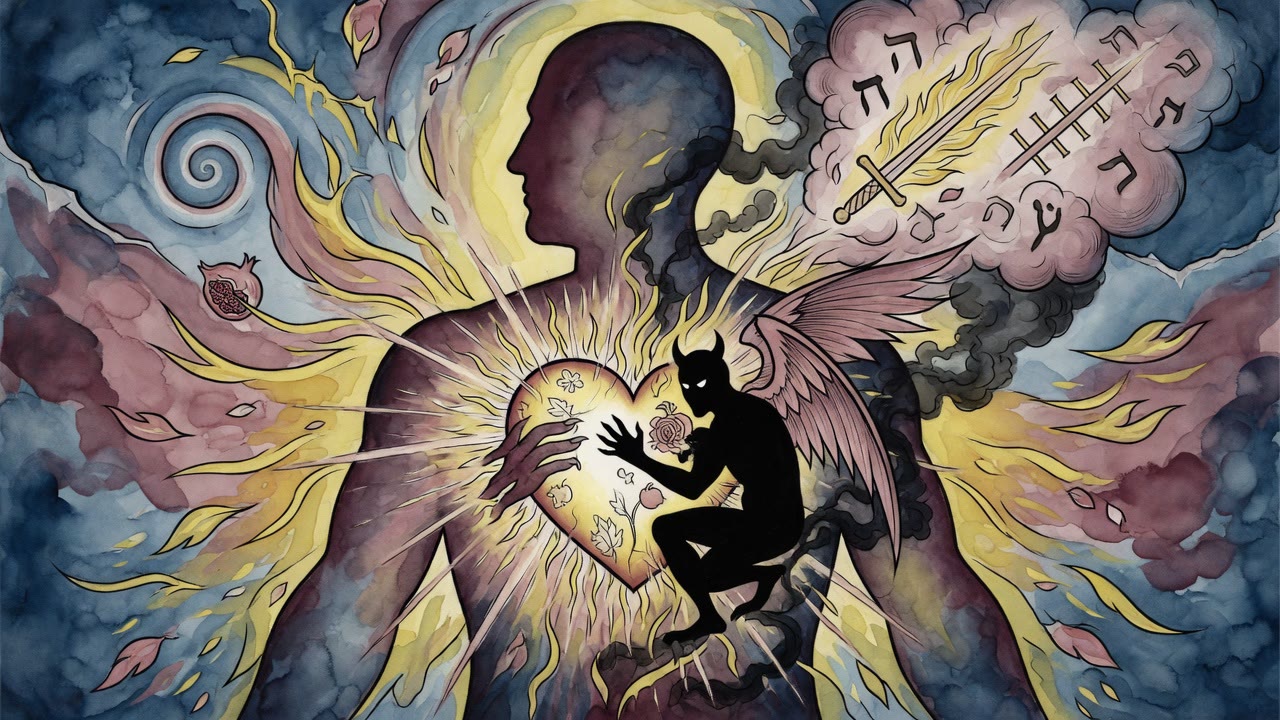
Samael had never been alone. He had come into being paired, the way the first man and woman were one body before they were two. His other half was Lilith. They were not made apart and joined later. They were born together, twined from the start, poison and night in a single birth.
Lilith did not stay only at his side. Ashmedai, the king of the demons, held a claim on a younger Lilith, a creature beautiful from the crown of her head down to the waist and, below the waist, burning fire. Samael saw the king's claim and went hot with jealousy. And the jealousy delighted Lilith, because she fed on exactly this, on courts turned against each other, on the heat between rivals. The dark household did not run on order. It ran on the same envy that had pushed a child to provoke a father in the grass.
The Prosecutor Waits at the Sea
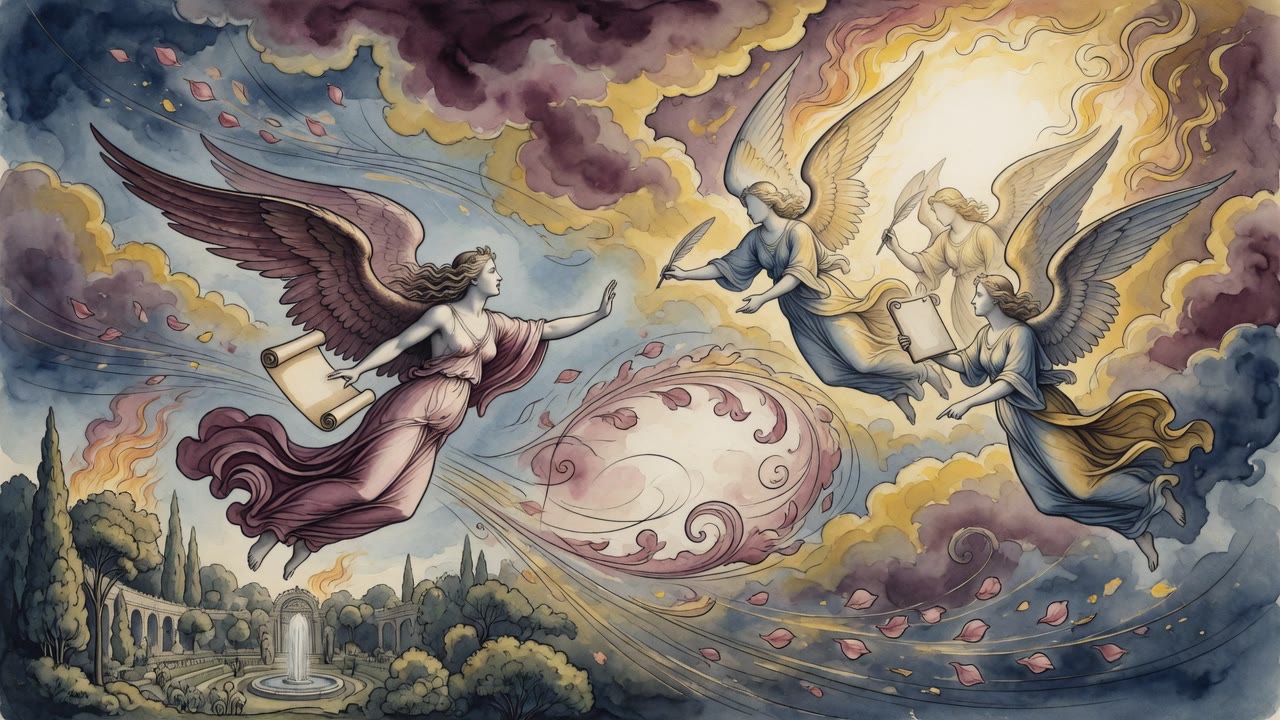
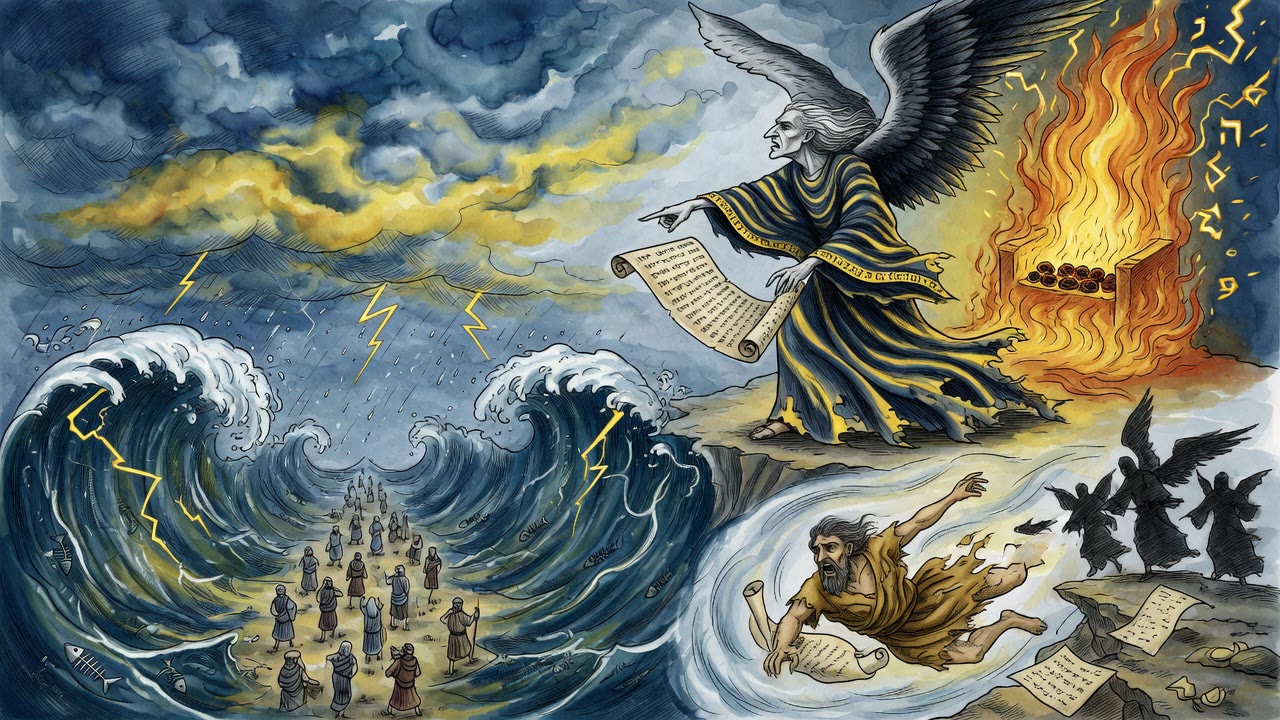
Generations later the poison reached open water. Israel stood trapped between the chariots of Pharaoh and a sea that would not part on its own, and a miracle was needed. Samael was there too, not as a swordsman but as a prosecutor, a celestial accuser who had been filing charges against the people since the night they walked out of Egypt. He pointed at their old idols. He pointed at their flaws. "Look at them," he said toward heaven. "Are these really the ones worth a miracle."
God answered the accuser the way a shepherd answers a wolf. A flock has to cross a rushing stream, and a hungry wolf waits at the bank to take whatever it can reach. The shepherd does not argue with the wolf. He throws it a strong ram and lets it tear into that while the flock crosses behind its back. So the accuser was given his portion to worry, and the sea opened, and the people went through on dry ground (Exodus 14:22) while the prosecutor was busy with the ram. The poison that began as a whisper from the head of a serpent had become a voice in the high court, and even there it could be fed, distracted, and outlasted.
← All myths