David and Job Kept Faith When the Wicked Thrived
David and Job watched the wicked thrive and nearly lost their footing. Their anger became the song that kept faith alive.
Table of Contents
 Click for full size
The Harp Woke Him at Midnight
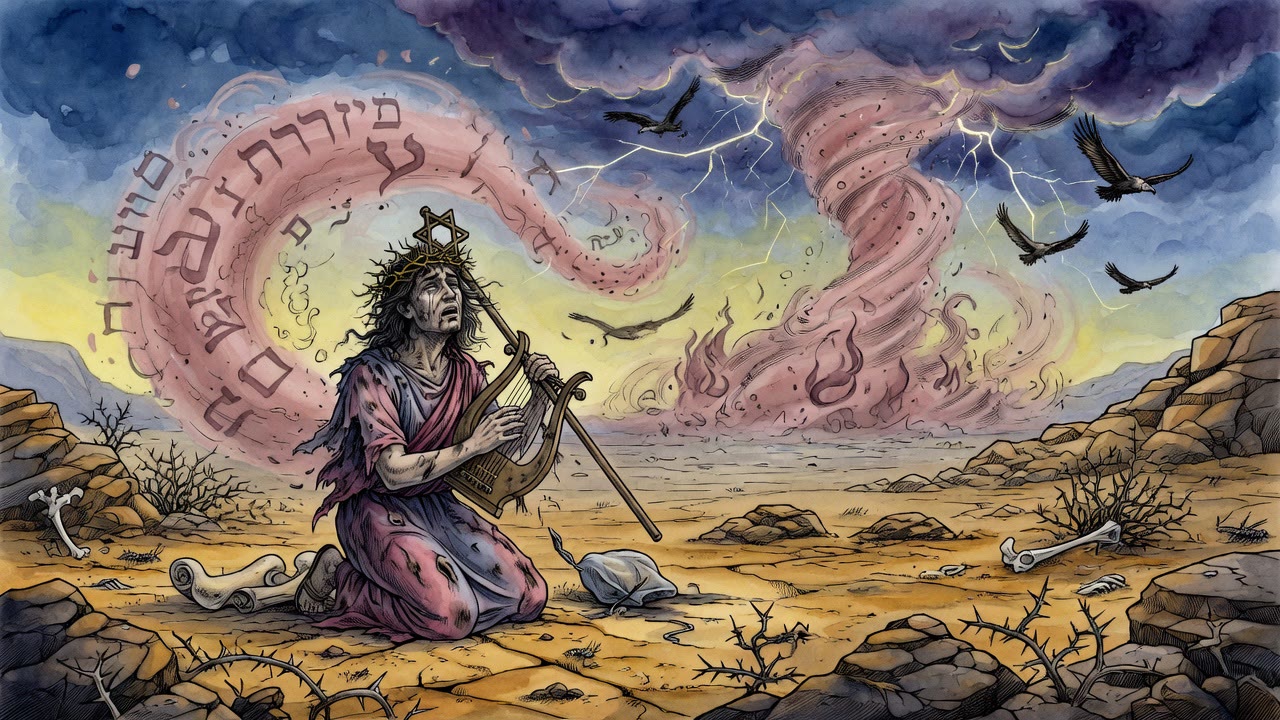
The harp hung above David's bed, and at midnight it began playing with nobody in the room.
The north wind came down off the left side, where God's strength is kept and where the thunder is kept alongside it, and went into the strings, and what came out was one tune with every other tune folded up inside it. He got up, because a man does not sleep through his own instrument answering somebody else. He had until first light, since the wind fell off when the sky changed and the strings went dead under it. That was the arrangement and had been for years.
What came into his mouth that night was not praise. It was Job's sentence, and Job had said it flat, without raising his voice, which is what makes it hard to put down. Their houses are safe from fear. The rod of God is not on them.
Their Houses Are Safe From Fear
He had watched them long enough to itemize it. Their roads are smoothed out ahead of them before they walk on them. The afflictions that come down on Israel go past their doors as though the doors were marked. They have never had to want anything long enough to find out what wanting does to a man, so the fat comes up around their eyes until the eyes sit back under the lids and look out of a face that has stopped working like a face.
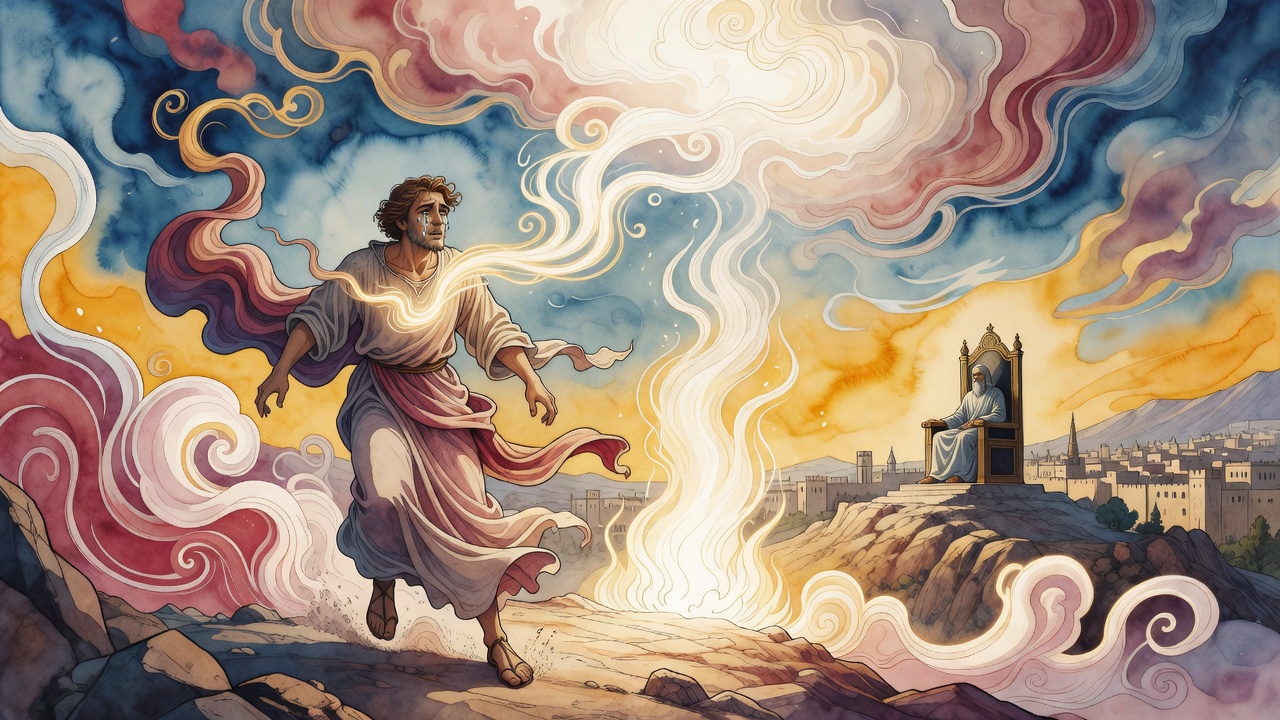
And because nothing ever cut them, they got strong, and out of that strength came the Chaldeans, whose horses are quicker than leopards and meaner than wolves at dusk, who ride in from a long way off and drop like an eagle in a hurry to eat. The men who would one day burn the house of God were being fed, right then, by the same ease he was looking at.
His feet went out from under him for a moment. He put that in the psalm too, later, rather than tidy it away.
The Sacrifice With No Smoke
He had written the answer years before he needed it. Offer sacrifices of righteousness, and trust in the Lord.
Rabbi Natan, in Rabbi Abba's name, said what that offering actually is. A man puts his hands to the commandments and then relies on Him for the wage, and because there is no altar for it, nothing burns and nothing smokes and nobody across the valley looks up and sees where he is standing. He keeps a command on a day when keeping it costs him and returns him nothing he can show anyone. Israel goes on paying that way, in suffering and servitude and blood, among nations who watch the bill run up and then ask whether they might have a share in the reward, though they have not offered to carry any of it. All we have, Israel says, is the light of Your face.
The Answer He Did Not Want
Then David said out loud what it was going to cost, and the saying of it stirred anger. He had seen the generations coming and prophesied that men would die for the Name, and not a few of them.
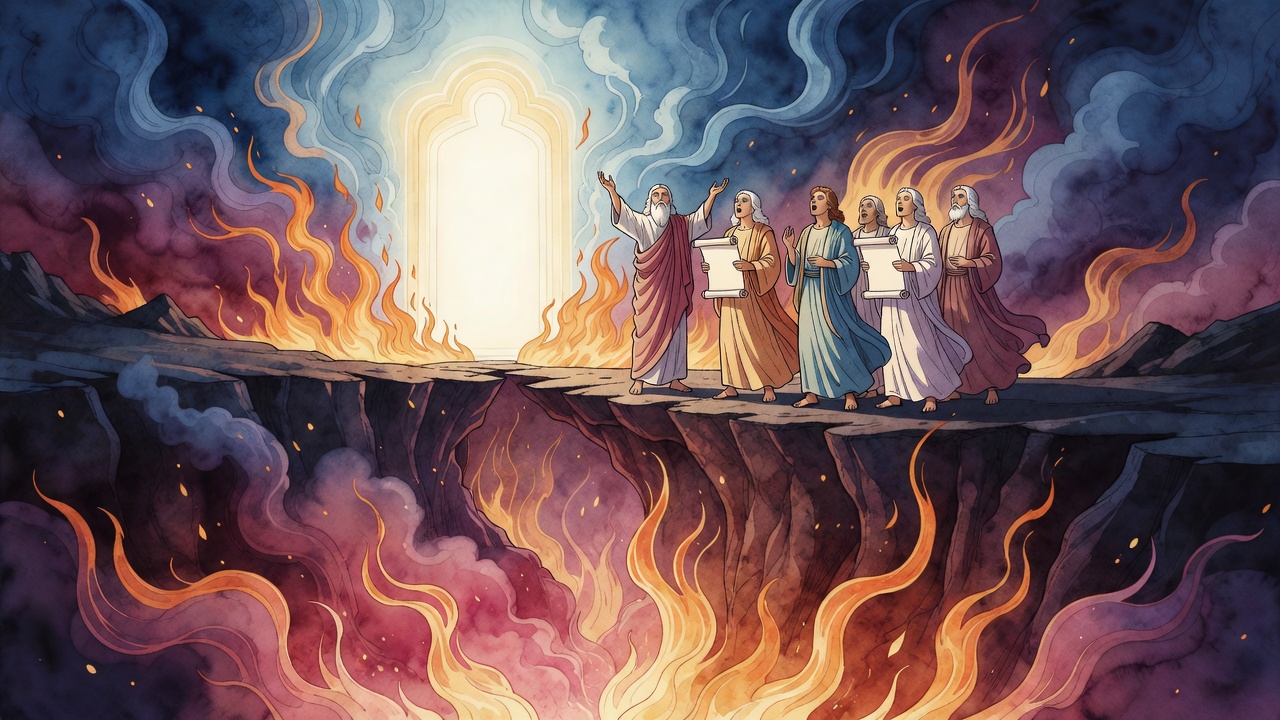
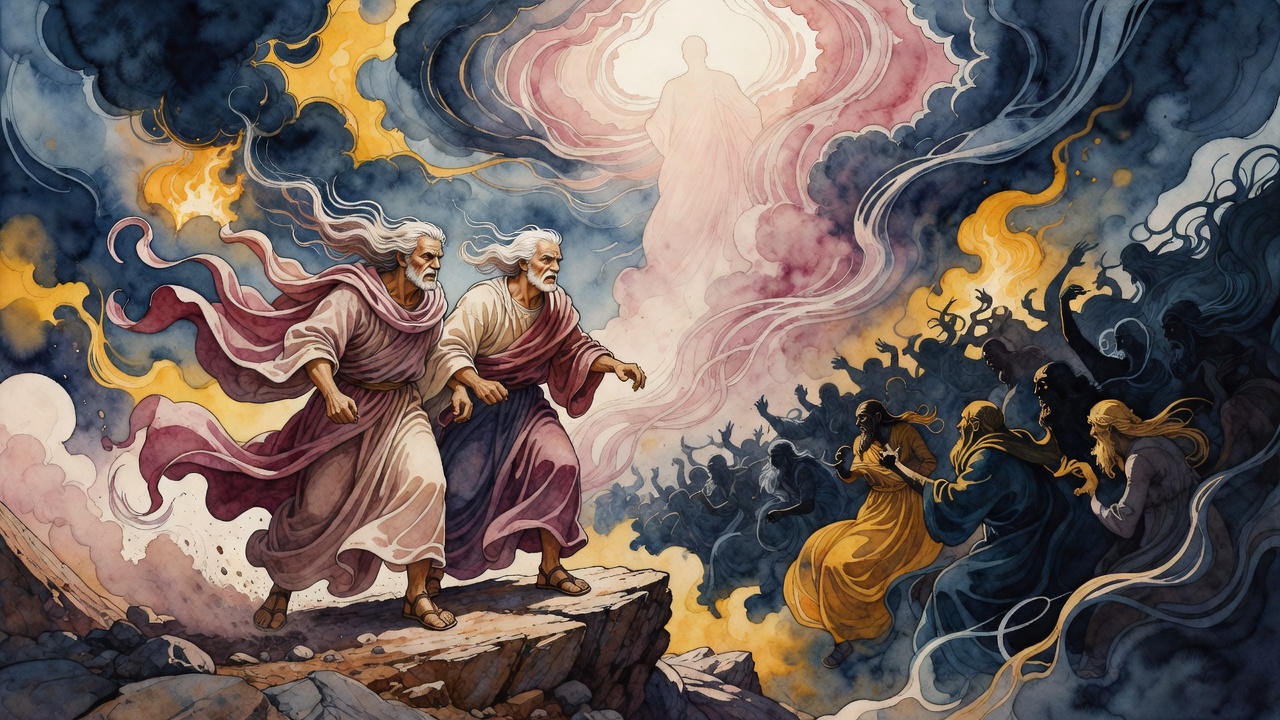
The answer he got back was not comfort. Their blood is dearer to Me than anything ever carried up to the altar. Rabbi Yehudah, in Rabbi Idi's name, splits that suffering into three currents: one borne by the fathers and every generation standing behind them, one falling on the generation that would watch the Temple come down, and one running ahead to the generation of the Messiah. The middle current is the one the midrash will not look away from. Men of that generation took iron balls and flattened them under their breasts. They drove reeds up under their fingernails. They died that way, on purpose, for the Name.
So the question about the wicked came back to him turned over. The safe houses stay safe. The rod still does not fall on them. But the ones it falls on are holding something the altar never held, and there is no way to want that answer.
Thunder From the Same Side
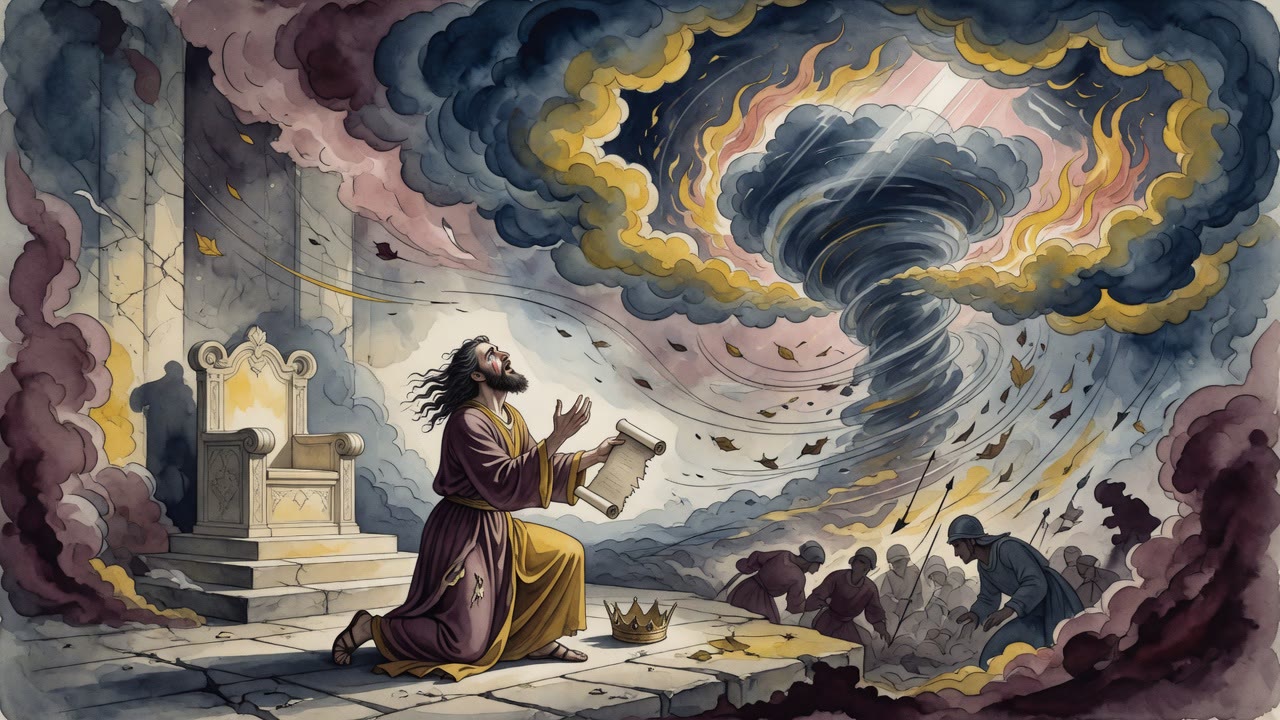
Job had one more line and David knew it. The thunder of His mighty deeds, who can understand?
The thunder comes off the same left side as the tune. The wind that plays a harp over a sleeping king is the wind that goes over a field and takes the roof off a house, and nowhere along it is there a seam a man can put a finger on. David did not solve any of it. He sat with the instrument going under his hands and put the whole night into a song: the smoothed roads, the fat around the eyes, the moment his footing went, the iron and the reeds, and Job refusing to be talked out of what he had seen.
The harp stopped when the wind turned, close to morning. By then he had the psalm.
← All myths