5 min read

Esau's Three Tears Made Israel Weep for Ages

Esau lost the blessing and cried three measured tears. Heaven remembered them, and Israel would weep for ages of its own.

Curated by Arthur · Told by Maggid ·
Table of Contents
  1. The Tent Held Its Breath
  2. A Cry Split the Tent
  3. Heaven Counted the Drops
  4. Israel Brought Its Own Tears
  5. The Snare Broke Open

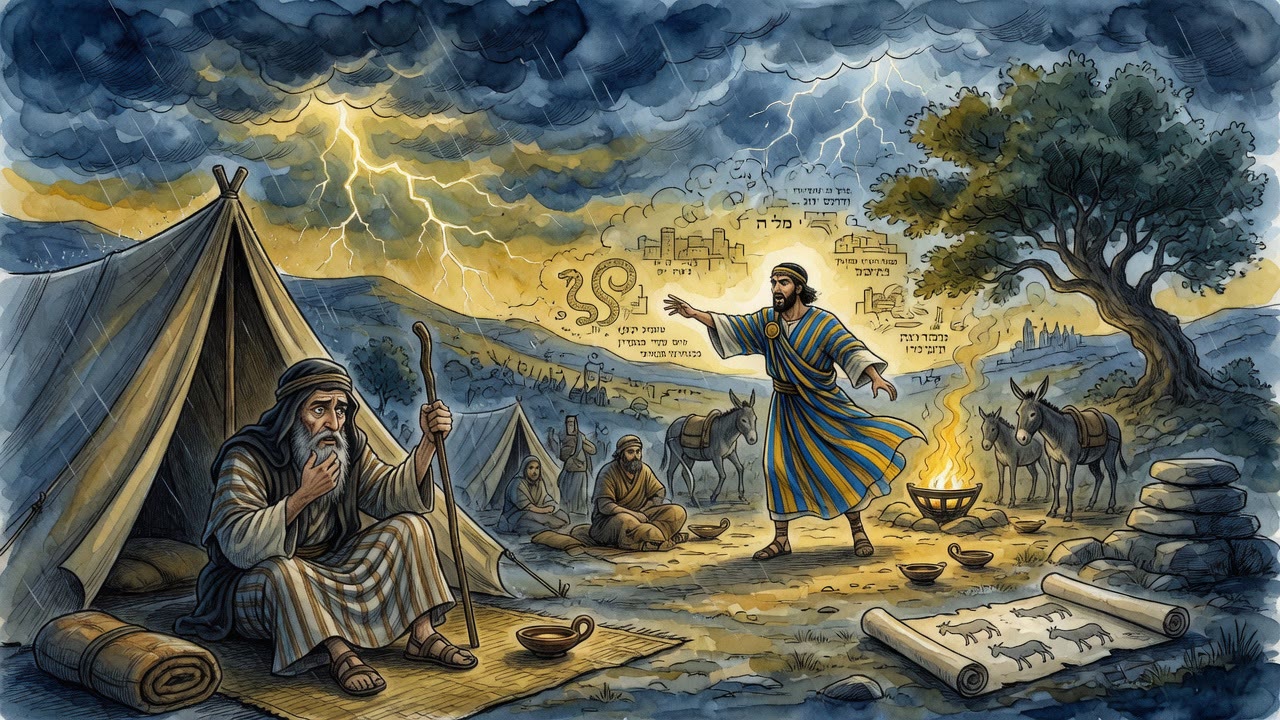
Esau came in smelling of the field, and the blessing was already gone.
The meat in his hands had cooled. The bow had done its work. He had hunted, cooked, hurried, and entered his father's tent with the confidence of a firstborn son arriving just in time. Then Isaac's face changed.

The Tent Held Its Breath

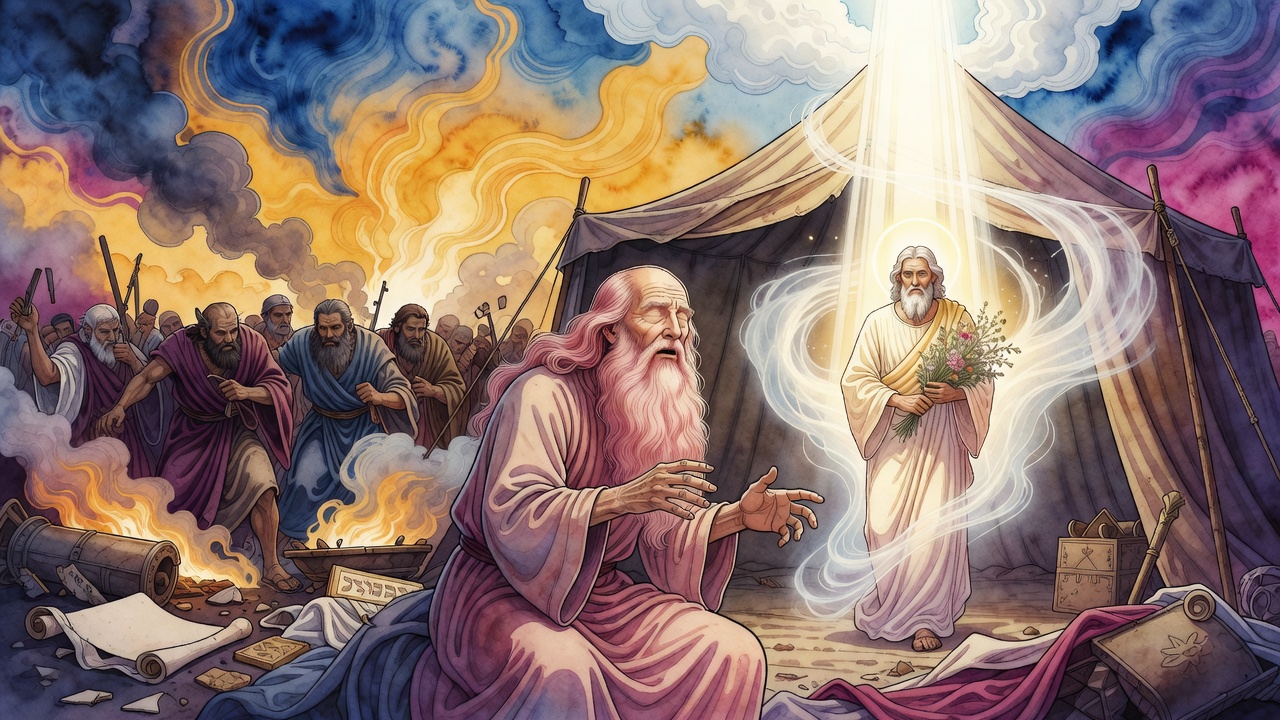
Isaac trembled so hard the tent seemed to tremble with him.

Someone had come before Esau. Someone had worn the skins, carried the food, bent close to the blind old man, and taken the words that could not be called back. The blessing had left Isaac's mouth like an arrow. It had found Jacob. It would not return to the bow.

Esau stood there with the meal he had prepared for nothing. The hunt, the sweat, the dutiful speed, all of it collapsed at his feet. His father had a blessing in him a moment ago. Now the tent held only the aftertaste of it.

"Bless me too," Esau said. The request was not noble. It was not clean. It came from a man who had already sold what he now wanted. But the pain in his throat was real.

A Cry Split the Tent

The cry came wild and bitter.

It did not sound like strategy. It did not sound like repentance either. It sounded like a son who had reached the door and found his brother leaving through the back with the future under his cloak.

Esau had despised the birthright when it sat before him in peace. Hunger had made a bowl of stew look larger than inheritance. But loss makes old contempt expensive. The blessing, once gone, became enormous. It filled the tent after Jacob had left it.

Isaac searched for something to give him. The words that remained were not the same. Esau heard them anyway, because a starving man will cup his hands under any leak in the roof.

Then the tears came.

Heaven Counted the Drops

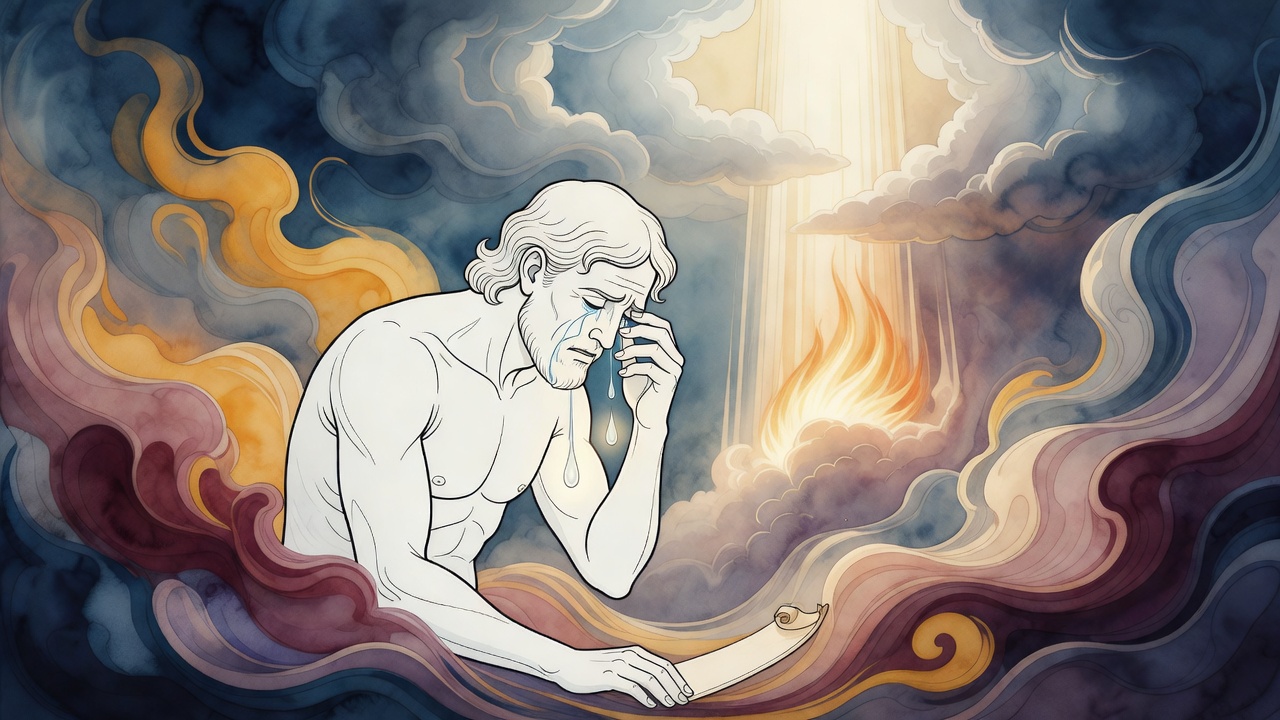
One tear from the right eye.

One tear from the left.

A third held between them, shared by both eyes, as if grief itself could not decide where to fall. Another reckoning made the measure smaller still, only a third of a tear. The count did not soften the result. It sharpened it.

Heaven did not say, "He is wicked, so the tears are nothing." Heaven did not say, "He lost what he had already cheapened, so the wet on his face should dry without memory." The drops were counted because they had happened. A wound had opened. A son had cried before his father.

That is the frightening part. Not Esau's righteousness. His tears. Even a crooked man can produce a true cry, and truth, once produced, enters the ledgers above.

Israel Brought Its Own Tears

Generations later, the elders of Israel stood with their own complaint.

"Master of the Universe," they said, "Esau cried three tears, or less than three, and peace spread under his feet. Power widened for him. His descendants walked the earth with room to breathe. What of the tears of Your children?"

Israel's bread had been wet with tears. Not once. Not on one afternoon in a patriarch's tent. Day and night. Mothers cried over sons. Exiles cried at rivers. Sages cried into sleeves in rooms where decrees had already been sealed. The tear that had earned Esau reward became an accusation in Israel's mouth.

The elders did not ask God to forget justice. They asked God to count again. If a single bitter cry from Esau had weight, then Israel's tears should bend the scale until mercy moved.

The Snare Broke Open

There were days when Israel had no answer except survival.

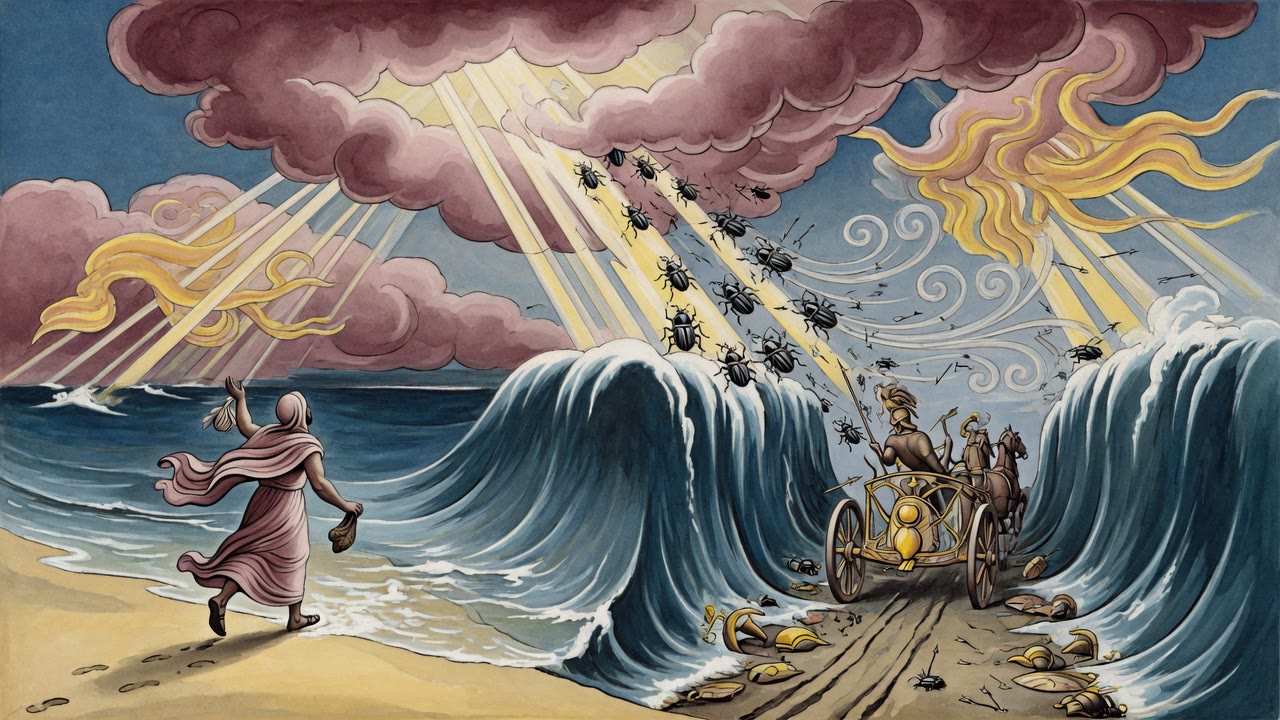
If God had not stood with them, the enemies would have swallowed them alive. The waters would have gone over their heads. The teeth would have closed. The snare would have held.

But the snare broke.

Israel the Elder carried that sentence like a staff. Not all tears were answered at once. Not every exile ended when the first throat cracked. Esau's cry had been counted, and that made the world feel unbearable. Israel's cry was counted too, and that kept the world from becoming final.

Back in Isaac's tent, Esau wiped his face and began to hate. Elsewhere in time, Israel lifted bread salted by grief and kept singing through wet mouths. Three tears fell from one brother. A people learned how heavy water can be.


← All myths
From the tradition

Sources

3 sources

The texts this telling draws on, in full. Open a card to read inline, or expand it for a wider, quieter read.

Midrash Tehillim 124:2Midrash Tehillim

That feeling is at the heart of Psalm 124, a song of ascent traditionally sung by pilgrims on their way to the Temple in Jerusalem. But there's so much more to it than just a simple expression of thanks.

This psalm, attributed to David, isn't just about individual salvation; it speaks to the collective experience of the Jewish people. It's a song of deliverance, a recognition that without divine help, we would have been swallowed whole by our enemies. A pretty dramatic image. But that’s the point. The psalm uses vivid language to paint a picture of the dangers faced and the gratitude felt for being spared.

Within this psalm lies a fascinating reference: "Israel Saba." What does that even mean? Well, saba (סבא) is Hebrew for "grandfather" or "elder." So, Israel Saba (ישראל סבא) literally translates to "Israel the Grandfather" or "Israel the Elder." But it’s not just a term of endearment. It's a way of referring to the Jewish people as a whole, linking them back to their ancestor, Jacob, also known as Israel.

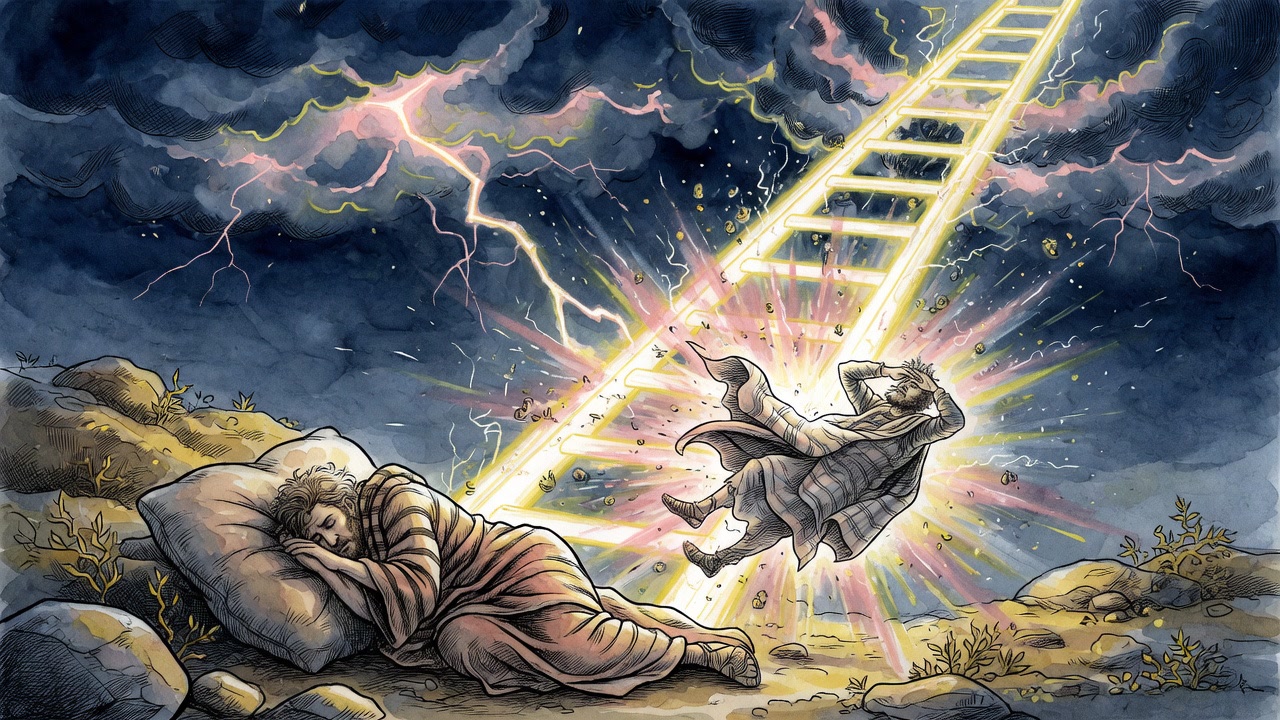
Why Jacob in particular? The Midrash Tehillim, our source for this understanding, connects Jacob to the very spot where the Temple would eventually stand. It tells us that Jacob slept at that sacred location. Can you imagine? This wasn't just any nap! According to the Midrash (rabbinic interpretive commentary), it was this experience, this connection to the future site of the Temple, that cemented Jacob's role as the "grandfather" of the nation and gave rise to the term "Israel Saba."

It’s a powerful image: Jacob, the patriarch, dreaming on holy ground, his experience somehow imbuing the entire nation with a sense of divine protection. It’s as if the psalm is saying, “Remember where you come from. Remember the promise made to our ancestor. Remember that even in the darkest times, we are connected to something bigger than ourselves."

So, the next time you hear or read Psalm 124, remember Israel Saba. Remember Jacob's dream. Remember that feeling of gratitude for being delivered from danger. It’s a reminder that we are part of a long and enduring story, a story of resilience, faith, and the unwavering protection of the Divine. And isn't that a story worth singing about?

Full source
Esther Rabbah, Petichta 3Esther Rabbah

God told Israel three separate times: do not go back to Egypt. According to Esther Rabbah, they violated every single warning and paid for every single one.

Rabbi Shimon ben Yohai identified the three prohibitions. The first appears at the Red Sea: "For as you saw Egypt today, you shall not see them ever again" (Exodus 14:13). The second is a direct command: "The Lord said to you: You shall not return again on that way anymore" (Deuteronomy 17:16). The third is a threat disguised as prophecy: "The Lord will return you to Egypt in ships" (Deuteronomy 28:68). Rabbi Yitzhak offered a wordplay on that last verse, reading "in ships" (baoniyyot) as "in poverty" (baaniyyut) of good deeds. Why Egypt specifically? Because nothing humiliates a freed slave more than crawling back to his former master.

Israel broke all three warnings. The first violation came during Sennacherib's reign, when they fled to Egypt for military aid: "Woe! Those who descend to Egypt for aid" (Isaiah 31:1). The second came in the days of Yohanan ben Kareach, who dragged the remnant of Judah into Egypt against Jeremiah's explicit warning (Jeremiah 42:16). The third came under Emperor Trajan. His wife gave birth on the Ninth of Av while Israel was mourning. The baby died on Hanukkah, and the Jews lit their lamps anyway. Informers told Trajan's wife: they mourned when you gave birth and celebrated when your child died. Trajan sailed for Egypt. He expected the voyage to take ten days. The wind brought him in five. When he arrived, he found the Jews studying the verse: "The Lord will bring a nation against you from afar, from the end of the earth, as the eagle will swoop" (Deuteronomy 28:49). Trajan announced: "I am the eagle." His legions surrounded them and killed them.

The midrash (rabbinic interpretive commentary) then pivots to Esther's plea before Ahasuerus: "We have been sold, my people and I, to be destroyed, to be killed, and to be eliminated" (Esther 7:4). This was worse than slavery. Slavery at least has a buyer. Under Haman's decree, there was no buyer at all, only annihilation. And so the opening word of the Book of Esther, vayhi ("it was"), becomes vai ("woe") for what transpired under Ahasuerus.

Full source
Targum Pseudo-Jonathan on Genesis 27:34Targum Pseudo-Jonathan on Genesis

The cry Esau lets out when he realizes the blessing is gone is one of the most haunting sounds in the Torah. The Targum Pseudo-Jonathan preserves it in its raw Aramaic. "He cried with a cry exceeding great and bitter, and said to his father, Bless me, me also, my father!" (Genesis 27:34).

A cry exceeding great and bitter. Tza'akah gedolah u-marah ad me'od.

An echo that reaches the book of Esther

The rabbis noticed something remarkable. There is exactly one other place in the Tanakh where this precise phrase returns. It is in the book of Esther, when Mordechai learns of Haman's decree to destroy the Jews: "he cried with a loud and bitter cry" (Esther 4:1).

Who was Haman? The Talmud in Megillah traces his lineage to Amalek, grandson of Esau. The rabbinic tradition reads the two cries as linked across the centuries. Esau's bitter cry in his father's tent, uttered when he lost the blessing, was answered, centuries later, by Mordechai's bitter cry at Shushan's gate, when Esau's descendant tried to destroy Esau's brother's descendants.

Some midrashim take this even further and say that every tear Esau shed on that night has continued to bleed into Jewish history as a form of spiritual debt, one the Jewish people pay down through the generations.

The takeaway

Pseudo-Jonathan preserves the cry because cries matter. A tear, in the rabbinic imagination, does not disappear. It is gathered, weighed, and answered. Esau's cry echoes through the book of Esther and beyond. The lesson: be careful whose heart you break, and how. The sound may outlast you by a thousand years.

Full source