God Rebuked Isaac for Trying to Comfort Esau
After Jacob fled with the blessing, Isaac tried to comfort Esau. God rebuked him for it. The exchange is one of the most unsettling in midrash.
Table of Contents
 Click for full size
The Father Who Could Not Stop Being a Father
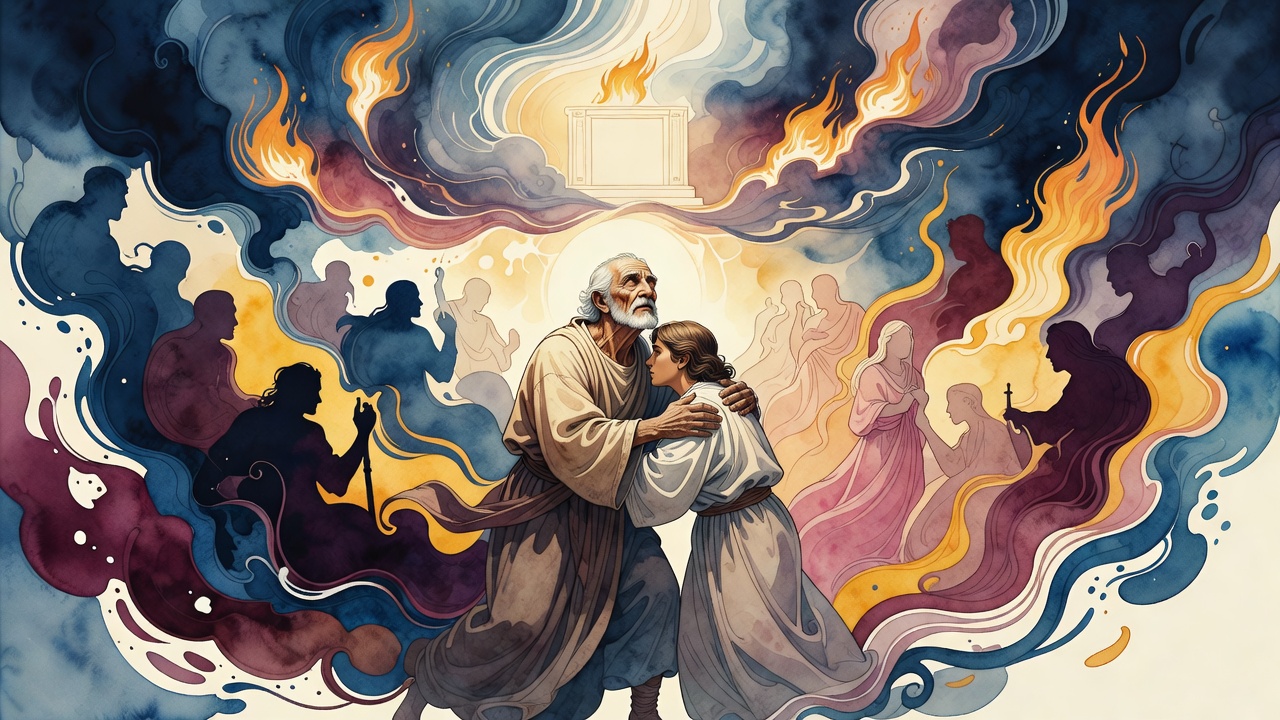
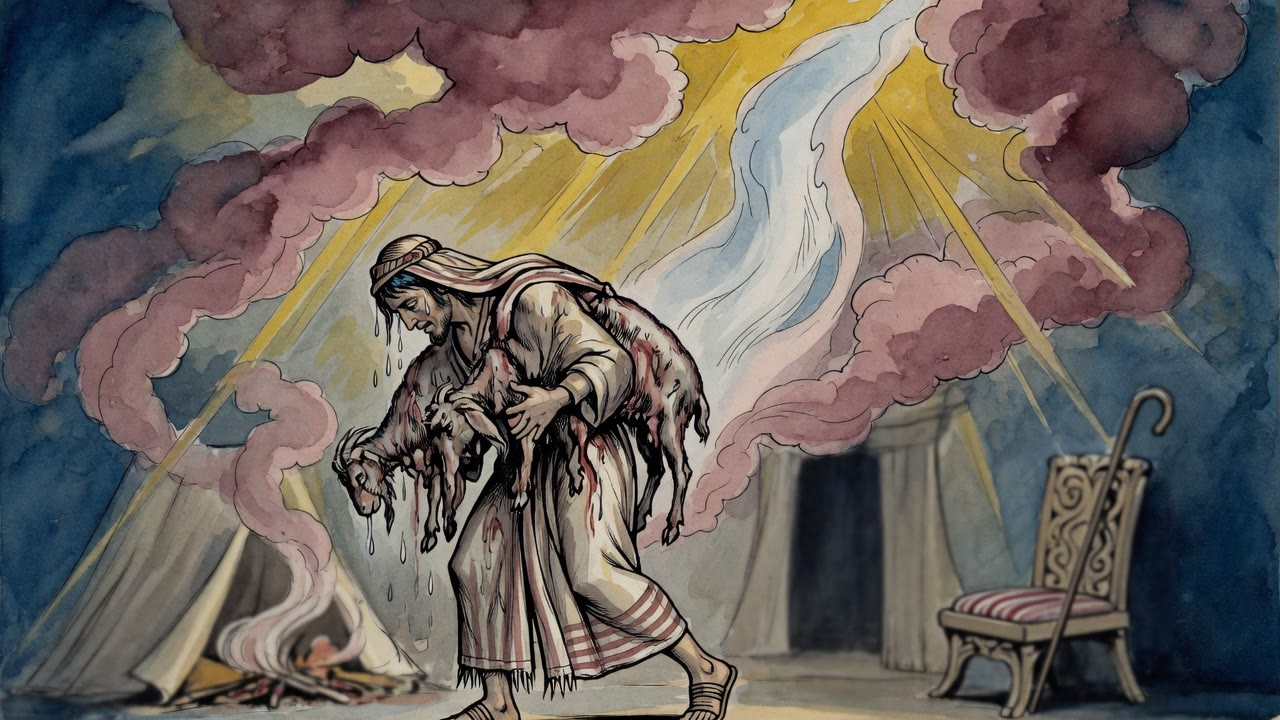
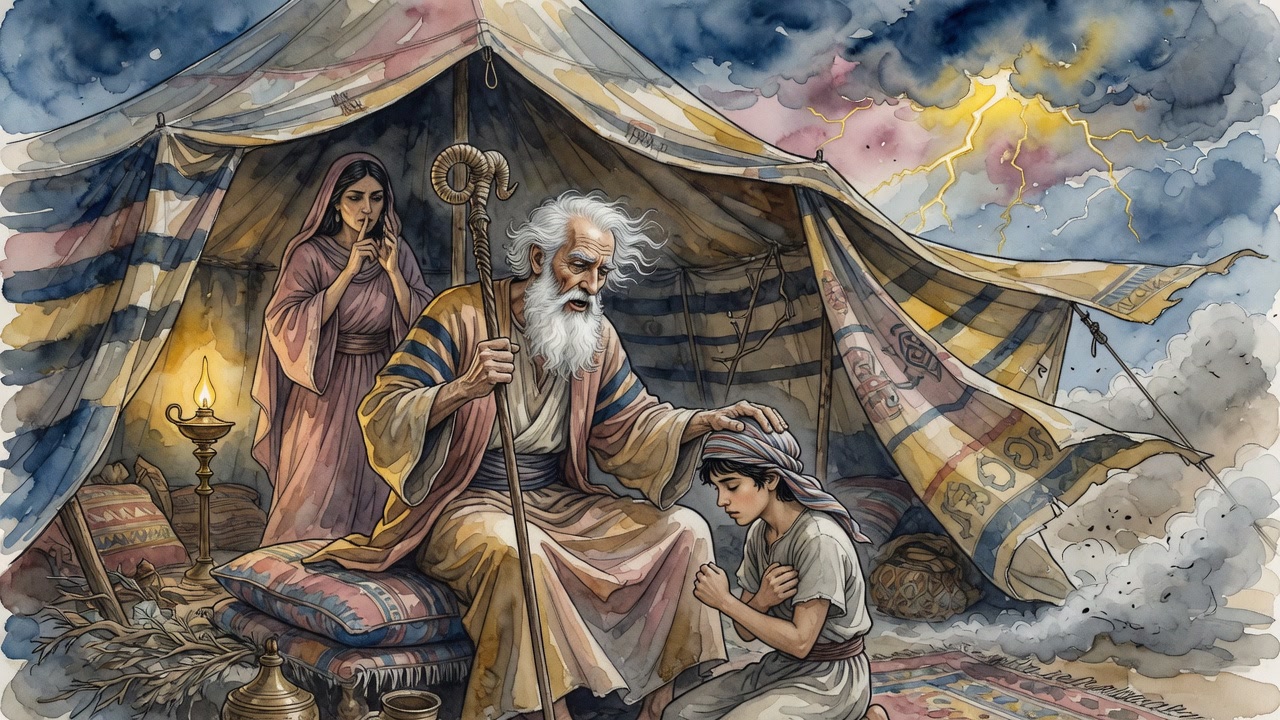
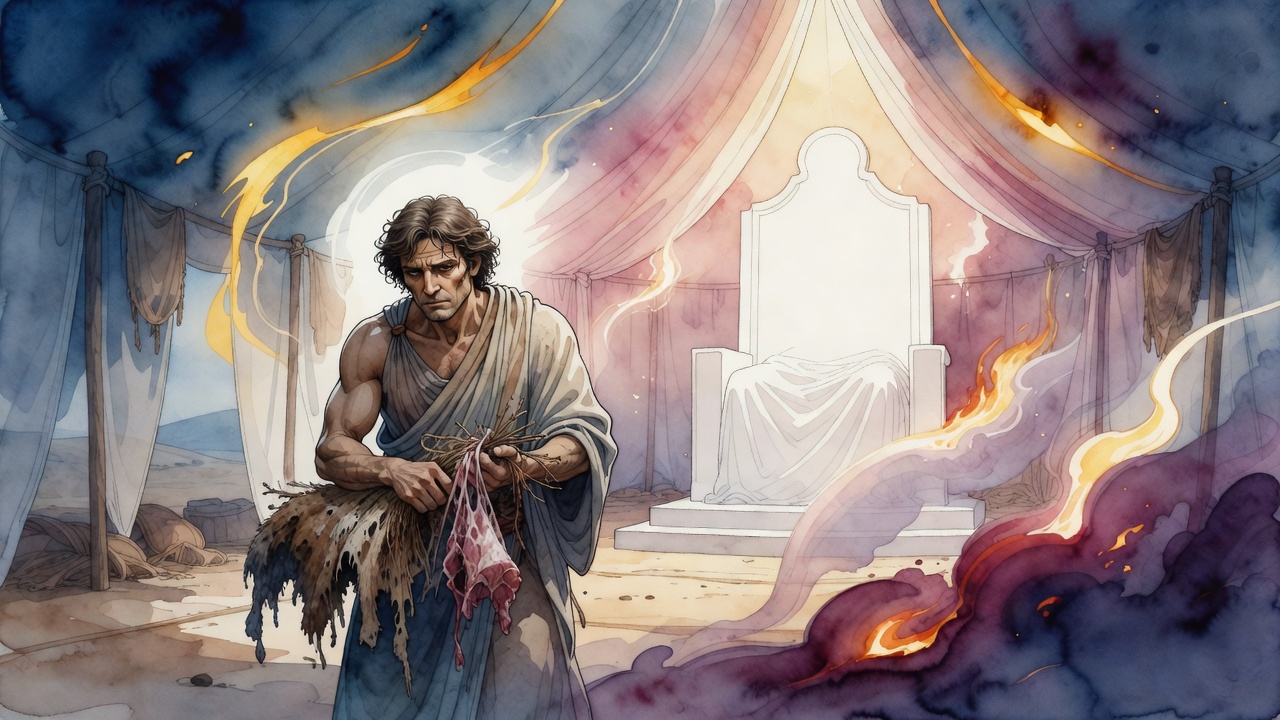
Jacob was gone. The blessing had left the tent with him, and there was no calling it back. What has been blessed is blessed. The savory dish Esau had hunted and cooked still sat where he set it down, gone cold, the smell of it filling a tent where the wrong words had already been spoken over the wrong head. Isaac sat blind in the dark of his failing eyes with his favorite son and tried to find words for the wreckage.
He said: "you are still my child. There is still something left for you." He called on the dew of heaven and the fat of the earth in a diminished version of what he had given Jacob. He told Esau he would live by the sword and serve his brother, but that when he grew restless and threw off the yoke from his neck he would be free. These were not nothing. They were what a grieving father could scrape together for a son who had stood weeping at his knees, asking whether there was not one blessing left, only one, for him.
God was not pleased.
The Rebuke and What It Named
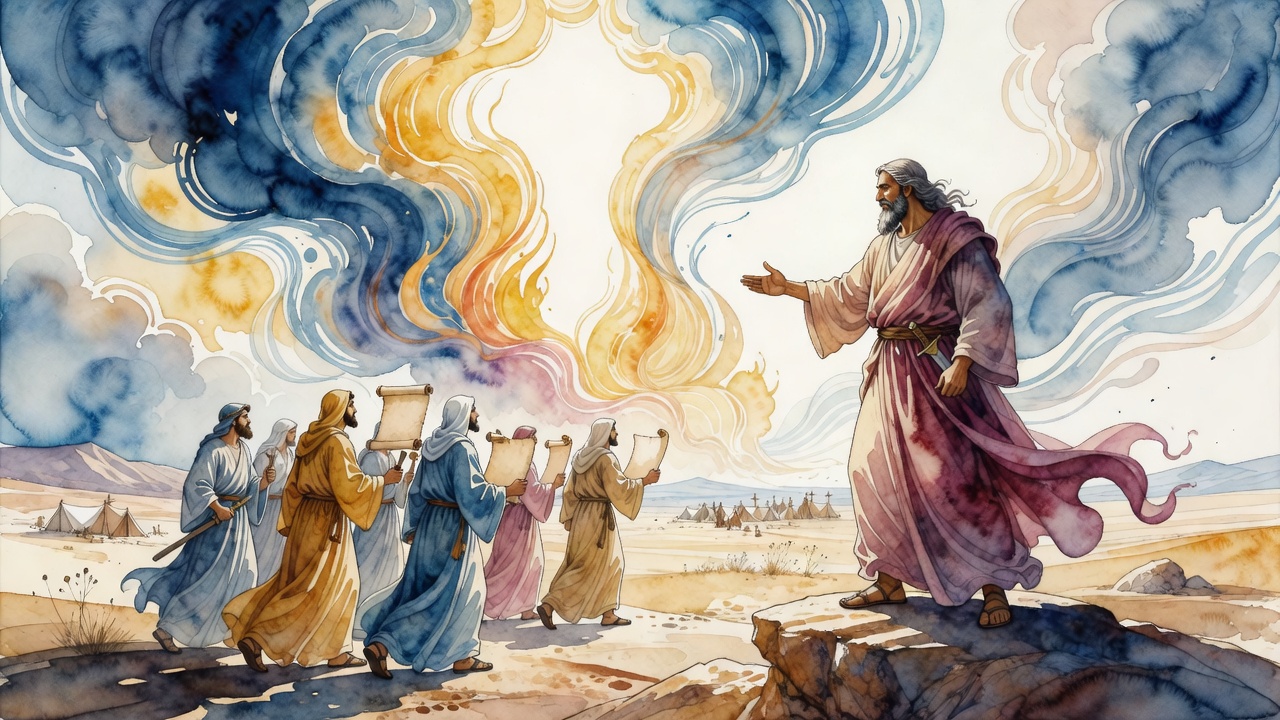
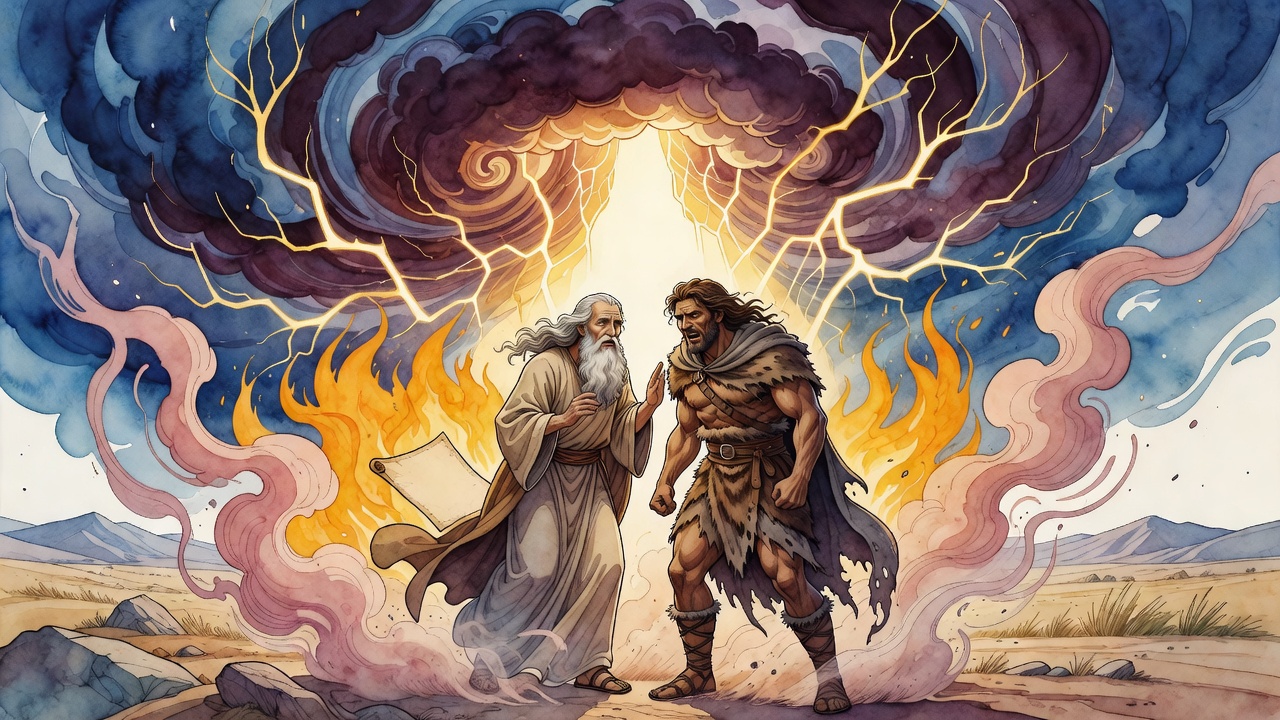
God spoke directly to Isaac. The tradition records the words without apology: "to my enemy, you say, what shall I do for you, my son?"
God called Esau an enemy. Not a disappointment. Not a wayward son. An enemy. The word landed on a father who had spent decades refusing to see it. Isaac had loved this son for the venison in his mouth, for the smell of the field that clung to his clothes, for the rough open largeness of him that the quiet tent-dwelling brother never had.
The Father Who Pushed Back
Isaac pushed back. He said: "does Esau not deserve credit for the way he honors his parents?" He had been watching Esau for decades. He had seen the hunter come home with the kill across his shoulders and cook the game himself and carry it in to his father's couch. He had seen the questions Esau asked about how to tithe salt and straw, the questions of a son performing piety. He had seen the whole careful performance of filial devotion that Esau put on inside the tent while doing everything he wanted the moment he was out of his father's blind sight.
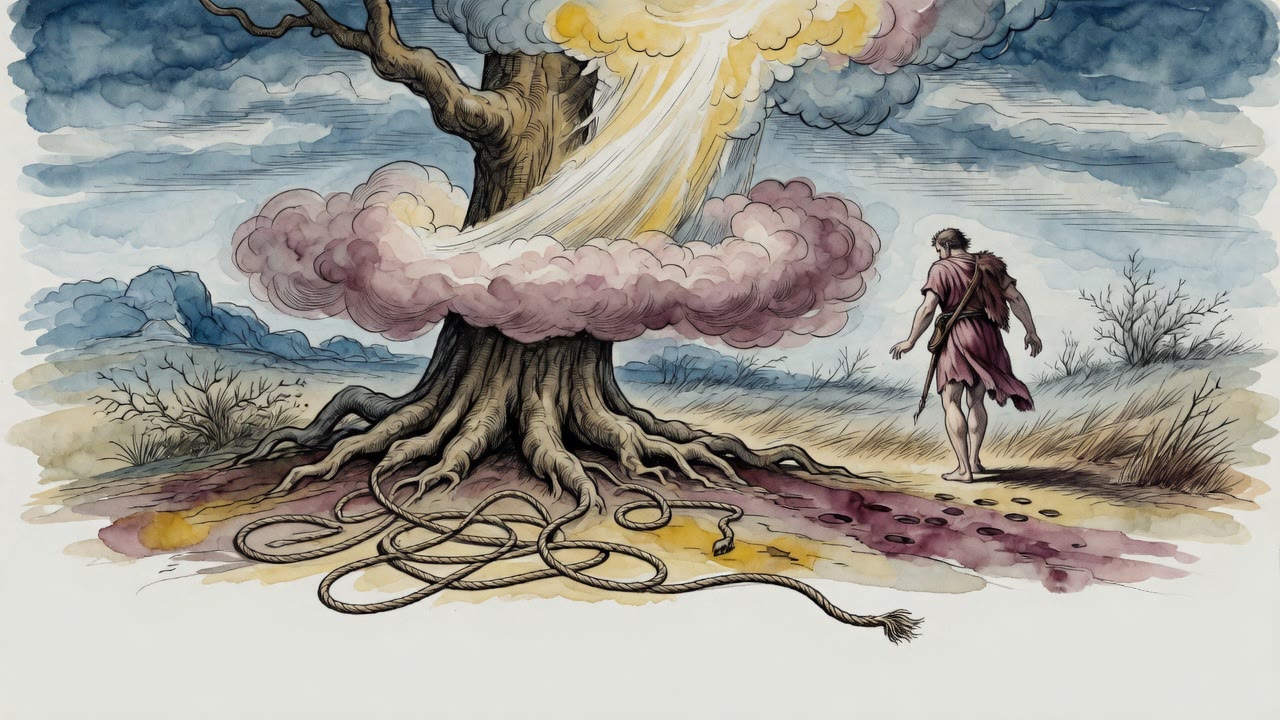
God's answer carried prophecy forward into the future. In the land of uprightness, God said, Esau would deal wrongfully. The honor paid at his father's couch would not hold. His descendants would stretch their hand against the Temple itself, against the dwelling-place that mattered more than any field Isaac could bless.
The Deal Isaac Struck for His Son
Isaac's response was not surrender. He had been rebuked, and he acknowledged the charge, but he was still a father and he was still negotiating. He said: "then let Esau enjoy this world, so that he might not behold the dwelling-place of the Lord in the world to come."
It was a remarkable bargain, struck by a blind old man who had nothing left to give and gave it anyway. He was not asking God to change Esau's judgment. He was asking for something more limited: give him this world and let the next world belong to Jacob. Give him the material portion, the sword and the land and the political power his hands could close around, and let what mattered for eternity go where it was already going.
The tradition does not record God agreeing or disagreeing. It records Isaac making the offer into the silence. What happened afterward in history, Esau's descendants and what they did to the Temple, suggests that the terms of the arrangement were honored, including the cost Isaac paid for accepting them.
← All myths