Esau, Pharaoh, and Haman Each Plot to Kill the Last Jew
Esau waits for his father to die. Pharaoh counts a swarming people. Haman seals a letter to kill every Jew in one day. Each plot is smarter. Each fails.
Table of Contents
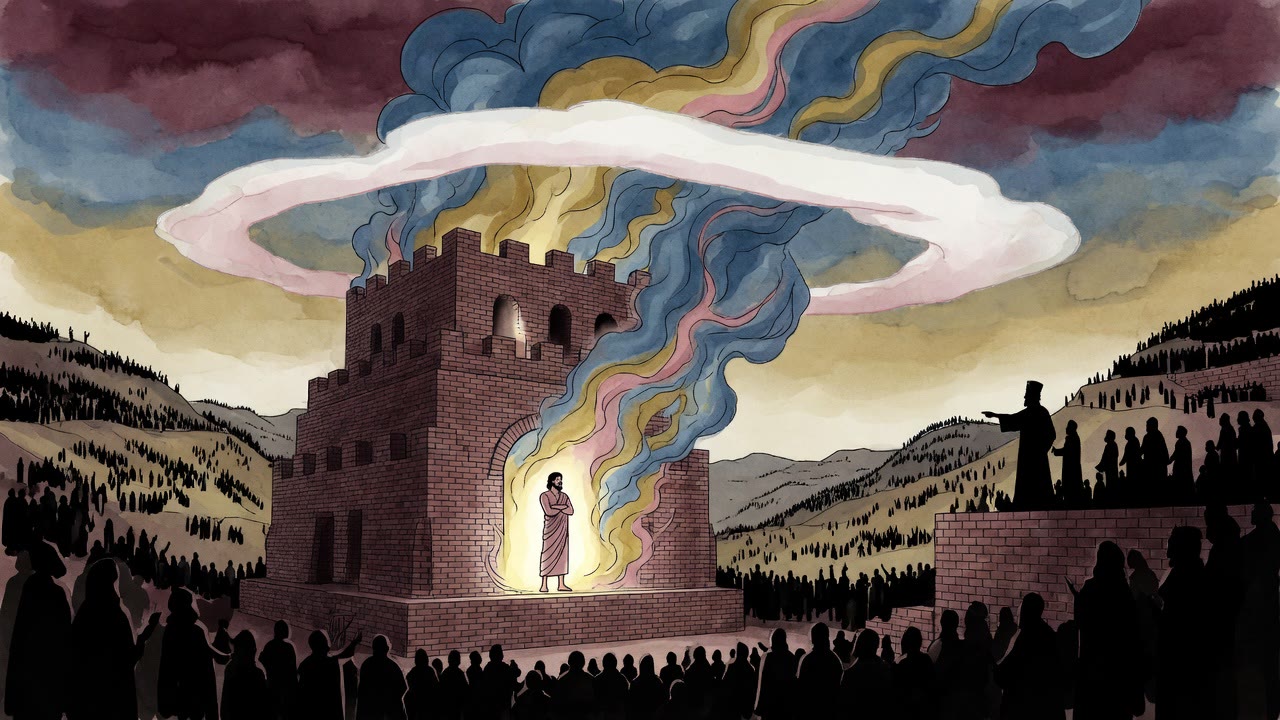
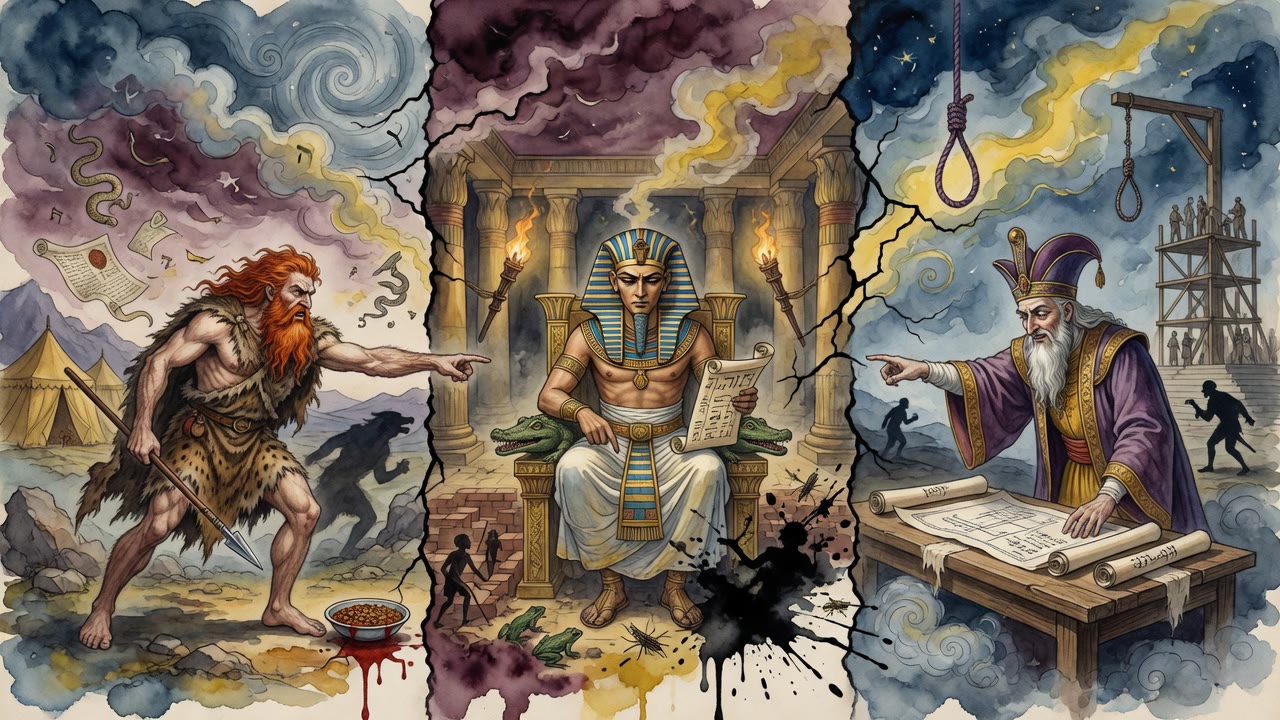
Picture a single warrior planted in a doorway, sword loose in his hand, the only thing standing between a country and the men who want it. The invaders gather at the treeline and understand, all of them at once, that the walls do not matter and the gates do not matter. Only the warrior matters. Kill him, and the land falls open like a split fruit. So they stop talking about the country. They start talking about the man.
 Click for full size
That is how the plotters against one family always begin. Not with armies. With a council. With chairs drawn close and voices lowered and a diagram of the single throat that must be cut.
Esau Sits in the Dark and Studies a Murder
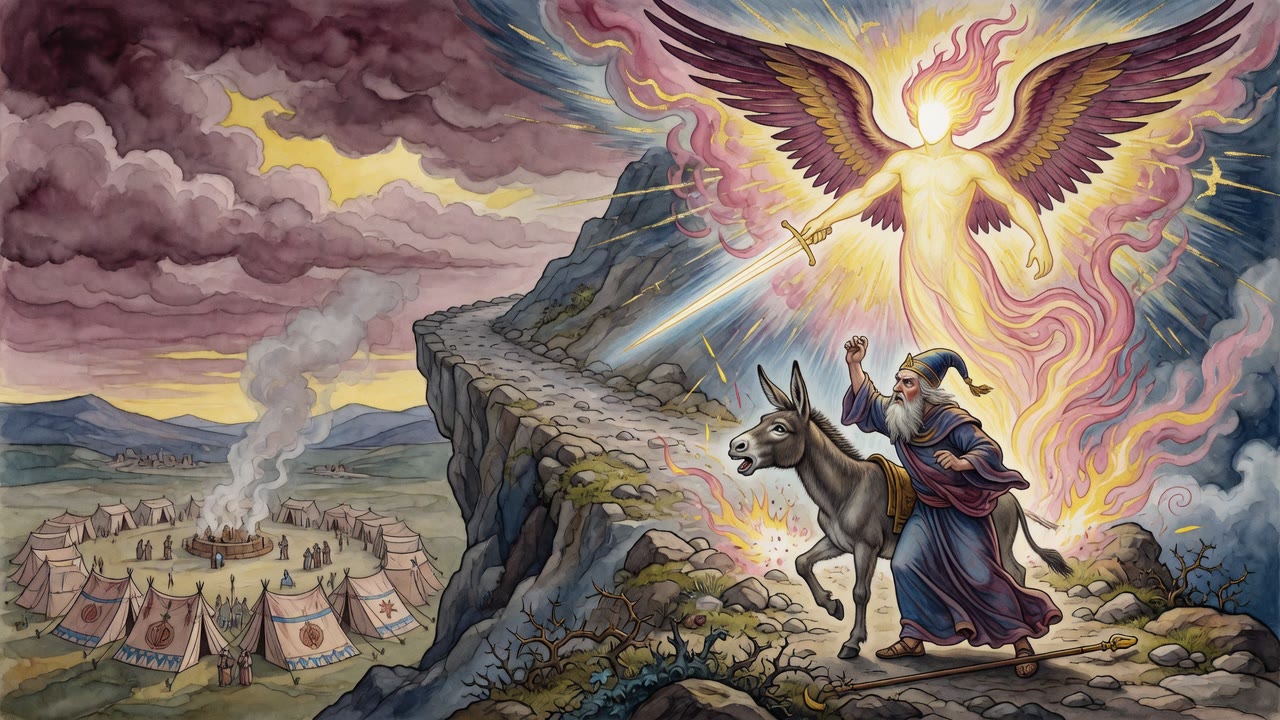
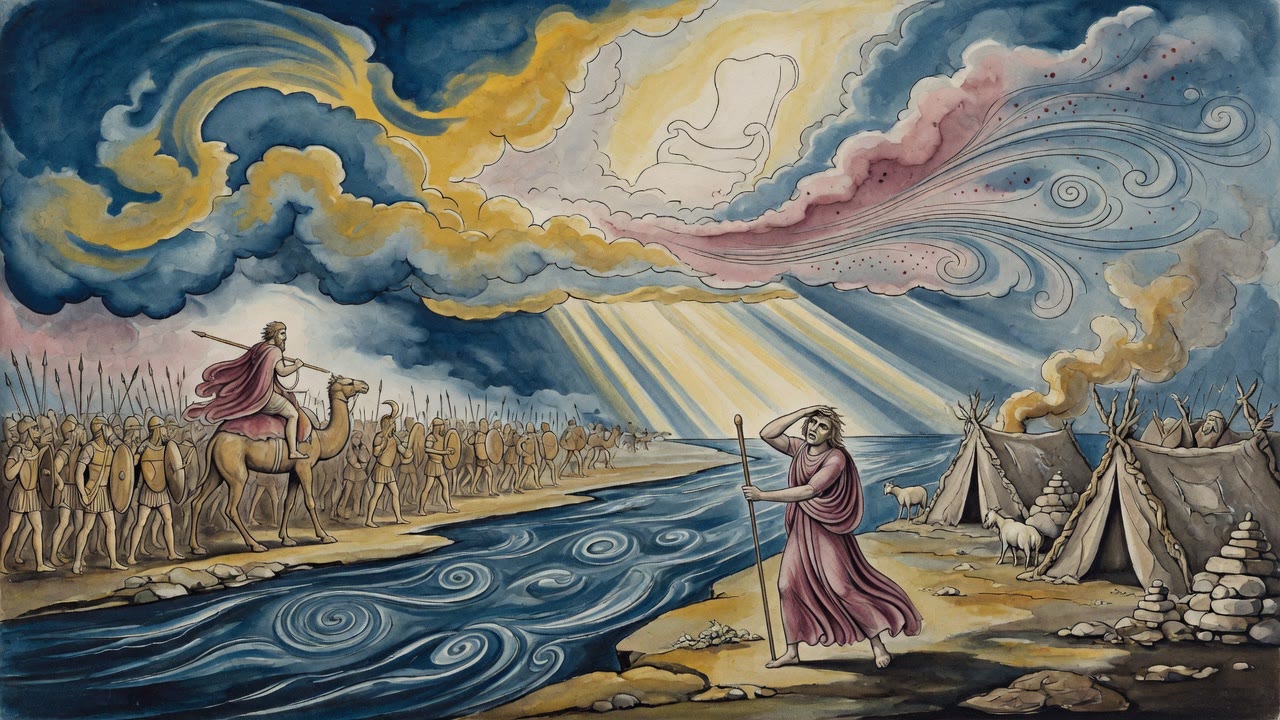
The first of them needs no council at all. Esau sits alone in Canaan, turning over a wound that will not close. His father Isaac, blind and trembling, had laid hands on the wrong son. The blessing went to Jacob, smooth where Esau was rough, quiet where Esau was loud, and the words that came down on Esau instead were a sentence: by your sword you will live, and your brother you will serve (Genesis 27:40).
Esau does not weep over it twice. He calculates. He reaches back to the oldest killing of all, the field where Cain struck down Abel while their father still walked the earth. Esau sees the flaw in it the way a craftsman sees a crooked joint. Cain killed too soon. Adam was alive, able to father another son, and so the line simply continued through Seth and the murder bought nothing. Blood spilled, and the family grew back over the wound like bark.
Esau will not be a fool like Cain. He will wait. Let Isaac die first, of old age, in his own bed. With no father left to make another heir, and Jacob in the ground beside him, the line ends in one motion and stays ended. It is patient. It is cold. It is, he is certain, perfect. So Esau keeps threatening, and waits, and the waiting is the gift. Jacob uses the years to leave, to marry, to grow into a nation that no longer fits inside a single throat.
Pharaoh Counts a People That Will Not Stop Multiplying
Centuries pour through, and the family Esau meant to end has become a tide. By the time the throne of Egypt turns its attention to them, they have multiplied through four hundred years of slavery and bondage, swarming in the brickyards, filling the land.
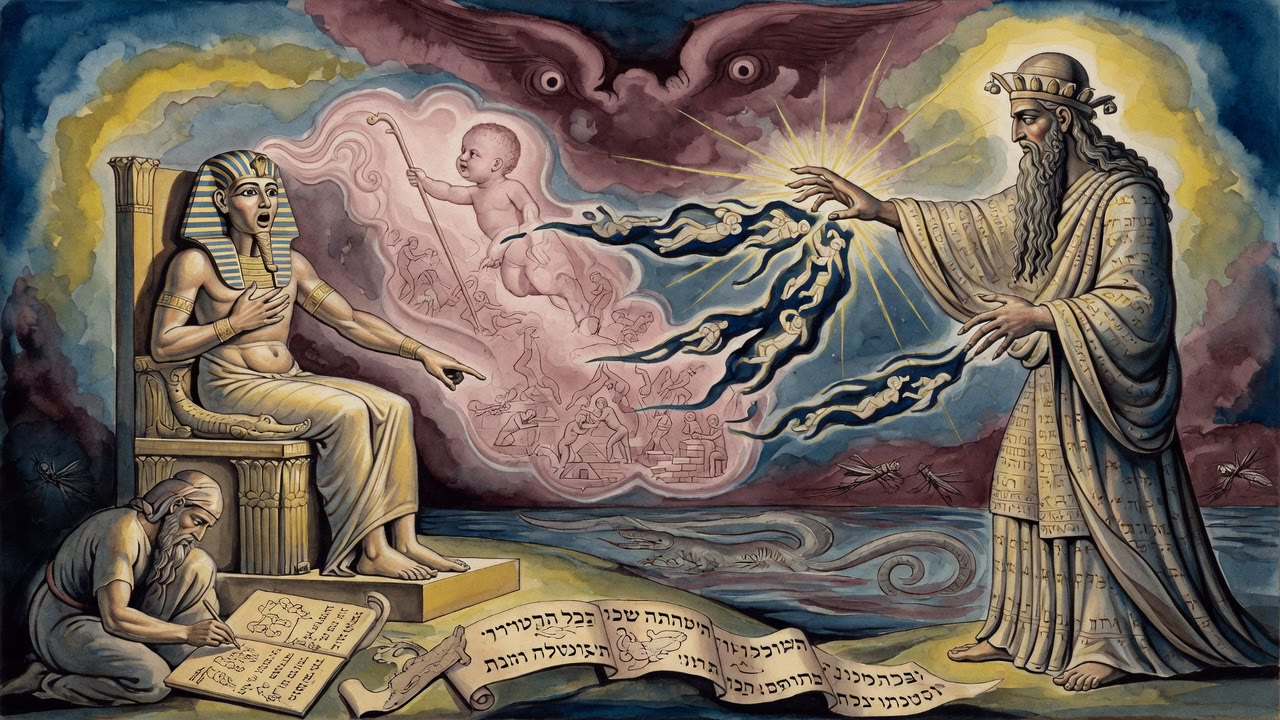
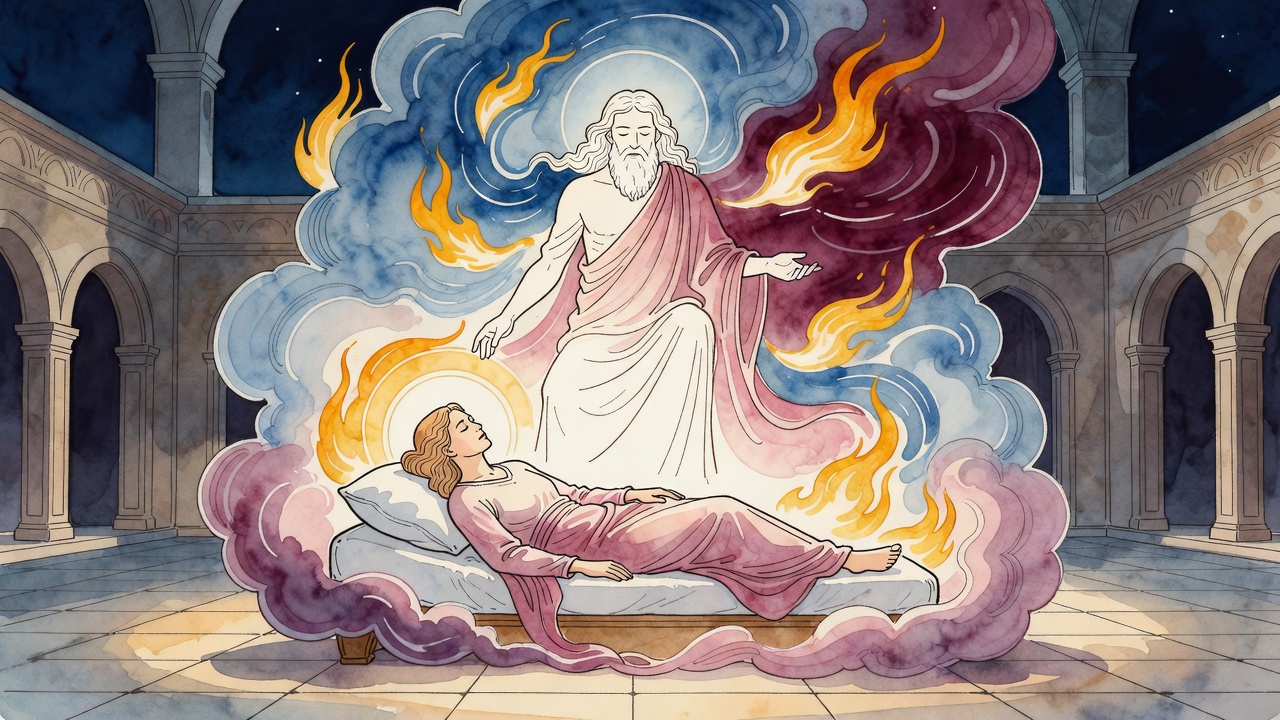
This time there is a council. Pharaoh calls his advisors and they look at Esau's error and improve on it. One man is impossible to kill cleanly. A whole people is harder. So they will not try to erase everyone. They will bleed the future quietly, drowning only the boys, taking the sons, leaving the daughters and the laboring men whose backs they still need (Exodus 1:22). It is efficient. It keeps the workforce and strangles the line in the cradle.
Therefore the midwives stall, and the river that was meant to be a grave carries one basket the wrong way, into the arms of the palace itself. The plan that spared the useful and killed the small raises its own destroyer at the king's own table.
Haman Reads Every Failure Before His Own
The next man to try has studied all of them. Haman the Amalekite carries an inheritance of rage older than his own life. His people were the ones Saul cut down from Havilah to Shur, more than five hundred thousand of them, men and women and children, and Haman has never set the grudge down. Worse, the Jew who will not bow to him at the king's gate, Mordecai, descends from that same Saul.
The grudge sharpens into something administrative. Mordecai, sitting at the gate, overhears two of the king's chamberlains, Bigthan and Teresh, plotting to behead Ahasuerus and ship his head to a rival king at war with Persia. Mordecai sends word through Esther. The two are hanged. They had been Haman's own counselors, and their bodies swinging there do not cool his rage. They feed it.
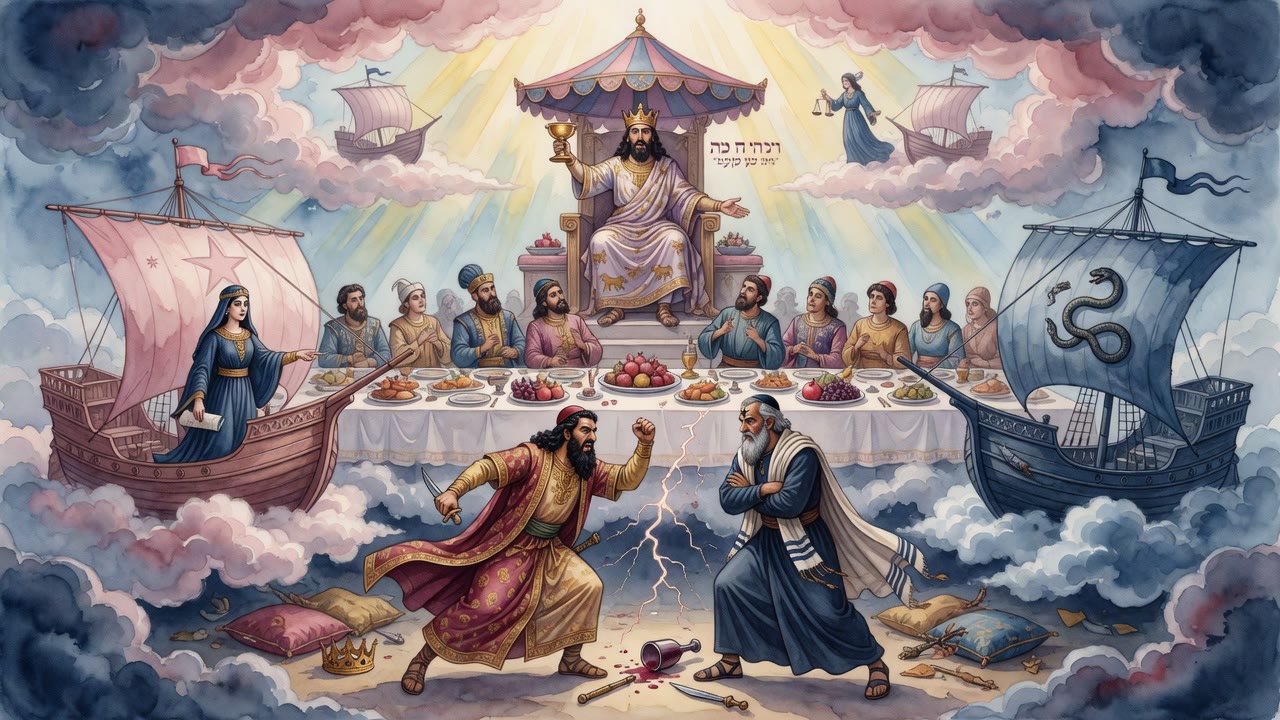
So Haman sits down and writes the most thorough death warrant in the long history of the councils. He gathers the consent of all the prefects, the governors, the rulers, all the kings of the East, and seals the letter with the ring of Ahasuerus itself. Inside it he runs the ledger of everyone who failed before him, and he names their mistakes like a man grading lesser students.
The Letter That Corrects All the Others
Pharaoh, Haman writes, killed only the males, and so a remnant survived to walk out free. Esau wanted Jacob dead but meant to keep the sons alive as servants, and the servants outlived the master. Amalek harried the people but only struck the stragglers at the rear, the weak and the tired, and left the body of the nation intact. Nebuchadnezzar dragged them into exile but then raised some of them up to power inside his own court. Sennacherib carried them off to a land much like their own, where they took root and did not die.
Each of them, Haman sees, kept a door open somewhere. He will keep none. He likens this people to a great eagle whose wings once spread over the whole earth until the Medes broke them, and now, he warns, the broken wings are growing new feathers. So the writ is total: to destroy and to slay and to blot out all the Jews, young and old, women and children, on one single day, so that there be no seed left in the world.
One day. No remnant. No useful survivors, no servants, no exiles promoted to office. The flawless version at last. And the gallows Haman builds for the man who would not bow becomes the beam he hangs from, and the day he chose to end a people becomes their feast.
The Council at the Edge of Time
There is one more named in the ledger, not yet arrived. Gog and the land of Magog, the last muster, the final council that gathers at the rim of history with the whole accumulated wisdom of every plotter who came before. Esau's patience, Pharaoh's arithmetic, Haman's totality, all of it studied, all of it sharpened, all of it aimed once more at the single warrior in the doorway. The throne in heaven laughs at the gathering (Psalm 2:4), because the council has met before, under other names, and the warrior is still standing.
← All myths