Esau Had No Fear of Heaven and Jacob Knew It
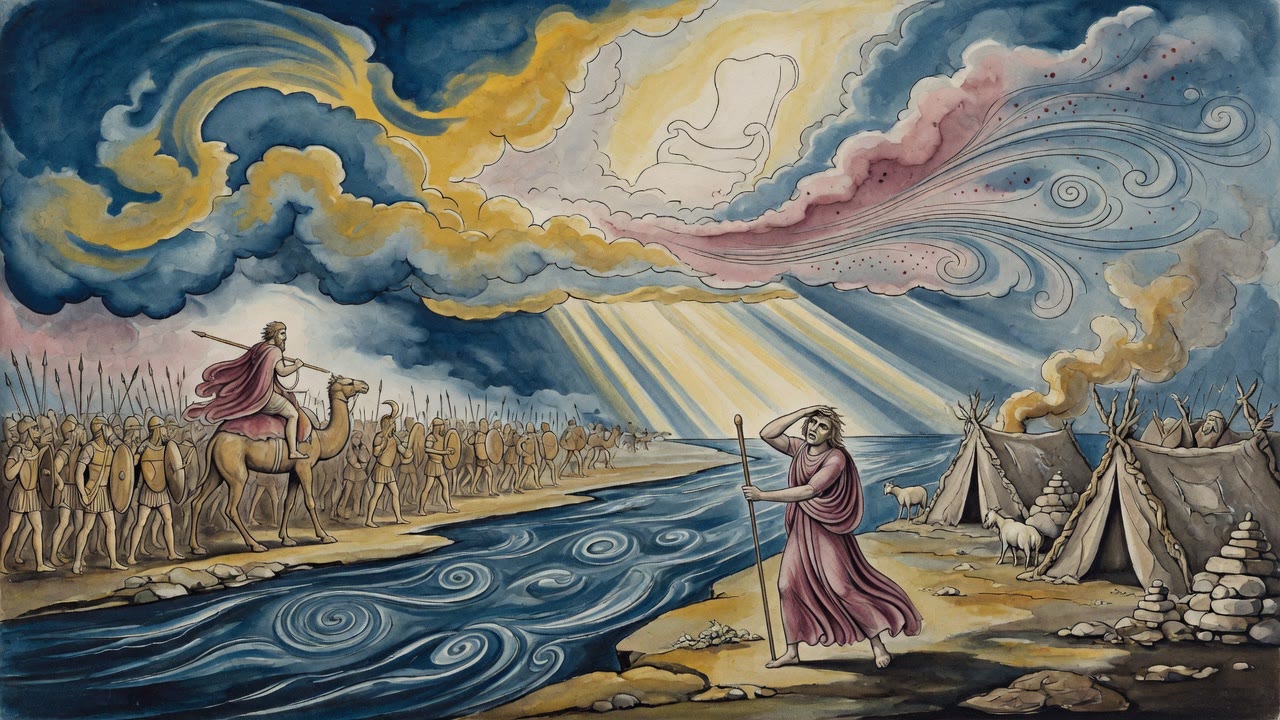
Jacob survived Laban, crossed the Jordan alone, and built two camps. Then he heard Esau was coming with four hundred men and was genuinely afraid.
Table of Contents
 Click for full size
The Fear That Made No Sense
Jacob had wrestled an angel through the night and come out walking, injured but standing, with a new name. He had survived twenty years of Laban's manipulations. He had built camps of wives and children and flocks out of nothing. He had crossed the Jordan with a staff and returned with two groups of people and animals large enough to split into two companies as a defensive measure.
None of it helped when the messenger arrived. Esau was coming with four hundred men. Jacob was greatly afraid and distressed. The Torah uses both words because one was not enough.
The rabbis asked what specifically terrified him. It was not the numbers. Jacob had resources and had shown he could act decisively under pressure. The fear was something else, and the tradition identified it with precision.
The Principle That Governed the Fear
Do not fear a ruler, the tradition said. Fear a man who has no fear of heaven.
The principle was axiomatic. A ruler operates within constraints: political calculation, reputation, the limits of what his court and people will accept. Even a harsh ruler thinks about consequences. But a man with no fear of heaven has removed the deepest constraint of all. He does not believe the universe holds him accountable. He does not limit himself by any authority above the one he holds in his own hands. He does whatever he is capable of doing, and capability is the only boundary.
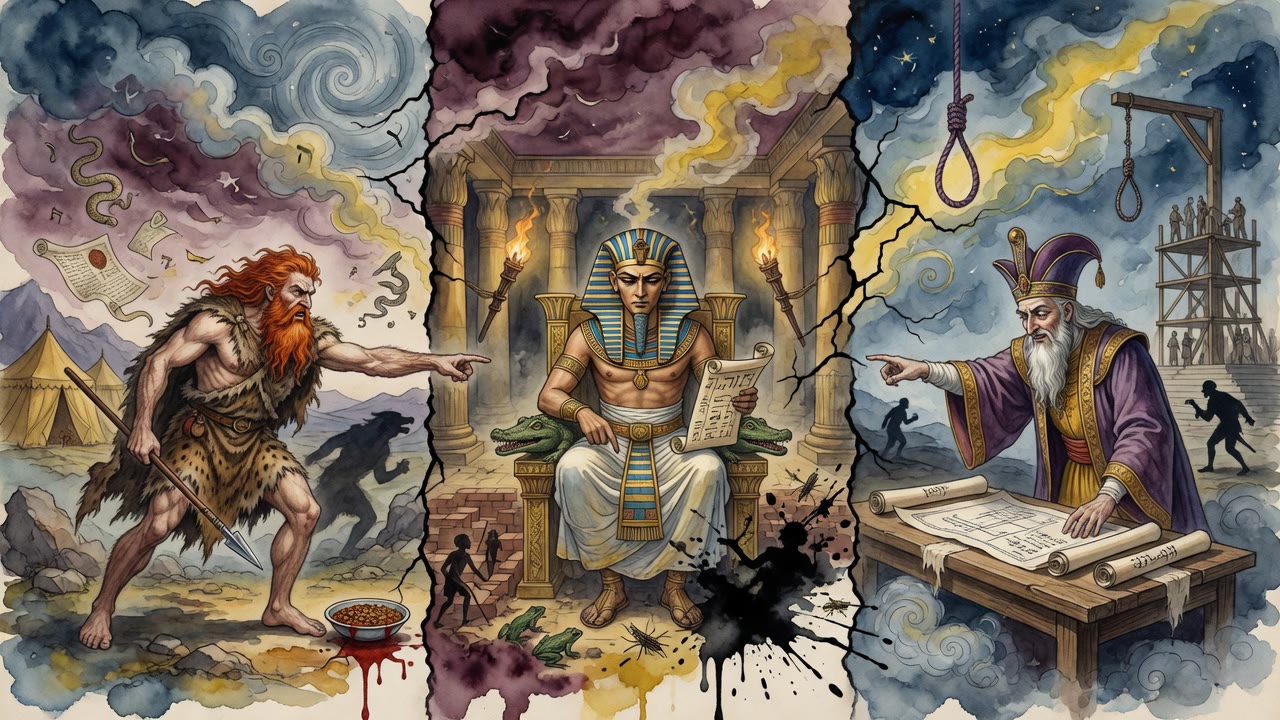
Esau was that man. He had sold the birthright for a bowl of lentil soup, which the tradition read not as a transaction but as a statement about what he valued. The birthright carried the covenant relationship, the line of Abraham, the promise of the land, the standing before God that Isaac's household held. Esau traded all of it because he was hungry at that particular moment. A man who makes that trade has already told you what he thinks of invisible obligations.
The Evidence of a Life
Esau had married Hittite women who made life bitter for Isaac and Rebekah. He had planned to kill Jacob once their father died, and Jacob had fled because of it. He had spent the years of Jacob's absence building a following: four hundred men who answered to him and no one else. A private army, in the ancient sense, is not a social club. It is a statement about the kind of authority a man intends to exercise.
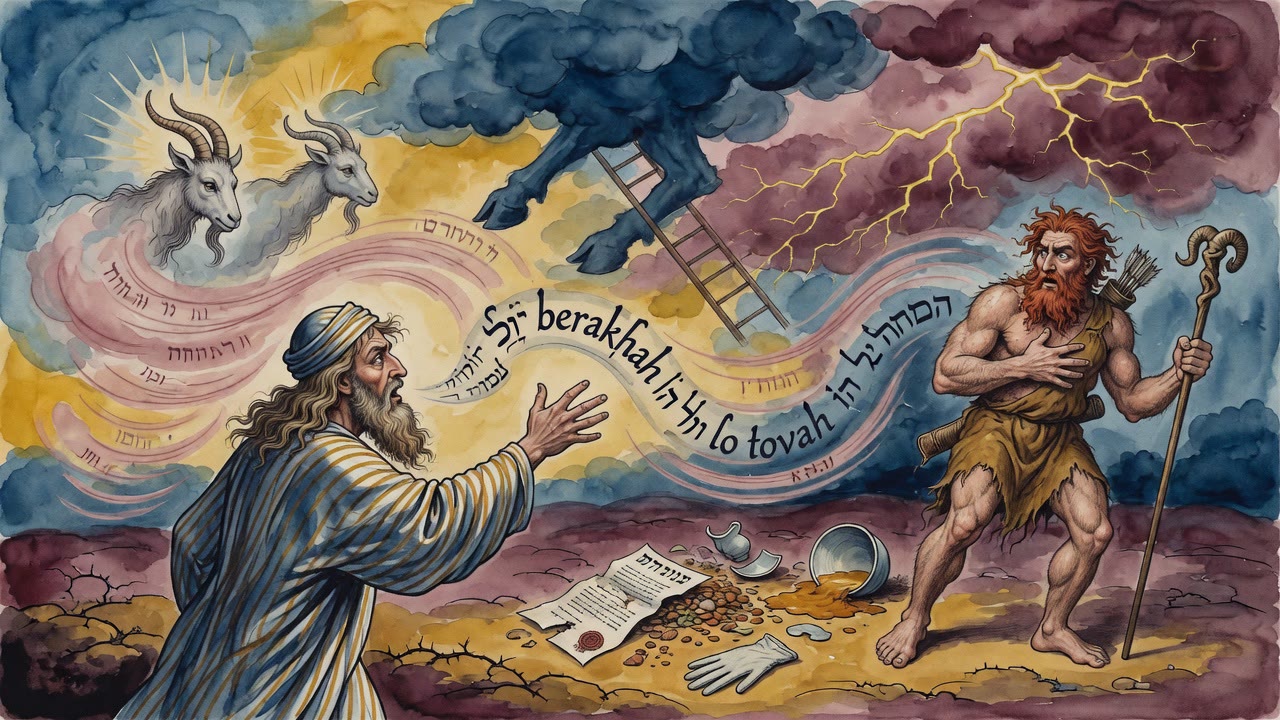
Jacob divided his camp into two because if Esau struck one group, the other might escape. He sent gifts ahead, wave after wave of them, each group of animals announced by servants before it arrived, each announcement structured to soften Esau's anger incrementally. He prayed. He wrestled the angel. He still did not know what Esau would do when they finally stood face to face, because a man with no fear of heaven is genuinely unpredictable. There is no calculation that reliably restrains him.
When Esau Ran to Meet Jacob
Esau ran to meet his brother. He fell on his neck and kissed him. They wept together. Jacob introduced his family in the careful, formal language of a man who is still not sure if peace has actually arrived. He called the children a gift from God. He pressed the gift animals on Esau until Esau accepted them, because Jacob understood that acceptance of a gift is a kind of contract, and he wanted something between them that had the structure of an obligation.
The tradition saw the embrace in complicated terms. Some read Esau's kiss as genuine, a moment when fraternal feeling overrode old resentments. Others read the encounter as one that could have gone differently. Jacob's preparations had been correct. The fear had been correct. The outcome was not inevitable. It had been managed, carefully, by a man who understood precisely what he was dealing with.
Jacob, after the encounter, did not go south with Esau as he had offered. He went to Succoth. He had made it through, and he was not going to press his luck by sharing a road with four hundred men under the command of a brother he still could not fully predict.
← All myths