6 texts
Esau in Jewish mythology is documented here through 6 source passages from 2 distinct source names represented in this theme. The strongest clusters come from Rabbinic Midrash (6), with frequent witnesses in Yalkut Shimoni on Torah (4) and Yalkut Shimoni on Nach (2). These texts preserve how Jewish writers, sages, and mystics described esau across biblical interpretation, rabbinic storytelling, medieval compilation, and kabbalistic teaching.
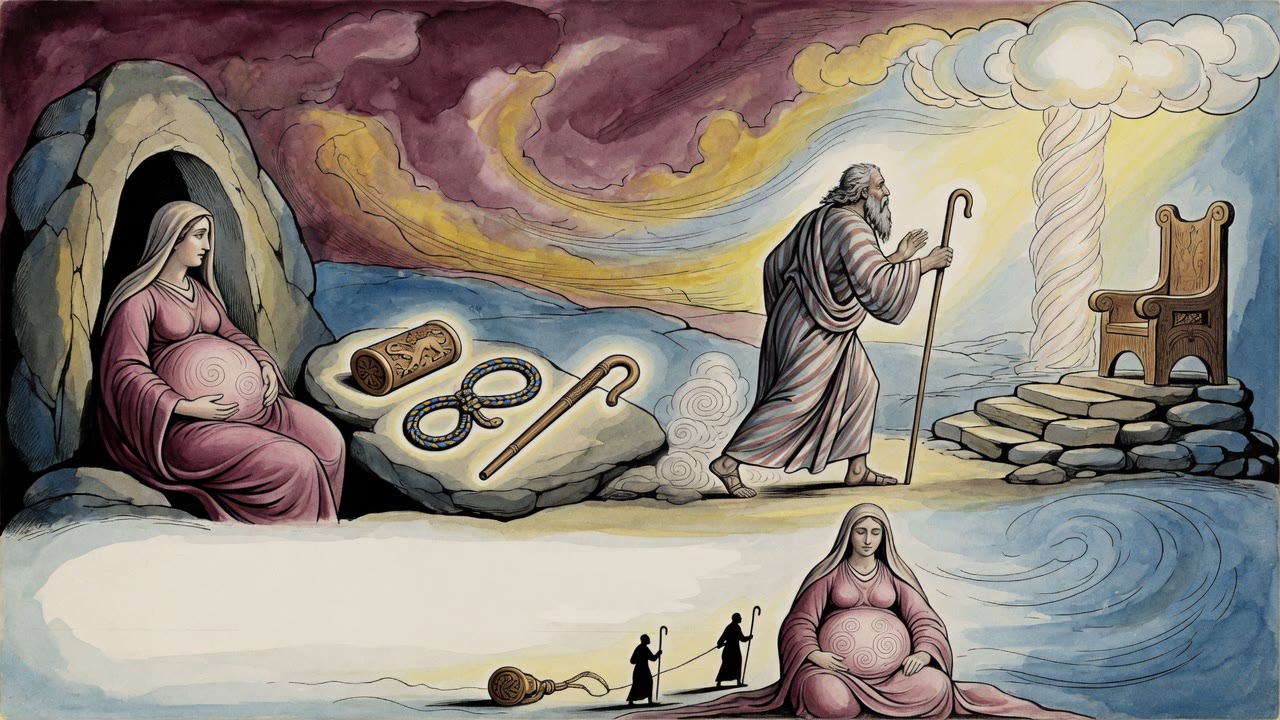
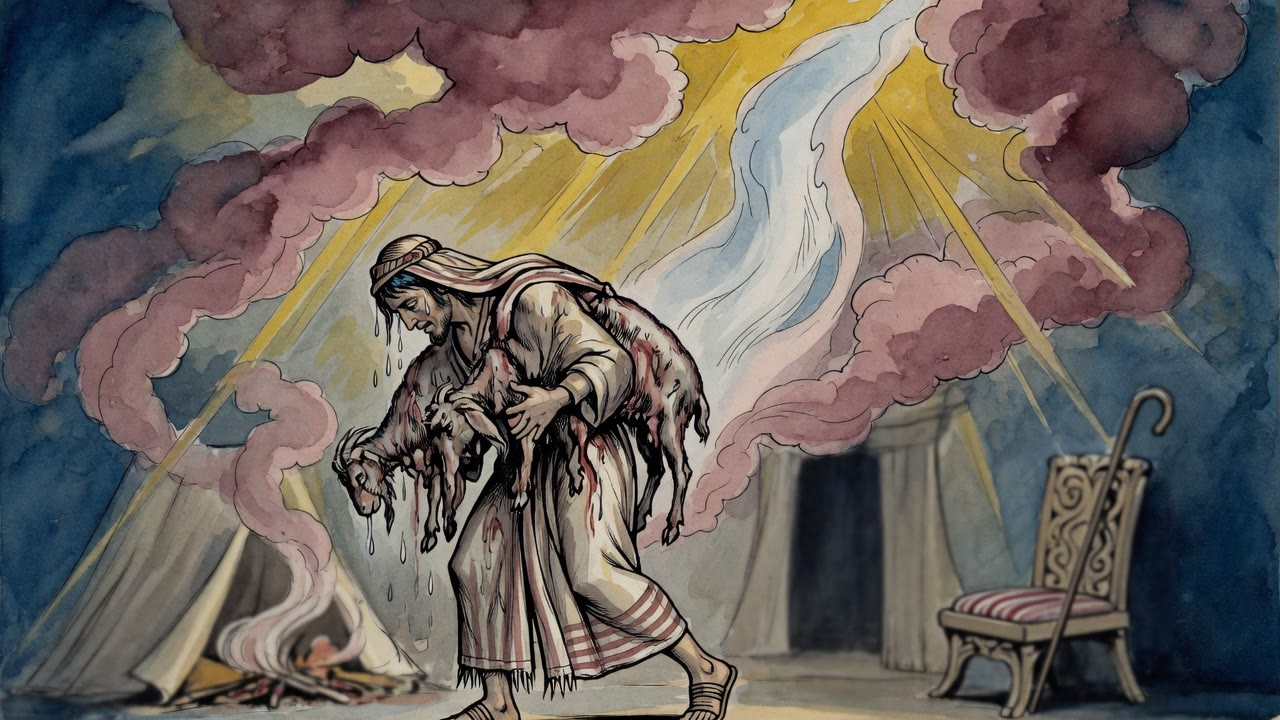
This page is a topic hub, not a single article. Use it to compare how different Jewish sources treat esau: where the theme appears in narrative, how it changes across source families, which figures or symbols recur, and which passages are most useful for citation. Representative entries include The Gifts Jacob Gave Esau Will Return to the King Messiah, Jacob Never Went to Seir Until the End of Days, Why Jacob's Children Descended and Esau's Did Not, The Great Man Among the Anakim Adam and the Patriarchs, and Joseph and Esau as the Mirror of Two Opposite Lives. For synthesized anthology narratives, start with Creation Needed Measuring Rods and Human Restraint, The Garments Adam Wore in Eden Ended Up in Rome, and Every Deer Esau Caught for Isaac Got Untied and Ran Away.
Joseph (2), Messiah (2), Redemption (2), Divine Justice (1), Jacob (1), and Joshua (1)
A simple man, no scholar, came to Rabbi Oshaya with a question shaped like a bargain. If the rabbi found his idea worth repeating, would he repeat it in public and credit the man w...
Rabbi Abbahu raises a problem that has bothered close readers of the text. Jacob tells Esau he will follow him down to Seir, the heart of Esau's territory. Yet search the whole of ...
The verse names the sons of Israel who came into Egypt, and the sages ask a sharp question. Isaac and Ishmael were brothers. Jacob and Esau were brothers. Why was it Jacob's line t...
When Joshua's account calls Hebron the home of "the greatest man among the Anakim," the sages refused to read it as praise for a mere giant. They unpacked the phrase word by word a...
The midrash sets Joseph and Esau side by side as two portraits hung on facing walls, each reversing the other. Joseph was the younger son yet earned the birthright; Esau was the fi...
Why Joshua and not someone else? The midrash answers from his bloodline. Joshua descends from Joseph, and the prophet Obadiah had already written the verdict over Esau: the house o...
Bereshit Rabbah links creation's six tools, Eve's added fence, Abraham's war, and Esau's unstable kings into one warning about order.
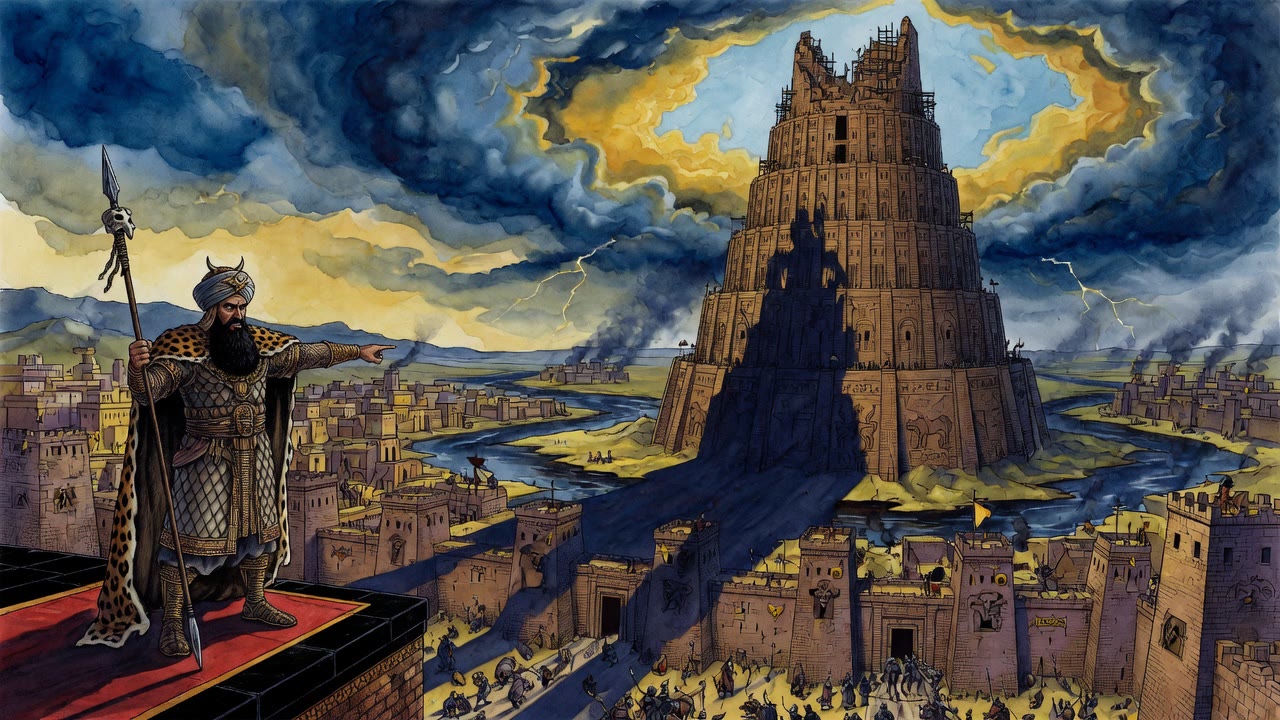
God made Adam and Eve garments of skin when he expelled them from Eden. The tradition traces those garments through Noah, Nimrod, Esau, and finally to Rome...
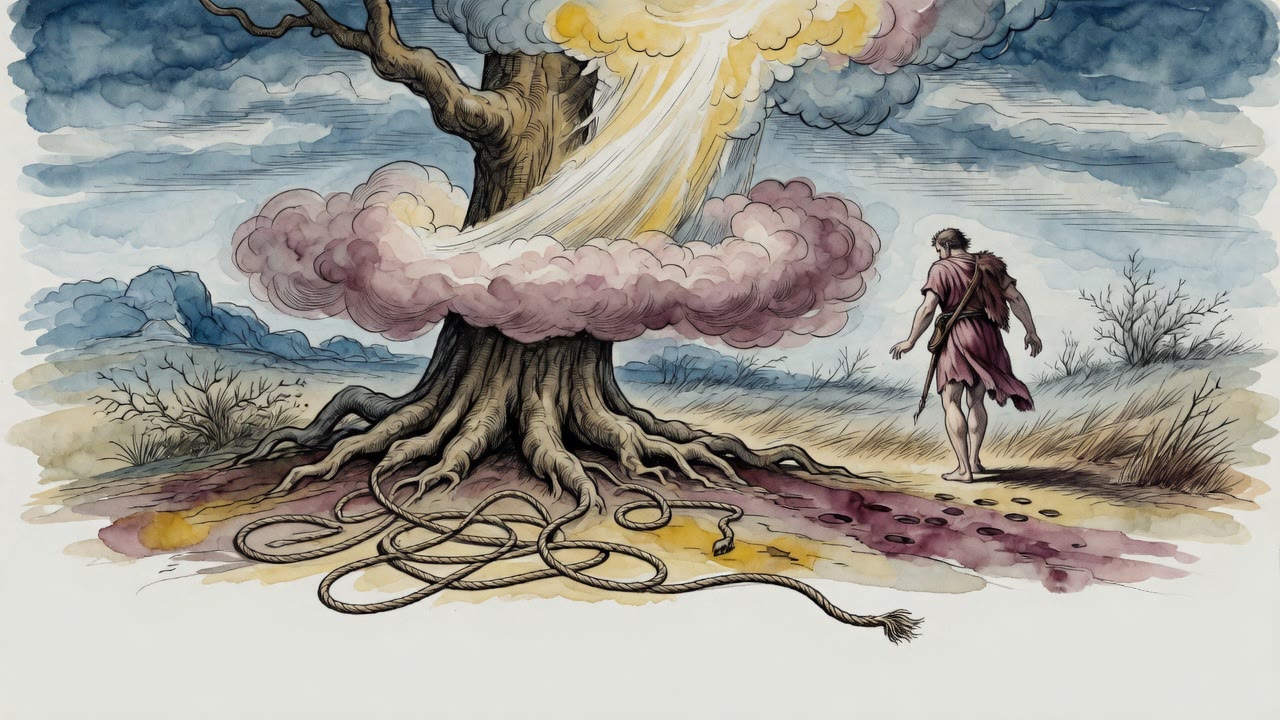
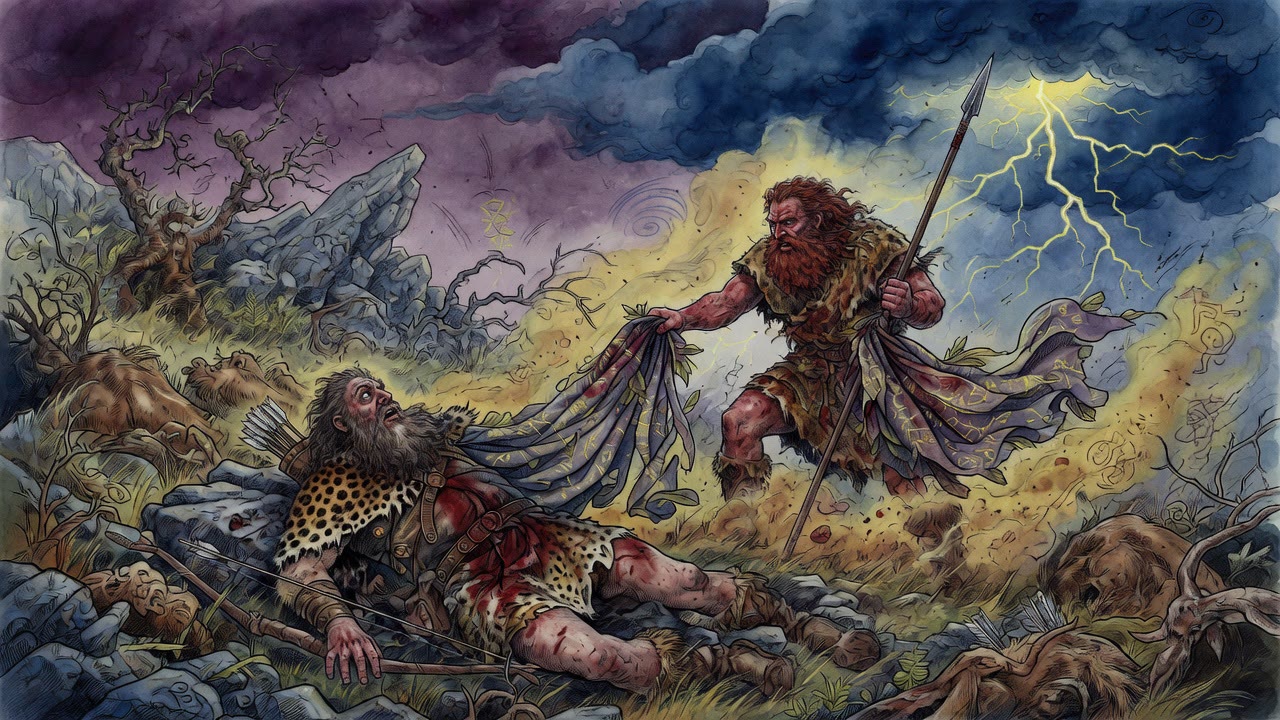
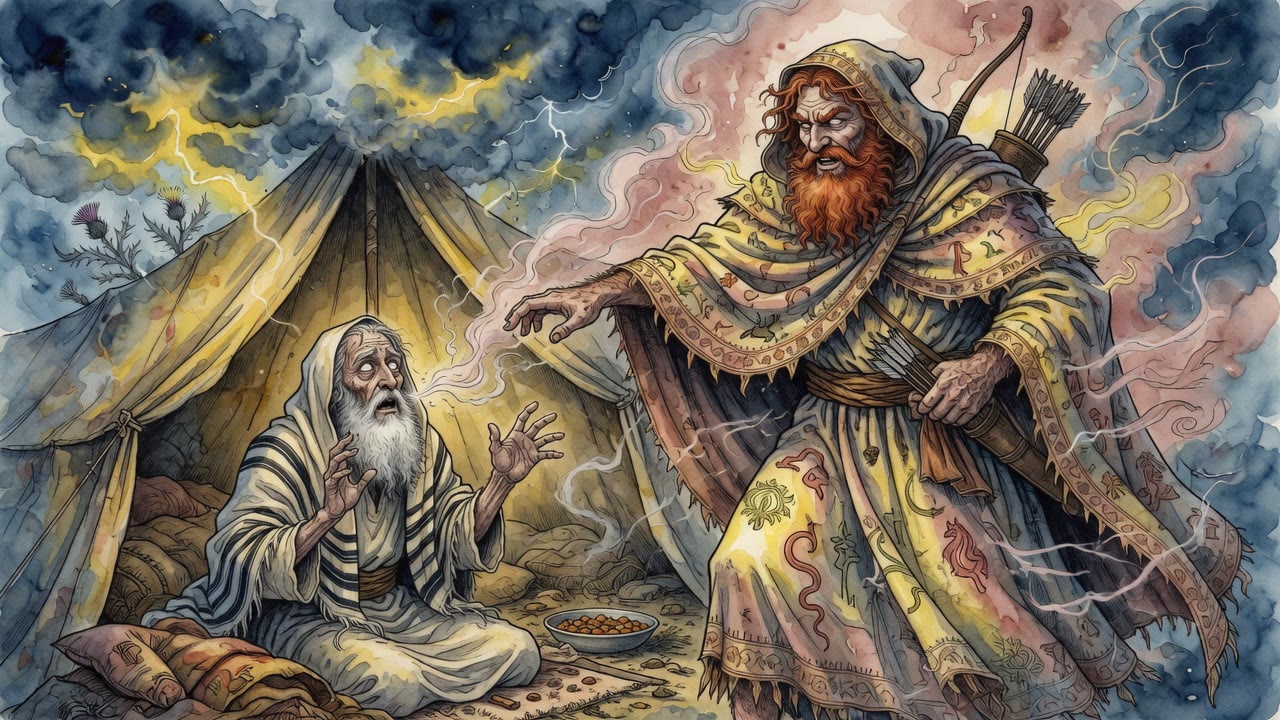
While Esau hunted game to win his father's blessing, Ha-Satan kept slipping the knots. Every deer he caught vanished from the rope.
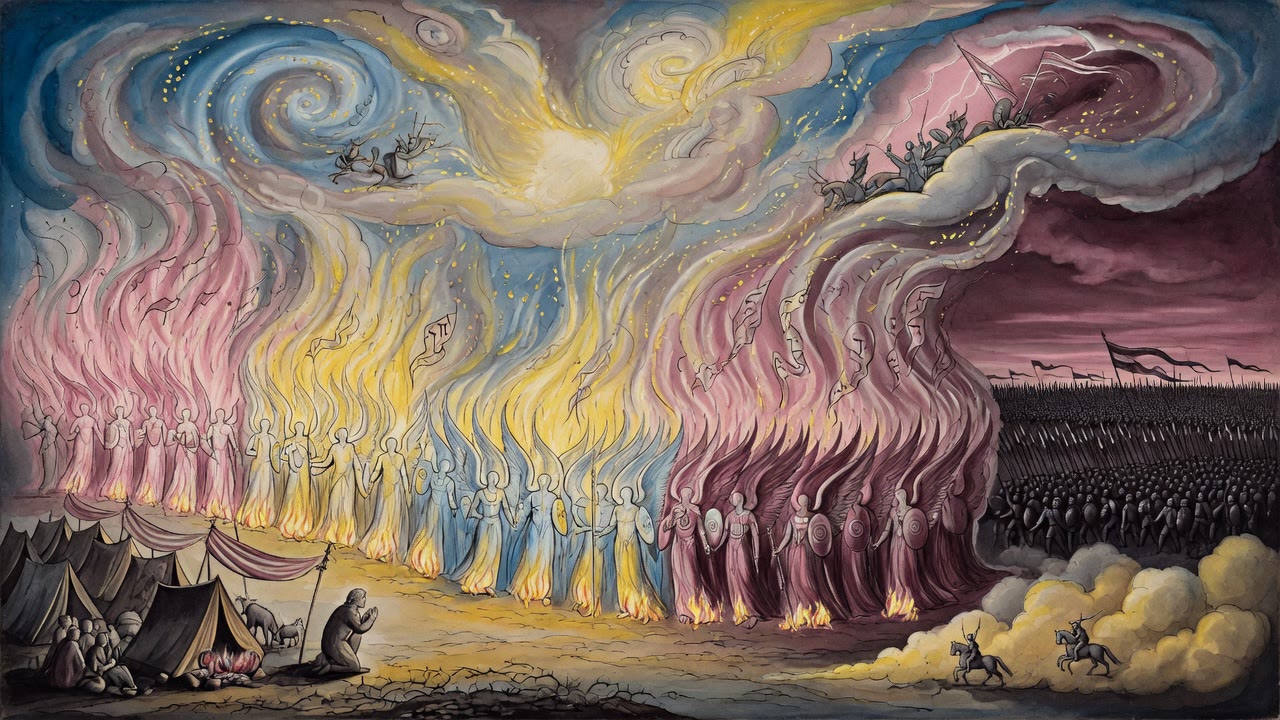
When Esau rode out with four hundred armed men to meet Jacob, he didn't know what was riding ahead of him. The Book of Jasher says God sent four angel...
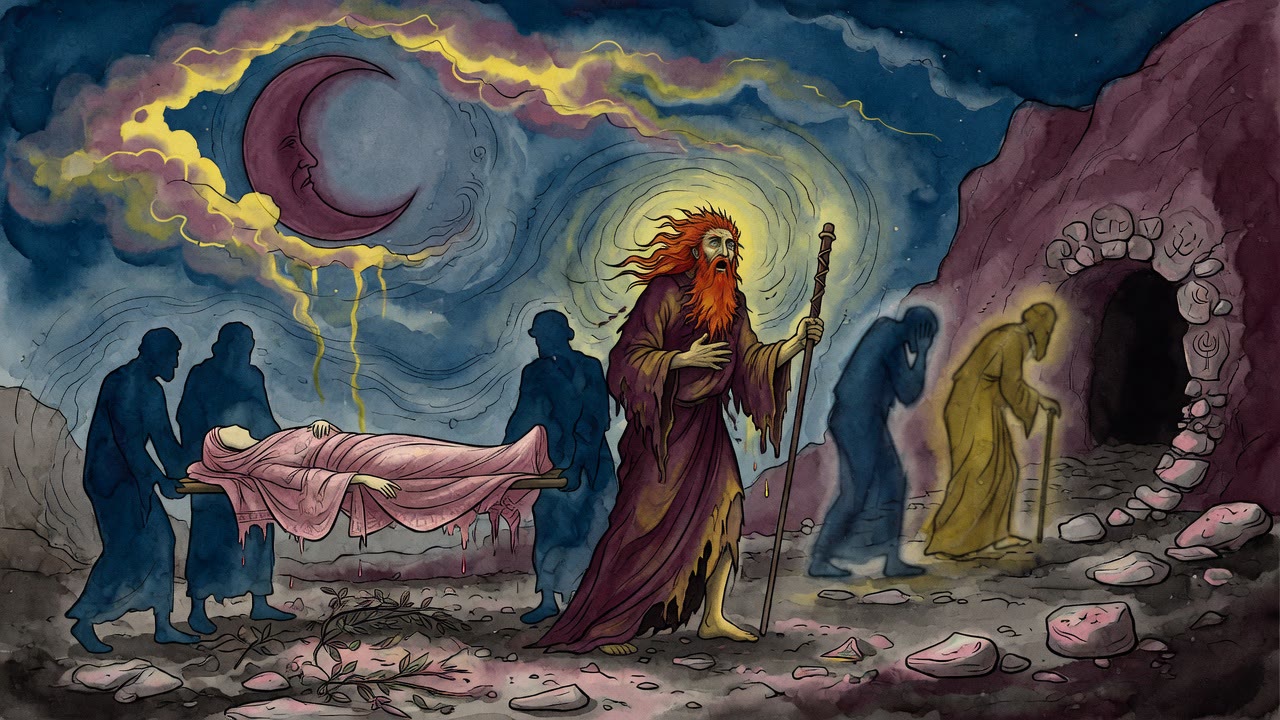
Rebekah died while Jacob was away and Isaac was blind. The family buried her in secret, fearing what Esau's presence at the funeral would provoke.
At Bethel, Jacob collided with God in prayer. But God had already promised to protect him. So why was Jacob still afraid?
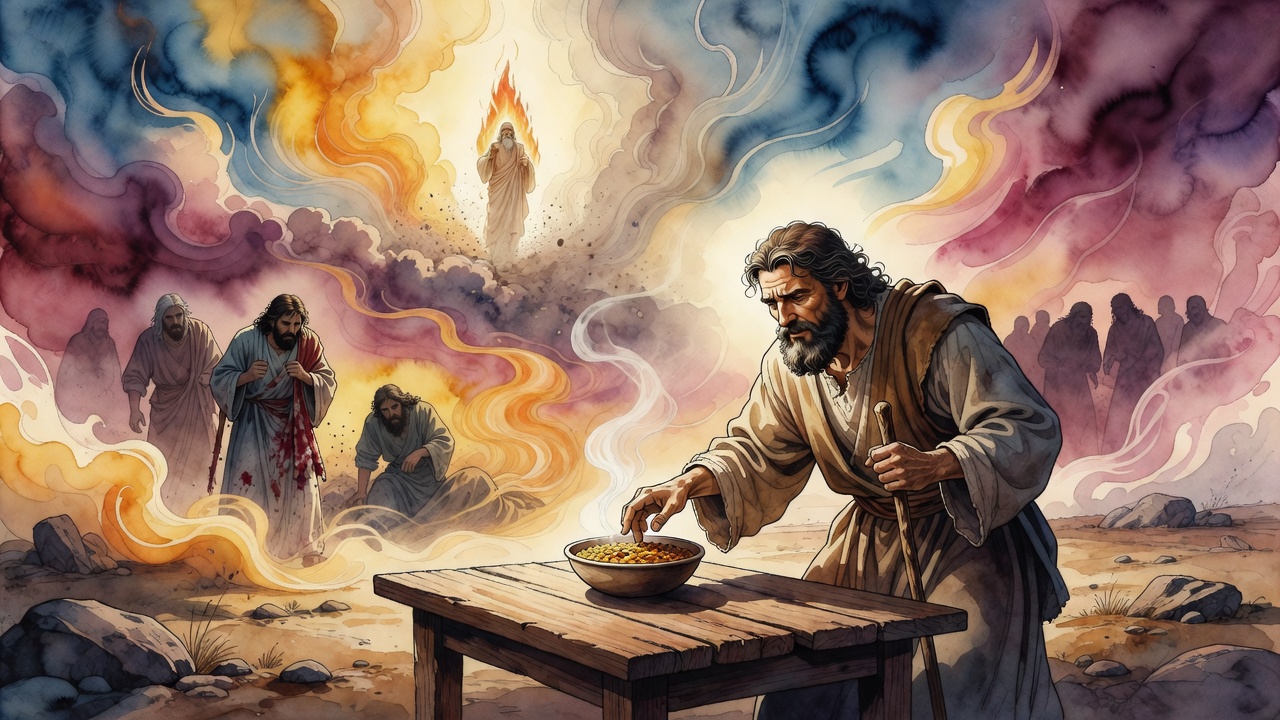
On the same afternoon his grandfather was buried, Esau sold his birthright for soup. The rabbis say that was the least of what he did that day.
The clothes that gave Nimrod power over all living things once belonged to Adam. Esau killed a king to get them - then sold his birthright the same day.
Rebekah's burial was hidden because only Esau was free to mourn her. Two texts reveal the sorrow she carried from womb to grave.
Esau never spoke his plan to kill Jacob and Ishmael aloud. Midrash Tehillim says God quoted it back to him anyway, word for word.
A set of clothes passed from Adam to Nimrod to Esau to Jacob traces a hidden thread of blessing and rivalry through the book of Genesis.
Esau sold the birthright for soup, but Bereshit Rabbah says he gave away something far greater: his right to stand before God in sacred service.
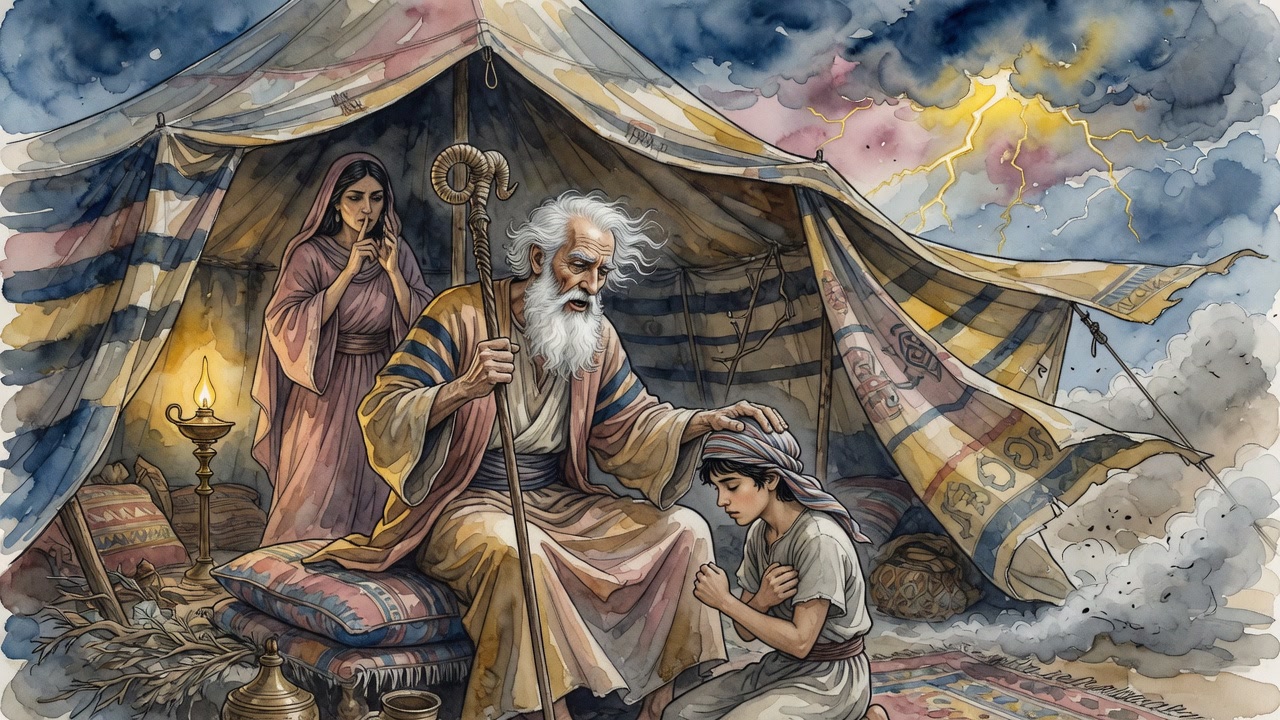
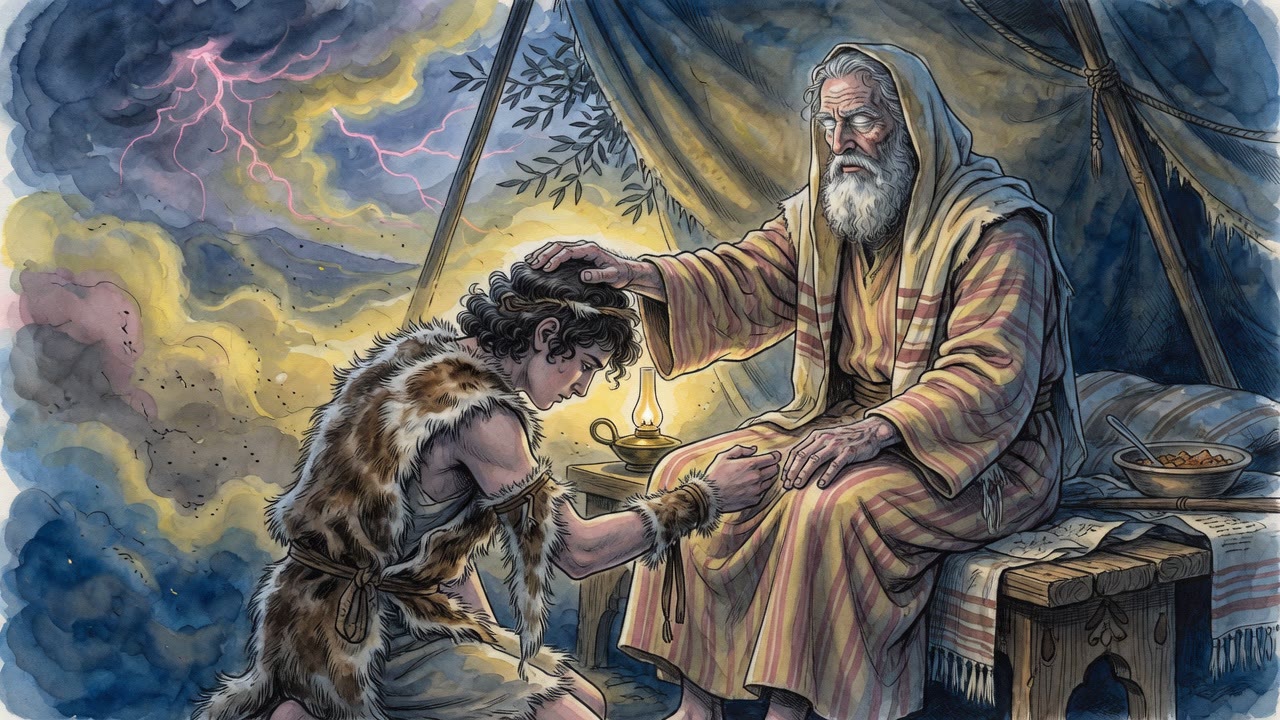
Jacob tricked Isaac into giving him Esau's blessing. What the Midrash notices is what Isaac felt in that moment, and what it cost him afterward.
Isaac was meant to live 185 years. He lived 180. Bereshit Rabbah says Esau's sins were the reason, and God mourned what the patriarchs never received.
The Torah never records Rebecca's death. The Book of Jubilees does, preserving a dying woman still working to protect the son she knew Esau intended to kill.
Esau was four hours late to claim his blessing. What he found when he arrived. How he tried to undo what was already done reveals the oldest rivalry in...
Isaac tried to comfort Esau after Jacob took everything, and God rebuked him for it. The exchange is one of the most startling in all of midrash.
Jacob needed permission before leaving the Holy Land. What he discovered at Beersheba shaped the path of the patriarchs for generations.
Adam wore them in the garden. They passed through Noah's ark, through Nimrod's hands, through Esau's shoulders, and finally onto Jacob. The rabbis traced...
The Book of Jubilees doesn't condemn Esau for selling his birthright for soup - it reveals that Abraham saw the problem decades before the bowl was even on...
Bereshit Rabbah follows Abraham from victory to fear, then through Moriah, Sarah's burial, Rebecca's kindness, Isaac's blessing, and Esau's flight.
Bereshit Rabbah follows Jacob through names, blessings, Rachel's pain, Esau's anger, and the hope that present righteousness can repair a life.
Ginzberg reads Abraham sitting at Gehenna's gates and Isaac seeing Gehinnom cling to Esau as twin pictures of how the patriarchs see across the cosmic gap.
Ginzberg reads Esau's plan to kill Isaac then Jacob and Rachel's silent gift of the wedding signs to Leah as twin pictures of hidden choices shaping history.
Leah wept so hard over her promised fate that her eyelashes fell out. What she feared, what she got instead, and what she gave the world.
Jacob locked his daughter in a chest to hide her from Esau. The rabbis say God called that an act of cruelty - and the consequences proved them right.
When Jacob counted Esau's royal line and despaired, God turned him around. What he saw behind him changed everything about how he understood his own place...
Eight kings ruled Edom and vanished before a single Israelite sat on a throne. The rabbis read their list as a prophecy, not just a genealogy.
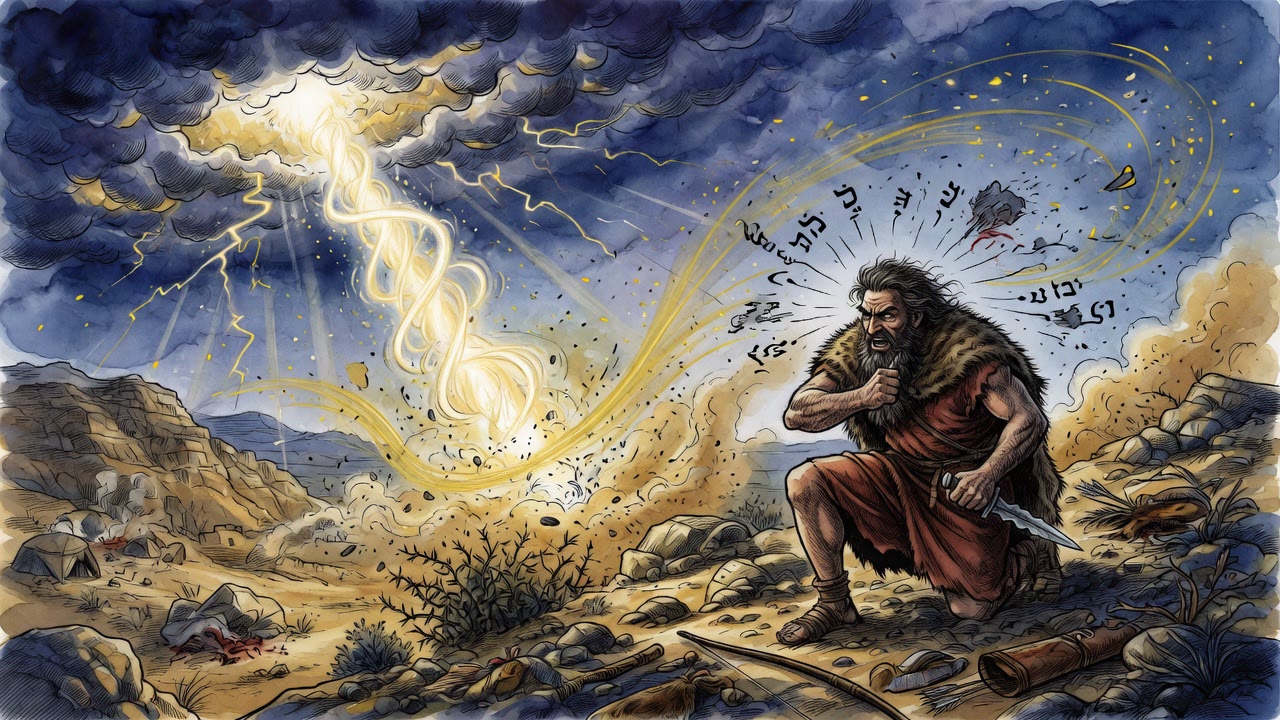
At the river Yabbok, Jacob was attacked by something the Torah only calls a man. The midrash names it. The name changes everything about what that night cost.
Jubilees records how Jacob's sons held the tower against four thousand men. Judah led from the south, and what he did there is why the crown landed on his line.
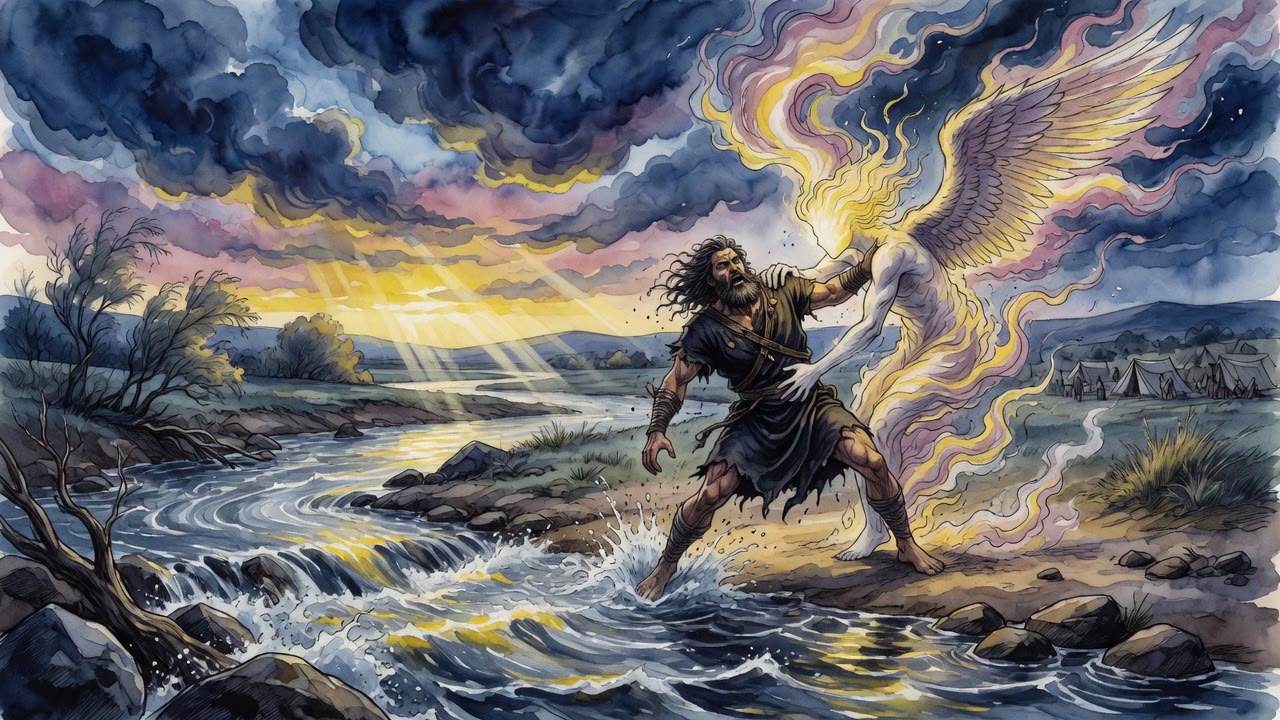
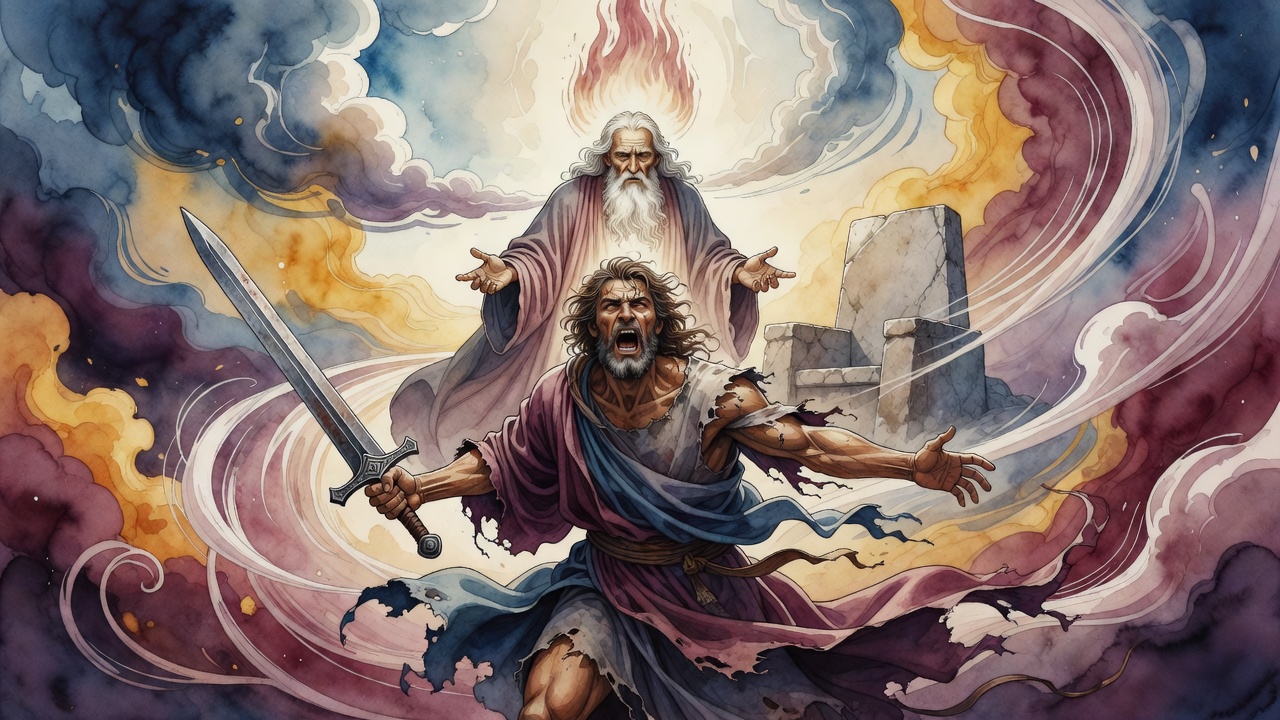
Jacob wrestled with a man at the Jabbok ford - but Jewish tradition knows exactly who that man was. He was Samael, Esau's guardian demon, and the...
Bereshit Rabbah follows Jacob and Esau, Laban's stone pile, Rachel's grave, and Jacob's gathered family into fragile peace.
Bereshit Rabbah joins Laban's false welcome, Jacob's gifts to Esau, the sciatic nerve, and Timna's longing for Abraham's house.
Ginzberg reads Abraham's refusal to bless Isaac and Jacob's year of gifts to Esau as twin strategies for managing the conflict between brothers and successors.
Pirkei DeRabbi Eliezer reads Jacob wrestling the angel before facing Esau and Michael presenting Levi to the Throne of Glory as twin pictures of elevation.
Yalkut Shimoni on Torah imagines Jacob's family guarded by angels who witness the birthright, lift Levi, name Israel, and break Esau's threat.
Shir HaShirim Rabbah reads the lily blooming after Esau's shadow and God leaping over mountains of sin as twin pictures of how Israel endures into redemption.
A mother who had not seen her son in twenty years watched him approach from a window. The old texts say she did not wait for him to reach the gate.
Rachel's tears outlasted her life. The Tikkunei Zohar and Ginzberg agree: only Joseph's line could stand against Esau, and Rachel is still waiting.
Adam's garments passed from the first man to Nimrod to Esau, making each one terrifying and unstoppable. The midrash traces what those clothes cost every...
When Esau ran to embrace Jacob after twenty years apart, the rabbis noticed dots above the Hebrew word for kissed. Dots in a Torah scroll mean look closer.
Jubilees and Ginzberg's Legends describe an Abraham who swore by heaven twice and was later spotted completing a minyan on Yom Kippur eve in Hebron.
Jubilees and Ginzberg's Legends follow the consequences of Esau's impulsive choice through three generations, ending in a massacre in Seir.
Jubilees and Ginzberg's Legends record Esau's bitter cry, Isaac's second blessing, and Jacob's divided camp as he prepared to face his brother once more.
Most people remember Esau as the brother who lost. The rabbis preserved something stranger: his argument that his blessing equaled Jacob's.
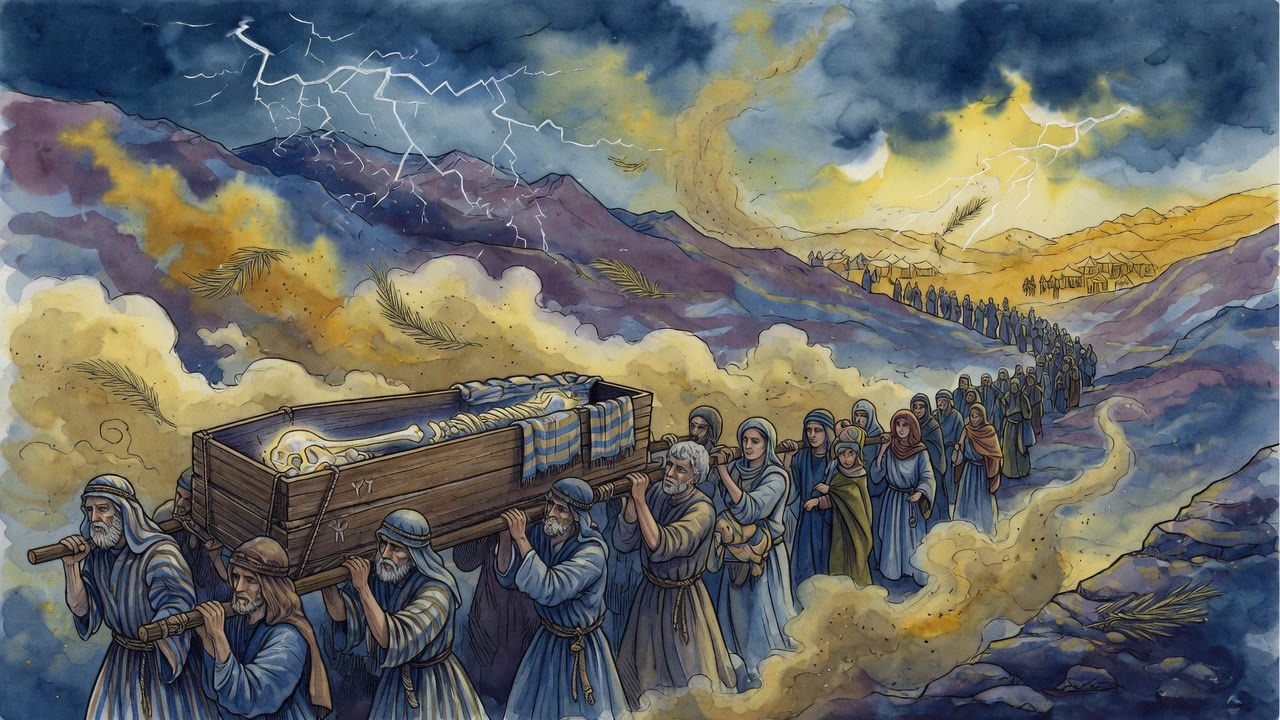
Jacob ran from Esau through fourteen hidden years. When he died, Egypt formed an honor guard. Then his son carried his coffin to freedom.
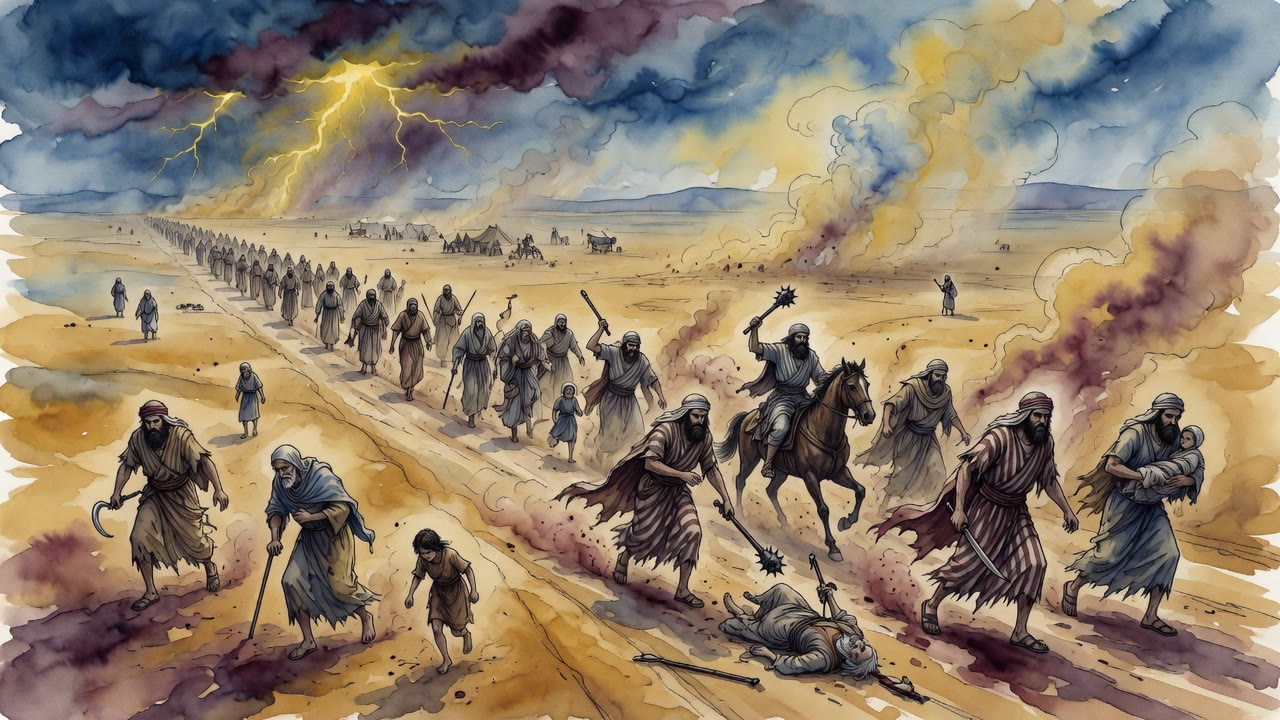
Esau sold the birthright for a meal, with witnesses and a signed document. Years later, forty thousand angelic warriors attacked him on the road to meet Jacob.
Rebekah sent Jacob away and said she would not lose both sons in one day. It was a prophecy. It was fulfilled the day Jacob was buried and Esau was killed.
Esau lived by the sword and lent money at interest. The rabbis taught that everything he accumulated was destined to flow back to Israel.
Midrash Tanchuma lines up Jethro and Esau side by side, and Jethro wins every round. An outsider treated Israel better than family ever did.
The soup was real. So was the hunger. But Jubilees and the Midrash say Esau traded away his burial place beside the patriarchs along with his inheritance.
While Jacob was in Mesopotamia, Esau moved to Mount Seir and left their aging father behind. Jubilees marks this as the moment Esau sealed his own path.
While Jacob mourned his dead wife, Esau arrived with four thousand soldiers. What Jubilees records about the final confrontation between the brothers.
Esau's declaration before the siege closed every door. Jubilees preserved his exact words, and they sound like a man who had made his final choice.
The Book of Jubilees records Edom's forgotten dynasty. Eight kings ruled and died before Jacob's descendants ever wore a crown.
No other woman had suffered what Rebekah suffered. She went to the oldest living man she could find, Shem son of Noah, and demanded an answer.
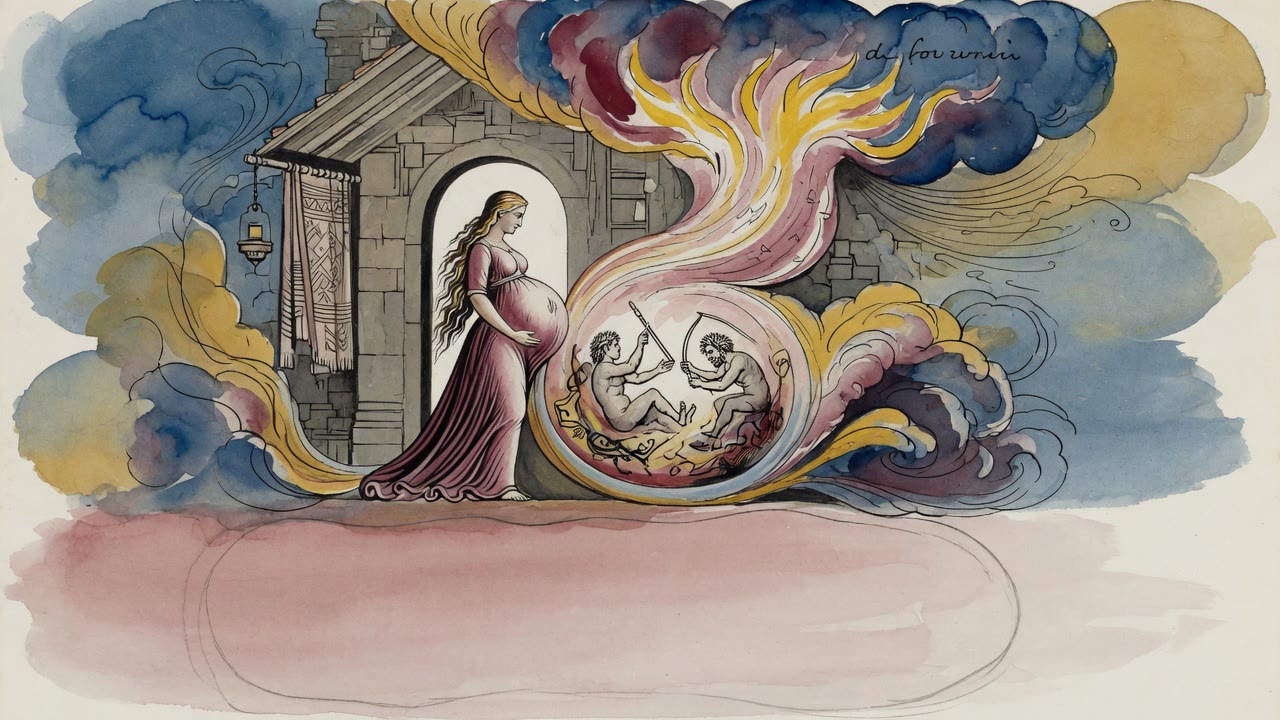
Esau was born with a beard, fully formed, blood-red, bearing the mark of a serpent. Every sign at his birth pointed toward what he would become.
Abraham was supposed to live to 180. God took him at 175. The five missing years were mercy. He died before learning what his grandson had become.
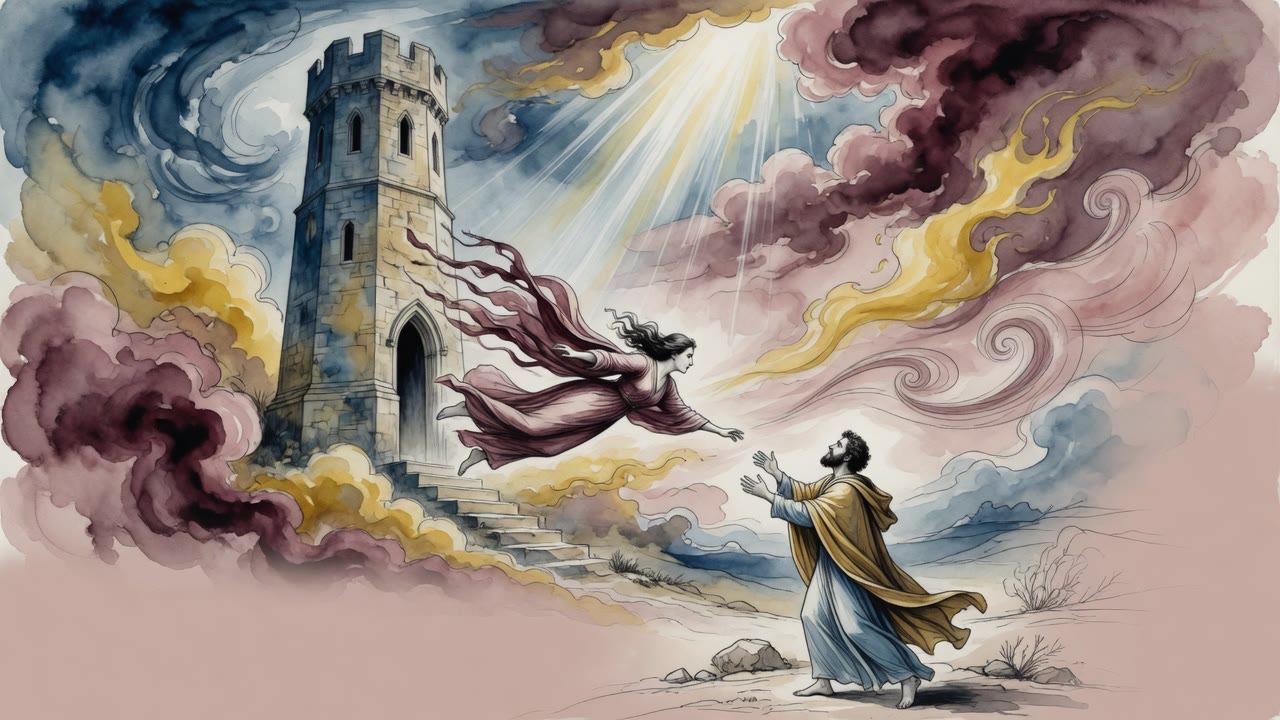
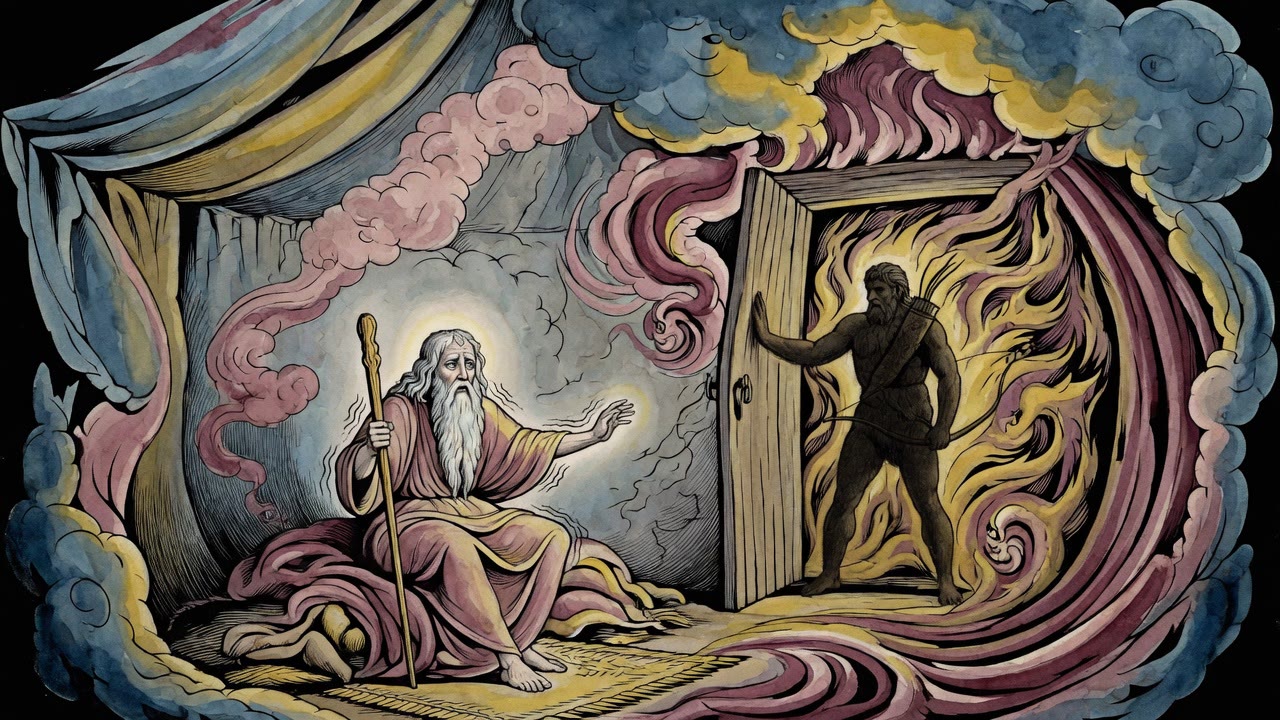
When Jacob fled Esau's wrath, something extraordinary happened at the threshold of his father's tent. He never even knew it.
Esau chased Jacob all the way to a boiling spring and sealed every exit. What happened next is one of the strangest rescue stories in all of midrash.
When Jacob left Laban's house and crossed back into the Holy Land, a second army of angels came to meet him. He recognized both hosts and named the place.
When Jacob sent word ahead to Esau, his message was nothing like what you would expect from a man who had stolen his brother's blessing.
Esau spent his life contesting what he had given away. When Jacob was carried home for burial, he came one last time to claim the cave. He did not leave alive.
The struggle between Jacob and Esau began inside Rebekah's womb, and Rabbi Levi Yitzchak of Berditchev found a complete theology of spiritual inheritance...
The coat that gave Nimrod his power over animals came from Adam, passed through Noah, and ended up with Esau on the day he sold his birthright. The rabbis...
Jacob feared Esau not because of his physical strength but because of the most dangerous thing in the world: a powerful man with no moral restraint. The...
Isaac knew what Esau was. He had watched his son sell the birthright, marry foreign women, and abandon every obligation of the covenant. And still, on what...
Deuteronomy commands Israel to protect escaped servants. Sifrei Devarim asks whether that protection extends to servants who escape from the people of Edom...
Jacob's funeral procession traveled from Egypt to Canaan in a ceremony fit for a king. At the cave of Machpelah, Esau arrived and declared that the burial...
The rabbis saw in Esau's red, hairy birth something that connected him directly to the first transgression in Eden - as though Adam's failure had finally...
Hebraic Literature pairs Akiba laughing at the fox in the Temple ruins with the rabbinic reading of a Roman tableau showing the Esau-Jacob reversal to come.
Bereshit Rabbah follows Abraham, Sarah, Isaac, Jacob, and Esau through tests, laughter, suspicion, diplomacy, and promised destiny.
Bereshit Rabbah reads three family trees side by side and finds Jacob rehearsing heaven, Esau drowning in gold, and Dan walking alone like a serpent.
Bereshit Rabbah reads Isaac's family like an audit. Esau looked great, Dina inherited a glance, and Jacob owed an altar he had not built.
Jacob crouched at the Jabbok bargaining with God over a single word. He had just called his murderous brother my lord, and heaven was not pleased.
Bereshit Rabbah reads two genealogies side by side. Abraham cut himself in public at ninety-nine. Esau's family tree quietly listed its scandals.
The commandment to remember Amalek is not about vengeance. According to the Pesikta Rabbati, it is about what happens to a nation that forgets what cruelty...
Eight kings ruled Edom and died before Israel crowned its first. The Book of Jasher and Book of Jubilees remember their names.
The rabbis saw Esau not merely as Jacob's rival brother but as the ancestor of an absence: a world without truth, kindness, or Torah. Sifrei Devarim maps...
The rabbinic tradition traced a hidden thread from Esau's rejected birthright through the patriarchs all the way to King David - arguing that every step of...
Two Midrash Tehillim passages cast David and Solomon as joint teachers of how wickedness loses its gains and the penitent secures inheritance.
Ginzberg reads Jacob's offer of dominion to Esau as a Messianic vision and Ahab's afterlife as the structural cost of Jezebel's instigated wickedness.
Jacob killed Esau at Machpelah with one arrow. Dying in Egypt, he crossed his hands to give the greater blessing to the younger of Joseph's two sons.
The shortest book in the Hebrew Bible is one chapter long. The rabbis said its author was chosen because he had lived the exact inverse of Esau's life.
Obadiah was a convert who had lived in the house of wicked rulers. The rabbis said God gave him the shortest book in the prophets for one reason. The logic...
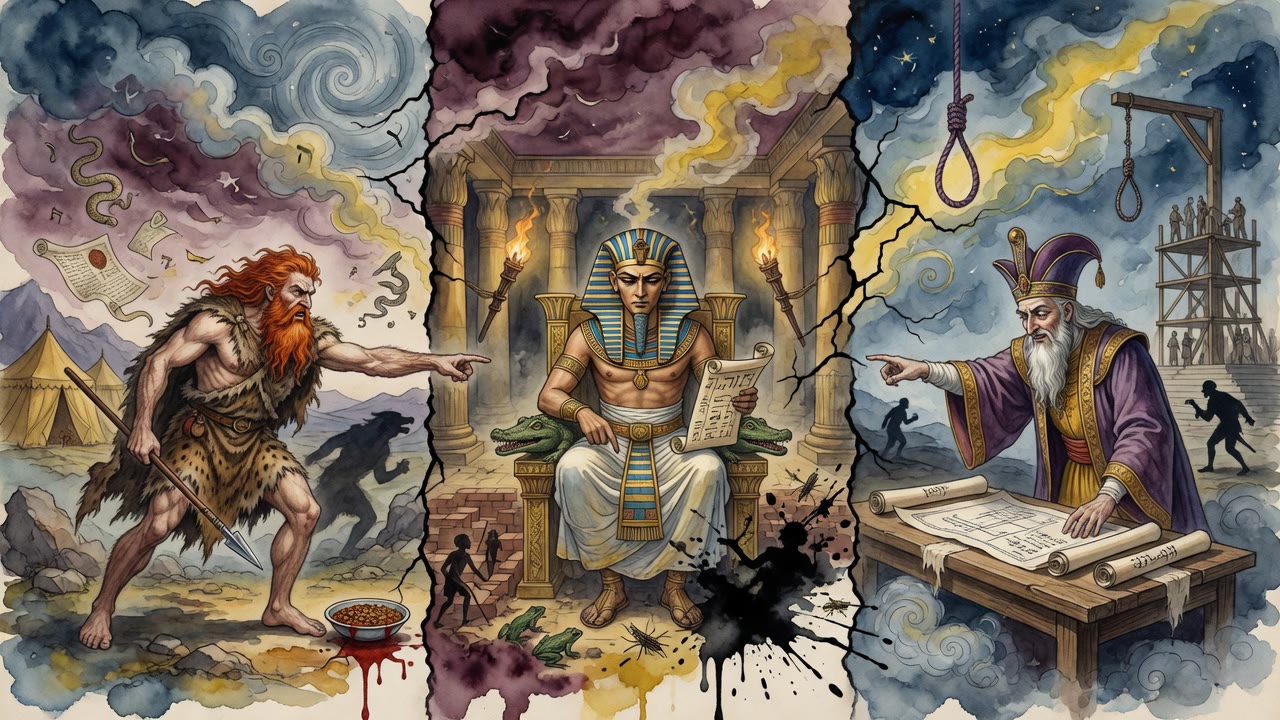
Midrash Tehillim on Psalm 2 maps four generations of enemies: Esau, Pharaoh, Haman, and Gog and Magog. Each thought they had the perfect plan. Each was wrong.
The rabbis noticed that a single word in Psalm 9 contains three instances of the Hebrew letter nun. They decoded this as a prediction of three kingdoms that...
Ginzberg reads Isaac's unconditional blessing for Esau and Job's notarized commitments to widows as twin pictures of how blessing relates to merit.
Eliphaz, raised in Isaac's household, became a prophet. He confronted Job with the faith of the patriarchs -- and God rebuked him for it.
Kohelet Rabbah reads Abraham as the wise man whose eyes saw the end from the start and Jacob as the heart-on-the-right whose priorities reveal lasting wisdom.
Bereshit Rabbah quietly ties Lot's clinging, Sarah's miraculous birth, and Esau's bitter cry to Esther and the Shushan palace centuries away.
The Tikkunei Zohar used a burning candle to explain how Esau relates to divine judgment. Each part of the flame corresponds to a letter of God's name, and...