Esau Died Claiming the Cave at Machpelah's Gate
The funeral from Egypt stopped at the cave mouth. Esau filled the doorway and said the last empty place inside belonged to him.
Table of Contents
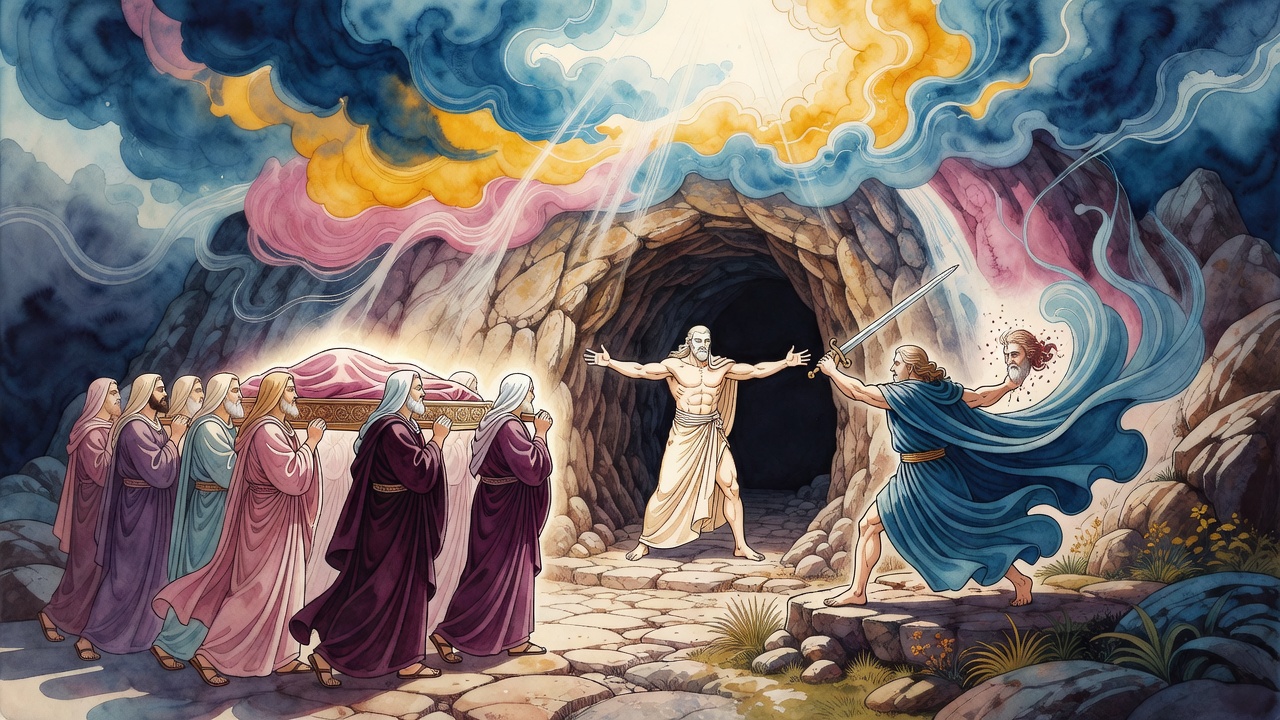
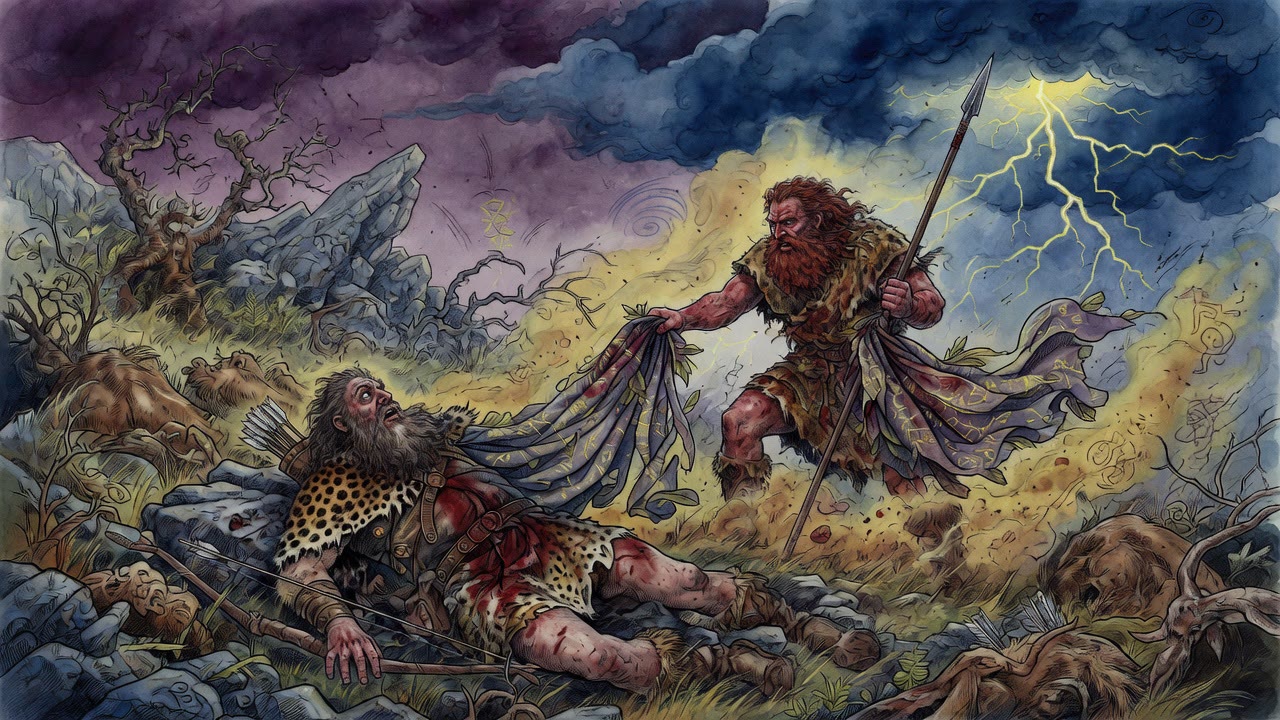
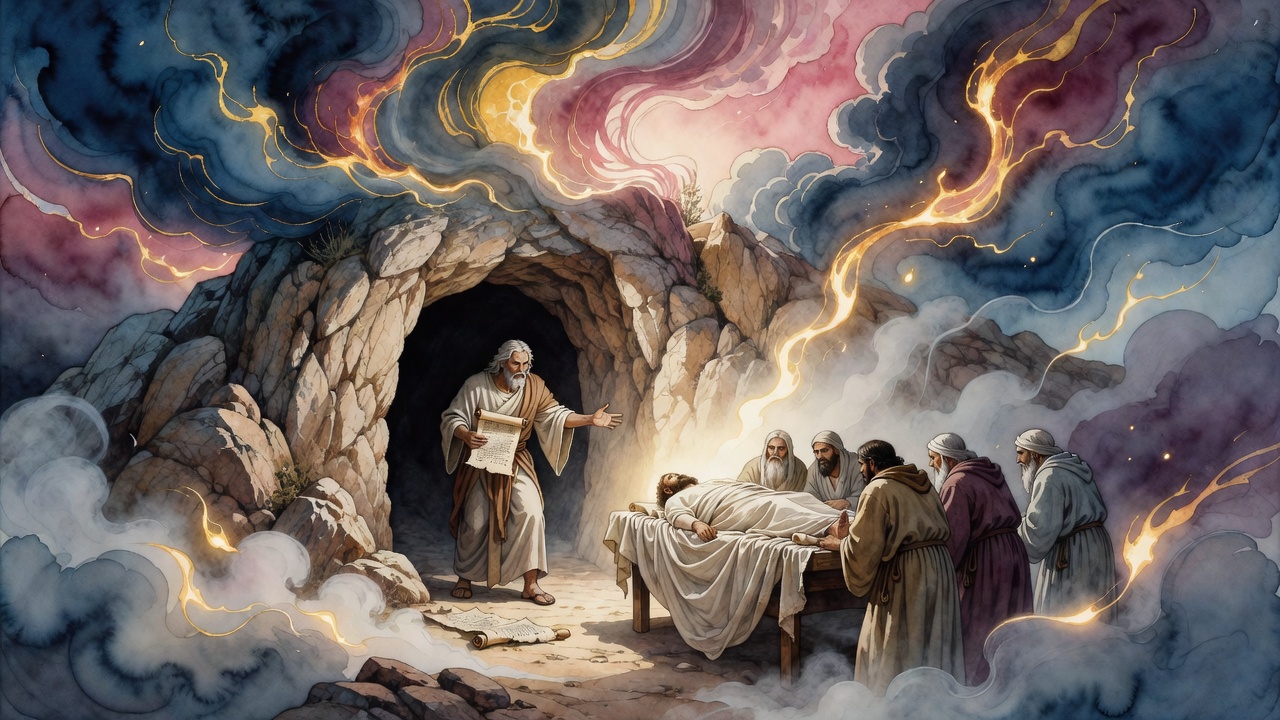
The bier stopped at the gates of the cave. The mouth of Machpelah stood open, and Esau was already in it, filling the gap with his shoulders, his sons packed on the slope behind him, claiming the last empty place before the coffin could pass.
 Click for full size
The funeral had come up from Egypt with chariots and elders and the whole household of Israel. Jacob had died there, seventy days of embalming, a state procession on Pharaoh's model. They had paused at the threshing floor of Atad, where the Canaanites watched the mourning and named the place for it. Now they were at Hebron, at the cave Abraham had bought, where Sarah and Isaac and Rebekah and Leah already lay, and the last empty place was the reason Esau had come.
The Last Empty Place
"Four couples," Esau said. He had the count ready. Adam and Eve. Abraham and Sarah. Isaac and Rebekah. Jacob had already put Leah in. The last niche was his. Not Jacob's. His.
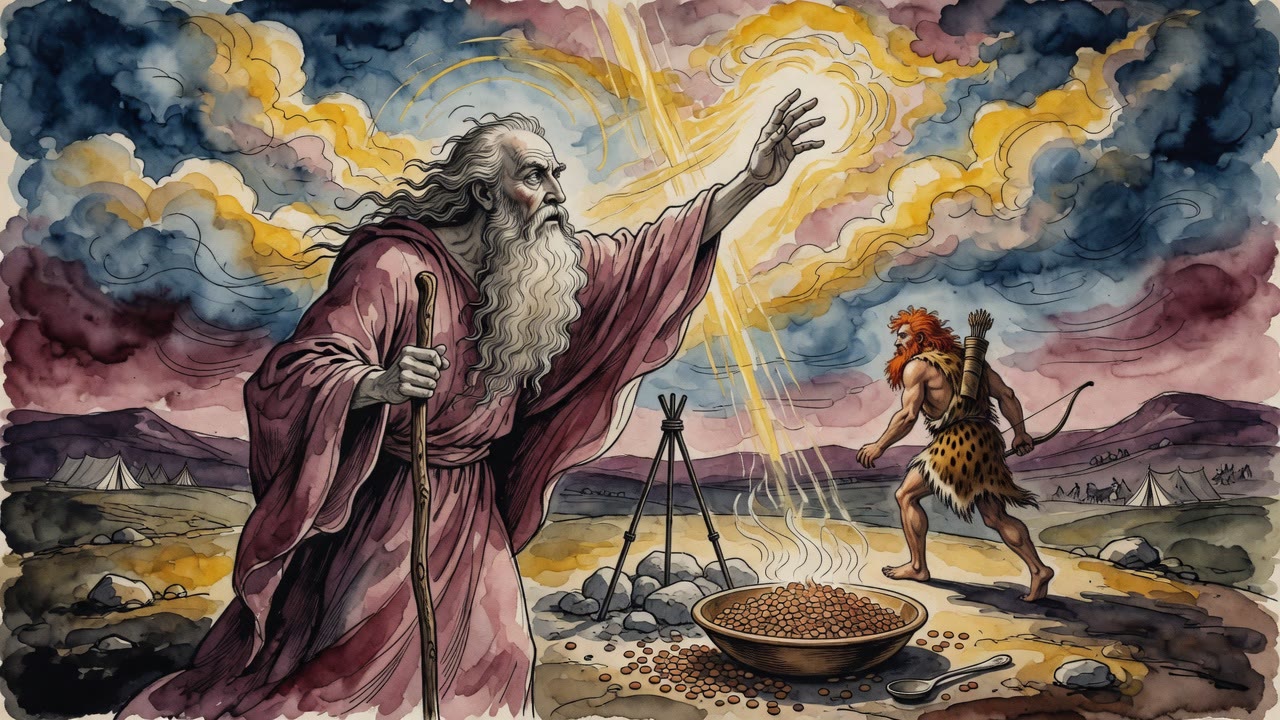
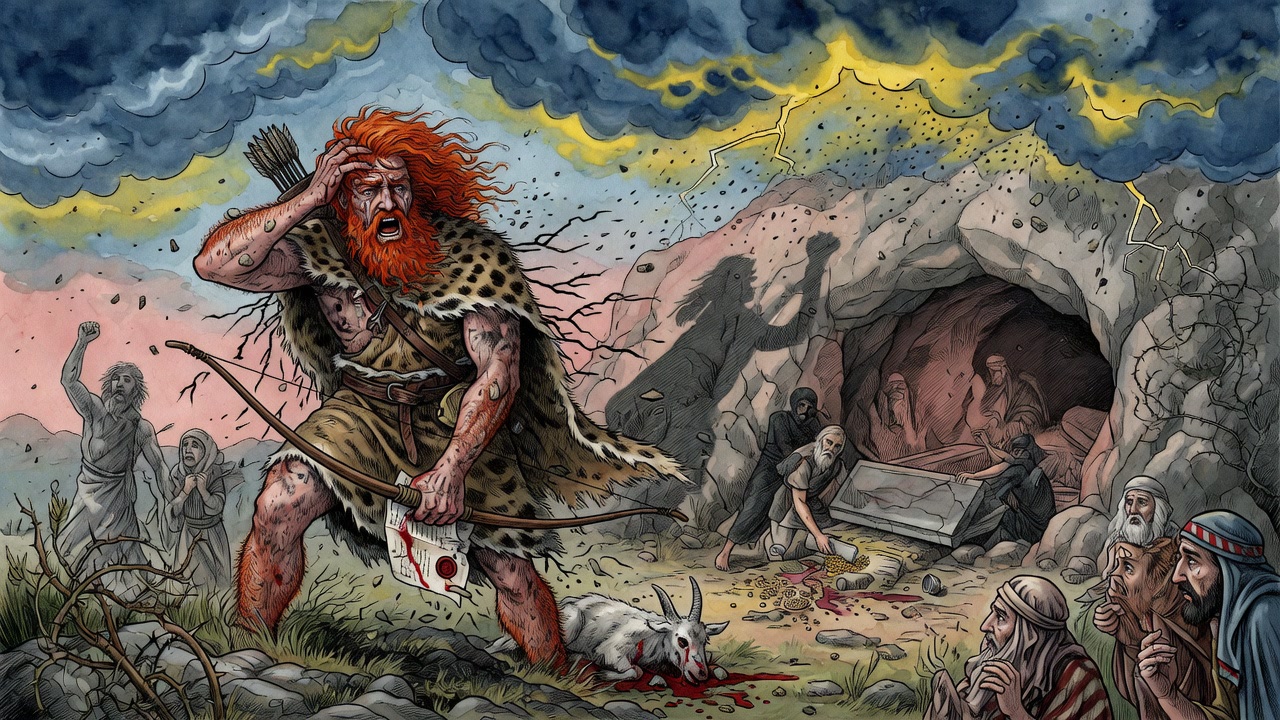
Joseph stood with the coffin in the dust. Pharaoh's servants waited. The horses stamped. Esau would not move. He had sold the birthright for a bowl of soup. He had lost the blessing in a tent with goat hair on his arms. He had spent a long life with Isaac's other word in his pocket: you will live by the sword, you will serve your brother, and a day will come when you shake the yoke off your neck. Jacob was dead and could not argue. The cave was the last thing left to take.
Joseph asked for the deed. Abraham had bought this field from Ephron the Hittite with silver, weighed out in the hearing of the city. The paper was in Egypt.
Esau knew that. He had timed the objection for the hour when the paper could not be produced.
Naphtali Ran for the Deed
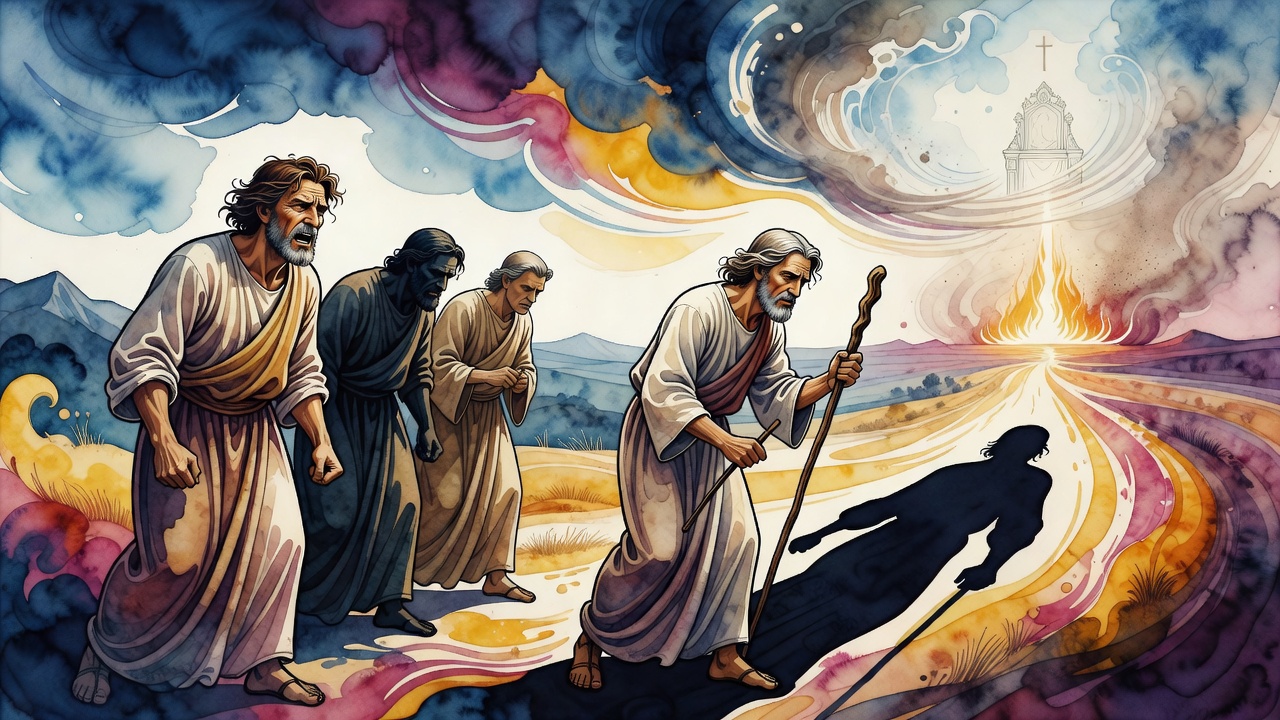
Joseph sent Naphtali. The man could run. His tribe was named for speed. Naphtali turned south toward Egypt and left the argument standing in the sun.
The lawyers kept talking. Esau's sons kept their hands on their swords. Jacob's body waited. Four days of travel, there and back, and the dead man had already come farther than that to lie down here.
Naphtali made the distance. He came back with the deeds before the talk at the gate could turn into something worse. They were read aloud at the cave mouth. The weights of silver were listed. The witnesses were listed. The land was bought. Esau's case folded in the reading.
He still did not step aside.
Chushim Did Not Hear Any of It
Chushim son of Dan stood in the procession. He was deaf. He had not followed the case, the birthright, the silver, the runner. He saw his grandfather's coffin held at a hole in the rock while men with mouths full of law delayed the burial.
He pulled at a sleeve. Why are we standing. Why is the old man not in the ground.
Someone shouted it at him, slow, with hands. Esau will not let us bury until the runner comes back from Egypt.
The runner had already come back. The deeds had already been read. Esau was still in the doorway. Chushim did not wait for another sentence.
He took a staff. He stepped through the lawyers. He struck Esau at the neck.
The head came off. It rolled across the threshold and into the cave, into the dark where Isaac already lay. Esau's eyes stayed open. The body stood a moment without it, then went down in the gap he had been guarding.
What Went In and What Went Home
They buried the head in Machpelah. The cave took the part of him that had done the arguing. His sons lifted what was left and carried it east, back to Edom, back to Seir, out of the field Abraham had paid for.
A fight broke around the entrance. Forty of Esau's men died in it. Jacob's sons lost no one. Joseph took Zepho, son of Eliphaz, in chains down to Egypt.
Jacob went into the cave beside Leah. Esau got the niche he had come for, and only as much of it as a head requires. The yoke he had waited a lifetime to shake off was off. He was not there to feel it.
← All myths