Esau Packed His Flocks and Left His Father Alone
When Jacob left for Mesopotamia, Esau moved his herds to Mount Seir. The word that sits in the text like a verdict is: alone.
Table of Contents
 Click for full size
The Departure Nobody Recorded
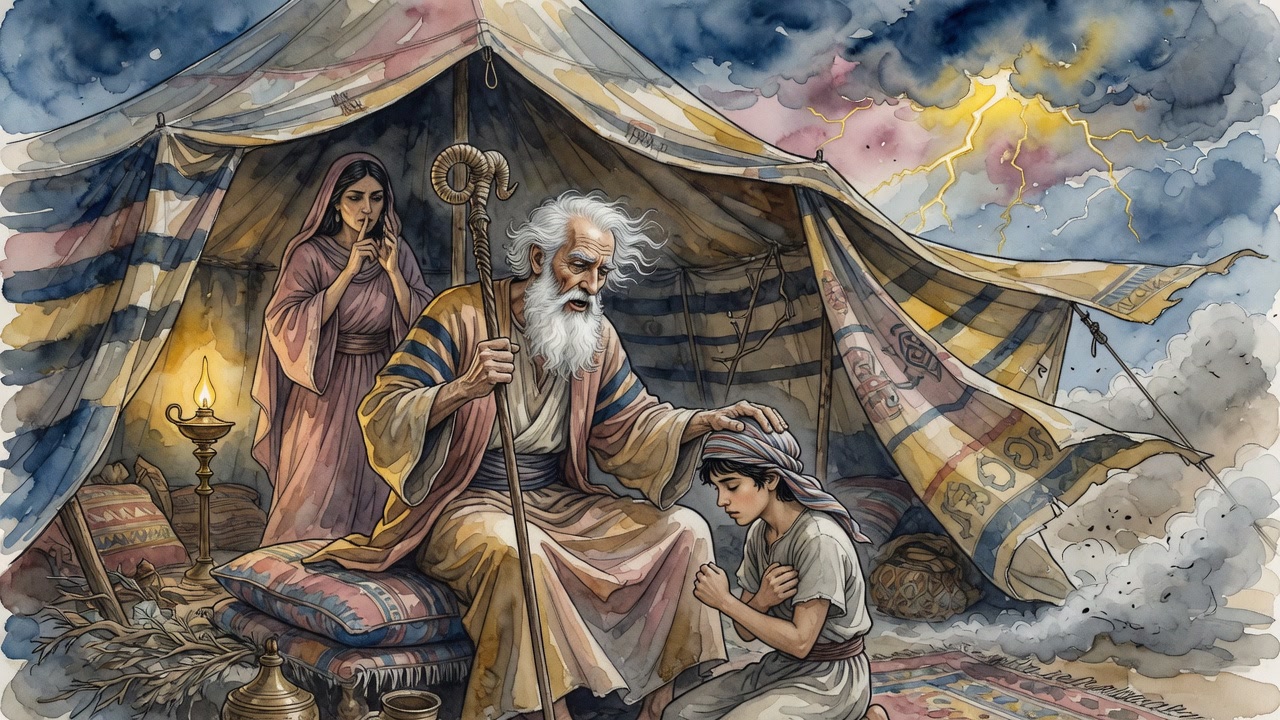
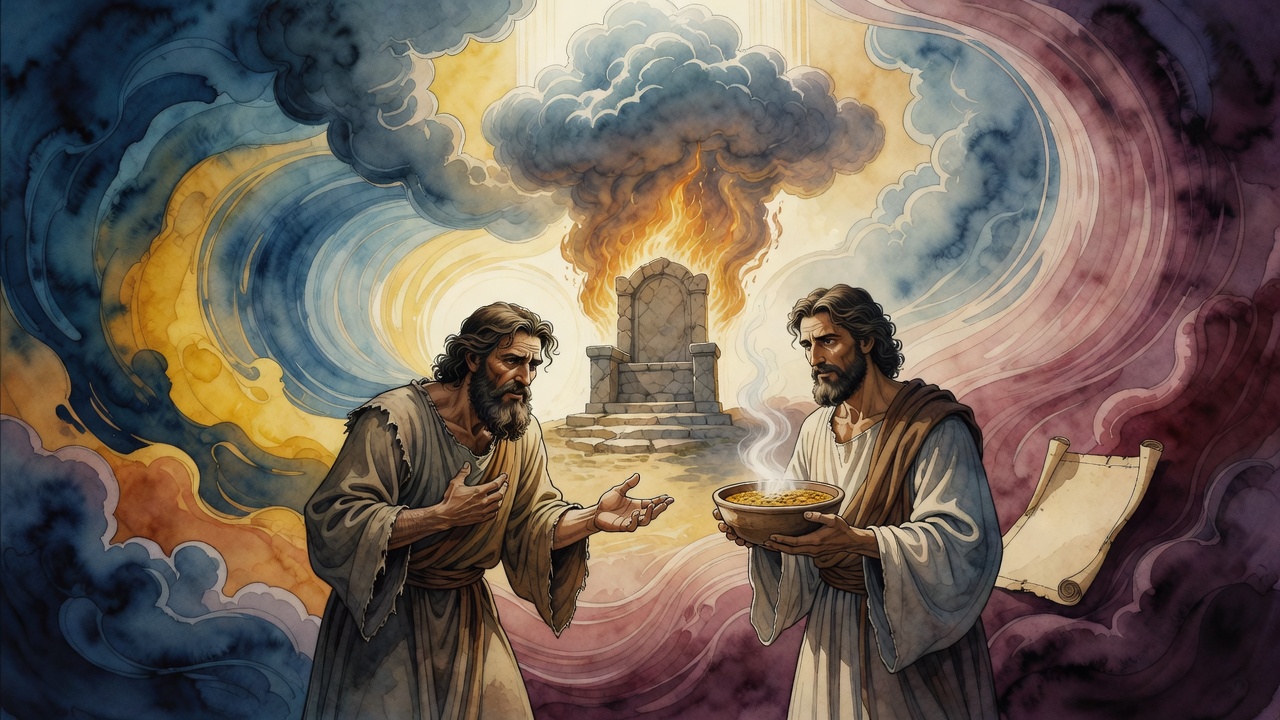
Isaac was old and nearly blind at the Well of the Oath, living in the tower his father Abraham had built in the hills of Hebron. His eyes had dimmed until faces were only shapes against the light, and he knew the people around him by their voices and the weight of their footsteps on the stone. Jacob had gone north twenty years before, carrying nothing but a staff and a vow. Esau was still there, with his Canaanite wives and his herds and the flocks that grazed in the valleys his father could no longer walk down to see. There was someone to look after Isaac. That someone was Esau.
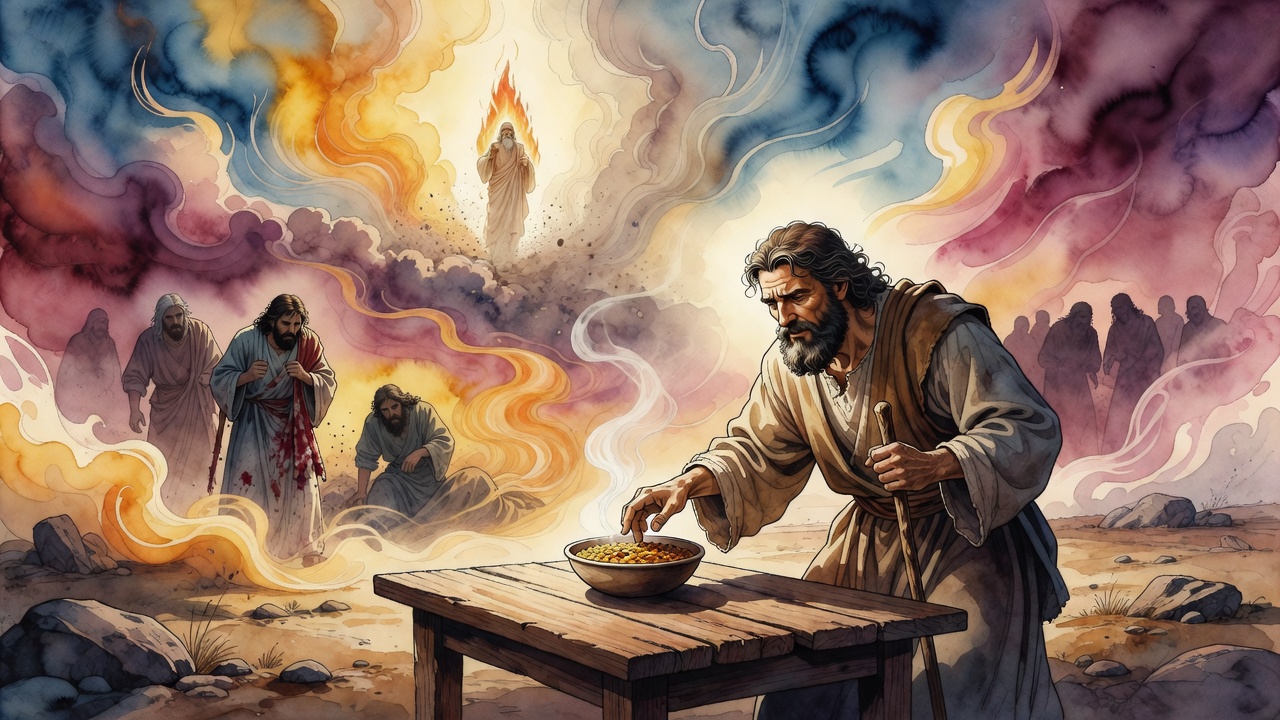
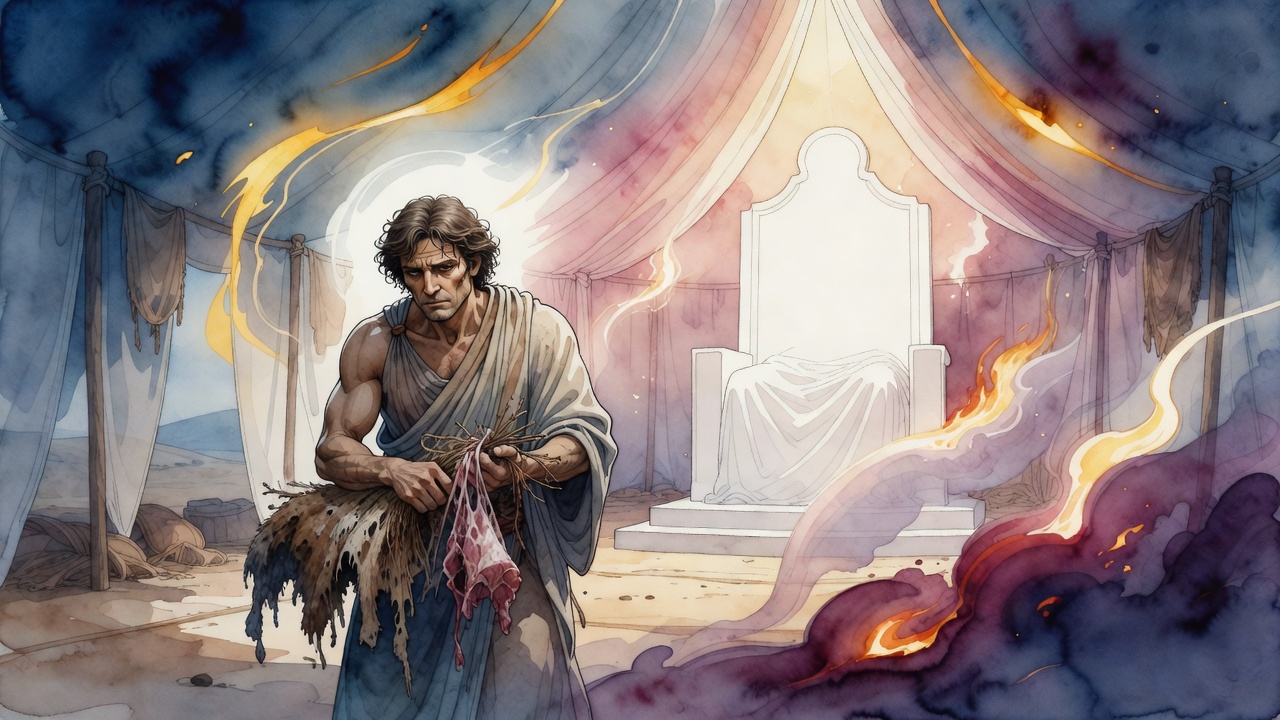
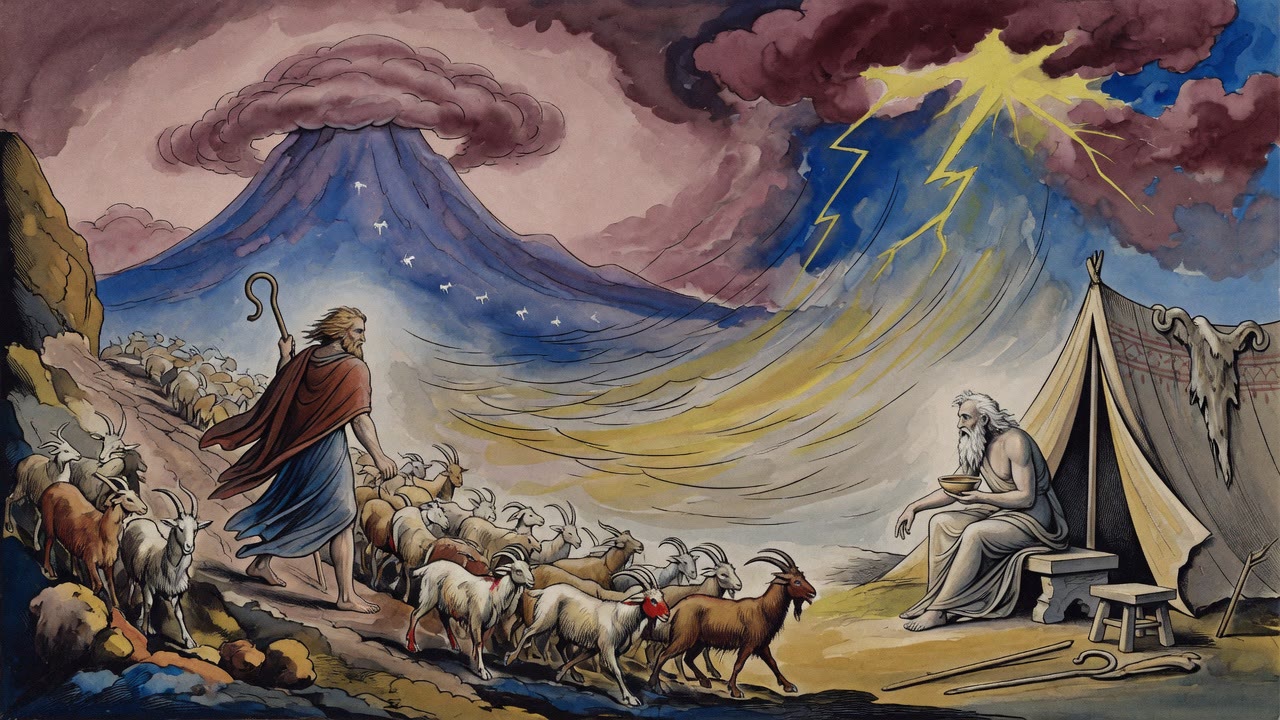
Then Esau took his wife Mahalath, the daughter of Ishmael, and gathered all the flocks of his father and all his wives, and went up and dwelt on Mount Seir. He took everything he had accumulated. He drove the herds out of the valleys below Hebron and up the long road south toward the red hills, the dust of them hanging in the air for a day after they had passed. He moved. And he left Isaac at the Well of the Oath alone, in the tower, with no familiar step on the stair and no voice he knew calling up to him.
The word alone sits there in the text like a verdict.
The Marriage That Looked Like Piety
Esau's marriage to Mahalath was itself a kind of performance. His Canaanite wives had made life bitter for Isaac and Rebekah, grinding them down with their foreign gods and their foreign ways, filling the household with rites the old couple could not bless. Esau heard the displeasure in his father's voice and his mother's voice and took a third wife from a different source, from Ishmael's line, from the family that shared Abraham's blood. It looked like a correction. It looked like a man listening to his parents at last.
But Abraham had already seen through Esau before this. He had told Rebekah what he recognized: Isaac loved Esau more, but God had chosen Jacob. The love ran in the wrong direction. And now Esau took the Ishmaelite wife and the flocks and moved to the mountains and left the old blind man in the tower by himself.
The Road to Seir
The choice had a direction, and the direction was up and away. Seir lay to the south and east, the red mountains rising out of the wilderness, far from the well where Abraham had dug for water and far from the tower where Isaac now sat in the dark. To go there was to put a wilderness between himself and his father. Esau drove the whole of his accumulated life along that road: the wives, the children, the gathered flocks that had been Isaac's, every head of them counted and taken. Nothing was left behind in the valleys of Hebron except the old man who could no longer see them go.
Jacob had also left his father, but Jacob had left under a threat, with a staff and a vow and nothing else, fleeing a brother who wanted him dead. Esau left with everything, and he left because he wished to, and the distance he chose was the distance between a man and an obligation he had decided not to carry.
What God Saw
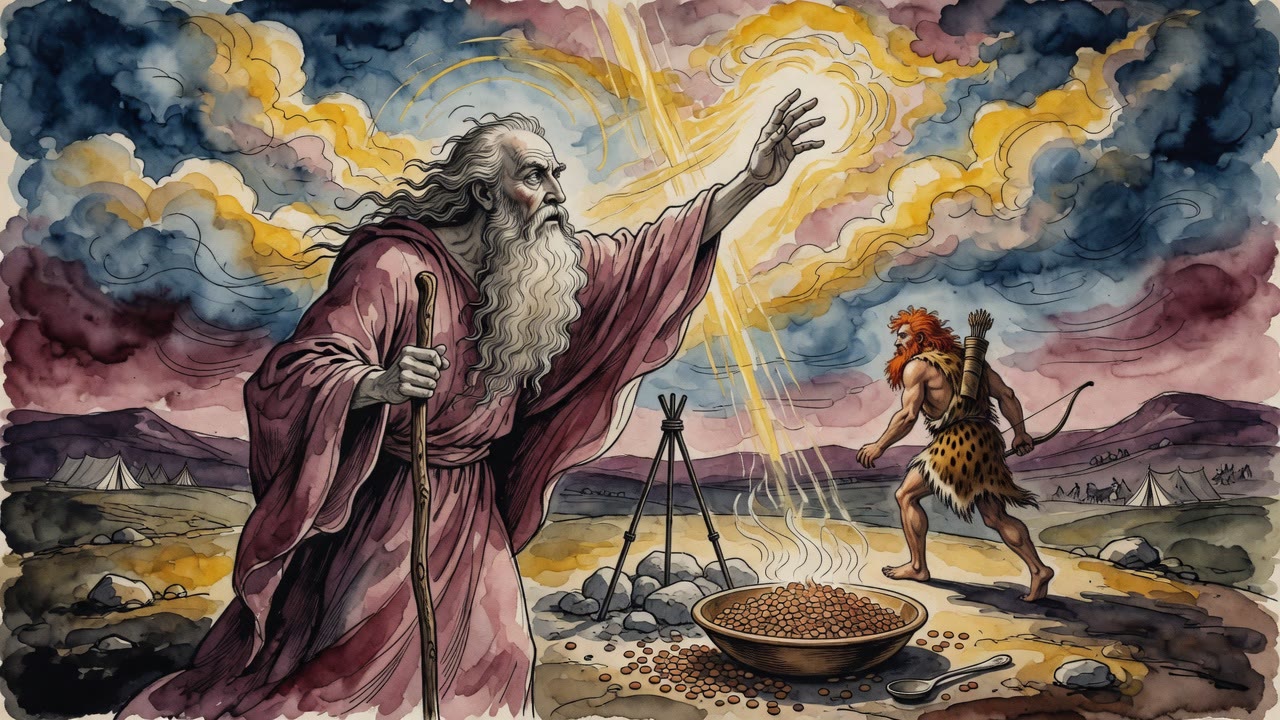
Abraham had asked God directly to look at Jacob with love, to let his name be blessed, to add to him the kindness already promised. The prayer had been made because Abraham saw clearly which grandson would carry the covenant forward. Not Esau, who sold the birthright in a moment of appetite and then dressed the act as necessity. Not Esau, who chose wives outside the family and then added one inside it to soften the optics. Not Esau, who moved up to Seir with everything he owned and left his father without company in the last years of his life.
The tradition that preserved this detail understood what it meant. The inheritance was not only about who received the blessing in a tent with goatskin on his arms. It was about who stayed. Jacob fled because he had to. Esau left because he chose to. That choice had a shape, and the shape was visible from heaven.
← All myths