Jacob Saw Samson Coming and Prayed for a Different Rescuer
He was naming his sons one at a time from the bed. At Dan he described a man who fights alone and wins, and then he broke off to pray.
Table of Contents
 Click for full size
Jacob Came to Dan and Saw a Rescuer
Jacob was dying and he was going down the line. Twelve sons around the bed, each one waiting to hear what his father could see coming out of him, and the old man was working through them in order.
He got to Dan and his voice changed. Dan will avenge his people, he said, as one of the tribes of Israel.
That word one did the damage. It can mean the most singular of the tribes, the one that leads, which is Judah. It can also mean the One, the single One of the world, the one who goes to war and needs nobody beside Him, who said He trod the winepress alone and there was no man with Him. Jacob had just told a room full of his children that a descendant of this son would fight the way God fights. Nobody in the room had heard anything like it about anybody.
The Serpent Travels Alone
Then the picture came in closer and it was not what he had been expecting.
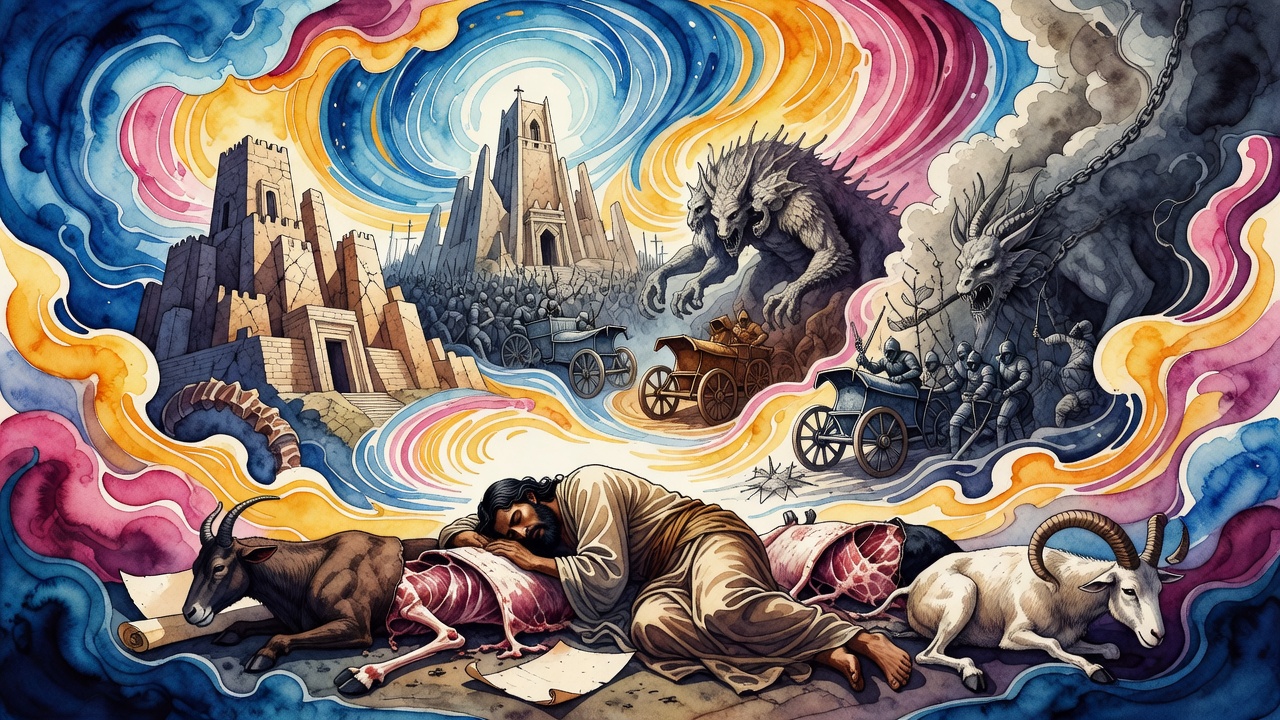
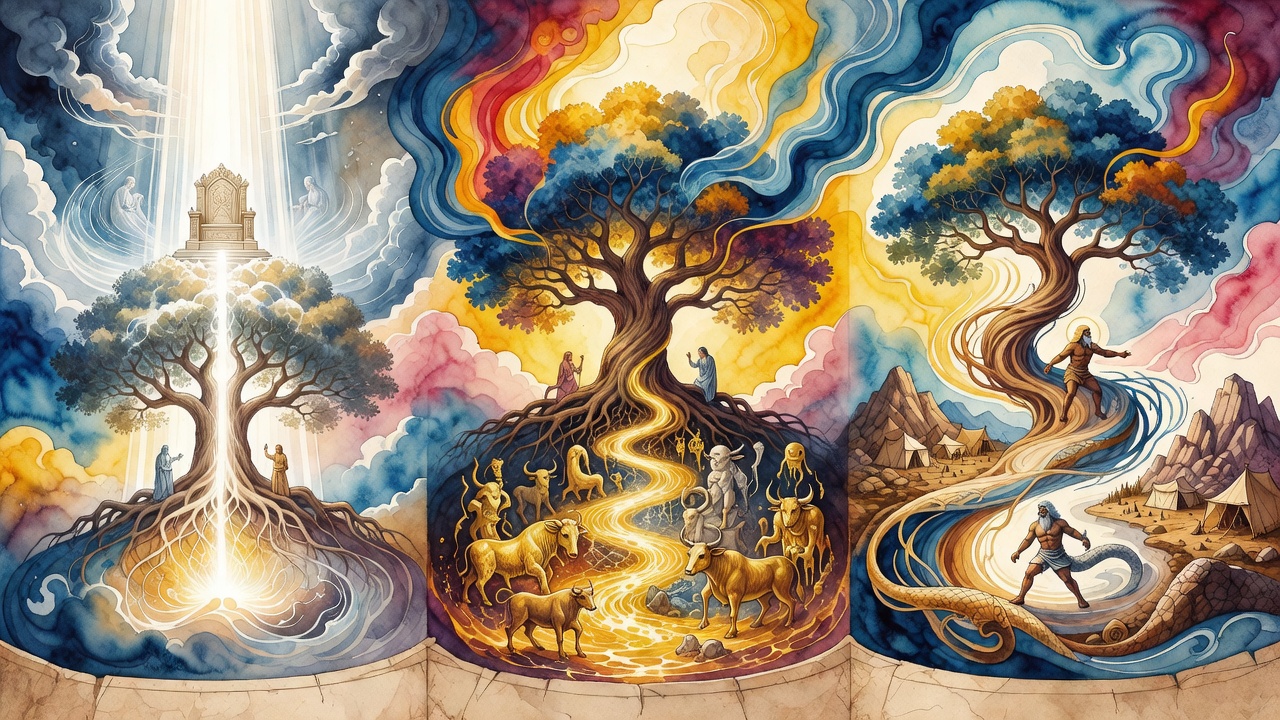
Dan will be a serpent on the road, he said. A viper on the path, that bites a horse's heels so the rider falls backward.
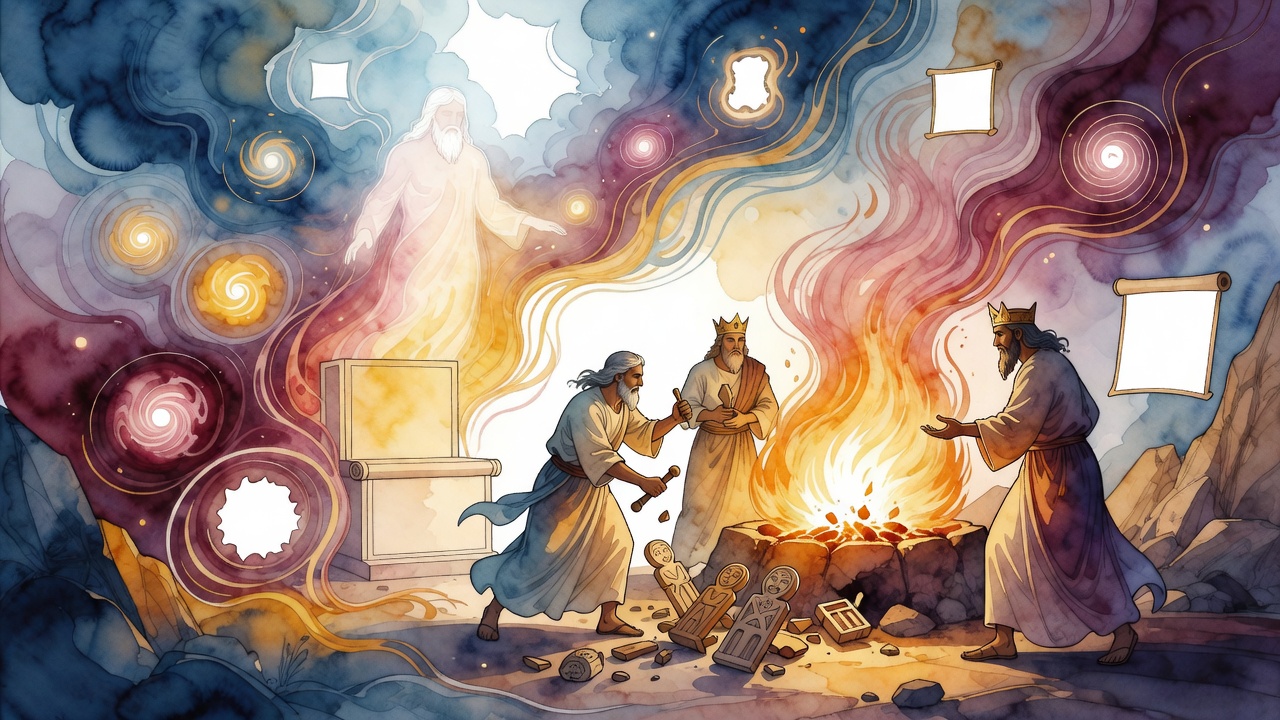
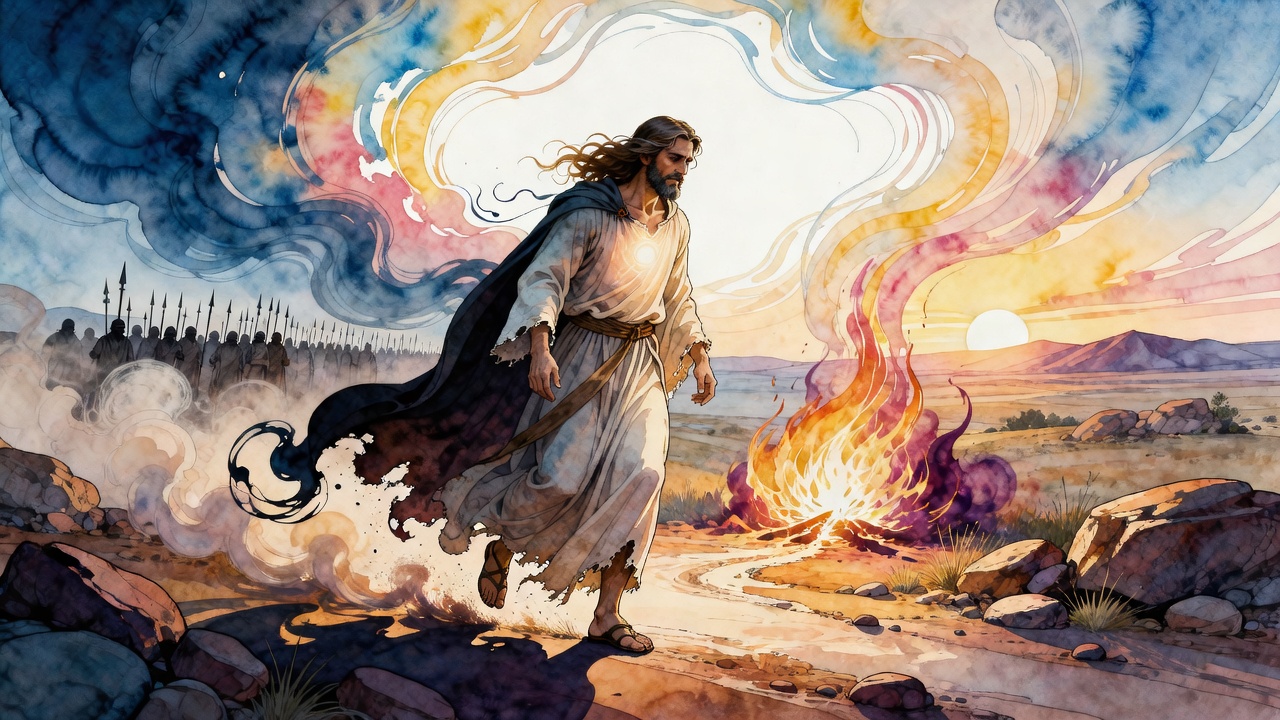
Every other animal moves in pairs. The serpent goes down the road by itself. And there he was, the man the blessing was describing, coming up out of Dan generations later with no army, no sword, and the jawbone of a donkey in his fist. Samson did not need anyone. That was the point of him. He was also vindictive the way the serpent is vindictive, and at the end of his life, blind and chained between two pillars in a hall full of people, what he asked for was one more turn at revenge.
Let me take vengeance once.
The Prayer That Broke the Blessing
Jacob stopped in the middle of the blessing and prayed.
"For your salvation I await, Lord."
It sits there in the text with nothing around it, a line of prayer dropped into a list of sons, and it is the sound of a man realizing he has the wrong candidate. He had watched a fighter come up out of Dan who could do what God does, alone, against a whole nation, and for a moment he had thought the rescue of Israel had a face and a name. It did not. Samson would bring down a building on himself and be carried home by his brothers. The strength was real. The salvation was somewhere else.
So Jacob moved on to the next son and put it there. Gad, a troop will slash his enemies, and he will slash their heel. The heel is the end of the thing, the last part of the body of history, and the man who comes at the heel is Elijah, who was of the tribe of Gad. Jacob had found the right line by going one name further down the bed.
Everything God Will Do, Done Early
Rabbi Berekhya taught what that office involves. Every single thing the Holy One is going to do at the end, He has already had done once in this world, ahead of time, through the righteous.
God revives the dead. Elijah stretched himself over a boy in an upper room and the boy breathed. God shuts up the sky. Elijah shut it, and no rain fell for three years because he said so. God takes the last of what a starving household has and makes it hold out. Elijah stood in a widow's doorway in a famine and the jar of flour did not run out and the jug of oil did not run out. Elisha did the same run of work after him. He raised a dead child. He remembered a barren woman and she carried a son. He threw salt into a poisoned spring at Jericho and the water came sweet.
There is none like God, the verse says. Then who is like God? Yeshurun, which is Israel at its straightest. It is not a small claim and the sages who made it knew what they were saying. The proof they liked best was the night at the ford, when Jacob sent everyone he owned across the water and stayed behind. Jacob remained alone. Of God it is written that on that day the Lord alone will be exalted. The same word, the same solitude, a man and his Maker matched on one line.
The Treasure Edom Is Piling
Esau's descendants took the other road out of the same house.
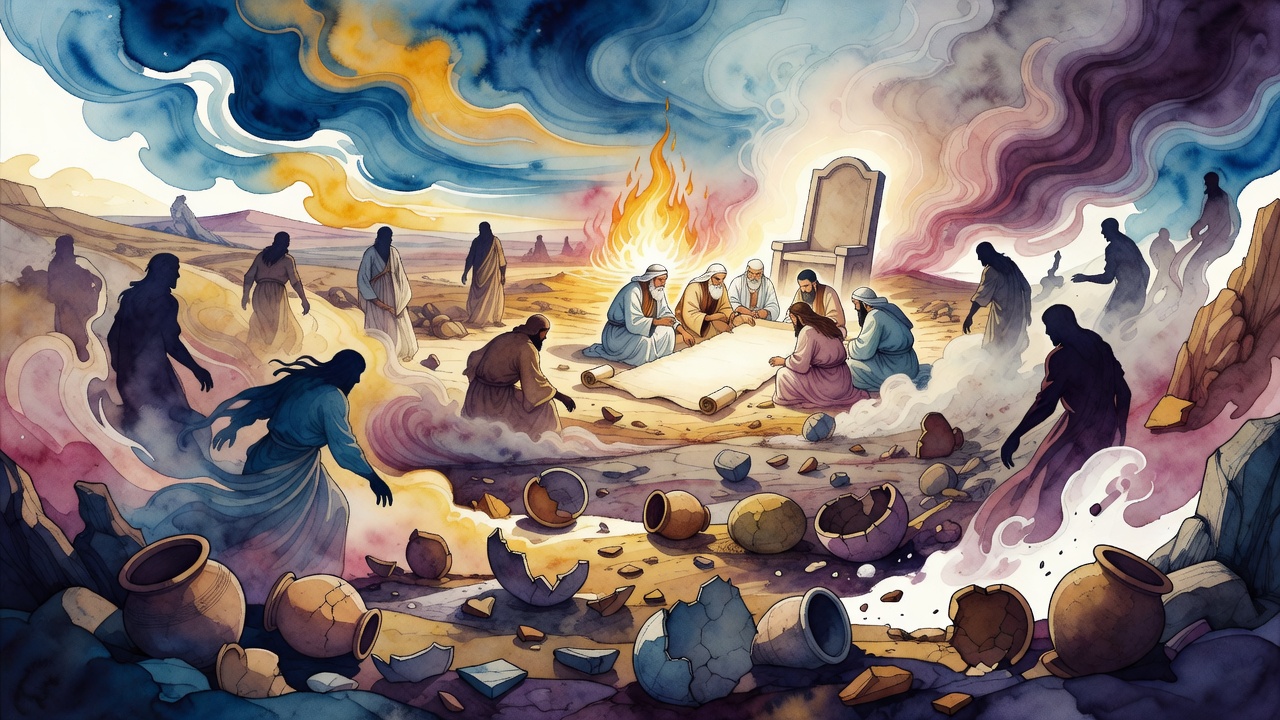
Their names read like an inventory of what they cared about. One line of chieftains dressed up their gods. Another dressed up their women, made them beautiful for their husbands, and then took them away from their husbands. They put up castles for idol worship. And when the money came in past the point where money means anything, they started asking, out loud, what is gold, what is silver, as though the stuff were beneath them now.
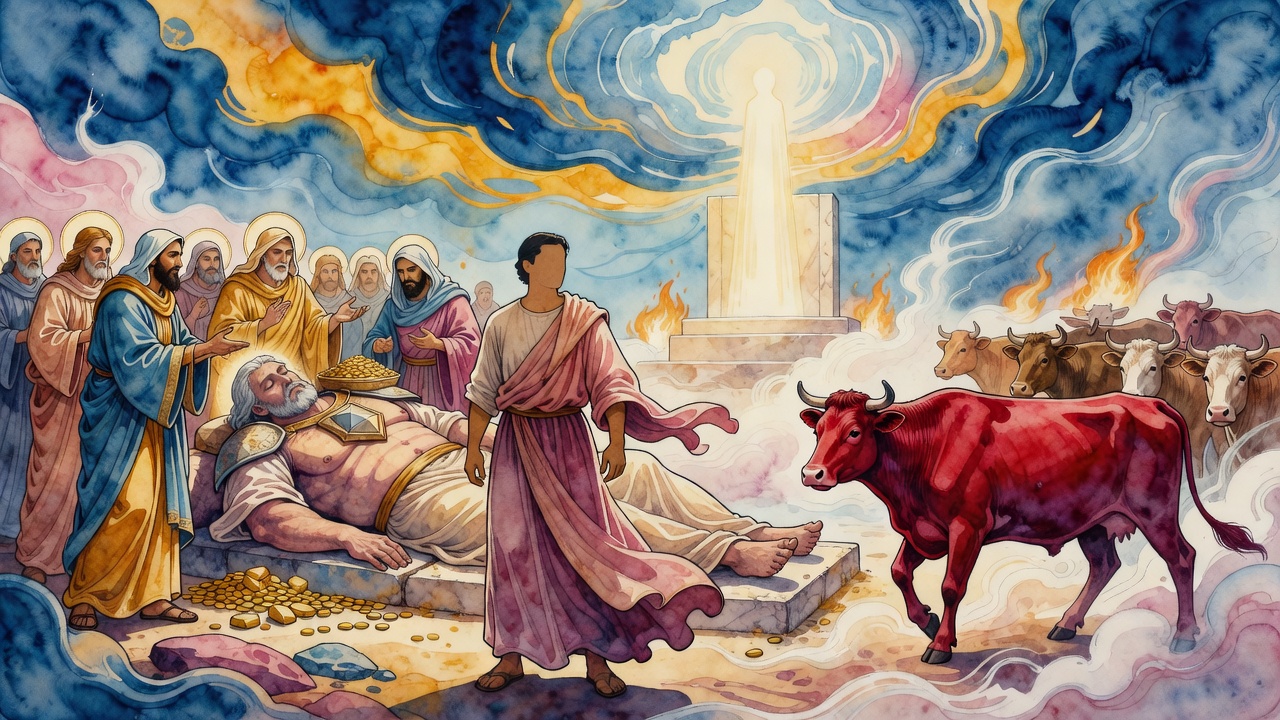
Rome inherited the whole account. On the day Diocletian took the throne, Rabbi Ami dreamed a chieftain from that list had taken it, woke up, and said Edom needs one more king. And there was an heir in Rome who was burning through his father's vaults, until Elijah came into the man's sleep and stood in front of him. "Your fathers gathered, and you squander?" He did not get up from that until the treasuries were full again.
Nobody told him whose treasure it was. One of Esau's chieftains carries a name that means piling up, because piling up is what the whole line has been doing without being informed, stacking silver in vaults for the king who has not arrived yet.
← All myths