Jacob Left the Well Before the Sun Healed Him
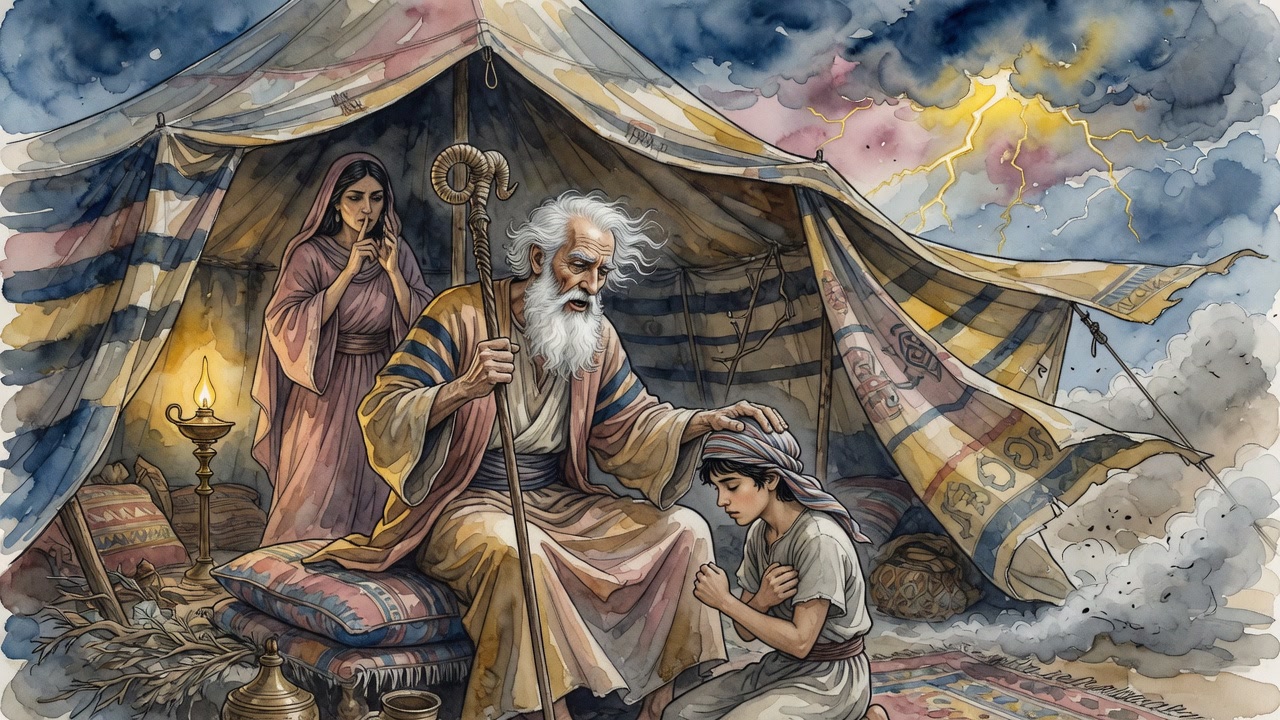
Esau had married Hittite women and their customs filled the house. Rebecca told Isaac that if Jacob married the same way she would rather die.
Table of Contents
 Click for full size
The Well Was Not as Safe as It Sounded
Jacob left Beersheba, and the name of the place followed him. Be'er: a well. Shevuah: an oath. Beersheba was the place of sworn water, where Abraham and Avimelekh had made a treaty binding their families for generations. The well was memory and inherited obligation at once.
Bereshit Rabbah says Jacob left because the shadow of that old oath fell across his path. Abraham had promised Avimelekh that his descendants would deal kindly with the Philistine's descendants for three generations, seven years counted for each. Jacob looked at the well and understood: if he stayed, he might find himself trapped inside his grandfather's words. The place of covenant could become a cage. He left before the next obligation could find him.
Rebecca Could Not Bear the House Any Longer
His mother had already told his father what she could not say to Esau's face. Her life was loathsome because of the daughters of Chet. Esau had married Hittite women who brought their customs into the household, and Rebecca found the air unbreathable. If Jacob married like that, she said, why should she go on living?
Bereshit Rabbah reads this as more than domestic distress. Rebecca is watching the covenantal household buckle. She had gone to inquire of God while the twins were still wrestling in her womb, and the answer had been clear: the elder will serve the younger. Now the elder's marriages were pulling the house toward Canaan and away from Haran. Jacob had to leave not only to escape Esau's anger but to find the woman who would make the continuation possible.
Laban Was Already in the Story
Before Jacob reached Haran the midrash finds Laban there waiting. He is the uncle who becomes the trap, the one who smiles while counting what he can take. The rabbis track his name across the story the way you track a smell before the fire appears. Laban approves the servant's original mission, shapes the family's politics for twenty years, and releases Jacob only when God tells him directly: do not touch this man.
The struggle with Laban is the struggle with someone who knows how to use love as leverage. He loves his daughters enough to trap Jacob with them. He loves his flocks enough to change the labor contract ten times. Jacob outsmarts him in the end but not without cost. He arrives in Canaan a rich man who has been bent by the work.
Malachi Remembered What Jacob Endured
Centuries later the prophet Malachi opens with a line that became famous: I loved Jacob, but Esau I hated. Bereshit Rabbah refuses to sentimentalize it. The love is not approval without scrutiny. It is the recognition of someone who went through what Jacob went through and came out still carrying the promise. God's love for Jacob is described through the contrast with Esau, whose mountains would be made a waste and whose inheritance would become jackals' territory.
Jacob did not choose the easier life. Malachi at the end of the prophetic canon looks back across the whole history and says: that choice was seen, that endurance was remembered.
Rome Was Esau's Shadow
Bereshit Rabbah was compiled in the Land of Israel under Roman rule. When the rabbis read about Esau's descendants building empires, they are also reading about their present. Esau's kingdom, in their imagination, is Rome: powerful, brutal, and temporary. Jacob's limp at the Jabbok is not only a wound. It is the mark of someone who wrestled the empire and survived the night, who emerged damaged but named, who crossed into morning even if the hip socket was broken.
Israel's history under Rome looked like that limp. Present but bent. Alive but marked by the struggle.
Sukkot Was Where He Rested Before Shechem
After the Jabbok, after Esau met him and they wept and parted, Jacob moved to Sukkot. He built booths for his cattle and a house for himself. Bereshit Rabbah asks how long he stayed and finds meaning in the silences around the number.
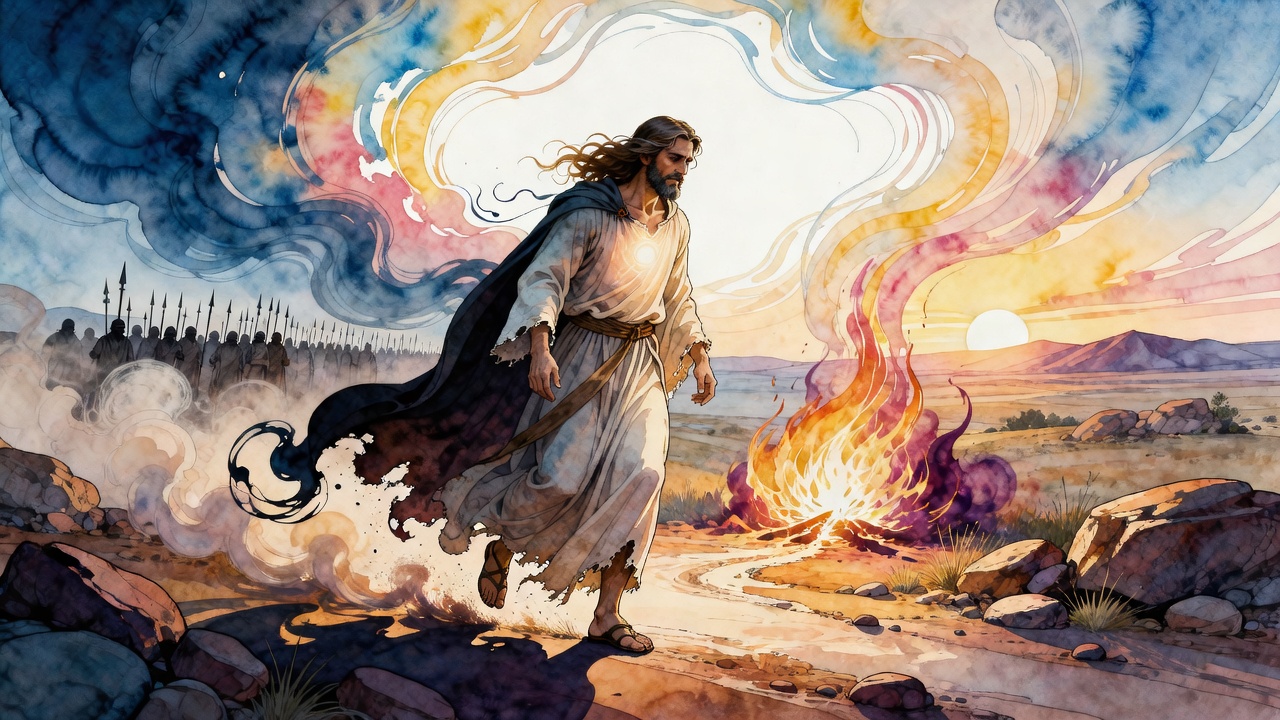
What matters is that Jacob stopped. After Haran and Laban and Penuel and the encounter with Esau, there was a place between the struggle and the next chapter. He built something temporary. Sukkot means booths. And then the sun that had set when he fled Beersheba rose early to heal him as he crossed into the land again. Bereshit Rabbah says the sun that sank to speed him out of danger rose early to repair what the wrestling had broken. The hip did not stay broken forever. The land itself restored him.
← All myths