Laban the Deceiver Who Shaped Israel's Destiny
Laban called Jacob his brother though Jacob was his nephew. The word was a bid, not an embrace, and it opened twenty years of systematic fraud.
Table of Contents
 Click for full size
Running Toward the Wrong Man
Word had reached Padan-aram before Jacob did. Laban's sister Rebekah had a son who had arrived at the well, alone, and single-handedly rolled away the great stone that normally required a group of men to move. Then he kissed Rachel and wept. Then he announced himself as the son of Rebekah.
Laban ran. The tradition noted that he ran for the wrong reasons. He had heard that his sister's son had moved the stone. A man that strong was an asset. And he had heard that Jacob had come without a caravan and without gifts, which suggested either poverty or extraordinary circumstances. Laban wanted to know which, and he wanted to find out before Jacob had time to understand what he had walked into.
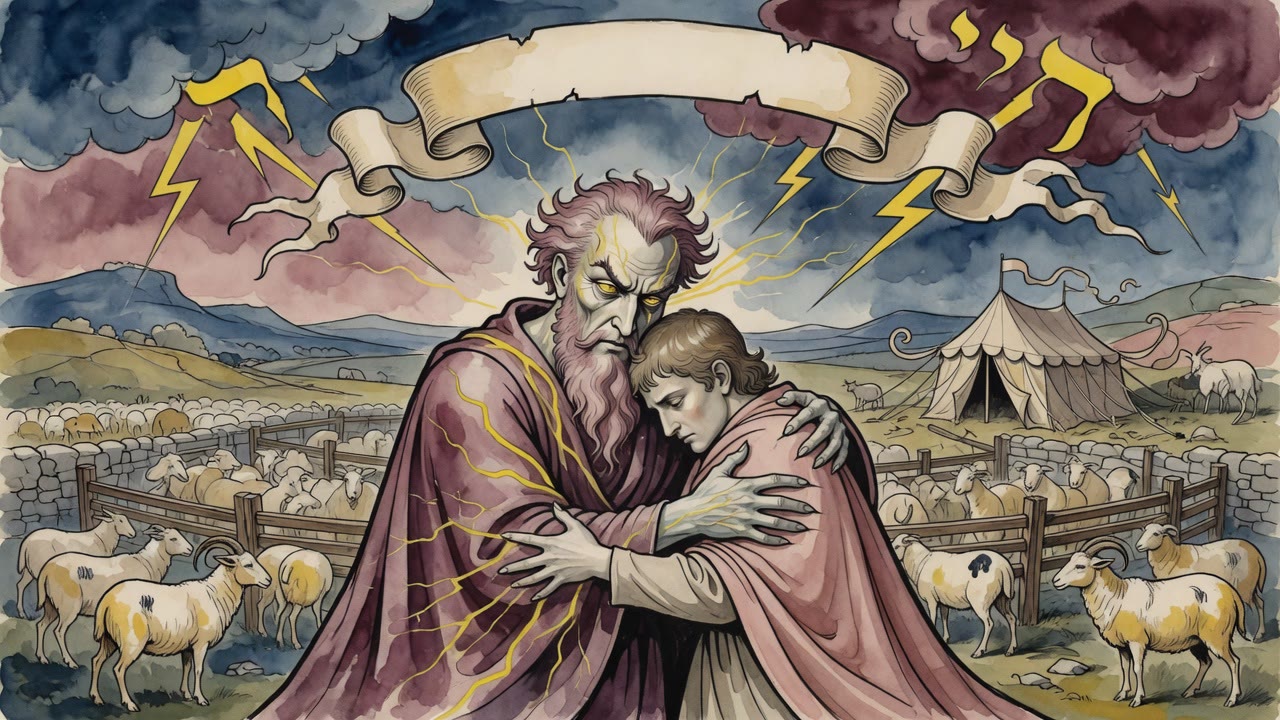
When Laban embraced Jacob and brought him into the house, he said: you are my bone and my flesh. The word he used was brother. Not nephew. Brother.
The Word That Started Everything
The rabbis paused on this word with the precision it deserved. Laban was Jacob's uncle. His sister's son was not his brother. But brother meant something specific in the economics of a household relationship. It meant equal. It meant partner. It meant: you and I owe each other something, and we negotiate as peers.
Nephew meant subordinate. Nephew meant: I took you in. Nephew was the word of the man who holds the advantage. Brother was the word of the man who wants the other to believe there is no advantage held.
Laban used brother because he needed Jacob to feel welcomed before the terms were set. The embrace came first. The question came second: because you are my bone and flesh, should you serve me for nothing? Tell me what your wages should be. The question sounded generous. It was a trap dressed in kinship language. Laban had already decided what Jacob would do. He was letting Jacob's name the price so that Laban could control the terms of accepting it.
Twenty Years of the Same Move
Jacob worked seven years for Rachel. On the wedding night, Laban put Leah under the veil. Jacob did not discover the substitution until morning. When he confronted Laban, Laban explained that the custom of the place required the older daughter to be given before the younger. This custom had not been mentioned when Jacob named Rachel as his price. Laban had waited until the morning after the wedding to introduce it.
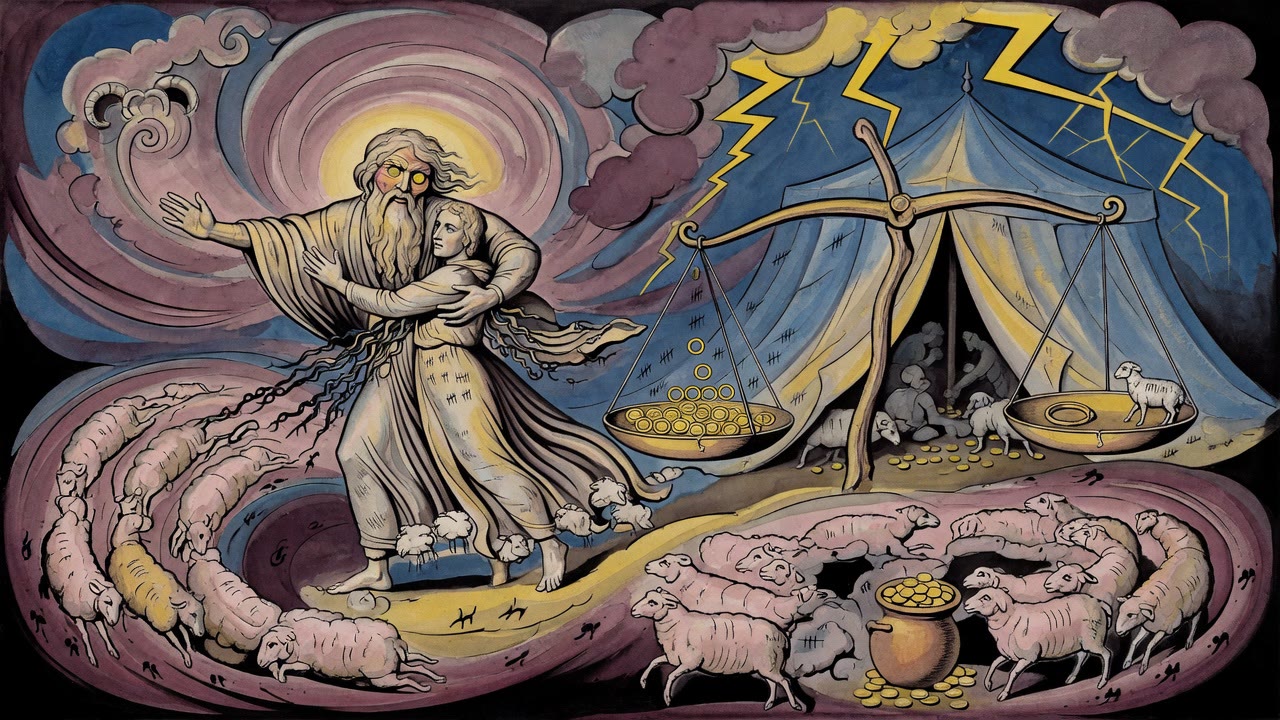
Jacob worked seven more years for Rachel. Then he worked six more years for flocks. In those twenty years Laban changed his wages ten times, the tradition counted carefully. Every arrangement that seemed settled, Laban adjusted when it stopped serving him. When the spotted animals multiplied, Laban said Jacob's wages were the striped ones. When the striped multiplied, the spotted became Jacob's wages again. The manipulation was systematic and relentless.
The word brother had been the first move. Every move for twenty years followed the same logic: use the language of relationship to extract the benefit of transaction.
The Pursuit on the Mountain
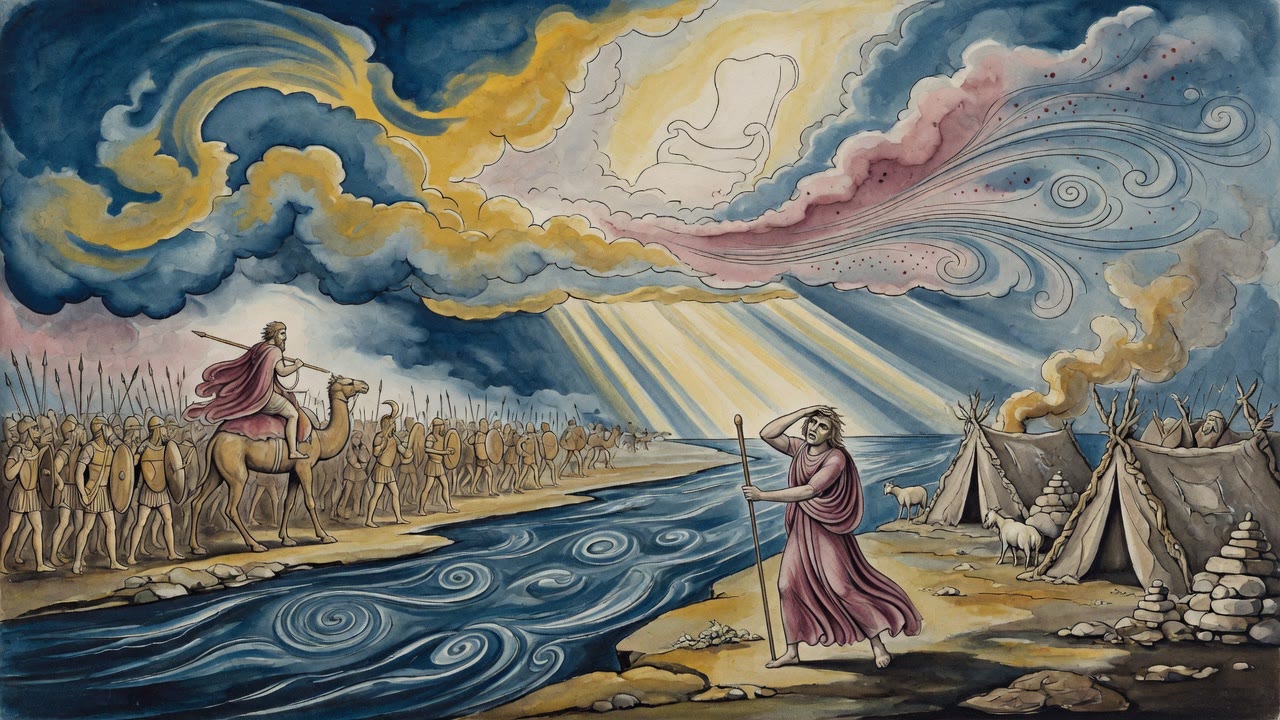
Jacob finally left without telling Laban. He had spent twenty years reading the man and had concluded that no honest negotiation was possible. He took his wives and his children and his flocks and crossed the Euphrates and headed toward Gilead.
Laban caught him in seven days. His speech to Jacob on the mountain was another performance in the same register as the first: you have deceived me, you drove away my daughters like captives of the sword, you did not let me kiss my grandchildren and daughters goodbye. You have acted foolishly. The language of grievance, of violated family feeling, of a grandfather denied his rightful farewell.
Jacob's response was the first honest speech of the relationship. He listed the years. He described the changed wages. He named the heat of the day and the cold of the night and the sleep that had left him. He said Laban would have sent him away empty-handed if God had not intervened. The truth of twenty years came out in a single speech, and Laban had no answer that could hold against it.
They made a covenant at Gilead and separated. Laban returned to his household of gods and his manipulations. Jacob went south toward the land his grandfather had been promised. The twelve tribes of Israel would be born from the family Jacob had built in the house of the man who called him brother and meant nothing by it.
← All myths