The Family That Carried Creation Through Exile
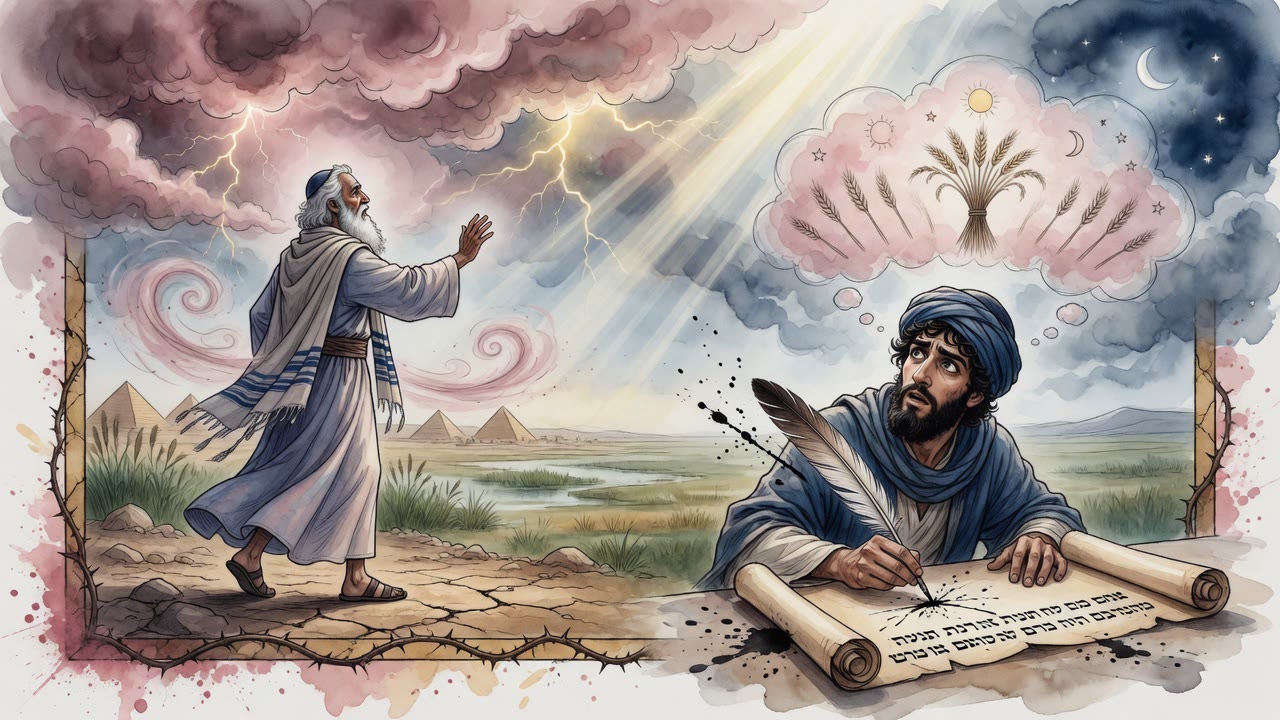
Abraham was seventy-five when he walked away from his father's house toward a land he had not seen. Isaac sowed in a famine year and reaped a hundredfold.
Table of Contents
 Click for full size
Abraham Walked Out of Ordinary Fate
God's first command to Abraham does not sound extraordinary until you actually imagine obeying it. Leave your land. Leave your birthplace. Leave your father's house. Walk away from every structure that held your identity in place. In the ancient world, a person without land, kin, and ancestral memory was nobody. Abraham was being asked to become nobody and then to become something that had never existed before.
Bereshit Rabbah hears this departure as a rupture with the machinery of fate. Astrology placed Abraham in a position that said: no children. The stars said it. The pattern of his birth said it. What God said was: step outside that pattern. Walk away from the system that predicts you, and I will make you into something the prediction system cannot accommodate.
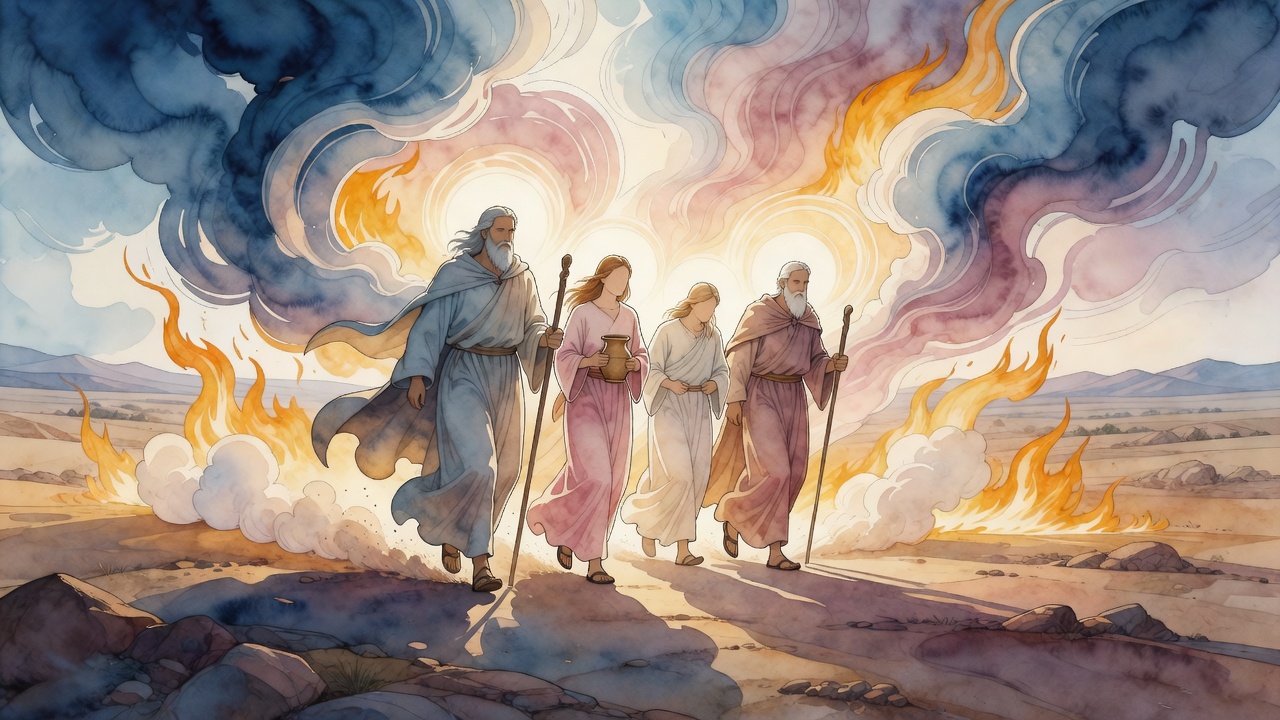
Abraham went. He was seventy-five years old. He took Sarah, his nephew Lot, and everything they had accumulated, and he walked toward a land he had been told he would receive without yet being told anything specific about when or how. The rabbis read this departure as a second creation, a world beginning again around one man's willingness to leave behind everything that made him legible to the world he had known.
Rebecca Stood at the Dawn
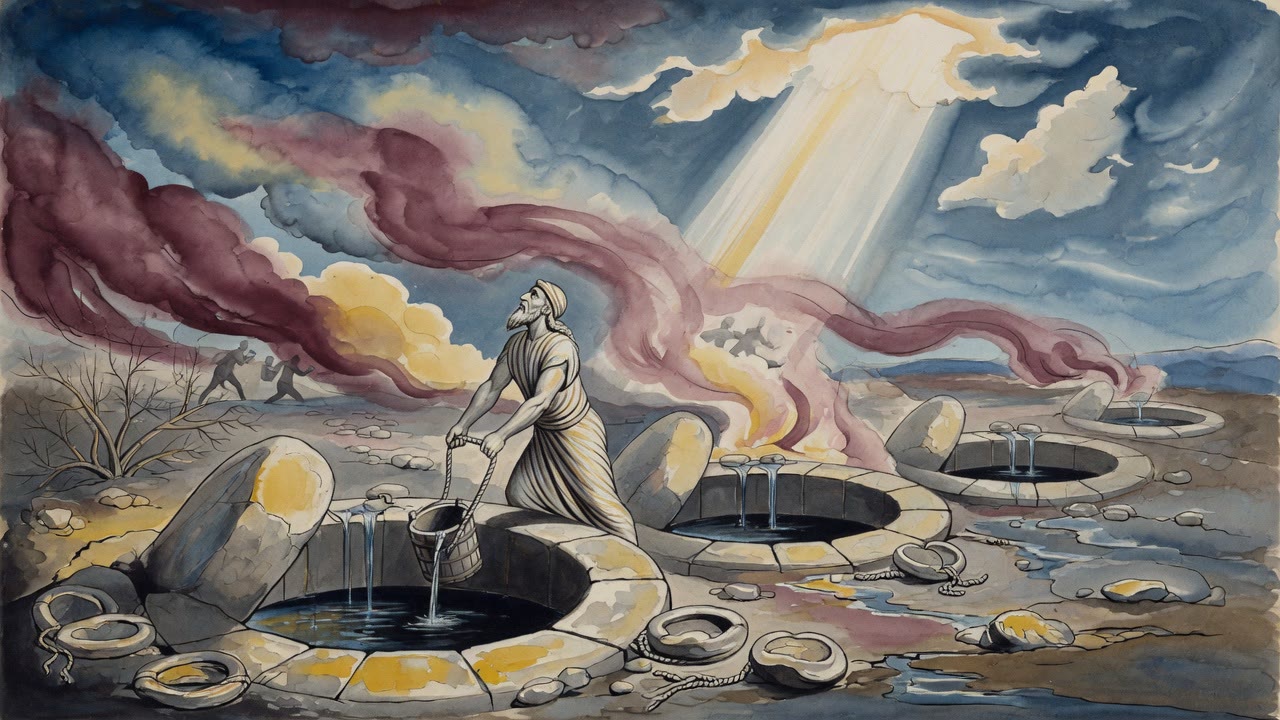
The rabbis in Bereshit Rabbah placed Rebecca at the beginning of things, not as an afterthought to the patriarchal line but as a person whose election preceded the obvious moments of her life. She appeared at the well and gave water to a stranger and his camels without being asked for more than a sip. That action, freely offered, was the test. She passed it without knowing she was being tested.
The rabbis noticed that Psalm 46 sings of God's city, the holy dwelling of the Most High, and connects it to streams that make glad, to God who is in her midst. Rebecca, in her kindness at the well, was that city-in-person. She was the stream making glad. The whole arrangement of creation that had been waiting for Abraham to leave Ur was now waiting for Rebecca to pour water into a trough for a stranger's camels. Holiness arrives at a well. Providence works through hospitality so ordinary that the person performing it does not register the cosmic weight of what they are doing.
Isaac Faced His Father's Trial Again
Famine came to the land of Canaan in Isaac's generation just as it had in Abraham's. The specific geography was different but the pressure was identical: leave or starve. The promise of the land was colliding with the reality that the land could not always sustain the people who had been promised it.
God appeared to Isaac and gave him instructions that mirrored Abraham's original call. Do not go down to Egypt. Stay in this land. I will be with you and bless you. The promise was repeated to the next generation in different words for the same situation. This is not repetition for lack of a better story. Bereshit Rabbah hears in it a deliberate pattern: the covenant is not transmitted automatically from father to son. It is renewed. Each generation faces the same essential question in the terms of their own crisis, and each generation either stands in the land or does not.
Isaac stayed. He sowed in that year of famine and reaped a hundredfold, because God blessed him. Wealth accumulated around him until the Philistines became afraid of him and Abimelech asked him to leave. That departure, chosen rather than forced, looks nothing like Abraham's desperate journey through the same region, and yet the rabbis heard the same music underneath both stories. The patriarch in an impossible situation, holding to the promise, being moved by circumstances, but never dropping what had been given him.
Jacob Arrived Whole
The Torah says Jacob arrived at Shechem shalem, whole, intact, complete. The rabbis in Bereshit Rabbah spent considerable energy on that single word. A man returning from twenty years of service under Laban, who had cheated him and changed his wages ten times, a man who had just survived the night of wrestling and the terror of approaching his brother Esau with a gift and a prayer and no certainty about what was coming, and the Torah says he arrived whole.
Whole in his body, despite the limp. Whole in his money, despite the years of exploitation. Whole in his Torah, despite the distance from his father's household. The rabbis prized this integrity above almost any other quality in the patriarchal narratives. Jacob could have arrived diminished, wounded in ways that never healed, broken by the injustice and the exile and the long labor under a man who would never deal honestly with him. He arrived intact. Whatever Laban had taken from him had been restored before he crossed back into Canaan.
God Appeared Again After All the Trials
After the violence at Shechem, after Dinah's story and what her brothers did in response, after the fear of revenge from the surrounding peoples, God appeared to Jacob again. The timing matters. God did not appear in Jacob's early years of ease, or at the peak of his prosperity with Laban, or when the wrestling night had just ended in blessing. He appeared after the hardest part, after the catastrophe and the flight and the grief of Deborah's death and Rachel's death and all the disorder of the family.
God told him again: your name is Israel. I am El Shaddai. Be fruitful and multiply. A nation and a company of nations will come from you, and kings will come from your body. The land I gave to Abraham and Isaac I give to you, and I will give the land to your seed after you.
Bereshit Rabbah read this repetition as confirmation that the covenant had survived everything. The promise did not only belong to the Abraham who left confidently or the Isaac who sowed in a famine year. It belonged equally to the Jacob who had been cheated and wrestled and grieved and had watched his children do something terrible in his name. The covenant is not given to people at their best. It is confirmed to people who have gone through everything and are still standing.
← All myths