Bereshit Rabbah Found Israel's Future in Bread, Dreams, and One Rebuke
Joseph read the butler's dream correctly and asked him for one favor, a word to Pharaoh. The butler walked free and forgot him for two years.
Table of Contents
 Click for full size
Abraham Fed the Future at His Door
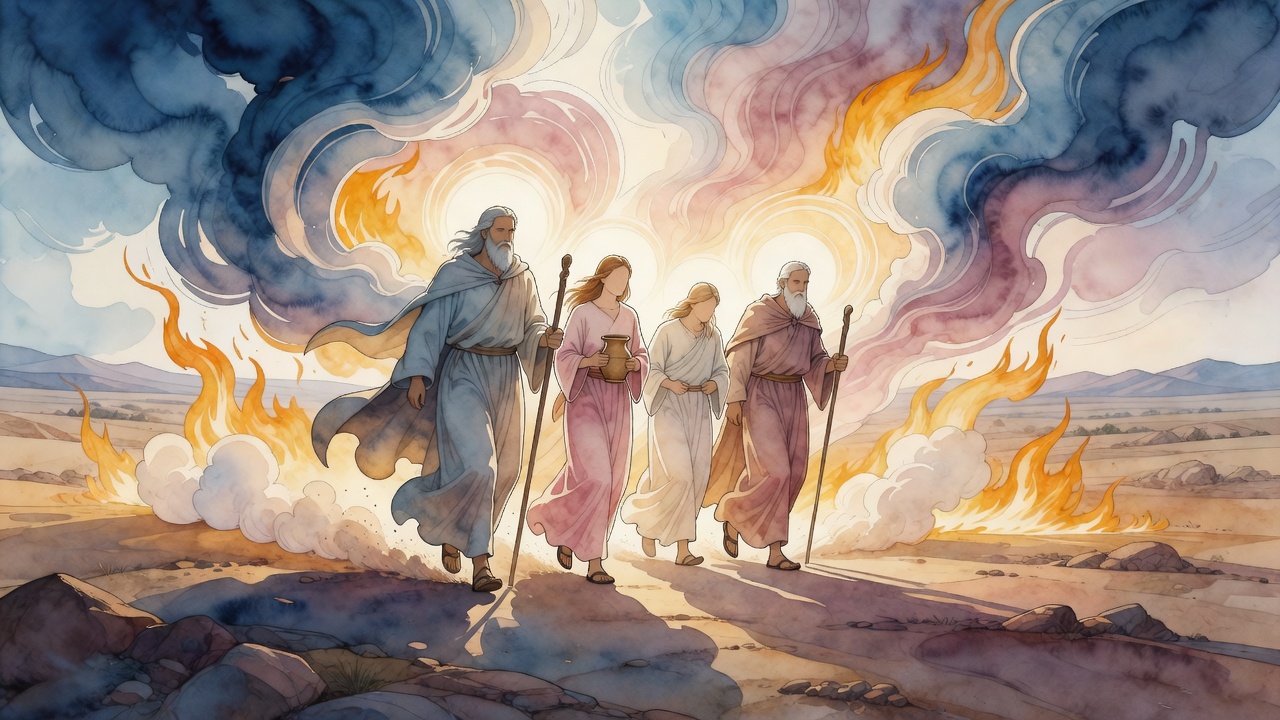
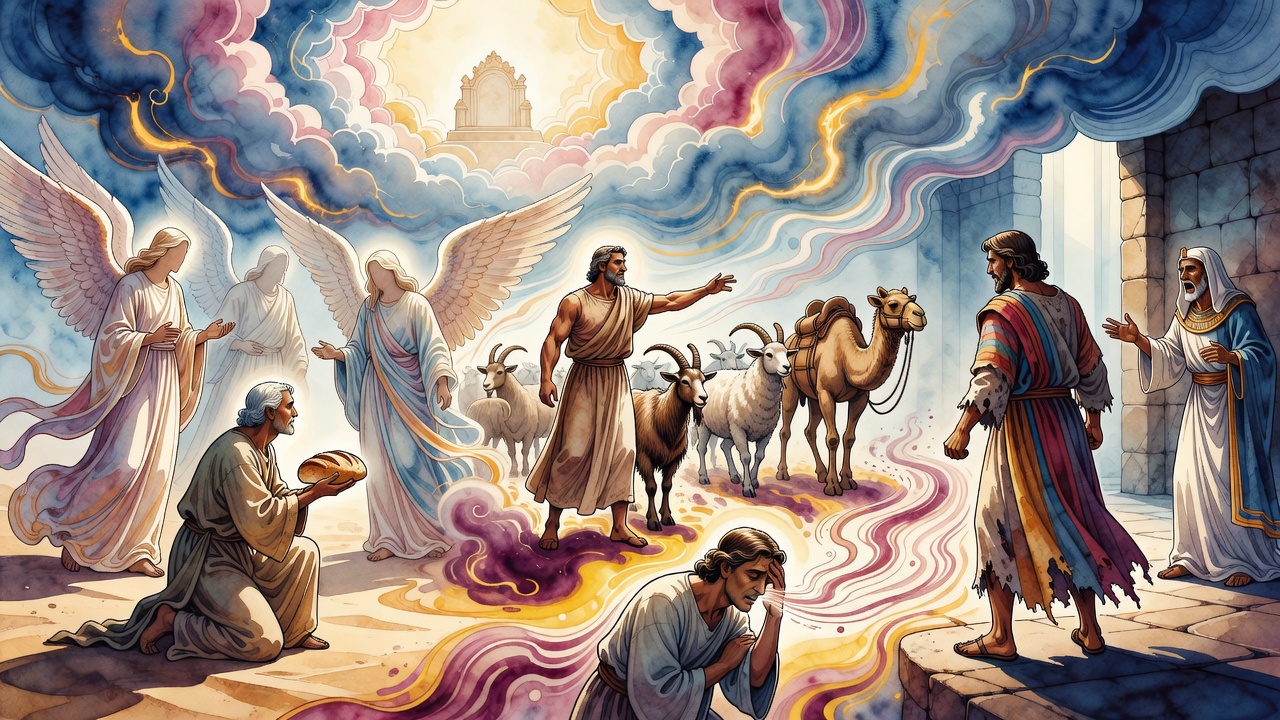
Three men appeared at Abraham's tent in the heat of the day. He did not wait to be asked. He ran to meet them. He bowed to the ground. He said: "let a little water be brought and wash your feet and rest under the tree." Then he ran to Sarah and asked for quick bread from fine flour. He ran to the herd and chose a calf, tender and good, and gave it to a young man to prepare quickly. He brought curds and milk and the meat he had prepared and set it before them and stood beside them under the tree while they ate.
Bereshit Rabbah looked at that scene and heard more than hospitality. Abraham was not yet aware that the future of his family was being delivered to his door. The promise of a son in a year's time, the announcement that would make Sarah laugh and that would be fulfilled precisely on schedule, came with the bread and the meat and the curds served under the tree. The three travelers ate the food Abraham prepared and gave him back something worth infinitely more than what he had spent on the meal.
This is the midrash's teaching about ordinary goodness: it does not know its own consequences. Abraham ran to the cattle and ran back to the tent and ran to meet the travelers because that was who he was, not because he had calculated the return on hospitality. The future hid itself inside the bread precisely because the bread was given freely.
Abraham's Word at Moriah
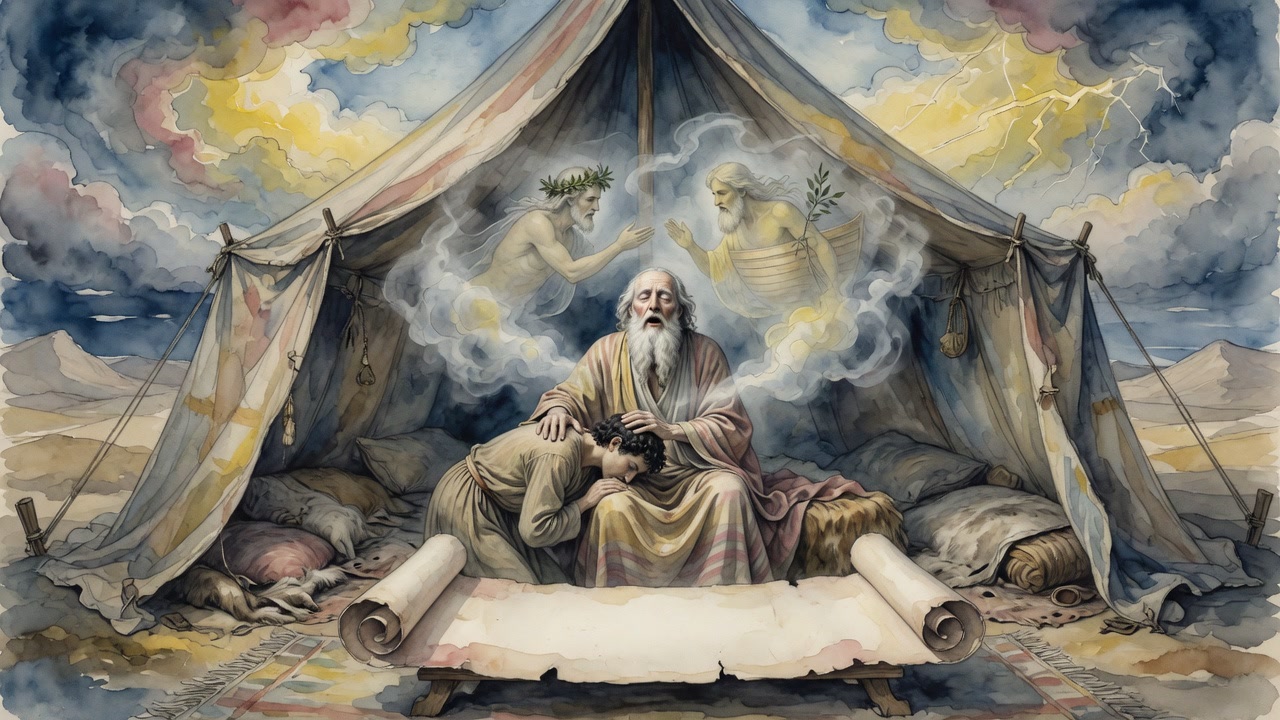
Abraham told his servants: "I and the boy will go yonder and worship and we will come back to you." He used the word we. He said we will return.
The rabbis took this seriously as prophecy. Abraham did not know he was prophesying. He said what he believed would happen, or perhaps what he hoped would happen, and the word came true in ways he could not have planned. Both of them returned. Isaac came back from Moriah as a person who had been brought to the edge of death and received back to life, which the rabbis understood as a kind of resurrection. Abraham came back as a man who had surrendered everything and been given everything back.
But the we had pointed forward as well as back. All of Israel would come back from places further than Moriah. The redemption from Egypt, from Babylon, from every exile that followed, was already encrypted in Abraham's confident plural on the morning he saddled the donkey and cut the wood. We will return. Not he. We.
Jacob's Animals Moved Toward Esau
Jacob sent servants ahead with a gift for Esau: two hundred female goats and twenty males, two hundred ewes and twenty rams, thirty milking camels and their colts, forty cows and ten bulls, twenty female donkeys and ten males. The count was specific and large. Jacob was not sending a token. He was sending a significant portion of his wealth toward the brother who had sworn to kill him.
Bereshit Rabbah read the animals as symbols. Each species, each number, pointed forward to something in Israel's future. The goats became the sin offerings. The rams became the offerings for festivals. The camels, who carry their load without complaint and do not require daily supervision, stood for a quality of endurance that Israel would need. The cows and bulls pointed to the Temple service. The donkeys pointed to the humble work of ordinary life.
Jacob was walking toward Esau with the whole future of Israel in the animal gift moving ahead of him. He did not know this. He thought he was buying his brother's mercy with livestock. God had arranged it so that the inventory of Israel's covenant life moved through the fields of Canaan as a flock on the way to a reconciliation that almost did not happen.
Joseph Refused the Butler's Help
Joseph was in prison because Potiphar's wife had lied. He had been careful, faithful, and completely innocent, and he was in a dungeon because the most powerful woman in his employer's household had decided to destroy him for refusing her. He had no recourse through the ordinary human channels.
The butler of Pharaoh was put in the same prison. Joseph correctly interpreted the butler's dream: in three days Pharaoh would restore him to his position. Joseph asked the butler to remember him to Pharaoh, to mention his case, to help him out of this place. The butler was restored exactly as Joseph said. The butler forgot Joseph entirely for two full years.
Bereshit Rabbah read Joseph's appeal to the butler as a failure of faith, and the two extra years in prison as its consequence. Joseph had put his trust in a human intermediary when the only intermediary who could actually release him was God. The extra years were not punishment in a simple sense. They were the natural result of looking for rescue in the wrong direction. When the right moment finally came, it came because Pharaoh had a dream that only Joseph could interpret, which meant God had arranged the release through a route that bypassed the butler entirely.
Pharaoh's Dream Shook Everything
The seven fat cows and the seven thin cows. The seven full ears of grain and the seven blasted ears. Pharaoh's wise men offered interpretations: seven daughters, seven provinces, seven kings. Every reading was technically creative and completely wrong, because the men interpreting Pharaoh's dream were reading it as a personal statement about Pharaoh's fortune rather than as a disclosure about the entire region's agricultural future.
Bereshit Rabbah noticed something in Pharaoh's reaction to the wrong interpretations: his spirit was troubled. The word used is the same word used when the divine spirit moved over the waters at creation. Pharaoh's mind, standing before a dream he could not understand, was in a condition similar to the formless void waiting for ordering. Joseph's interpretation was not merely more creative than the wise men's. It was the ordering word that the chaos of Pharaoh's dream had been waiting for, the act of understanding that gave the seven years their meaning and made the next fourteen years survivable.
The Brothers Saw Each Other on the Day of Judgment
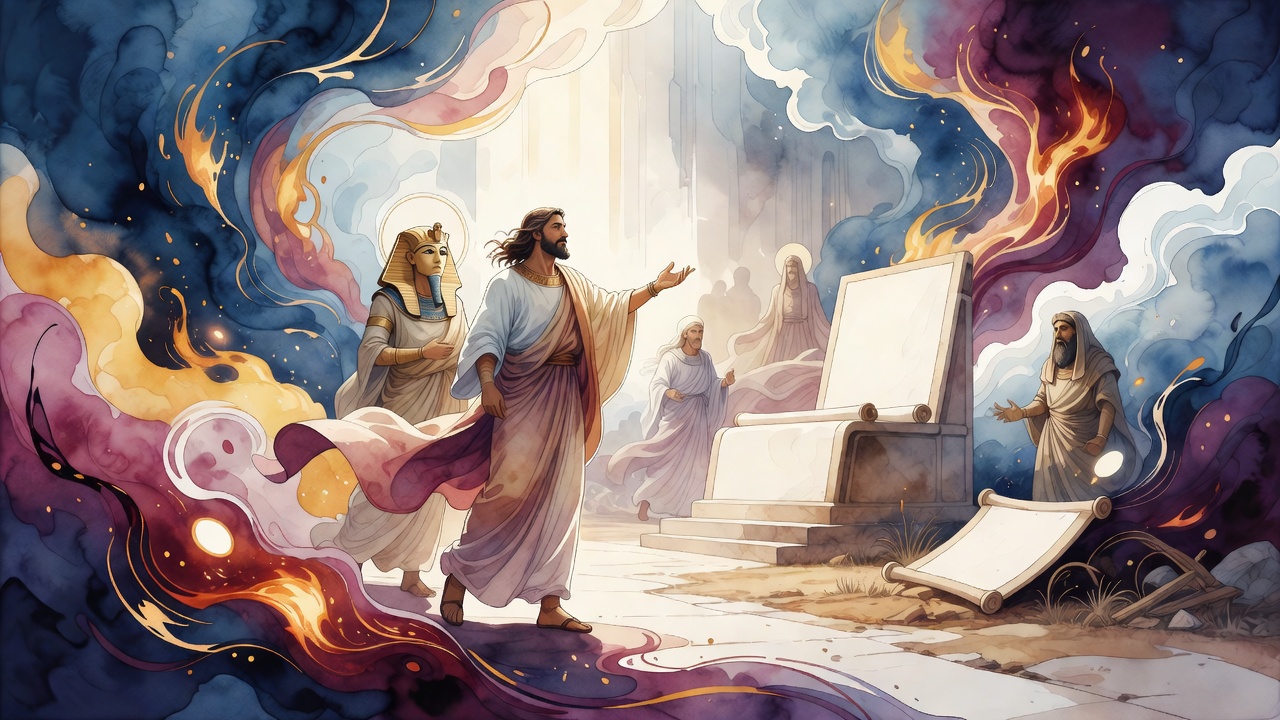
When Joseph finally revealed himself to his brothers in Egypt, the moment arrived with a sentence that the rabbis remembered as the most devastating rebuke in the Torah. Joseph said: "I am Joseph. Is my father still alive?" And his brothers could not answer him because they were terrified in his presence.
Bereshit Rabbah looked at that sentence and heard the voice of the day of judgment inside it. If Joseph, whom you sold, is standing before you now, how will you answer on the day when God stands before you and says: "I am God, whom you abandoned?" The brother who spoke one sentence of accusation from a position of power revealed not only his own history but the structure of the ultimate reckoning. The shame the brothers felt before Joseph is what shame before God looks like when every concealment is stripped away and the one who was wronged is in the position of power and the wrongdoers are standing in their original guilt with nowhere left to hide.
The brothers could not answer. There was no answer. What they had done was what they had done, and the gap between then and now had not erased it. The future hidden in bread and dreams and animals and a prisoner's misplaced hope in a butler had arrived at this moment: a living man standing before the brothers who sold him, and the reckoning being gentler than they deserved.
← All myths