How Joseph Left Room for God to Cancel the Famine at Year Two
Joseph told Pharaoh the famine would last seven years, but Jacob's arrival canceled it after two. Rabbi Levi Yitzchak explains what Joseph knew when he spoke.
Table of Contents
 Click for full size
Seven Years, Then Two
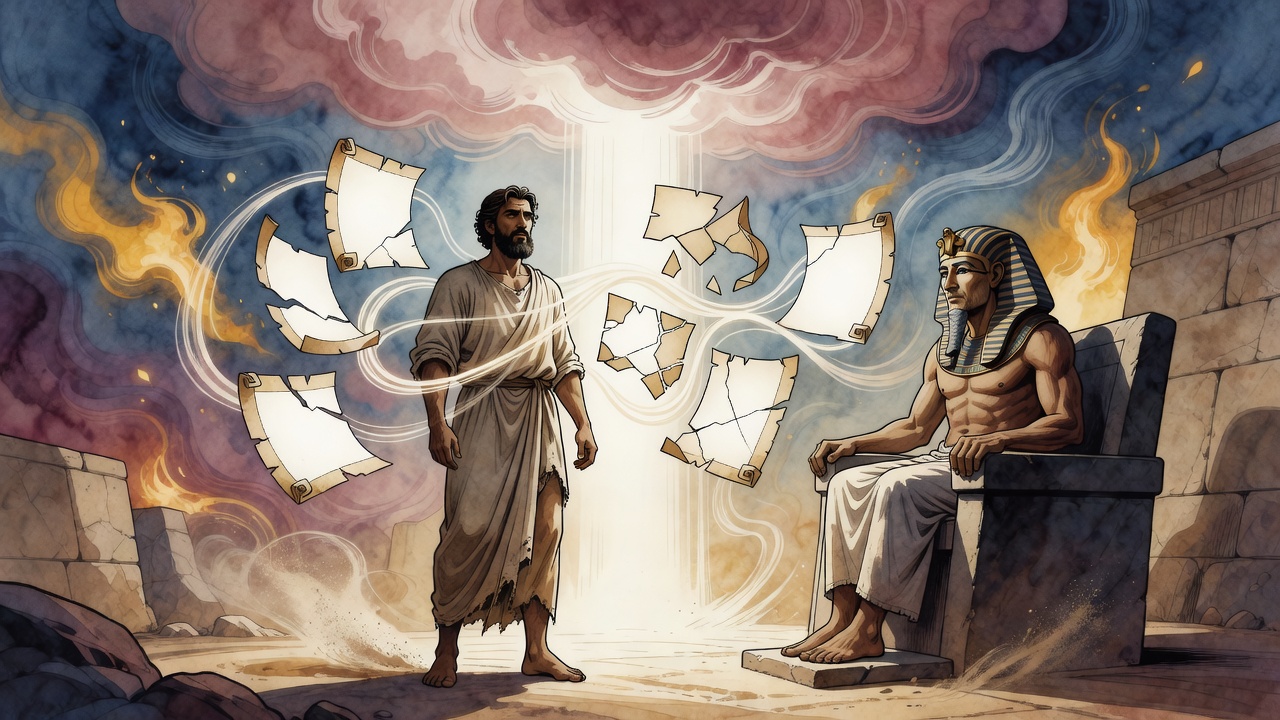
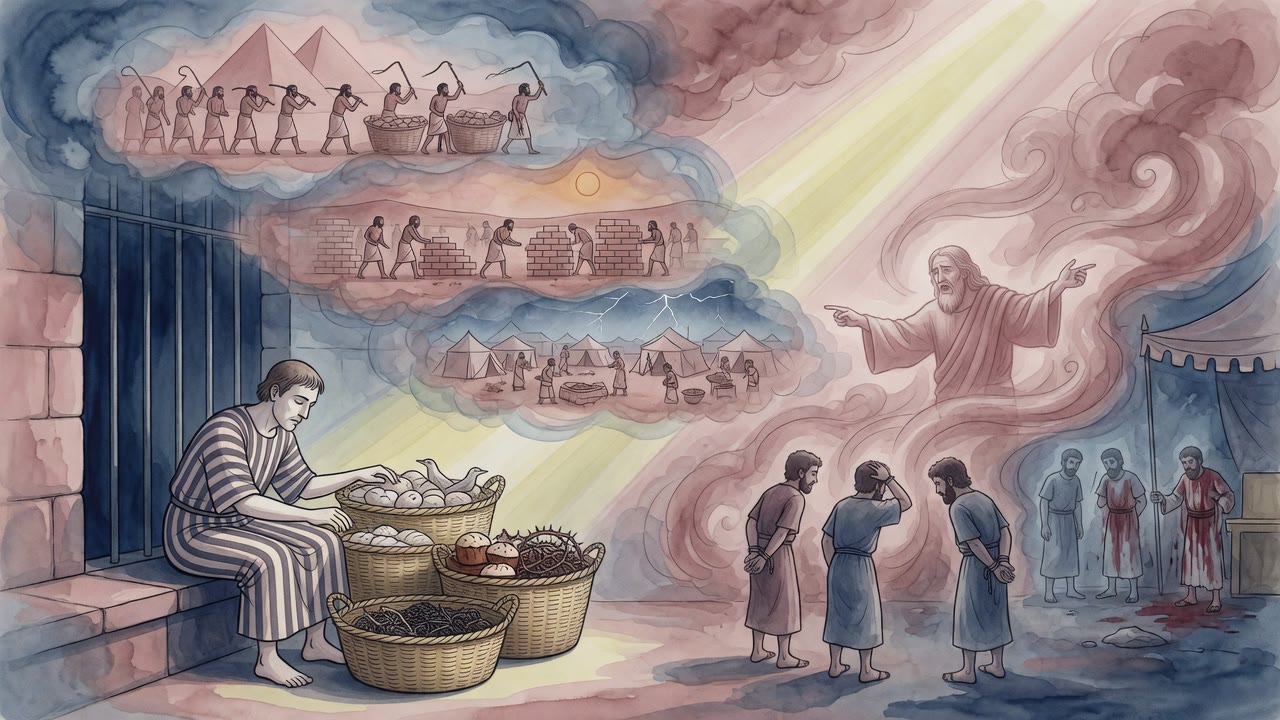
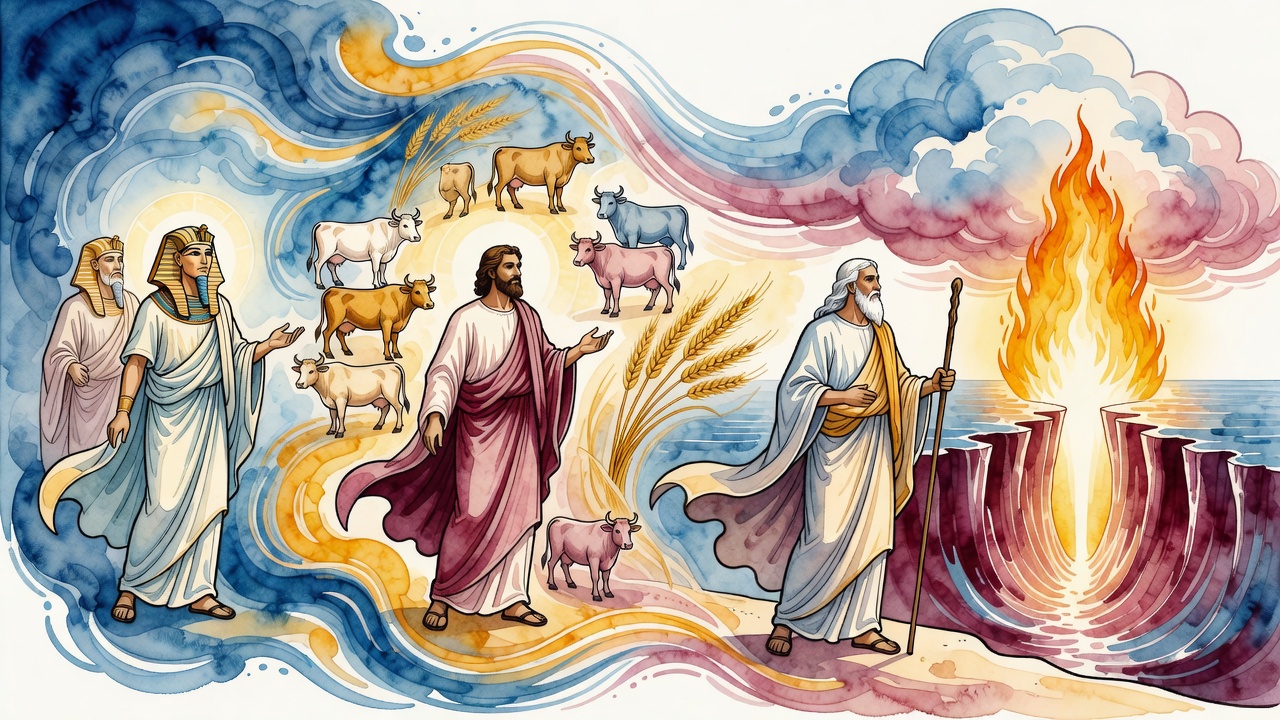
Joseph stands in Pharaoh's throne room after two years in the dungeon, and he is good at this. The dreams that no one else has been able to crack open, he cracks open immediately. Seven fat cows devoured by seven thin ones. Seven full ears of grain swallowed by seven withered ones. The dream says the same thing twice, Joseph explains, because God has determined the matter and it will happen soon (Genesis 41:32). Seven years of abundance. Seven years of famine. He names the years and outlines the policy for surviving them, and Pharaoh is so persuaded that he takes his ring off his hand and puts it on Joseph's.
Then Jacob arrives in Egypt after only two years of the famine, and the famine stops. The seven-year decree runs out at year two. The abundance Joseph stored in the granaries is enough because the shortage ends ahead of schedule. Pharaoh does not call Joseph back to ask him to explain the miscalculation. But the question sits in the text, quiet and unsettled: what happened to the other five years?
The Phrase That Protected the Prediction
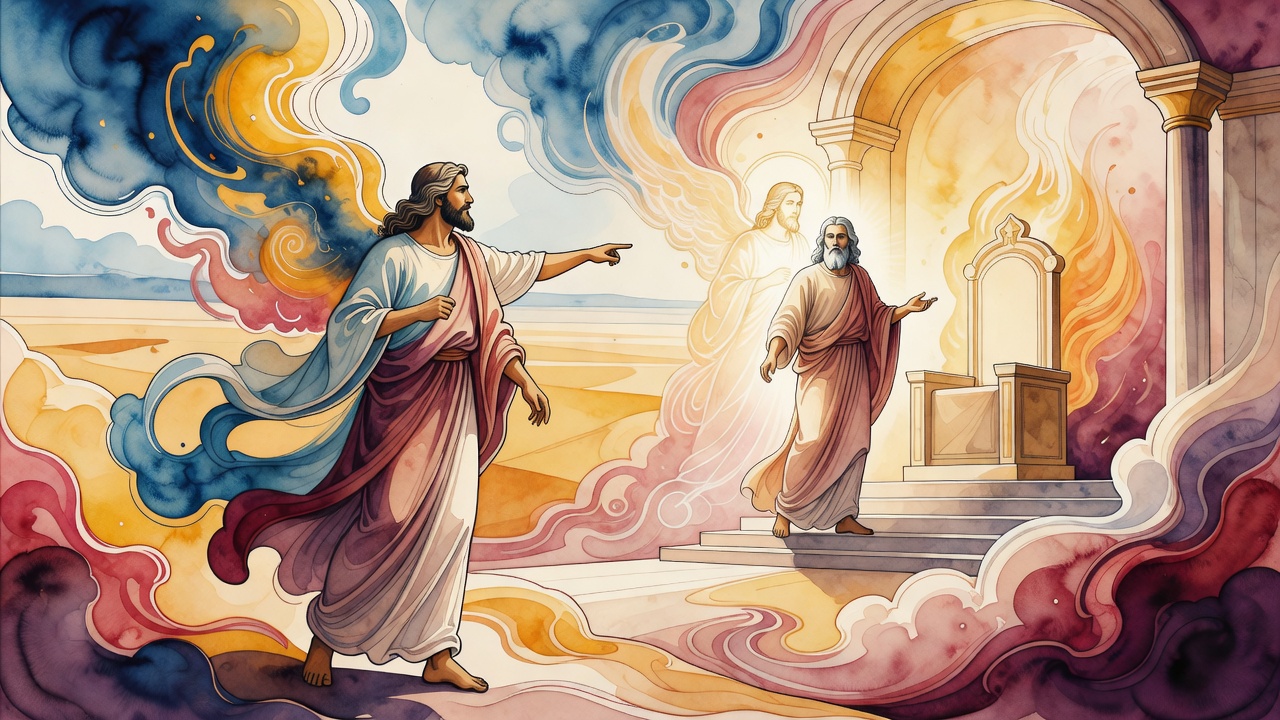
Rabbi Levi Yitzchak of Berditchev, whose Kedushat Levi was published in 1798, does not accept that Joseph miscalculated or that the divine decree was simply rescinded without cause. He reads the answer in a single phrase from Joseph's interpretation. When Joseph explained the dream to Pharaoh, he did not say: there will be seven years of famine. He said: "What God is about to do, He has shown Pharaoh" (Genesis 41:28). The prediction is attributed entirely to God's intention in that moment. It is not Joseph's forecast. It is a report of a divine plan, and a divine plan with a negative character can be interrupted.
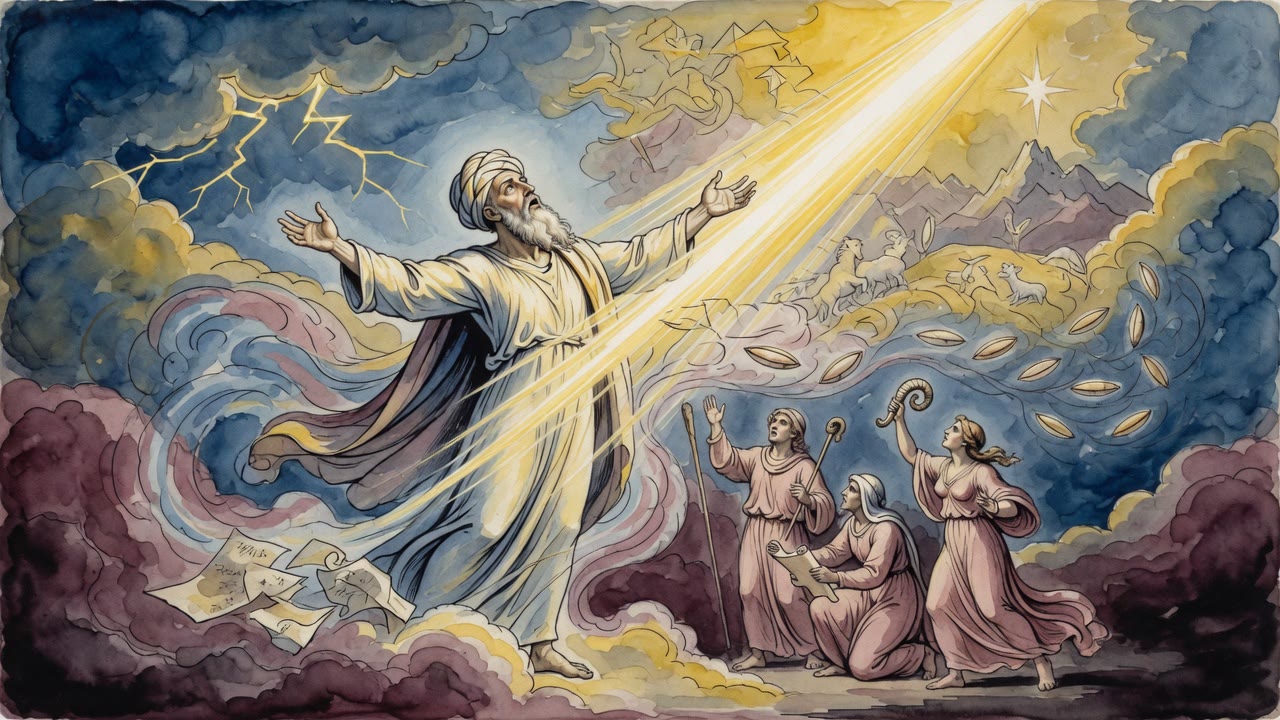
This is the theological architecture beneath Joseph's words. Divine decrees of blessing are sealed and permanent. Divine decrees of suffering are always conditional, always subject to cancellation by repentance, by prayer, or by the arrival of a righteous person whose presence changes the calculation. Joseph, standing in Pharaoh's court, knew this. He built the escape clause into his own interpretation not to protect himself from being wrong but to preserve the possibility of divine mercy being exercised before the decree ran its full course.
What Jacob's Arrival Changed
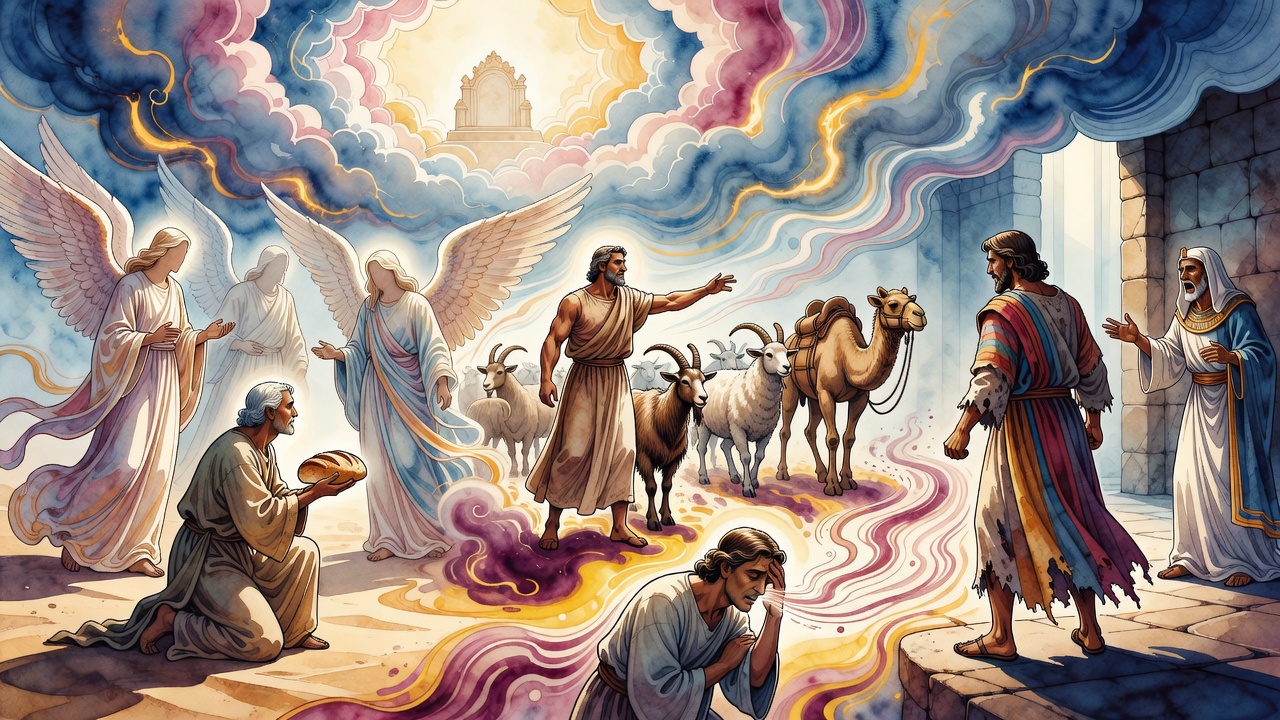
The Kedushat Levi identifies Jacob as the tzaddik whose arrival canceled the famine. A tzaddik, a righteous person, does not simply survive a divine decree of suffering. A tzaddik changes the environment in which the decree was issued. The famine existed because the world required it for purposes that Jacob's presence made unnecessary. When Jacob came down to Egypt, when Joseph saw his father and wept and held him, something in the cosmic accounting closed that could not close before. The five remaining years of famine were no longer required.
This is not magic. It is the logic of why certain people are sent into certain situations. Jacob did not come to Egypt to end the famine. He came to see his son, to spend his last years near the child he had mourned for twenty-two years. But the presence of the person who carries what Jacob carried, the weight of the patriarchal inheritance and the direct encounter with God at the ford of the Jabbok, cannot enter a space without altering what that space requires. Jacob arrived and the famine ran out of purpose.
The Interpreter Who Knew the Limits of Interpretation
What the Kedushat Levi admires in Joseph is not the accuracy of the prediction but the humility encoded in the phrasing. Joseph could have named the seven years with the confidence of someone who has seen the dream clearly and knows he has read it correctly. He names them instead as what God is showing Pharaoh. This is a prophetic act of self-erasure: the interpretation is given not in Joseph's name but in the name of the one whose plan it is, which means the interpretation carries exactly the flexibility that divine plans carry and nothing more rigid than that.
A prophet who interprets in his own name is bound by what he says. A prophet who says "this is what God is doing" leaves the door open for God to do something different. Joseph the tzaddik, standing in the throne room in the linen garments Pharaoh just gave him, is already preparing for his father's arrival fifteen years in the future and the cancellation that will come with it.
← All myths