Joseph Fed the World While His Brothers Remembered
The butler dreamed of a vine in Joseph's cell. Years later the brothers bowed for grain and named the sale with their own mouths.
Table of Contents
 Click for full size
Pharaoh's Anger Opened the Cell
Two officers of Egypt went to sleep as servants of the king and woke as his prisoners. The chief butler. The chief baker. Pharaoh had turned on them in a single day, and the cell they entered already held a Hebrew named Joseph.
Joseph had not climbed out of the pit by force. Brothers had sold him. An officer had bought him. A wife had accused him. A second pit had taken him. Then God stirred a king's anger so that two dreamers would sit where Joseph could hear them. Masters rage at servants. The righteous rise through other men's fury.
In the dark Joseph waited. He had read dreams before. He would read them again.
The Vine Put a Cup in His Hand
The butler spoke first. A vine had stood before him with three branches. The branches budded. Blossoms opened. Clusters filled with grapes. He took the grapes, pressed them into Pharaoh's cup, and set the cup in the king's hand.
"The three branches are three days," Joseph said. "In three days Pharaoh will restore you, and you will give him the cup as you did before."
Joseph looked at the vine longer than the butler did. He saw a people in it, a vine God would one day carry out of Egypt (Psalms 80:9). He saw three who would hold that people through the leaving: Moses, Aaron, and Miriam. The budding was already a redemption starting in a prison dream. Grapes pressed into an empire's cup. A gift Egypt could drink and could not grow.
"Remember me to Pharaoh," Joseph said. The butler forgot him. Two years passed in the same stone room.
The Provider Locked the Grain
Pharaoh dreamed of seven fat cows and seven thin ones. No magician in Egypt could satisfy him. The butler remembered the Hebrew. Joseph shaved. He changed his clothes. He stood before the king at thirty years old.
"Your dreams are one," he said. "Seven years of plenty. Then seven years of famine so hard the plenty will be forgotten." He did not wait to be asked for a plan. Take a fifth in the good years. Store it in the cities. Hold it against the hunger.
Pharaoh believed him. A foreign general named Pikhol had once stood before Abraham and said, "God is with you in everything you do." The nations had whispered that Abraham could not be righteous without a son. Then Isaac was born, and the whisper died. Pharaoh could not name Abraham's God. He still knew when a prisoner was accompanied.
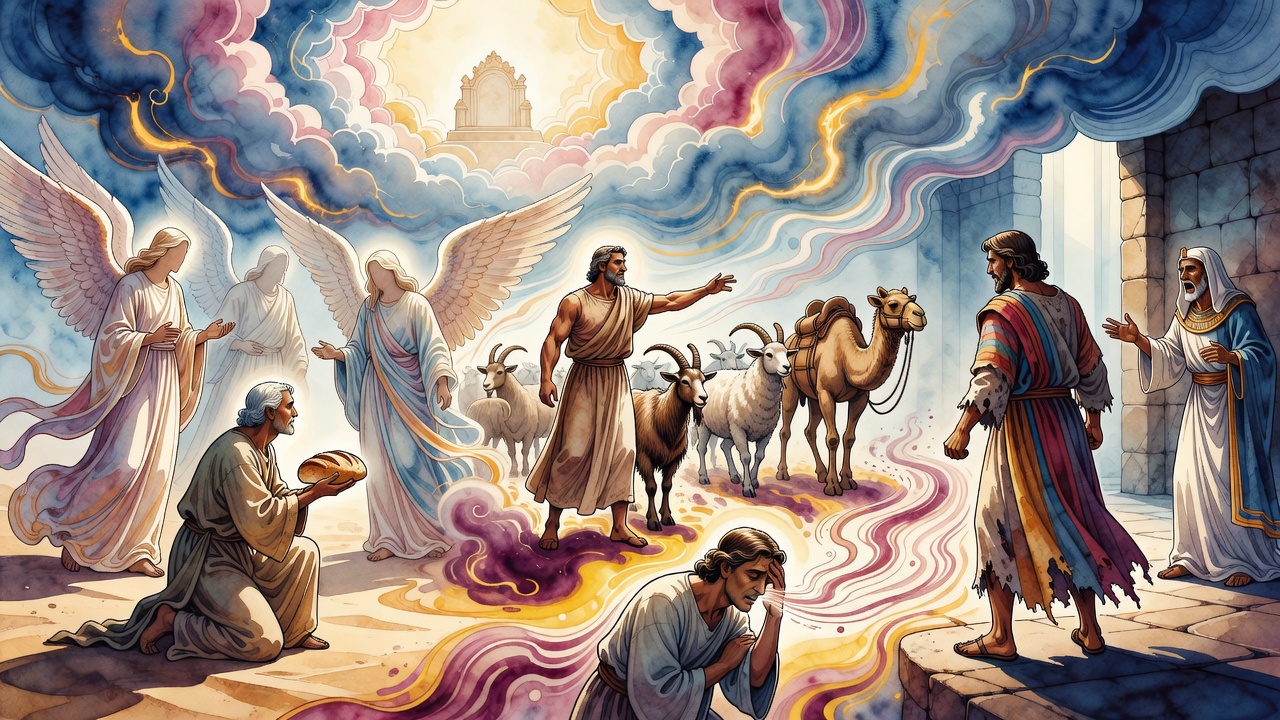
The keys changed hands. When famine came, Egyptians gathered at Joseph's door and cried for bread. "My God does not sustain the uncircumcised," he said. "Go and circumcise yourselves, and I will give to you."
They ran to Pharaoh weeping. "He said empty matters to us." Pharaoh called them fools. "Did he not warn you in the years of plenty? Why did you not store grain in your own houses?" The nation cursed Pharaoh as the withholder of grain (Proverbs 11:26). Blessing sat on Joseph's head. He fed the hungry the way a shepherd leads a flock.
The Brothers Named the Sale
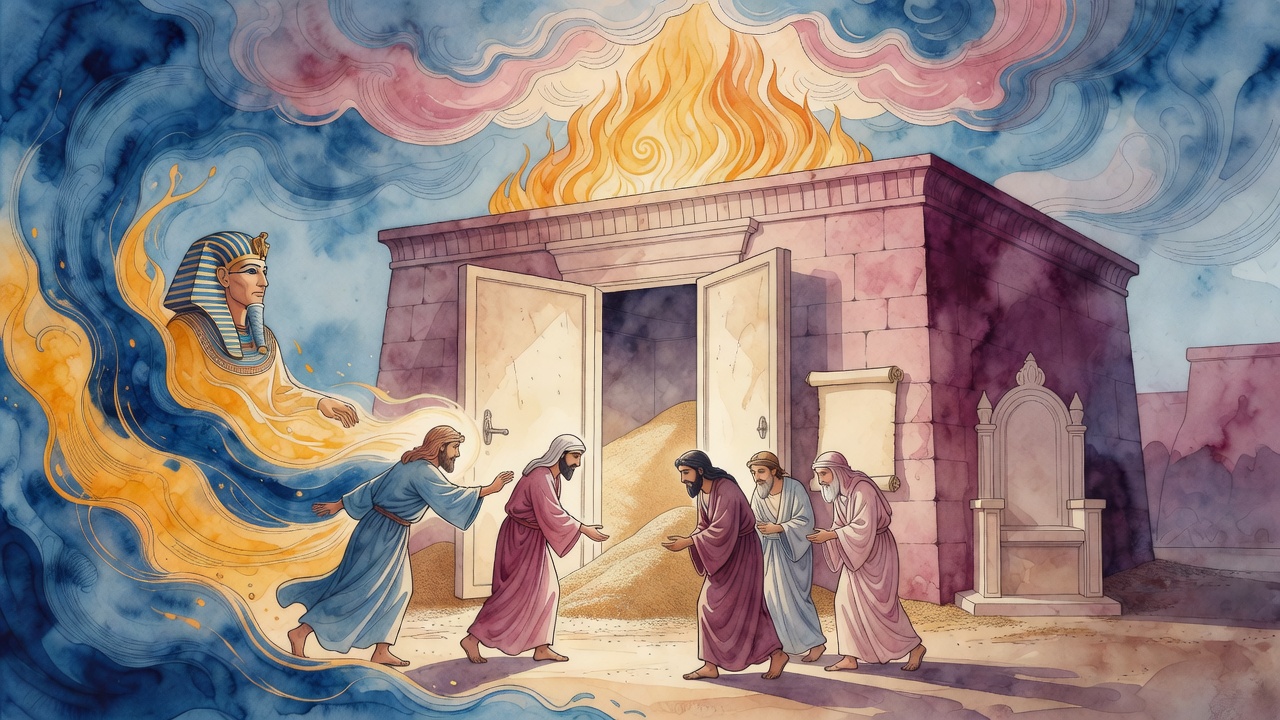
Famine reached Canaan. Jacob sent his sons for grain. They came and bowed, faces to the ground. Joseph knew them at once. They did not know him. He had been beardless when they sold him. He was bearded now, and dressed as Egypt.
He remembered the sheaves. He accused them of being spies. He needed to know whether the men who threw him in a pit were the same men now standing in line for bread.
"We are twelve brothers, sons of one man, and one is absent," they said.
"Where is he?"
"We sold him."
"For how much?"
"For five sela."
Would they buy him back at five? At double? At a thousand? "It is for that purpose that we descended," they said, "either to kill or to be killed." Guilt had walked with them to the storehouse door. Joseph locked them up for three days. On the third day he opened the cell and spoke again.
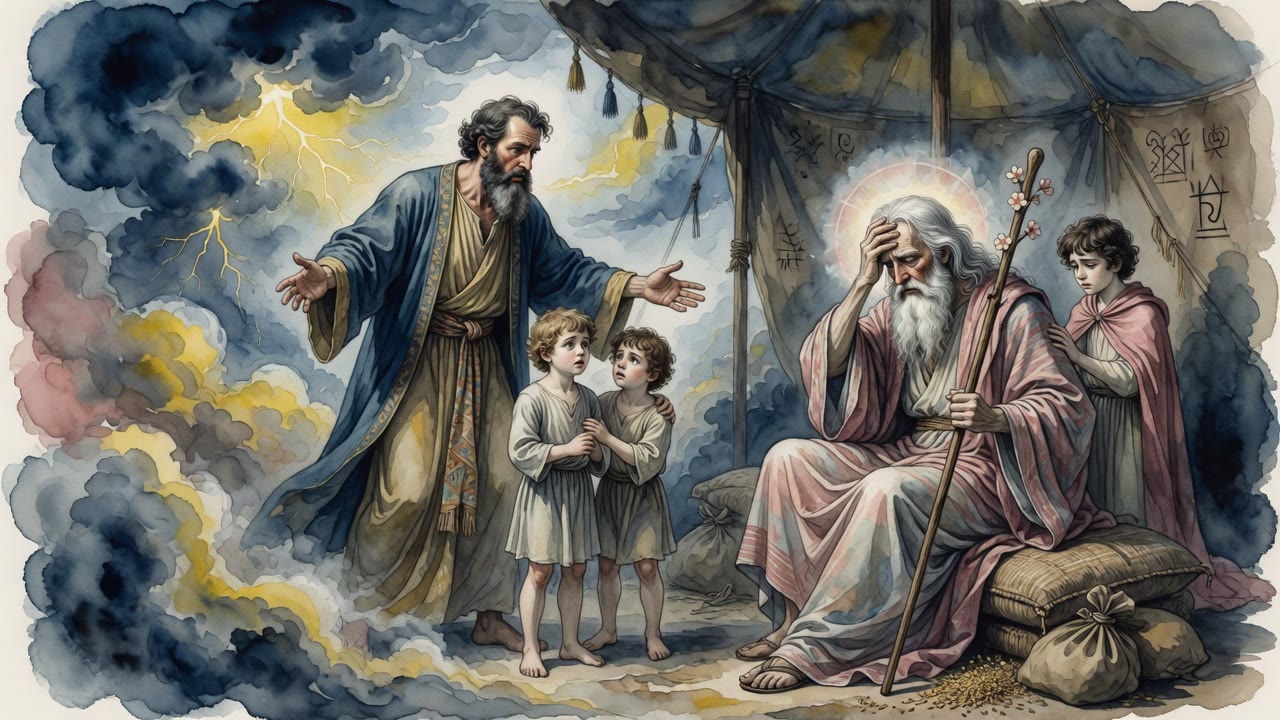
When the truth finally reached Jacob, his heart went faint. He had looked at a torn coat and said an evil beast had eaten his son, and an evil beast is a lion, and a lion is Judah. He would not believe Joseph lived until wagons arrived, a sign of the chapter they had left on together.
The Mountain That Did Not Steal
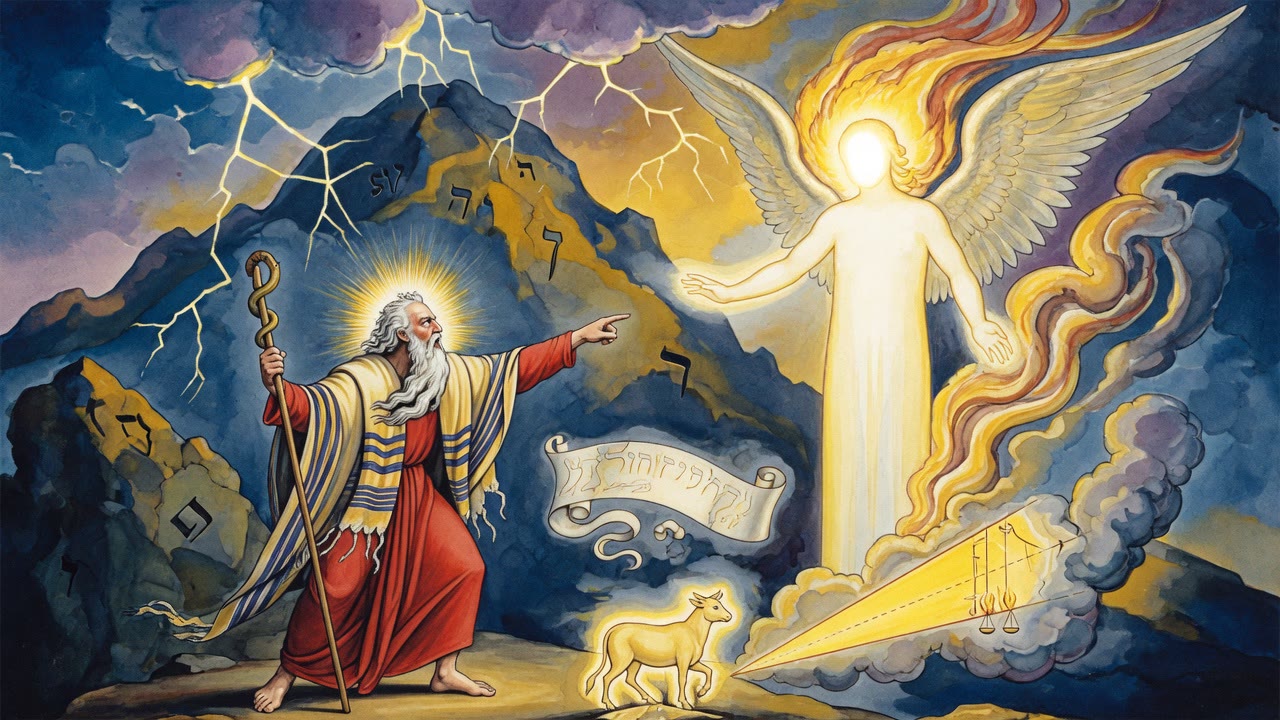
The sale did not end in the storehouse. When God came to give Torah, the mountains ran and argued. Tabor came from a distance. Carmel crossed the sea. Each claimed the fire. Sinai was small. No idol had stood on its peak. God chose the small height for the large gift.
When the tribes later argued over where the Temple would sit, the same quarrel returned. God told them they were all marked. All of them had been party to the sale of Joseph. Benjamin had not. The mountain God wanted for His house sat in the portion of the brother who never took a coin for Joseph's life.
Joseph had been the one thrown down. He stored grain while Pharaoh earned a curse. His brothers bowed and named the sale with their own mouths. The pit had become a storehouse. The rejected son held the bread. The brother who did not steal him held the mountain.
← All myths