5 min read

Reuben Put His Sons Between Jacob and Benjamin

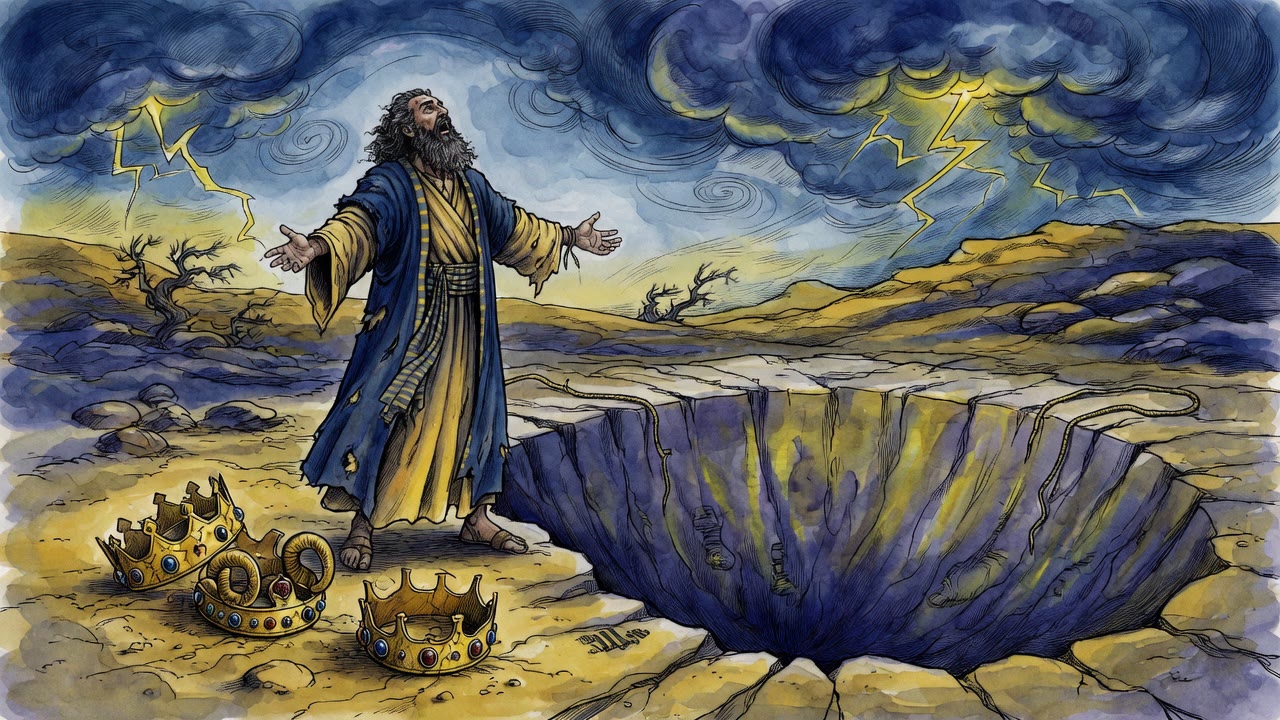
Reuben offered his own sons as collateral for Benjamin. Bereshit Rabbah hears the old guilt over Joseph speaking through that desperate pledge.

Curated by Arthur · Told by Maggid ·
Table of Contents
  1. The Pledge Jacob Could Not Accept
  2. Joseph Heard the Confession
  3. The Blood Included Jacob
  4. Reuben Offered What Judah Would Correct

Reuben offered the wrong lives because he was still carrying the old one.

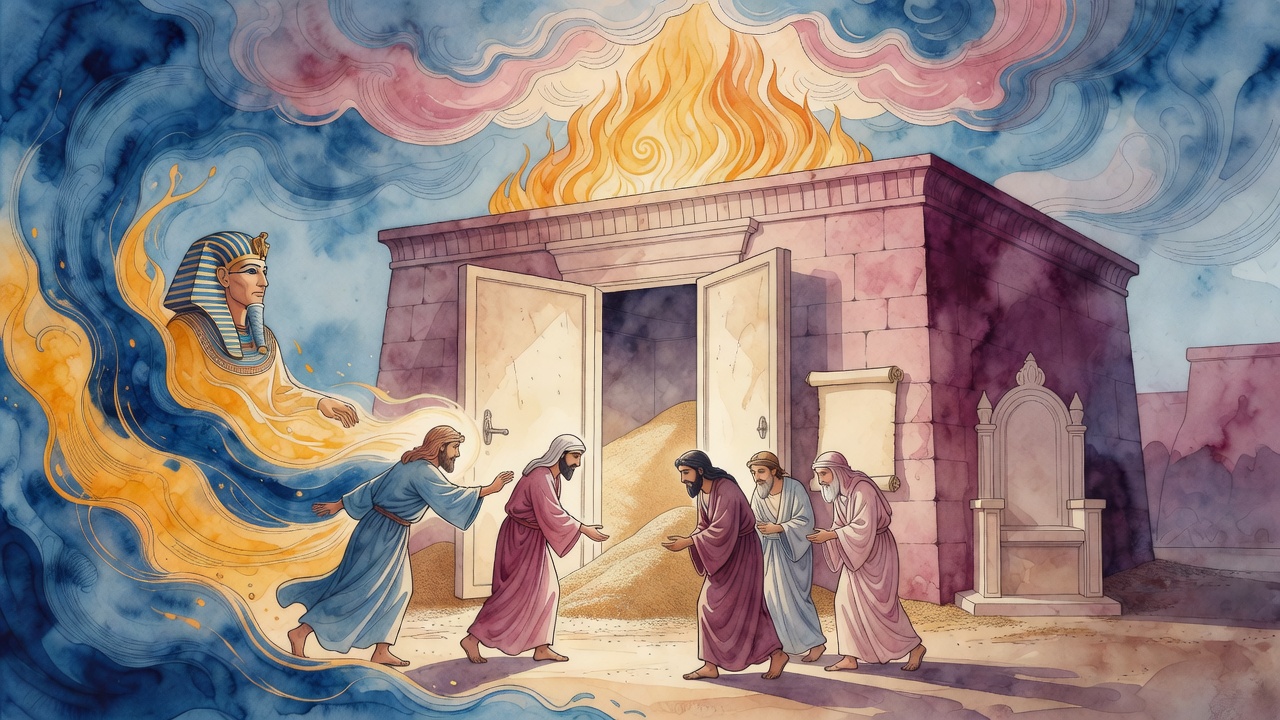
The famine had narrowed the world to grain, travel, and fear. Joseph, hidden behind the face of an Egyptian ruler, had demanded that the brothers return with Benjamin. Jacob refused. He had already lost Joseph, or thought he had, and Rachel's last remaining son was not going down into Egypt on the word of brothers who had once brought him a bloodied coat.

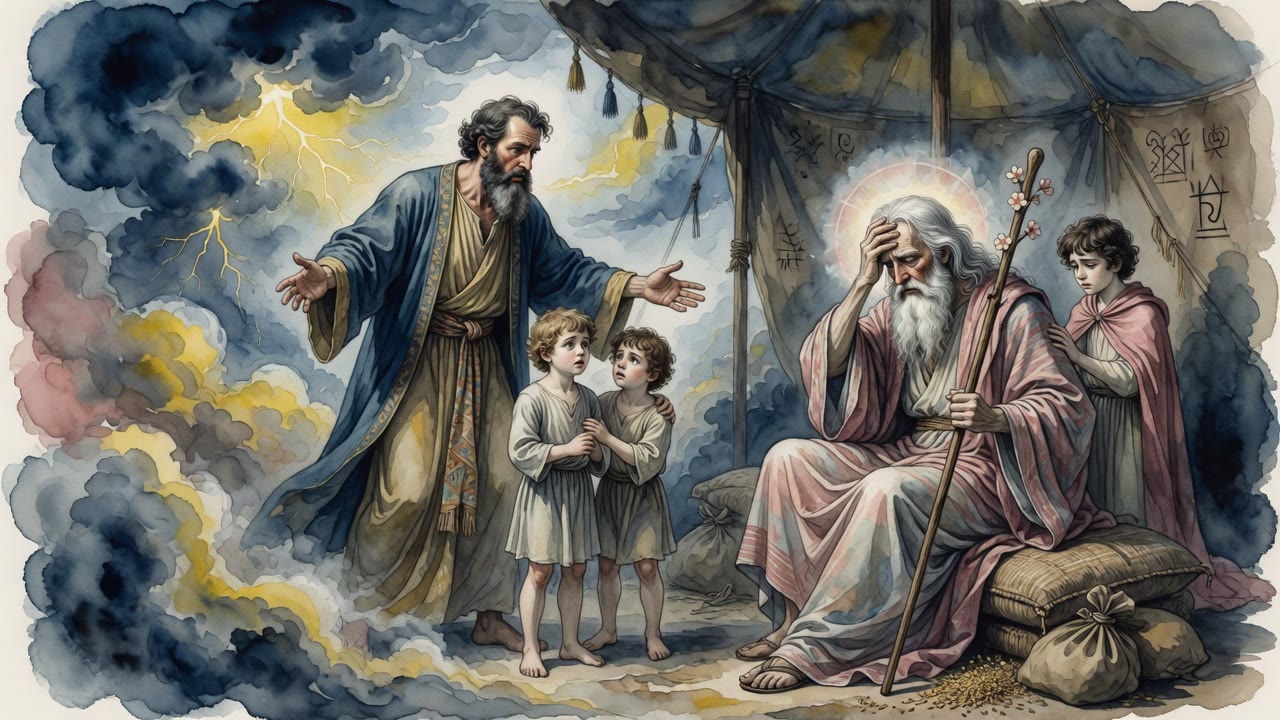
So Reuben spoke. "You may kill my two sons if I do not bring him back to you" (Genesis 42:37).

The Pledge Jacob Could Not Accept

The pledge is horrifying because it is useless. Killing Reuben's sons would not restore Benjamin if Benjamin died. It would only make Jacob's house emptier. Bereshit Rabbah hears in this not a practical guarantee but a confession spoken in the language of collateral. Reuben is not calculating. He is bleeding.

Years earlier, when the brothers wanted Joseph dead, Reuben had intervened. "Do not shed blood," he said. "Throw him into the pit." The Torah reveals his intention: he meant to return and rescue him (Genesis 37:22). But intention is not rescue. Reuben came back to the pit and Joseph was gone. He tore his clothes and cried out, "The child is not here, and I, where shall I go?" (Genesis 37:30). That cry never left him.

Now Benjamin stands where Joseph once stood: Rachel's son, beloved by Jacob, required for a journey the father cannot bear. Reuben reaches for the most extreme pledge he can imagine because moderation would sound false beside what he failed to prevent.

Joseph Heard the Confession

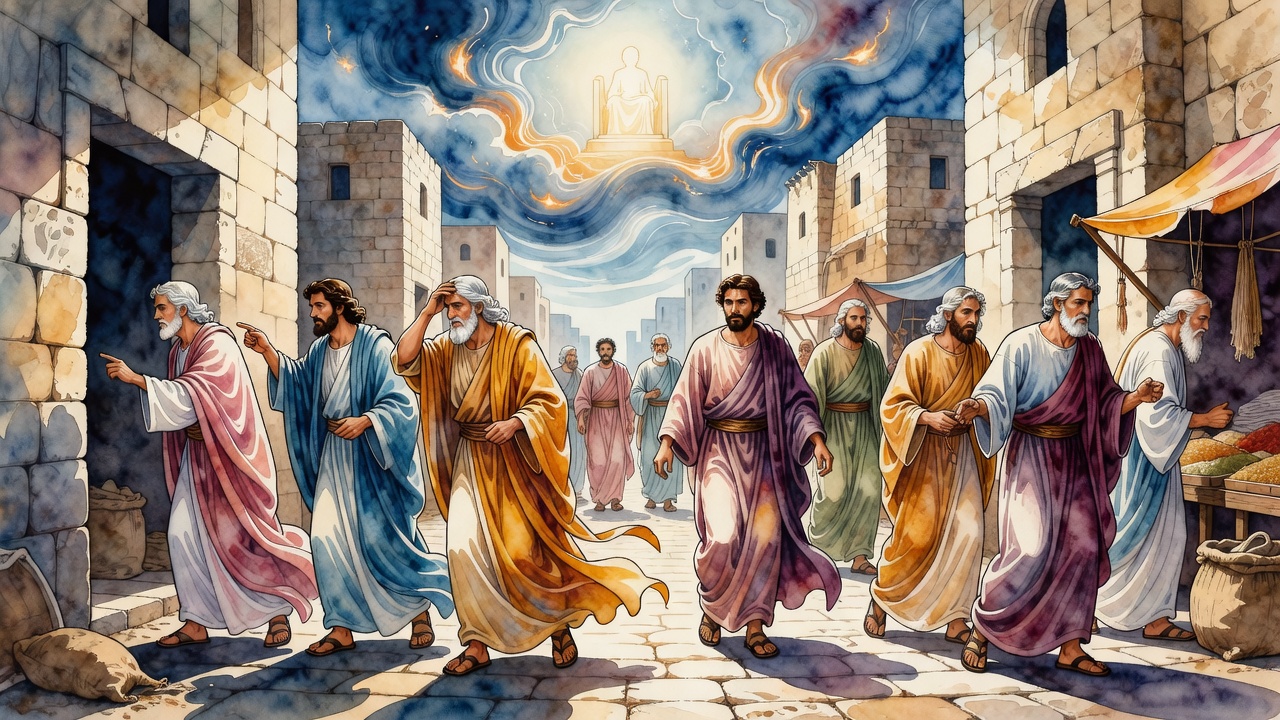
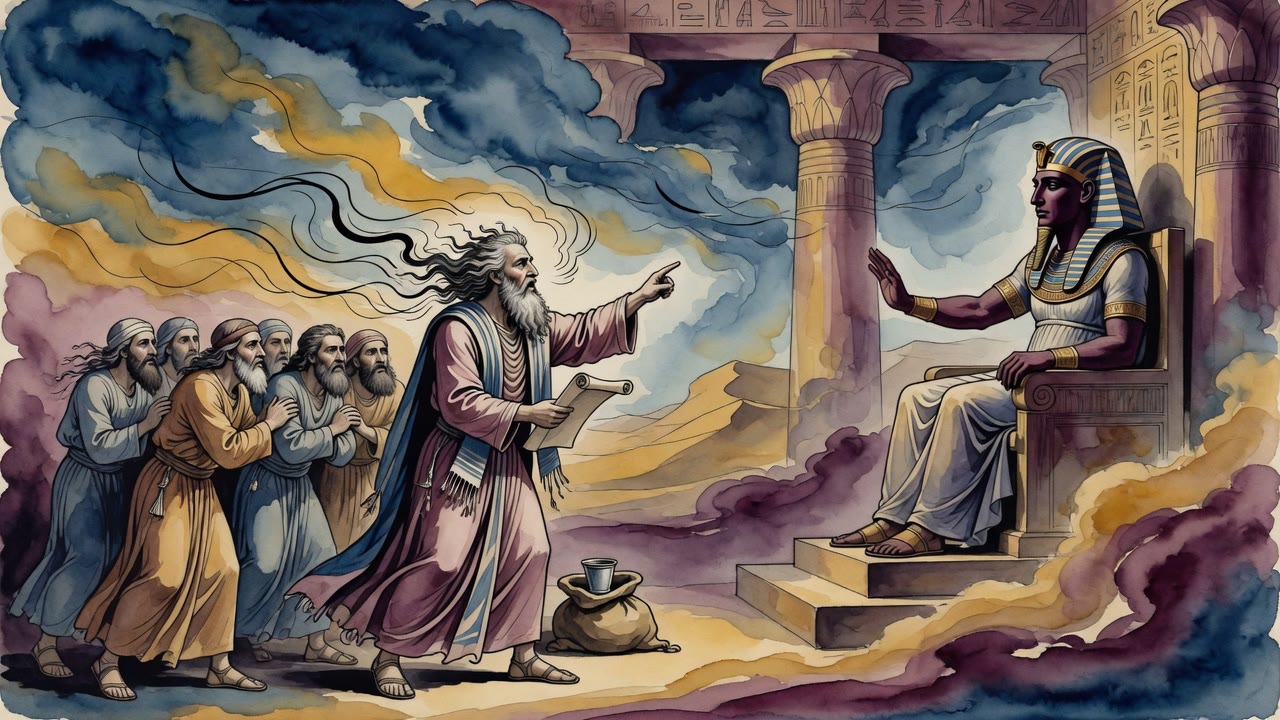
The scene in Egypt had already opened the old wound. The brothers stood before Joseph and did not know him. He recognized them. They saw only power, grain, accusation, and danger. He saw beards on the faces of the men who had once looked down at him from the edge of a pit.

Bereshit Rabbah asks whether Joseph was silent when they sold him. Could a seventeen-year-old boy watch his brothers bargain over him and say nothing? The midrash says no. He prostrated himself before each brother and begged. Not once to the group, but one by one, face by face. He pleaded, and they did not listen.

That memory finally spoke in Egypt. The brothers said, "Truthfully, we are guilty concerning our brother, because we saw the anguish of his soul when he pleaded with us, and we did not listen" (Genesis 42:21). Rabbi Abba bar Kahana notes the force of the opening word. In the southern dialect, "aval" means truthfully. Their guilt is not a guess. It is the thing they know at last.

The Blood Included Jacob

Reuben answers them with the sentence he has been keeping alive: did I not tell you not to sin against the child? And now, behold, his blood is required (Genesis 42:22). The rabbis notice an extra particle in the phrase "vegam damo," his blood also. That also widens the wound. Joseph's blood, yes, but also Jacob's. The father had been bleeding grief for more than two decades because the sons chose silence over truth.

Joseph hears all of this through the interpreter, and the brothers do not know that he understands. The interpreter, in the midrashic imagination, is Manasseh, Joseph's son. The grandson of Jacob stands between Jacob's sons while the lost son listens to the crime finally name itself.

Then Joseph turns away and weeps. He returns, speaks harshly again, and takes Simeon from them before their eyes. The public act is severity. The hidden act is mercy. Once the brothers leave, the rabbis say, Joseph releases Simeon, feeds him, gives him drink, bathes him, and anoints him. He is still Joseph. Egypt has given him power, but not the ability to stop caring for the men who threw him away.

Reuben Offered What Judah Would Correct

That is the road back to Reuben's impossible pledge. He offers his sons because he still thinks in substitution. Let these children stand for that child. Let one loss answer another. Jacob refuses because the arithmetic is monstrous. Family cannot be repaired by adding corpses to the account.

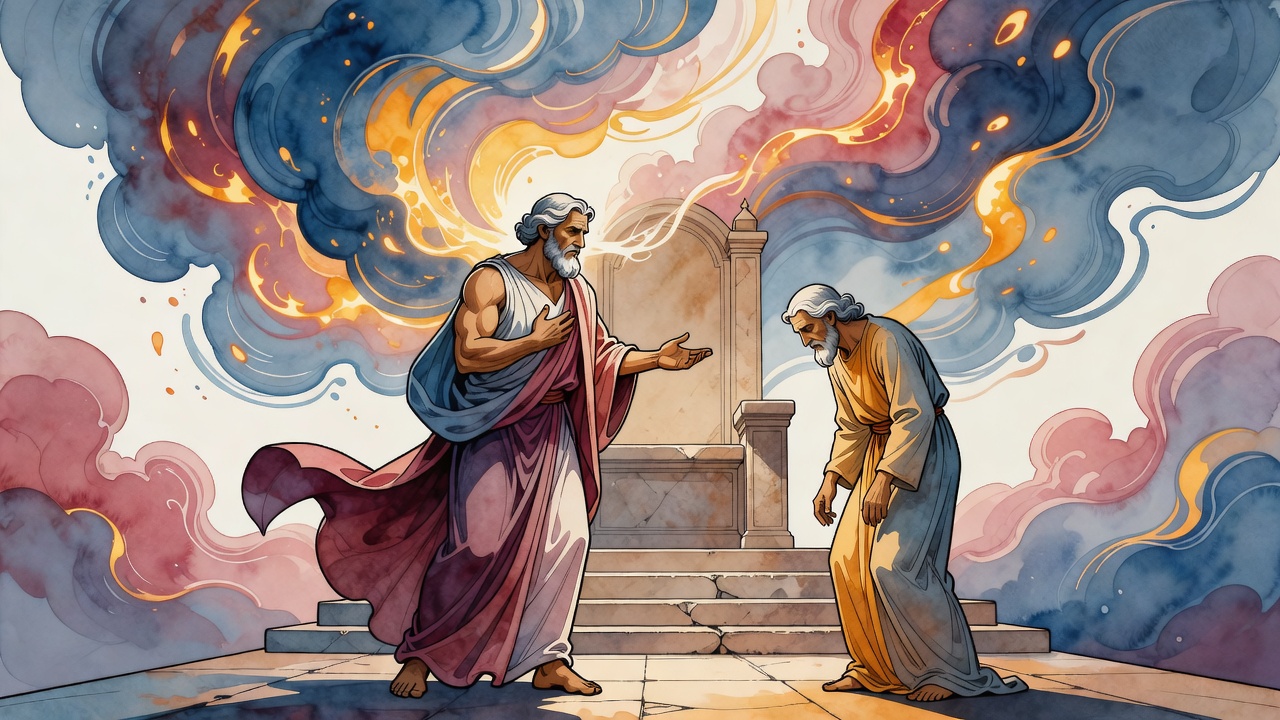
Judah will later make the pledge that works: "I will be surety for him" (Genesis 43:9). Not my sons. Not someone else's life. Me. Judah offers himself, and that is the beginning of the speech that will finally break Joseph open.

Reuben's pledge matters because it is not enough. It shows guilt awakening before it has learned the right form. He knows someone must stand between Jacob and another loss. He does not yet understand that the person who must stand there is himself.

The house of Jacob moves toward healing by passing through that failed offer. The brothers confess. Joseph weeps. Simeon is fed in secret. Reuben puts the wrong sons forward, and Judah will later step forward with the right life. That is how repentance begins in this family: badly, desperately, but no longer silently.


← All myths

From the tradition

Sources

5 sources

The texts this telling draws on, in full. Open a card to read inline, or expand it for a wider, quieter read.

Bereshit Rabbah 91:8Bereshit Rabbah

The Torah portion of Vayigash gives us a glimpse into their complex relationship, and the Rabbis of the Midrash (rabbinic interpretive commentary), particularly in Bereshit Rabbah 91, examine the nuances of this dramatic encounter.

It all starts when Joseph, now a powerful figure in Egypt, confronts his brothers. He demands they prove their sincerity by leaving one brother behind while the others return home to fetch their youngest brother, Benjamin. As (Genesis 42:19-20) tells us, Joseph says, “If you are sincere, one of your brothers will be incarcerated in the place of your custody and you, go bring grain for the hunger of your houses… And bring your youngest brother to me and your statements will be verified, and you will not die.”

The brothers, unaware that Joseph understands them, begin to speak candidly amongst themselves. (Genesis 42:21) recounts, "They said one to another: But we are guilty in our brother’s regard, that we saw the anguish of his soul, when he pleaded with us and we did not heed; that is why this anguish has befallen us.”

Here’s where the Rabbis dig a little deeper. Rabbi Abba bar Kahana points out that the word "aval" (but) in their statement, "aval we are guilty," might be a southern dialect for "truthfully." In other words, their guilt is not just a passing thought, but a deeply felt truth.

And what about Joseph's role in all this? Was he simply a passive victim? Rabbi Levi, in the name of Rabbi Yoḥanan bar She’ila, offers a compelling insight. The Midrash asks: "Is it possible that Joseph, at seventeen years old, would see his brothers selling him, and be silent?" Rather, he suggests, Joseph prostrated himself before each of his brothers, begging for mercy. According to Ginzberg's retelling in Legends of the Jews, Joseph pleaded, but his brothers remained unmoved.

Reuben, who initially tried to save Joseph, steps forward, reminding his brothers of his past warnings. (Genesis 42:22) states, “Reuben responded to them, saying: Did I not speak to you, saying: Do not sin against the child, and you did not heed? And, here is a reckoning for his blood.” But the Midrash sees more in Reuben's words. He reminds them, according to Bereshit Rabbah, that they had plotted to kill Joseph, saying "Now let us go and kill him" (Genesis 37:20).

The phrase “indeed…his blood [vegam damo]” is particularly striking. The Midrash sees an inclusion here. Instead of just “his blood [vedamo]”, vegam (indeed) implies something more. Bereshit Rabbah suggests that this word includes the blood of his father, Jacob. How so? Perhaps it hints at the emotional pain and suffering that the brothers' actions inflicted upon their father.

All this time, Joseph is listening, but his brothers don't realize it. (Genesis 42:23) tells us, “They did not know that Joseph understood, as the interpreter was between them.” And who was this interpreter? According to the Midrash, it was none other than Manasseh, Joseph’s own son!

The emotional weight of the situation becomes almost unbearable. (Genesis 42:24) describes, “He turned from them and wept, and he returned to them; he spoke to them, and took Simeon from them, and incarcerated him before their eyes.” Rabbi Ḥagai, in the name of Rabbi Yitzḥak, adds a poignant detail: even as Joseph incarcerated Simeon, he secretly ensured he was well cared for – fed, given drink, bathed, and anointed. A fascinating contrast between outward severity and hidden compassion.

What does all this tell us? The story of Joseph and his brothers is more than just a tale of sibling rivalry and betrayal. It’s a profound exploration of guilt, repentance, and the enduring power of family ties. It shows us how past actions can haunt us, and how even in the midst of anger and pain, compassion can still find a way to emerge. As we find in Midrash Rabbah, even in moments of conflict, there are layers upon layers of emotion, hidden agendas, and the possibility for eventual reconciliation.

It leaves you wondering, doesn't it? About the complexities of forgiveness, and the long, winding road to healing fractured relationships.

Full source
Bereshit Rabbah 91:7Bereshit Rabbah

The Bible is full of them, and the story of Joseph and his brothers is no exception. It's a tale of betrayal, forgiveness, and ultimately, reconciliation. But what about the subtle nuances, the unspoken emotions, the questions that linger just beneath the surface? to one fascinating piece from Bereshit Rabbah 91, a collection of rabbinic interpretations on the Book of Genesis. It focuses on the moment Joseph, now a powerful figure in Egypt, first encounters his brothers after years of separation. (Genesis 42:7) tells us, "Joseph saw his brothers [and he recognized them, but he acted as a stranger to them]." Rabbi Yehoshua bar Nehemya astutely points out: "He became like a stranger to them." But how could he, after all those years?

The text goes on: “Joseph recognized his brothers…(Genesis 42:8) Rabbi Levi and the Rabbis [discuss this verse]. Rabbi Levi said: When they fell into his hands: “Joseph recognized his brothers.” When he fell into their hands: “But they did not recognize him.” Isn’t that telling? Rabbi Levi highlights the power dynamic at play. When Joseph was at their mercy, they didn’t see him, or perhaps they refused to acknowledge who he truly was. But when they were in his power, his recognition was immediate.

Why this disparity? The Rabbis offer a compelling explanation: "He parted from them when they were bearded, so ‘Joseph recognized his brothers.’ ‘But they did not recognize him,’ as they parted from him when he was not bearded." It's a simple, almost comical detail – the presence or absence of a beard! But it speaks to the superficiality of their perception. They were so focused on the external that they missed the internal, the essence of who Joseph was.

There's more. "Joseph remembered…and said to them…[They said to him:] We are all the sons of one man” (Genesis 42:9–11). The text emphasizes, "they had a spark of the Divine Spirit." Even in their deception, even in their flawed actions, they possessed a connection to something greater. "They said to him: 'We and you are the sons of one man.'" This declaration, according to the Rabbis, reveals a fundamental truth: their shared ancestry created an undeniable bond.

Joseph, testing them, accuses them of being spies. Their response? “We, [your servants,] are twelve [brothers, sons of one man…and one is absent]” (Genesis 42:13). The story then takes a darker turn, as Joseph interrogates them about their missing brother. He asks how much they sold him for and then presents a hypothetical: would they even buy him back at any price? Their chilling answer: "It is for that purpose that we descended, either to kill or to be killed.”

This reveals the depth of their desperation and perhaps, their lingering guilt. They are willing to die rather than betray their current situation. Joseph, still probing, declares, "That is what I spoke to you, [saying: You are] spies." He then demands they prove their innocence by bringing their youngest brother, Benjamin, to Egypt.

The narrative then highlights Joseph's use of an oath: “With this you shall be put to the test: As Pharaoh lives, you shall not depart from here, unless your youngest brother comes here” (Genesis 42:15). Rabbi Levi offers a fascinating analogy: a woman who hides a stolen goat and then swears by "this one" (referring to a child she pretends is in the bed) that she knows nothing about it. This illustrates the deceptive nature of oaths, especially when used to manipulate and control. As we see, "as Pharaoh lives" was Joseph's go-to phrase when being untruthful.

Finally, the text notes that "He gathered them into custody for three days” (Genesis 42:17). The midrash, the interpretive tradition, sees significance in this timeframe. “The Holy One blessed be He never leaves the righteous in distress for three days." Joseph, in his actions, mirrors this divine attribute. Just as God offers redemption, Joseph too, will offer his brothers a path towards reconciliation. The text reminds us of other figures like Jonah, Mordechai, and David, who also experienced deliverance after a period of tribulation. "He will revive us after two days; on the third day (Hosea 6:2) of the tribes 'He will raise us.'" Just as Joseph released his brothers on the third day, so too will redemption come.

What does this all mean? It suggests that even in moments of great deception and hardship, there is always the potential for recognition, for forgiveness, and for redemption. The story of Joseph and his brothers is a powerful reminder that the bonds of family, however strained, can ultimately lead to healing and reconciliation. It also suggests that even in the darkest of times, hope, like the third day, will eventually dawn. What do you think?

Full source
Yalkut Shimoni on Torah 149:2Yalkut Shimoni on Torah

(Genesis 42:29) "And they came to Jacob and told him all that had befallen them [korot]." This teaches that the words were as hard upon them as beams [korot]. (Genesis 42:35) "And it came to pass as they were emptying their sacks." This teaches that their father suspected them. (Genesis 42:36) "And Jacob their father said to them, you have bereaved me; Joseph is no more, and Simeon is no more, and you would take Benjamin; all these things are upon me." Upon me it falls to raise up the twelve tribes.

(Genesis 42:37) "You shall slay my two sons [if I do not bring him back]." He said to him: foolish firstborn, are your sons not my sons too? (Genesis 42:38) "And he said, my son shall not go down with you." When a person would say something well-ordered before Rabbi Tarfon, he would say "a knob and a flower" [a phrase of approval]; and when a person would say something idle, he would say "my son shall not go down with you."

(Genesis 42:30) "The man, the lord of the land, spoke harshly [kashot] with us." This is to say that all speaking [dibbur] is a harsh expression. But was it not taught (Malachi 3:16) "then those who feared the LORD spoke [nidberu] with one another", and "spoke" there is only an expression of gentleness? And so it says (Psalms 47:4) "He subdues [yadber] peoples under us." "Dibber" is one thing and "yadber" is another.

Full source
Targum Pseudo-Jonathan on Genesis 42:37Targum Pseudo-Jonathan on Genesis

Reuben tried the one guarantee that could possibly move his father. Targum Pseudo-Jonathan on (Genesis 42:37) preserves the oath: "Slay my two sons with a curse if I do not bring him to thee. Give him into my hand, and I will restore him to thee."

The oath that could not land

Reuben offers to stake the lives of his own two sons, Hanoch and Pallu, as collateral for Benjamin's safe return. The Aramaic paraphrase, which took its final form in the Land of Israel around the seventh or eighth century CE, preserves the extremity of the offer. Bereishit Rabbah 91:9, a commentary on Genesis compiled in the Land of Israel around the fifth century CE, reads the proposal as earnest but tone-deaf. Jacob's response, captured in the next verse, does not even acknowledge it. Rashi (1040-1105 CE) explains why: Reuben's own sons are also Jacob's own grandsons. Telling a grandfather that his grandchildren can die if the plan fails is not a comfort. It is a second threat.

The oldest brother trying to lead

Yet, there is something genuine in Reuben's offer. He is the firstborn who failed at the pit in Dothan (Genesis 37:21-22). He is the oldest who has never led. Here he is trying, clumsily, to become the man his father needs. It is Judah, later (Genesis 43:9), who will find the right language, offering himself, not his children. And actually move Jacob to release Benjamin. But Reuben tried first, and the Targum preserves his attempt.

The takeaway

Good intentions fail when they speak the wrong language. Reuben wanted to save his family; he just offered the wrong collateral.

Full source
Targum Pseudo-Jonathan on Genesis 42:21Targum Pseudo-Jonathan on Genesis

The confession arrives without prompting. Targum Pseudo-Jonathan on (Genesis 42:21) preserves the exact moment the brothers name what they did: "In truth we are guilty concerning our brother, when we saw the distress of his soul, when he entreated us, and we would not hearken to him; therefore hath this affliction come upon us."

The detail the Torah held back for twenty-two years

This verse contains information the Torah never told us in Genesis 37. When Joseph was thrown into the pit, he begged. He pleaded. His brothers heard him and refused to listen. The Torah's account of the sale (Genesis 37:23-28) omits this entirely, no voice from the pit, no pleading, just a silent victim and a business transaction. But here, sitting in an Egyptian prison, the brothers finally say it. He entreated us. We heard him. We would not listen.

The theology of the affliction

Their second sentence is the key. "Therefore hath this affliction come upon us." The Aramaic paraphrase, which took its final form in the Land of Israel around the seventh or eighth century CE, treats this as the first moment of real teshuvah, repentance, in the story. The brothers name the sin. They connect it to their present suffering. They do not blame Egypt, Pharaoh, or bad luck. They own the chain of cause and consequence. In the rabbinic understanding of repentance, codified centuries later by Rambam in Hilkhot Teshuvah, this is step one: confession with specifics.

The takeaway

Twenty-two years of silence end with a single honest sentence. The brothers begin to be forgivable the moment they stop editing the story.

Full source