5 min read

Jacob Opens His Hands and Sends Benjamin

Benjamin was the last son Jacob could bear to lose. When famine pressed hard enough, even a father twenty-two years into grief had to open his hands.

Curated by Arthur · Told by Maggid ·
Table of Contents
  1. The Condition They Brought Home
  2. What the Famine Said
  3. What Jacob Sent With Them
  4. Benjamin Himself

The Condition They Brought Home

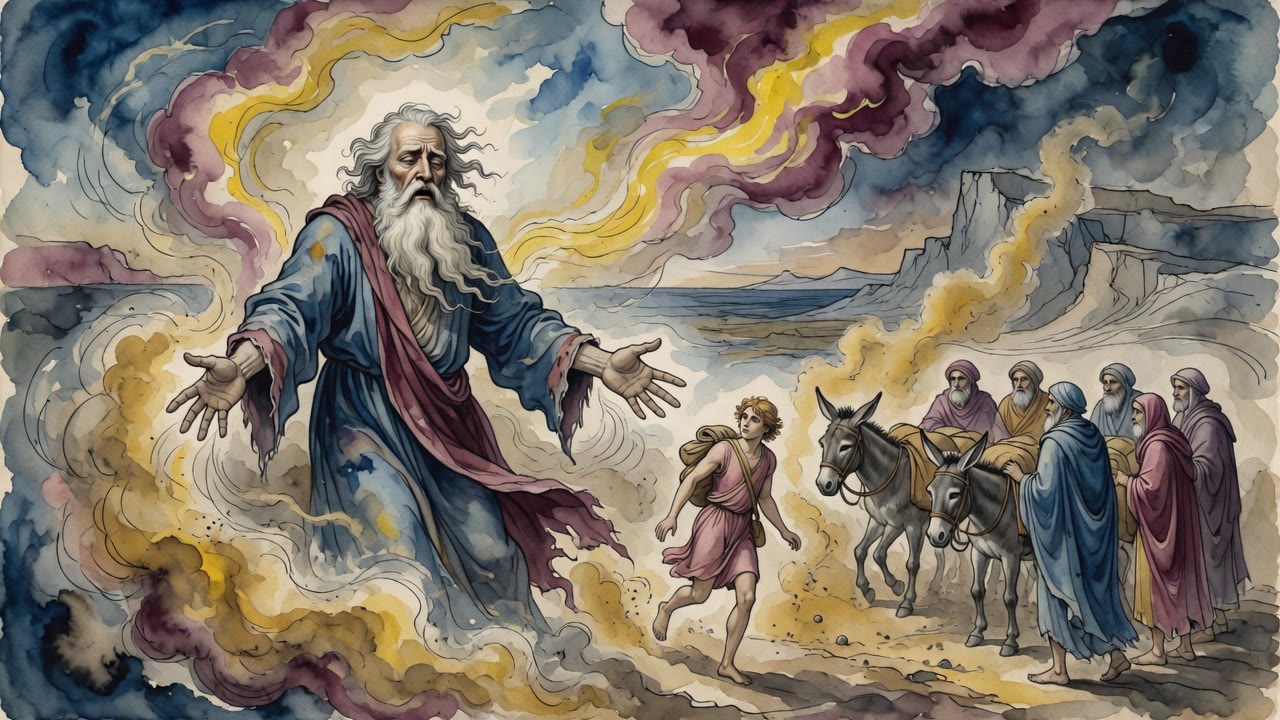
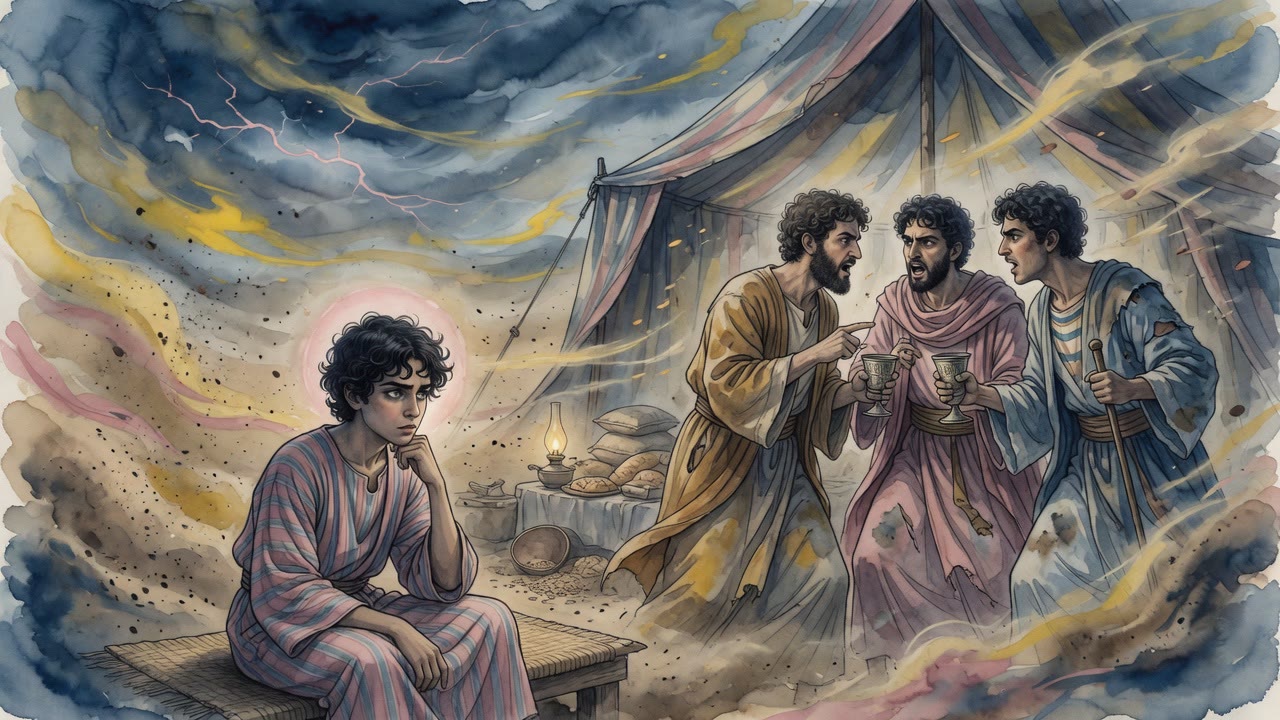
The sons of Jacob came home from Egypt with grain and with a condition. The viceroy of Egypt, whose face they did not recognize, would not see them again without their youngest brother. They had left Simeon behind in an Egyptian prison as proof of their intention to return. Benjamin had to come with them, or Simeon would stay there until he died, and the famine grinding through Canaan would finish the rest of them.

Jacob received this information the way he received every blow that came from the south: the land that had taken Joseph was now taking Simeon and demanding Benjamin as the price of grain. He said what he had said for twenty-two years: You have bereaved me. Joseph is gone, and Simeon is gone, and now you want to take Benjamin.

He refused. The sons waited. The grain ran out.

What the Famine Said

Famine does not argue. It simply continues. The stores they had brought from Egypt emptied, and Jacob's household, which had been large enough to require two camps when he returned from Paddan Aram, stood in front of bare shelves. Judah came to his father a second time and said what had to be said: there was no other way. The man in Egypt had been absolutely clear. Without Benjamin they would not even be received. They would go down and come back empty and the famine would finish what the empty shelves had started.

Judah offered himself as surety. He would be responsible for Benjamin. If Benjamin did not return, Judah would bear the sin forever. This was not a small offer from a man who understood what permanent debt to a father meant. But Judah made it, and Jacob heard it, and the scales finally tipped.

Jacob relented. What follows in the rabbinical tradition is a portrait of a father finding, inside his grief, reserves he did not know he had.

What Jacob Sent With Them

He sent gifts. The best products of Canaan: balm, honey, aromatic gum, ladanum, pistachio nuts, almonds. Small things, the kind of gifts a man sends when he has no real negotiating power and wants to make the meeting go well on texture and courtesy if nothing else. He sent double silver, enough to return what had been mysteriously placed back in their sacks and enough to buy new grain.

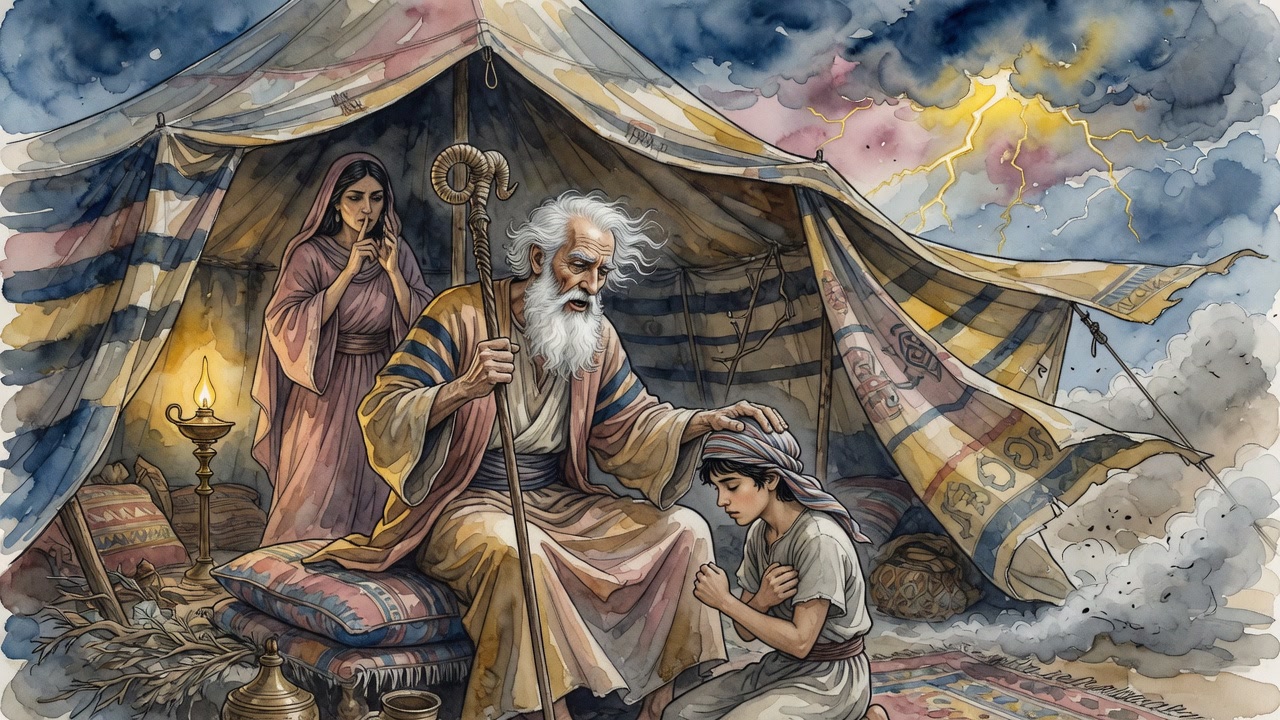
He sent a prayer. May El Shaddai grant you mercy before the man, that he may release to you your other brother and Benjamin. He did not say he expected God to answer. He said he hoped God would grant mercy. These are different words. A man who expected the outcome would not qualify it with hope. Jacob prayed and sent his son knowing that prayer might not be enough, knowing that the viceroy in Egypt might not grant mercy no matter what El Shaddai arranged.

And then he said the thing that reveals how far he had come from twenty-two years of refusing comfort: If I am bereaved, I am bereaved. The Hebrew carries a finality that is not despair but something harder, a recognition that there was nothing left to protect by holding on. He opened his hands.

Benjamin Himself

The rabbis paused at Benjamin. Why was he born in Canaan while all his brothers were born in Paddan Aram? One tradition says it was because he was the only son who could honestly be called a son of the land, a native of the place God had promised, born before the family descended to Egypt. Another says it was because Jacob, traveling through Canaan after Rachel died giving birth to Benjamin on the road to Ephrath, was given a native son for a native land.

Benjamin had lived his whole life as the replacement for something irreplaceable. Jacob had transferred everything he could not give Joseph onto this last son of Rachel. Benjamin carried the weight of all that redirected grief, and he did not know what the man in Egypt wanted with him, or whether he would come home.

He went. Jacob watched the party leave Canaan heading south and turned back into the tent to wait.


← All myths
From the tradition

Sources

6 sources

The texts this telling draws on, in full. Open a card to read inline, or expand it for a wider, quieter read.

Book of Jubilees 42:23Book of Jubilees

The famine in the land was brutal. The people were starving. Desperate, Jacob turned to his sons: "Go again," he pleaded, "and procure food for us, that we die not."

His sons were firm. "We shall not go," they declared, "unless our youngest brother go with us, we shall not go."

That youngest brother, of course, was Benjamin.

Jacob was in agony. He knew the dangers of the journey. He remembered the loss of Joseph. The thought of losing another son… it was unbearable. But he also knew that if he didn't send Benjamin, they would all perish from hunger. The Book of Jubilees paints a stark picture.

One of the brothers, Reuben, tried to reassure his father. "Give him into my hand," he urged, "and if I do not bring him back to thee, slay my two sons instead of his soul."

Imagine the weight of those words! Reuben was willing to sacrifice his own children to guarantee Benjamin’s safety. It speaks to the desperation of the situation, doesn’t it?

But Jacob was unmoved. "He will not go with thee," he insisted. The pain of losing Joseph was still too raw, the risk too great.

What would you do in Jacob's place? Would you risk your youngest son to save your family from starvation? Or would you hold on to him, clinging to hope in the face of certain death? It's a terrible choice, a reflection of the impossible situations life sometimes throws our way. And it forces us to ask: what are we willing to sacrifice for those we love?

Full source
Sifrei Devarim 352:16Sifrei Devarim

It seems like a simple question, but the answer, like so many things in Jewish tradition, is layered with meaning.

The Sifrei Devarim, an ancient commentary on the Book of Deuteronomy, offers a couple of fascinating explanations, and they both point to the unique character of Benjamin.

The first reason? Benjamin was the only one of Jacob's sons born in the land of Israel. All the other brothers came into the world outside the promised land. Benjamin, however, arrived on the scene right there, on holy soil. So, in a way, his very existence was intertwined with the land itself.

There's more to the story.

The Sifrei Devarim offers a second, even more compelling reason, one that touches on the drama of Joseph and his brothers. Remember that story? The jealousy, the betrayal, the sale into slavery? A pretty heavy tale.

Well, according to this tradition, all the brothers except for one were involved in the sale of Joseph. That one? You guessed it: Benjamin. He was innocent. Untainted by the brothers' actions.

And that, apparently, made all the difference.

Because of the brothers’ actions, God declared "Shall I tell these to build the Temple? No." Their lack of compassion disqualified them.

The Shechinah – that indwelling divine presence – wouldn't rest among those who lacked mercy. "Let them pray before Me and I will be filled with mercy for them; but I will not repose My Shechinah in their midst, for they did not have mercy upon their brother." Strong words. The Holy One, Blessed be He, wouldn't allow the Beit Hamikdash, the Temple, to be built in the territory of those who lacked compassion. God chose Benjamin, the innocent one.

So, maybe it wasn’t just about geography or lineage. Maybe it was about character. About the kind of people who would be worthy to host the divine presence. It suggests that compassion and integrity are just as important – maybe even more so – than birthright.

What does this tell us? Perhaps that even thousands of years ago, our ancestors wrestled with questions of justice and worthiness. Maybe it’s a reminder that our actions have consequences, not just for ourselves, but for generations to come. And maybe, just maybe, it's a call to each of us to strive for that same innocence and compassion that made Benjamin so special.

Full source
Legends of the Jews 1:235Legends of the Jews

Little does Jacob know the drama unfolding there, the accusations, the imprisonment of Simeon, and the demand to bring Benjamin, his youngest and most cherished son, back to Egypt. Jacob is understandably reluctant. He's already lost Joseph, or Yosef, as he is known in Hebrew. The thought of losing Benjamin is unbearable.

Necessity prevails. The family needs food. So Jacob sends his sons, including Benjamin, back to Egypt with gifts and a plea for mercy. But before they depart, Jacob delivers a powerful message to them – a message intended for the ears of the Pharaoh.

"Knowest thou not, O king of Egypt, that the might of our God is with us, and that He always hearkens unto our prayers, and never forsakes us?" Jacob asks, rhetorically, of course. It’s a bold statement, a reminder of the divine power backing the house of Israel.

Here’s the truly intriguing part. Jacob continues, "Had I called upon God to rise up against thee when my sons told me how thou didst act toward them, thou and thy people, ye all would have been annihilated ere Benjamin could come down to thee." Jacob believes, without a doubt, that he possesses the spiritual power to call down divine wrath upon Egypt and utterly destroy it. It is quite a threat!

Yet, he didn’t. Why?

"But I reflected that Simon my son was abiding in thy house, and perhaps thou wast doing kindnesses unto him, and therefore I invoked not the punishment of God upon thee." The Zohar, that foundational text of Jewish mysticism, would likely delve deep into the kabbalistic reasons for this restraint, but on the surface, it’s an act of profound compassion and strategic thinking. Jacob recognizes that even in the face of injustice, there might be mitigating circumstances, a chance for kindness to exist. He refuses to unleash his full power because of the potential harm it could inflict on his own son, and perhaps, on the Egyptians themselves.

This moment speaks volumes about Jacob’s character. He is not just a patriarch, but a leader who tempers justice with mercy, power with responsibility. He understands the weight of his influence and chooses to wield it with careful consideration.

And then comes a final word of caution and hope: "Now my son Benjamin goeth down unto thee with my other sons. Take heed unto thyself, keep thy eyes directed upon him, and God will direct His eye upon all thy kingdom." It’s a subtle warning, a reminder that divine judgment is always watching. As Ginzberg retells it in Legends of the Jews, Jacob's words carry the weight of prophecy.

What does this story tell us? Perhaps it’s a reminder that true strength lies not just in possessing power, but in knowing when. And when not, to use it. It's a lesson in restraint, in considering the consequences of our actions, and in recognizing the potential for goodness even in the most challenging of circumstances. It is something to consider in our own lives. How often do we react without considering the consequences? How often do we judge without seeking to understand? Jacob's story challenges us to strive for a higher standard, to temper our power with compassion and wisdom.

Full source
Aggadat Bereshit 72Aggadat Bereshit

"And the El Shaddai grant you mercy" (Genesis 43:14). Jacob is sending Benjamin to Egypt, his youngest, his only remaining connection to Rachel, the son he can least afford to lose. He has already sent ten sons and gotten back strange terms and a hostage. And now he has to send the one he was protecting. He says: God Almighty grant you mercy.

Psalm 139 provides the framework: "Knowledge is too formidable for me; it is concealed from me, I cannot know it" (Psalm 139:6). Jacob says something similar: "I cannot understand this matter." God had promised Abraham twelve tribes (Genesis 15:5). Jacob has twelve sons. But Joseph is apparently dead, and now Benjamin is being demanded as collateral. The math does not add up to the promise. Jacob cannot see how God will keep the covenant while simultaneously doing what seems to be happening.

The rabbis read this as the defining moment of Jacob's faith, not the dream at Bethel, not the wrestling at the Jabbok, but this. Sending the child you least want to send, in the direction you least trust, toward an outcome you cannot predict, with only God's prior promises to hold onto. "May God Almighty grant you mercy" is not a prayer of confidence. It is a prayer of someone who has run out of everything except the name of God. And the rabbis said: that is exactly enough.

Full source
Bereshit Rabbah 91:10Bereshit Rabbah

The scene: a devastating famine grips the land. Jacob's sons have returned from Egypt with grain, but it’s gone. They need to go back, but the mysterious Egyptian ruler, who we, the audience, know is Joseph, but they don't, has issued a stern condition: bring your youngest brother, Benjamin.

The brothers plead with Jacob. "The man forewarned us," they say, "You shall not see my face, unless your brother is with you” (Genesis 43:3). They argue that Joseph's demand is reasonable. Would Joseph accept the excuse that they simply couldn't bring Benjamin? Of course not!

Jacob is resistant. "Why have you done me wrong," he cries, "to tell the man that you have another brother?" (Genesis 43:6).

Here’s where it gets really interesting. Rabbi Levi, in the name of Rabbi Ḥama bar Ḥanina, offers a startling interpretation. Jacob, a man known for his awareness of God's hand in his life, seemingly falters here. Etz Yosef explains that Jacob typically never attributed his troubles to chance.

But, the Midrash (rabbinic interpretive commentary) suggests, perhaps God Himself is speaking through Jacob's lament! God is essentially saying, "I am involved in crowning his son in Egypt, and he says: “Why have you done me wrong?”’ This echoes (Isaiah 40:27): “[Why do you say, Jacob…]: My way is hidden from the Lord, and from my God." In other words, Jacob's limited perspective prevents him from seeing the grand plan unfolding. He can't see that this journey, as painful as it is, is part of a larger, divinely orchestrated destiny.

The Midrash then dives deeper into the brothers' interactions with Joseph. Rabbi Abba bar Kahana says that Joseph revealed to them "even the wood of our cradles." What does this mean? The text suggests Joseph knew incredibly intimate details about their lives, even the materials their cradles were made of. The phrase "our relatives [moladtenu]" can also mean "our birthplace," suggesting Joseph knew details about the conditions of their birth. It highlights Joseph's almost unnerving ability to see through their facades.

Finally, Judah steps up. He offers himself as a guarantor for Benjamin's safety. "Send the lad with me," he pleads, "and we will arise and go, and we will live, and not die, both we, and you, and our children” (Genesis 43:8). He declares, "I will guarantee him; from me you can demand him; if I do not bring him back to you, and present him before you, I will have sinned to you forever” (Genesis 43:9).

The Midrash points out a profound idea here. Judah believes it's better for one person (himself) to be in a state of uncertainty than for everyone to certainly starve. This displays a willingness to sacrifice oneself for the greater good. Even more striking, the phrase "forever [kol hayamim]" is interpreted as referring to the World to Come [olam haba (the World to Come)], which is entirely day [shekulo yom] – meaning Judah is willing to bear the sin of failing to protect Benjamin even in the afterlife.

What does this all mean? This passage from Bereshit Rabbah isn't just a retelling of a biblical story. It's an exploration of faith, destiny, and the limits of human understanding. It invites us to consider: Can we trust in a larger plan, even when we can't see where it's leading? Are we willing to sacrifice for the well-being of others, even if it means bearing the weight of uncertainty ourselves? And perhaps most importantly, are we open to the possibility that what we perceive as misfortune might actually be a piece of a grander, more beautiful design?

Full source
Targum Pseudo-Jonathan on Genesis 42:36Targum Pseudo-Jonathan on Genesis

The old man counted his losses aloud. Targum Pseudo-Jonathan on (Genesis 42:36) preserves Jacob's lament word by word: "Of Joseph you said, An evil beast hath devoured him; of Simeon you have said, The king of the land hath bound him; and Benjamin you seek to take away: upon me is the anguish of all of them."

A father's ledger of sorrow

Jacob's tally is devastating. Joseph, devoured (or so he believes). Simeon, imprisoned. Benjamin, about to be risked. All three of the sons he most wants to protect are, or will be, gone. The Aramaic paraphrase, which reached its final form in the Land of Israel around the seventh or eighth century CE, preserves the exact rhetoric of the grief: he quotes his sons' own words back to them. They had told him an evil beast devoured Joseph (Genesis 37:33). Now they are telling him a king has bound Simeon. He has learned not to trust the patterns of his sons' reports.

What Jacob does not know

The tragic irony is that Jacob is wrong about the first item on his list. Joseph is not dead. He is the king of the land his sons keep returning to. The rabbinic tradition reads this verse as the emotional low point of the Joseph cycle: Jacob, broken by what he believes is a second loss, refuses to release Benjamin. His sons have no way to move him without confessing what they did twenty-two years ago, and they are not ready.

The takeaway

Grief is sometimes built on a false premise. Jacob is mourning a son who is alive and administering the very grain he is eating. Not every sorrow is what it appears to be.

Full source