Angels Guarded Creation, Jacob, Joseph, and Moses
On the second day the lower waters wept and would not split. The sky was three fingers thick. An angel sang about Sinai, and the waters went quiet.
Table of Contents
 Click for full size
The Waters Refused to Separate on the Second Day
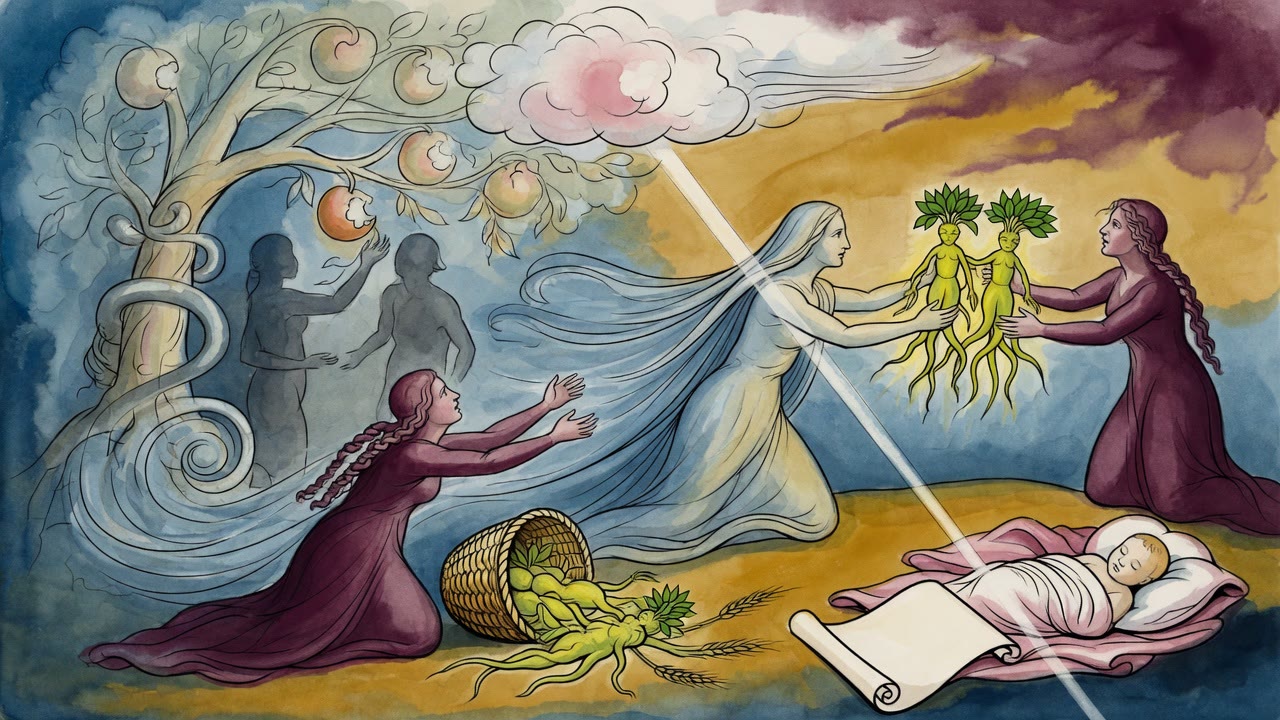
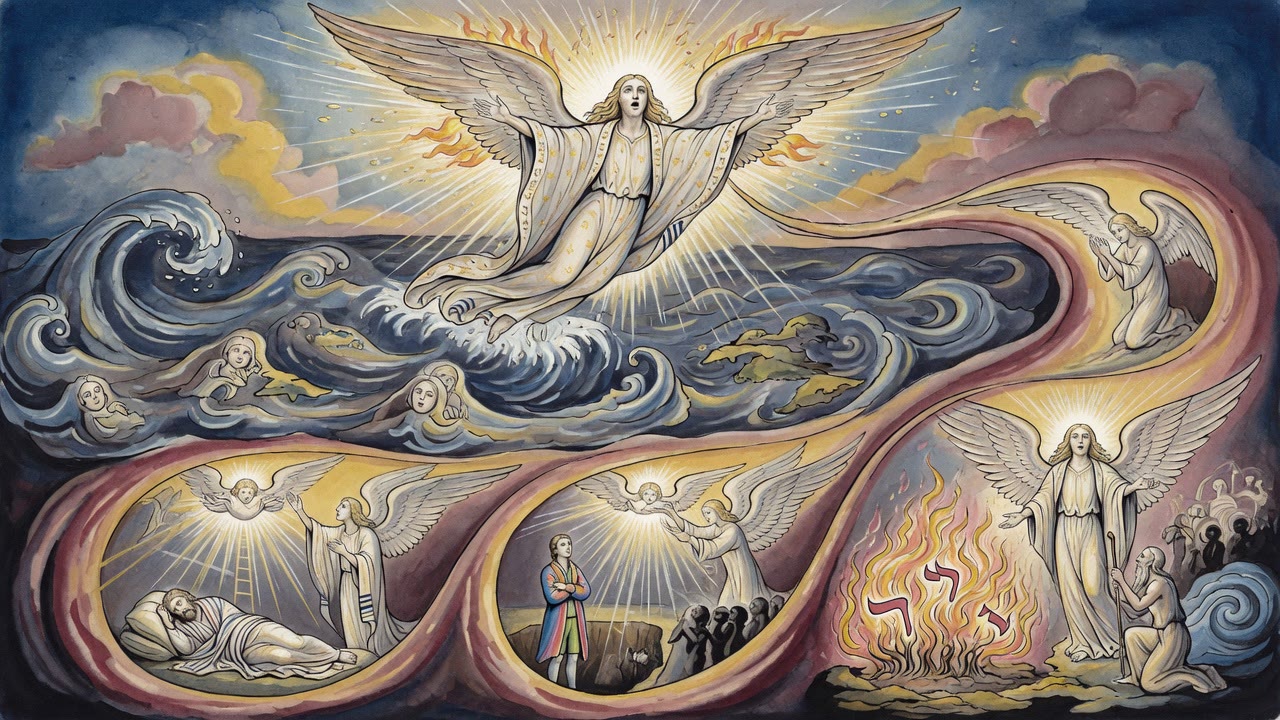
On the second day, God made the firmament and commanded the waters to divide. Some of the lower waters refused. They wept at the separation, not wanting to be exiled below, longing to remain close to the divine. God considered unmade what had been made. The firmament was only three fingers thick, and the resistance of water threatened to collapse everything that had been established on the first day.
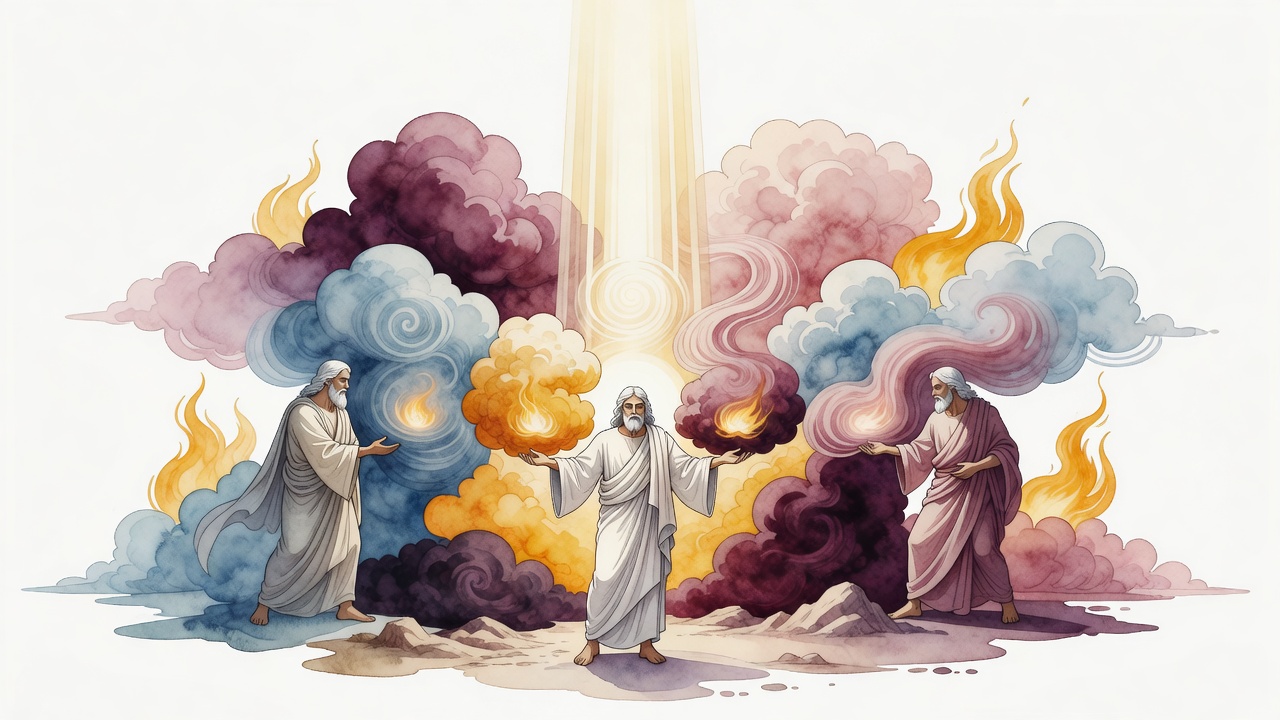
Then an angel sang. The angel did not praise what had already been accomplished. The angel sang about what was still to come: about the generations of Abraham, about the people who would one day call God King, about a mountain in a wilderness where the covenant would be spoken aloud. Before Israel existed, before Abraham's father was born, heaven was already making a case for Israel's future. The waters calmed. The firmament held.
Noah's Sons Built Their Cities Near the Ark
When the flood ended and Noah's family walked out onto the dry ground, they did not immediately scatter. The first cities of the new world were built in the shadow of the ark's resting place on Mount Lubar. Ham built in one direction, Japheth in another, Shem stayed closest to Noah and called his city the city of righteousness.
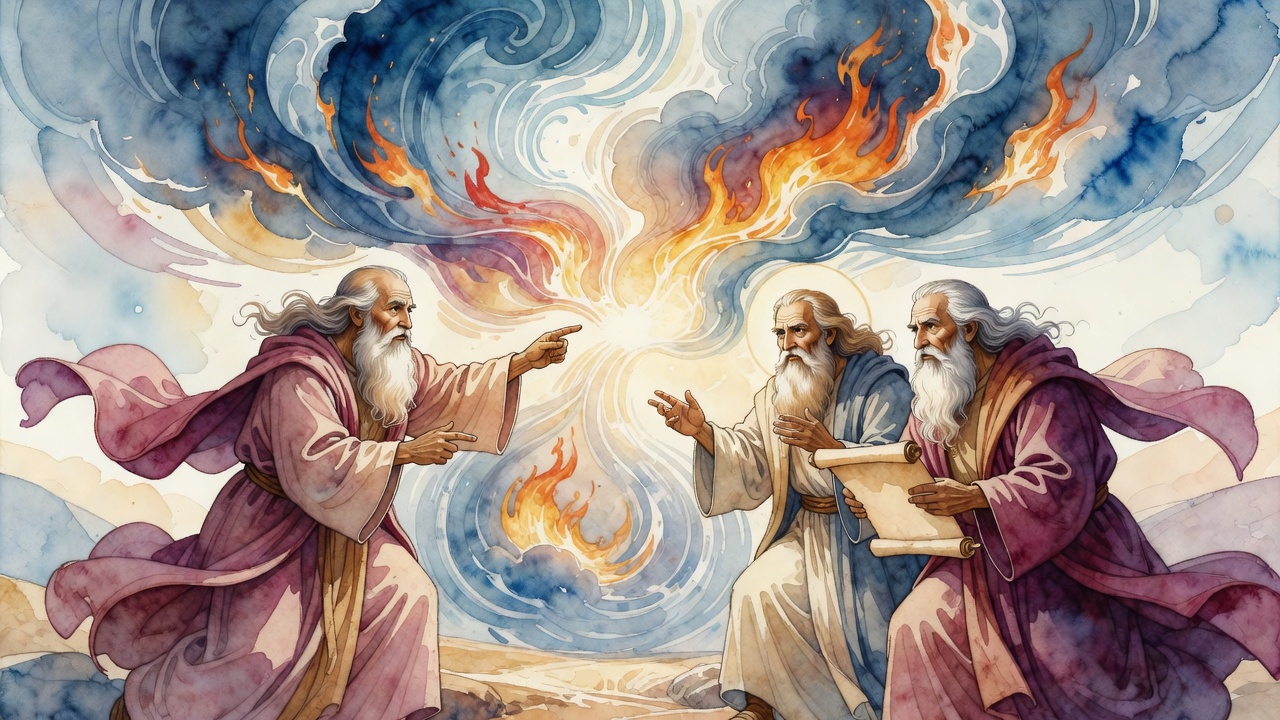
Noah taught his children what he had learned from Enoch and from the terrible education of the flood. He listed the sins that had brought water over the mountains and told his sons to teach their children to avoid them. But people spread. Families became clans, clans became nations, nations chose their own directions and forgot the ark and forgot the warning. The angel who had sung on the second day watched the new world repeat the questions that had nearly destroyed the old one.
Isaac Entertained the Philistines and Kept the Wells
Isaac dug wells in the valley of Gerar, and the Philistines stopped them up. He dug again, and they quarreled with him over those too. He dug a third time and they left that one alone, and he called it Rehoboth: wide places, room enough, no more fighting. He moved to Beersheva and God appeared to him at night and said: I am with you. Do not be afraid.
Isaac's life was quieter than his father's and his son's. He did not journey to Egypt. He did not wrestle with an angel. He dug wells and filled them with water and named them and moved when he had to move. The patriarchs did not all work at the same volume. Isaac's contribution was persistence: the willingness to dig the same wells again after they were stopped, to keep looking for water in a dry land without making the search into a drama. The angels who watched over the family watched a man who did his work quietly and kept finding what the land needed.
Jacob Saw Armies Before He Saw His Brother
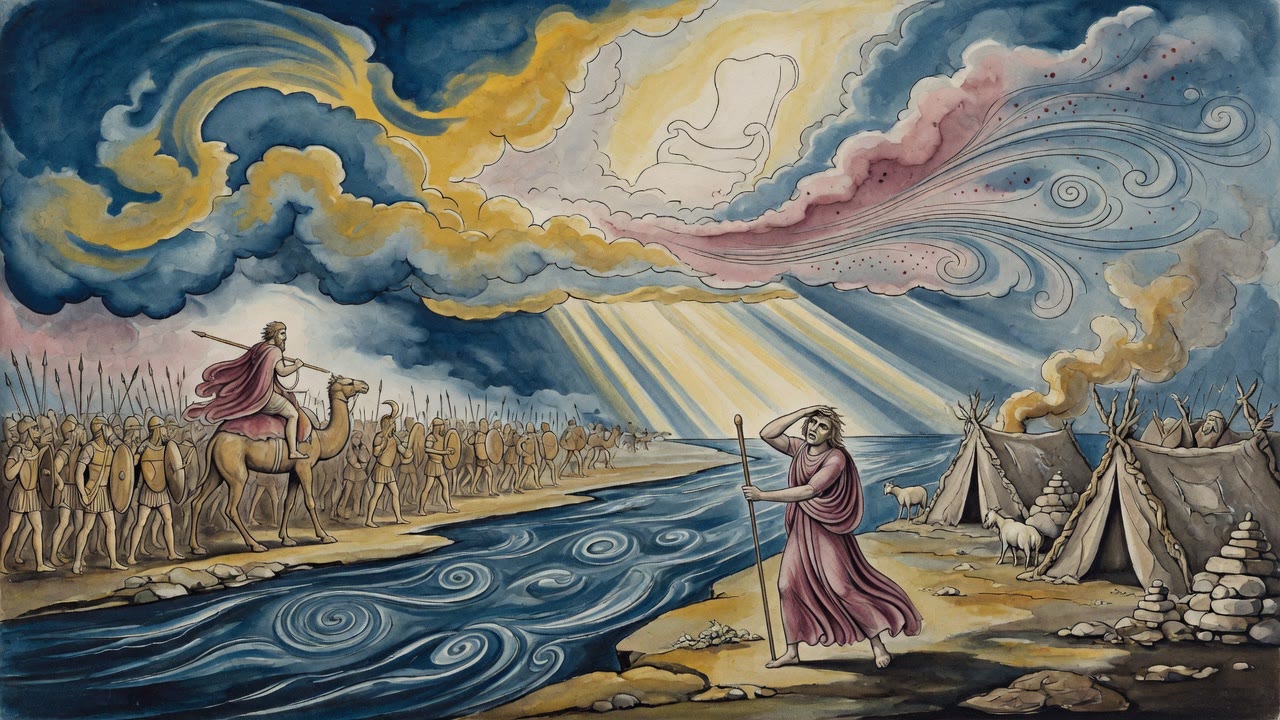
When Jacob heard that Esau was coming with four hundred men, he was genuinely afraid. He had left Canaan twenty years earlier running from his brother's rage, and now the same brother was riding toward him with an army. Jacob split his camp and his flocks into two groups, so that if Esau struck one, the other might escape. Then he prayed. He named his own smallness, his unworthiness of all the love God had shown him, and he asked plainly: save me from the hand of my brother.
Before the meeting, Jacob saw a camp of angels. He called the place Mahanaim: two camps. His own camp and God's camp. The tradition read this as a reassurance built into the geography of his fear. You are not alone in this. There is an army you cannot see accompanying the army you have split in two. Jacob went forward to meet Esau with an angel-guarded flank he did not know how to use but could at least name.
Moses Fled and Was Carried
Moses killed an Egyptian who was beating a Hebrew slave, buried the body in the sand, and thought no one had seen. The next day two Hebrews were fighting, and when Moses tried to intervene the one in the wrong turned on him and said: will you kill me the way you killed the Egyptian? Moses understood he had been seen. When Pharaoh heard, he ordered Moses killed, and Moses ran south into Midian.
The tradition said an angel carried him. The distance from Egypt to Midian in one day was not possible on foot, but Moses arrived. He sat beside a well and saw the daughters of a Midianite priest being pushed away from the water by other shepherds, and he stood up and helped them water their flock. The first thing Moses did in exile was what he had done at home: stand between the strong and the weak. The angel who carried him had delivered him not into safety but into the same situation he had fled from, and Moses walked straight into it again.
← All myths