Parshat Vayeshev5 min read

Benjamin Knew Josephs Secret and Kept It From His Brothers

When Benjamin went to Egypt, Joseph pulled him aside and asked what their brothers had told Jacob. The answer revealed a mercy his brothers never knew about.

Curated by Arthur · Told by Maggid ·
Table of Contents
  1. The Last Son
  2. The Private Conversation in Egypt
  3. What Benjamin Carried Home
  4. The Shape of Joseph's Life
  5. The Instruction He Left

The Last Son

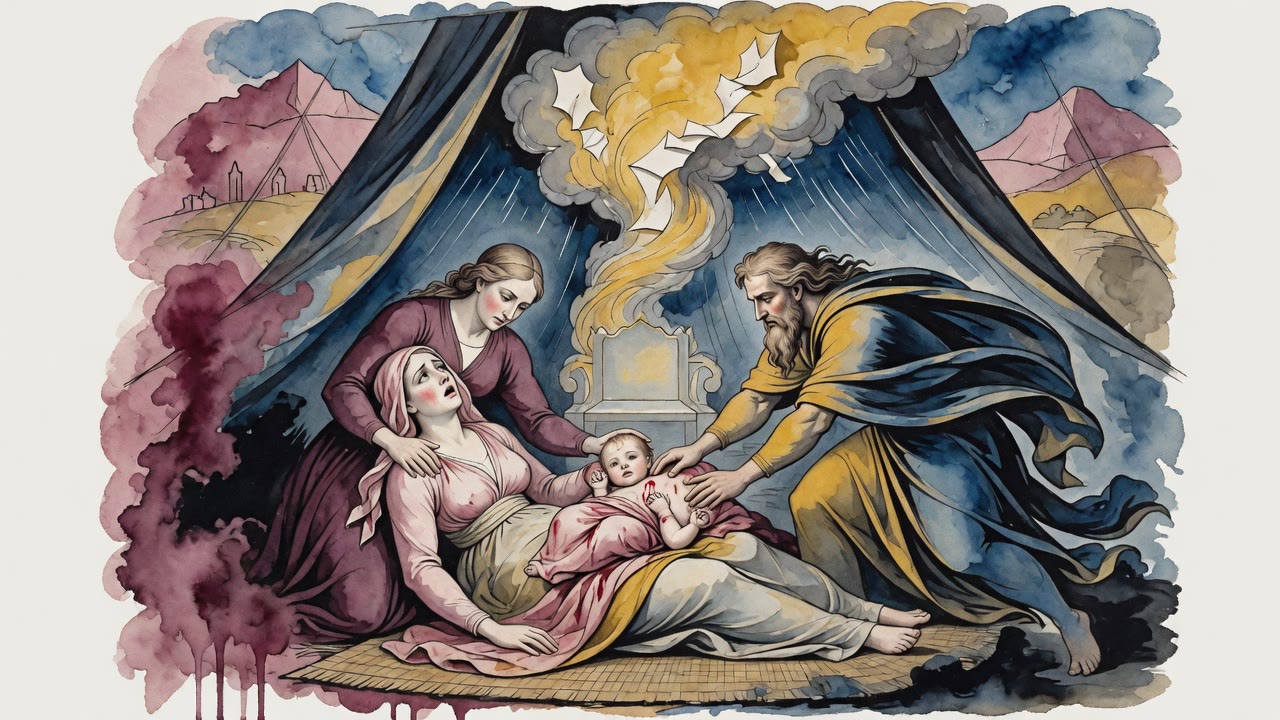
Benjamin was the only one who could not remember Rachel. She died giving him birth, and his first years passed under the care of Bilhah, her handmaid, because Jacob could not bear to watch the child Rachel had given her life for and not weep. Benjamin grew up knowing he was loved and also knowing that his arrival had cost the person his father loved most.

He told his sons this at the beginning of his testament, not to rouse their pity but to establish who he was: a man who understood that love and loss could arrive in the same moment, and that a person could be both gift and grief to the people who received them.

The Private Conversation in Egypt

When Benjamin came to Egypt and stood before the man who would not yet reveal himself as Joseph, he was watched. He felt it. The steward of the house looked at him too long. The great lord of the granary seated Benjamin at a separate table but sent him five times the portion of food the others received. Something was happening that no one explained.

Then Joseph cleared the room and drew Benjamin aside.

"What did they tell your father about me?" Joseph asked. "What did they say happened?"

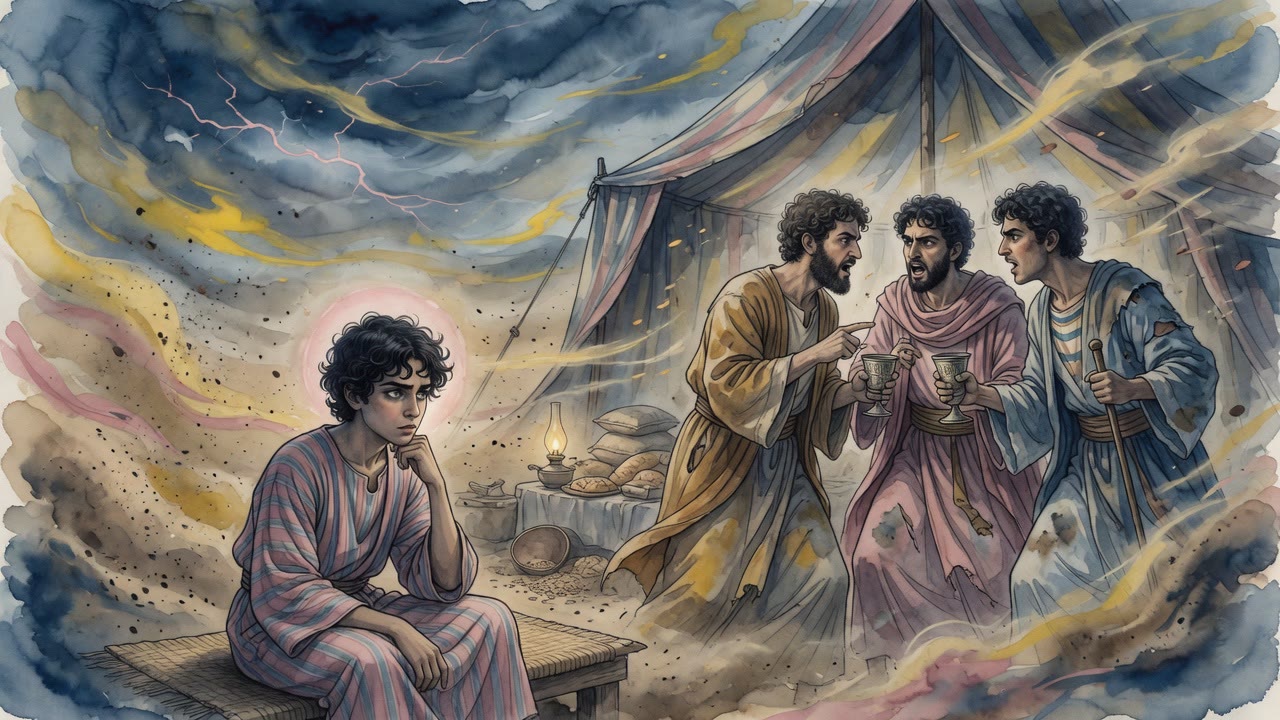
Benjamin told him the truth: they had taken Joseph's coat, slaughtered a kid, dipped the coat in the blood, and brought it to Jacob. They told him a wild beast had devoured Joseph. Jacob had torn his garments and mourned for days and could not be comforted.

Joseph wept when he heard this. Not from grief but from something more complicated, the knowledge that his father had spent all those years believing in a death that never happened, mourning a son who was alive in Egypt accumulating power and grain.

Then Joseph told Benjamin the thing his brothers never learned. He had recognized all of them when they first came. He had known their faces. But he had tested them before revealing himself, because he needed to know whether they had changed. He needed to see what they would do when a second son of Rachel was threatened. Whether they would abandon another boy the way they had abandoned him, or whether the years had reshaped something in them.

What Benjamin Carried Home

Benjamin held this knowledge alone and kept it. He went back to Canaan carrying a secret weight. His brothers, who had spent years building walls of silence around what they had done to Joseph, did not know that Joseph had already seen through the walls. They did not know they had been tested and that the test had had an answer.

Benjamin never told them. He told his sons at the end of his life instead, when there was nothing left to protect and everything left to transmit. Joseph had chosen silence deliberately, he explained. Not from weakness. Joseph's silence toward their brothers was a form of mercy, a choice to give them the dignity of not knowing how thoroughly they had been seen.

The Shape of Joseph's Life

Joseph spoke his own testament before Benjamin spoke his, and Benjamin wove it through his own address as the foundation of everything he had learned. Joseph had recited what had been done to him not as complaint but as evidence: "These my brothers hated me, but the Lord loved me. They wished to slay me, but God guarded me. They sent me down into a pit, and the Most High brought me up. I was sold into slavery, and the Lord made me free."

Each clause matched a human blow with a divine response. Not a balancing, exactly. More like a record showing that no human act of malice had the final word in Joseph's life. The pit was answered by God. The sale was answered by God. The prison was answered by God. What Benjamin took from this was not that God protected the righteous from suffering but that suffering was not the end of the account. The account remained open until God closed it.

The Instruction He Left

Benjamin told his sons to follow Joseph's example, not because Joseph was perfect but because Joseph had shown what it looked like to hold a pure mind inside impure circumstances. He had been enslaved and had not cursed his brothers. He had been propositioned and had not yielded. He had been imprisoned and had not lost his conviction. When power finally came to him, he had not used it to settle scores.

Benjamin had watched all of this from a closer distance than anyone else. And what he had seen was that purity of heart was not something that protected a person from harm. It was something that survived harm without becoming harm. That was the inheritance Rachel had left her sons through Joseph, and through Joseph to all of them.


← All myths
From the tradition

Sources

2 sources

The texts this telling draws on, in full. Open a card to read inline, or expand it for a wider, quieter read.

Testament of BenjaminTestaments of the Twelve Patriarchs

Benjamin, twelfth and last son of Jacob, born of Rachel, had lived a hundred and twenty-five years. He kissed his sons and began to speak.

"As Isaac was born to Abraham in his old age, so also was I to Jacob. Since Rachel my mother died giving me birth, I had no milk. I was suckled by Bilhah, her handmaid. For Rachel remained barren for twelve years after she bore Joseph. She prayed to the Lord with fasting for twelve days, and she conceived and bore me. My father loved Rachel dearly and prayed that he might see two sons born from her. Therefore I was called Benjamin, that is, a son of days" (Genesis 35:16-18).

Benjamin then revealed a conversation with Joseph in Egypt that his brothers never knew about.

When Benjamin went to Egypt, Joseph recognized him and asked: "What did they tell our father when they sold me?" Benjamin answered: "They dabbled your coat with blood and sent it, saying: Know whether this be your son's coat" (Genesis 37:32). Joseph replied carefully: "Even so, brother. The Canaanite merchants stole me by force. They concealed my garment as though a wild beast had met me and slain me. And so their associates sold me to the Ishmaelites."

Joseph was lying. Deliberately. He wished to conceal from Benjamin what his brothers had actually done. He called the brothers to him privately and said: "Do not tell my father what you have done to me, but tell him as I have told Benjamin." Even after everything they had done to him, Joseph shielded them.

"Do you also, my children, love the Lord God of heaven and earth, and keep His commandments, following the example of the good and holy man Joseph," Benjamin urged. "Let your mind be unto good, for he that has his mind right sees all things rightly. Fear the Lord, and love your neighbor. Even though the spirits of Beliar claim you to afflict you with every evil, they shall not have dominion over you, even as they had not over Joseph."

He said that Joseph besought their father to pray that the Lord would not impute to his brothers whatever evil they had done. And Jacob cried out: "My good child, you have prevailed over the bowels of your father Jacob!" He embraced Joseph and kissed him for two hours.

Benjamin then taught the nature of the good person. "The good man has not a dark eye. He shows mercy to all, even to sinners. Though they devise evil intent against him, by doing good he overcomes evil, shielded by God. He loves the righteous as his own soul. If anyone is glorified, he envies not. If anyone is enriched, he is not jealous. If anyone is valiant, he praises him. The virtuous he lauds. On the poor he has mercy. On the weak he has compassion. Unto God he sings praises."

"If you have a good mind," Benjamin said, "then wicked men will be at peace with you. The profligate will reverence you and turn to good. The covetous will cease from desire. Where there is reverence for good works and light in the mind, even darkness flees."

The inclination of the good person is not in the power of Beliar's deceit. The angel of peace guides such a soul. The good mind has not two tongues: one of blessing and one of cursing, one of honor and one of contempt. It has one disposition, uncorrupt and pure. No double sight, no double hearing. In everything it does, speaks, and sees, it knows the Lord looks upon the soul.

"Flee the malice of Beliar," Benjamin warned, "for he gives a sword to those who obey him, and the sword is the mother of seven evils: bloodshed, ruin, tribulation, exile, famine, panic, and destruction." He invoked Cain, who was delivered over to seven vengeances by God for the murder of his brother Abel. Every hundred years the Lord brought a plague upon him. Those who follow Cain in envy and hatred of brothers shall be punished with the same judgment.

"Flee evil-doing, envy, and hatred of brethren, and cleave to goodness and love," Benjamin commanded. "He that has a pure mind in love looks not after a woman for fornication, for he has no defilement in his heart, because the Spirit of God rests upon him. As the sun is not defiled by shining on dung and mire, but rather dries them up and drives away the stench, so also the pure mind, though encompassed by the defilements of earth, rather cleanses them and is not itself defiled."

He foresaw that the Temple of God would be in their portion, and the last Temple would be more glorious than the first. The twelve tribes would be gathered together, and the Most High would send forth His salvation.

"I command you, my children, carry up my bones out of Egypt and bury me at Hebron, near my fathers." Benjamin died at a hundred and twenty-five years, at a good old age. They placed him in a coffin, and in the ninety-first year after the children of Israel entered Egypt, they carried up the bones of their fathers secretly during the Canaanite war and buried them in Hebron, by the feet of their fathers.

Full source
Testament of JosephTestaments of the Twelve Patriarchs

Joseph, eleventh son of Jacob, beloved of Rachel, was about to die. He called his sons and brethren together and spoke.

"My brethren and my children, hearken to Joseph the beloved of Israel. I have seen in my life envy and death, yet I went not astray, but persevered in the truth of the Lord."

He laid it out like a psalm of survival: "These my brethren hated me, but the Lord loved me. They wished to slay me, but the God of my fathers guarded me. They let me down into a pit, and the Most High brought me up again. I was sold into slavery, and the Lord of all made me free. I was taken into captivity, and His strong hand rescued me. I was beset with hunger, and the Lord Himself nourished me. I was alone, and God comforted me. I was sick, and the Lord visited me. I was in prison, and my God showed favor to me. In bonds, and He released me. Slandered, and He pleaded my cause. Envied by my fellow-slaves, and He exalted me."

Then he told the full story of the Egyptian woman.

The chief captain of Pharaoh, Pentephris, entrusted Joseph with his house. But the captain's wife, a Memphian woman, began her campaign. She urged Joseph to transgress with her. The God of Israel delivered him from the burning flame. She threatened him with death. She summoned him for punishment, then called him back. She offered to make him lord of everything she owned.

Joseph remembered the words of his father, went into his chamber, wept, and prayed to the Lord. He fasted for seven years. To the Egyptians, he appeared to be living delicately, "for those who fast for God's sake receive beauty of face." When his master was away, Joseph drank no wine and for three days at a time took no food, giving it instead to the poor and sick (Genesis 39:7-12).

The woman came to him at night, pretending to visit. She embraced him as a son, then tried to draw him into sin. He declared the words of the Most High to her, hoping she might repent. She tried flattery, praising his chastity before her husband while scheming in private. She offered to abandon her idols if he would lie with her. She threatened to poison her own husband and take Joseph as her spouse. Joseph rent his garments: "Woman, reverence God, and do not this evil deed!"

She sent food mingled with enchantments. Joseph saw a vision of a terrible figure holding a sword within the dish. He wept and refused to eat. When she confronted him, he told her: "The God of my father has revealed your wickedness by His angel." To prove the enchantment was powerless against those who worship God with chastity, he prayed and ate the poisoned food before her eyes, unharmed. She fell at his feet weeping and promised to stop.

But she did not stop. She feigned illness, groaning and sighing. She threatened to hang herself or throw herself off a cliff. Joseph, seeing the spirit of Beliar troubling her, prayed to the Lord and counseled her to think of her children and reputation.

Finally, she seized his garment by force, dragging him. He left it behind and fled naked. She used the garment to accuse him falsely, and her husband had Joseph thrown into prison and scourged (Genesis 39:13-20). Even from prison, she sent messages: "Consent to fulfill my desire, and I will release you from your bonds." Not even in thought did Joseph incline to her.

"Ye see, my children, how great things patience works, and prayer with fasting," Joseph said. "If you follow after chastity and purity with patience and prayer, with fasting in humility of heart, the Lord will dwell among you, because He loves chastity."

He told of his humility. When the Ishmaelites asked if he was a slave, Joseph said yes, to protect his brothers from shame. When the eldest merchant said, "You are not a slave, for even your appearance makes it clear," Joseph insisted he was. When the Memphian woman arranged for Pentephris to buy him, and Joseph was beaten to make him confess his true identity, he maintained his story. Even when the Ishmaelites returned and revealed he was the son of a mighty man in Canaan, and Joseph's bowels dissolved and his heart melted with the desire to weep, he restrained himself to protect his brothers.

"Do you also love one another," he said, "and with long-suffering hide one another's faults. For God delights in the unity of brethren." When his brothers came to Egypt, Joseph returned their money, did not upbraid them, and comforted them. After Jacob's death, he loved them more abundantly. Their children were his children. Their suffering was his suffering. Their sickness was his infirmity. "I exalted not myself among them in arrogance because of my worldly glory," Joseph said, "but I was among them as one of the least."

He recounted a vision: twelve harts feeding, nine scattered, then three preserved, then all scattered, then restored as lambs crying to the Lord. God brought them into a flourishing, well-watered place, out of darkness into light. They became twelve sheep, then many flocks. Twelve bulls suckled one cow that produced a sea of milk. The horns of the fourth bull went up to heaven and became a wall for the flocks.

"Observe the commandments of the Lord," Joseph concluded, "and honor Levi and Judah, for from them shall arise one who saves Israel. His kingdom is an everlasting kingdom, which shall not pass away." He commanded them to carry his bones to Hebron and to bury Asenath near Rachel.

Joseph stretched out his feet and died at a good old age. All Israel mourned for him, and all Egypt with a great mourning. When the children of Israel went out of Egypt, they took his bones and buried him in Hebron with his fathers. The years of his life were a hundred and ten (Genesis 50:26).

Full source