Benjamin Said Nothing and the Temple Was Built on His Land
They struck him on the shoulder all the way back to the city. He had already named their crime once. He did not name it again.
Table of Contents
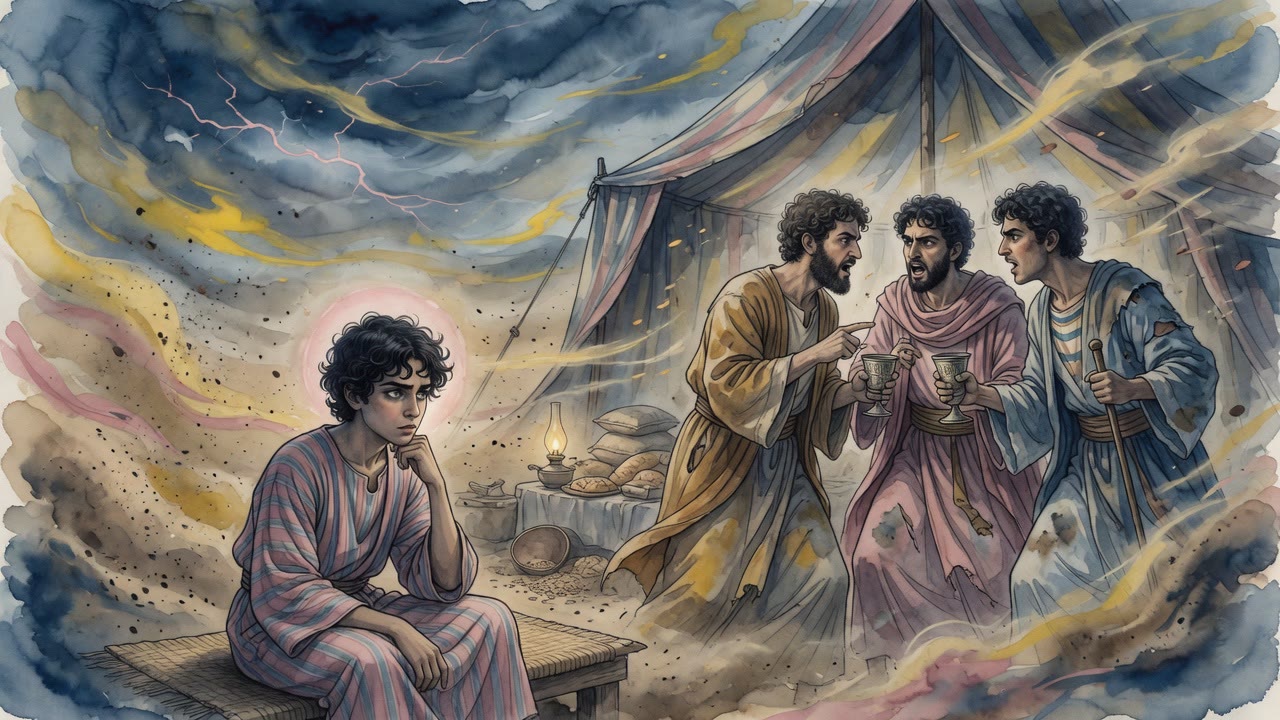
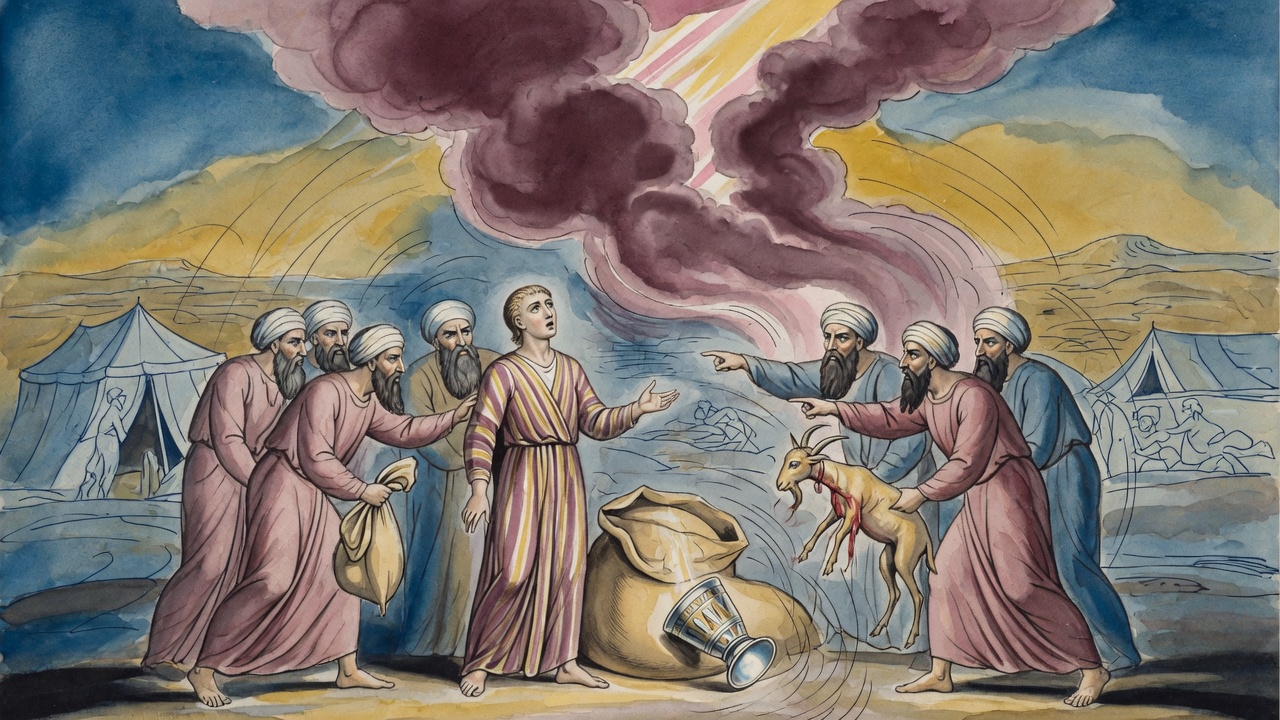
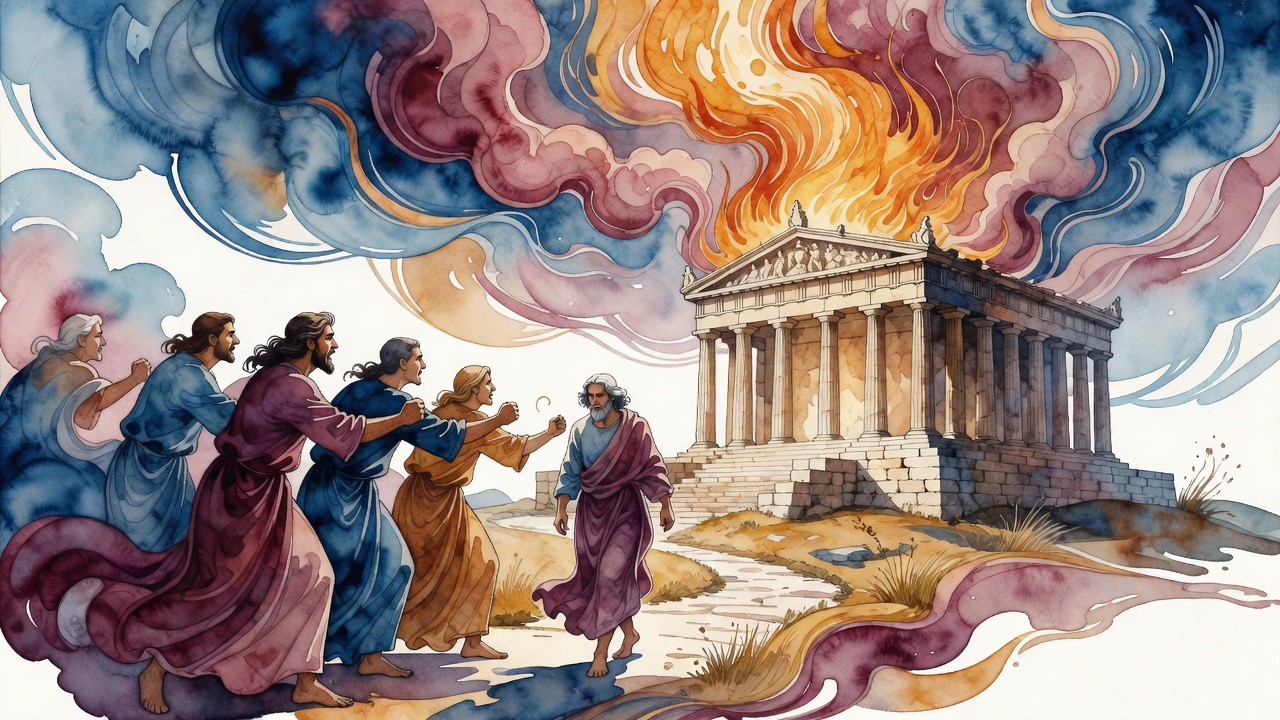
They were walking back toward the city with the cup already found. The donkeys were loaded. The ten older brothers had no target left except the youngest, so they used him. As they walked they struck Benjamin on the shoulder and said it again. "O thou thief and son of a thief. Thou hast brought the same shame upon us that thy mother brought upon our father."
 Click for full size
The blows landed on the same place, again and again. Shoulder. Road. Insult. He kept walking.
He Did Not Answer a Second Time
He had already answered once, when the cup came out of his sack. He had asked whether this matter was as evil as the kid of the goats, as the selling of their own brother. That question had shut their mouths. They had not refuted it. They could not.
Now they hit him, and he said nothing. Not because he lacked a line. He had spent the line. Saying it again would only multiply noise. He received the blows on his shoulder and kept the silence his one question had already filled.
The city grew larger. The viceroy's house waited. Benjamin's shoulder took what the ten men could not aim at the true defendant, who was already inside that house and still unnamed.
The Presence Chose the Bruised Place
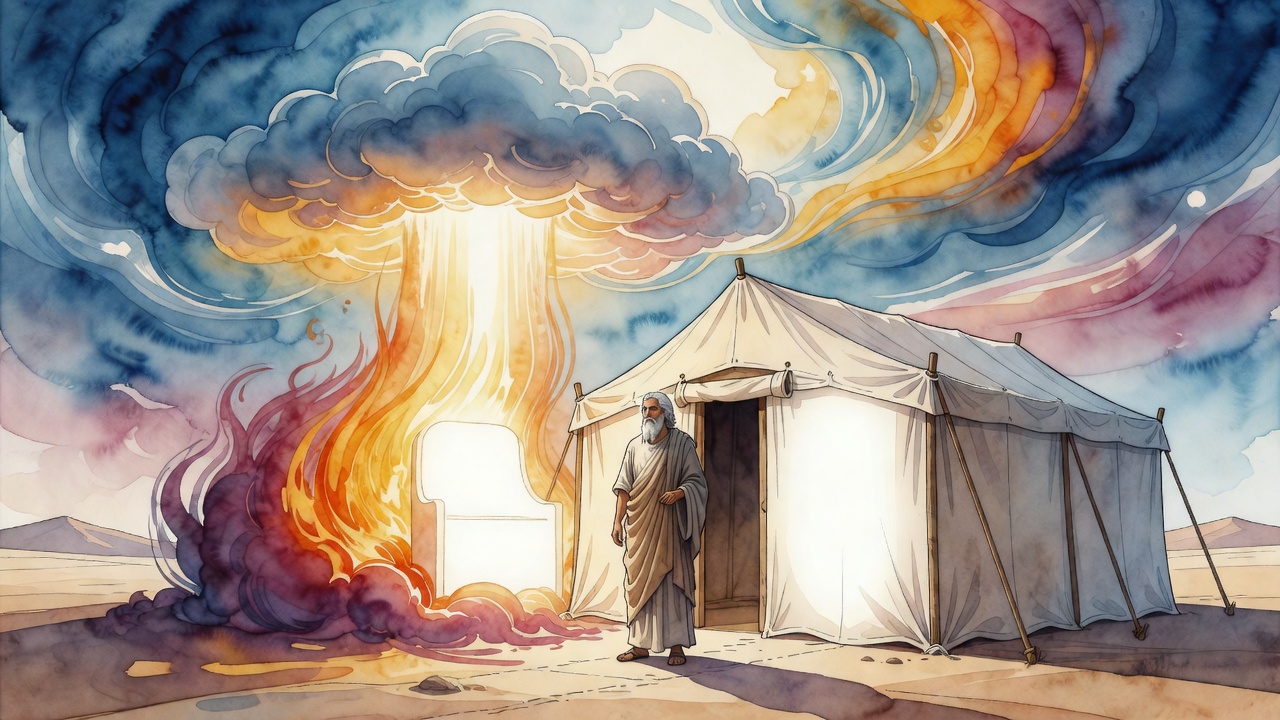
God watched the road. The blows were undeserved. Benjamin knew they were undeserved. He had the proof in his mouth and left it there unused. For that restraint, God appointed that the Shekinah (שכינה), the divine presence, should dwell between his shoulders.
The beloved of the Lord would rest in safety beside him. The presence would sit on the very place the brothers had struck. A later blessing would say it outright: he shall dwell between his shoulders (Deuteronomy 33:12). The bruise became an address.
Judah received kingship. Ephraim received the birthright Reuben had lost. Benjamin, born last, the child whose birth had cost Rachel her life, received the patch of earth where God's house would stand. The Temple was not a prize for a tribe that had never been wronged. It sat on the land of a man who had carried being wronged without making a second speech of it.
Joseph Asked Him in Private
In Egypt, when the viceroy was still a stranger to the ten, he already knew the twelfth. Joseph took Benjamin aside and asked what they had told their father when they sold him. Benjamin did not protect the lie. "They dabbled your coat with blood and sent it, saying, Know whether this be your son's coat."
He had known for years. He had named it on the road in one question. He named it again only because Joseph asked. He did not use the knowledge to demand that the ten be punished before he would stand in the same room with them. He told the truth and stayed a brother.
Joseph had been thrown in a pit and sold and had not required revenge as the price of going on. Benjamin took that as the pattern worth keeping.
He Told His Sons at the End
He lived a hundred and twenty-five years. At the end he kissed his sons and spoke. Rachel had died giving him birth. He had no milk from her. Bilhah had suckled him. Jacob had prayed to see two sons from Rachel, and Benjamin was the second, a son of days.
"Follow Joseph," he told them. Do not let the injuries done to you become the spine of your life. Flee envy and hatred of brothers. Cleave to goodness. He warned them of a sword that breeds bloodshed, ruin, exile, famine, panic, and destruction. He told them the Temple of God would stand in their portion, and that the last house would be more glorious than the first.
Then he ordered them to carry his bones out of Egypt and bury him at Hebron, near his fathers. He died at a good age. They placed him in a coffin. In the ninety-first year after Israel entered Egypt they carried the bones up in secret, during a Canaanite war, and laid him at his fathers' feet.
The House Stood Where the Blows Had Fallen
Centuries later the Temple rose on Benjamin's land. The presence that had been promised to the space between his shoulders took a house of stone and wood and fire. Priests walked there. Offerings rose. The youngest tribe held the address.
The road back to the viceroy's city was long gone. The shoulder was dust. The silence was not. A man had been hit for a cup he did not steal, had refused a second accusation, and the Shekinah had chosen that refused second word as a place to rest.
← All myths