Joseph Prayed in the Pit and God Answered in Egypt
The woman of Memphis sent Joseph a dish laced with spells. He looked up and saw a figure standing behind the servant, holding out a sword.
Table of Contents
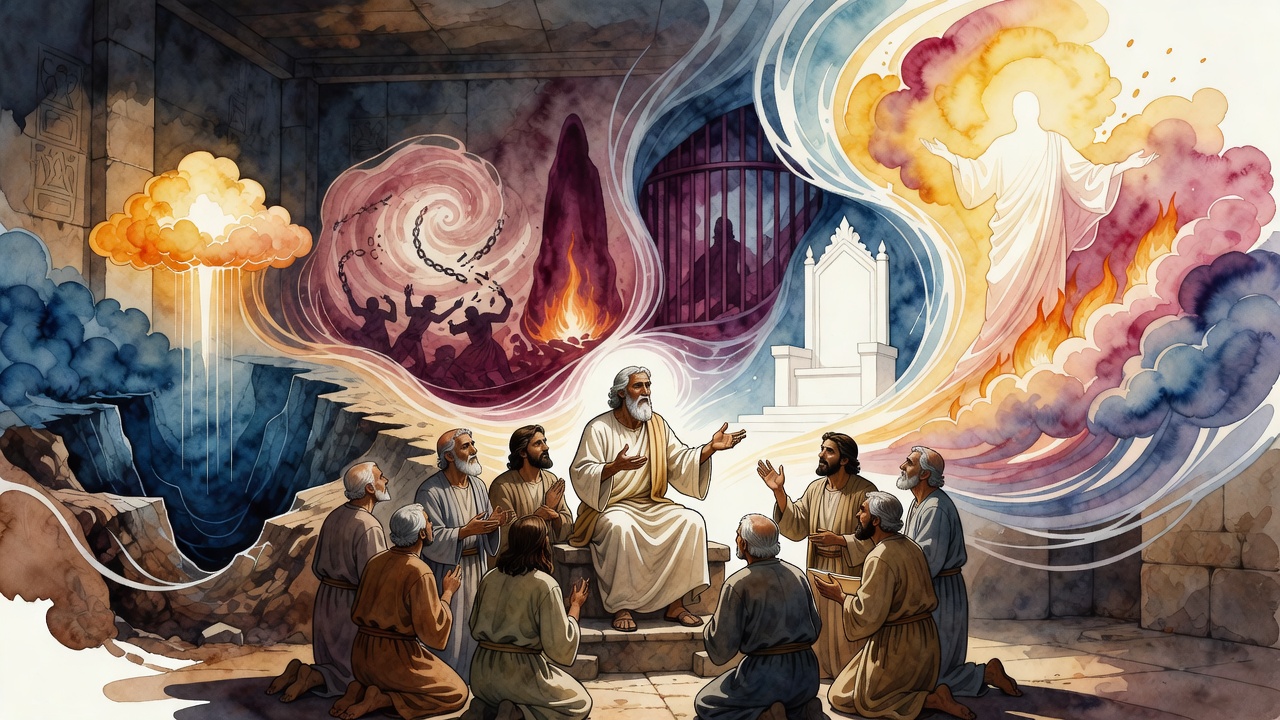 Click for full size
The Pit and the Meal Above It
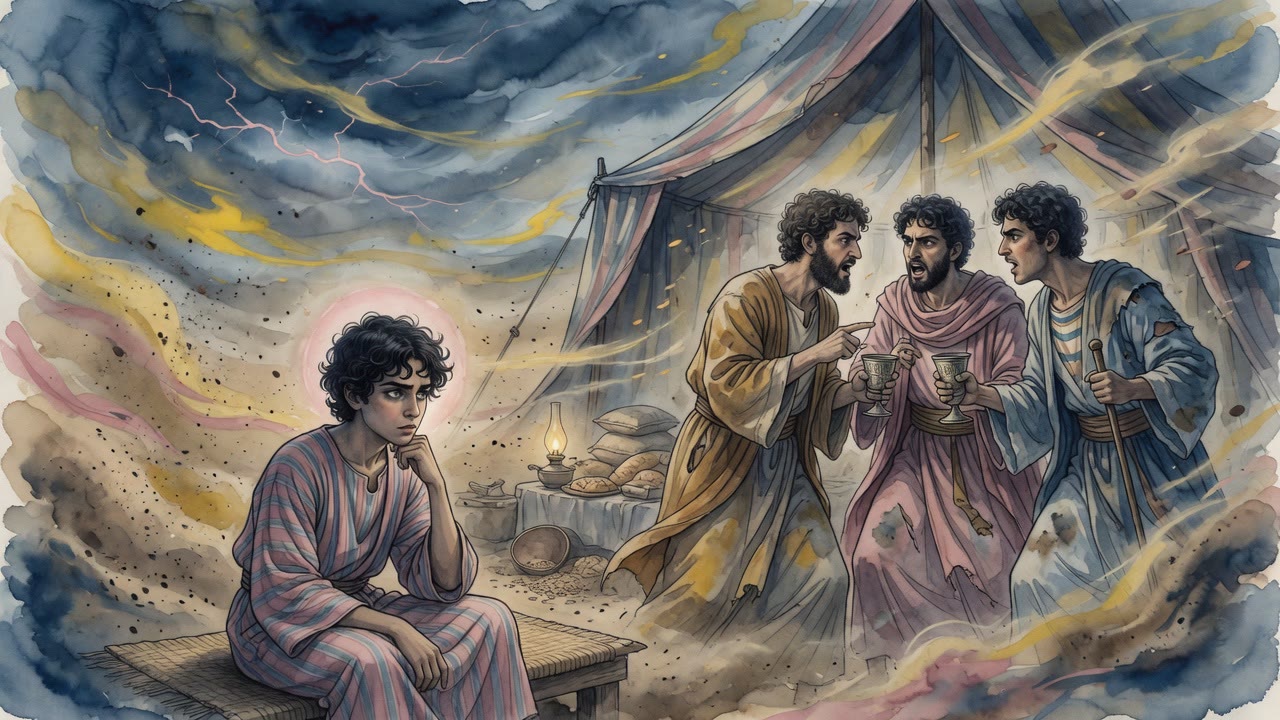
They took the coat off him first. Then they put him down the cistern, which was dry, and then they sat down on the ground around the mouth of it and ate their lunch.
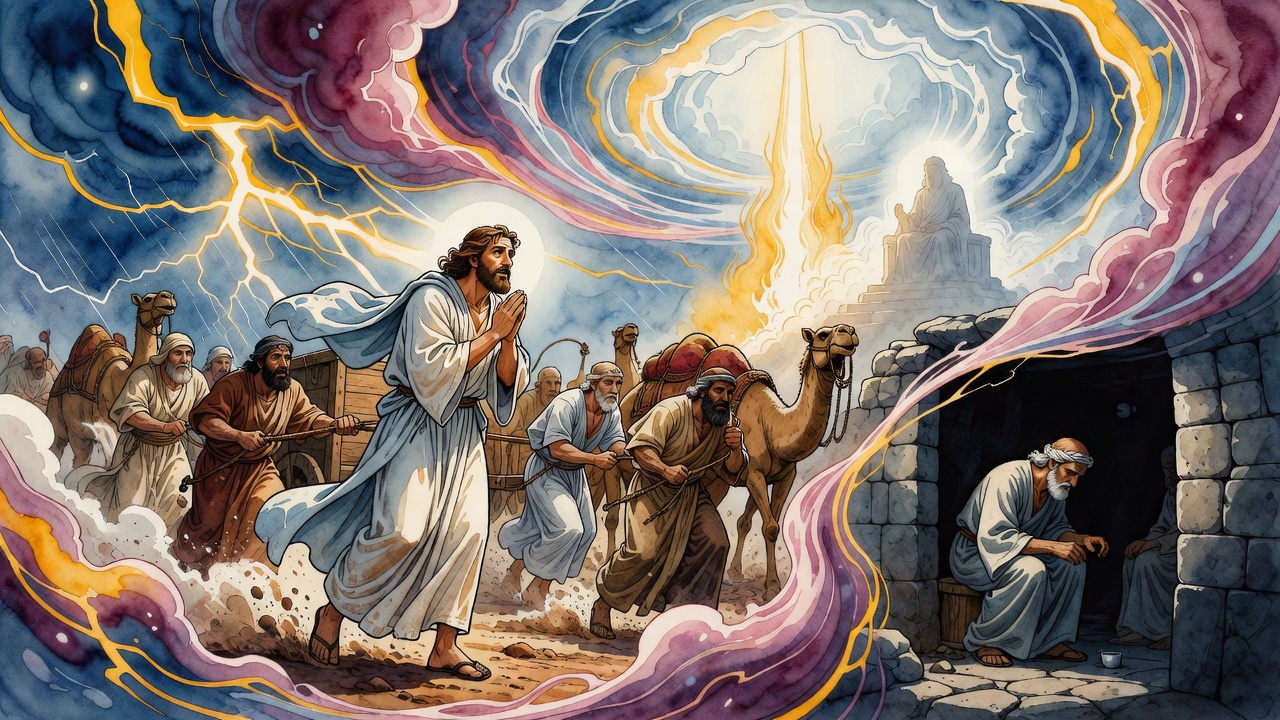
Joseph prayed down there. Nobody wrote down what he said. When the traders came up the road out of Gilead his brothers pulled him out and sold him for twenty pieces of silver, and he went south into Egypt in a caravan of gum and balm and myrrh, to a country where nobody knew his name and nobody was going to ask.
Gabriel Got There First
Potiphar did not buy a handsome boy to keep his accounts.
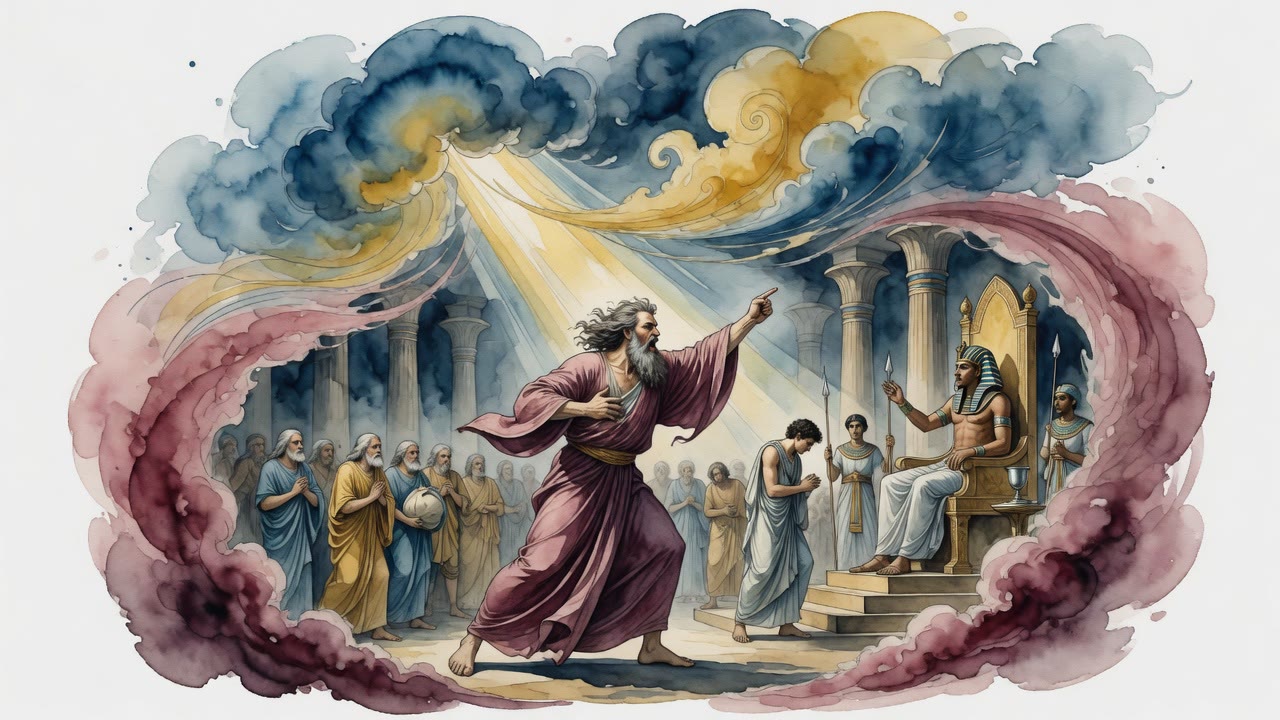
The prayer out of the cistern was answered in that house before Joseph knew anyone had heard it. The angel Gabriel came down and maimed the man so that what he intended could not be done, and Potiphar, whose plans had changed for reasons he could not explain to himself, put the boy in charge of his house instead.
Joseph moved through that house whispering. Whenever he was working, his lips were going.
"Are you putting a spell on me?" Potiphar asked him.
"I am asking God to let me find favor with you," Joseph said.
Seven Years of Fasting
The lady of the house wanted him and spent seven years going about it.
She began with the direct offer and moved to threats when it failed. She had him punished, then sent for him and had him brought back and threatened him again. Then she changed the terms. You will be lord over me and everything in this house, she told him. You will be our master. Say yes.
He went into his room, and wept, and prayed.
He fasted the whole seven years and it did not show on him. The Egyptians looking at him thought here is a young man who lives soft and eats well, because a man who fasts for God's sake is given beauty of face. When his master was away from home he drank no wine at all, and went three days at a stretch without eating, and passed his food out to the poor and the sick.
She came to his room at night with a story about checking on him.
She had no son of her own. So she took a new position, that she thought of him as her child, and she said it often enough that he prayed to God on her behalf, and she conceived and bore a boy. For a while after that she held him the way a mother holds a son and he did not see what was underneath it. When he finally saw it he grieved for days, not for himself, for her.
The Dish With the Sword in It
In front of her husband she praised the boy's chastity. In private she told him not to worry about the man. He is convinced of you, she said. If somebody came and told him about us he would not believe it.
Joseph lay on the floor of his room and asked God to get him out from under her.
She tried religion. Let me leave my idols, she said. Lie with me and I will bring my husband away from his idols too and we will both walk in the law of your Lord. He told her God does not take pleasure in people who come to Him out of a bed like that, and she went quiet, which was not agreement.
Then she tried murder. If you will not have me, she said, I will poison my husband and marry you.
Joseph tore his clothes in front of her. "Have some fear of God, woman. Do not do this. I am going to tell every man in this house what you just said."
She begged him not to and went away and started sending him presents.
Then she sent food.
The eunuch carried it in, and Joseph looked up from the dish and saw someone standing behind the man, a terrible figure holding out a sword to him along with the plate. When the eunuch left he wept, and he did not touch it, and he did not touch anything else she sent for a day.
She came herself to ask why the food had not been eaten.
"Because you filled it with death," he said. "You told me you do not go near idols, only to the Lord. God has shown me by His angel what you put in it, and I kept it so you would have to look at it. Now watch."
He prayed out loud, called on the God of his fathers and the angel of Abraham, picked up her dish, and ate it in front of her.
She went down on her face at his feet and cried, and he lifted her up off the floor and told her not to do it again, and she promised.
The Garment
She kept the promise about the food.
A while later her husband found her sitting with her face fallen in and asked what was wrong. Pain at the heart, she said. The groaning of my spirit. He comforted a woman who was not sick, and went out, and she went straight down the corridor.
"I will hang myself," she told Joseph. "I will throw myself off a cliff, tonight, unless you lie with me."
He talked her off it with the only thing that would work on her. Kill yourself, he said, and Asteho, your husband's other woman, the one who hates you, will beat your children in this house, and there will be nothing left on earth with your name on it.
She heard it as love. So you do care about me, she said.
She left at the sixth hour. Joseph stayed on his knees the rest of that day and all night and was still at it at dawn, asking to be let out of the house.
She came in and took hold of his clothes and pulled. He looked at her fist closed in the cloth and he came out of the cloth and left it with her and went out of the room with nothing on.
She held it up and told the household what he had done to her. Potiphar locked him in the house prison that night, had him beaten in the morning, and sent him on to the prison of Pharaoh.
Singing in the Dark
She came to the prison after that.
She stood where the sound came out and listened to the man she had put in there thanking God, out loud, in the dark, in a good voice, glad, because there was a stone wall between them at last.
She kept sending word for years. Consent and I will have the irons off you. Consent and I will get you out of the dark. Not once, he told his sons at the end of his life, did he lean toward it, not even in thought.
That was the whole list he left them. They put me in a pit and the Most High brought me up. I was sold and He set me free. I was hungry and He fed me. I was alone and He kept me company. I was in prison and my God did me a favor.
← All myths