Abraham Calls Jacob Into Rebecca's Tent for a Blessing
Old Abraham passes the tent flap and calls not Isaac but young Jacob to Rebecca's side, to hand him a blessing reaching back to Adam.
Table of Contents
The old man's hands shook as he lifted the tent flap, and the wool smelled of woodsmoke and old age. Abraham had buried a wife, sent away a son, walked a mountain with a knife and walked back down it changed. Now he was near the end, and there was one thing left undone. He did not call for the household to assemble. He did not summon the servants who counted his flocks. He passed by the tent where his son sat, and he kept walking, leaning on a younger arm, until he reached the place where the women dwelled.
 Click for full size
There he stopped. He had come to find a boy and a mother together, and he meant to bind them.
The Old Man Walks Past Isaac's Tent
It would have been simpler to bless Isaac and be done. Isaac was the promise made flesh, the laughter born to a barren woman, the son who had lain on the wood and lived. Everyone expected the blessing to settle there and stay. Abraham walked past it.
His mind was not on the son anymore. It was on the grandson, the quiet one, the one who lingered near the cooking fires and the tent ropes instead of the open field. Abraham had watched this boy and seen something he could not name out loud, only act upon. So he did not stop at the tent of the son. He went looking for the boy, and he knew exactly whose hands he wanted holding the boy when he found him.
Rebecca Hears the Voice She Loves
Rebecca already knew. She had two sons and she did not love them the same, and she had stopped pretending otherwise even to herself. One came in from the field smelling of blood and dust, loud, hungry, here and gone. The other had a voice that did something to her. The more she heard it, the more it pulled at her, low and even, asking questions, turning things over.
It was not only that he was hers and soft and near. She had looked at her boys the way a clear-eyed person looks at two roads and sees where each one ends. She saw who they were. She saw what would come of them. And every time the younger one spoke, the seeing and the loving grew into the same thing.
So when the old man's shadow fell across her threshold and his voice asked for the boy, she did not ask why. She brought Jacob forward and set him in front of his grandfather, and she stayed.
A Hand Laid on the Boy's Head
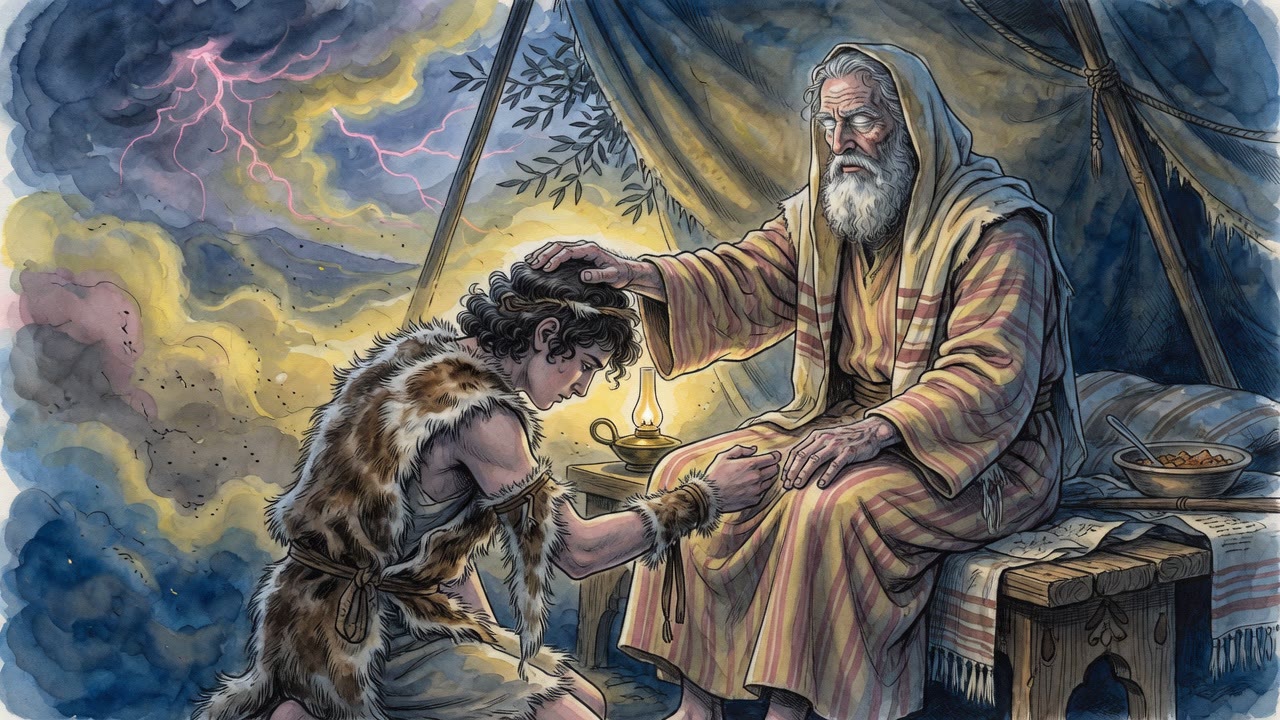
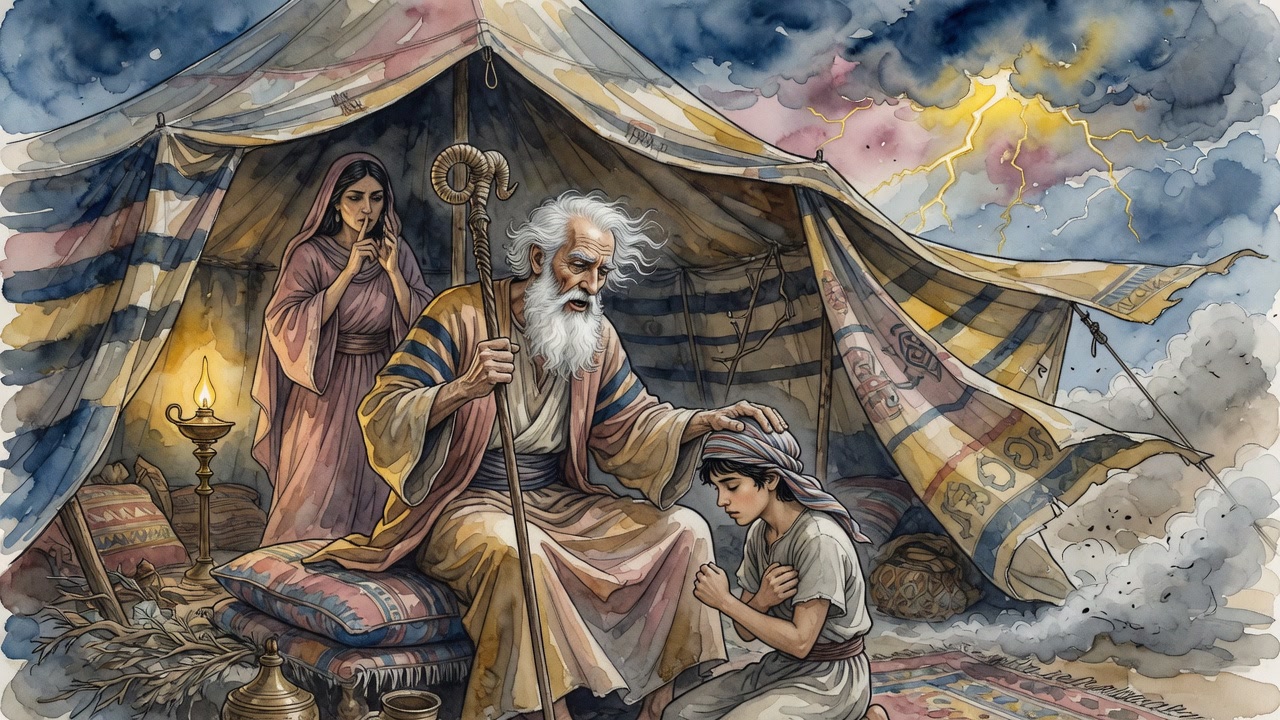
Abraham looked at the boy for a long moment. Then he laid his hand on him and spoke, and his voice had the weight of a man emptying everything he owned into a single vessel.
"Jacob, my beloved son, whom my soul loveth, may God bless thee from above the firmament." He did not stop at land. He did not stop at flocks or sons or a long life. He reached backward, past himself, past his own father, all the way to the beginning. "May He give thee all the blessing wherewith He blessed Adam, and Enoch, and Noah, and Shem."
The names landed one after another like stones set into a wall. The first man. The one who walked with God and was taken. The one who outlasted the flood. The one whose line carried the promise down to this tent, this hour, this boy. Abraham was not handing Jacob a family inheritance. He was setting him inside a chain that ran all the way back to the first breath of the first man (Genesis 5).
The Fear Behind the Blessing
Then the old man's voice changed, and what came next was not a gift but a guard. "And the spirit of Mastema shall not rule over thee or over thy seed." Mastema, from a word meaning enmity, the hostile pull that drags a person off the path and away from God.
This was the thing he feared most, and he named it out loud over the boy's head so that the naming itself would be a wall. Abraham had lived long enough to know that the danger to a line was never only famine or sword or barren wombs. It was the slow turning away, the seed of one generation forgetting what the last had carried. He could not live to fight that for them. So he set the words against it now, while his hand was still warm on the boy's head.
Rebecca Is Given the Charge
Then he turned to her, the mother who had not moved from the boy's side, and he gave her the thing that made the blessing real. A blessing spoken over a child is only breath unless someone living guards it. Abraham was dying. The boy was small. Between them stood the one person who already loved Jacob the way the old man did.
"My daughter, watch over my son Jacob," he said, and he called the grandson his son, "for he shall be in my stead on the earth, and for a blessing in the midst of the children of men, and for the glory of the whole seed of Shem." He had walked past Isaac's tent to come here and say this. The blessing was not a single act. It was two people, the mother and the boy, tied into one purpose, and the old man bound them with his last clear strength before he let his hand fall.
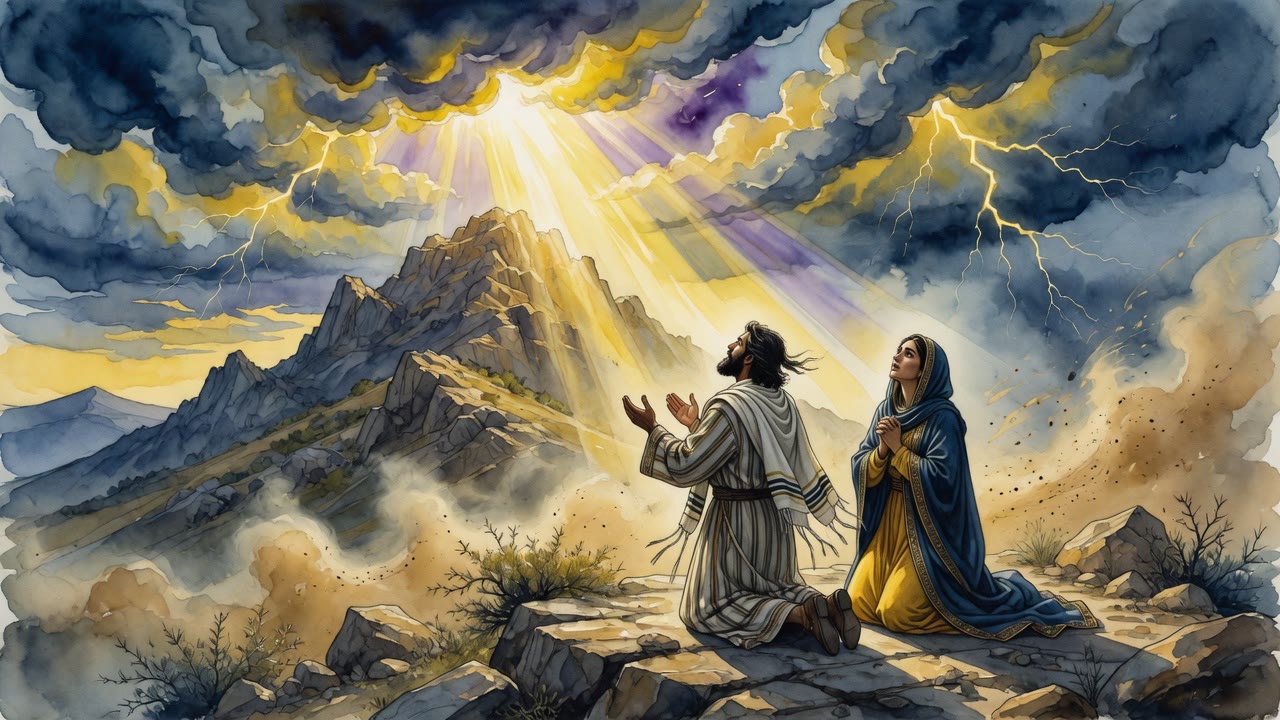
The names would keep blurring after him, the way names do in this family. The boy Jacob would one day be called Israel (Genesis 32:29), and even his father and grandfather would be folded into that name by those who came after. But on this day there was no confusion. There was an old man, a watching mother, and a boy with a hand pressed to his head, holding a blessing that reached back to Adam and was meant to reach forward forever.
← All myths