Abraham Stood in the Ruins of the Temple and Refused to Leave
The Temple is burning and the priests have fled. One figure stands in the ruins with no right to be there, refusing to go until God answers him.
Table of Contents
 Click for full size
The Ruins, and One Man Still Standing
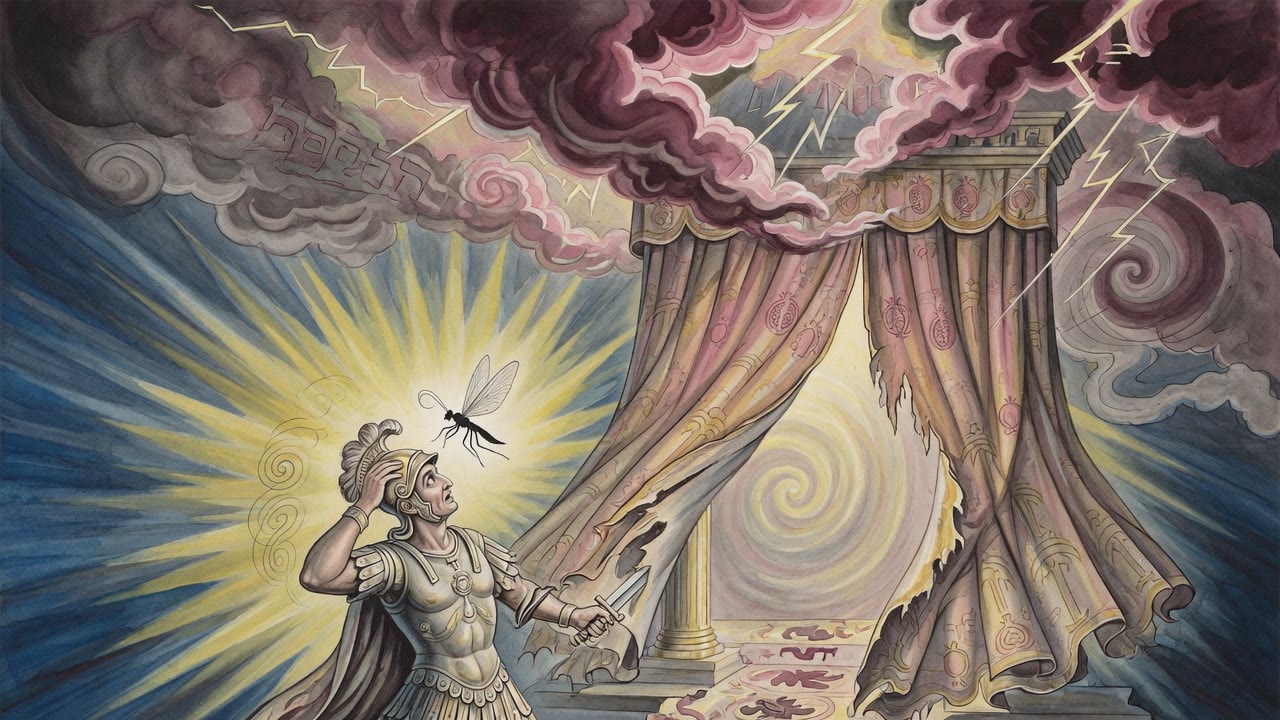
The priests had fled. The people were being marched northward into exile. Smoke was rising from the stone court where the daily sacrifice had been offered for four centuries. The Temple was burning, and according to the Talmud, one figure was standing in the ruins who had been dead for over a thousand years.
Abraham had come back.
The passage in Talmud Bavli Menahot 53b is brief, dense, and devastating. God finds Abraham standing amid the devastation and asks him the question from Jeremiah 11:15: what is my beloved doing in my house? The question is not rhetorical. It is heartbroken. The House that had been built for love had been destroyed by betrayal, and God was asking the man He had made the original covenant with why he was still there.
The Answer in Four Words
Abraham's answer, in the Talmudic text, is four words in Hebrew: al b'nei bati. I have come concerning my children.
He was not there to worship. He was not there to mourn the architecture. He was there to advocate for the people being led away in chains, and he would not leave until he understood what had happened to the covenant God had made with him when he left Ur of the Chaldeans.
God told him: your children have sinned and the Temple was destroyed because of it. This is what the covenant looked like from the divine side. The conditions had been set, the warnings had been given, and the consequence was the exile Abraham was watching.
The Patriarchs Who Came After
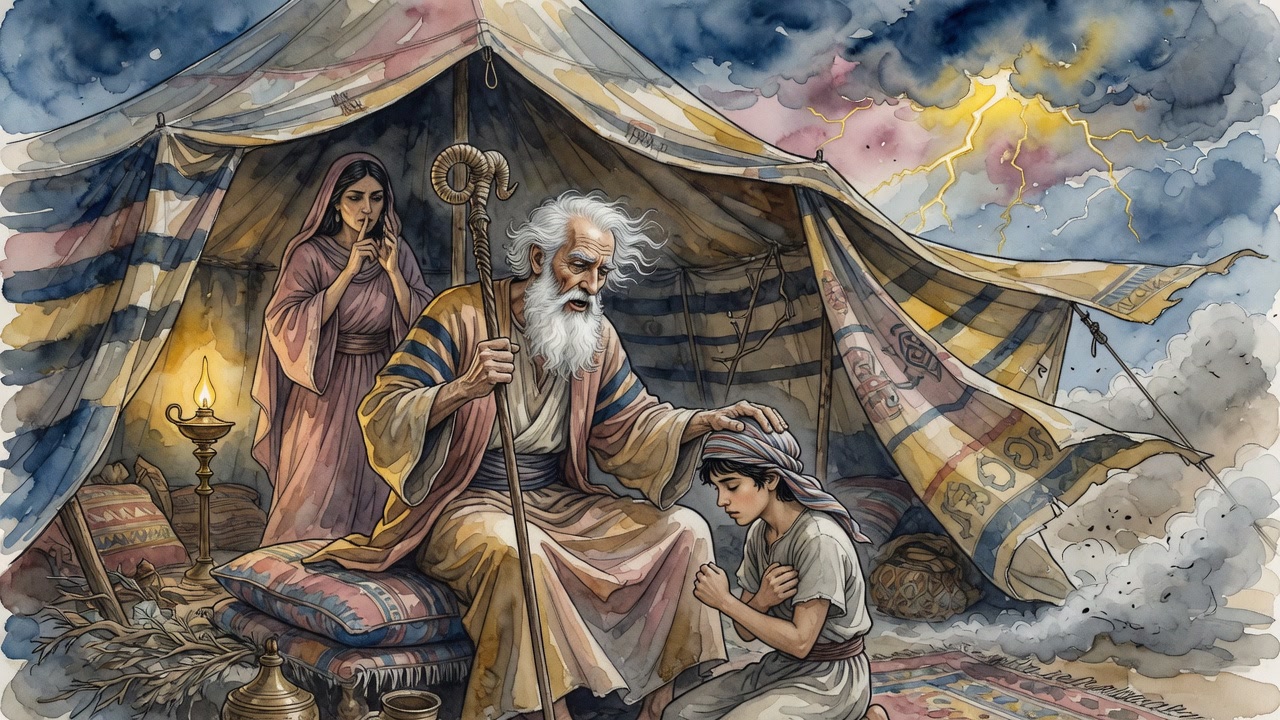
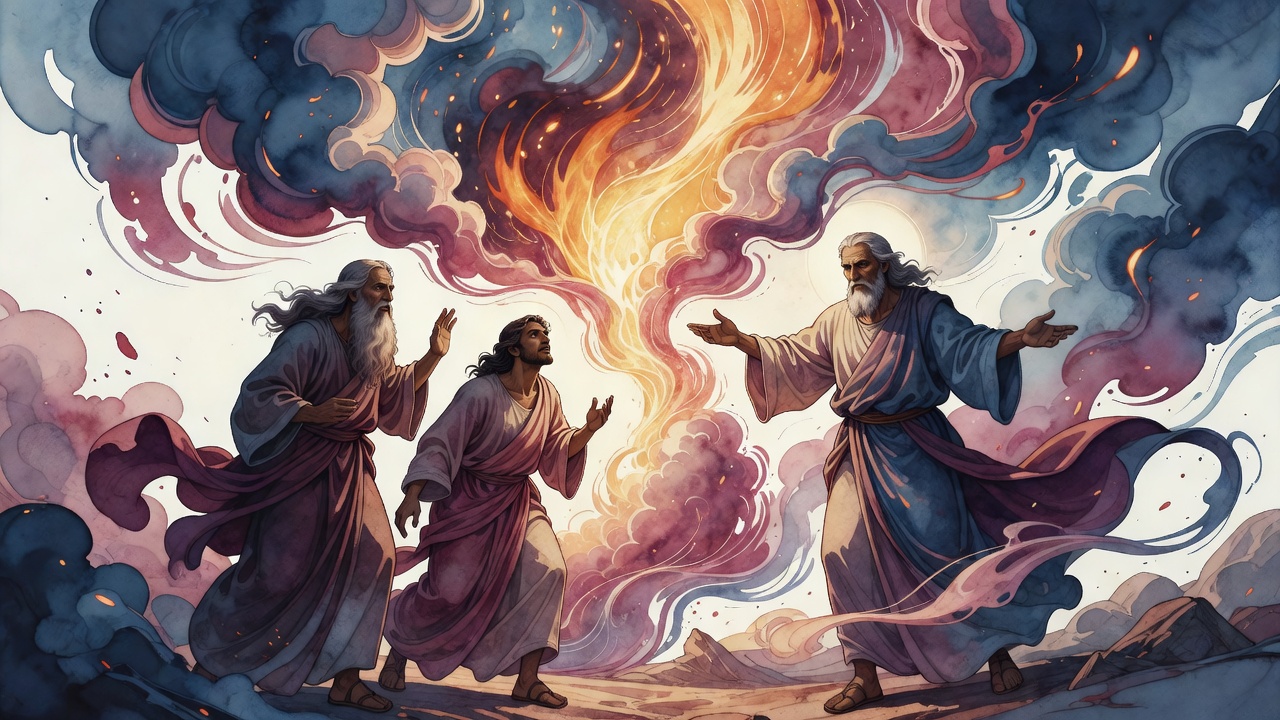
Abraham had not come alone. The Talmud records that Isaac and Jacob were also present, each called in turn to speak. Isaac spoke about the Akedah, the binding on the altar, the moment when he had been offered and spared. Jacob spoke about the years of service, the exile in Aram, the sons who became a nation. Each of them had given something to make this people possible, and each of them now stood in the ruins of the house that people had built.
Moses was there too, though he belonged to a different category: he had not died in the land of Israel, had not seen the Temple built, could not say I saw it rise and I see it fall. His presence was a different kind of grief.
Why Abraham Was Named Israel
The tradition in this passage is connected to a broader rabbinic discussion of why Jacob, and not Abraham or Isaac, was given the name Israel. The answer the Midrash offers is unexpected: because Abraham saw the exile and was silent. He could have argued further. He could have pushed past the explanation of the people's sin into a deeper plea. He held back.
Jacob, who became Israel, was the one who wrestled. The name Israel means one who strives with God and does not yield. The tradition preserves a complicated picture: Abraham's presence at the ruins was an act of love, but the Midrash holds that he did not press the case hard enough. He accepted the explanation. The people, in exile, would need someone who did not accept explanations. They would need the one who had wrestled.
← All myths