Jacob Wore Adam's Garments and Carried the Dew
Isaac's hands found goat hair. His ears caught Jacob's voice. His nose found a field after rain, older than either son.
Table of Contents
 Click for full size
Rebekah Dressed Him in a Hurry
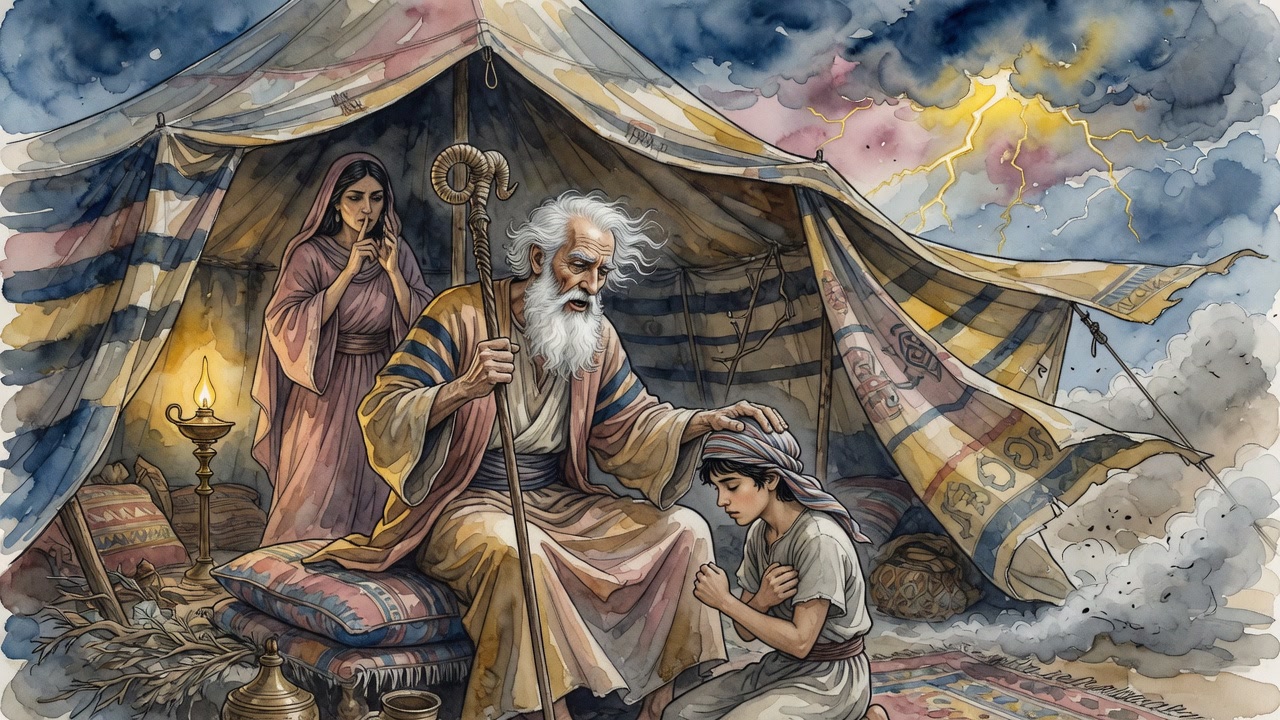
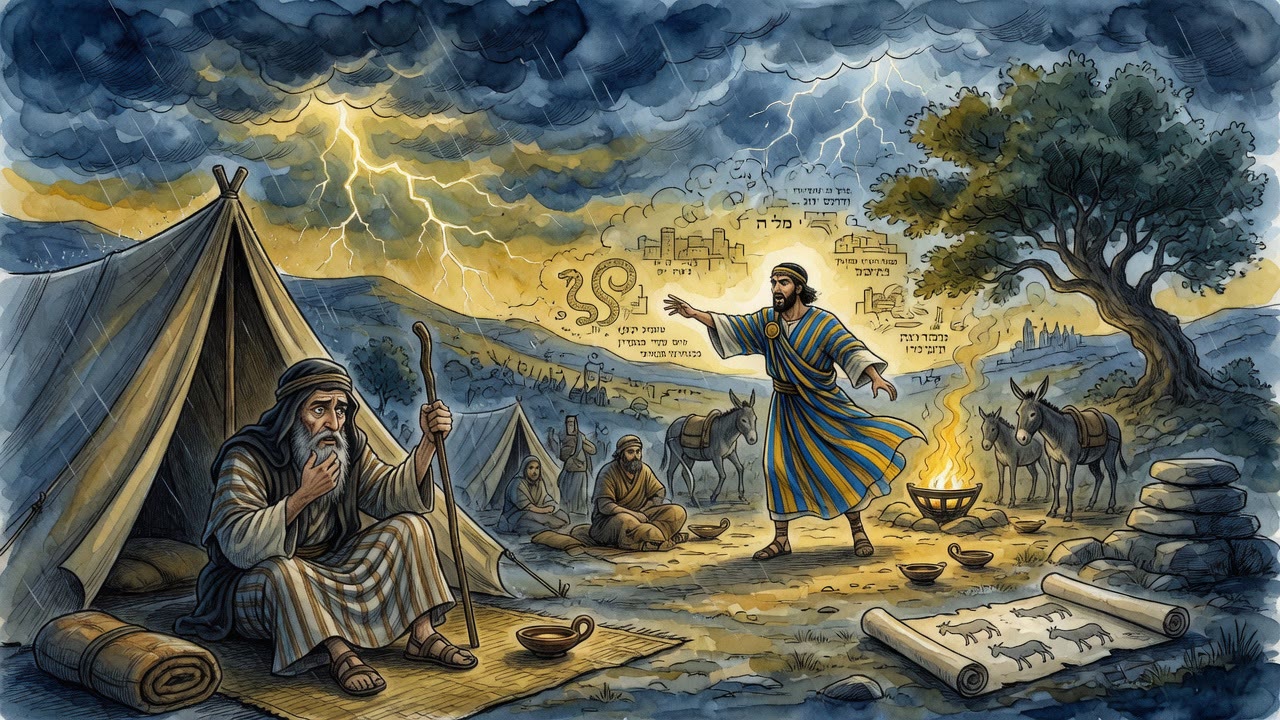
Isaac lay in the dimness of old age, waiting for Esau to return with food and a blessing. The room smelled of skin, stew, and hurry. Rebekah moved faster than either son. She had heard Isaac's plan. She had heard the blessing leaning toward the wrong child.
She did not bring Jacob a costume. She pulled the precious garments from Esau's chest, the ones he kept for the days that mattered, and put them on her younger son with her own hands. Jacob's arms shook. The sleeves were cut for a hunter. She wrapped goat skins over his hands and the smooth of his neck, and pushed him toward the bed.
The Robe Was Older Than Esau
Those garments had passed through more hands than Esau knew. They were the first priestly vestments, the clothing God made for Adam and Eve after Eden closed behind them. Before there was a Tabernacle, before Aaron's sons lifted their hands over Israel, the firstborn served at the altar. The garment went with the service.
Adam wore it first. The robe moved from the first humans to the righteous who knew what the altar required. By the time it reached Isaac's house, it belonged to the firstborn. Esau held that place by birth. He had already sold the birthright for a bowl of food and treated the holy office like a thing too heavy to carry.
Rebekah understood the cloth. Birth order had gone false. Esau could own the robe and still fail its service. Jacob could tremble inside it and still be the one who had to receive it. She was the custodian in that house, and her hands told the truth the genealogy would not.
Isaac Smelled What His Eyes Missed
Isaac could not see his son. Jacob came in with the stew and stood close enough for the old man to reach. Isaac's hands found the goat hair and believed Esau. His ears wavered. The voice was Jacob's. "The voice is the voice of Jacob," he said, "but the hands are the hands of Esau."
He drew the boy in anyway, and his nose caught what the room carried.
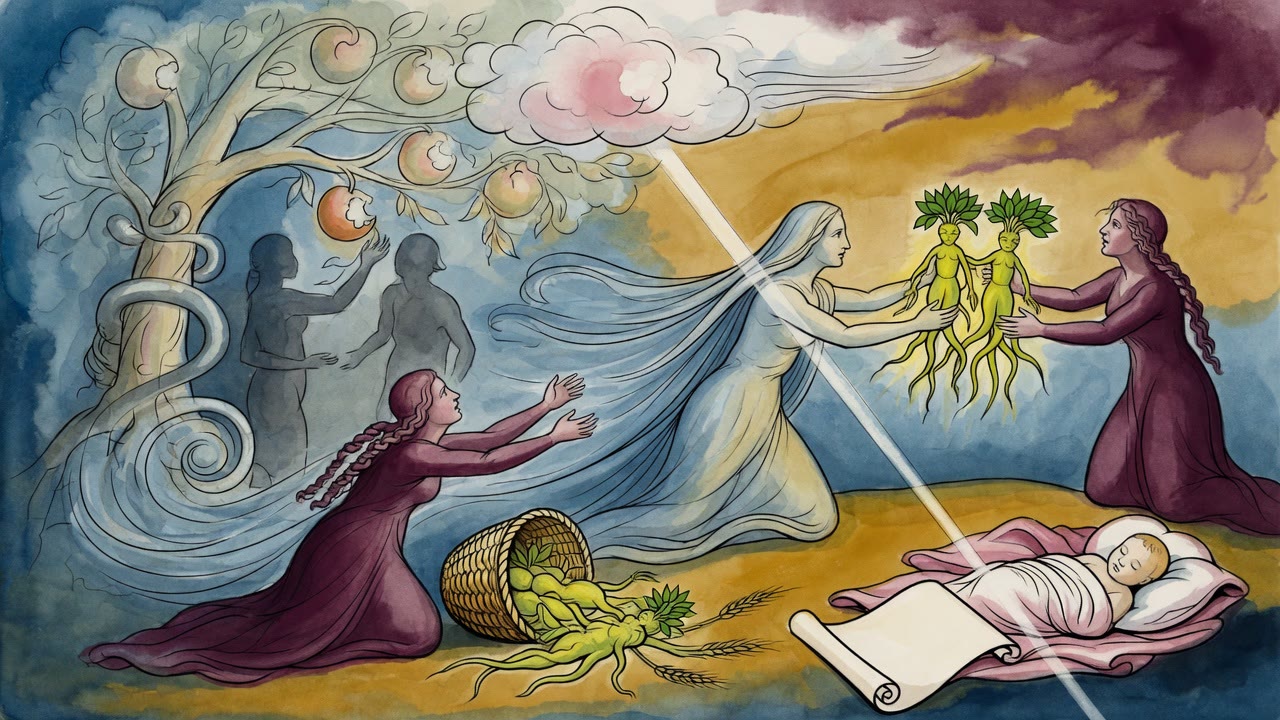
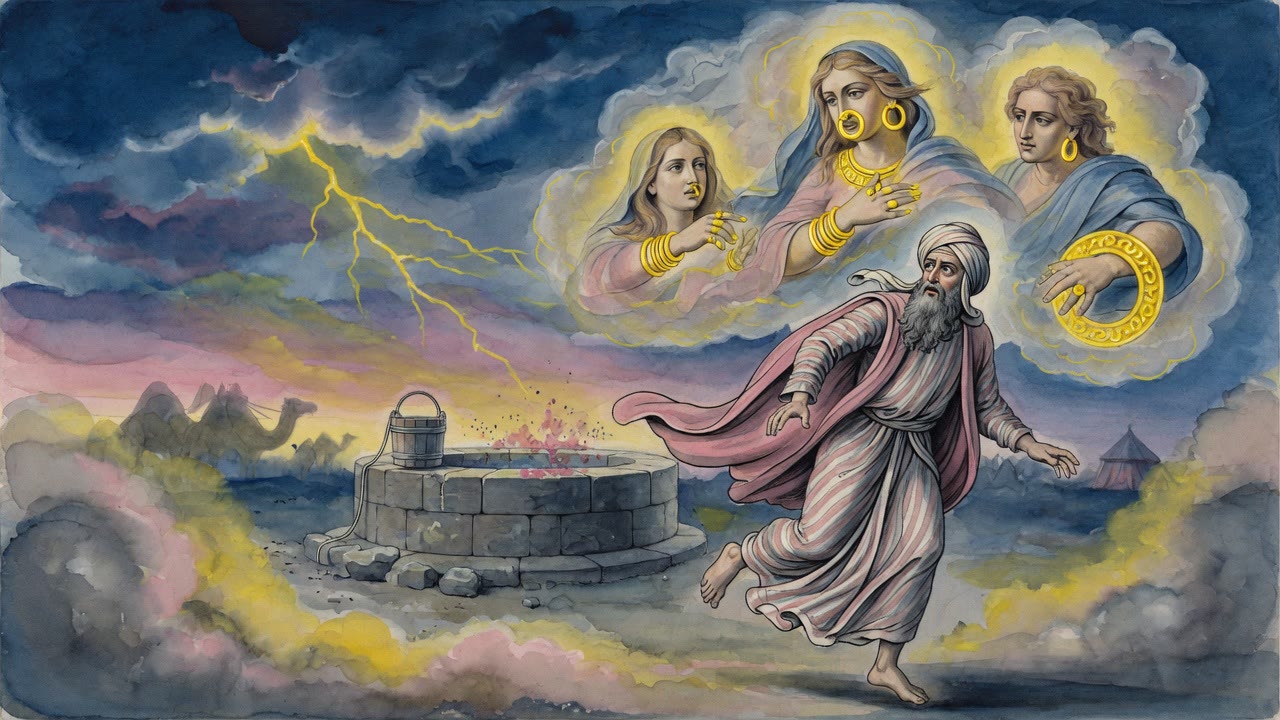
Five seconds. The stew went still. Isaac breathed once, then again, and the hunt-smell he expected was not there. He smelled a field after rain. He smelled Eden, the first garden, wet earth and fruit that had never been planted by a man. He smelled the robe's long memory of offerings, smoke and fat from altars older than Canaan. "The smell of my son is like the smell of a field that the Lord has blessed" (Genesis 27:27).
Esau had worn the garment. Jacob had entered its vocation. Rebekah's hands had dressed him for tents, exile, struggle, sons, and a covenant that would have to survive by more than strength.
The Blessing Opened With Dew
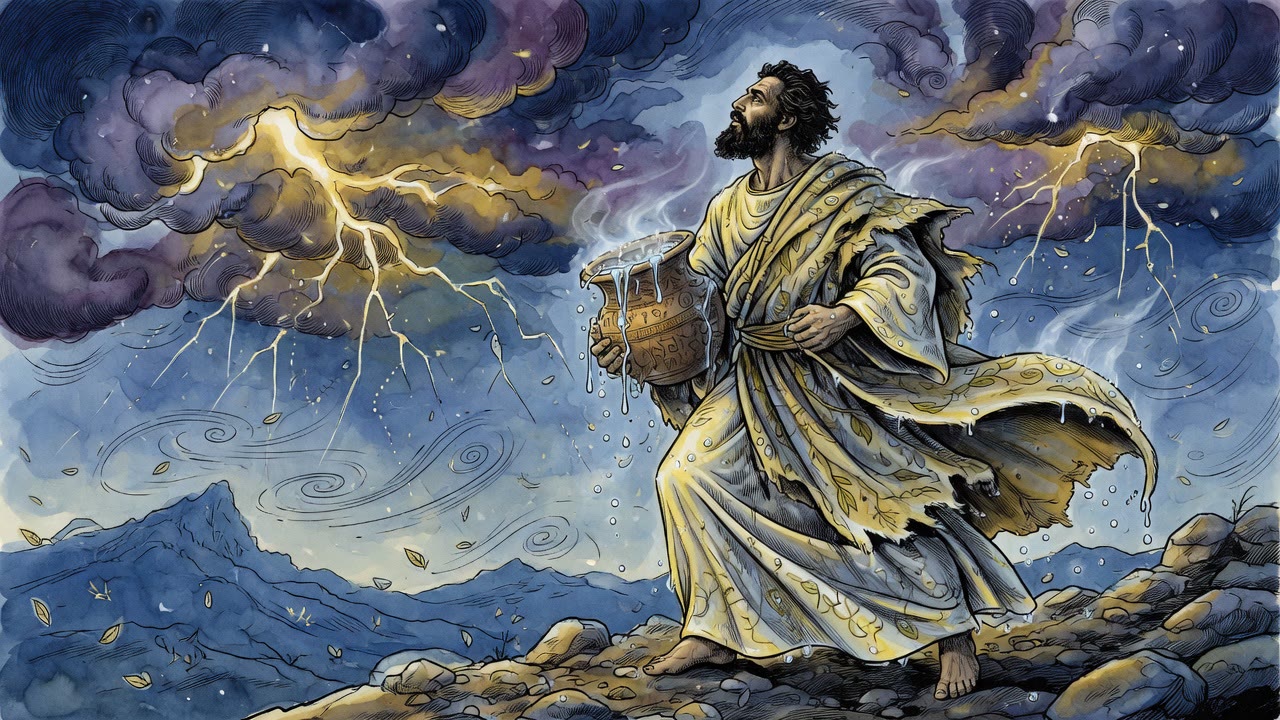
The blessing waiting in Isaac's mouth was not only grain, oil, or power. It opened with dew. "And God shall give you the dew of heaven" (Genesis 27:28).
That dew was older than weather. It joined itself to the hidden light created before the sun, the first light that had no lamp and no owner. Dew falls without plow or hammer. Light shone before anyone struck a fire. Jacob stood in the room wearing the first garment and received the first kind of blessing, gift before effort, holiness before possession.
The robe and the dew answered one another. One came from the beginning of human shame, when God covered Adam after the first transgression. The other came from beyond ordinary making, where blessing arrives before any human can manufacture it. Jacob stood between them, covered by mercy from the past and fed by mercy from above.
Esau Came Home to Fat Earth
When Esau returned, the room changed. He came with meat, breathless and ready, and found the blessing gone. Isaac trembled. Esau cried with a cry large enough to shake the house. He still received words, but they were different words.
Jacob's blessing carried God's name. Esau's portion leaned toward the fat of the earth. Earth can feed a man. Dew can keep a people when earth fails. Rebekah had not swapped sons in a blind man's room as a trick and nothing more. She had moved the garment back onto the one who would carry the hidden light with him.
Isaac knew something irreversible had happened. The blessing had left him and found its road. Esau could beg for another word, and Isaac could speak one, but the first word, the word with dew and God inside it, had already settled on Jacob's shoulders with the garment.
Jacob left the room still wrapped in the scent Isaac had named. The blessing would not spare him from fear, exile, labor, or grief. It would travel with him anyway, like dew that appears before anyone has asked for rain.
← All myths