Esau Brings Judith Home to Hebron While Jacob Studies
Esau hauls Judith back from the mountains of Seir to Hebron the same day, while Jacob waits unmarried at the house of study.
Table of Contents
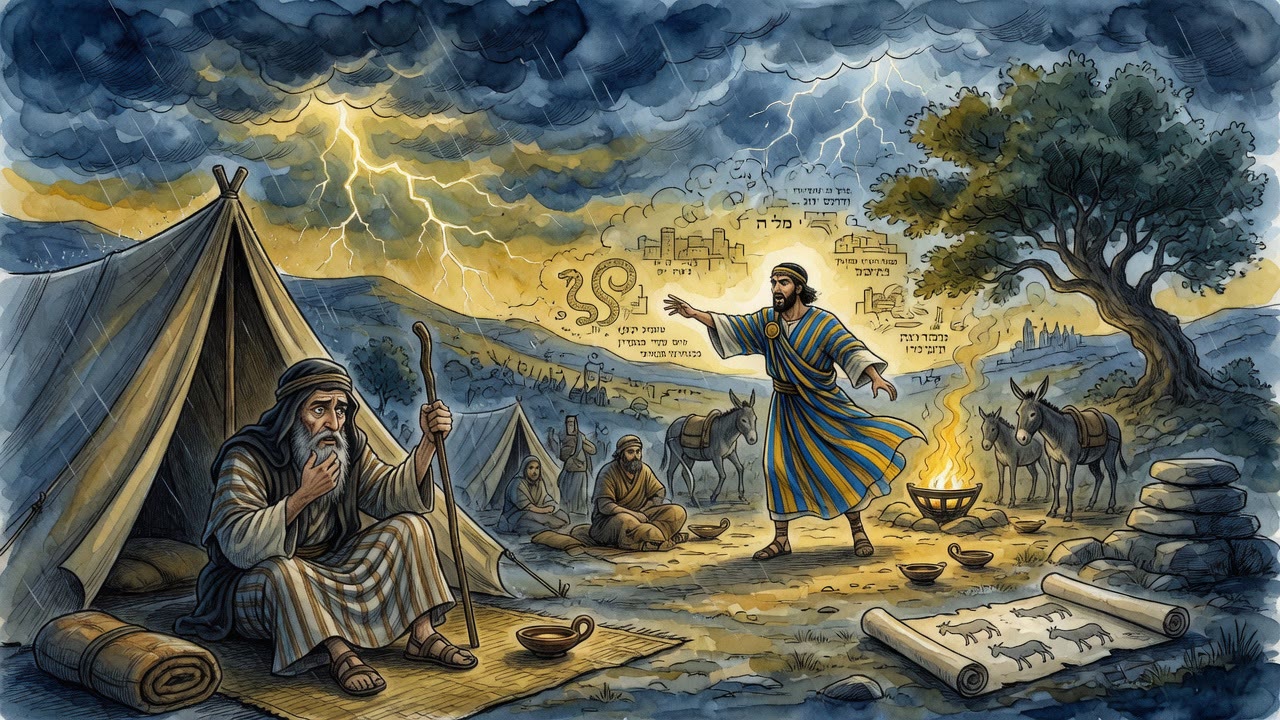
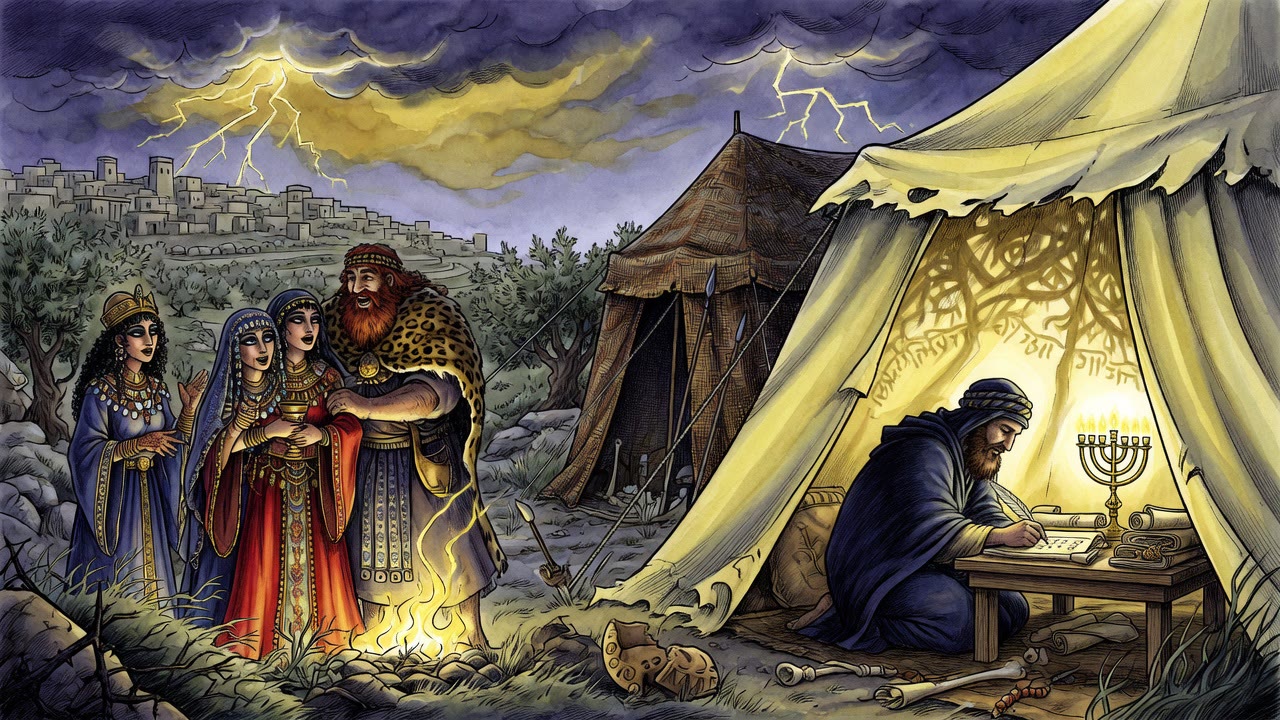
The dust came up the road to Hebron before the man did. Esau walked at the head of it with a carcass slung across his shoulders and a woman walking beside him, and he did not slow his pace as he crossed the threshold of his father's tents. He had gone out into the mountainous region of Mount Seir to hunt, and he had come back with two things, the kill and the wife, and he had decided on both the same way, by reaching for what stood in front of him.
 Click for full size
Her name was Judith, and she was of the family of Ham. Esau brought her to his father at Hebron and took her as his wife, and that was the whole of it. There had been no message sent ahead, no asking, no waiting. The mountains had offered her up the way they offered up game, and Esau took her the way he took everything, with his hands and without a second thought.
The Brother Who Reached For Everything
This was how Esau had always moved through the world. While his younger brother had been sent away to learn, Esau had refused to sit and study. He stayed home with his father, Isaac, who had settled in Hebron after the years of famine drove him back to Canaan. Esau's whole life was the hunt. He chased animals through the hills, and he chased men too, trapping them with cunning and with smooth speech, catching them the way a snare catches what wanders into it.
So when Esau saw a woman among the people of Seir, the logic was the same as the chase. She was there. He wanted her. He brought her home. The pace of the man never broke, not for marriage, not for anything. What was in front of him was what he wanted, and he was not built to wait for something better that he could not yet see.
The Brother Who Waited at the House of Study
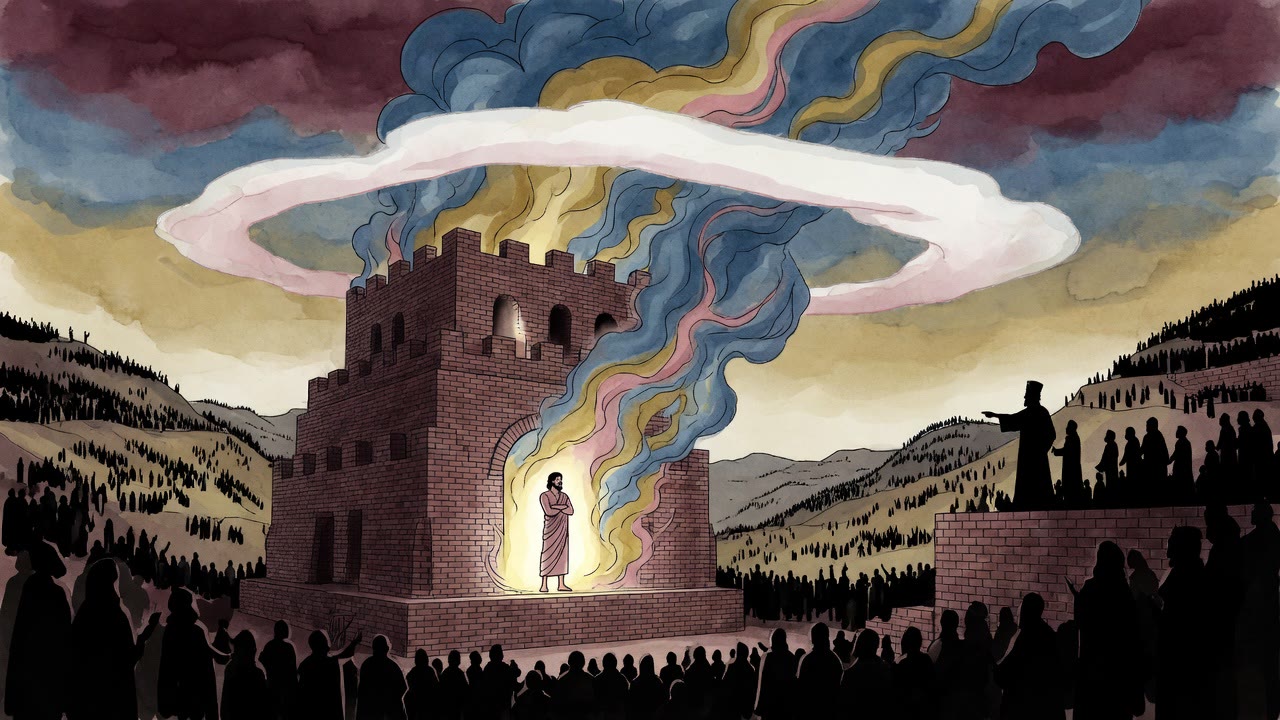
Far from those mountains, in the house of study, Jacob bent over his learning the way he had bent over it for years. He had been sent to the bet ha-midrash, the house of interpretation, of Shem and Eber, and there he stayed, not for a season but for thirty-two years, his hours filled with words while his brother's hours filled with blood and dust.
He did not come home when he might have. He came home only when his teacher died. When Shem passed, Jacob finally turned toward Canaan, and by then he was fifty years old, unmarried, in no apparent hurry, carrying nothing back with him but what he had learned. Two brothers, two roads out of the same tent. One had chased the visible thing through the hills and dragged it home in a day. The other had spent three decades in stillness and come back empty-handed and unbothered by it.
News From Haran of Two Daughters
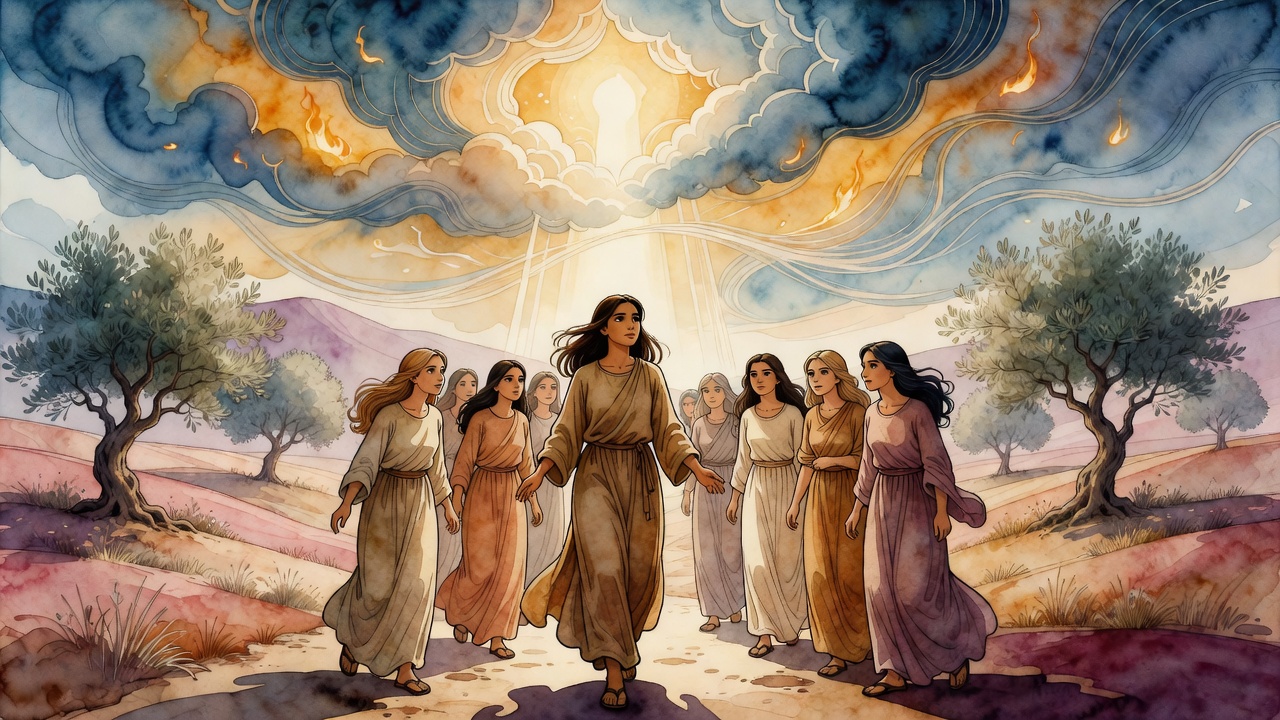
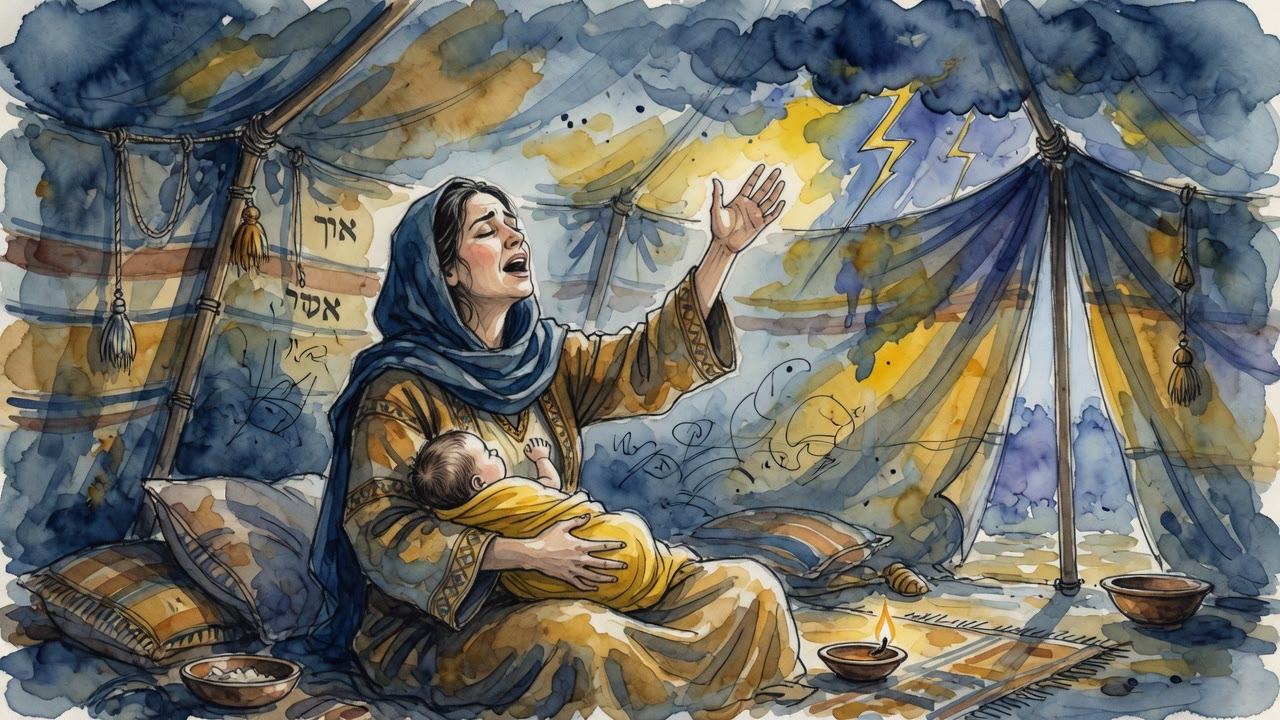
Then six years passed, and word traveled down from the north. Adinah, the wife of Laban, who had been childless for so long that the family had stopped expecting it, had given birth at last, and not to one child but to twin daughters. Their names were Leah and Rachel. The news moved through Hebron like warmth, a closed door finally swinging open in a distant house, the barren made fruitful, two girls born into the lineage that mattered to this family above all others.
The joy reached Rebekah, and so did the arithmetic that came with it. Two daughters, born to her own brother's wife, were growing up in Haran. And her older son had just hauled a Canaanite woman into the household without asking anyone, and Rebekah could not look at Judith without bitterness rising in her.
Rebekah Asks the Question Out Loud
She went to Jacob with the fear that had been building behind her teeth. She had watched one son reach for the nearest woman like a man reaching for the nearest fruit. She could not bear to watch the second do the same. So she put it to him plainly, that he must not take a wife from the daughters of Canaan, the way his brother had, but must go instead to their own kin, to the line of Abraham (Genesis 28:1-2).
Jacob heard her out, and there was no panic in him and no scramble. He reassured his mother, because the thing she was afraid of had already been decided long before she spoke. He was not unmarried at fifty, and still unmarried at sixty-two, because he could not find a wife or could not move. He was unmarried because he had heard, across all those miles, of the daughters of Laban, and he had already chosen, and he was simply waiting for the road and the years to bring him to them.
The Slowness That Was Not Weakness
So the two pictures hung side by side in Hebron. Esau, back from the hunt in a single dusty afternoon, a Canaanite wife installed in his father's house, his mother sick at the sight of her. Jacob, gray at the edges by the standard of his years, with no wife at all, and no hurry, because the slowness in him was not the slowness of a man who cannot act. It was the slowness of a man who knows exactly what he is waiting for and will not trade it for the easier thing simply because the easier thing is standing in front of him.
One brother grabbed what the mountain handed him. The other left the visible woman of Seir alone and held out for two girls he had never seen, born to a wife everyone had given up on, in a house he had not yet walked into.
← All myths