God Sifted Piles of Dust to Find the Gem That Was Abraham
Bereshit Rabbah compared God searching for Abraham to a king sifting piles of dust for a lost gem. Twenty generations of dust. One gem, gleaming.
Table of Contents
 Click for full size
The King Who Kept Sifting
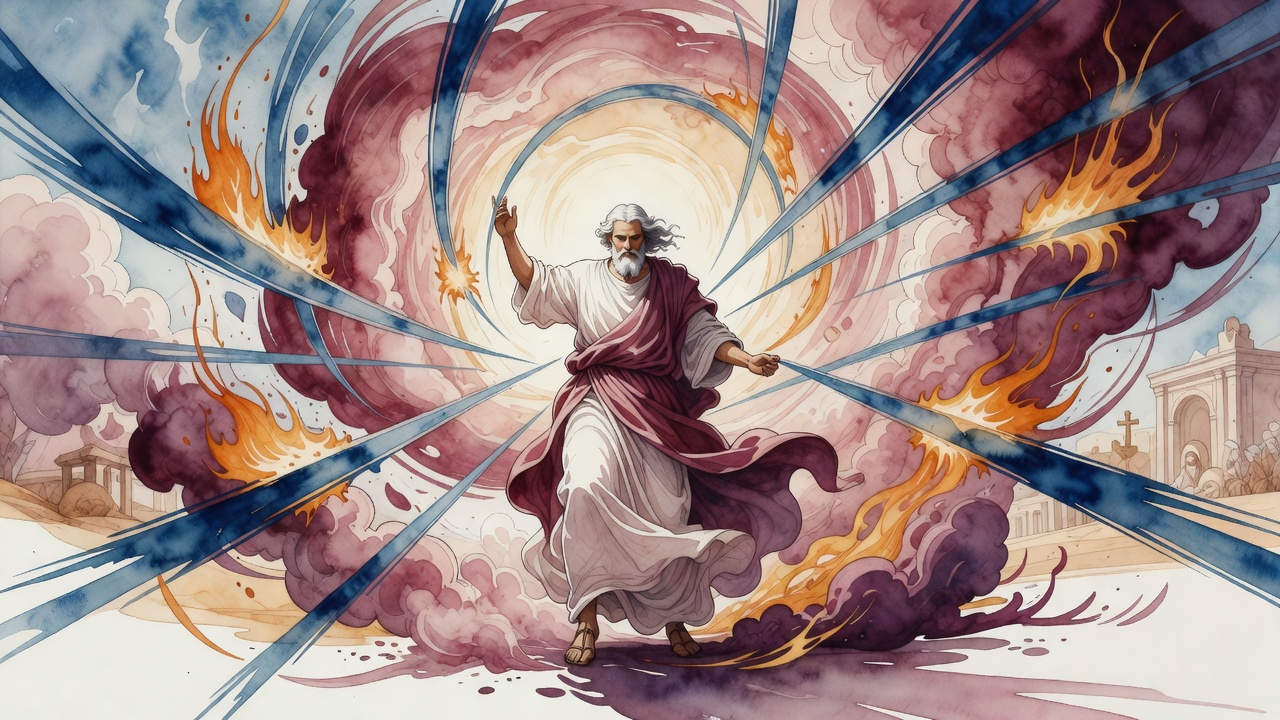
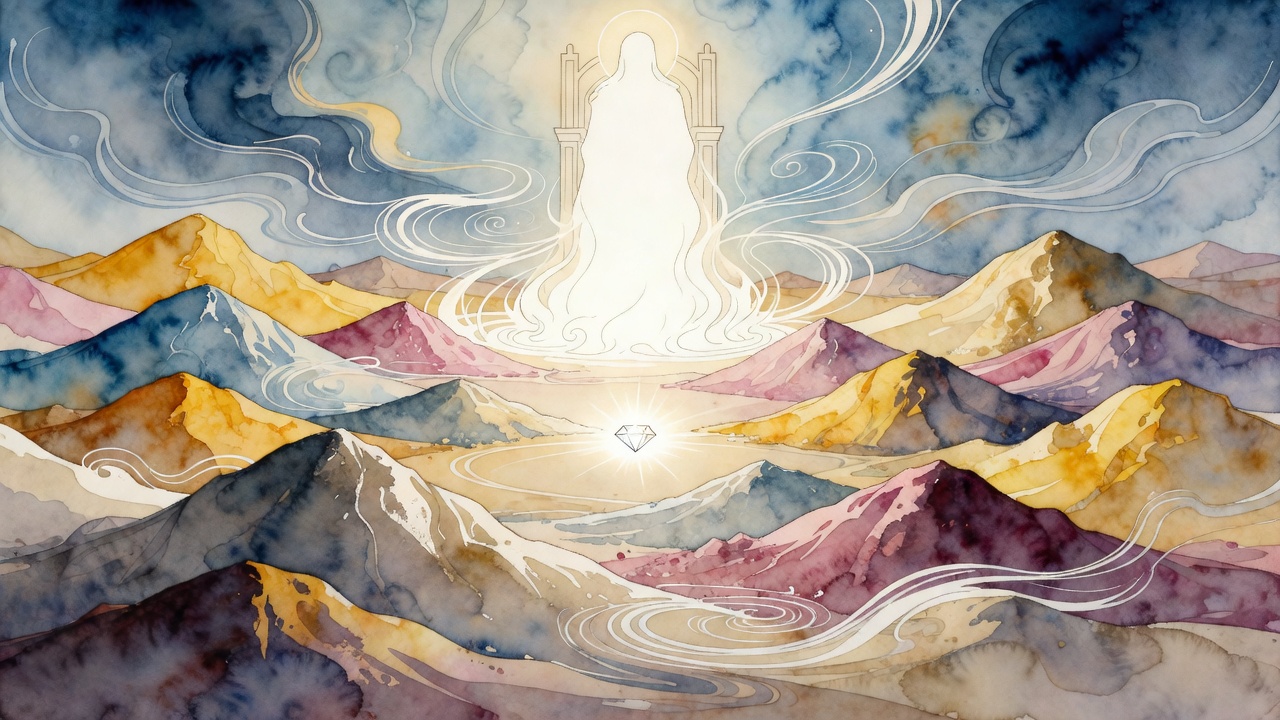
Rabbi Berekhya pictured God as a king who lost a jewel in the dust. The king stopped his whole court, ordered piles of earth brought before him, and sifted through them one by one. First pile: nothing. Second pile: nothing. Third pile: the gem appeared, gleaming in the dirt.
Bereshit Rabbah 39:10, compiled in fifth-century Palestine, applies the parable to Abraham. The king is God. The dust is every generation from Adam through Cain, the Flood, and the Tower of Babel. The gem is Abram of Ur of the Chaldees. God was looking for something specific. After twenty generations, He found it. Abraham did not invent holiness from nothing. God recognized one bright thing under all that accumulated dirt and reached for it.
Three Blessings for Leaving Home
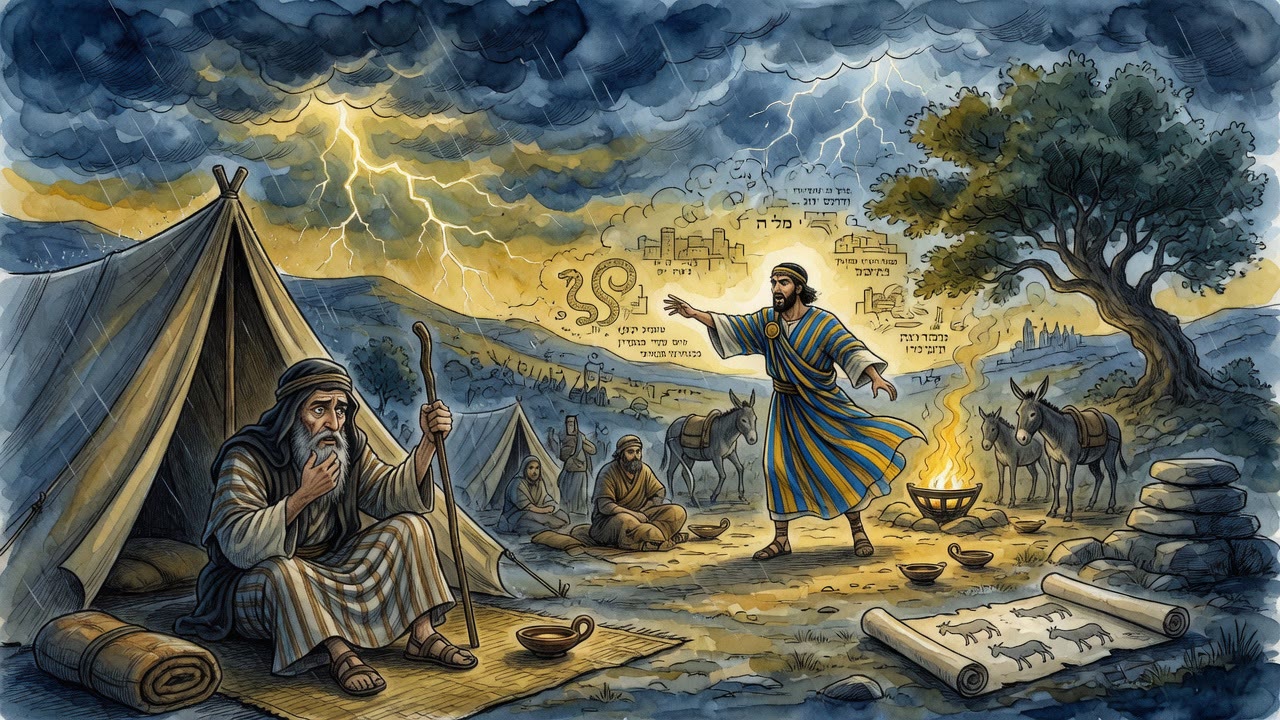
What the gem was asked to do after being found is the subject of the surrounding texts. The Legends of the Jews describes how God prepared Abraham for the disruption that election required. Leaving Haran was not a straightforward transaction. Moving from place to place damaged a person's reputation, reduced their connection to their community, cost them income, interrupted the chain of descendants. God preempted each of these costs with a specific blessing.
I will make your name great, because emigration would otherwise reduce you to a stranger with no standing wherever you went. I will make you a great nation, because travel interrupts the generation of descendants. I will bless you, because leaving familiar trade routes costs the prosperity you have built. The three blessings were surgical. They named the wounds that the call would open, and healed them in advance.
The Blood on a Victor's Hands
Then Abraham fought a war. He marched against the four kings who had taken Lot captive, routed them, returned the prisoners, and refused the spoil. The victory was complete. And then Bereshit Rabbah 44:4 records what troubled him afterward. He had killed men. Some of those men might have been righteous. Rabbi Levi gives the worry two versions. First: Abraham feared that among his enemies had been innocent people and that he would be held accountable for their deaths. Second: Abraham feared that he had cut off potential, that some of those enemies might have become righteous if given time, and that he had foreclosed that possibility.
It is a remarkable thing to be troubled by after a victory won in service of rescuing a kidnapped relative. A man who has just been blessed three times and won a battle against impossible odds is asking whether he killed someone who deserved to live. God answered him directly: Abraham's descendants would include righteous people who would serve as protectors for their communities, and whatever had been lost in the battle, something larger was being built through the line. That is the verse from Genesis 15:1: fear not, Abram, I am a shield for you. God spoke the word shield because Abraham had just discovered that he himself was not one.
Hospitality on Empty Roads
After Sodom was destroyed, Abraham moved. Bereshit Rabbah 52:3 reads the verse Abraham traveled from there as an act of hospitality in motion. Travel through the region had stopped since the destruction. Abraham, whose whole life had been organized around feeding strangers, found himself sitting with full storehouses and empty roads. He could not wait for guests to come. He went looking for them. The text quotes Proverbs 10:8, where the wise-hearted take commandments toward themselves, and applies it to Abraham. He understood hospitality not as an open door but as an active pursuit.
The Little Sister Who Became a Tower
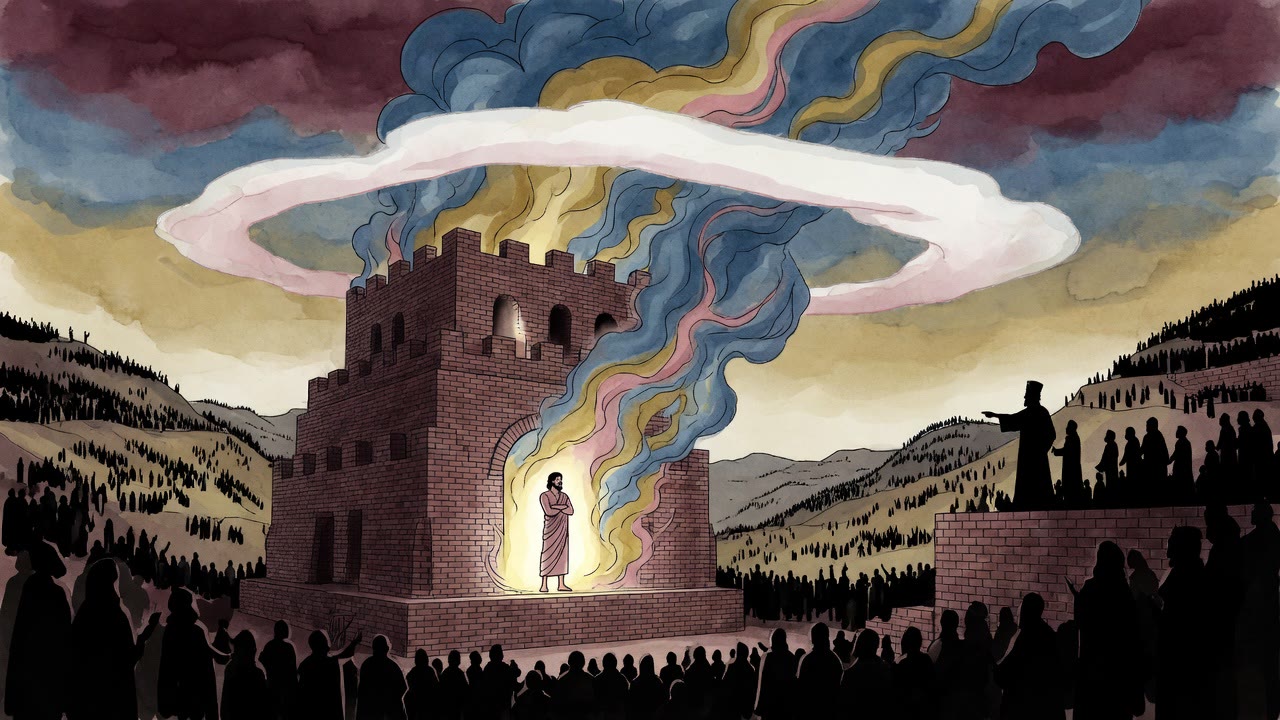
Bereshit Rabbah 39:3 finds one more image for Abraham in the Song of Songs: we have a little sister, and she has no breasts. Rabbi Berekhya reads this as the nations of the world describing Abraham before his calling took shape, small and unformed, not yet capable of what a patriarch must be capable of. Then the verse continues: if she is a wall, we will build upon her a turret of silver. The little sister became the tower. The gem sifted from generations of dust became the foundation of something that would outlast every empire that ever tried to erase it.
The Midrash Rabbah tradition never stopped being astonished by this. The more it looked at Abraham, his hospitality, his battles, his grief over the men he had killed, his willingness to pursue guests on empty roads after the worst day in recent memory, the more it saw the shape of the search that had found him. The king had sifted twenty generations of dust. What gleamed in the third pile was not a man who had never gotten his hands dirty. It was a man who kept asking whether the dirt was his fault.
← All myths