Leah Names Asher and the Praise She Says Is Owed
Leah holds Zilpah's newborn son, names him Asher, praise, and says aloud that every mouth will praise her. Why does she dare?
Table of Contents
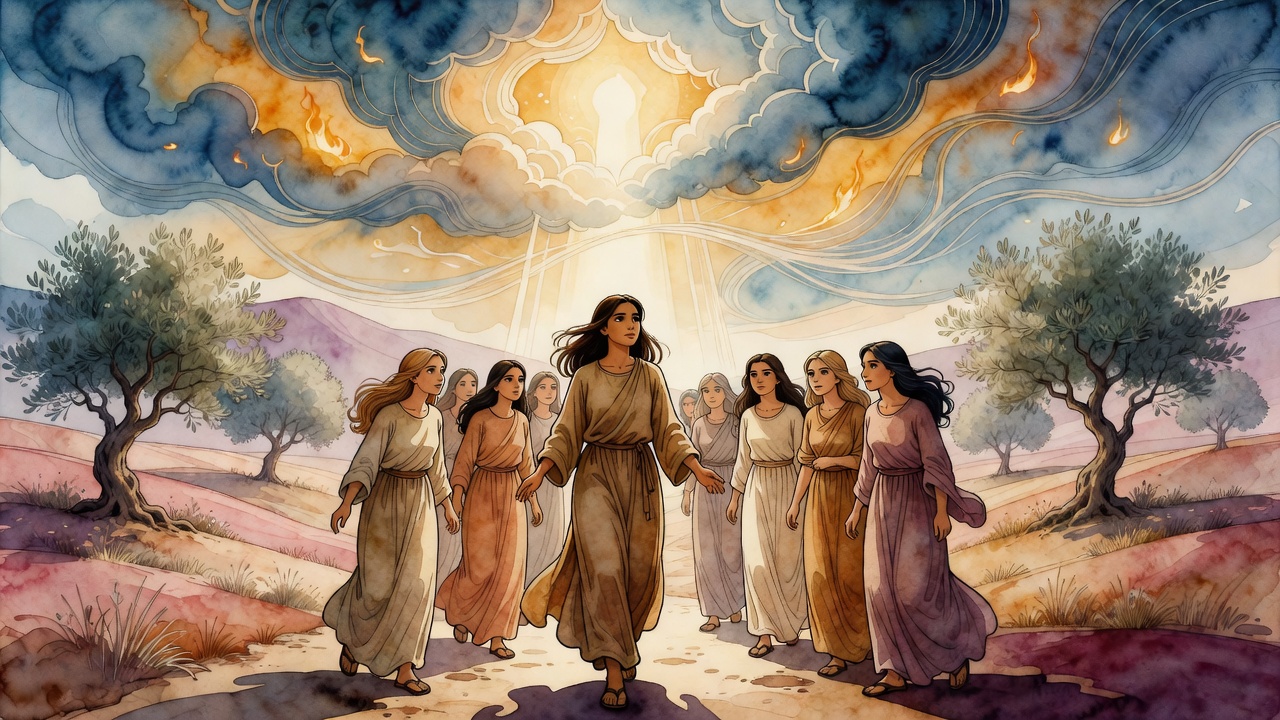
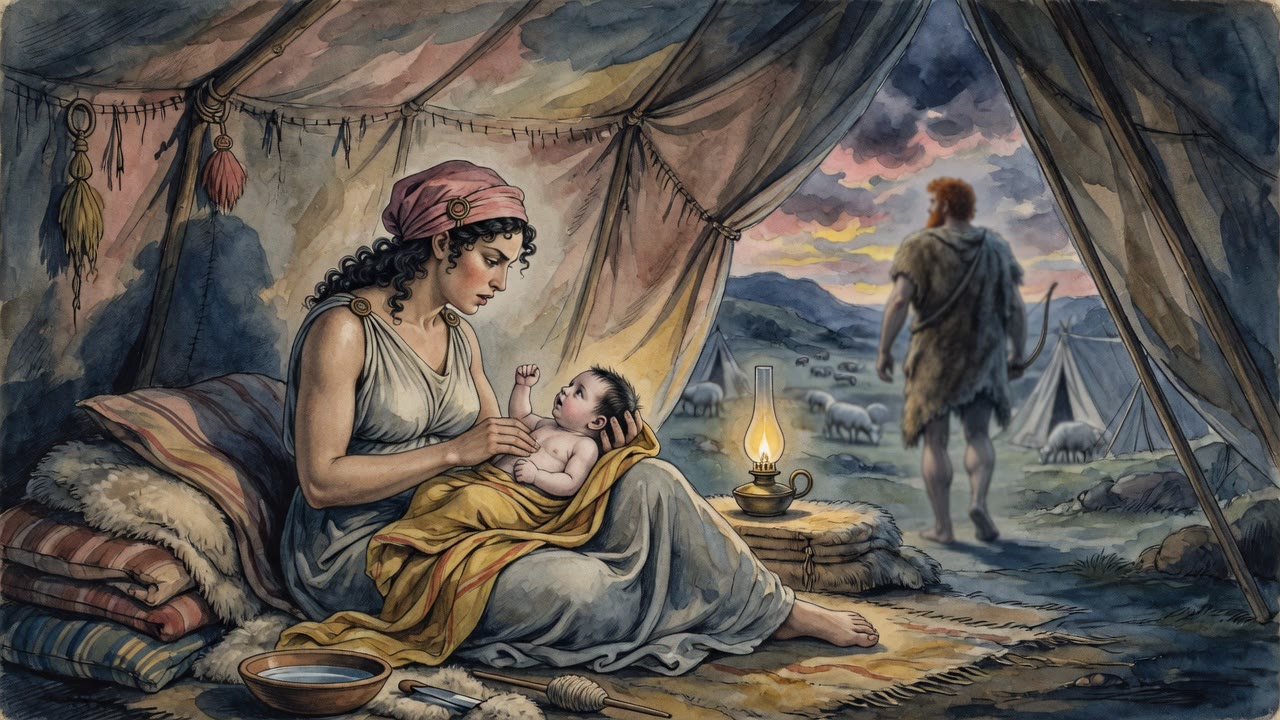
The baby came without warning. One morning Zilpah was carrying water, slim as a girl, and that same evening she was on her knees in the tent with her teeth clenched, and by the time the lamps were lit there was a son crying against her chest. No one had seen it coming. The girl was so young, so narrow in the hips, that her belly had never swelled enough to give her away. She had walked among them for months with a secret folded inside her, and the secret was a boy.
 Click for full size
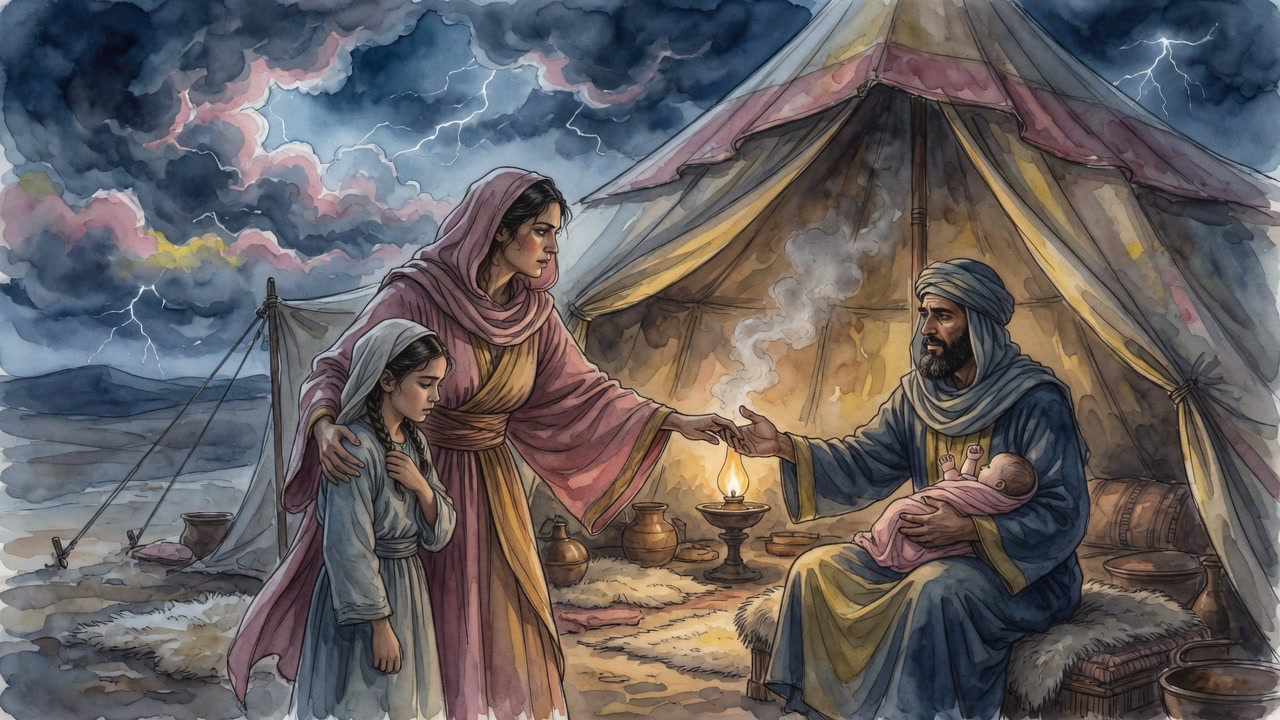
Leah took the child while the women were still wiping their hands. She held him up near the lamp and looked at the small furious face, and the others waited to hear what she would call him, because they knew her by now. They knew that when Leah named a son she was settling an account.
The Names She Had Already Spent
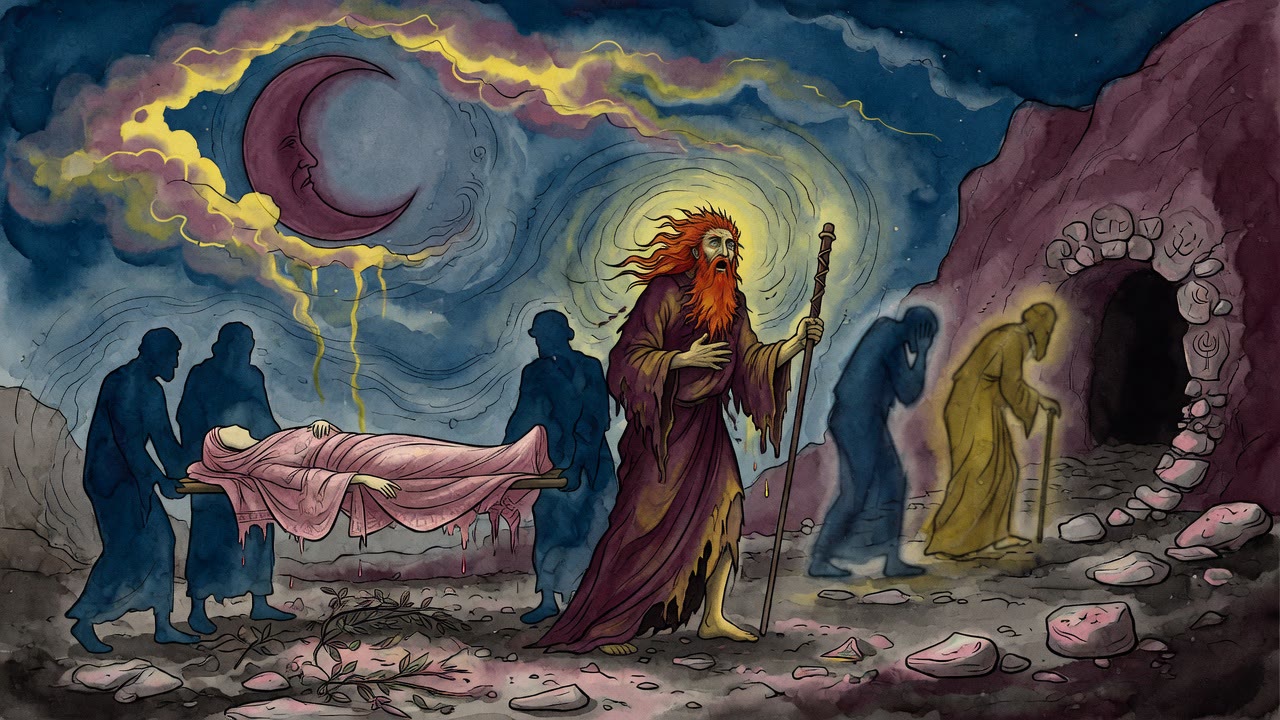
Her first she had called Reuben, because God had looked at how little her husband loved her and had given her a boy anyway (Genesis 29:32). The name was a wound she said out loud. Her second was Simeon, the heard one, because she had been heard, which meant she had been crying. Her third she called Levi, the joined one, with her eyes on Jacob across the fire, hoping that three sons would finally tie him to her the way a rope ties a tent to its stake (Genesis 29:34).
Every name was a complaint dressed as a blessing. Every name asked for something she did not yet have. The women had grown used to the sound of Leah wanting. So when she lifted Zilpah's son toward the light, they expected another ache with a name on it.
Why She Sent Her Own Handmaid In
What they did not know was the arithmetic Leah had done in the dark. Her body had stopped giving her children, and across the camp her sister's handmaid Bilhah had already borne Jacob two sons for Rachel. Leah had lain awake counting and had reached a conclusion that frightened her with its size. Jacob was meant to father a nation, and a nation needed four mothers. Her sister. Herself. And the two handmaids, Bilhah and Zilpah.
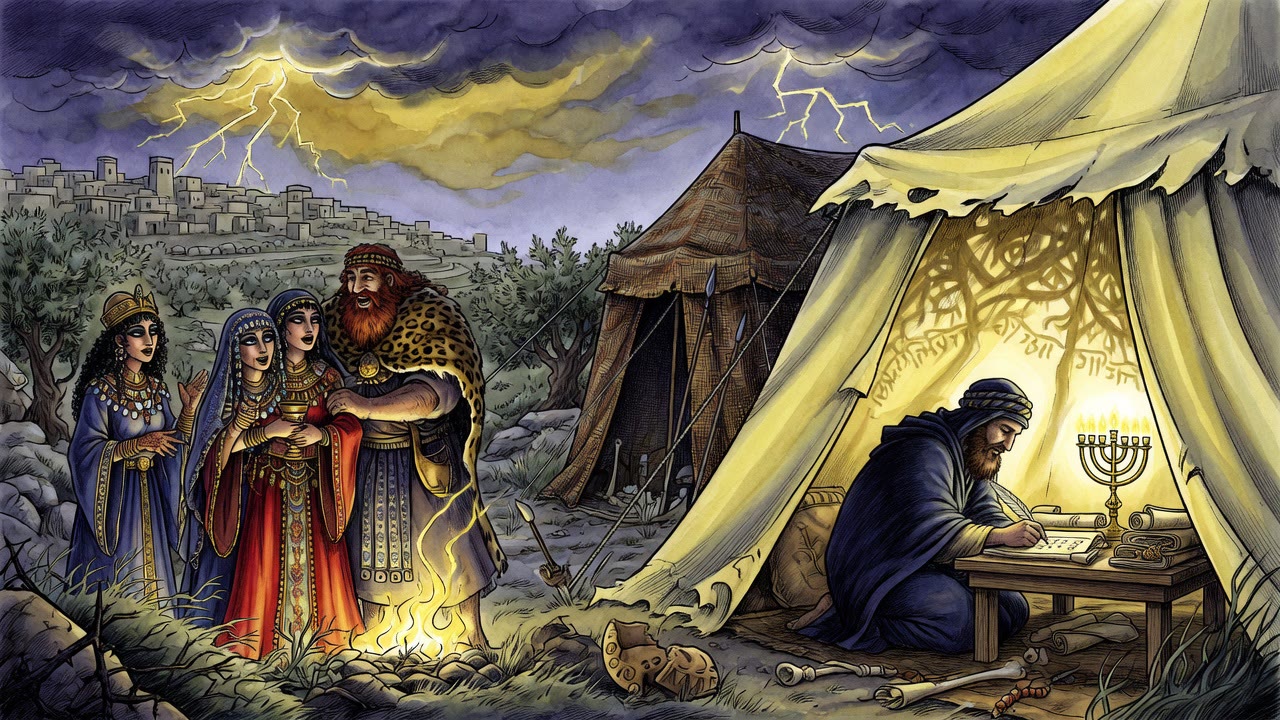
So she had done the thing that cost her. She had taken her own servant girl by the hand and walked her to Jacob's tent and given her over to be his wife. She had built her rival inside her own household with her own hands, and she had done it dry-eyed.
That this servant was a child still, the youngest of the four women, was not an accident either. When daughters married, the older daughter was sent off with the older handmaid and the younger daughter with the younger. On the night her father Laban wanted to pass Leah off as Rachel under the veil, he had handed Leah the young handmaid Zilpah as her marriage portion, so that the bridegroom counting servants in the dark would think he was getting the younger sister. Leah had married into a lie and been given a girl to seal it. Now that girl had borne her a son.
The Word That Was Not a Complaint
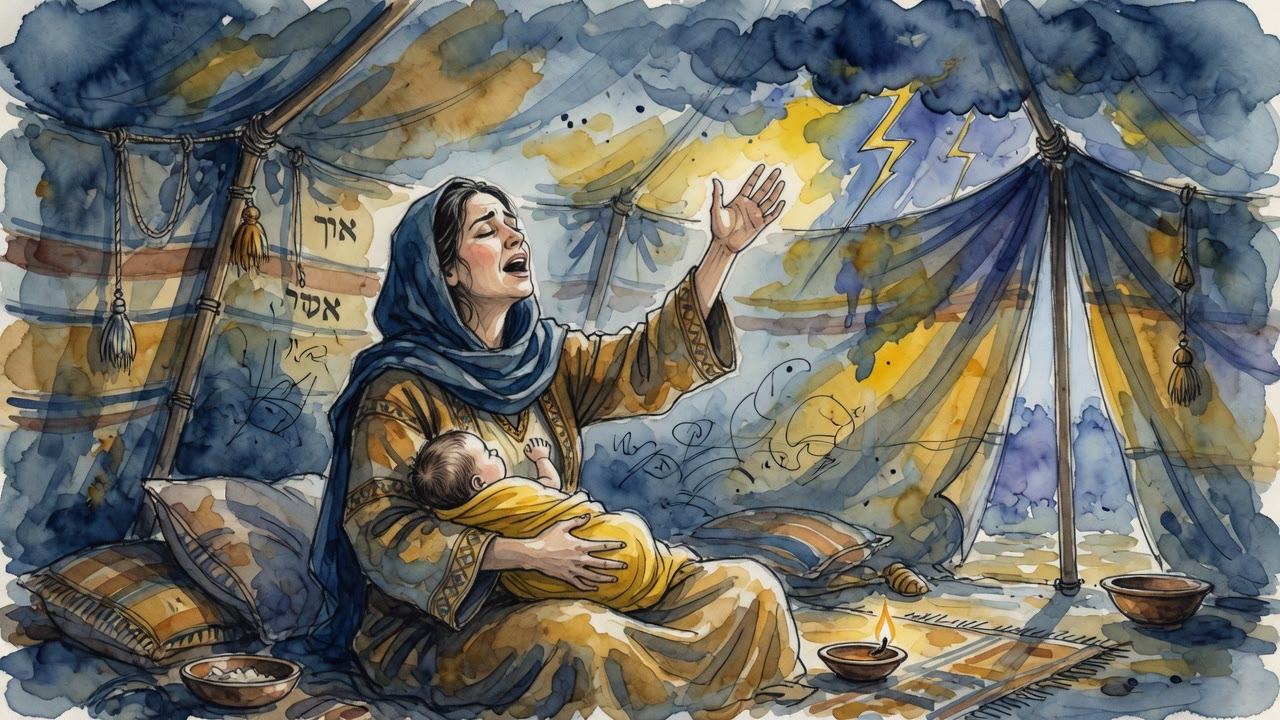
Leah turned the boy in her arms and she did not weep and she did not beg. She said one word, and the word was praise. Asher. Asher, because praise was owed. "Unto me," she said, loud enough that the girls at the tent mouth went still, "all manner of praise is due."
It landed wrong in the silence. A woman who had spent eleven years being not-quite-loved did not say such things. A woman whose own name meant weary did not stand in a birthing tent and announce that the whole world ought to extol her. The young mother on the floor looked up. The other women glanced at each other. Praise. From Leah. For what.
The Argument Hidden Inside the Name
But it was not pride. It was a case, built tight as a wall, and she laid the stones one at a time so they would hear it.
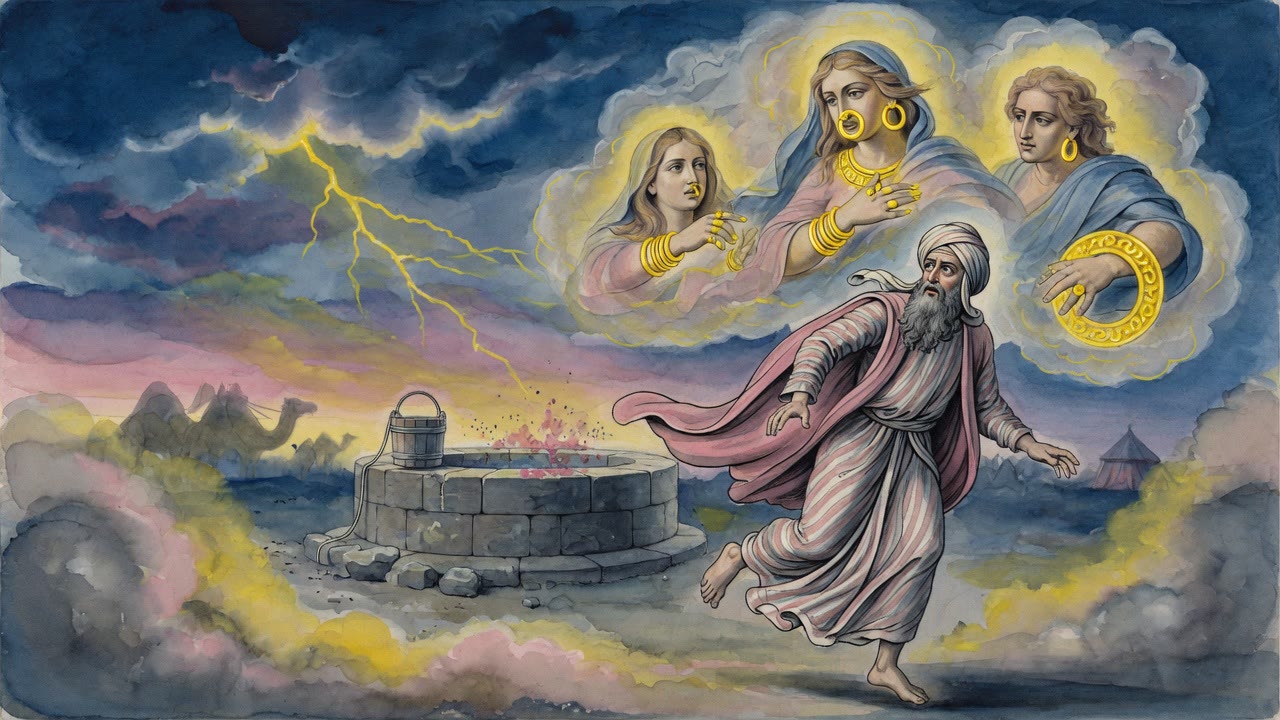
Sarah had given Hagar to Abraham, yes (Genesis 16:1-2). Rachel had given Bilhah to Jacob, yes (Genesis 30:3). Everyone knew those stories. But both of those women had been childless when they did it. They had empty arms and burning shame, and a woman with empty arms will hand her husband anyone if it might fill them. That was not generosity. That was desperation wearing generosity's coat.
"I had children," Leah said, and she let the word sit. She had sons. She had already done more than her portion of the work of building this house. She owed Jacob nothing, not another wife, not another womb, not a single thing. And still she had subdued the heat in her own chest, the jealousy that any wife would feel, and put another woman in her husband's bed with her own hands and no tears. "And nevertheless," she said, "without jealousy I gave my handmaid to my husband for wife. Verily, all will praise and extol me."
That was the claim. Not that she was loved. Not that she had suffered. That she had been generous when she had every reason to be cruel, and had asked for nothing in return. The newborn in her arms was the proof of it, a boy who existed only because Leah had defeated the most natural feeling she owned.
What She Kept and What She Released
So she named him for the thing she had earned rather than the thing she lacked. Reuben and Simeon and Levi had been about Jacob, about being seen, being heard, being held. Asher was about Leah. For once she was not measuring herself against her husband's cold shoulder or her sister's beautiful face. She was measuring herself against what she had actually done, and finding, for the first time, that she came out ahead.
She handed the boy back down to Zilpah, the child-mother who had hidden a child so well that birth itself was a surprise. Four mothers now stood in the house of Jacob, exactly as Leah had reckoned in the dark. And one of them had stopped asking to be loved long enough to notice she had become worthy of praise.
← All myths