Parshat Vayetzei5 min read

Leah Named the Son Gad and Only Later Knew Why

When Leah gave her handmaid Zilpah to Jacob and the child was born, she chose a name pointing forward to a prophet not yet born for another thousand years.

Curated by Arthur · Told by Maggid ·
Table of Contents
  1. Leah Counted Wives
  2. The Child Born in Secret
  3. The Name That Pointed Forward
  4. What the Household Looked Like

Leah Counted Wives

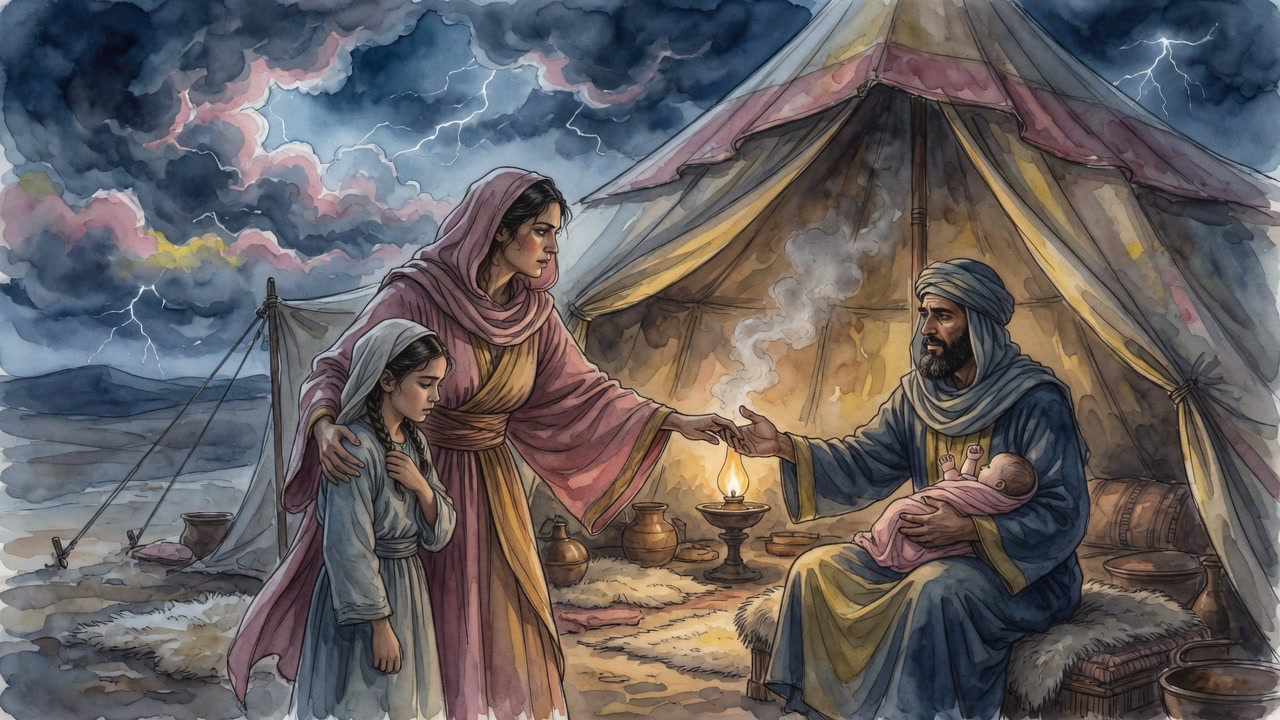
Leah had stopped bearing children, and she knew what that meant in the arithmetic of Jacob's household. She counted. Jacob was destined for four wives, the ancient reasoning held. Herself, Rachel, and their two handmaids, Bilhah and Zilpah. Bilhah had already given Jacob two sons. That was two sons from Rachel's side of the equation. Leah had given him four. She had been fertile and her sister had been barren and it had not mattered, because what Jacob wanted was not more sons but Rachel, and Rachel was finally pregnant with Joseph, and Leah's body had gone quiet.

She calculated her position. Jacob was destined for twelve sons. Bilhah had given him two. She had given him four. If she gave Zilpah to Jacob now, and Zilpah's sons counted in her column rather than in a neutral column, the totals would work out in her favor. She was not giving Jacob another woman because she wanted to. She was managing the outcome of a family that was not running the way she needed it to run.

She gave Zilpah to Jacob. The Legends of the Jews records an additional detail: Zilpah was the youngest of the four women. This was because Laban had given Leah the younger handmaid as compensation when he pulled the wedding switch, giving Leah to Jacob instead of Rachel. Zilpah's youth, which should have been an advantage, had come to Leah as a secondary portion. She was giving Jacob the part of her dowry that she had already received as a second prize.

The Child Born in Secret

Zilpah bore a son. The Book of Jubilees, which retells Genesis with a strong interest in the exact circumstances of each birth, says it happened in secret. Leah had not told Jacob she was giving Zilpah to him until after the pregnancy was established. The text records the date: in the fifth year of the sixth week, in the third month of the seventh year after Jacob's crossing of the river. The Jubilees tradition cared about these dates the way a legal document cares about dates, because the calendar structure of the story was part of its meaning.

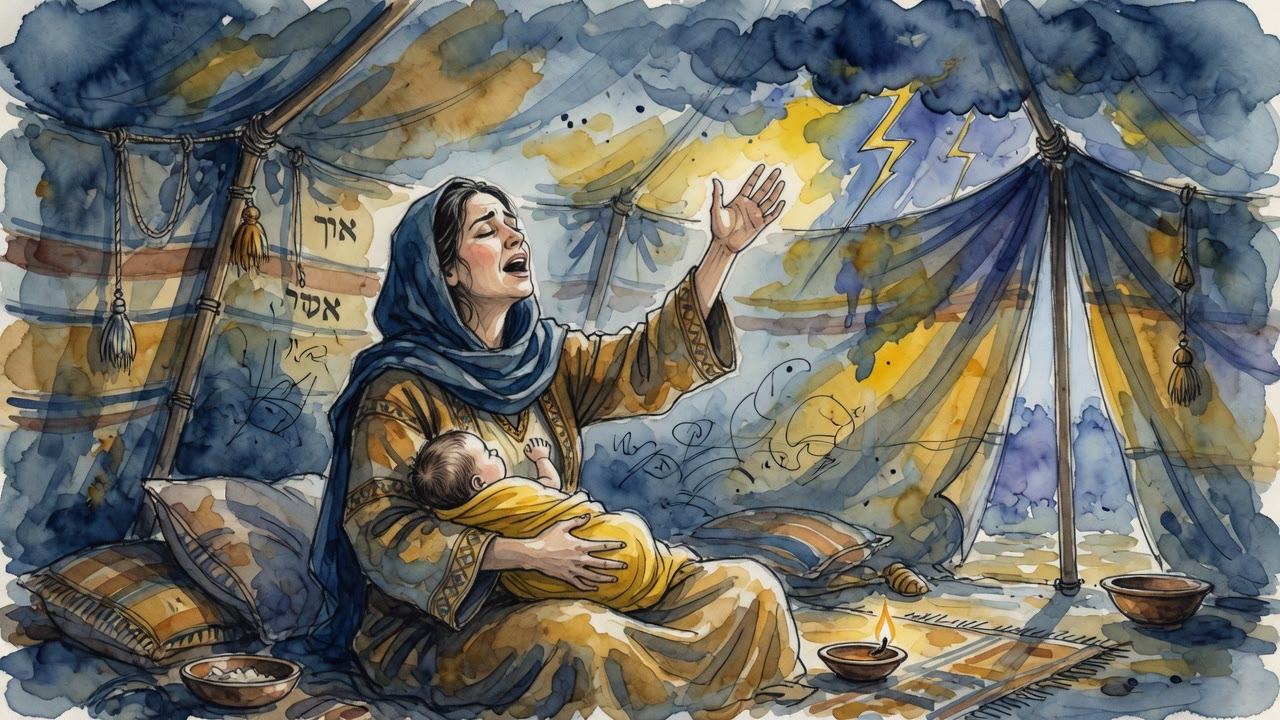
When the child came, Leah named him. She said: luck has come, or perhaps: a troop comes, because the Hebrew word gad carries both meanings, fortune and a military band. She named the child at the intersection of these two ideas, in the moment of a lucky arrival that felt like a force coming in from outside the ordinary pattern of things.

The Name That Pointed Forward

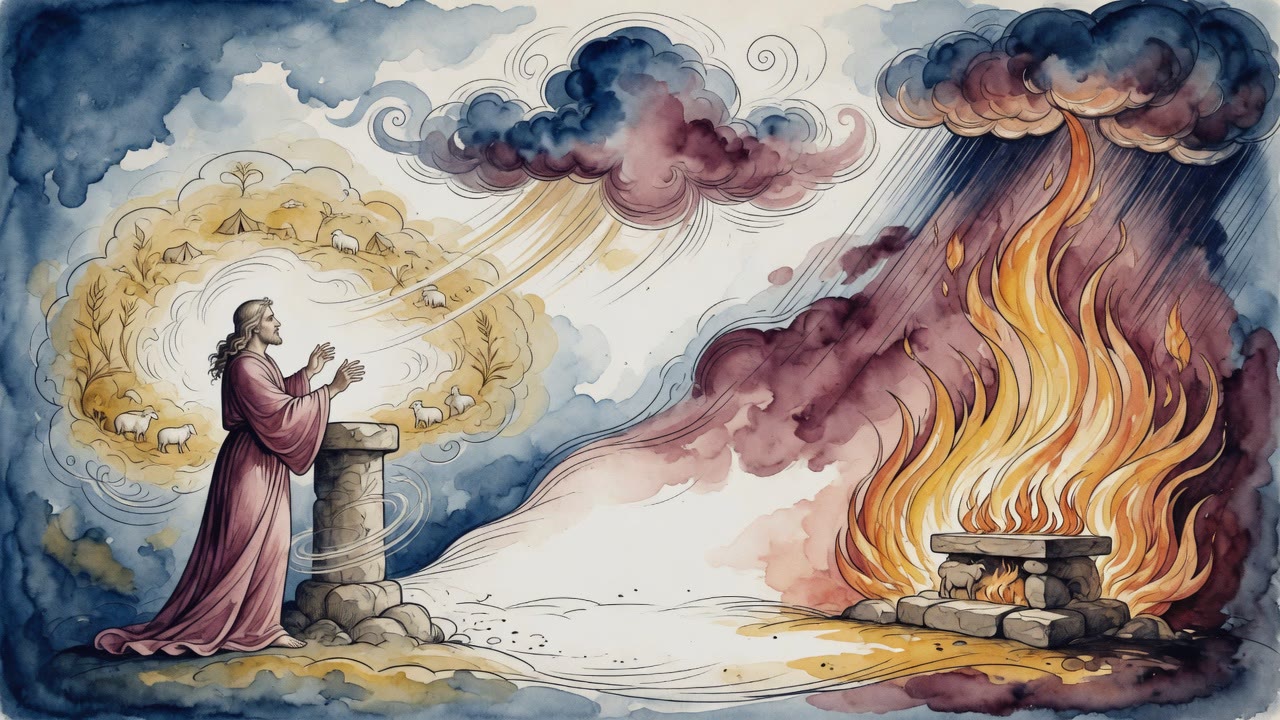
The Legends of the Jews preserves a tradition about the naming that goes further than the etymology. Gad shared his name with the prophet Gad, who would not be born for another thousand years, David's court prophet, the seer who came to David after the census and offered him three options for punishment and who built God's altar on the threshing floor of Araunah. Leah could not have known this. But the name she chose, standing over Zilpah's newborn in whatever circumstances the birth had been kept quiet, pointed forward to a man who would be the prophetic voice in the court of Israel's greatest king.

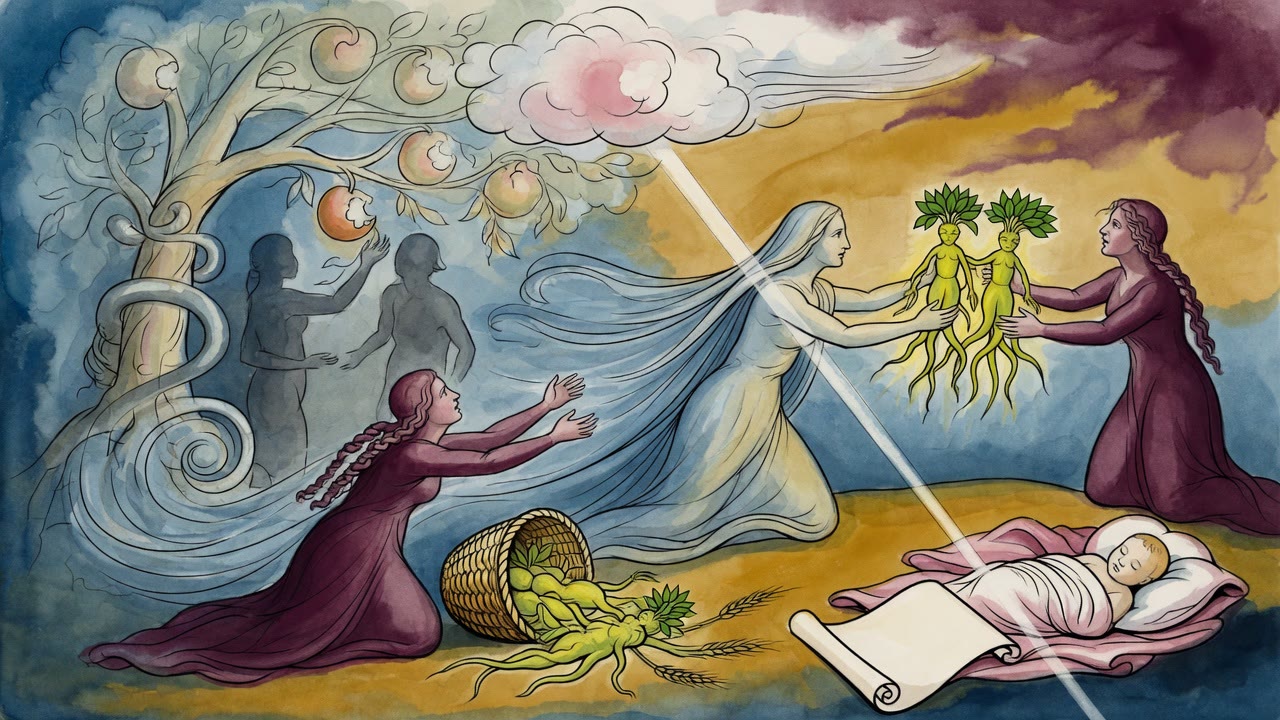
The tradition is interested in this kind of forward-pointing. Names in the Genesis narratives often carry more than the person named can know at the time of the naming. Rachel's naming of Joseph encoded the future split of the tribes. Lamech's naming of Noah held the whole logic of the Flood in a word that meant rest. Leah named Gad for luck and troop and got, without knowing it, a pointer toward a prophet she would never meet.

What the Household Looked Like

Jacob had by this point in the Jubilees chronology been with Laban for years, working and being cheated and working again. His household was complicated in the way that a household with four wives and multiple children from multiple mothers is always complicated. Each woman watched the others. Each tracked how many sons each had given Jacob. Leah had been first. She had been the unwanted wife who became the mother of more sons than anyone else. And she was still watching, still counting, still managing the situation with the tools available to her.

Giving Zilpah to Jacob was a management decision. Naming Gad was a moment of genuine feeling, the luck she had been hoping for, the troop arriving in her corner of the competition. She did not know the name would outlast all of them in a way that had nothing to do with luck or competition. She just knew the child was born and he was hers and she was calling him fortune.


← All myths

From the tradition

Sources

2 sources

The texts this telling draws on, in full. Open a card to read inline, or expand it for a wider, quieter read.

Legends of the Jews 6:138Legends of the Jews

Leah, found herself in a predicament. She had stopped bearing children, while her sister Rachel's handmaid, Bilhah, had already given Jacob two sons. According to Legends of the Jews, Leah came to a pretty significant conclusion: that Jacob was destined to have four wives – her sister, herself, and their handmaids, Bilhah and Zilpah. So, what did she do? She gave her own handmaid, Zilpah, to Jacob as a wife.

That Zilpah was actually the youngest of the four women. Apparently, there was a custom back then: the older daughter got the older handmaid as part of her dowry, and the younger daughter got the younger handmaid. Remember Laban's trickery, switching Leah for Rachel on Jacob's wedding night? To pull that off, Laban had given Leah the younger handmaid as her marriage portion, making Jacob think he was marrying the younger daughter all along!

Here's a fascinating detail. Zilpah was so young that her pregnancy didn't show. Nobody knew she was expecting until, surprise, a son was born! Leah named him Gad.

The name Gad itself is loaded with meaning. Leah chose it carefully. It can mean "fortune," hinting at the tribe of Gad's future good luck. But it also means "the cutter." Why "the cutter?" Because, as Legends of the Jews explains, from the tribe of Gad descended the prophet Elijah. Elijah, who brings good fortune to Israel and, at the same time, "cuts down" the heathen world.

Leah had still other reasons for this double meaning. The tribe of Gad had the good fortune of entering into possession of its allotment in the Holy Land before any of the other tribes. And, get this, Gad, the son of Jacob, was born already circumcised! It's a lot to unpack, isn't it? A complex web of family, destiny, and names pregnant with meaning. It makes you wonder, doesn't it, about the weight we give to names and the stories we tell about ourselves and our families. How much of our lives are shaped by fortune, and how much by the "cutting" we do – the choices we make to shape our own destinies?

Full source
Book of Jubilees 28:30Book of Jubilees

Sometimes the ancient texts offer us a glimpse behind the curtain, a little more color, a little more… well, human drama.

This ancient Jewish text, considered apocryphal by some but deeply revered by others, retells much of the Genesis story, adding layers of detail and interpretation. And in Chapter 28, we get a poignant look at the complicated dynamics within Jacob's family.

" Can you imagine the weight of that in a society where a woman's worth was often tied to her ability to produce children? A reader can gloss over these details when reading the main narrative, but texts like Jubilees force us to confront the emotional lives of these biblical figures.

Leah’s pain, as we might expect, leads to envy. She envies Rachel, who is also barren. And in a move mirroring Sarah’s with Hagar, she gives her handmaid Zilpah to Jacob as a wife. The text reads, "and she also gave her handmaid Zilpah to Jacob to wife." It’s a stark reminder of the social structures of the time, where women were often caught in a web of power dynamics and expectations.

Zilpah conceives and bears a son. Leah names him Gad. Jubilees helpfully tells us this happened on the twelfth of the eighth month, in the third year of the fourth week (of the Jubilee cycle, a 49-year period). See how specific it gets? Zilpah then bears another son, named Asher, on the second of the eleventh month, in the fifth year of the fourth week.

The narrative then shifts back to Leah. "And Jacob went in unto Leah, and she conceived, and bare a son, and she called his name Issachar." We’re told this happened on the fourth of the fifth month, in the fourth year of the fourth week. Again, the Book of Jubilees is meticulous in its dating. It even mentions she "gave him to a nurse," a small detail that adds to the sense of realism.

These seemingly minor details, the specific dates, the mention of a nurse, bring the story to life. They remind us that these weren't just archetypes or symbols. They were people living within a specific time and place, confronting very human emotions like jealousy, hope, and the desire to build a family.

What does this little peek into the lives of Leah, Rachel, and Jacob tell us? Perhaps it's a reminder that even within the grand narratives of faith, there's always room to find the human story, the messy, complicated, and ultimately relatable experiences that connect us to the past. And maybe, just maybe, understanding those human moments can help us better understand ourselves.

Full source