Jacob's Name Left Room for Elijah's Fire
Benjamin was still unborn when God named a nation in Jacob. Centuries later Elijah stacked twelve stones on Carmel, and the fire found them.
Table of Contents
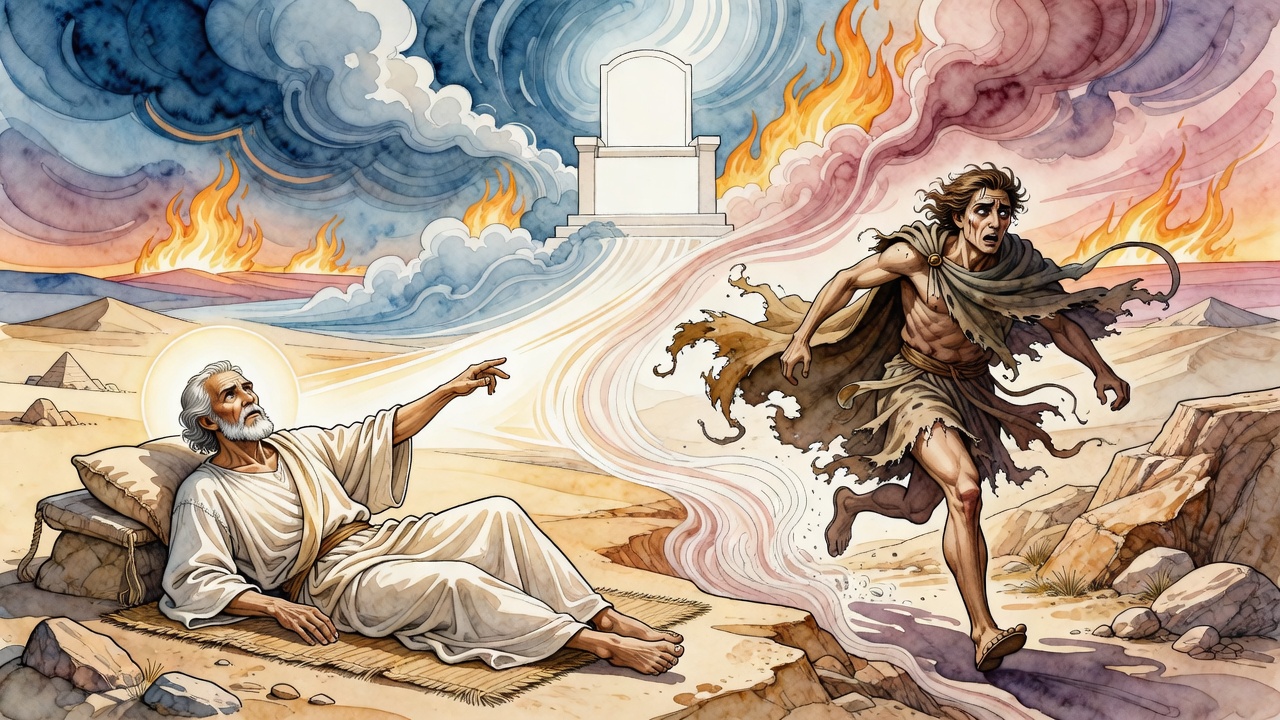
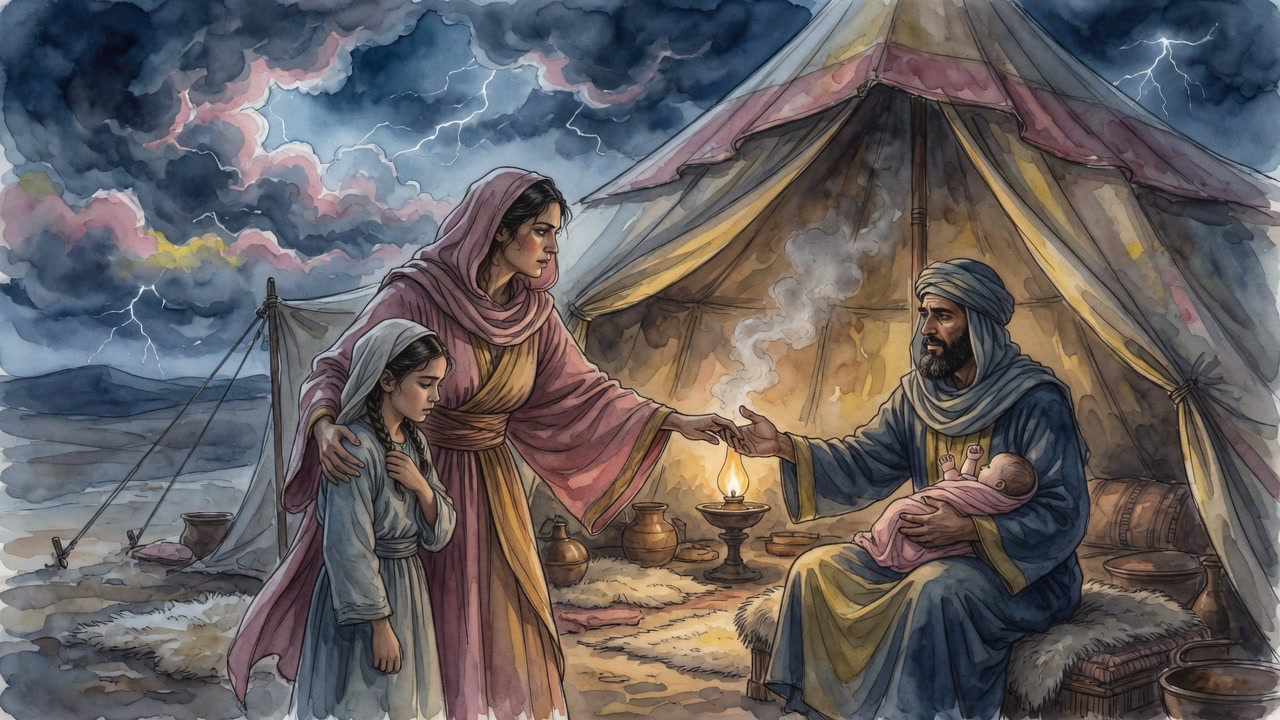
Jacob was still on the road from Shechem when God stood over him and spoke. "I am God Almighty. Be fruitful and multiply. A nation and an assembly of nations shall come from you, and kings shall emerge from your loins" (Genesis 35:11).
 Click for full size
Jacob could count his sons on two hands and have one finger left. Reuben through Joseph were already in the world. Rachel walked beside him with a belly that had not yet given its name. The last child was still hidden. God named a nation anyway.
A Nation Still in the Womb
The unborn one was Benjamin. "A nation" pointed at that closed womb. "An assembly of nations" pointed farther, at Joseph's two boys, Manasseh and Ephraim, who would later stand as tribes in their own right. Jacob's house would not merely add bodies. It would split and double. One son would become two tribes. One womb would still produce a people not yet born.
Jacob heard expansion. He also heard a map that would not stay flat. Kings would come from those loins. Courts would multiply. So would dangers.
Benjamin Is Born and Rachel Dies
They moved on. The birth came hard. Rachel named the boy Ben-oni, son of my sorrow, and died on the road to Ephrath (Genesis 35:18). Jacob renamed him Benjamin, son of the right hand. The nation God had spoken while the child was still hidden arrived in blood and burial. Jacob set a pillar on Rachel's grave and carried a twelfth son whose mother would not see him weaned.
The promise had a body now. It also had a grave beside it.
Israel Almost Erases the Tribe
Generations later the tribe of Benjamin nearly ended. A concubine was murdered at Gibeah. Israel went to war against Benjamin and cut the tribe down until only a remnant was left (Judges 20). In the wreckage the people reached for verses the way a court reaches for a ruling. One reading let them cast Benjamin out. Ephraim and Manasseh could stand like Reuben and Simeon and keep the number of tribes whole without him (Genesis 48:5).
They almost did it. The smallest tribe, named in a womb, could have vanished from the camp. Men sat in the dust counting survivors and wondering whether eleven banners were enough.
Then they read the other sentence. "A nation and an assembly of nations shall come from you." Benjamin had been written into Jacob's blessing before he was born. A tribe spoken there could not be erased. They pulled him back. They found wives for the remnant. The empty places in the camp filled with a people that had come within a day of not existing.
Elijah Stacks Twelve Stones
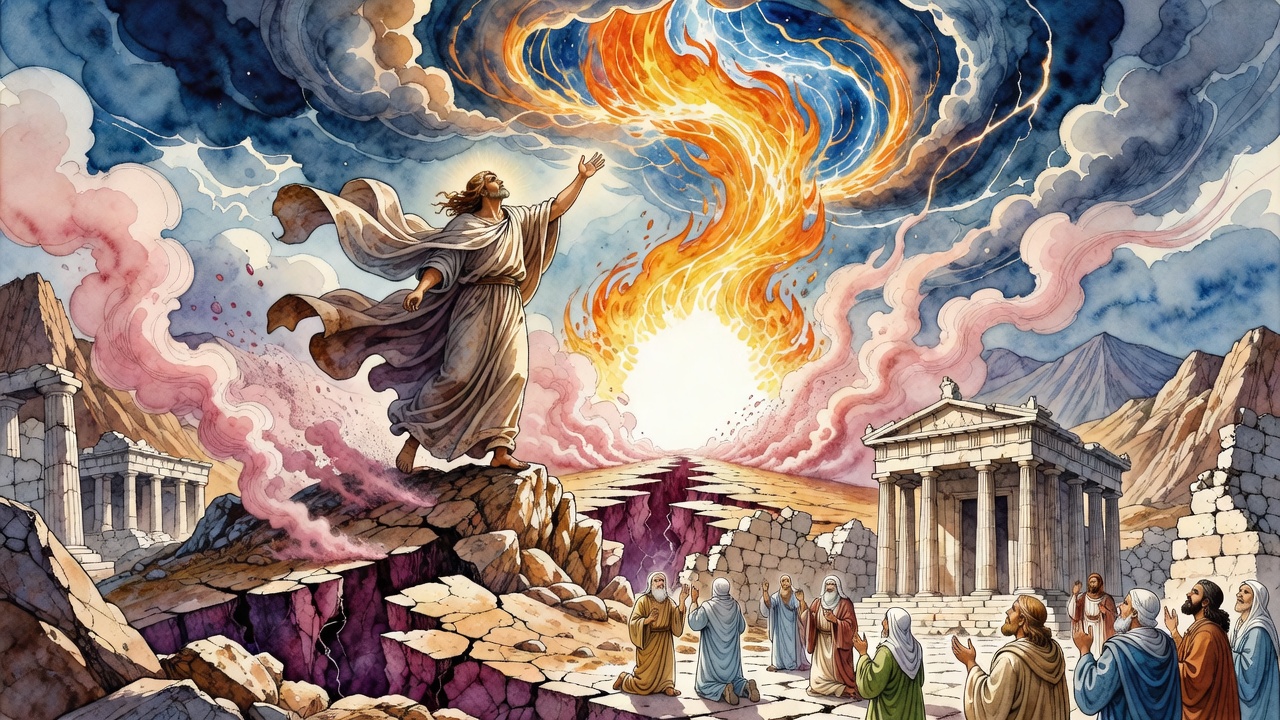
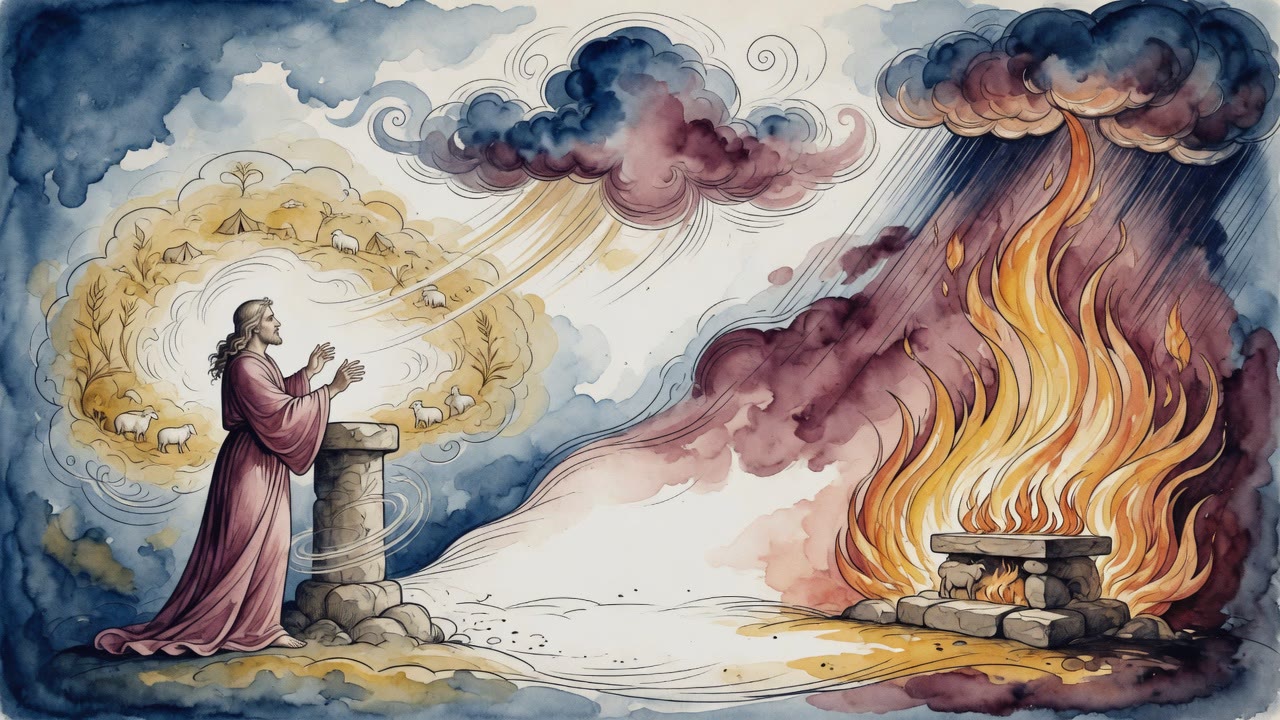
Centuries after that, Elijah stood on Mount Carmel with a nation that could not decide whom to serve. The Temple service did not cover this hour. He took twelve stones, one for each tribe, Benjamin among them, and built an altar the ordinary hour would not have allowed (1 Kings 18:31). Private altars can be a breach. This one was a rescue. The twelve stones did not reject the house in Jerusalem. They called the tribes by name, including the one Jacob's sentence had saved from the wreckage of Gibeah.
Elijah arranged the wood. He laid the bull. He had them pour water until the trench filled. He called on the God of Abraham, Isaac, and Israel.
Fire Falls on Carmel
Fire fell. It ate the offering, the wood, the stones, the dust, and the water in the trench. The people dropped on their faces. "The Lord, He is God," they said. "The Lord, He is God."
Twelve names had been in those stones. One of them had almost been missing. Jacob's sentence, spoken over a womb on the Shechem road, was still holding the count when the fire came down.
← All myths