Elijah Told a Sage Why the Ground Keeps Shaking
The floor moved under the study house. Rabbi Nehorai blamed unseparated tithes. Elijah told him the real reason, and the real reason was worse.
Table of Contents
 Click for full size
The Ground Moved While the Sages Were Sitting
The benches shifted first, then the water in the jar, and by the time anyone stood up the shaking had already passed through the floor and gone somewhere else. It had happened before. It kept happening.
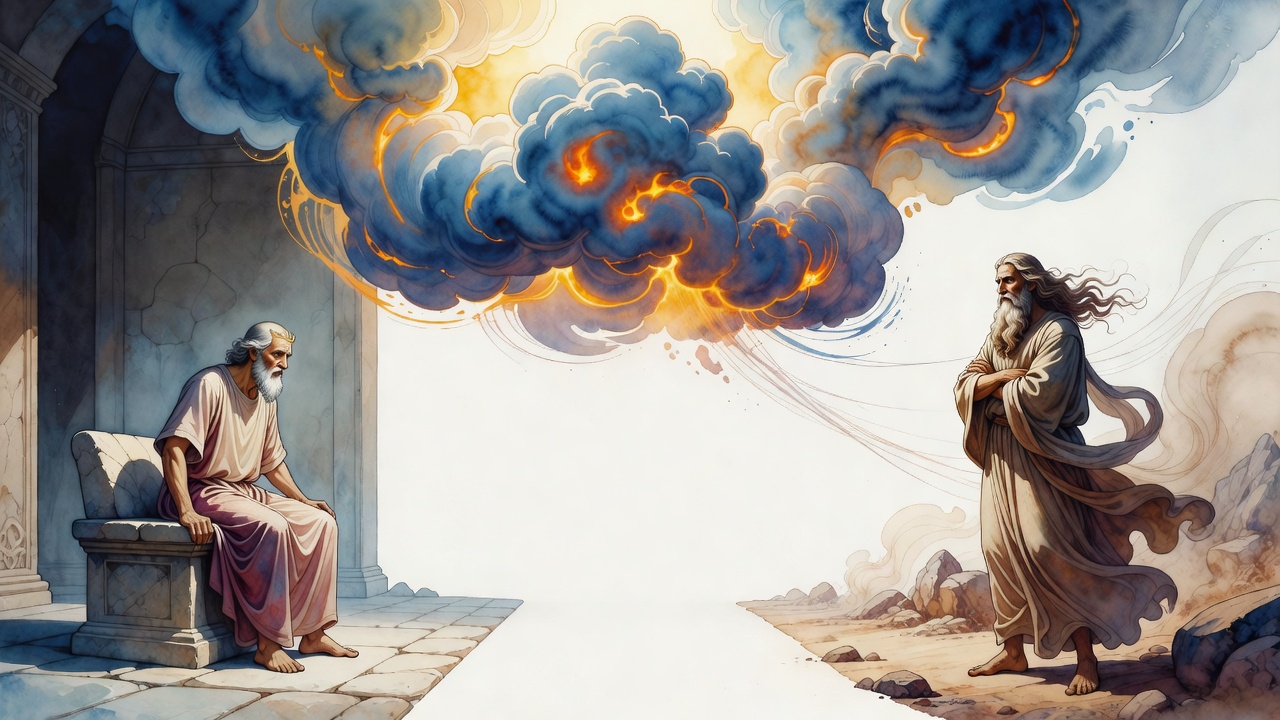
Rabbi Nehorai was still on his feet when Elijah came in and asked him, without any greeting, why tremors come upon the world.
Nehorai gave the answer a careful man gives. "Because of the tithes. People do not separate them the way they are supposed to, and the produce goes out into the market unfixed."
"That is a reasonable answer," Elijah said. "It is not the reason."
What God Sees When He Looks Down at the World
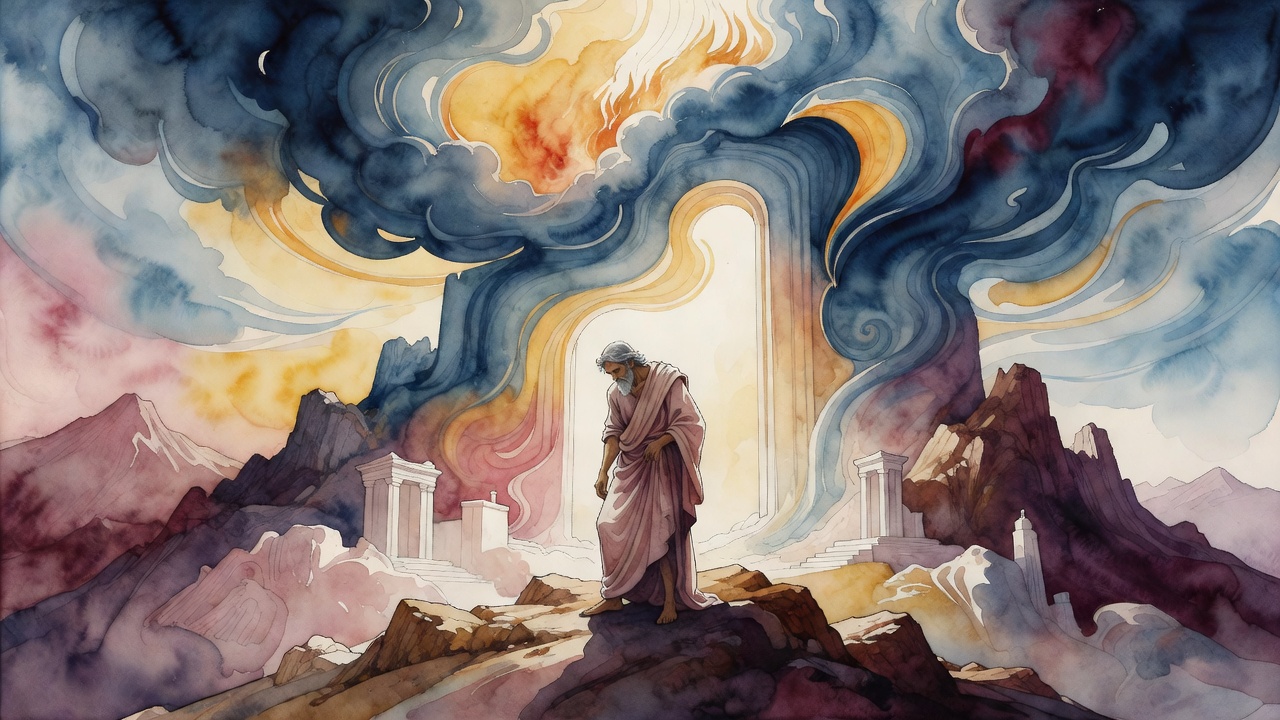
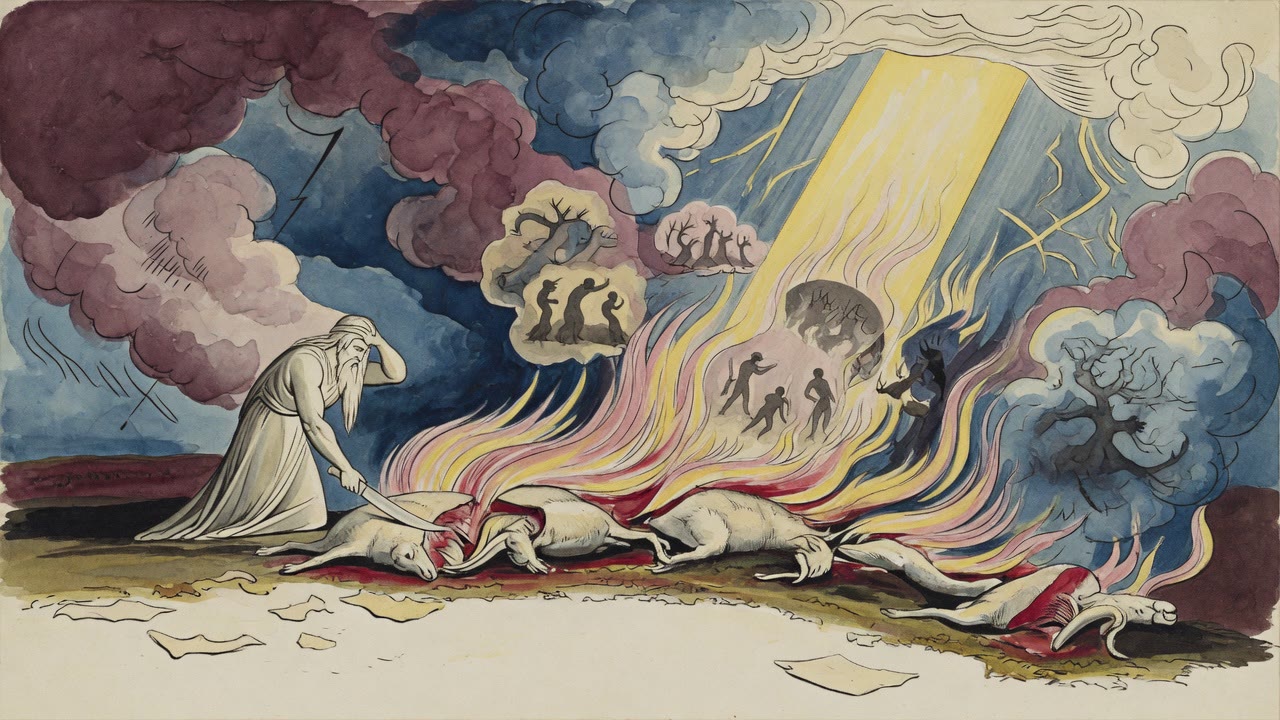
"The Holy One looks at his world," Elijah said. "He sees the houses where they burn incense to idols, and they are full. He sees the houses of entertainment, and they are full. He sees the nations of the world sitting in their own countries at ease, nobody threatening them, nobody taking their children. Then he looks at his own house and it is a heap of stones with grass growing out of it, and he looks at his own children scattered through those same nations in distress. And his anger comes up in him, and he reaches out to destroy the world he made."
He roars over his habitation, the prophet said. That is what a father does over the wreck of his own house.
"So the earth shakes," Nehorai said.
"So the earth shakes."
Rabbi Acha told it a different way, and in his version God speaks. A man uses his body for something it was never meant for, and his limbs shudder, and the Holy One says to him: you made your own limbs tremble over a thing that was not worthy of you, so I will make the world above and the world below tremble for your sake. The rabbis had a third account, plainer than either. The earth cracks open because of quarrels. Men argue until the ground splits and the valley of the mountains runs all the way to Azal.
The Earth Only Shakes When a Kingdom Changes Hands
Rabbi Samuel bar Nachmani kept coming back to the same observation, and he would not be moved off it. The shaking does not come at random. It comes at the seam, when one empire is finishing and the next one has not yet taken hold.
The earth quaked and trembled, the prophet Jeremiah wrote, because the thoughts of God had risen up against Babylon.
Israel had felt that seam in the body. The generation that watched Babylon go down and Persia come up had stood in the street with the paving stones moving under them and understood that somebody was being taken apart overhead. The empires felt it too. They only ever felt it on the way out.
The Orphan and the Widow at the Gate
The kingdom of the nations came to Israel and told her to pick up the yoke and carry it.
"I am an orphan," she said. "I am a stranger here."
"And have you heard nothing about me?" the kingdom said. "I am a widow."
Neither of them was lying. Both of them had been left. The answer Israel got was not a promise of rescue and not a court date. Go to the God of Jacob and put the case to him, because a father of the fatherless and a judge of widows is God, and the address is his holy habitation.
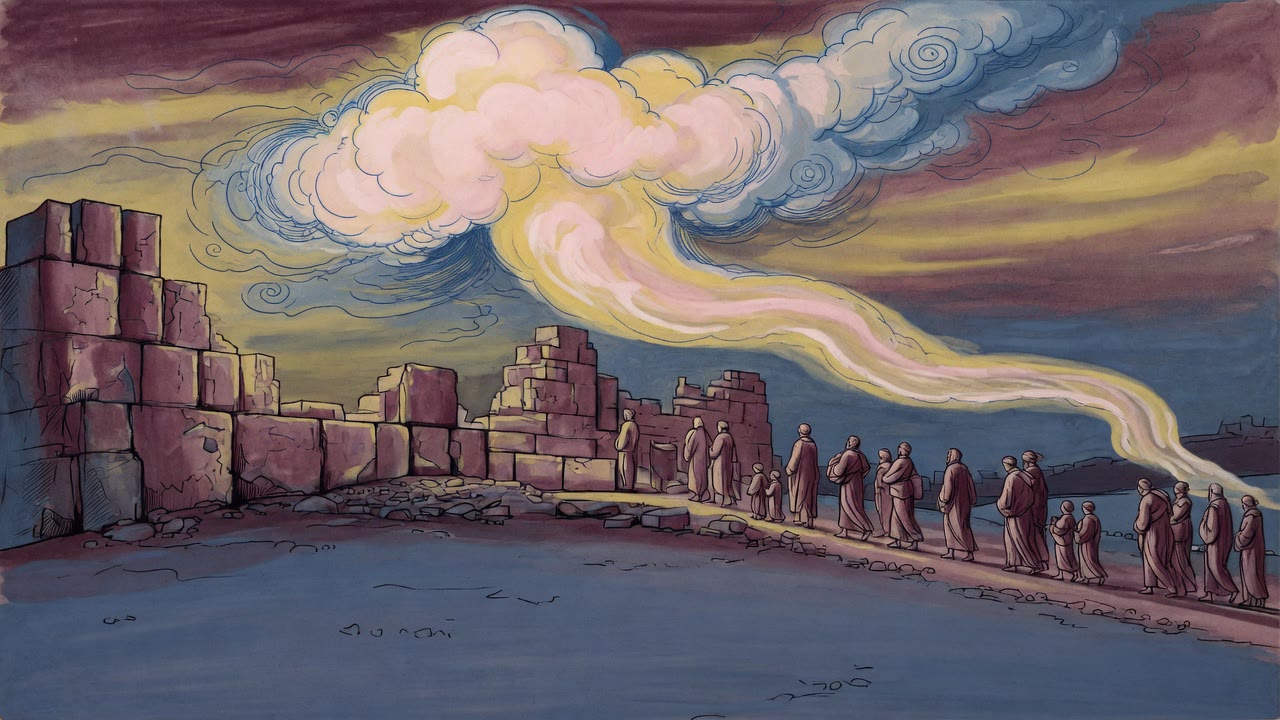
Which was rubble. The orphan was being sent to a ruin, and the ruin was the right address, because the same wrecked house that made God roar was the house where the fatherless were told to knock.
Israel had watched Nebuchadnezzar burn it. He had taken the people off their land and put them in chains, and God had let a prophet promise him that the nations would serve him and his son and his son's son after him. Three generations of mercy for the man who had lit the fire.
The Last Time Fire Came Down for a Word
Elijah had seen fire answer once, on a mountain, and he had gotten it by breaking the rule.
The law knew one altar and it was not on Carmel. Joshua had built one on Mount Ebal in his day, and afterward only a prophet had the standing to pull an altar down. Gideon slaughtered his father's bull at night, on a high place, on flawed stones, with wood cut from an Asherah, and a careful counter could find seven things wrong with the offering, and heaven took it. Samuel was a boy and a Levite when he lifted a suckling lamb whole onto the fire and cried out for Israel, and he was answered on the spot.
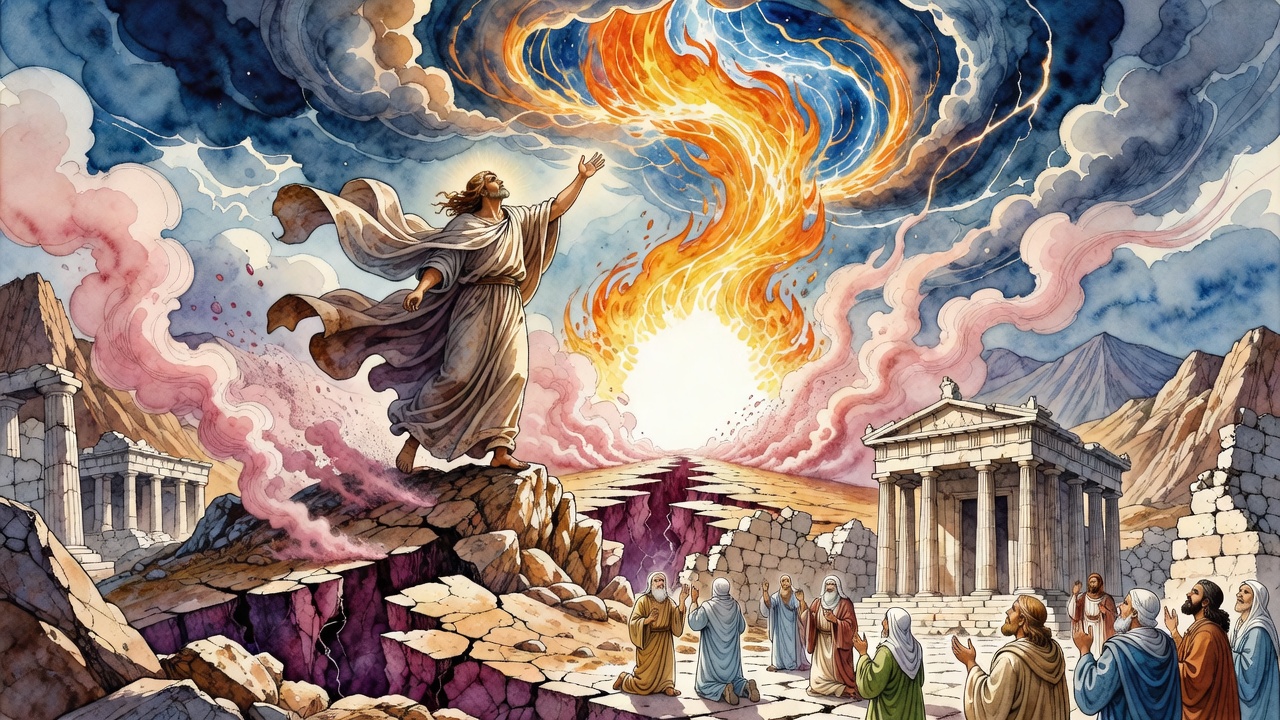
Elijah stood on Carmel in a time when no altar outside Jerusalem was permitted and offered there anyway, and the fire fell on the wood and the stones and the dust and licked the water out of the trench. He did it on his word alone. If the people turn back, he said, the rain comes back with them.
He had spent every century since then walking around asking questions in study houses.
The floor under Nehorai went still. The two of them stayed where they were a while longer, listening for whether it would start again.
← All myths