The Shekhinah Stood on the Mount of Olives for Three Years
She kissed the pillars and called from the hill for three years. Nobody climbed up. The innkeeper would not open after dark.
Table of Contents
 Click for full size
She Kissed the Walls of Her Own House
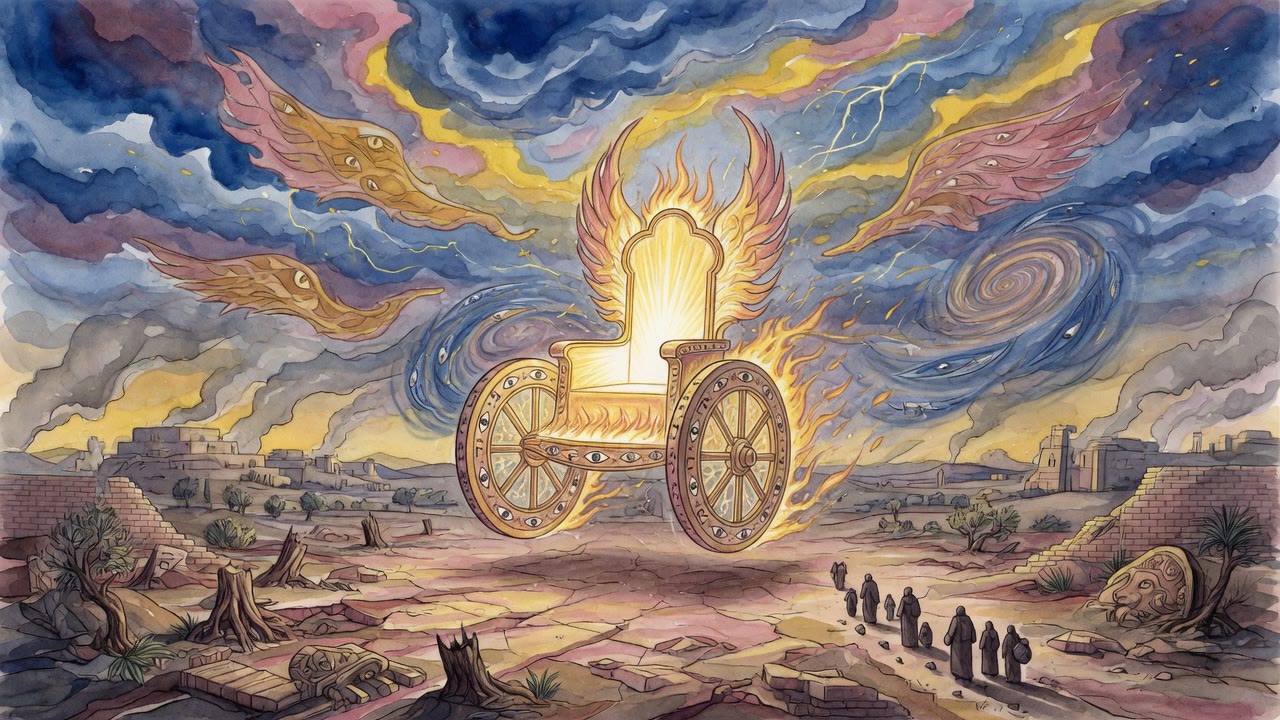
The Shekhinah (שכינה), the Divine Presence, did not leave the Temple in one step. She left it in ten, and she took her time over every one of them.
First from the cover of the ark to the cherub. Then from that cherub across to the other. Then down to the threshold of the house, and there she stopped. The word used is that the glory went out from the threshold, when anyone describing an exit would have written that it came in.
A king being turned out of his own palace does not walk. He stops in the doorway with his hand flat on the wall. He puts his mouth to the stone. He gets his arms around a pillar the way a man gets his arms around someone he is not going to see again, and he says it out loud to a building. Be at peace, my house. Be at peace, my palace.
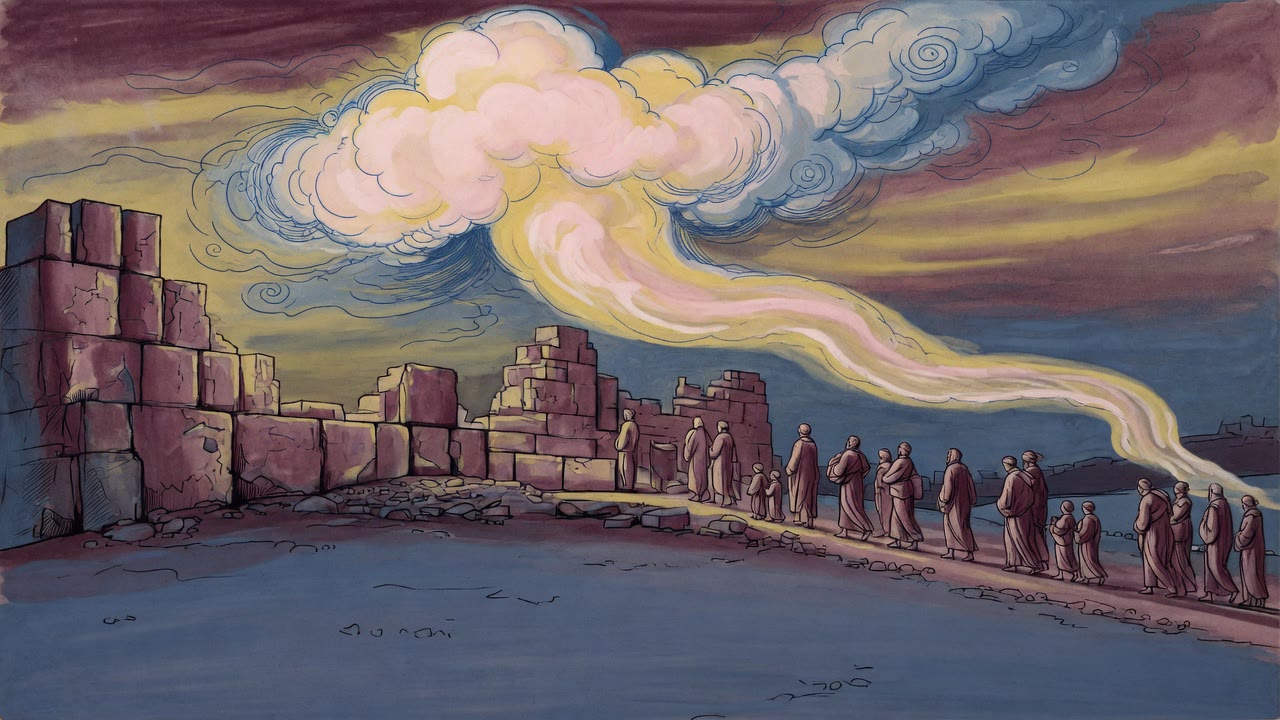
She kissed the walls like that. Then she let go. To the court. To the altar. To the roof. To the wall. Out into the city. From the city she stood on the Mount of Olives, the hill east of everything, close enough to be seen from the streets.
Three Years on the Hill
She stayed on that hill for three and a half years. Three times every day she called out over the rooftops.
Come back, wayward children, and I will heal you.
And the other cry, the one that names what is happening: people who never asked for me found me. People who never looked for me are the ones who got me.
Nobody came up the hill. Not in the first year, not in the second, not in the fourth harvest of the third. The city below went on doing what a city does. Smoke from ovens. Arguments in doorways. She kept crying out, and the streets did not turn their faces.
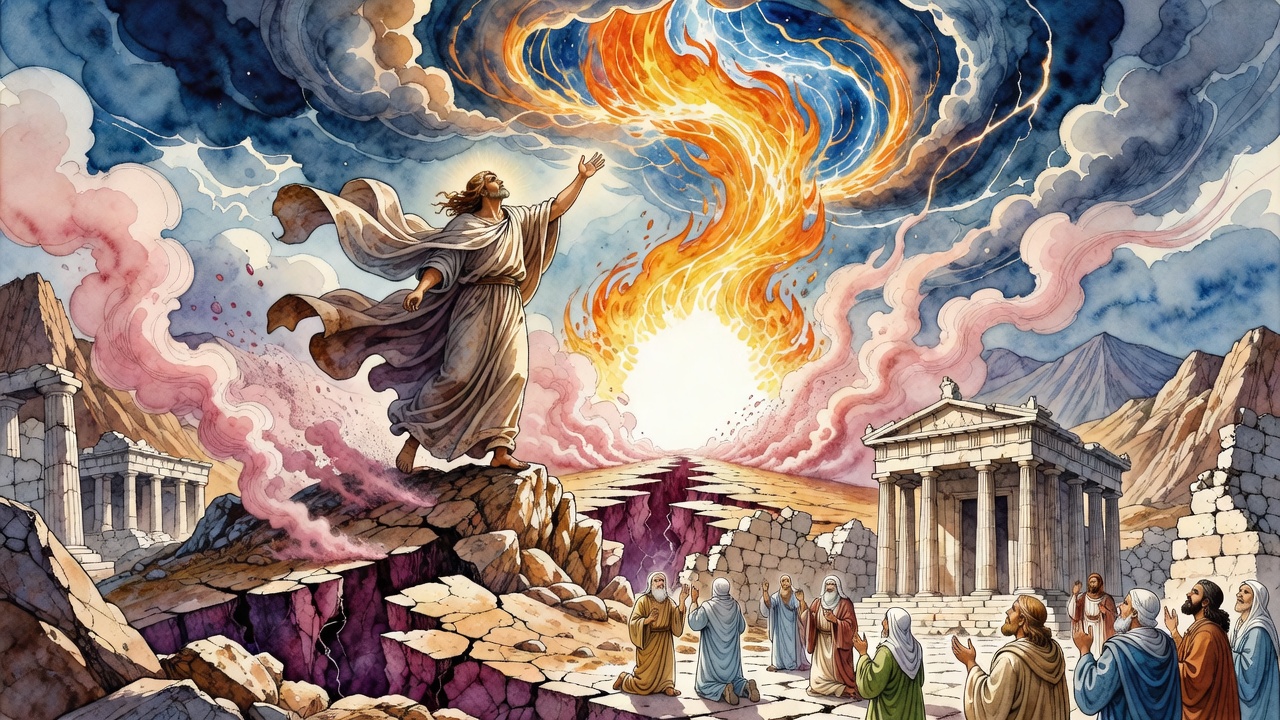
At the end of it she went up into the air and said the last thing. I will go back to my own place, and I will stay there until they admit what they did and come looking for my face.
Then she was in the wilderness. Six months she waited there, in case they turned around even that late. They did not. She said, let their eyes fail in their heads, and she went home.
The Inn That Would Not Open
A caravan was once out on a road with the light going.
The captain pulled up and pointed. "Get inside the inn. There are animals out here after dark, and there are men worse than the animals."
They laughed at him. "Caravans do not stop at inns. Not even in daylight." So they camped where they were, in the open, and around midnight the robbers came through them and took everything they had.
They walked back to the inn and knocked. Nothing. They knocked harder, and the innkeeper spoke through the door without opening it.
"Inns do not open at night. Inns do not take guests at this hour. When I wanted you inside you would not come. Now that you want to come in, I cannot let you."
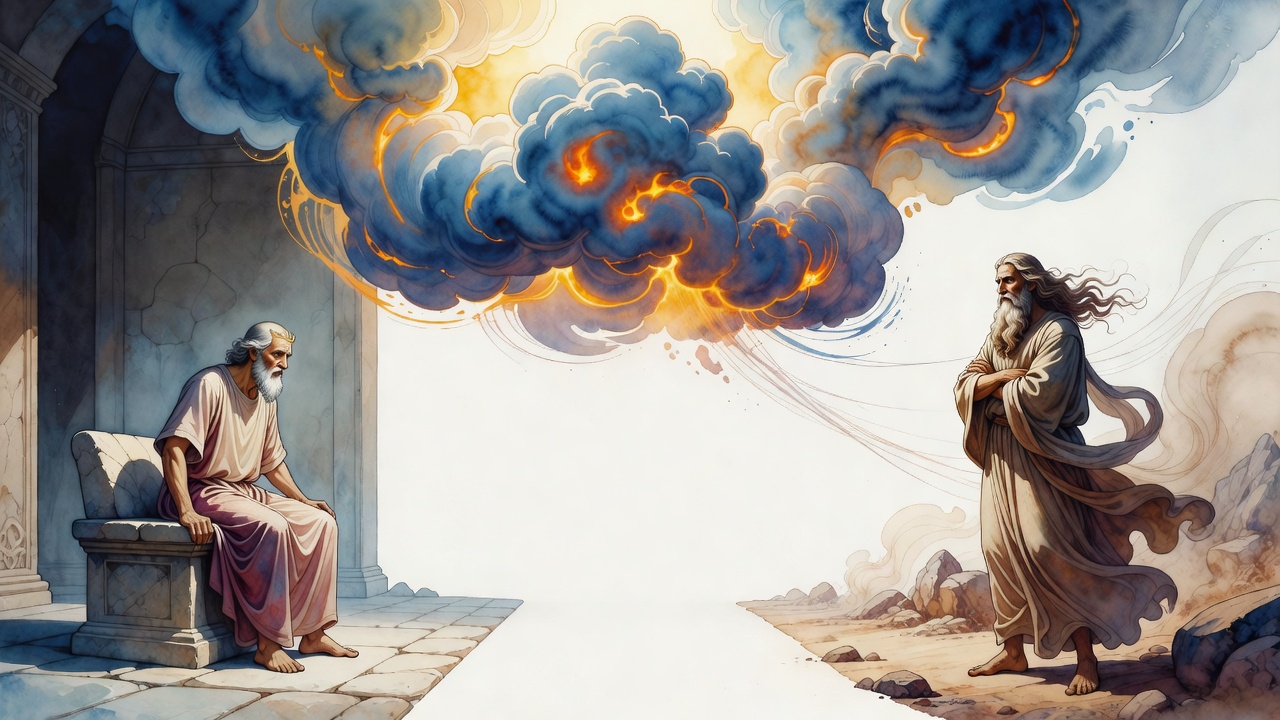
By the rivers of Babylon they sat down and asked why the Lord stood so far off. The answer came back the same shape as the offer had been. "When I looked for you, you did not look for me. Now you are looking, and I am not listening." Measure for measure.
Jeremiah Put the Yoke Back On
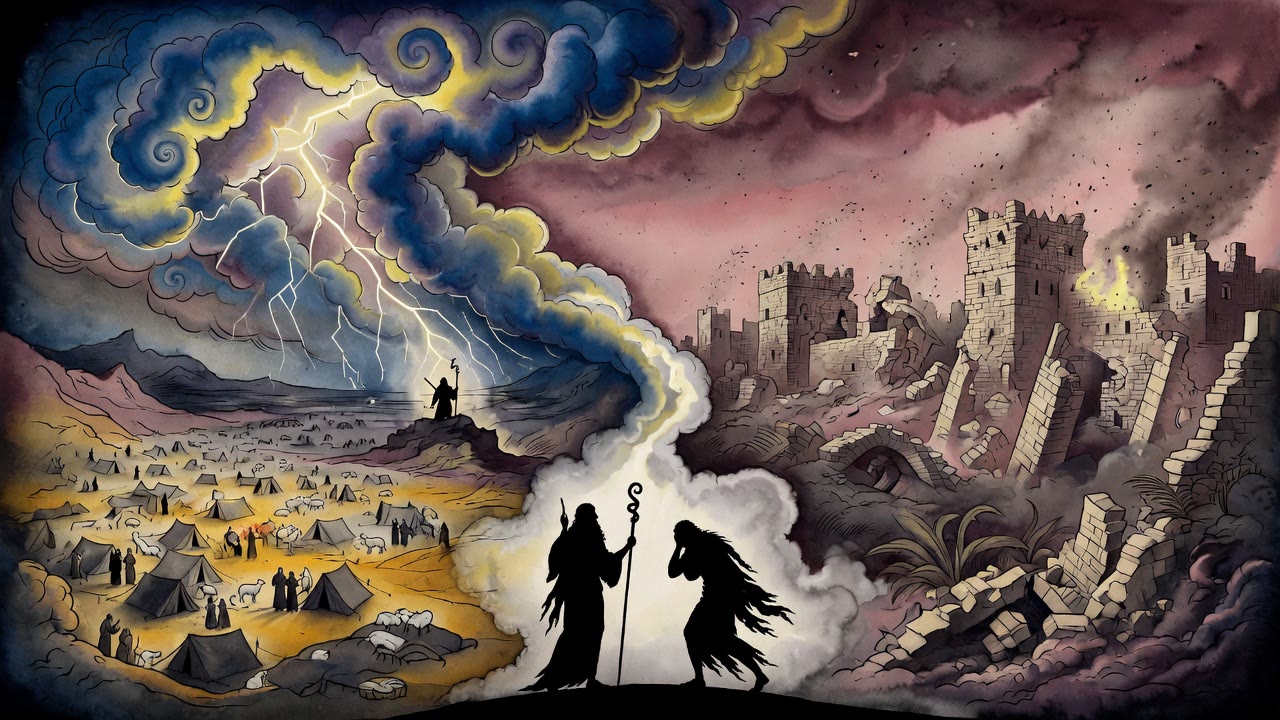
On the road out, Jeremiah walked with them. He had put a yoke across his own neck and he carried it like the rest of them.
Nebuzaradan lifted it off him. "You are injuring yourself. The king gave an order about you. If he hears of this he will say I disobeyed him."
Jeremiah put it back on. He had already said his piece to God. The place has to fall, fine, but let it fall through somebody else. It fell through him. So he wore the wood.
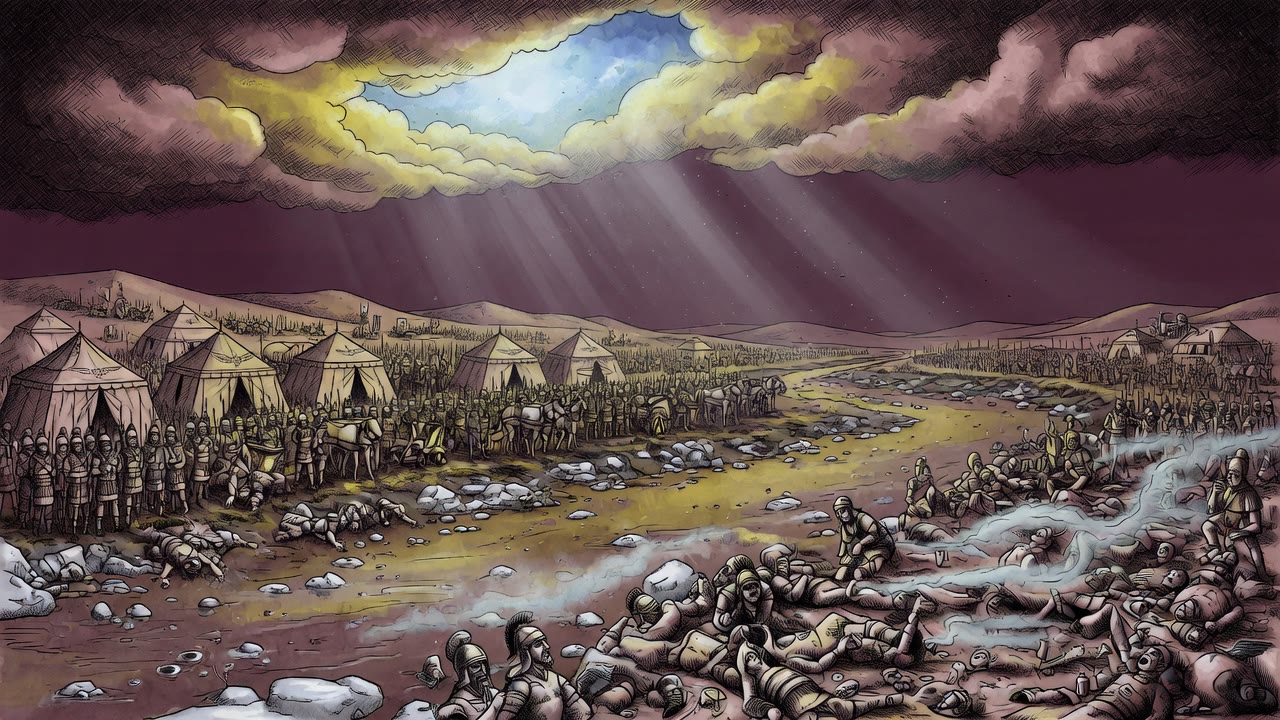
It bought them something. The men driving the column would see the prophet in among the ropes and slow their horses, and the whole line got to walk a little easier. When they wanted speed again they had a method for that. They would take one man out of the line, kill him, cut him into pieces, and throw the pieces down on the road ahead of the others. The others walked over them with ropes on their necks.
Hosea Brought a Cup She Would Not Take
Jerusalem sat down in the ashes of herself and wept in the night.
God said, "You weep at night. I weep night and day, because there is no sleep in front of me." He who keeps Israel does not doze and does not sleep, and so there is no hour in which the weeping stops.
She weeps bitterly, and bitterly means twice. Once for the dead. Once for the famine, in which the hands of compassionate women cooked their own children.
So God sent prophets down to comfort her. Hosea came first and stood in front of the city and said, "Get up and take the cup of comfort. He sent me to comfort you."
"What have you brought?"
"He says: I will be like dew to Israel."
Jerusalem looked at him. "Yesterday it was, I will be a lion to them, I will lie in wait by the road like a leopard. Today it is dew. Which of the two am I supposed to believe, the first one or the last one?"
She sent him away. "Your comforts are worth nothing." The cup stayed full. The hill to the east stood empty.
← All myths