Jacob Blessed Judah With the Roar of a Lion
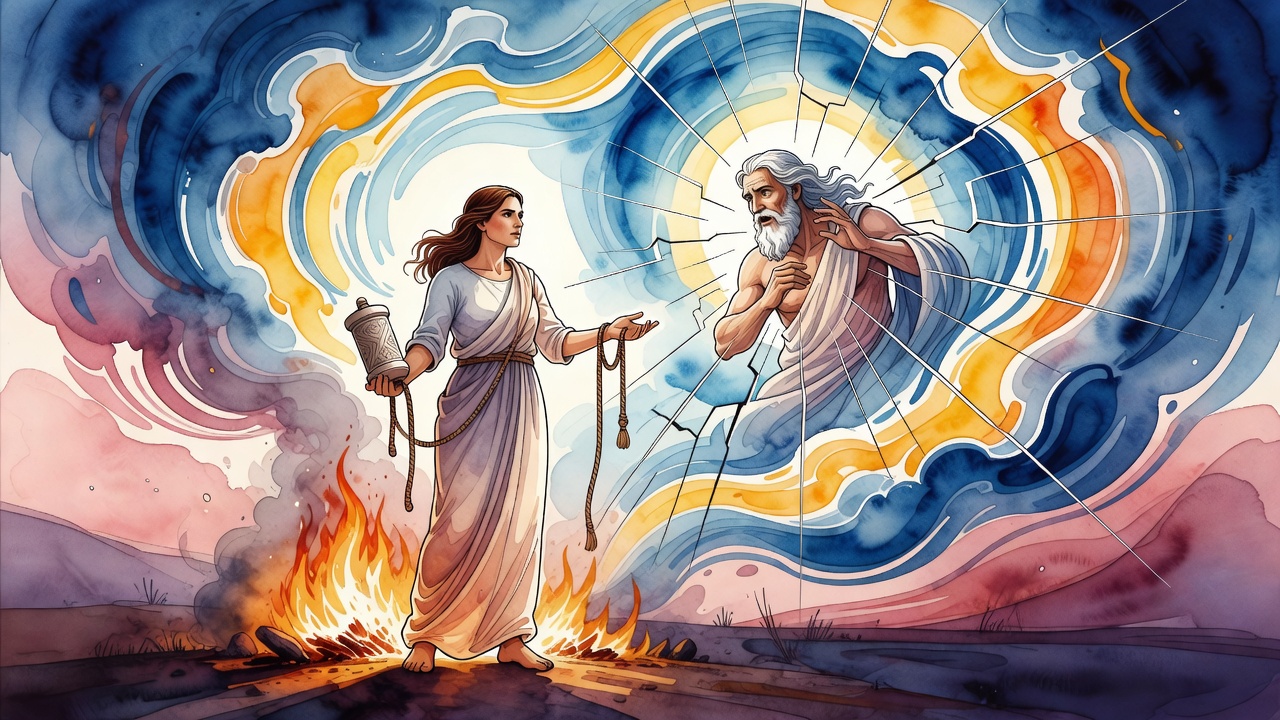
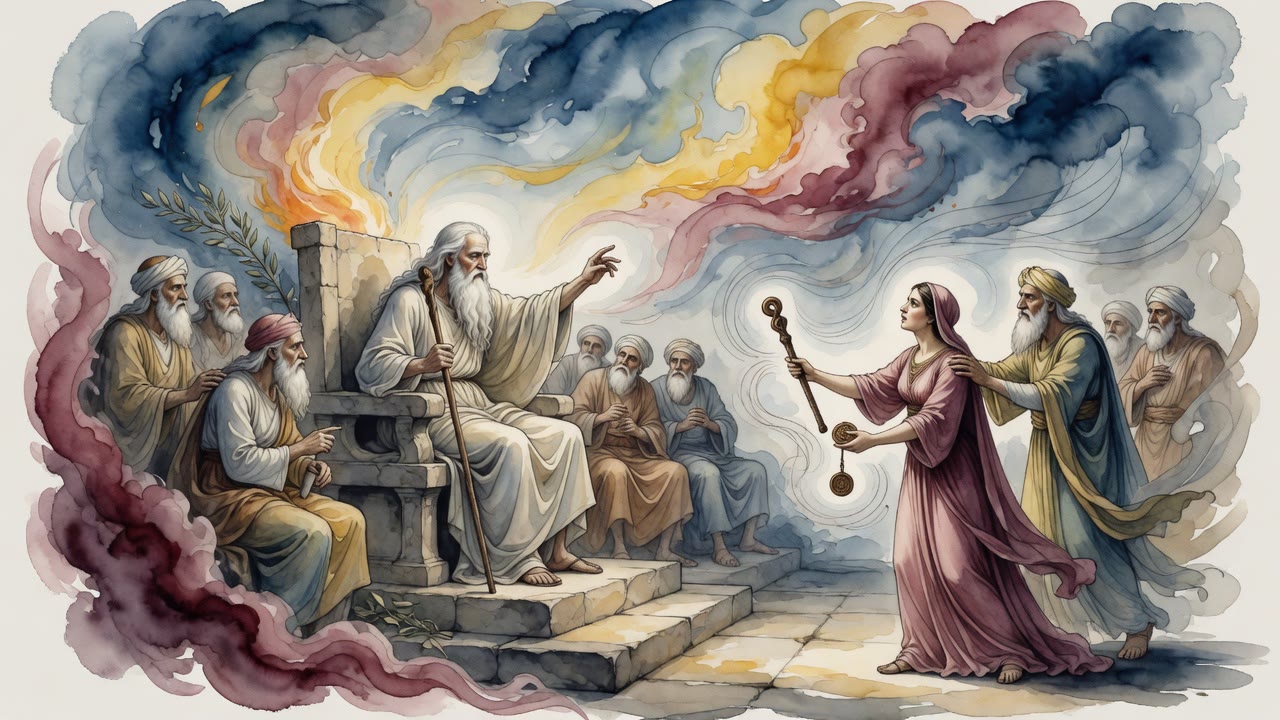
Judah told the men to burn Tamar. She sent him the seal he had left on the road. He said she was more righteous than he was.
Table of Contents
Tamar took off the widow's clothes after the mourning for Judah's wife had ended. She veiled her face and sat at the entrance to Timnah, where the road turned toward the sheep-shearing. Judah came up the road and did not know her.
 Click for full size
Two Sons Dead and a Third Withheld
His first son, Er, had been wicked in the eyes of God, and God slew him. Onan followed. Judah told Tamar to remain a widow in her father's house until Shelah, the third son, grew up, and he would give her to him as a wife. The line of Er needed a child. That was the duty.
Shelah grew. Judah's wife Batsuel would not let the boy marry Tamar. She held her last son back, and Judah let her. A year later Batsuel died, in the fifth year of that week of years. In the sixth year Judah went up to Timnah to shear his sheep.
Word reached Tamar. "Behold thy father-in-law goeth up to Timnah to shear his sheep." She had waited through two funerals and a promise that never arrived. She stopped waiting in the house. She put on a veil and took the road.
She Took His Seal on the Road to Timnah
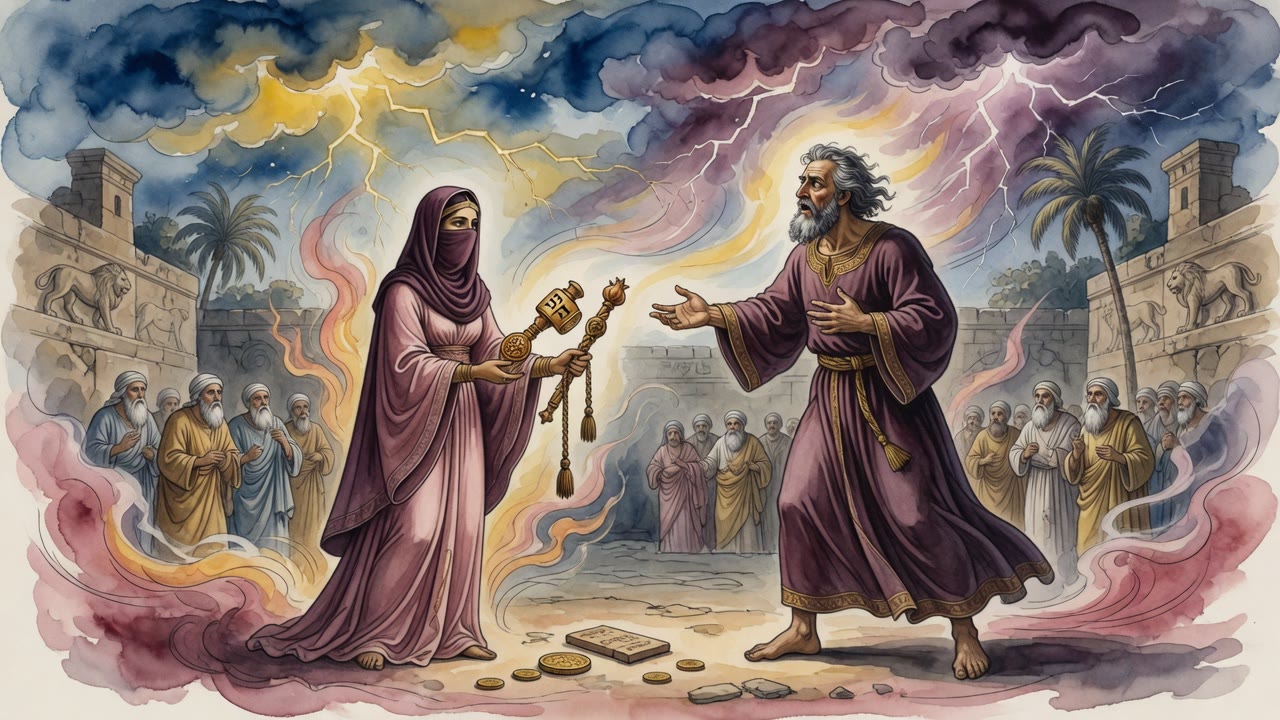
Judah saw her and took her for a zonah, a prostitute. "Let me come in unto thee," he said. She agreed, then asked for her hire. He had nothing in his hand but the ring on his finger, the necklace at his throat, and the staff in his palm. Those were not trinkets. They were how a man of his house proved who he was.
"Give them to me until thou dost send me my hire," she said. He promised a kid of the goats and handed the three things over. He went on to the shearing. He did not know he had left his name in a widow's fist.
When her pregnancy showed, the report came back to him as a charge against her. He ordered her burned. He could have ended it there. The veil was gone. The road was behind him. He still had Shelah.
She sent him the ring, the necklace, and the staff.
He Said She Was More Righteous
He looked at what she had sent. He knew the seal. He knew the cord. He knew the wood of his own staff. He could have stayed silent and let the fire take her. He could have had the evidence buried. The men were already waiting for the sentence he had spoken.
He opened his mouth. "Tamar is more righteous than I am. And therefore let them burn her not."
He said it in front of people. He named his own failure out loud: he had not given her to Shelah, and the child she carried was his. He did not approach her again. In the seventh year of that second week she bore twins, Perez and Zerah. Perez would stand in the line that runs toward David. The royal road began in a public confession Judah could have refused.
He Offered Himself for Benjamin
Years later famine held the land, and only Egypt had grain. Jacob had already lost Joseph, as he thought, and he would not send Benjamin, Rachel's last, down to the viceroy who had demanded the youngest brother as proof. Reuben offered his own two sons as collateral. Jacob turned the offer away. He would not spend more children to buy a child.
Judah came forward with a different pledge. "Send him with me," he said, "and if I do not bring him back to thee, let me bear the blame before thee all the days of my life." Not his sons. Himself. All his days.
Jacob sent Benjamin. They carried stacte and almonds and terebinth nuts and pure honey, gifts for a man who already had Egypt. On the first day of the month, in the second year of that week, the brothers stood before Joseph. Judah had put his own life in the gap where a coat soaked in blood had once been shown to a father.
The Old Man's Voice Changed
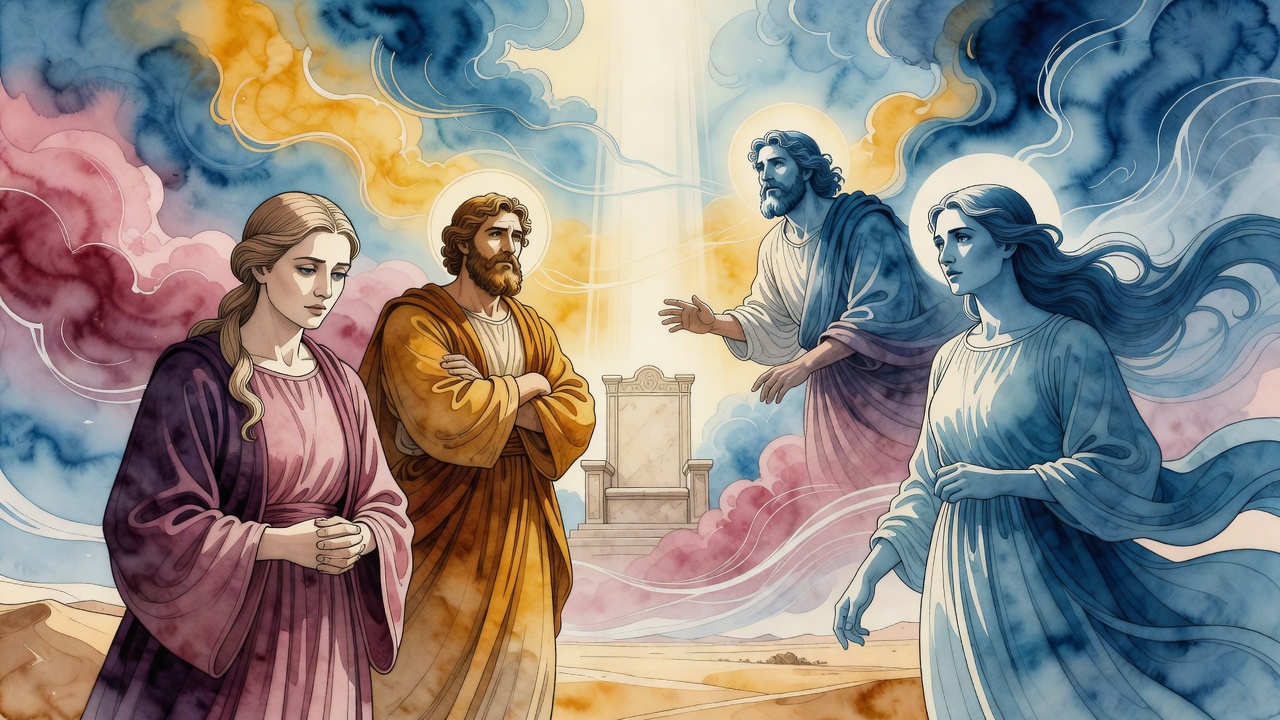
When Jacob gathered his sons for the last time, every man in that room carried a history. They had sold a brother. They had watched their father break. The old man could barely sit upright. He spoke over each of them in turn. When he came to Judah, the fourth son, the one whose name meant praise, his voice changed.
"A prince shalt thou be, thou and one of thy sons, over the sons of Jacob. May thy name and the name of thy sons go forth and traverse every land and region. Then will the Gentiles fear before thy face, and all the nations will quake."
The roar landed on a man who had sold a brother, lost two sons, withheld a third, and walked into a trap on the Timnah road. It landed because he had not run from the seal when it came back to him, and because he had offered his own life for Benjamin when a cheaper pledge was on the table. Jacob did not bless a clean record. He blessed the son who had failed and then stayed in the room.
← All myths