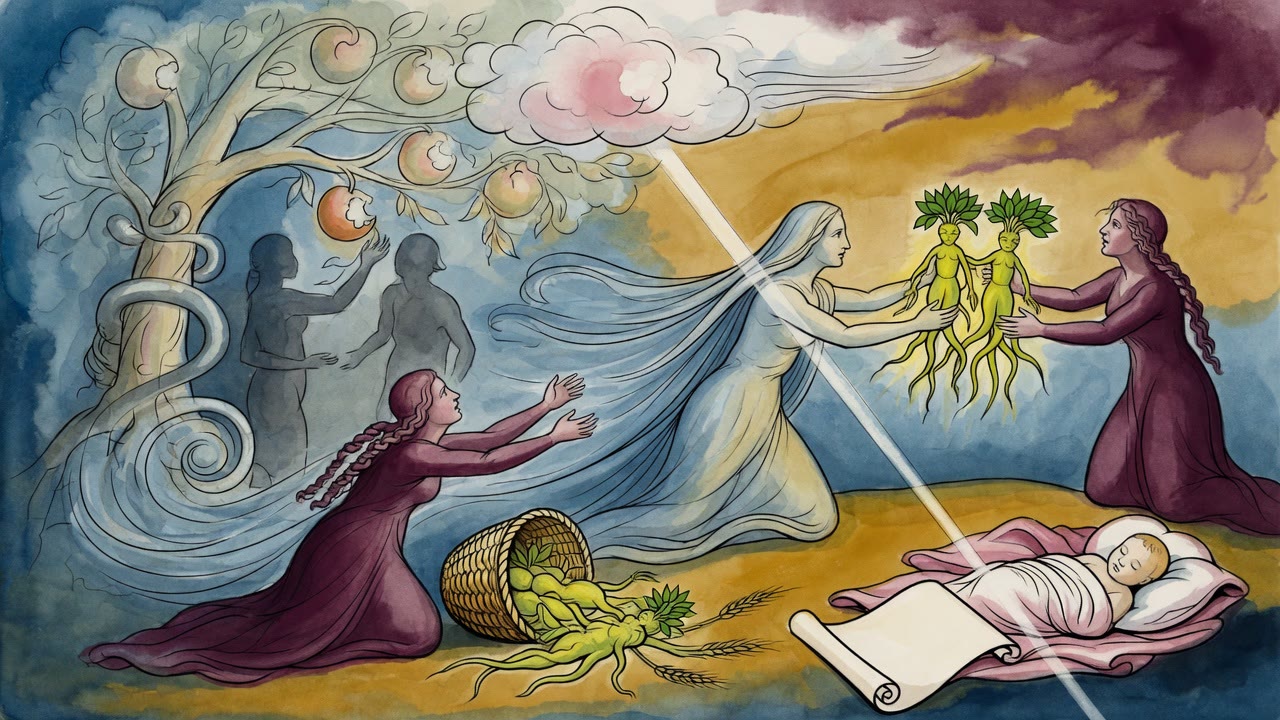
Leah Cried Her Eyes Out Rather Than Marry Esau
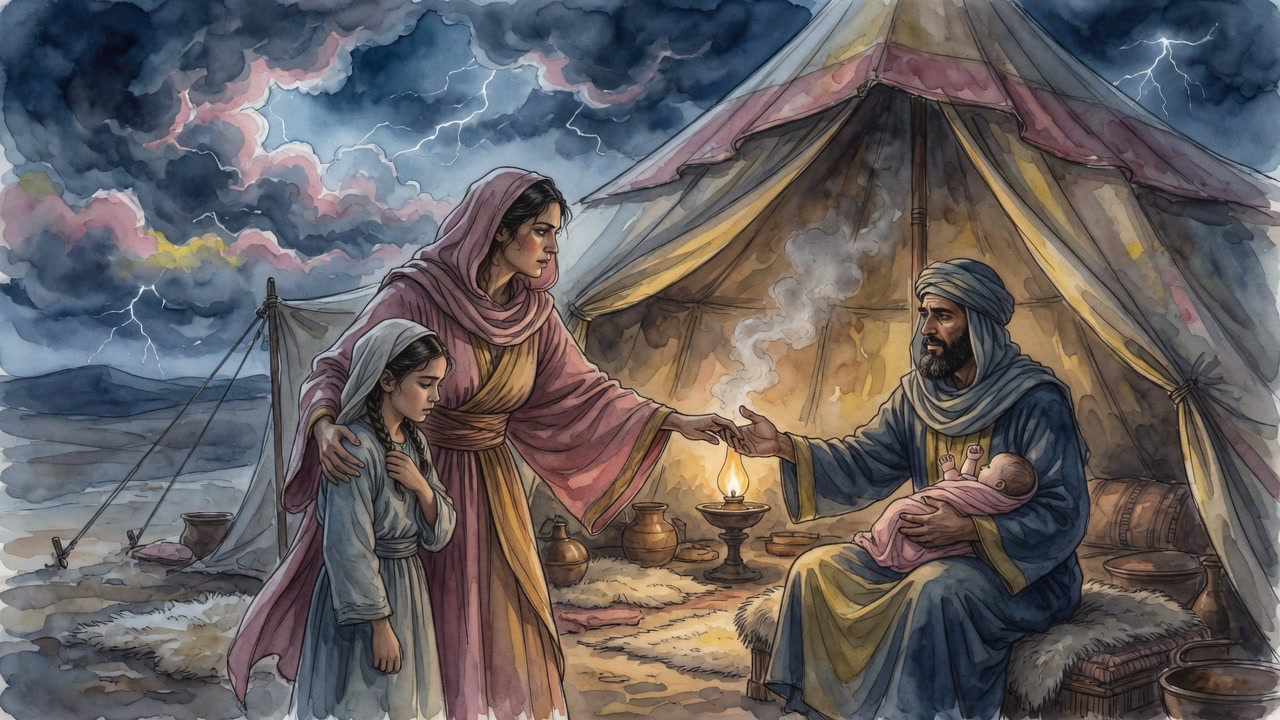
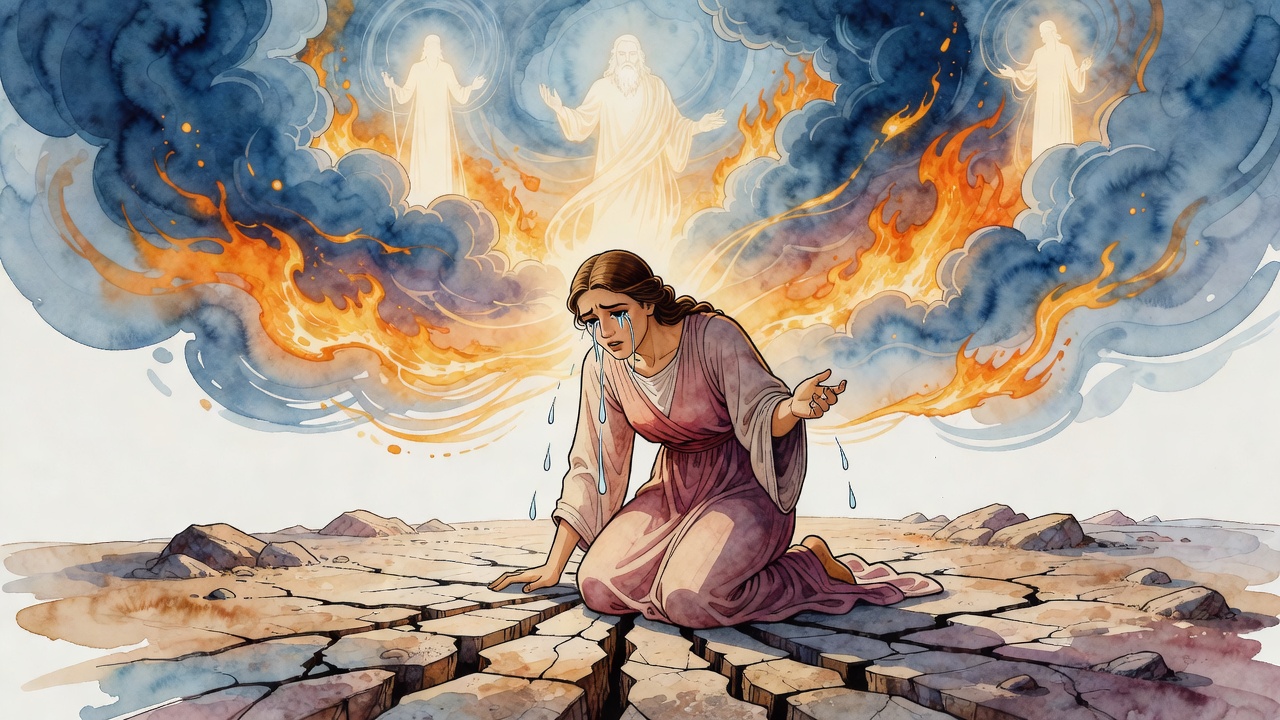
Two sisters, two brothers, and everyone in Haran knew which went with which. Leah heard what her half of the bargain was like and started weeping.
Table of Contents
 Click for full size
What the Travelers Said at the Crossroads
Haran sat on the road between Canaan and the rivers, so everyone passed through it eventually, and everyone talked while their animals drank.
What they were saying that season was arithmetic. Rebekah had two sons. Laban had two daughters. The older to the older, the younger to the younger. It was tidy enough that nobody bothered to argue with it, and it meant that Leah, who was the elder, belonged to Esau.
Then they said what Esau was. He had sold his birthright for a bowl of food. He had married Hittite women and made his parents sick over it. He hunted, he ate, he took what the day handed him.
Leah went home and started crying and did not stop for years. Not the crying of a bad afternoon. She wept at the door until the tears took the lashes off her eyelids, and what was left were the weak eyes she would be known by.
The Rule That Was Older Than Laban
Jacob came up the road and worked seven years for the younger sister, and the seven years went by. Then he asked for his wife.
What he got, in the dark, was Leah.
In the morning he went at his father-in-law. "Take your daughter, and I will go. You have done evil to me."
Laban did not flinch, because he had a law in his hand. "It is not done that way in our country, to give the younger before the elder." And it was more than a village custom. It stood written on the tablets in heaven that no man gives the younger daughter before the elder, that the elder goes first and the younger after her, and that guilt is set down against any man who does otherwise. Nobody who does that thing is counted righteous.
So the trick had a warrant. The woman who had wept for years to be let out of one marriage had been carried into another by a rule written before she was born, and the man she got had spent every one of those seven years wanting her sister.
Seven More Years for the Other One
"Let the seven days of this one's wedding feast pass," Laban said, "and I will give you Rachel too, and you will serve me another seven years."
Jacob took the terms. When the seven days of Leah's feast were finished, Laban opened the tent, brought Rachel out, and handed her over, and the second seven years began.
The verdict on the two sisters was delivered plainly and never softened. Jacob loved Rachel more than Leah. Leah's eyes were weak, though her figure was fine. Rachel had beautiful eyes and a beautiful figure both.
Leah had gotten exactly what she had asked heaven for. She lived inside it for the rest of her life.
The Sons She Counted by the Day
She bore. That was the one thing the house could not take from her, and the household kept the record like a ledger, down to the day of the month and the year of the week.
Reuben. Simeon. Levi. Judah. Sons who would carry the priesthood and the kings, born to the wife nobody had wanted to marry.
And then she stopped.
Leah went barren in a tent where her sister was still bearing, and she did the thing she had watched Rachel do. She took her handmaid Zilpah and gave her to Jacob. Zilpah conceived, and bore, and Leah named the boy Gad, on the twelfth day of the eighth month in the third year of that week. She went back and did it again, and Asher was born on the second day of the eleventh month.
Then Jacob came in to Leah herself, and she conceived and bore Issachar on the fourth day of the fifth month, and she handed him to a nurse.
The Eyes
She got the tent she had wept for and the sons the covenant would run through, and she got them by walking into a wedding canopy in the dark and letting a man call her by her sister's name until sunrise.
The record is exact about the births and says almost nothing about the woman. It gives her two lines. Her form was very handsome. Her eyes were weak.
Those were the eyes she had cried out at a door in Haran, back when the only thing she wanted from heaven was a different husband.
← All myths