57 myths · Page 1 of 2
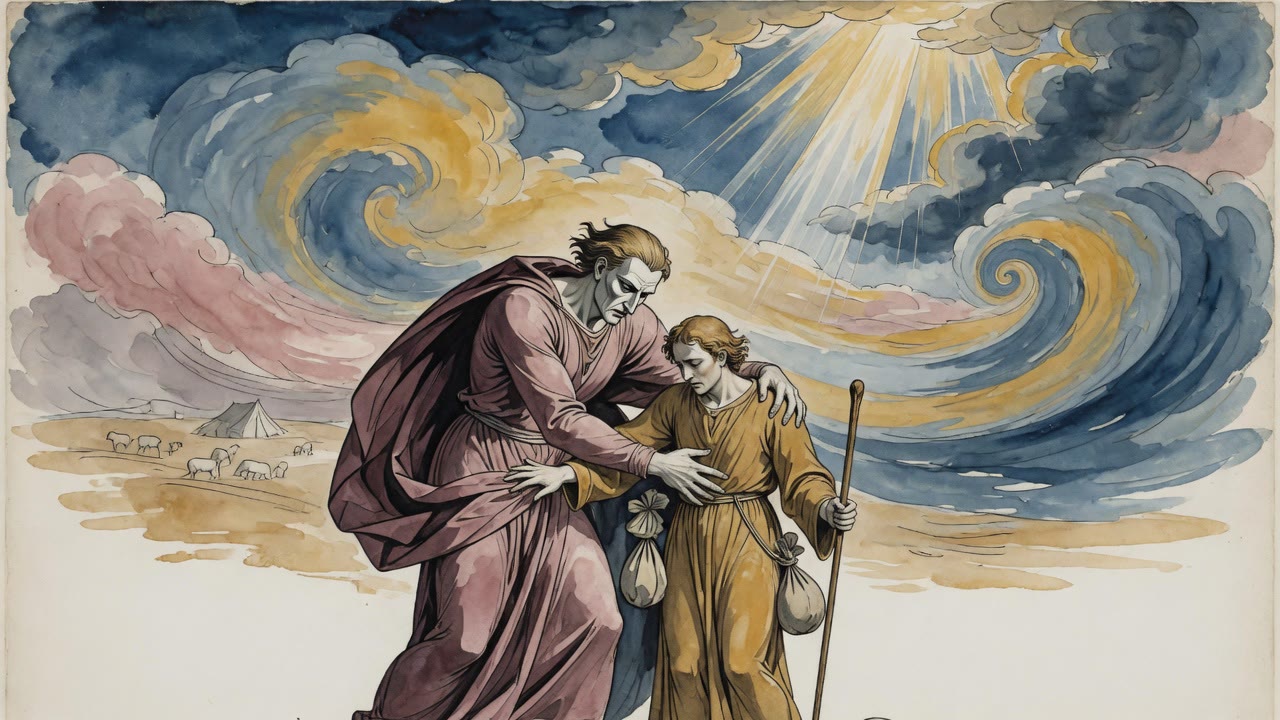
Ten camels had come with Eliezer a generation earlier. Laban ran out expecting the same weight. His hands found a staff.
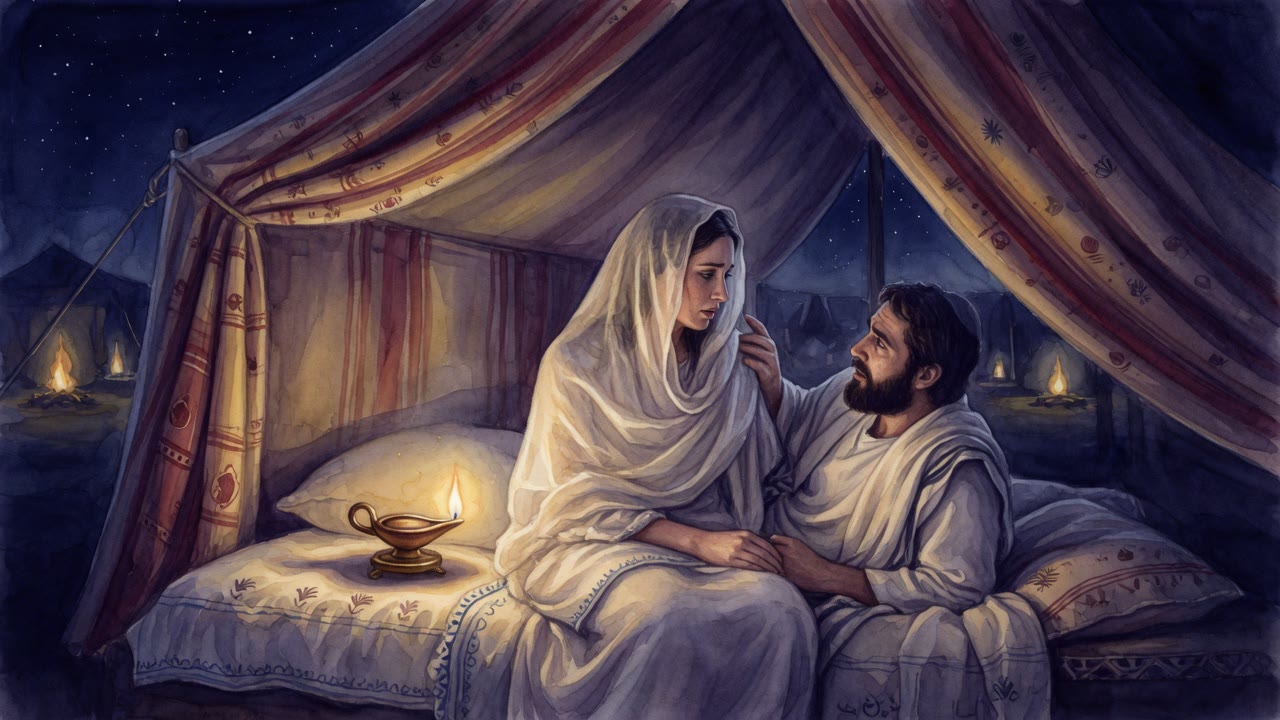
Laban spent the town's pledges on wine and meat. All day the guests sang two words into Jacob's face. He smiled and never heard them.
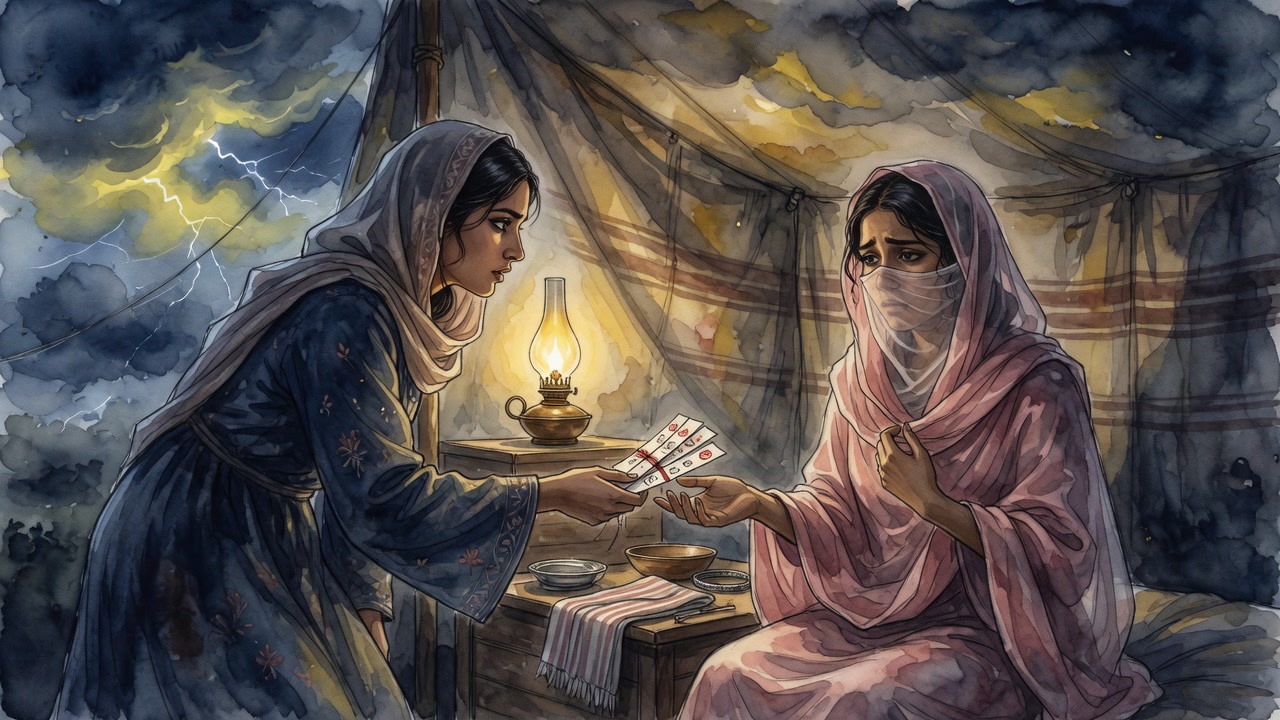
Jacob gave Rachel secret signs so no veil could fool him. Then Laban bought a town's silence, and Rachel handed the signs to Leah.
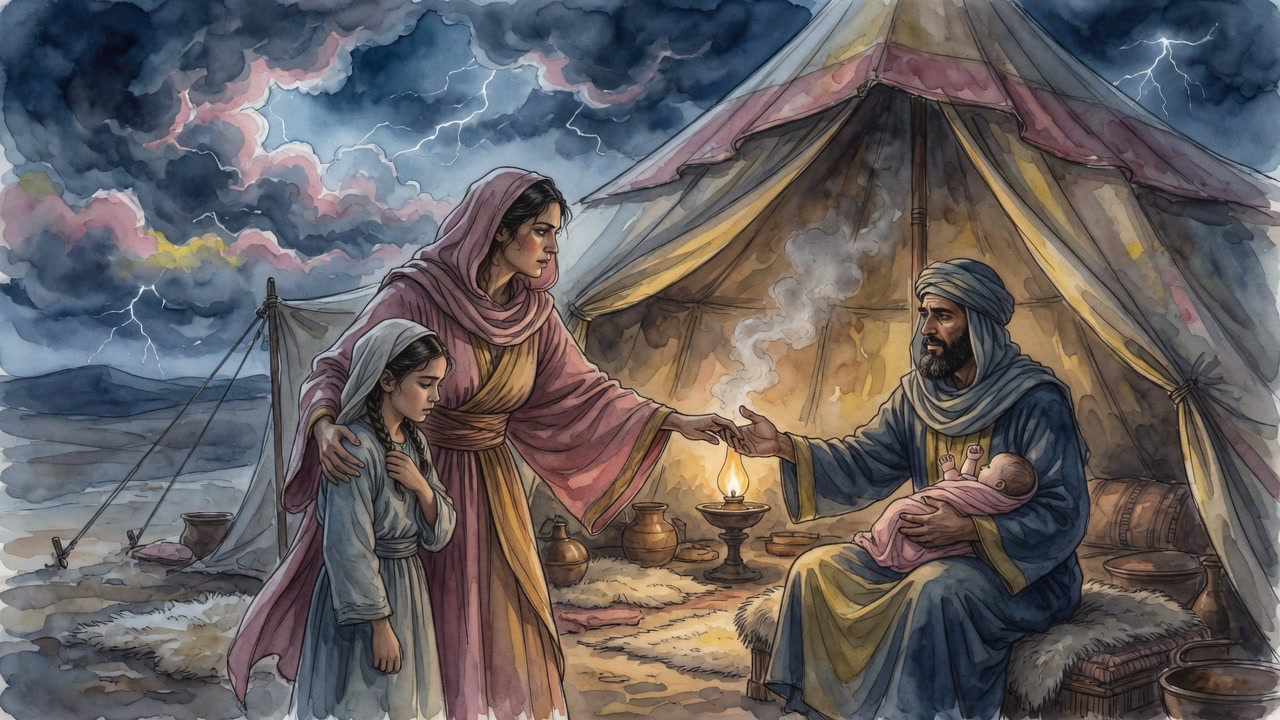
When Leah gave her handmaid Zilpah to Jacob and the child was born, she chose a name pointing forward to a prophet not yet born for another thousand years.
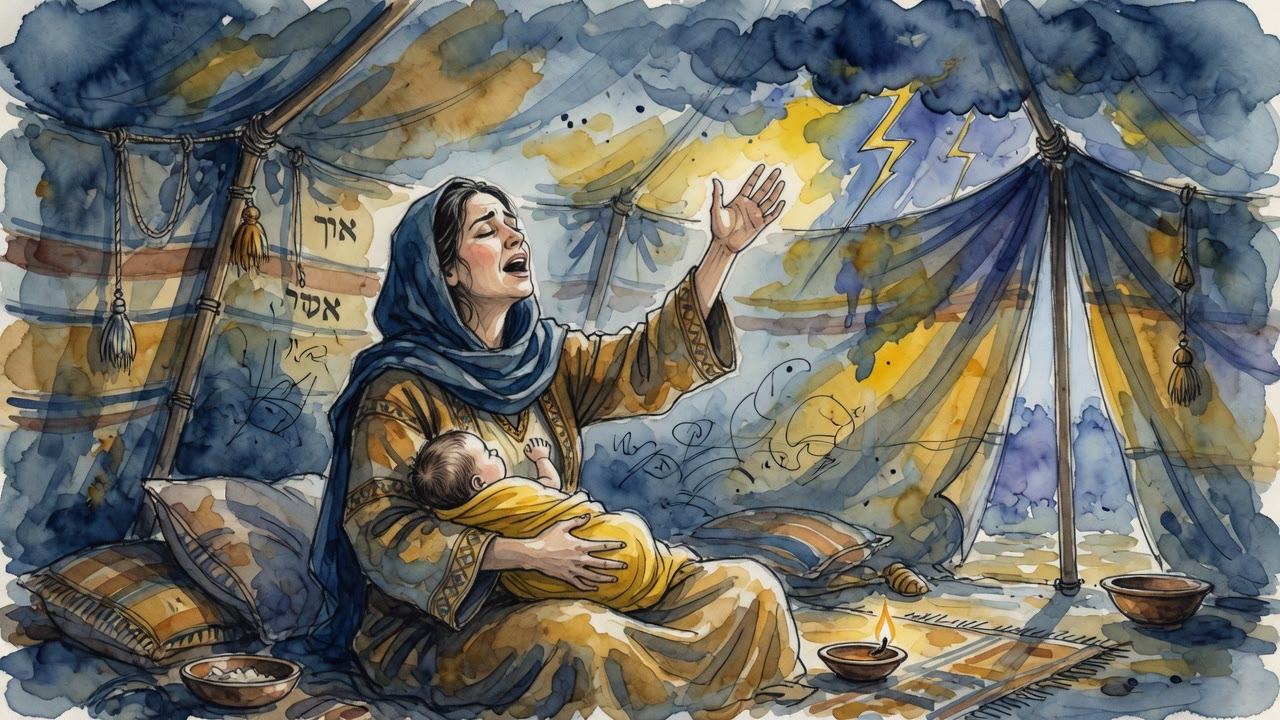
Leah holds Zilpah's newborn son, names him Asher, praise, and says aloud that every mouth will praise her. Why does she dare?
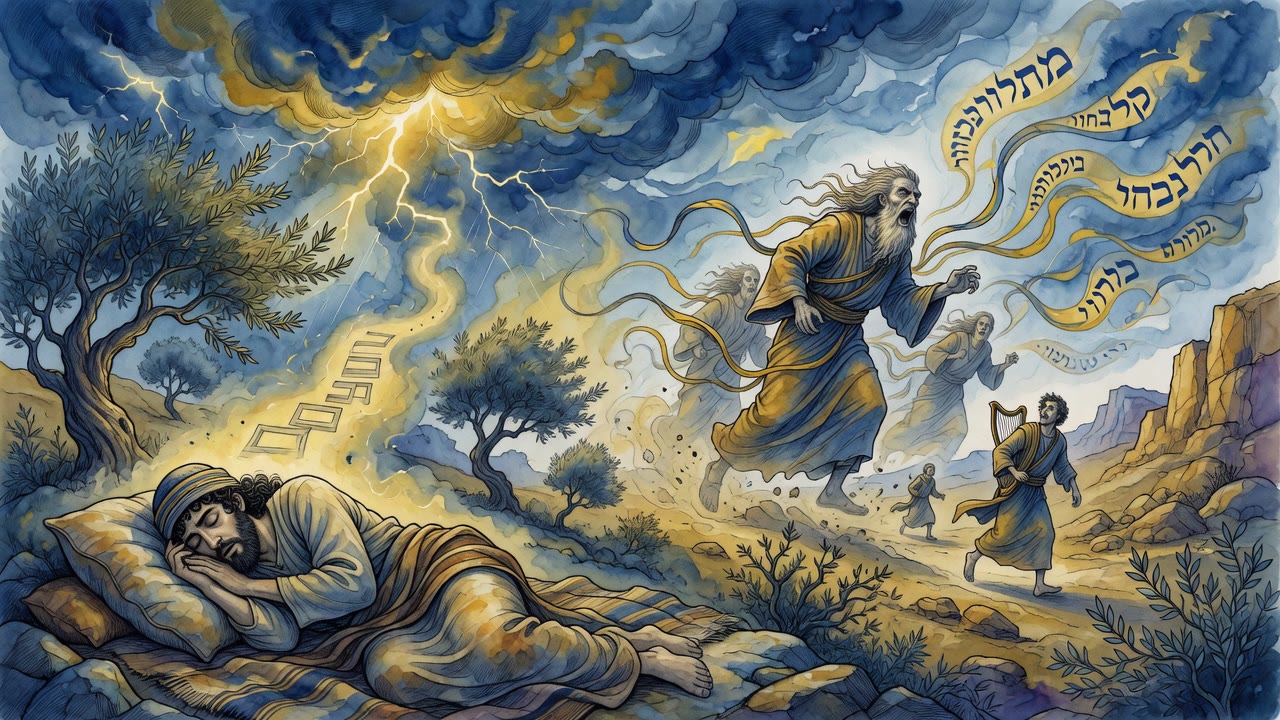
Doeg did not need a blade in Saul's hall. He told the king where David had gone, and the sentence kept traveling after the door shut.
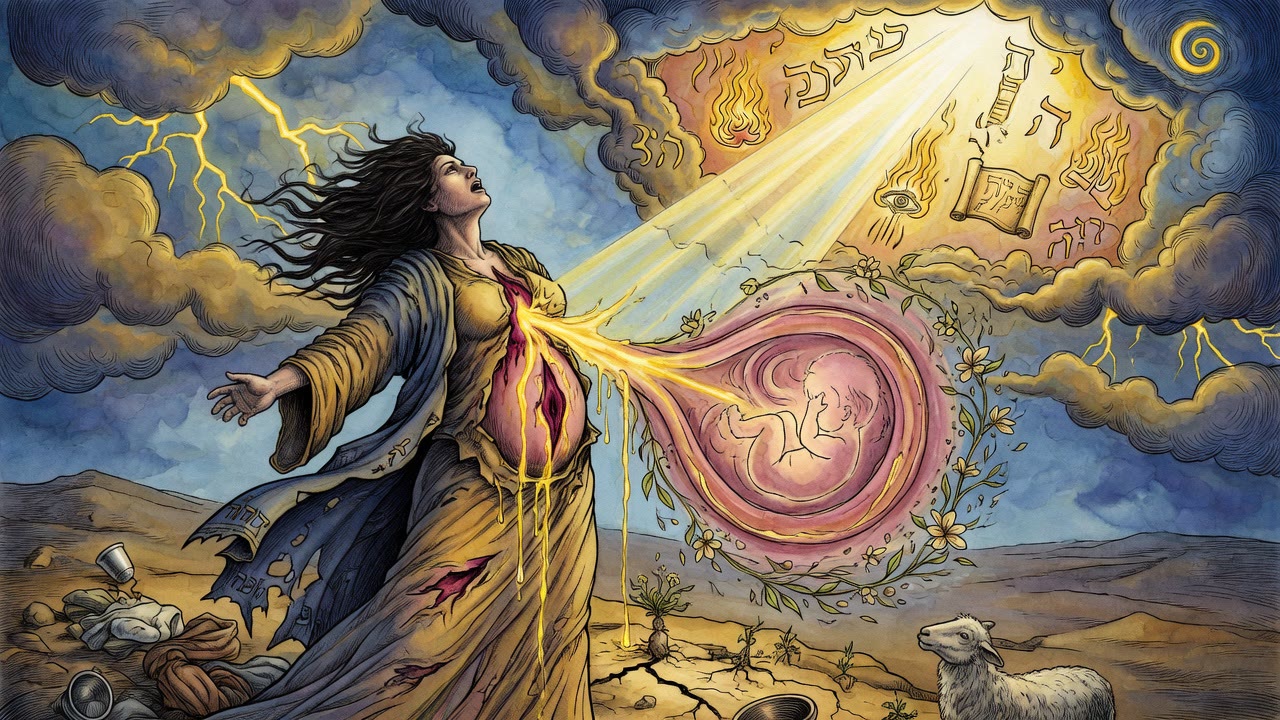
Jacob woke to Leah's face and called her a deceiver. She asked who had worn Esau's name. God looked at the wife the house would not love.
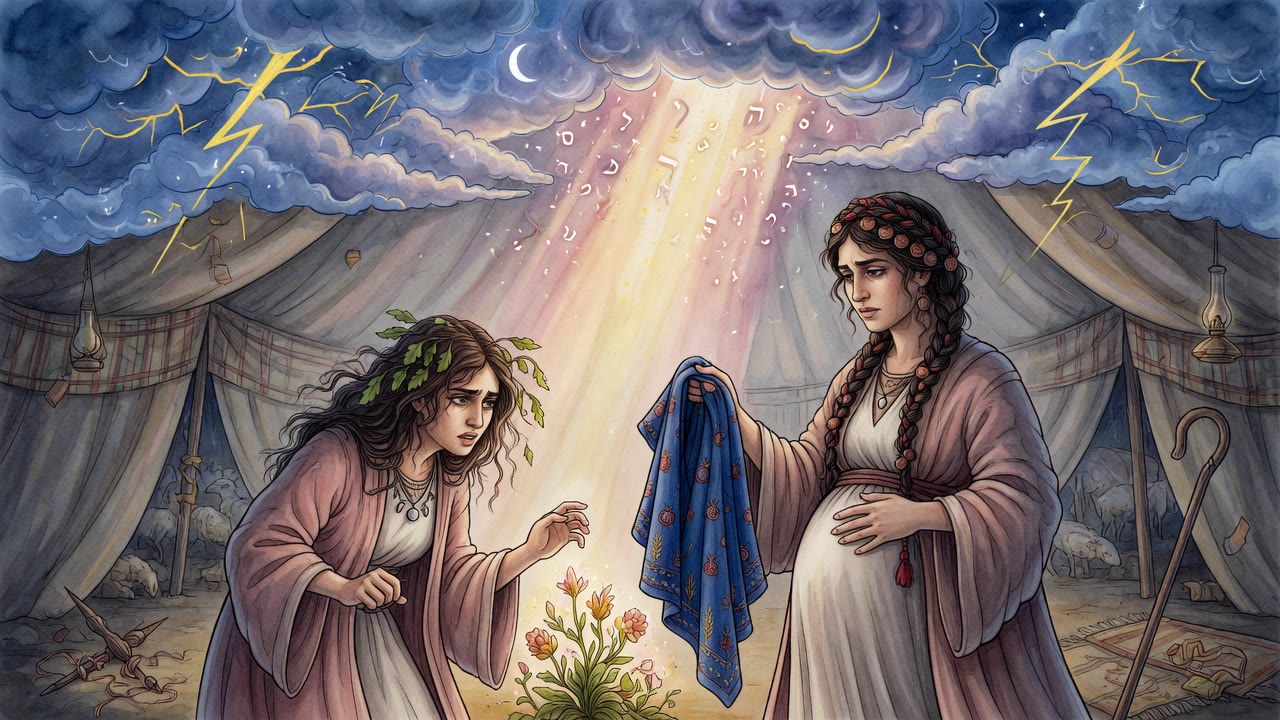
Jacob had given her signs for the dark. She pressed them into Leah's hand so her sister would not be caught. Years later the womb was still closed.
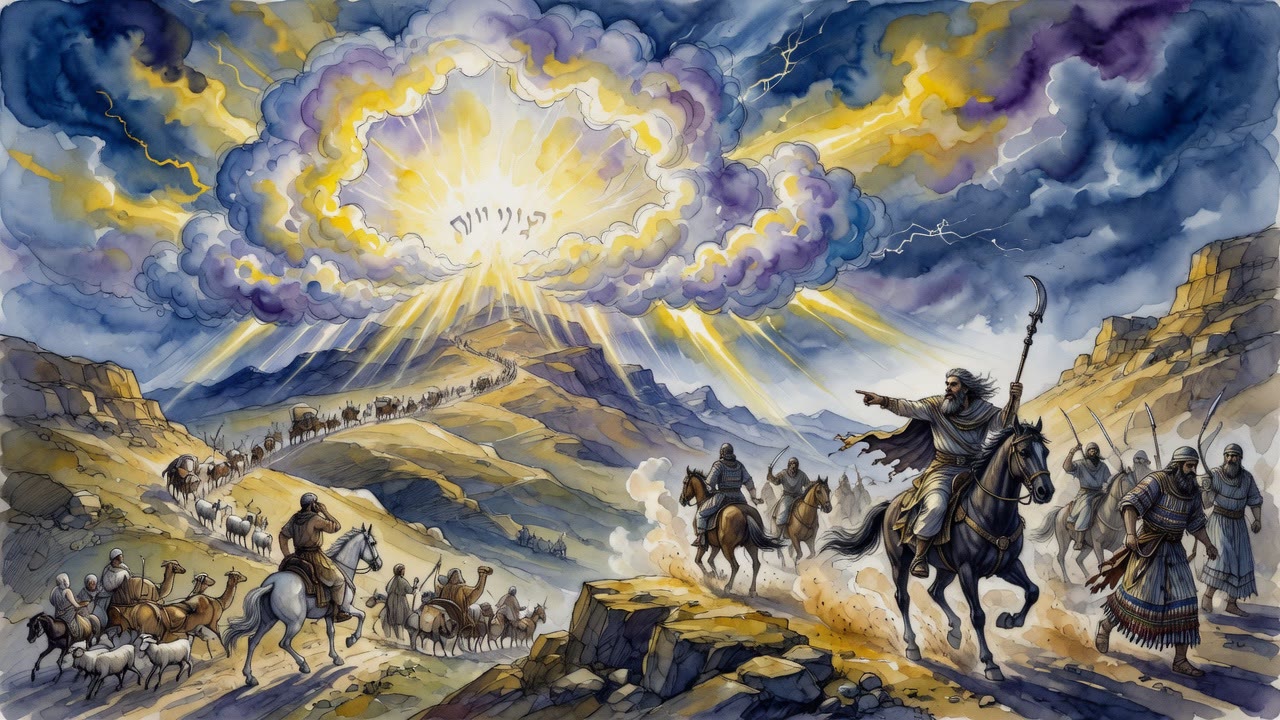
Jacob swore that whoever had taken Laban's gods would not live. He did not know his wife was sitting on them in a camel basket ten feet away.
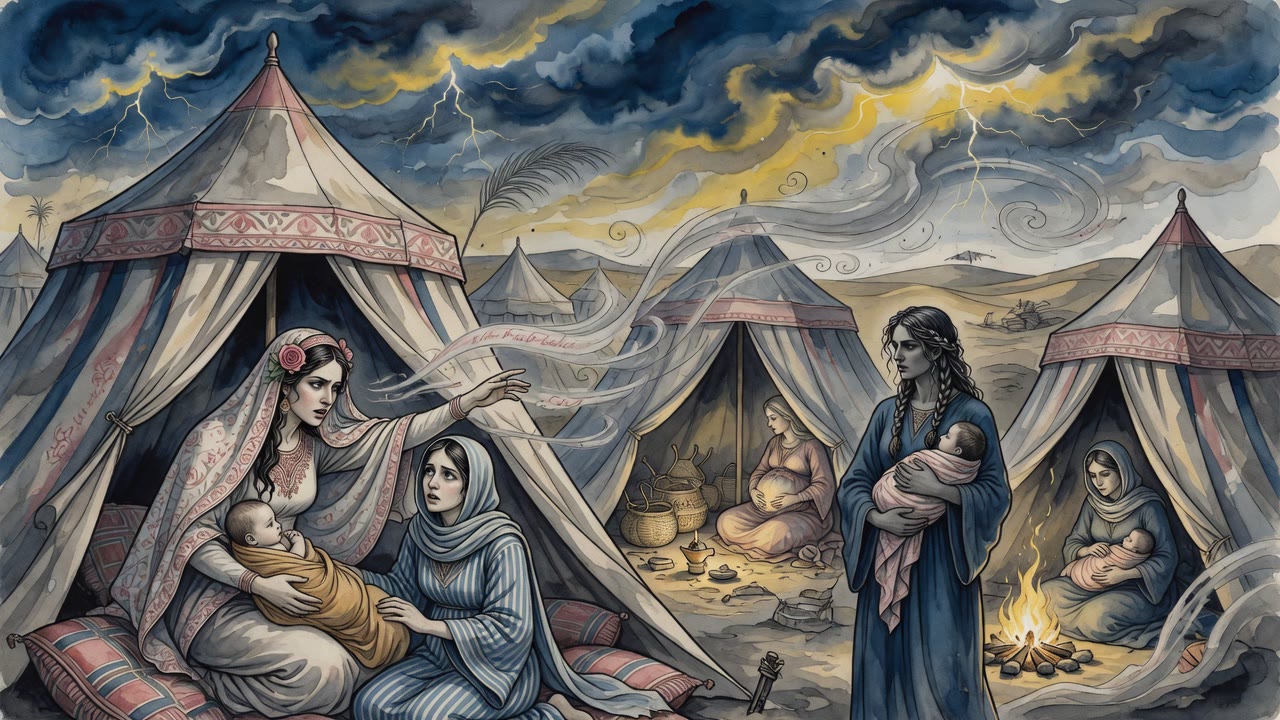
Six sons from Leah, two from each handmaid, and twelve tribes in all. She was carrying the eleventh, and she already knew what one more boy would do to Rachel.
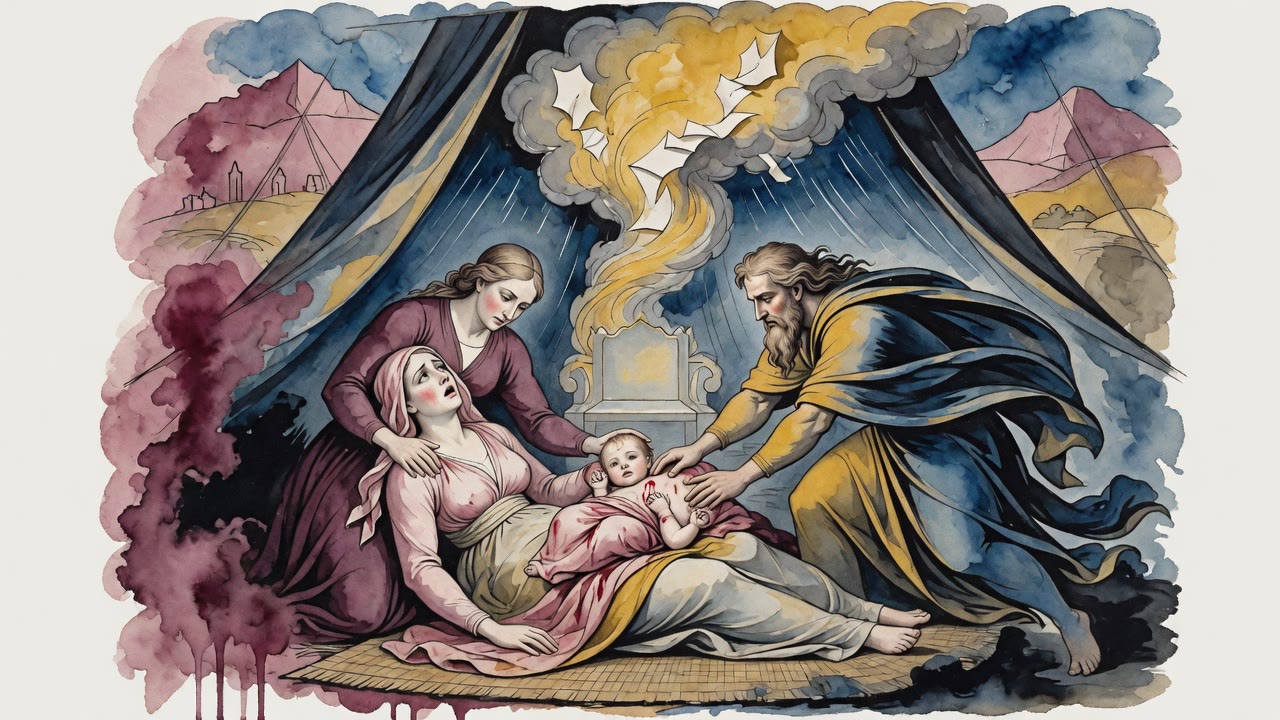
Rachel's last act was to name her son for her own grief. Jacob renamed him immediately. The Torah kept both names and refused to choose between them.
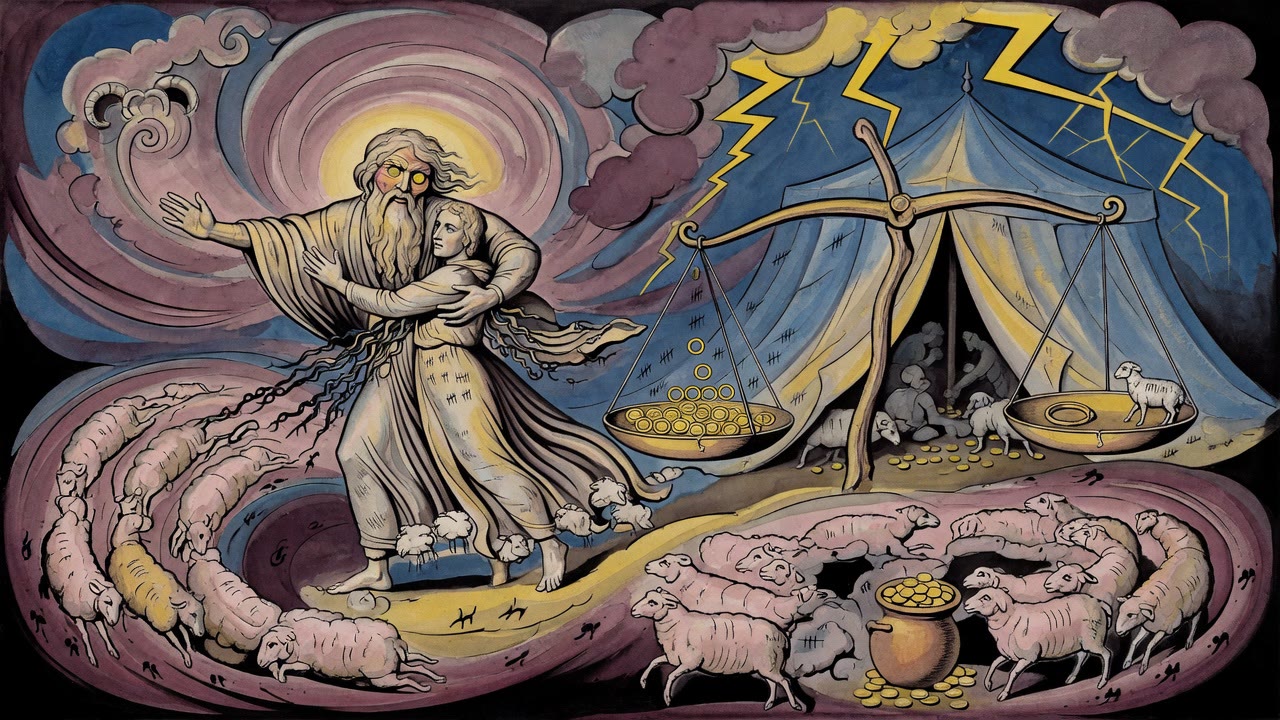
He threw his arms around Jacob's waist, feeling for gold. Then he kissed him, hunting the mouth. Both searches came up empty.
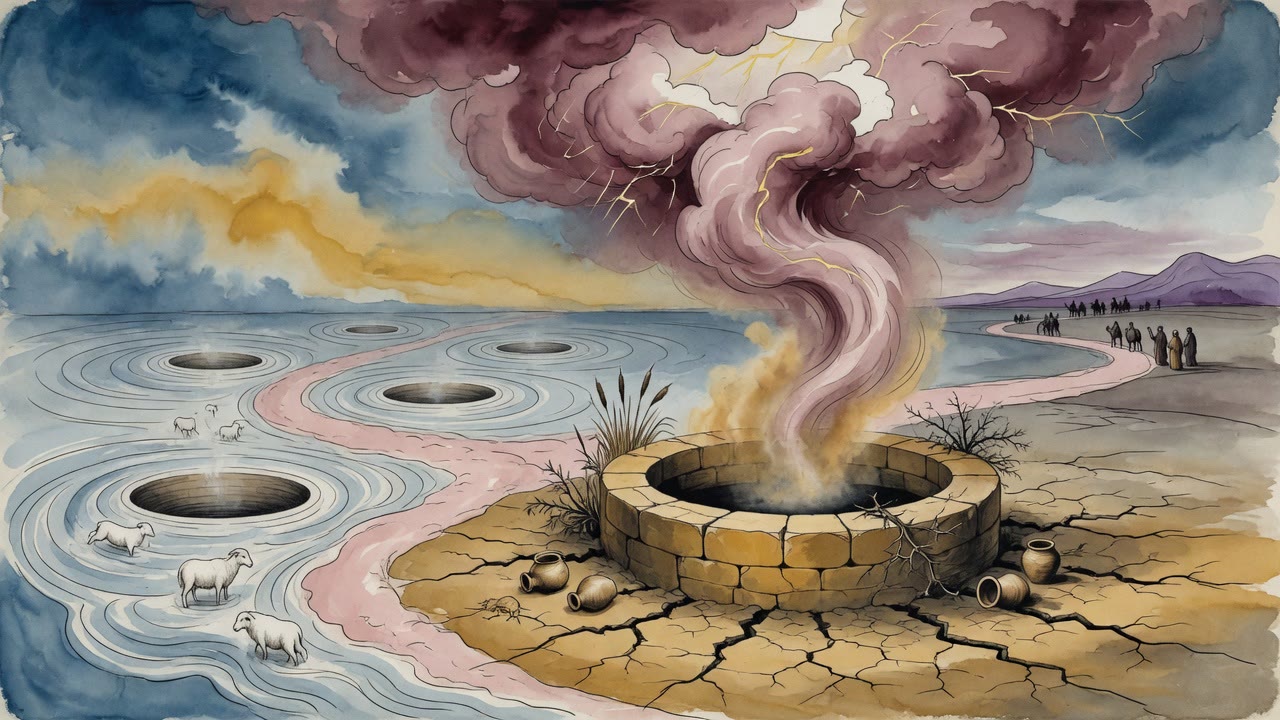
Jacob rolled the stone off Haran's well alone, and the water rose to meet him. Twenty years later Laban found only a dry hole.
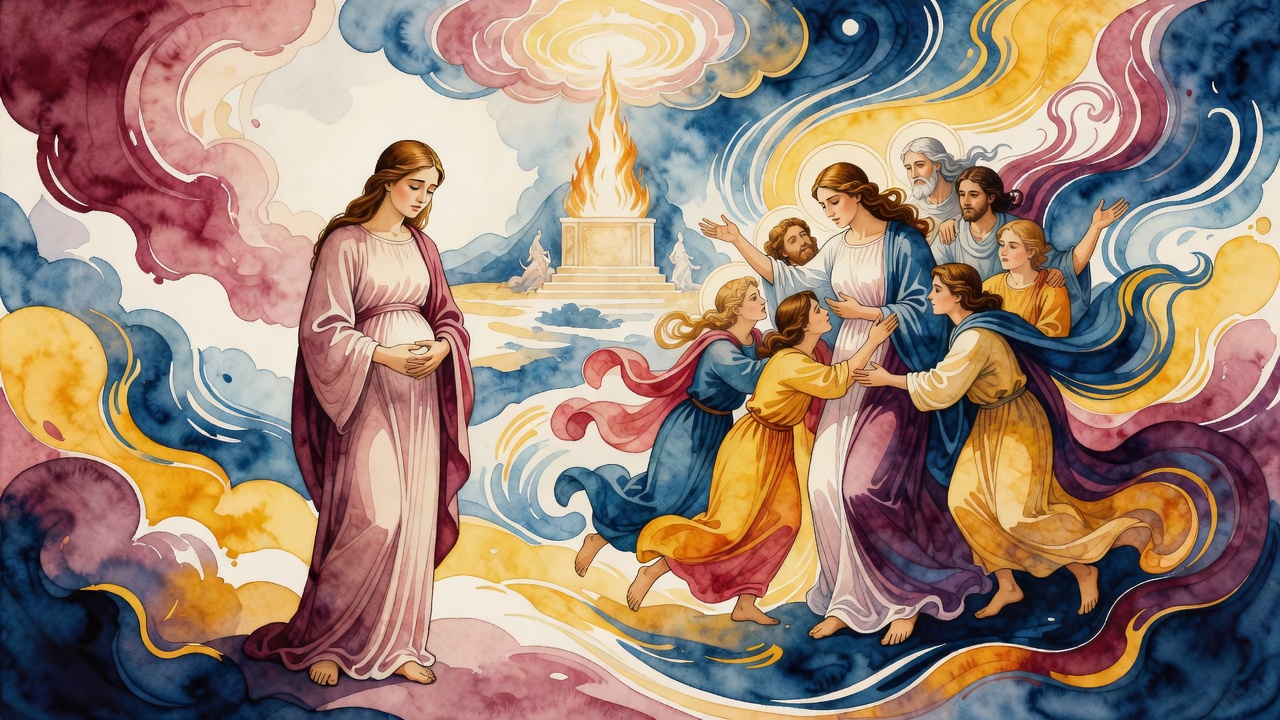
A jar went missing in Jacob's tent. Every face turned toward the wife with no sons. Rachel had lived that look for years.
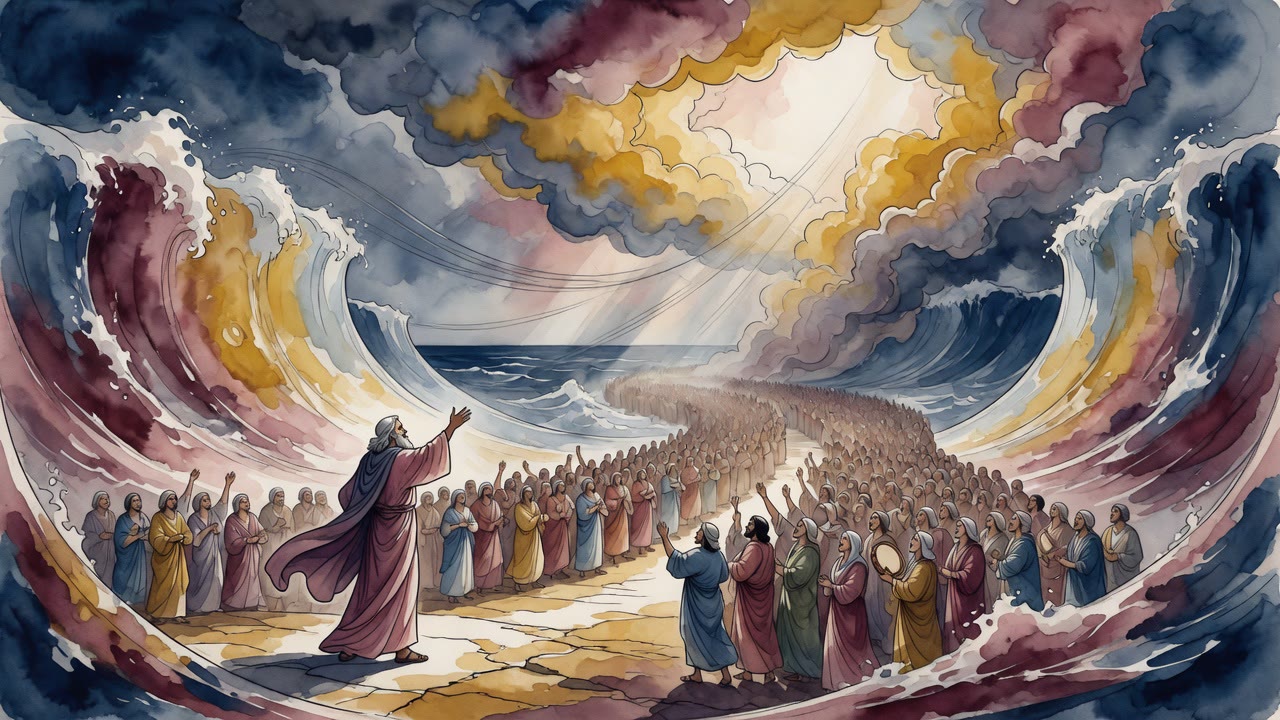
Laban tears across Gilead with supernatural speed, fast enough to catch Jacob and still unable to harm him once God's dream warning lands.
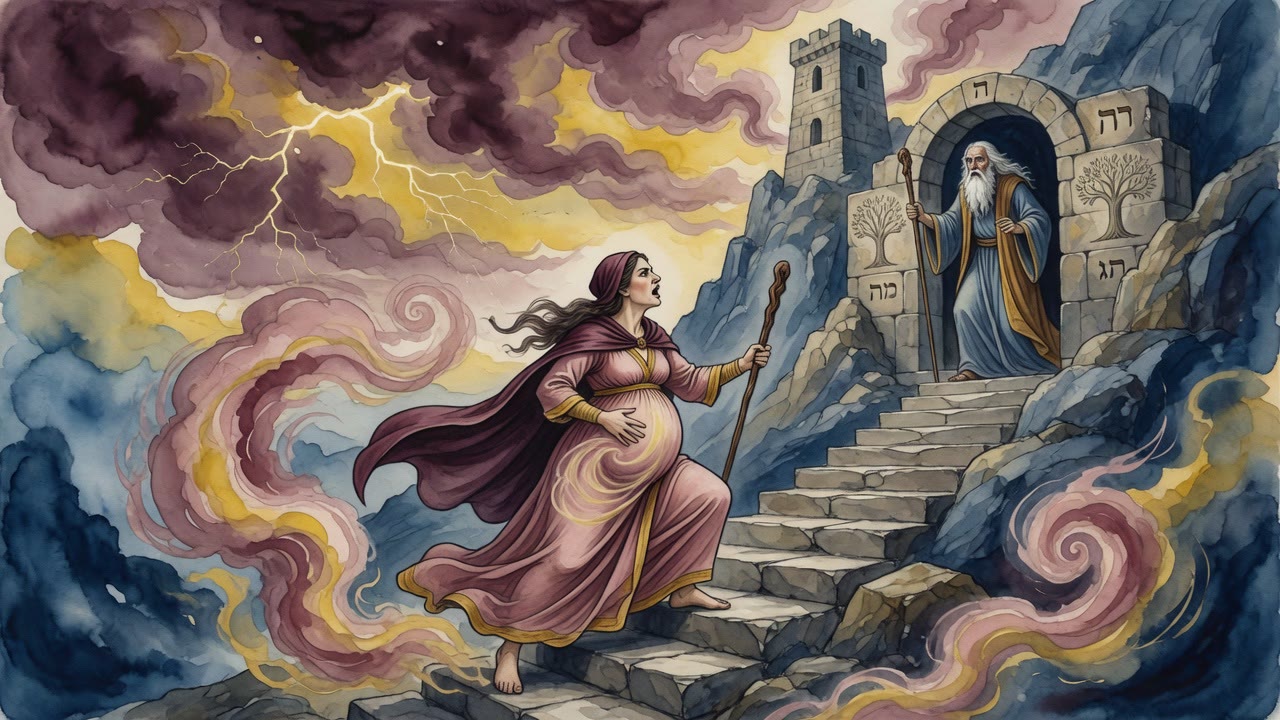
Leah wept over her promised fate as Esau's wife until her eyelashes fell out. What she feared, what she got instead, and what she named her sons.
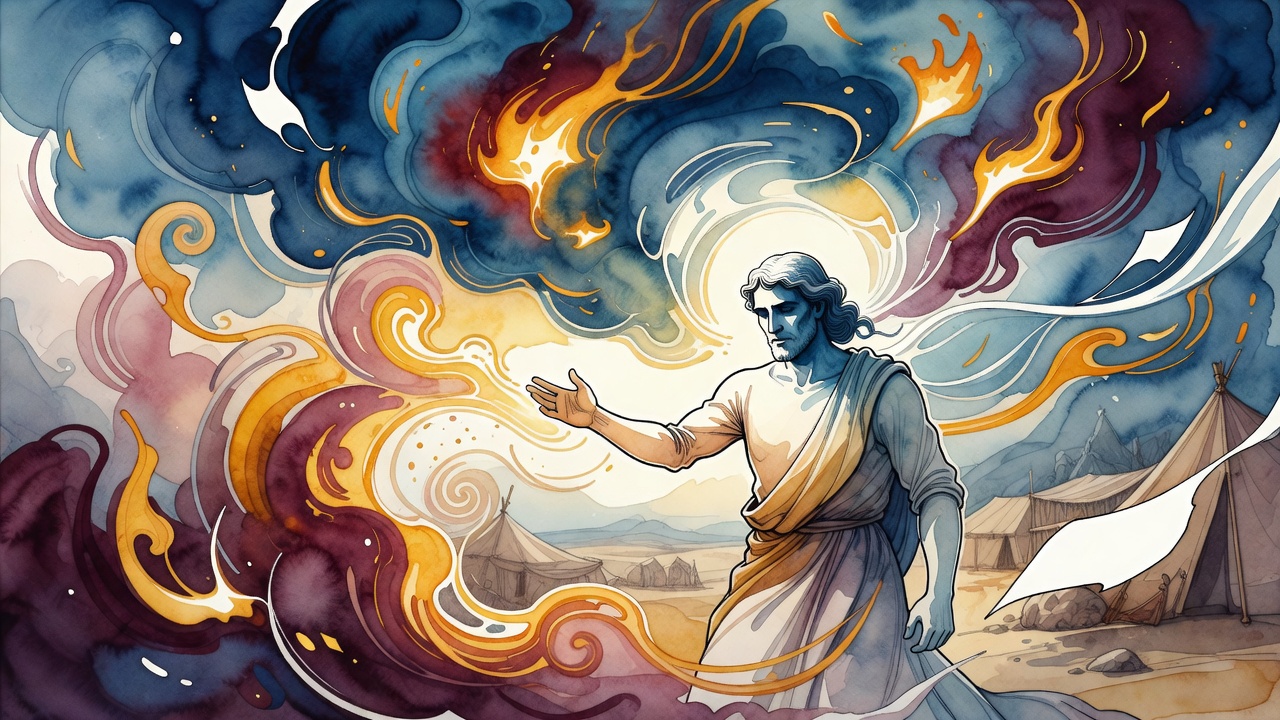
Jacob swore that whoever took Laban's idols would not live. He had no idea it was Rachel. The words were already moving toward their target.
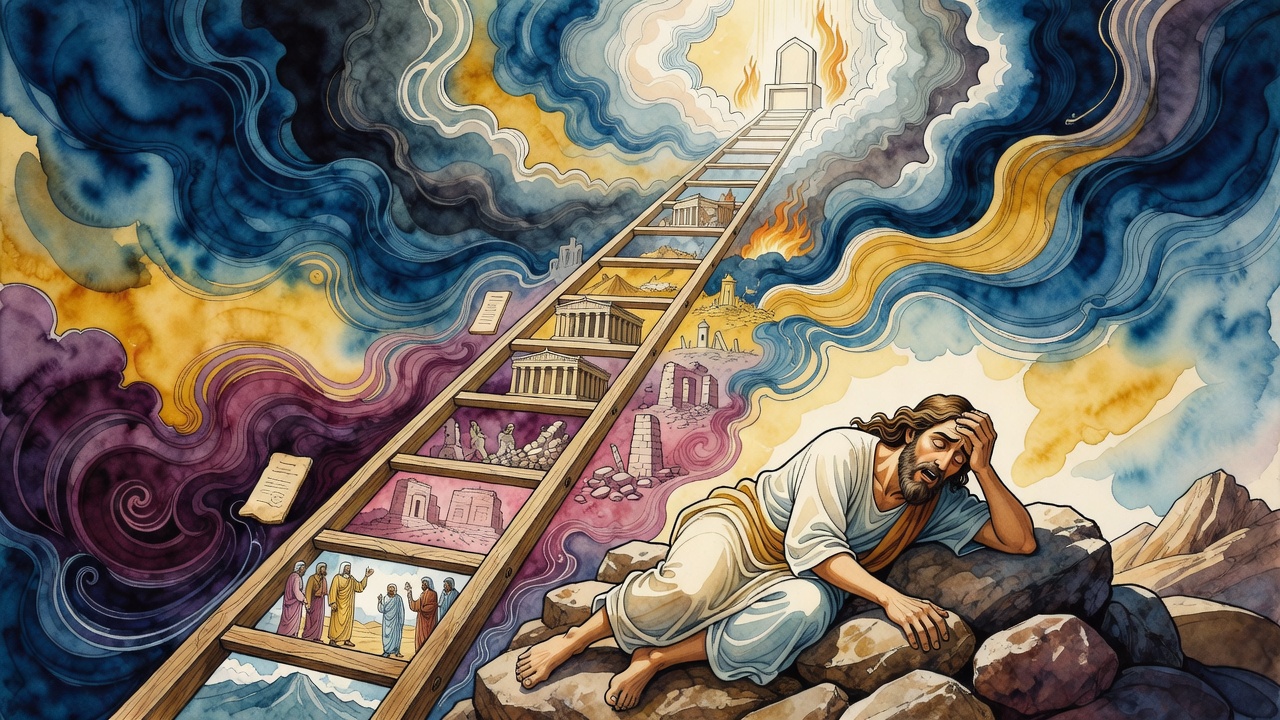
The two angels from Sodom had been shut out of heaven for 138 years. They used Jacob's sleep as the hour they were allowed back up.
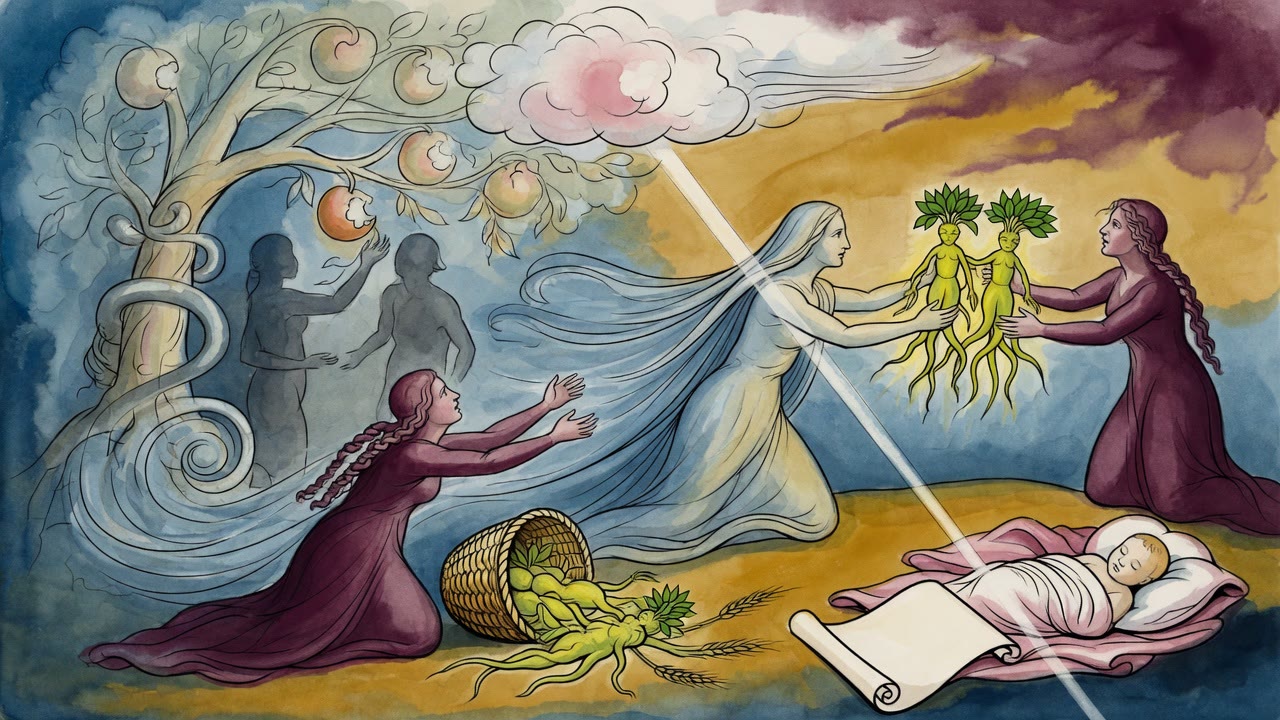
Reuben tied his father's donkey to a mandrake root and walked off. He came back to find the plant torn out of the ground and the donkey dead beside it.
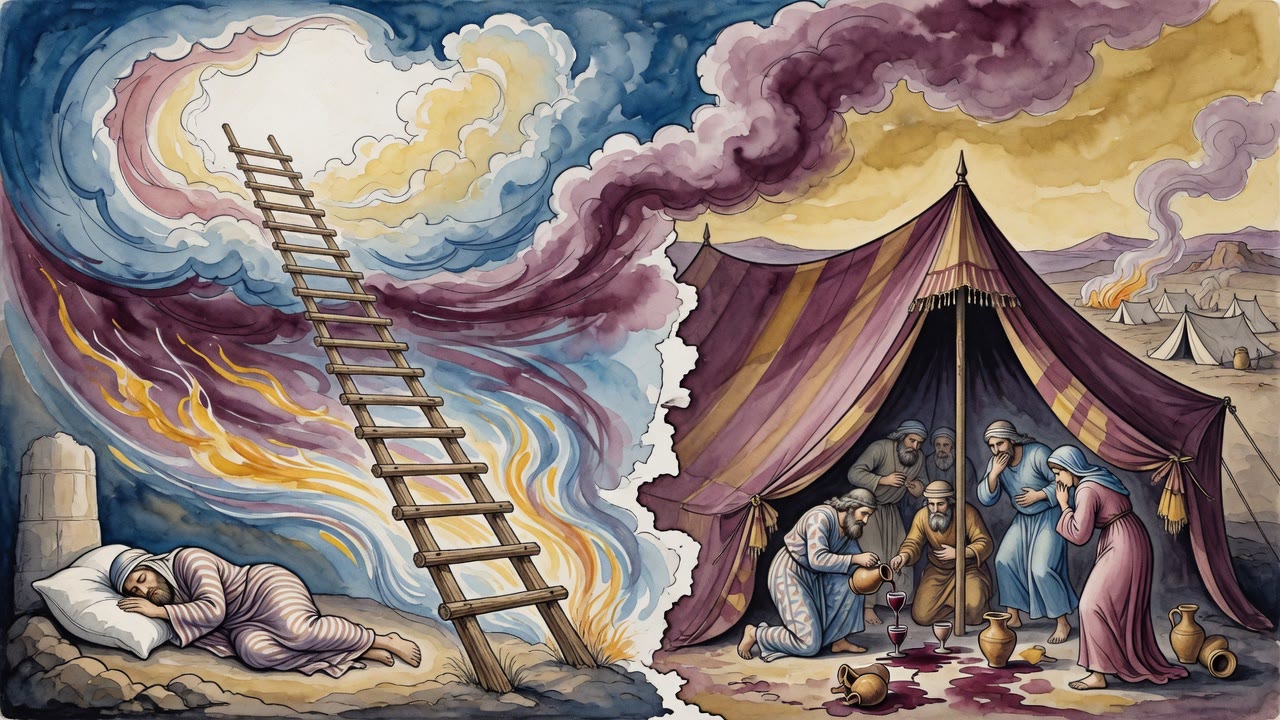
God contracted the daylight to strand Jacob at Mount Moriah. In his sleep the stones quarreled, fused into one, and all of Israel history unrolled before him.
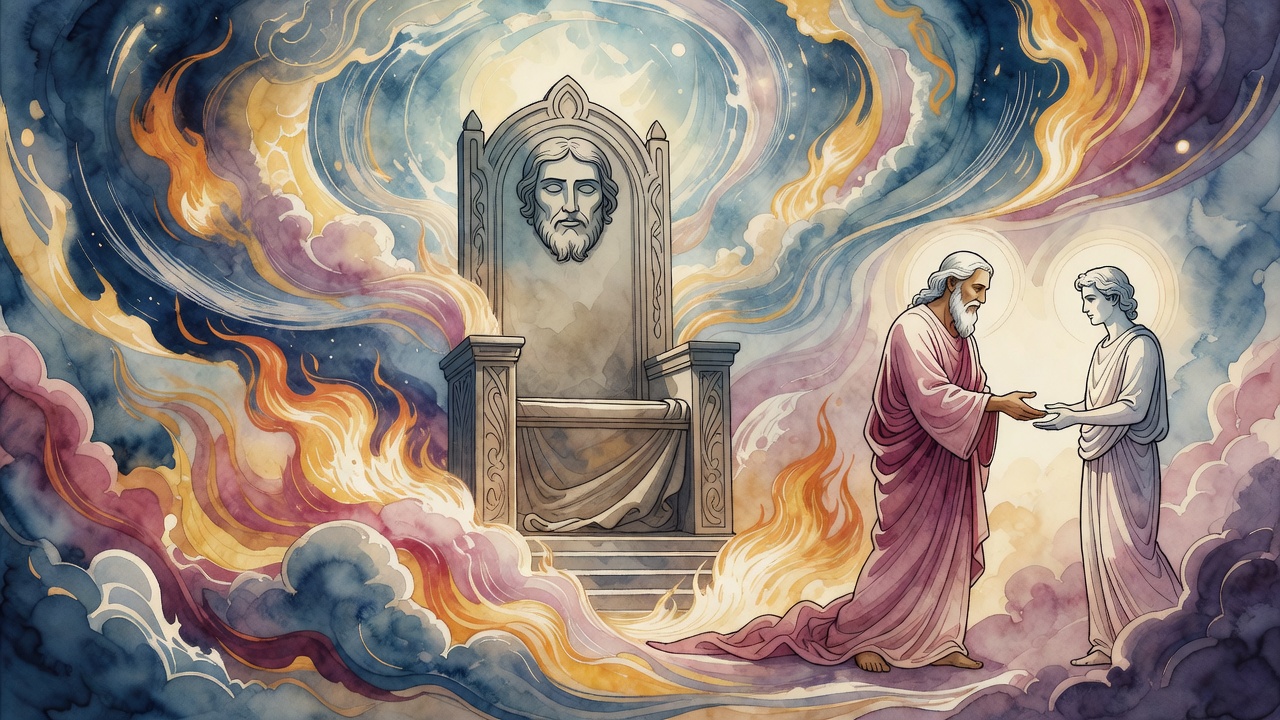
In Adam's vision of the generations, one soul had no years beside its name. Adam had a thousand of his own. He died at nine hundred and thirty.
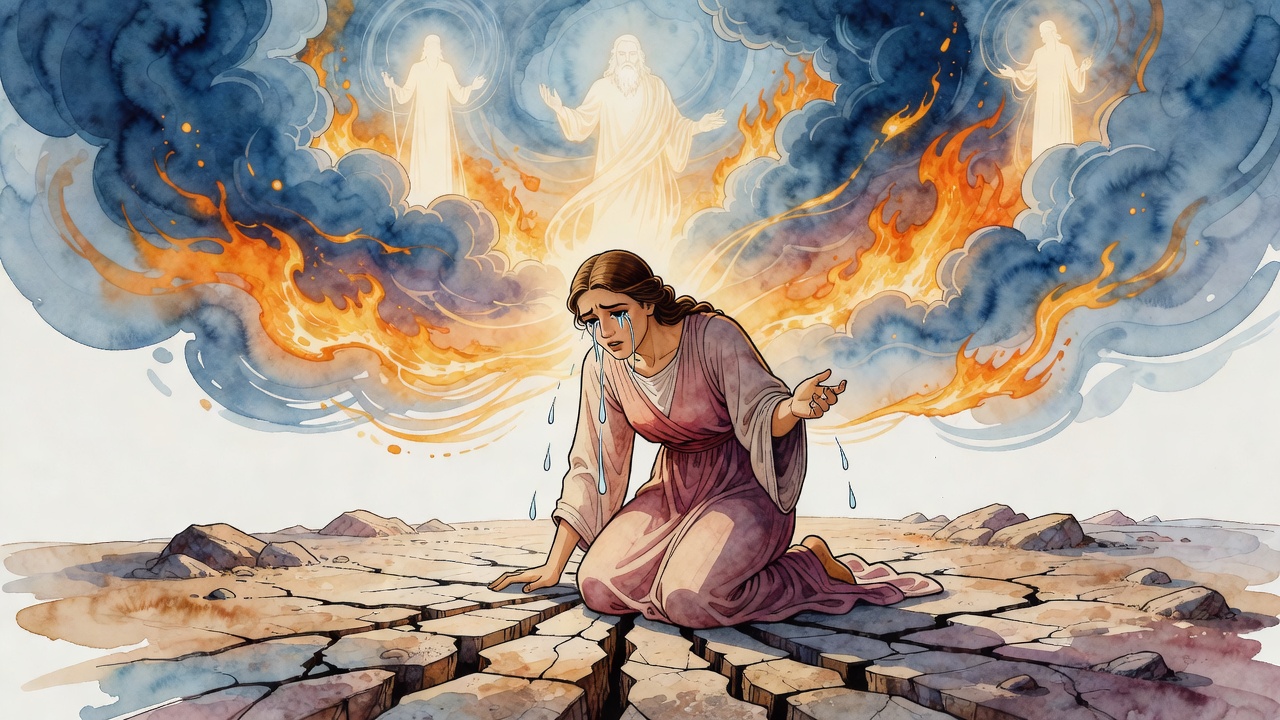
Two sisters, two brothers, and everyone in Haran knew which went with which. Leah heard what her half of the bargain was like and started weeping.
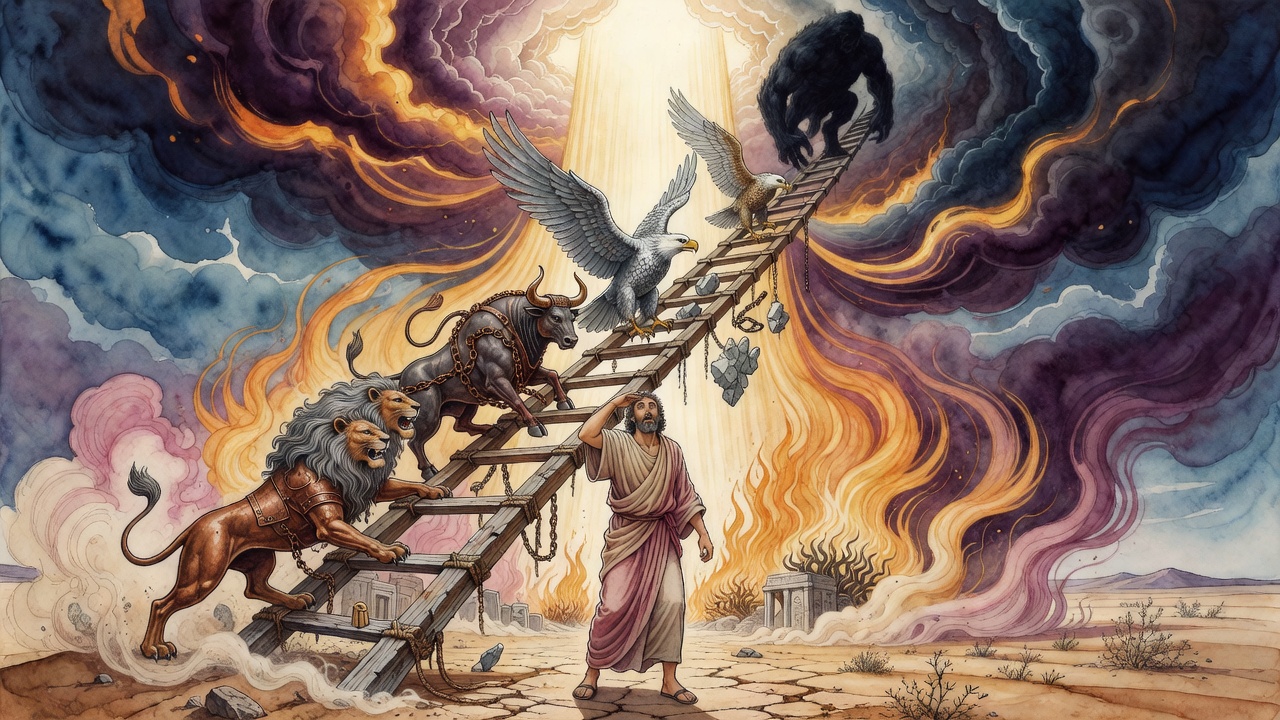
Each empire climbed the ladder and descended. The fourth climbed so high Jacob could no longer see the top and terror seized him until God spoke.
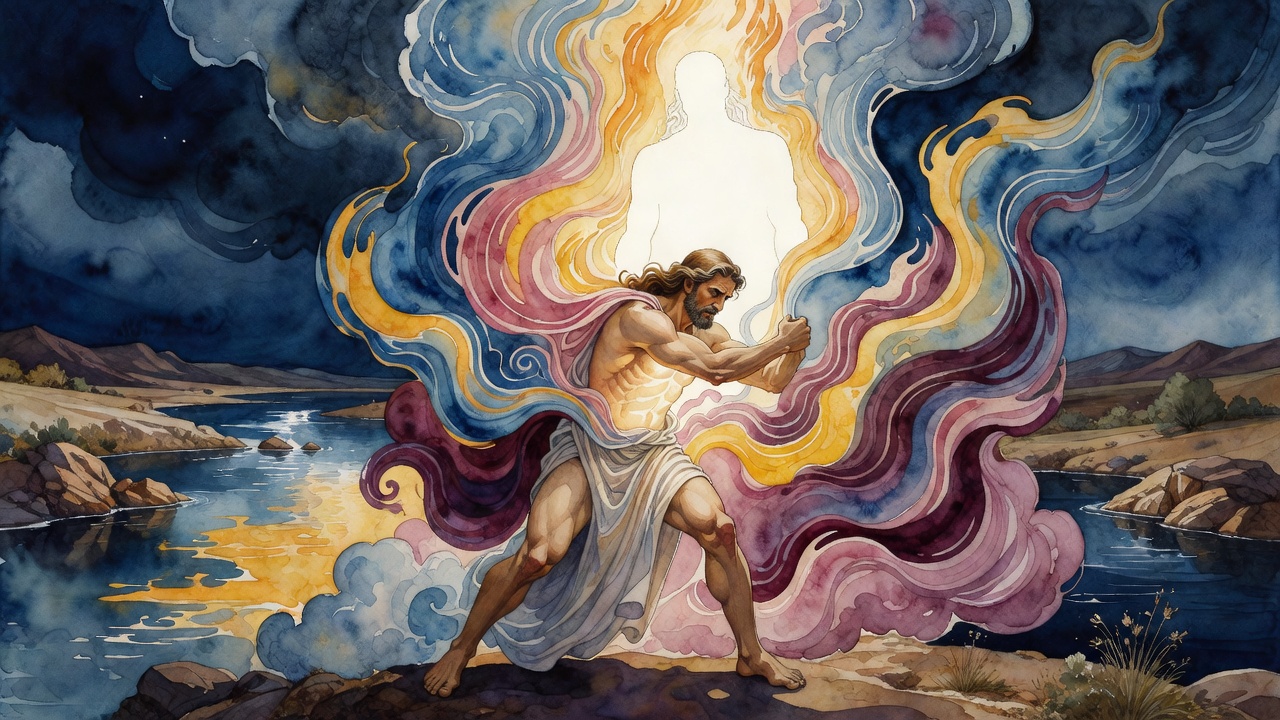
God invited him up the ladder and he said no, because if he climbed he would have to come down again. He did not yet know he had come down once already.
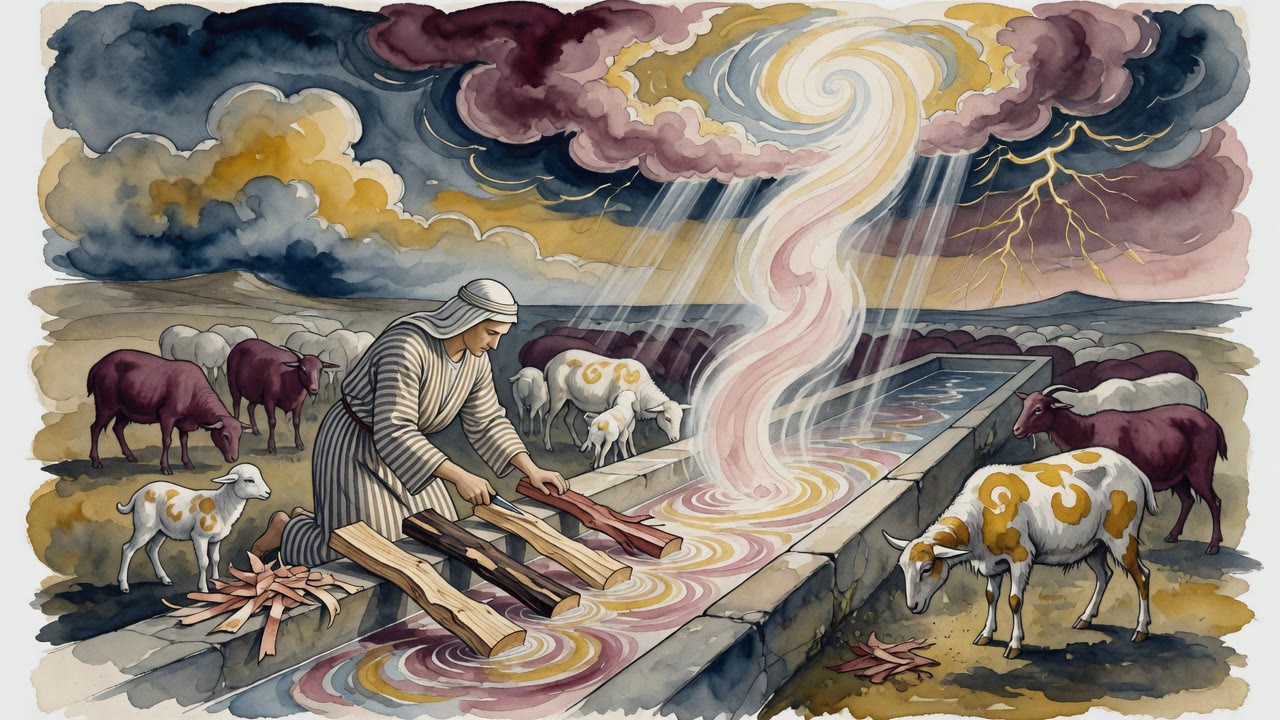
At Laban's troughs with a knife and three kinds of wood, Jacob turns twenty years of cheated wages into the beginning of Israel's herds.
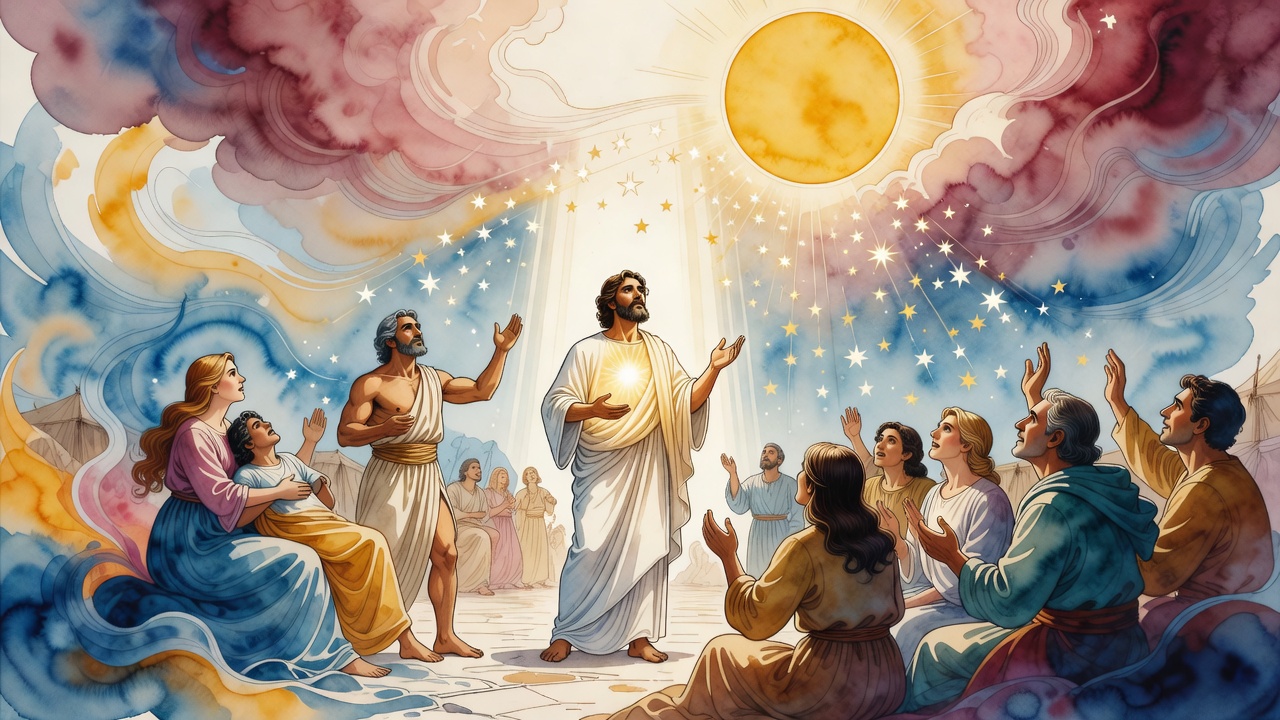
The moment Rachel bears Joseph, Jacob finds courage to leave Laban. Then Joseph dreams of sun and stars bowing, and no one in the family forgets it.
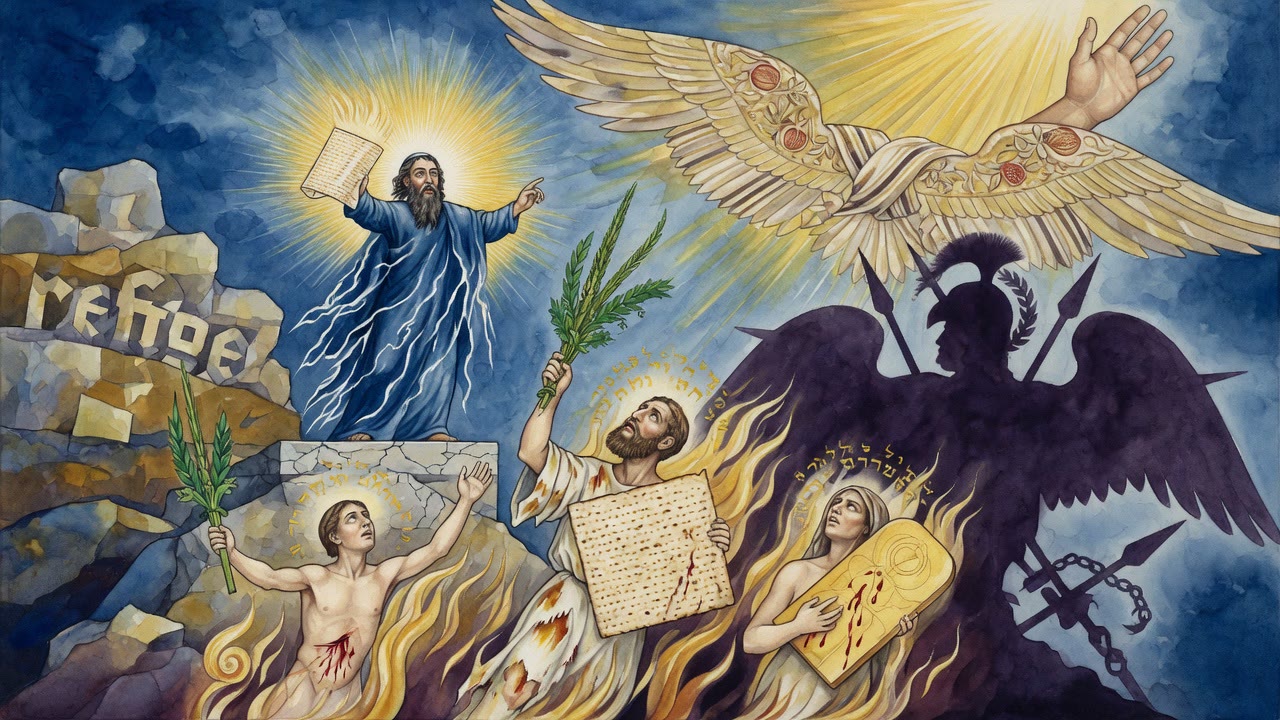
Jacob flees east from Esau, sleeps on the bare ground, and finds the place where a ladder connects earth to heaven in his own dream.
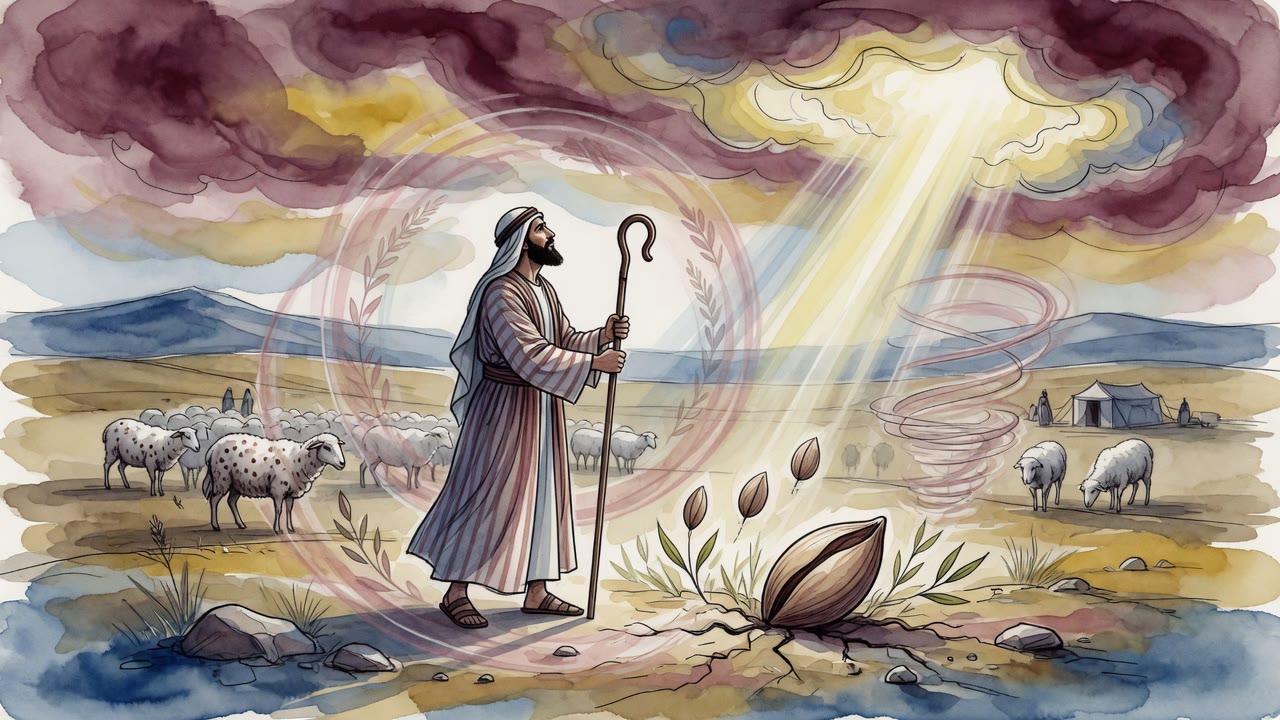
Jacob keeps his word to Laban through a second seven years, and Bereshit Rabbah reads his faithfulness as a seed of the World to Come.
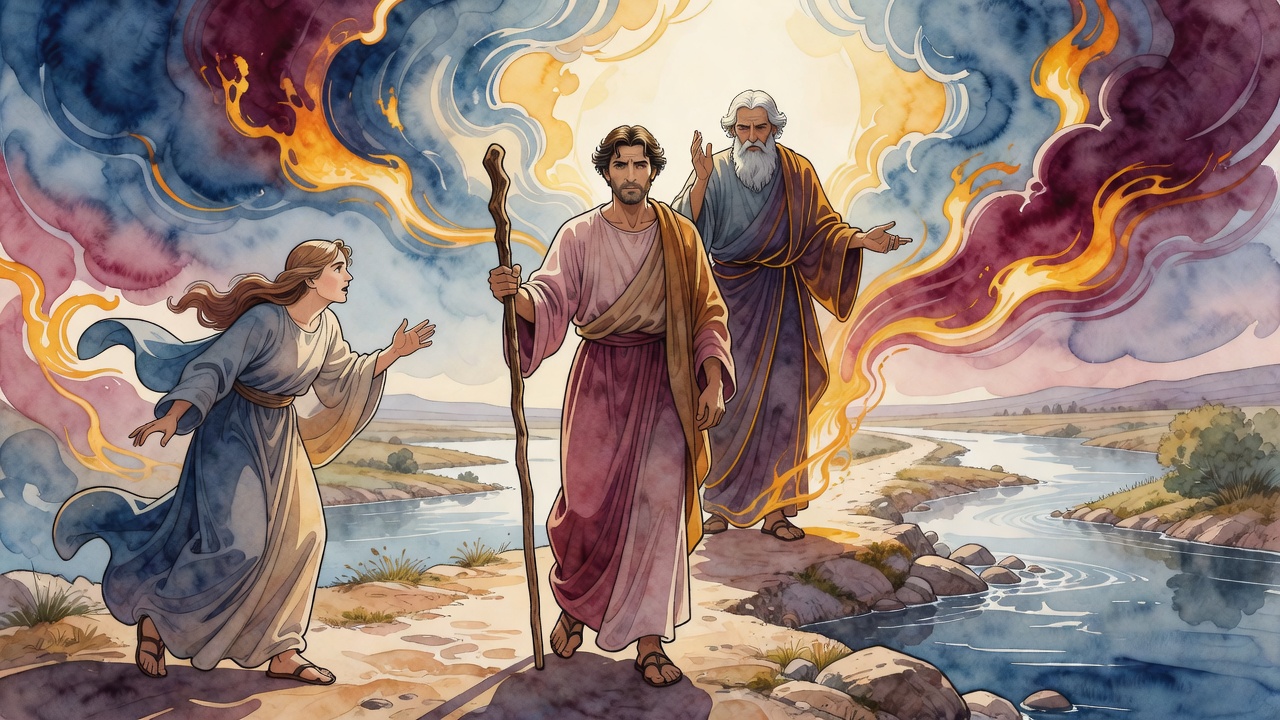
Rebekah had the road ready and the days counted. Jacob would not take a step until Isaac blessed him in the open and named the house he was bound for.
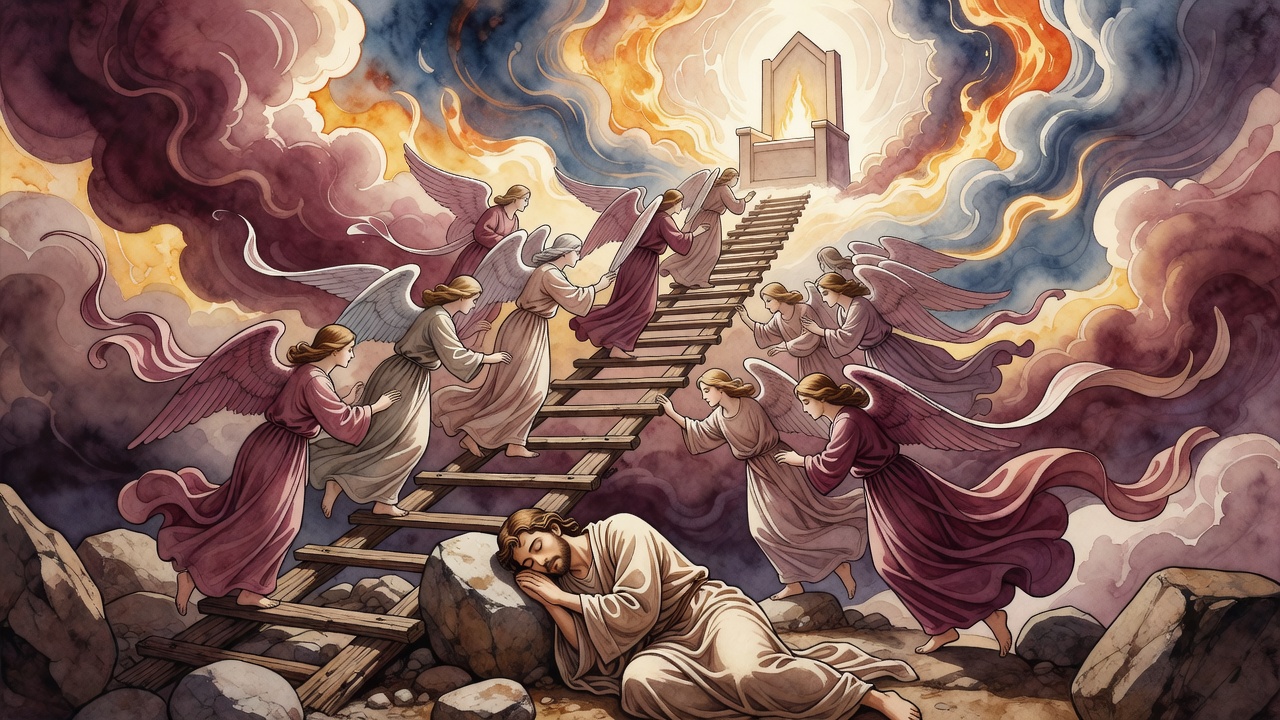
Fleeing Esau, Jacob pillows his head on the stones of Moriah, and the angels race up the ladder to match his sleeping face against the Throne.
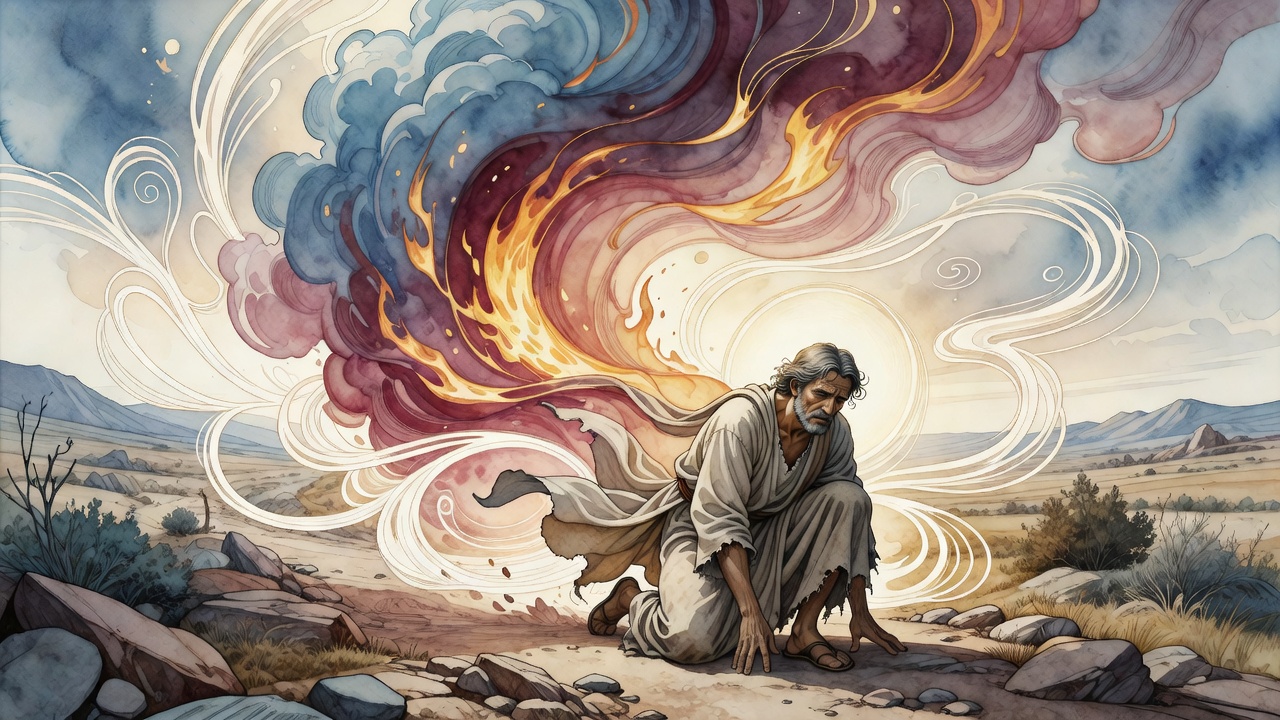
Jacob sat in the dust with Esau behind him and no prayer left. The presence that had ridden his life went out, and the road became only a road.
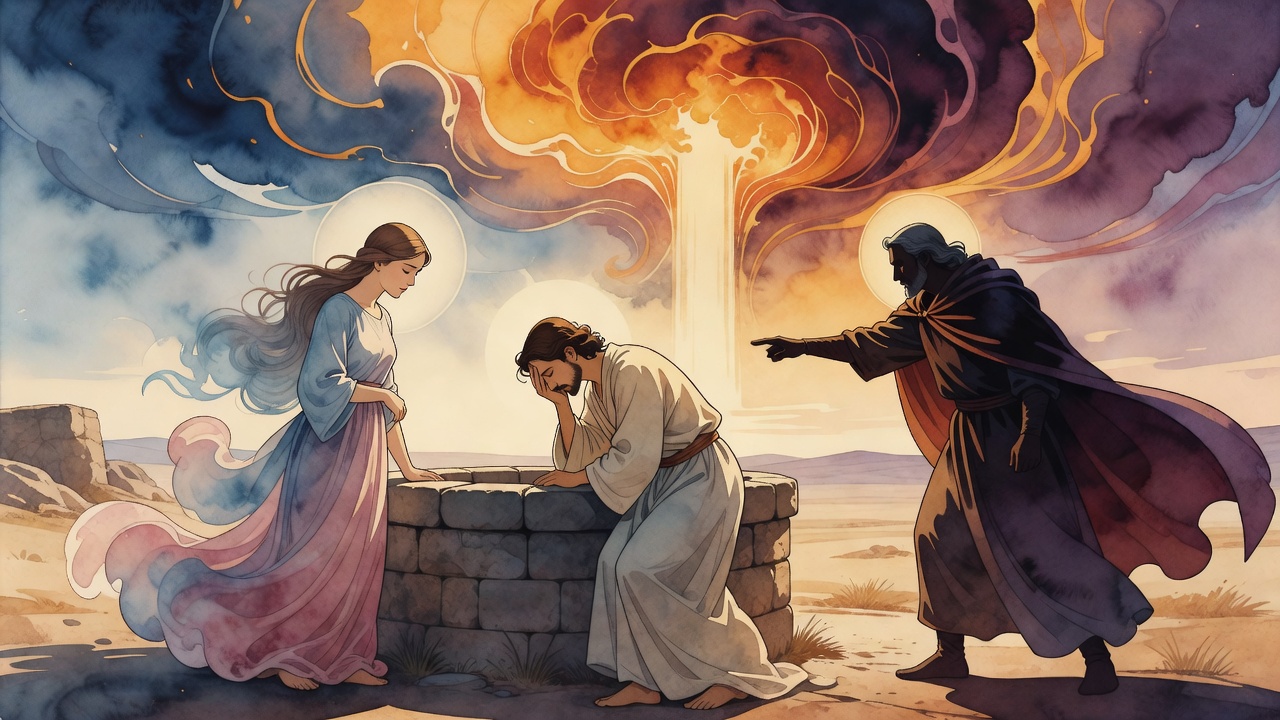
The shepherds stared when Jacob kissed Rachel at the well. He had arrived with empty hands. Eliezer had come with ten loaded camels.
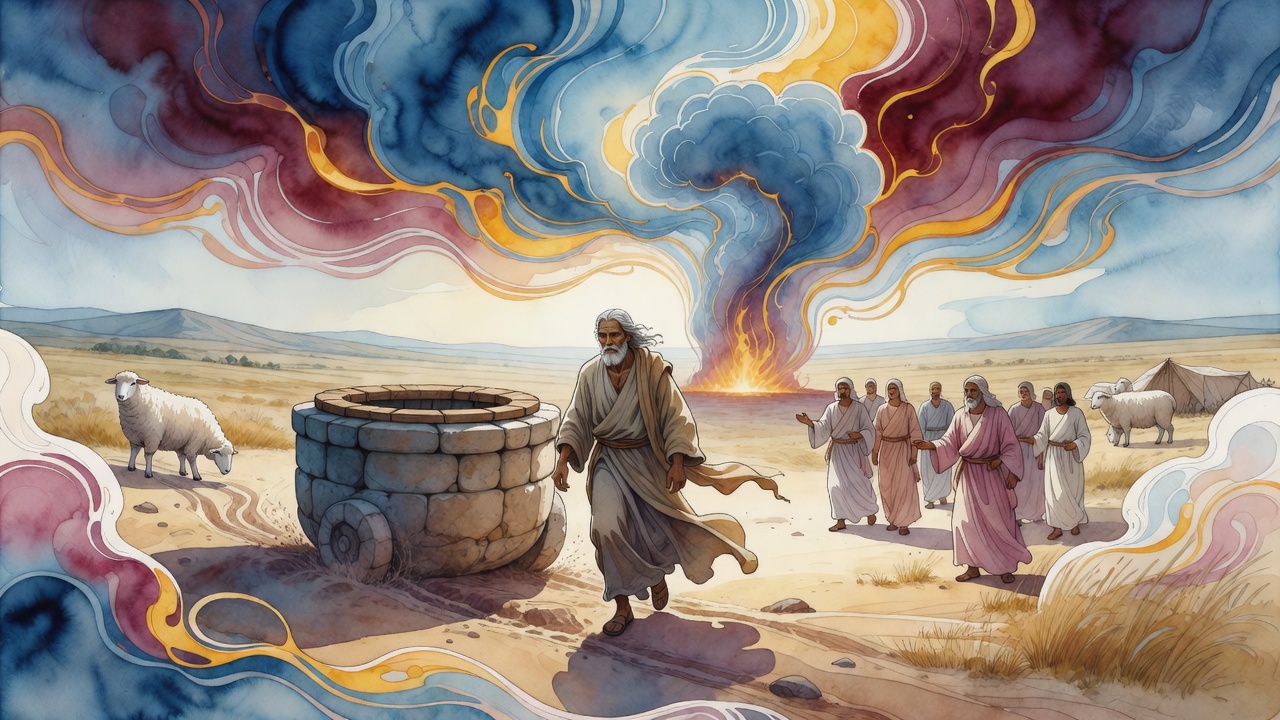
Jacob was seventy-seven when he left Beersheba with Esau's anger behind him. At a well in the east he rolled the heavy stone off alone for Rachel's sheep.
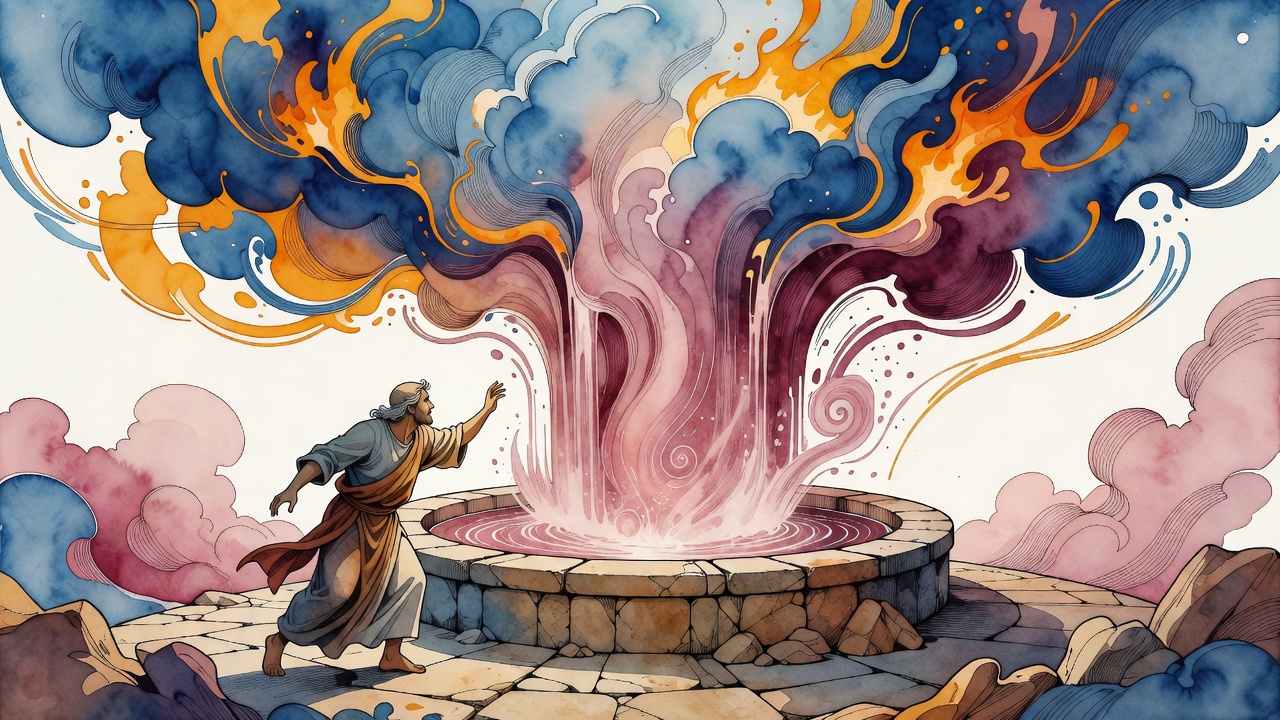
Jacob pressed his face to the stone and asked only for a safe return. The road shortened. At Haran the water climbed the shaft without a rope.
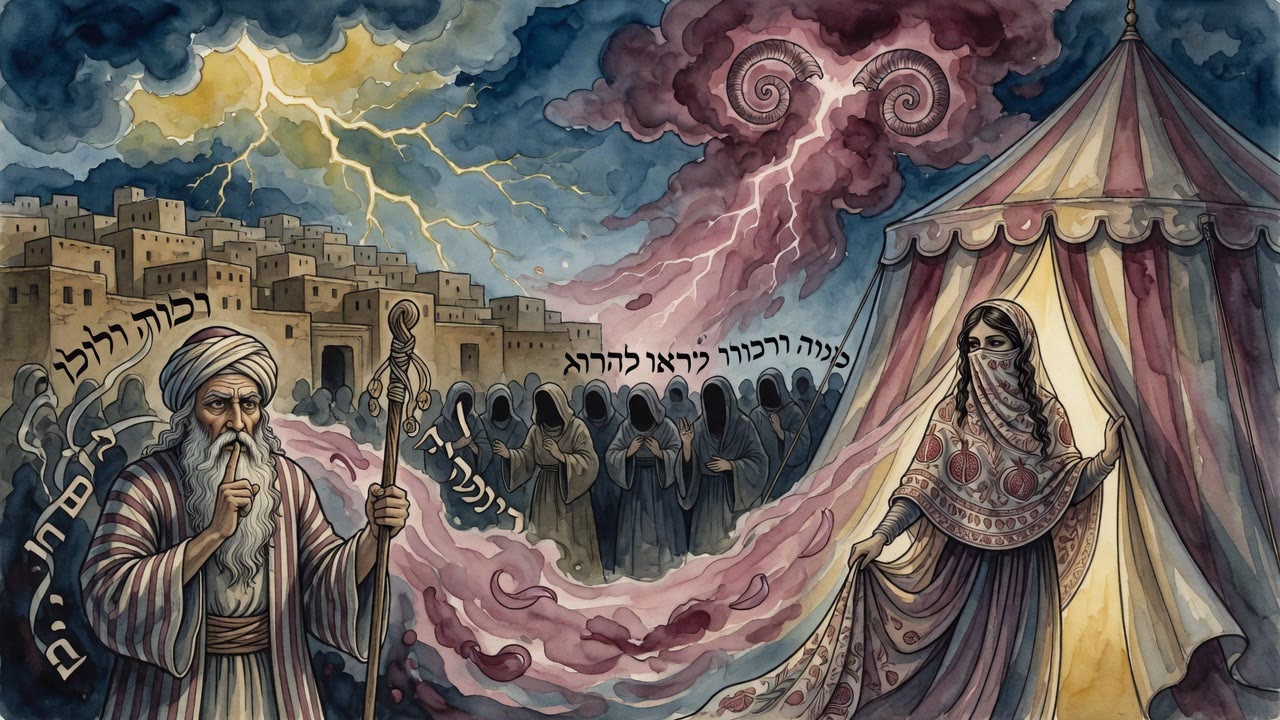
Laban admitted Jacob had filled their wells, then bound Haran by oath to keep silent while Leah entered the tent meant for Rachel.
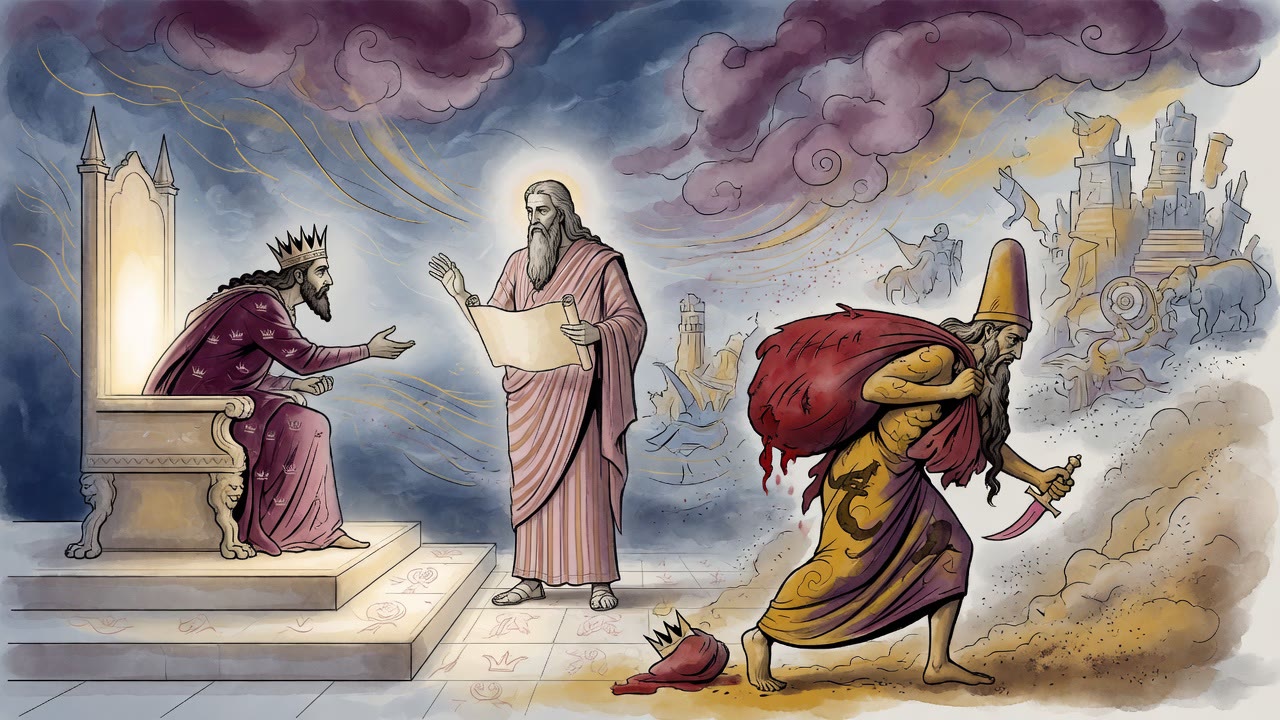
Laban's hands were full of wool. Jacob told Leah and Rachel the dream from heaven. They said they would go wherever he went.
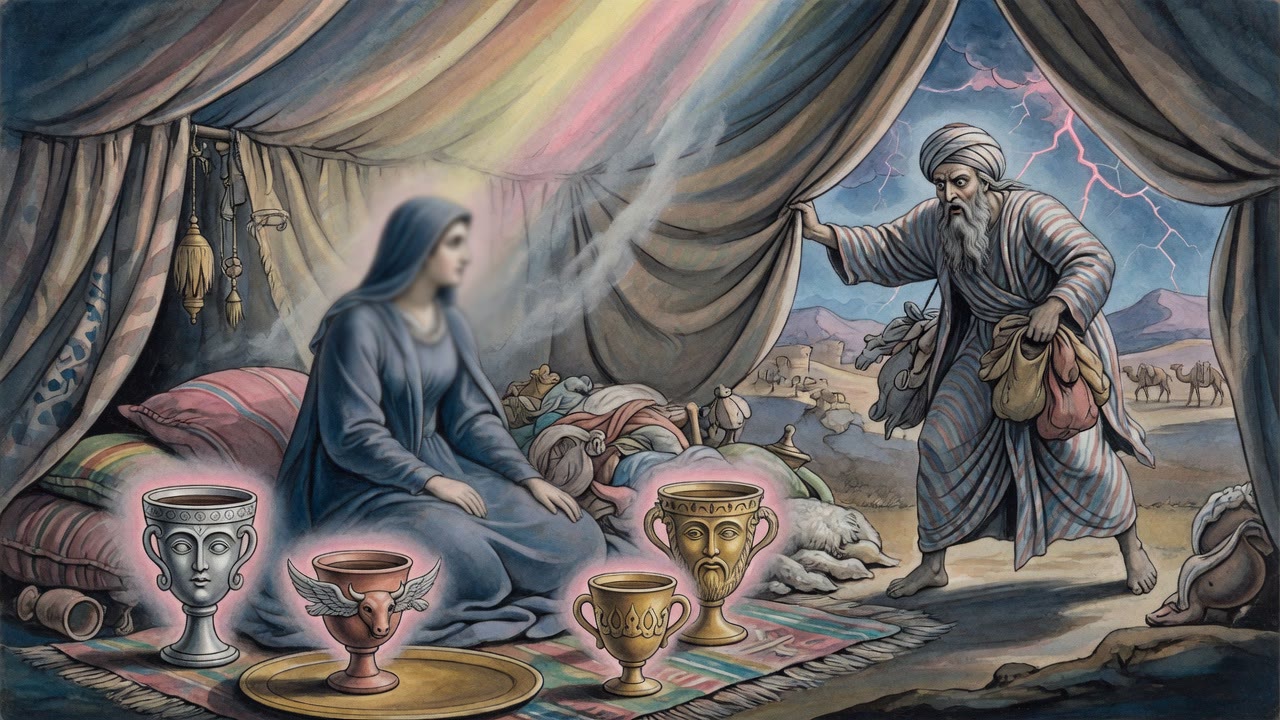
Laban went tent to tent looking for the household gods. Rachel sat still. In her camel's saddle the teraphim had become ordinary cups.
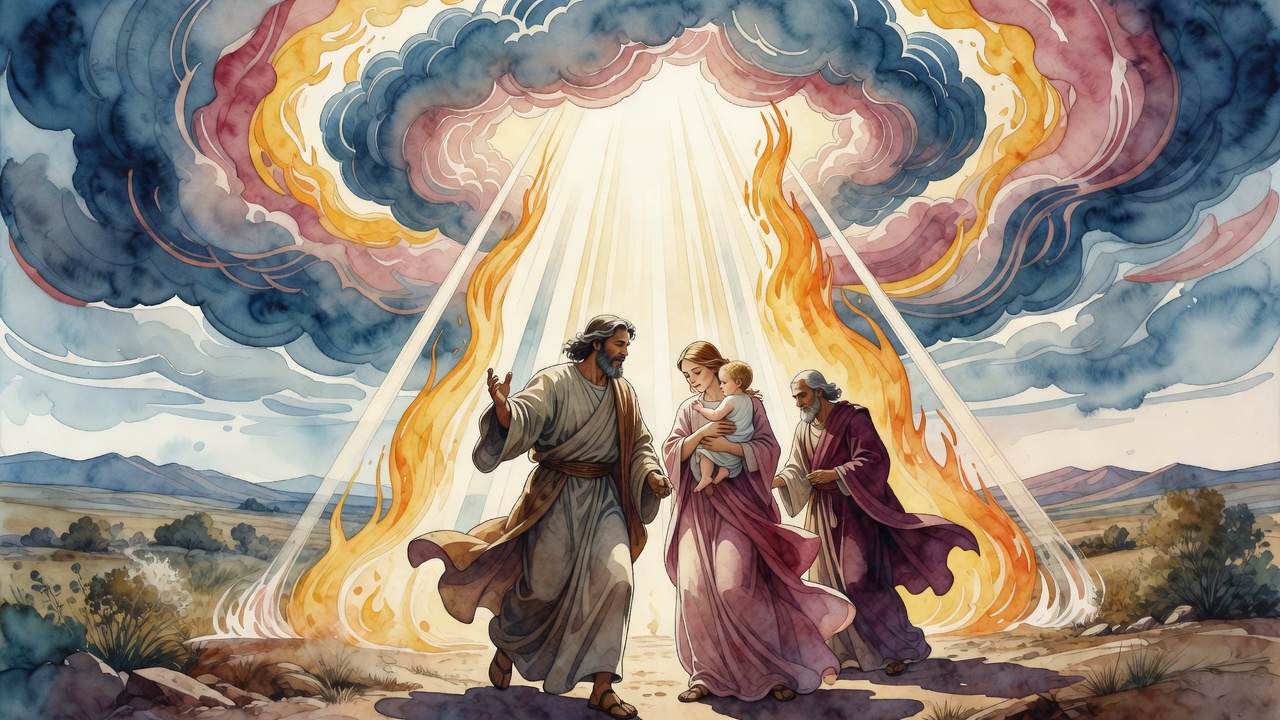
Treasure turned up at Jacob's feet the day he asked to go, and Laban called it divination. He had walked into Haran with a staff. He would not sneak out.
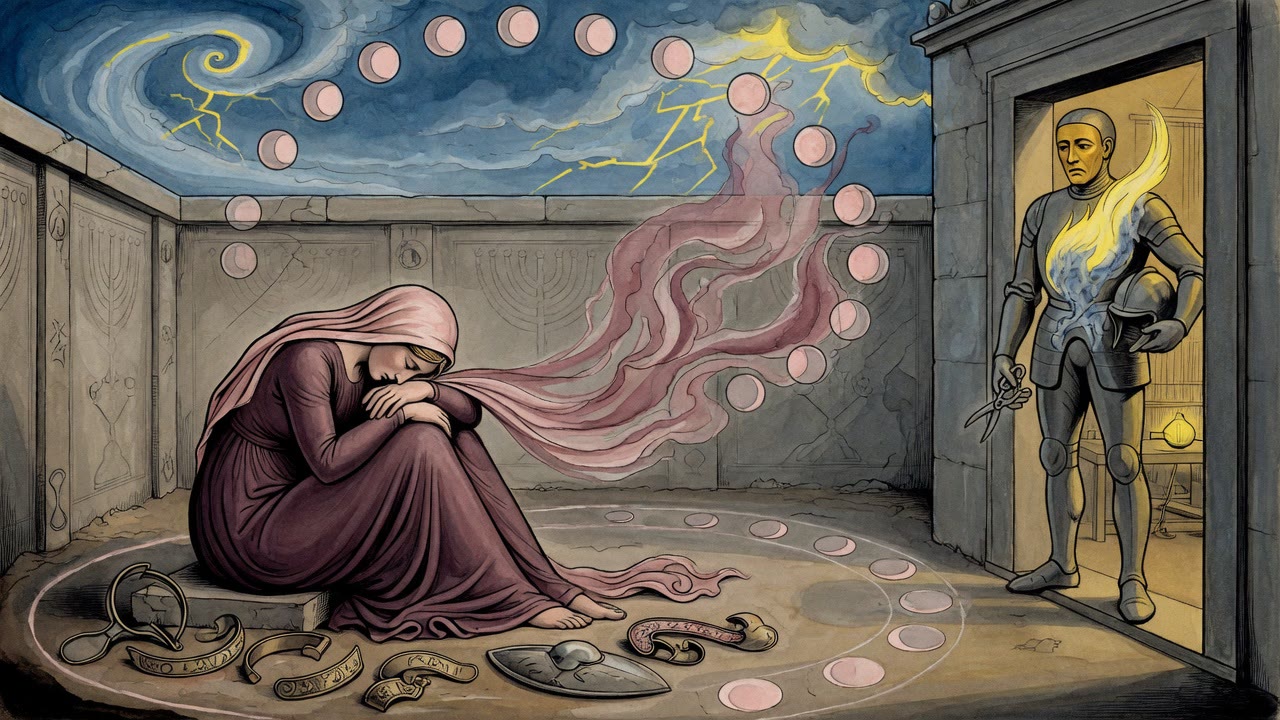
Matched from the cradle to Esau the hunter, Leah cried her eyes tender. Rachel laughed at Jacob's quiet fame until barren fear found her.
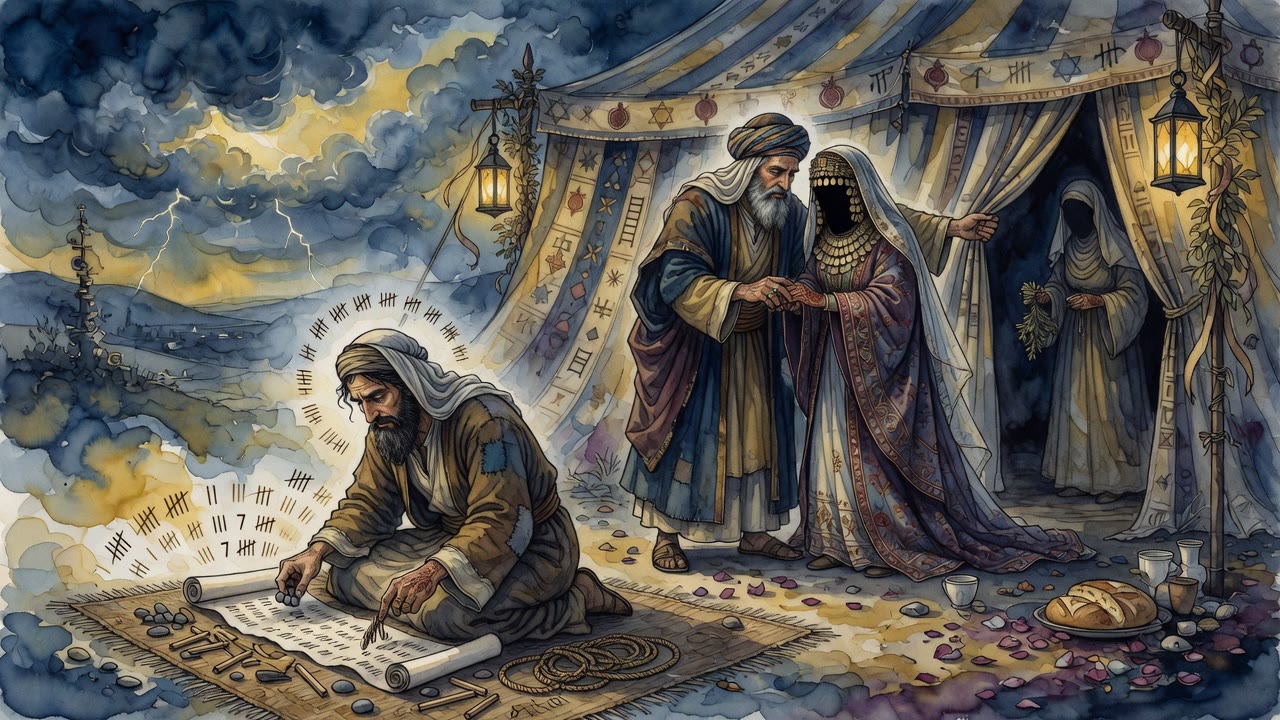
Jacob gave Rachel secret tokens so no veil could fool him in the dark. She held them through the wedding night and never cried out.
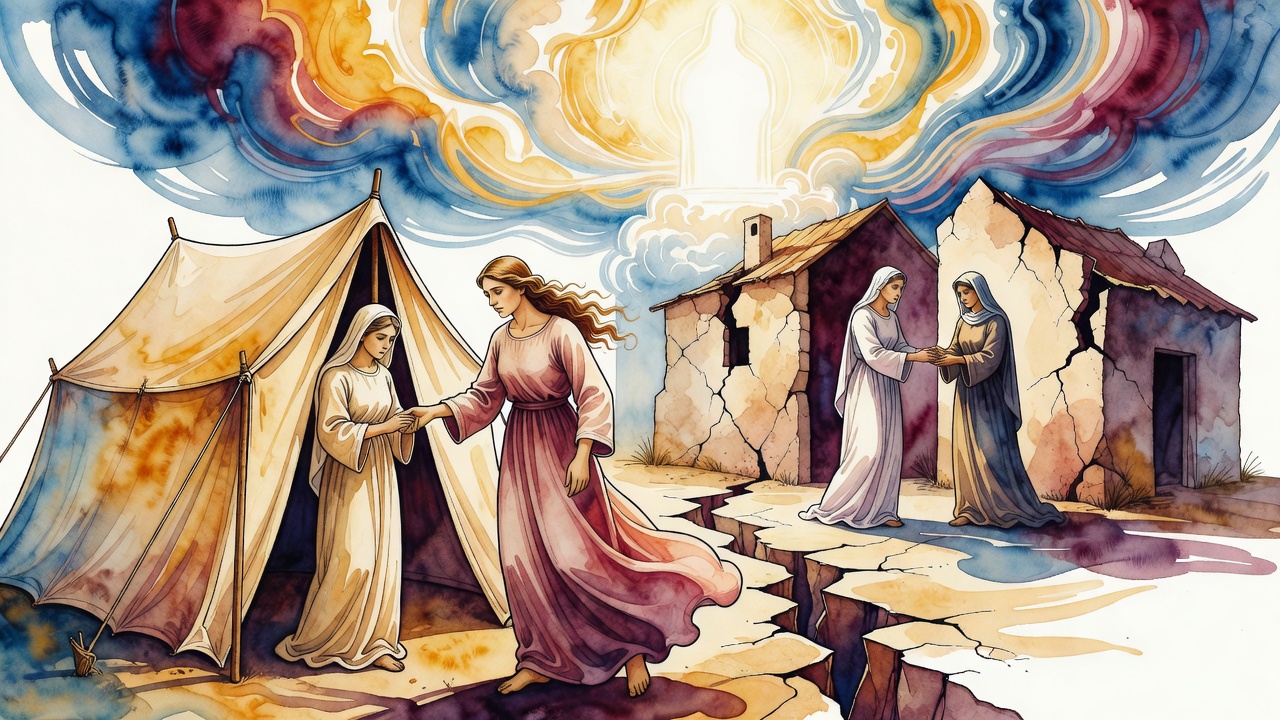
Leah had four sons and Rachel had none. So Rachel sent her servant Bilhah to Jacob and claimed the two boys Bilhah bore, Dan and Naphtali.
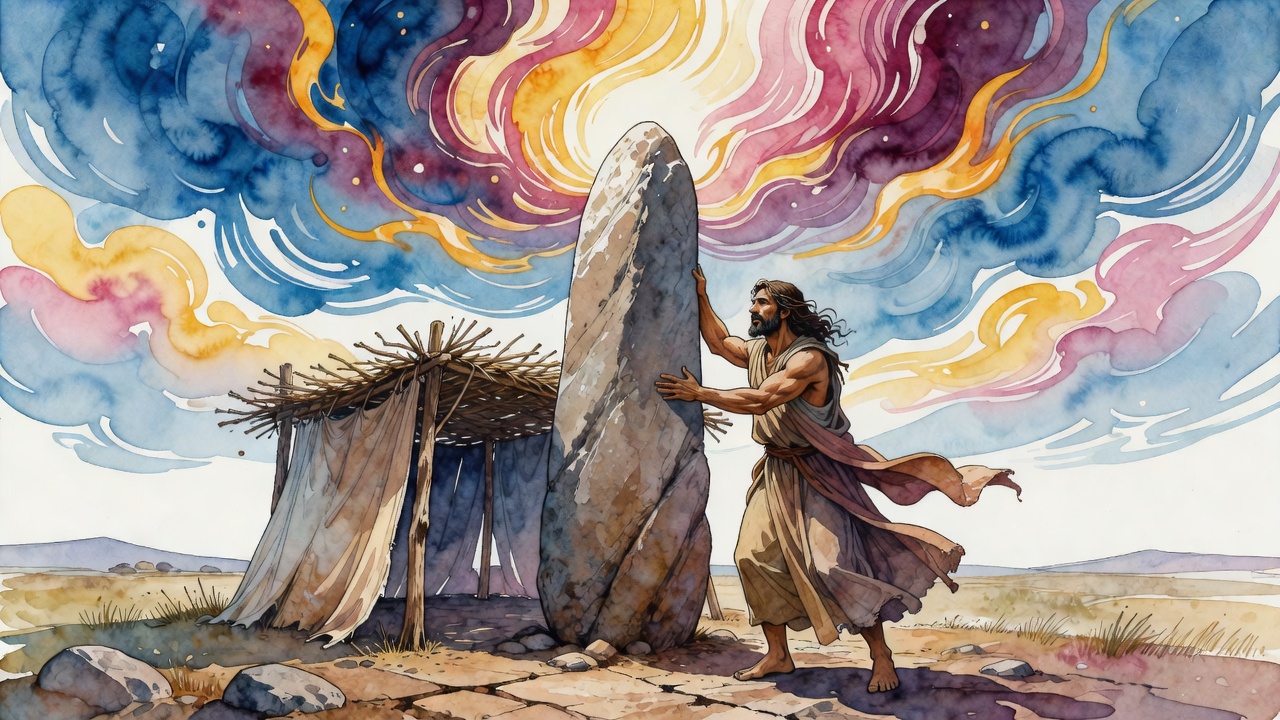
Years after he poured oil on the rock he had slept on, Jacob crossed back with flocks, children, and a limp. He built booths for the cattle too.
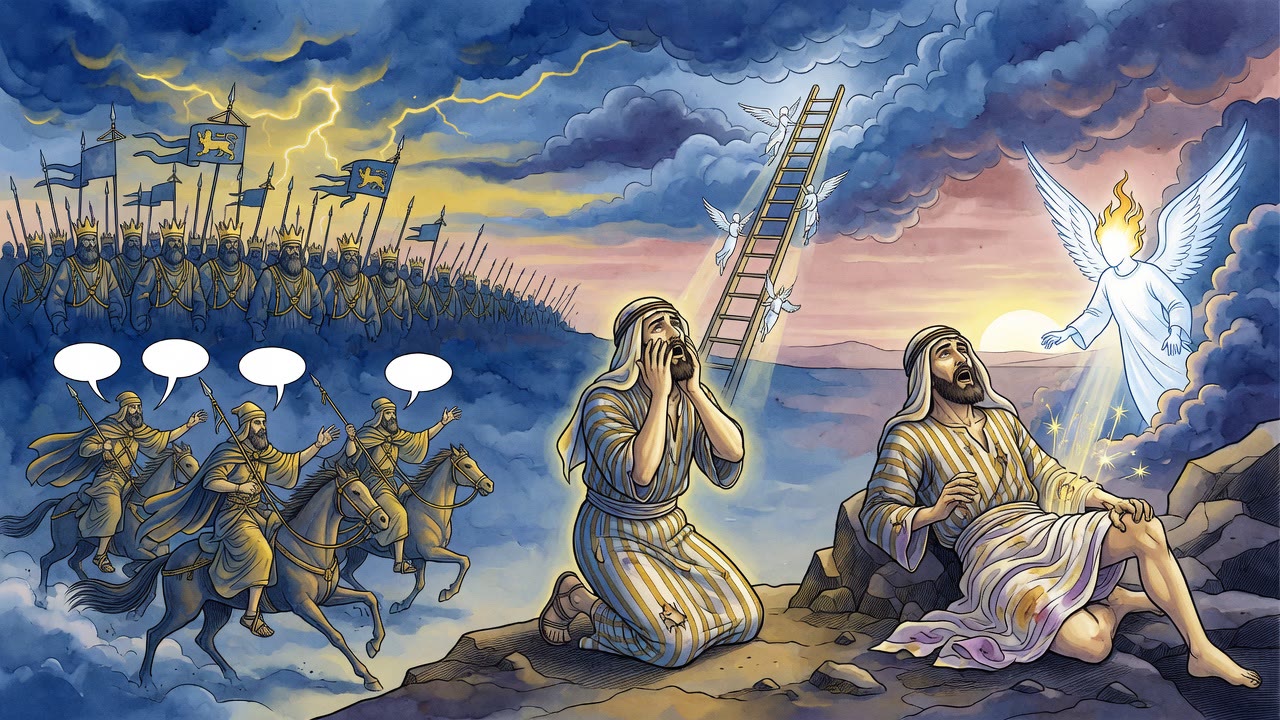
Esau sent Elifaz to kill his brother. The boy had been raised in Isaac's house and could not do it, so Jacob told him to take the money and the clothes.
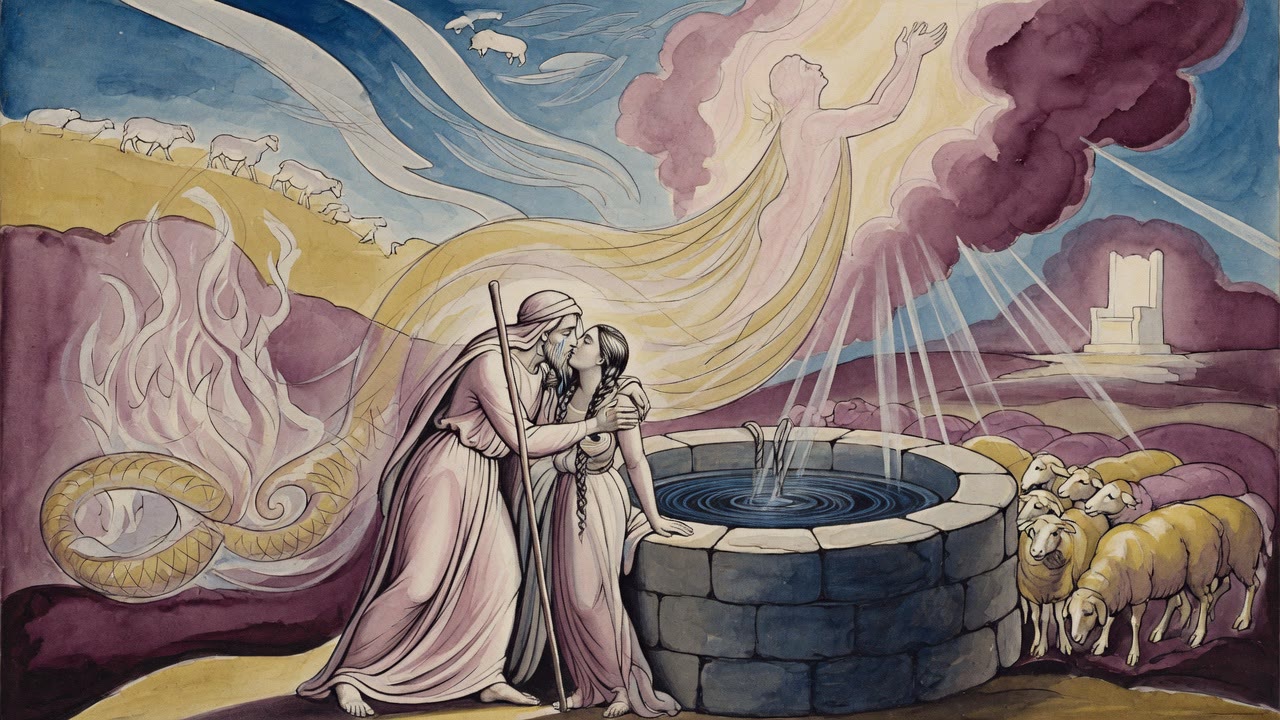
The stone came off the well as if it had waited for his hands alone. Rachel stood there with her father's flock. The shepherds stared while he wept.
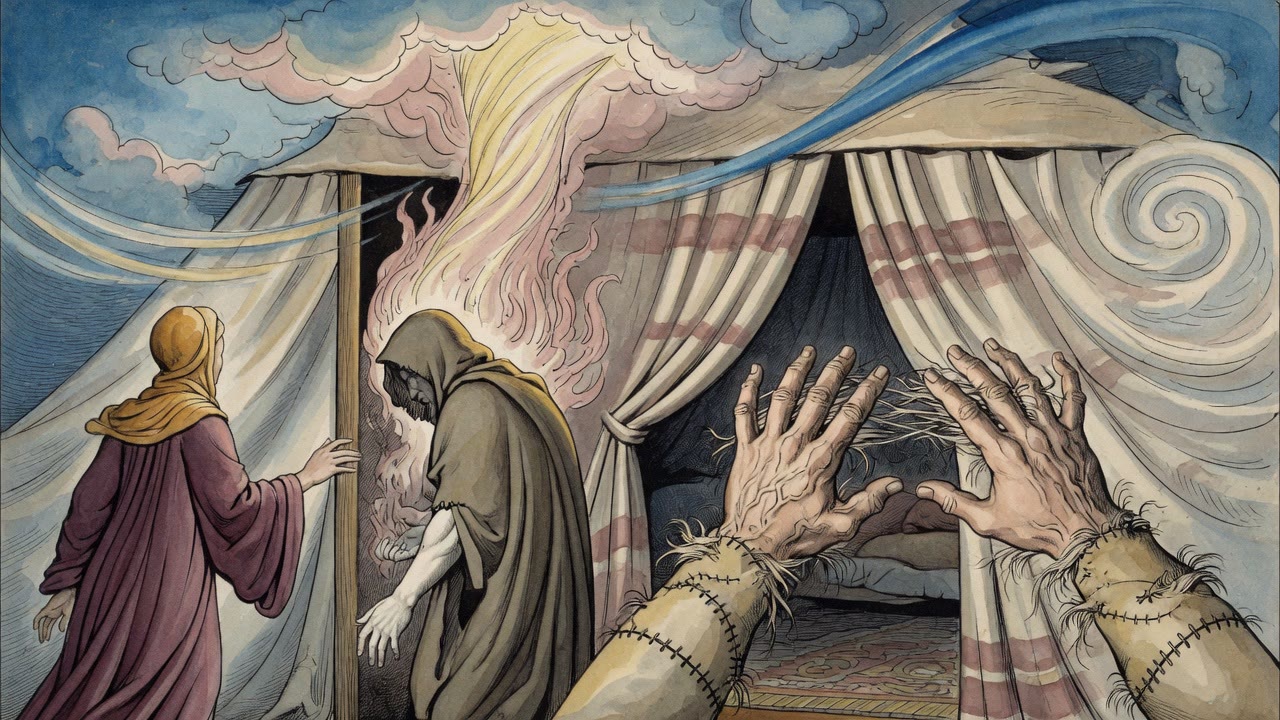
Rachel told him her father was cunning. Jacob rolled the stone anyway. Laban ran with the birthright already counted in his head.
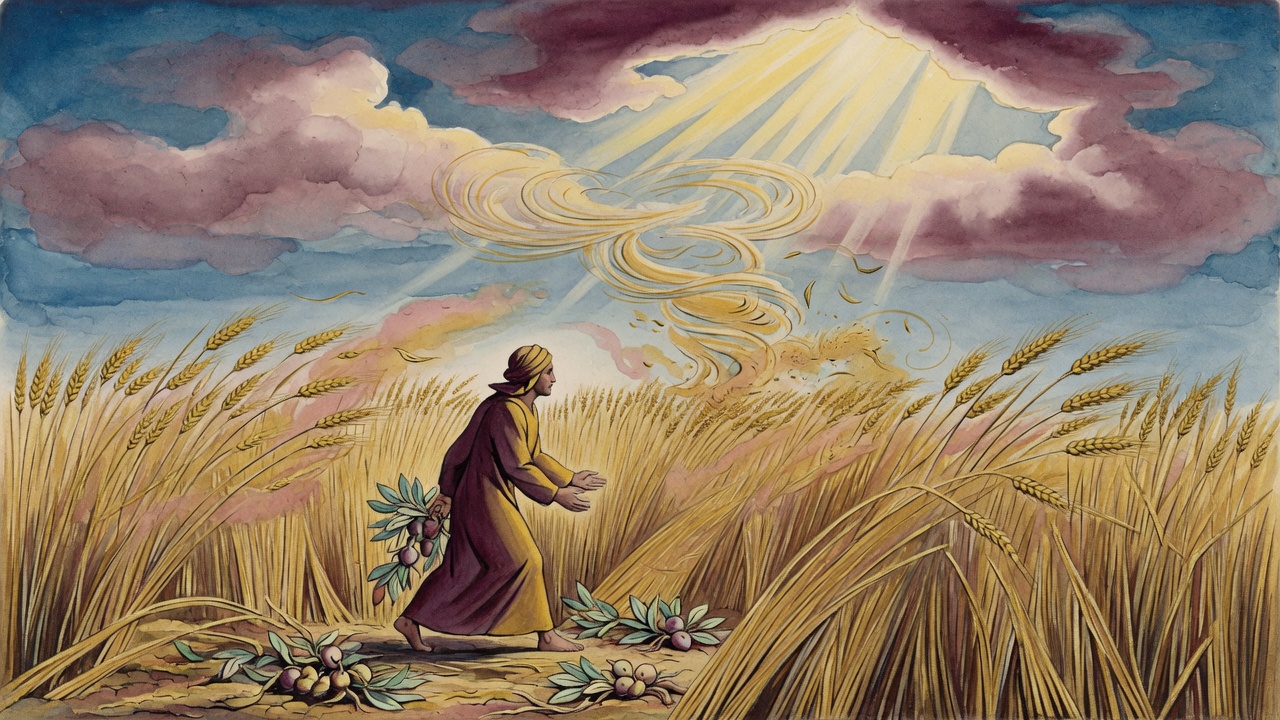
The owners were gone and the grain stood unwatched. Reuben was hungry enough to take a sheaf. He tied mandrakes to the donkey and left the gold standing.
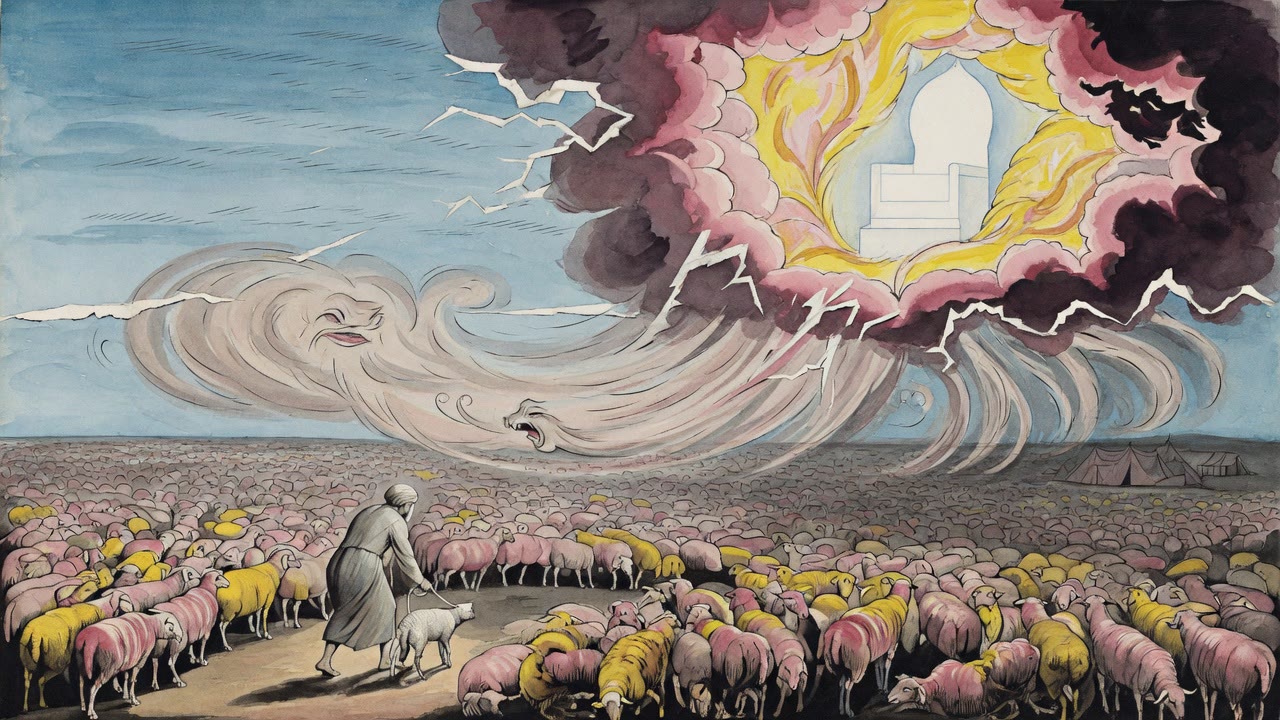
For twenty years heaven says nothing while Jacob toils for Laban, until his flocks swell to a hundred and twenty myriads and the snarling breaks it.
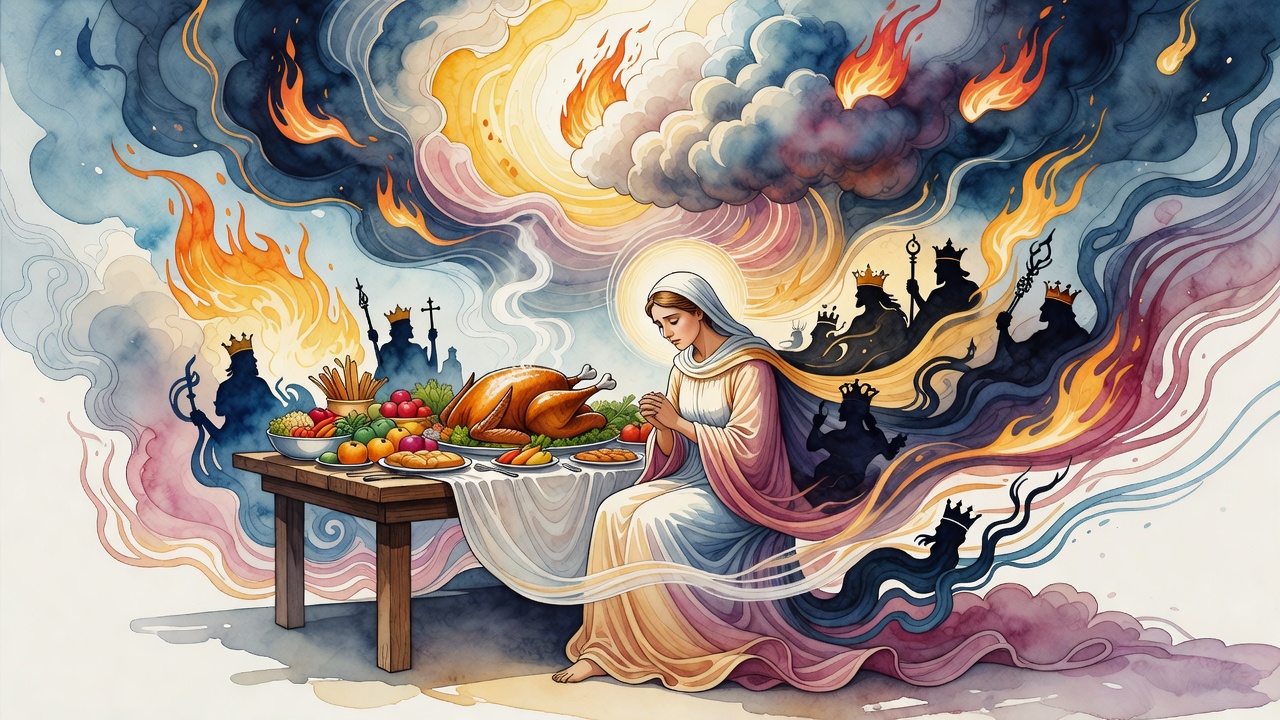
God saw Leah hated and opened her womb, but she gave clean thanks only at Judah, unaware seven wicked kings already hid inside that praise.
