Jacob's Rash Oath Sealed Rachel's Death Without His Knowing
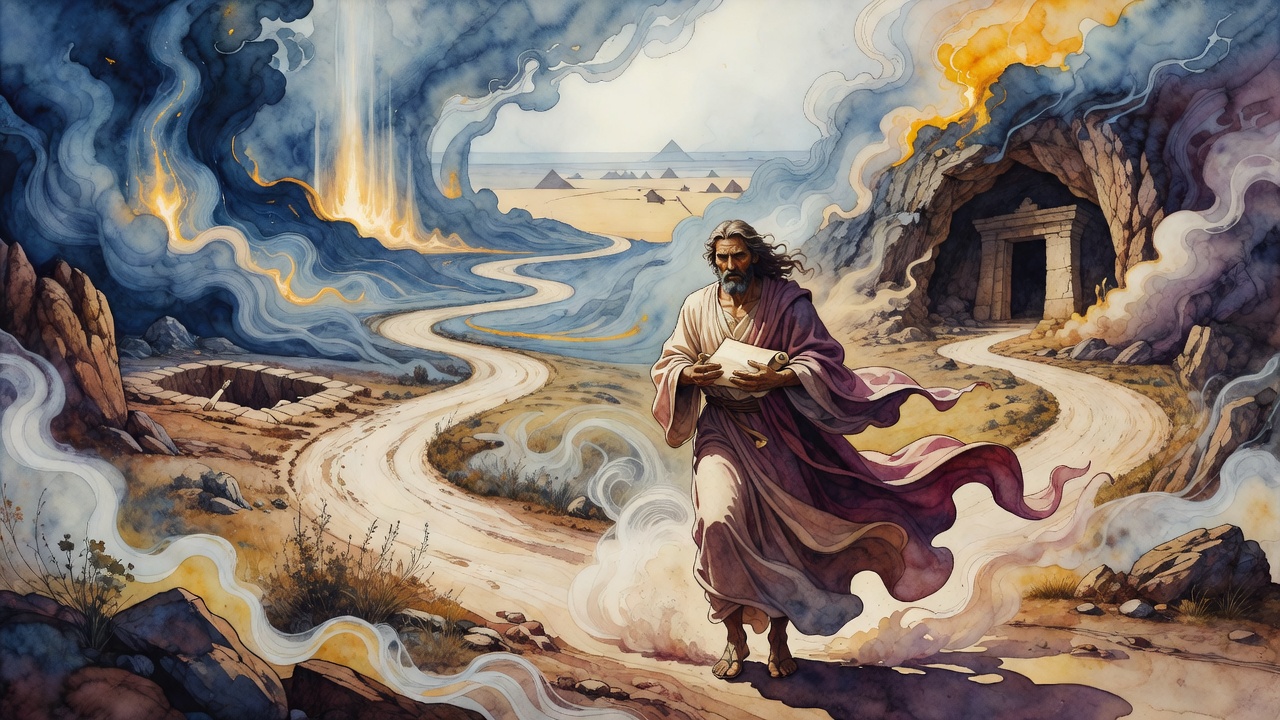
Jacob swore that whoever took Laban's idols would not live. He had no idea it was Rachel. The words were already moving toward their target.
Table of Contents
 Click for full size
The Oath Spoken in Fury
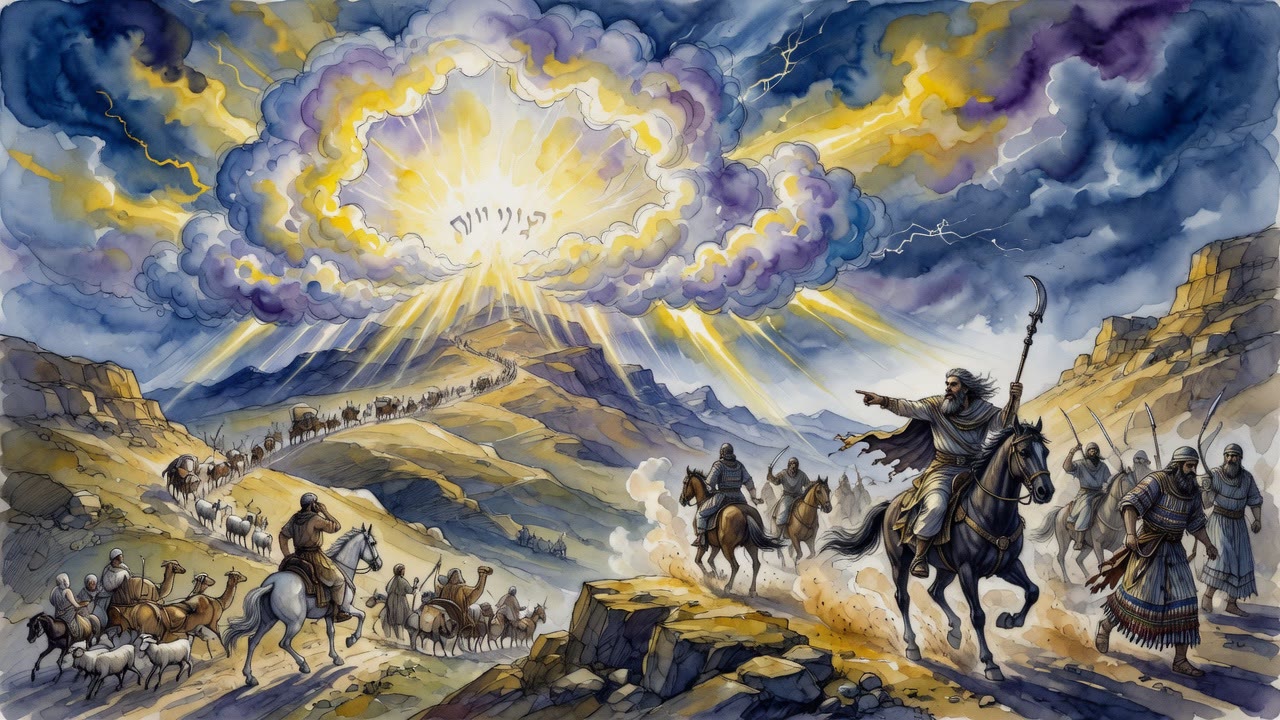
Laban had caught Jacob's caravan on the road out of Haran and searched every tent for his household gods. His complaint was specific: someone had stolen his teraphim, the small idols that served as domestic emblems of inheritance and household authority. He had lost them and he wanted them back.
Jacob did not know Rachel had taken them. He did not know she had hidden them in a camel saddle and was sitting on them while Laban searched the tent. He knew only that the accusation felt unjust after twenty years of honest labor and changed wages and cold nights. He was angry.
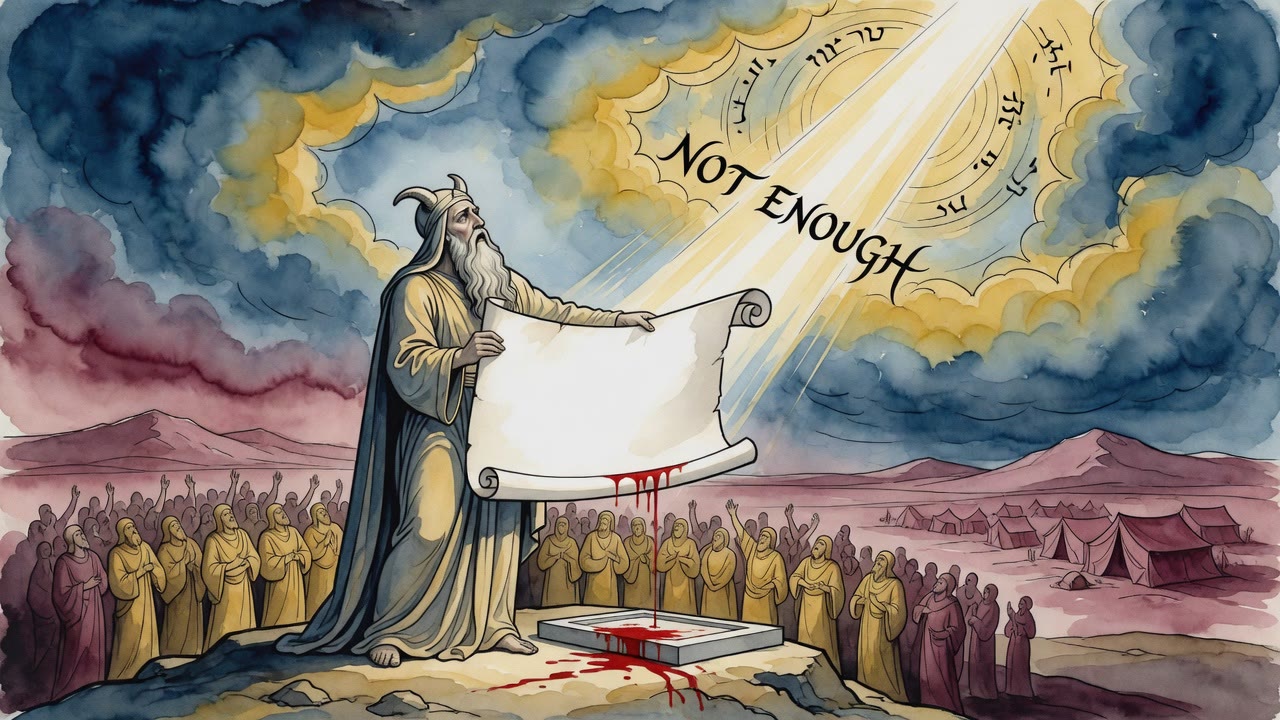
He said: the one with whom you find your gods shall not live.
He meant it as a declaration of innocence, as the kind of oath people swear when they are certain they have nothing to hide. He was also cursing his wife to death without knowing it, in front of her father, with complete confidence.
Two Traditions on Why Rachel Died Young
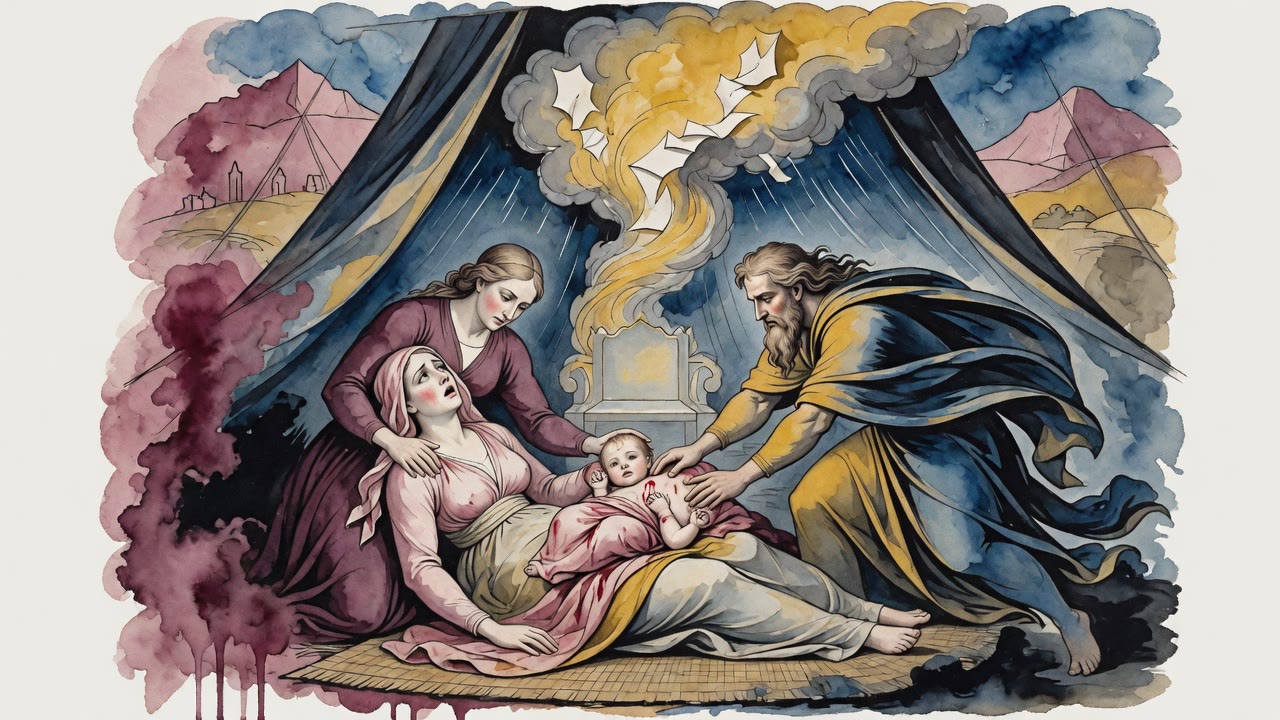
The tradition does not give Jacob a pass on this. The curse took effect. The only reason it did not kill Rachel immediately was that God wanted Benjamin born first, and so the oath was deferred until after the birth, and then it found its mark on the road from Bethel to Efrat.
A second tradition, preserved in the midrash, gives a different reason for the same death. When Jacob had called his wives to speak privately with him before leaving Haran, Rachel answered before Leah. She had inserted herself ahead of her older sister, taken precedence that was not hers by order of birth. Rabbi Yudan held this was the cause. Rabbi Yosei held instead that Jacob had called Rachel by name first, the way a man names the one he loves when he means both, and that Rachel's reply was therefore appropriate, and the fault was Jacob's in calling her out of order.
The two traditions do not resolve each other. They sit together in the midrash the way real causes often sit together: multiple threads leading to the same outcome, with different weight assigned to each depending on the person doing the counting.
What She Carried on the Road From Haran
Rachel had taken the idols for a reason. The tradition disagrees on what the reason was. Some say she took them to prevent Laban from using them for divination, to cut off his ability to know which road Jacob had taken and which way the caravan had turned out of Paddan-aram. Some say she could not let go of her father's religious practices, that the teraphim represented something she was not ready to leave behind, the small familiar shapes of the house she had grown up in.
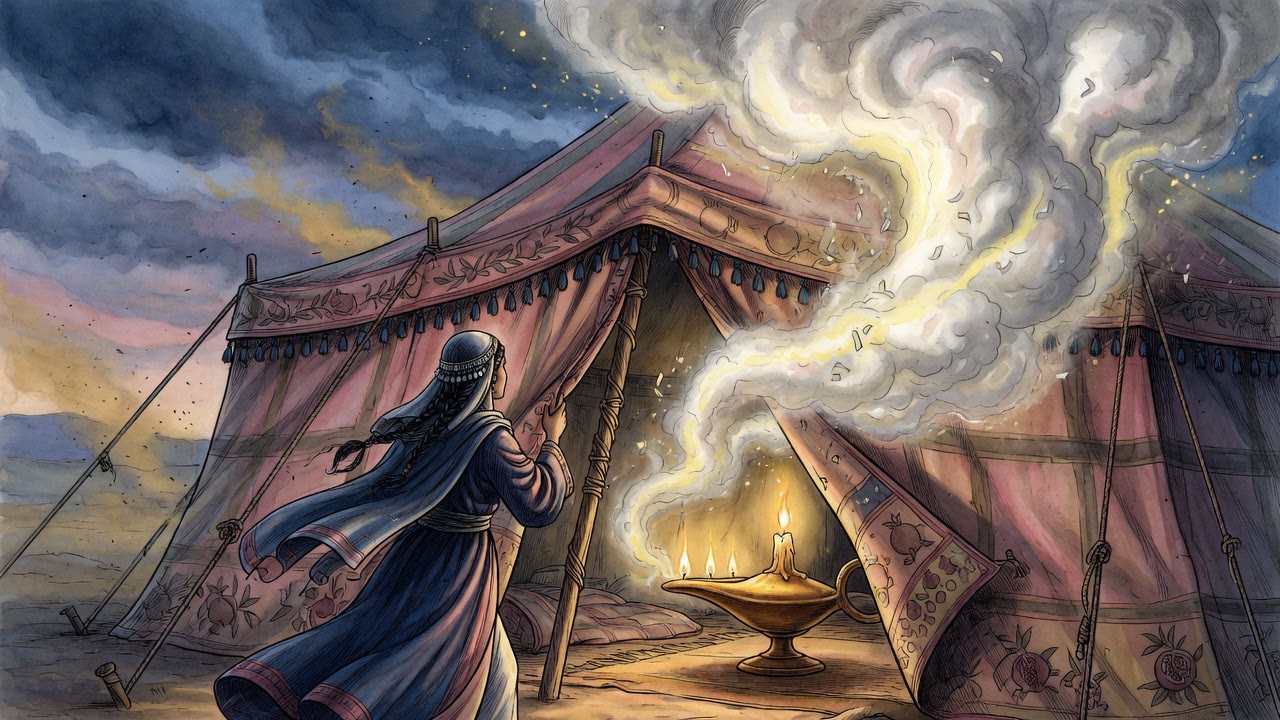
Whatever the reason, she had wrapped them and carried them and concealed them where no searching hand would think to reach. They were under her now, hard edges pressing up through the woven saddle, and she did not move from them while her father went tent to tent, lifting cloth, turning over bedding, calling out the names of his gods as if they might answer him from inside Jacob's belongings.
The Lie Told Sitting on the Idols
When Laban came to her tent and the saddle she sat upon, Rachel did not rise. She told him she could not get up because the way of women was upon her, that the manner of women was on her and she was unwell. So he searched around her and did not find the household gods. She lied to her father's face to protect the idols beneath her, holding herself still over the very thing he was hunting for.
She was on the road between one world and another, sitting on what she had stolen, carrying a death sentence spoken by the man she loved without his knowing whose throat it was aimed at. And she was pregnant with the child whose birth would finally let the oath find her, the weight of Benjamin already inside her as she pressed the weight of Laban's gods down into the saddle and waited for her father to give up and walk away.
← All myths