Rachel Bore Joseph and the Accusation Landed on Him Instead
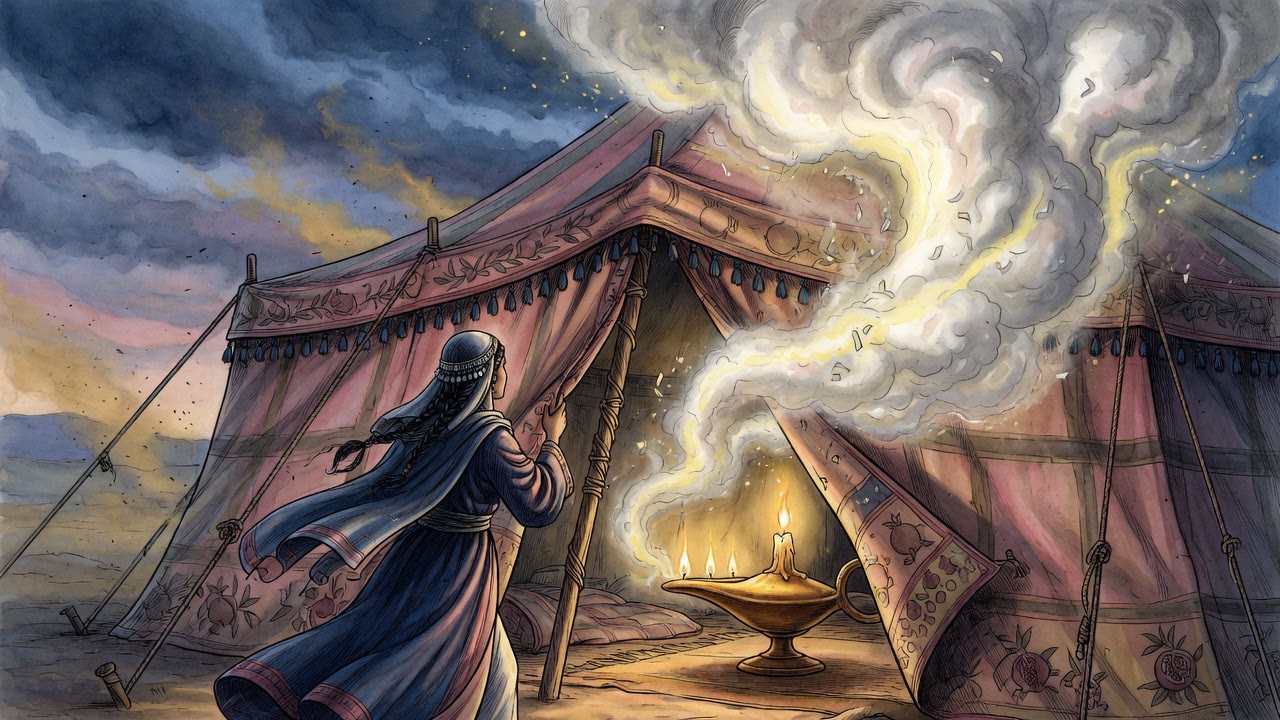
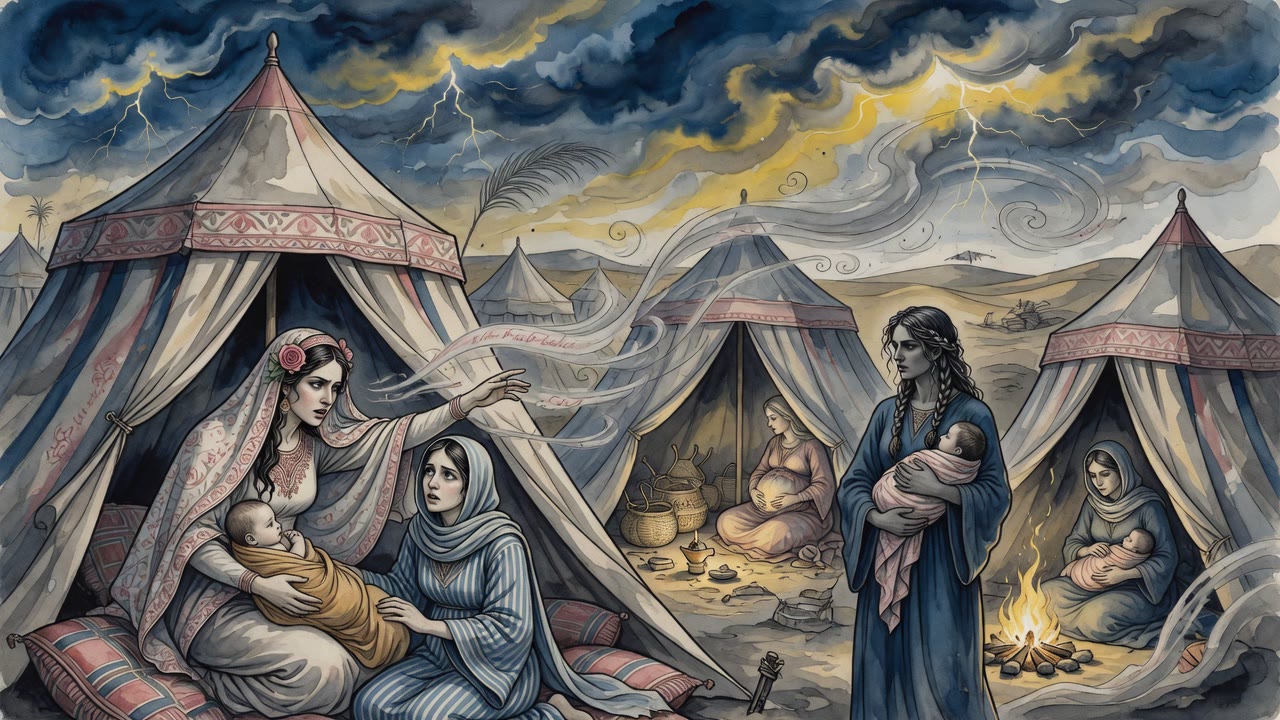
A jar went missing in Jacob's tent. Every face turned toward the wife with no sons. Rachel had lived that look for years.
Table of Contents
 Click for full size
Every Face Turned Toward Rachel
A jar went missing from the shelf. Something had been eaten that was being kept. A cloth was torn and nobody owned up to it. In the silence that followed, everybody in the tent knew where to look.
They looked at the wife with no children.
That is the house Rachel lived inside, year after year, while the household filled with her sister's sons. Leah had six boys and a daughter. The tent was loud with them. When something went wrong in a house where one woman has borne seven children and the other has borne none, the fault attaches itself to the empty one. She is the only person in the room who cannot produce a smaller culprit.
God Heard the Voice
She prayed. Not once and not for a season. Out loud, in words, while the boys shouted outside.
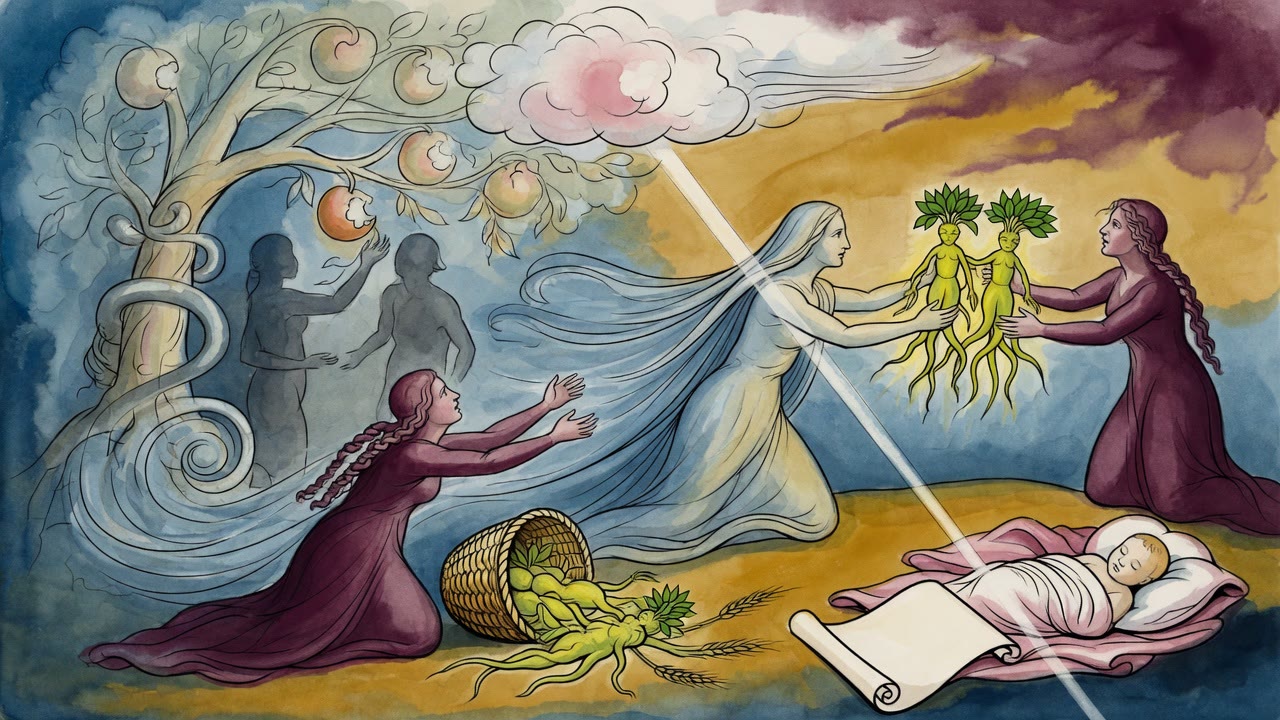
Then God remembered her. Four words in Hebrew, and they sound like a file being pulled off a shelf after a long time sitting on it. The old Aramaic rendering refuses to leave it there. The remembrance of Rachel came before the Lord, and the voice of her prayer was heard before Him, and He said in His Word that He would give her sons.
The voice. Not the wish. Not the ache. The specific sound she had been making for years.
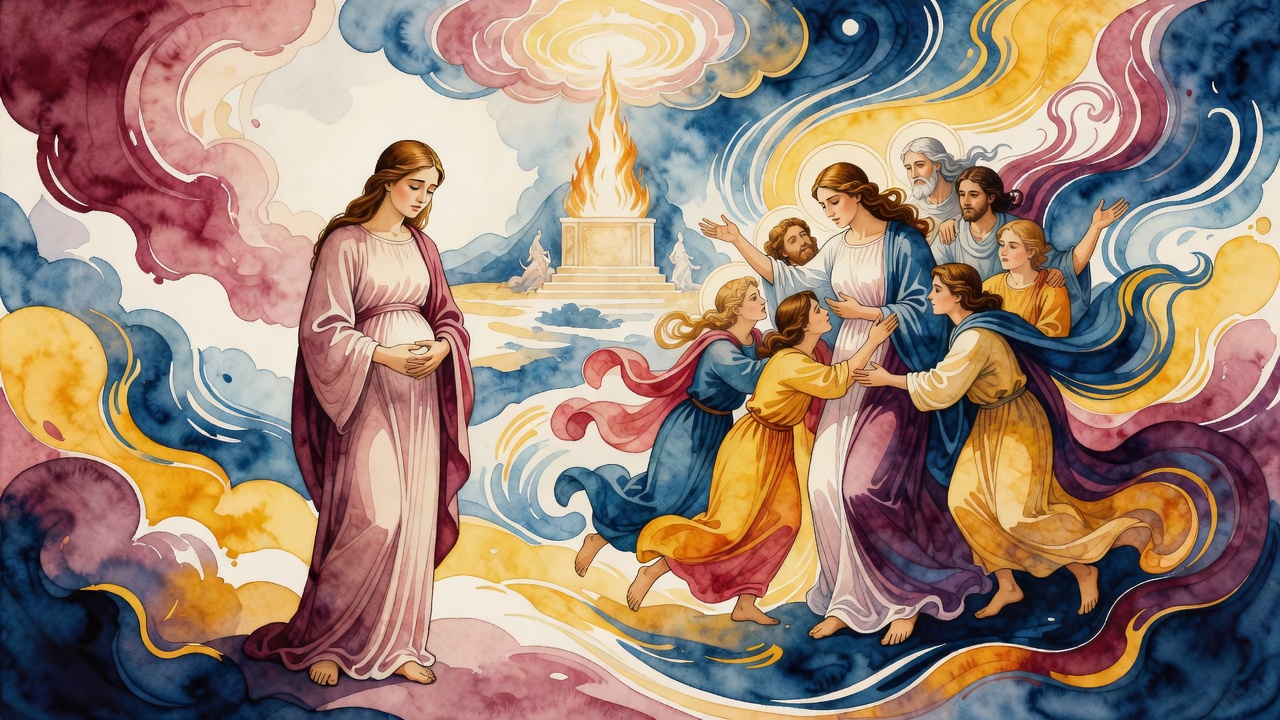
Then her womb opened.
She Named the Disgrace First
She bore a son. Out of everything she could have said standing there holding him, this is what came out of her mouth.
"God has removed my disgrace."
Not joy first. Not gratitude, though there must have been an ocean of it. She reached first for the thing that had been sitting on her, and she used the word for it that everyone in the camp had been too polite to use in front of her. Something had been laid against her. It was gone now. She named the weight before she named the boy.
The Fault Landed on Joseph
The next morning a jar went missing again. A voice in the tent that used to turn toward Rachel turned toward the cradle instead.
"Who ate this?"
"It is your son."
"Who broke this?"
"It is only your son."
Nothing about Rachel had changed. The jars still went missing. The cloth still got torn. What changed was that there was now a small person in the tent, and from the morning Joseph could crawl, every accusation that used to land on Rachel landed on him instead. She had been carrying the household's small daily faults on her own back because she had no one to hand them to. Now she did.
She Asked for Another Son
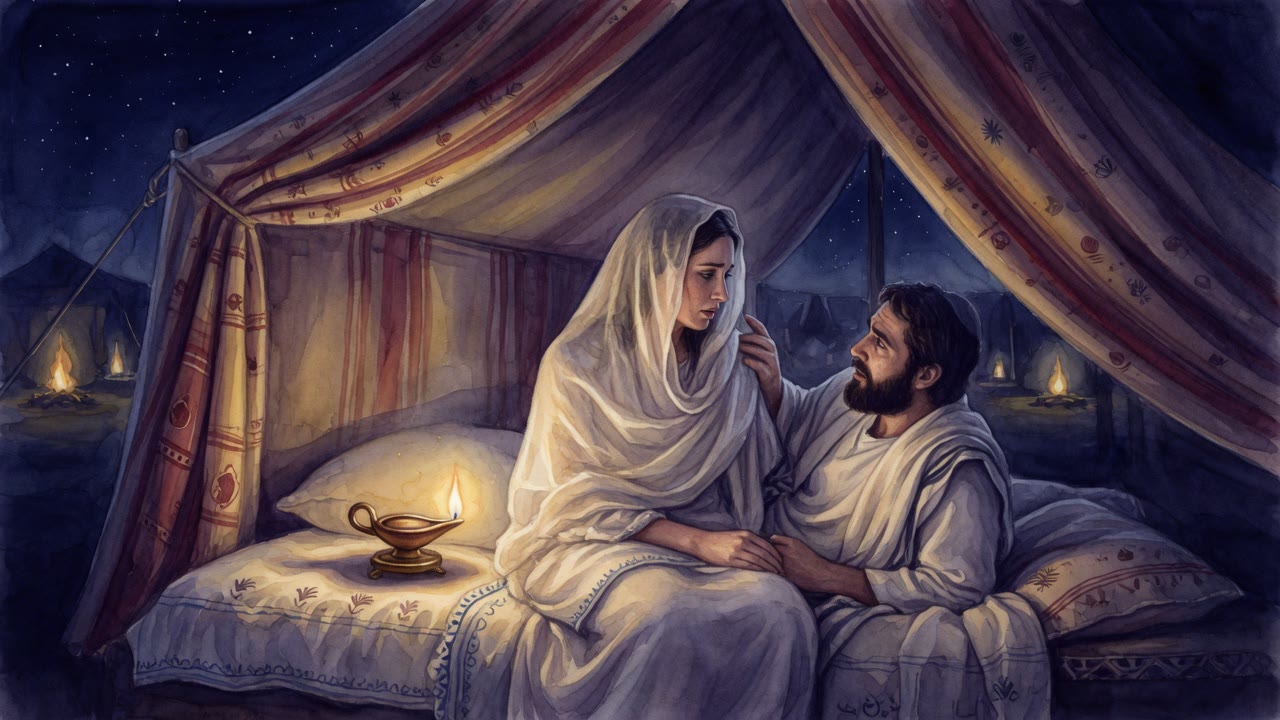
Still holding him, she asked for more.
"May the Lord add to me another son."
The shame was gone. The hunger was not. She got the exact thing she had been asking heaven for, and her first act while it was still in her arms was to ask for the next one.
Generations later a king of Judah named Aviya broke the army of Yerovam, who came out of Ephraim, who came out of Joseph, who came out of Rachel. Aviya was not content with the victory. He left the dead where they could not be recognized. He set guards over the bodies for three days until the faces went, so that no widow could swear she had seen her husband dead, and no widow could marry again.
The Lord struck Aviya for that. He had heaped disgrace on the children of Rachel. The word she had used over Joseph had not gone away. Disgrace still had a price.
← All myths