Jacob Worked Fourteen Years and Still Believed
Jacob keeps his word to Laban through a second seven years, and Bereshit Rabbah reads his faithfulness as a seed of the World to Come.
Table of Contents
 Click for full size
The Morning After the Wedding
Jacob woke in the dark, reached out, and understood what had happened. Leah was beside him. Not Rachel. He had worked seven years for Rachel, and Laban had placed Leah in the tent while the lamps burned low. Seven years of labor, and the morning held the wrong sister.
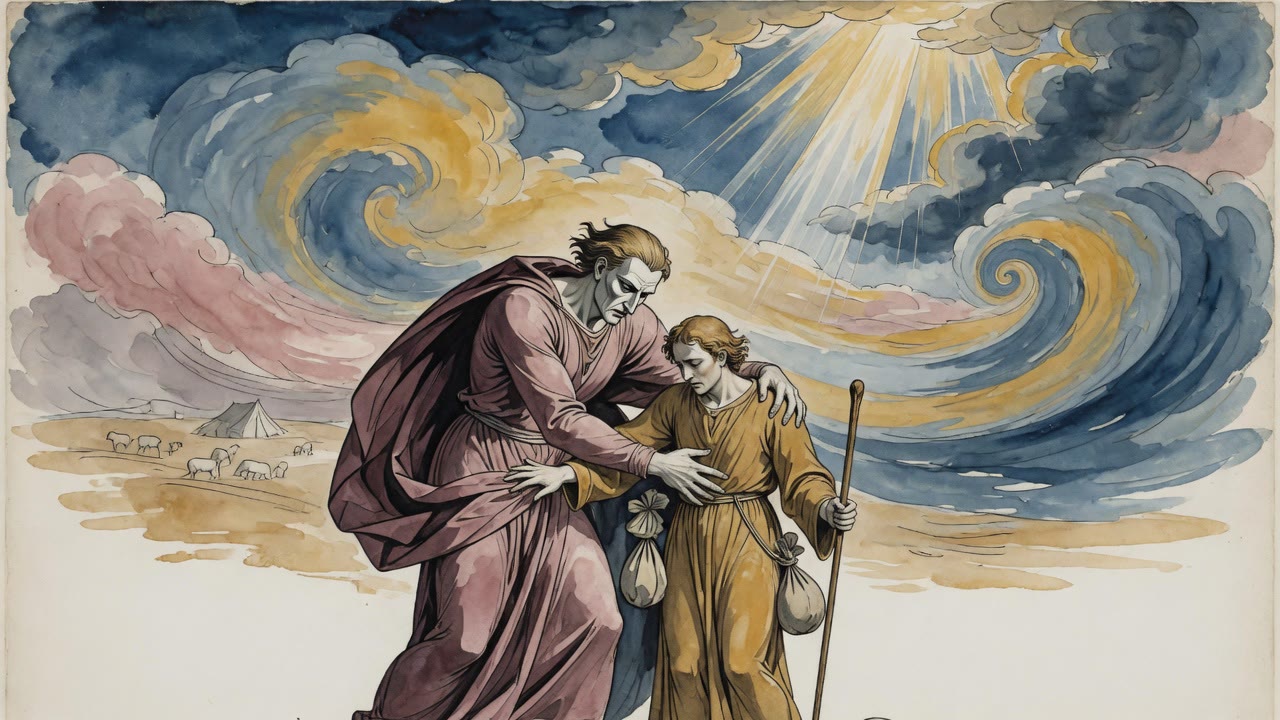
He went to Laban. He said it plainly: Why? Laban answered with custom and convenience and the elder daughter's right, and Jacob listened, and then Jacob agreed to seven more years. The text says it simply: he worked with him another seven additional years. Rabbi Yehuda bar Simon in Bereshit Rabbah notices the word "also", he also worked. The way of the world, the rabbi says, is that a man who buys merchandise and finds it defective returns it and refuses to pay. Jacob had been deceived. He could have refused. He also worked.
That small word carries the story. Jacob did not walk away from a broken agreement. He re-entered it, fully, with no guarantee beyond Laban's word, the very word that had just betrayed him.
A Name Repeated, a Door Left Open
Before Jacob enters this part of the story, Bereshit Rabbah opens with a different puzzle: Terah. The Torah says his name twice in the same verse. These are the descendants of Terah. Terah begot Abram, Nahor, and Haran. Why the repetition?
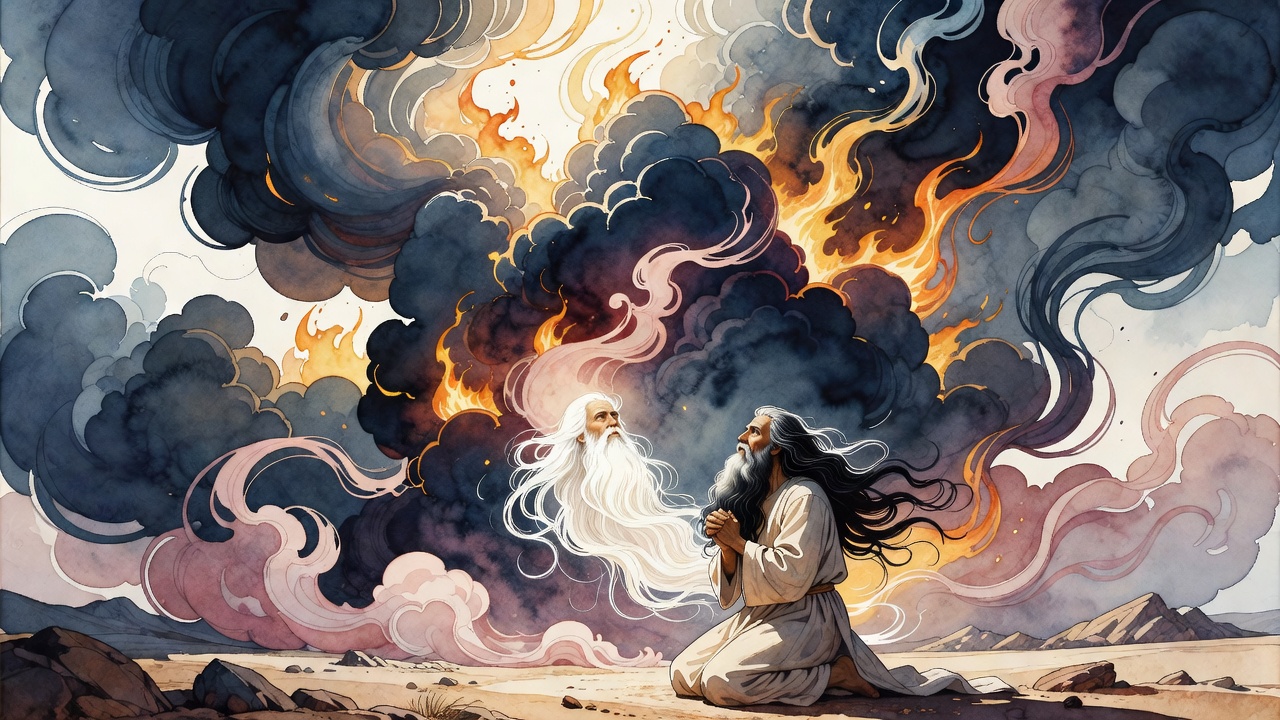
Rabbi Abba bar Kahana reads doubled names as a promise hidden in grammar. A person whose name appears twice has a share in this world and in the World to Come. Someone objects: Terah? The father who worshipped idols? Rabbi Yudan answers through God's word to Abraham: you shall go to your fathers in peace. That promise extends backward, to the father who raised him.
The doubled name becomes an act of mercy almost invisible on the page. Even a man whose life bent toward error can carry a future inside his name. The midrash places this observation before it reaches Jacob not by accident. It is teaching us how to read what comes next, that futures can be hidden inside ordinary words and ordinary faithfulness, where the surface offers nothing but seven more years of labor.
Leah Named Her Joy Toward the Future
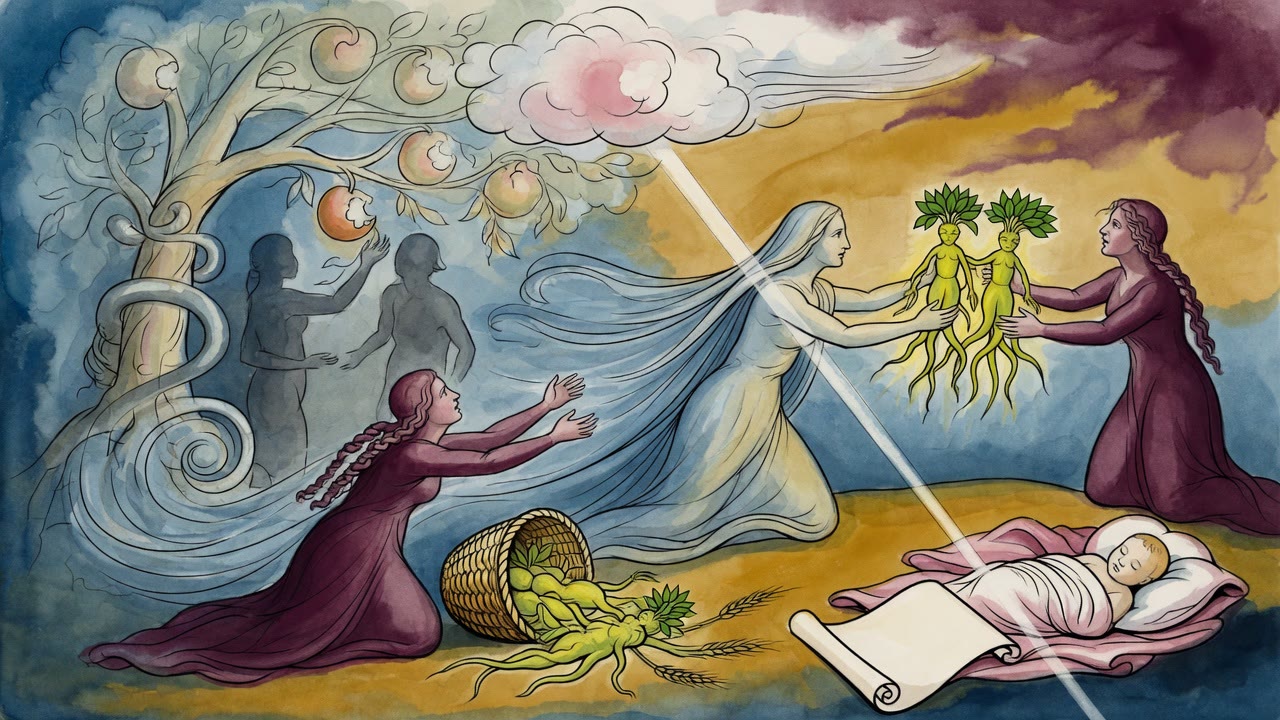
Leah bore sons. After four of her own, her maidservant Zilpah bore two more sons to Jacob. When the second one came, Leah named him Asher, happiness. And said, in my happiness, women will be happy for me. Bereshit Rabbah asks what exactly Leah foresaw that filled her with such certainty.
Asher's daughters would be beautiful, the rabbis answer. They would be women fit to marry kings and high priests. Future generations would look at the line of Leah and see abundance passing through it. She named the child not for what she already had but for what she read ahead. Her happiness ran forward in time.
This sits inside the same story as Jacob's labor because Bereshit Rabbah is not simply telling family history. It is tracing what faithfulness under pressure produces. Jacob worked through deception. Leah named toward what was coming. The children born in that household would carry futures inside their names and their bodies.
The Flocks Jacob Earned
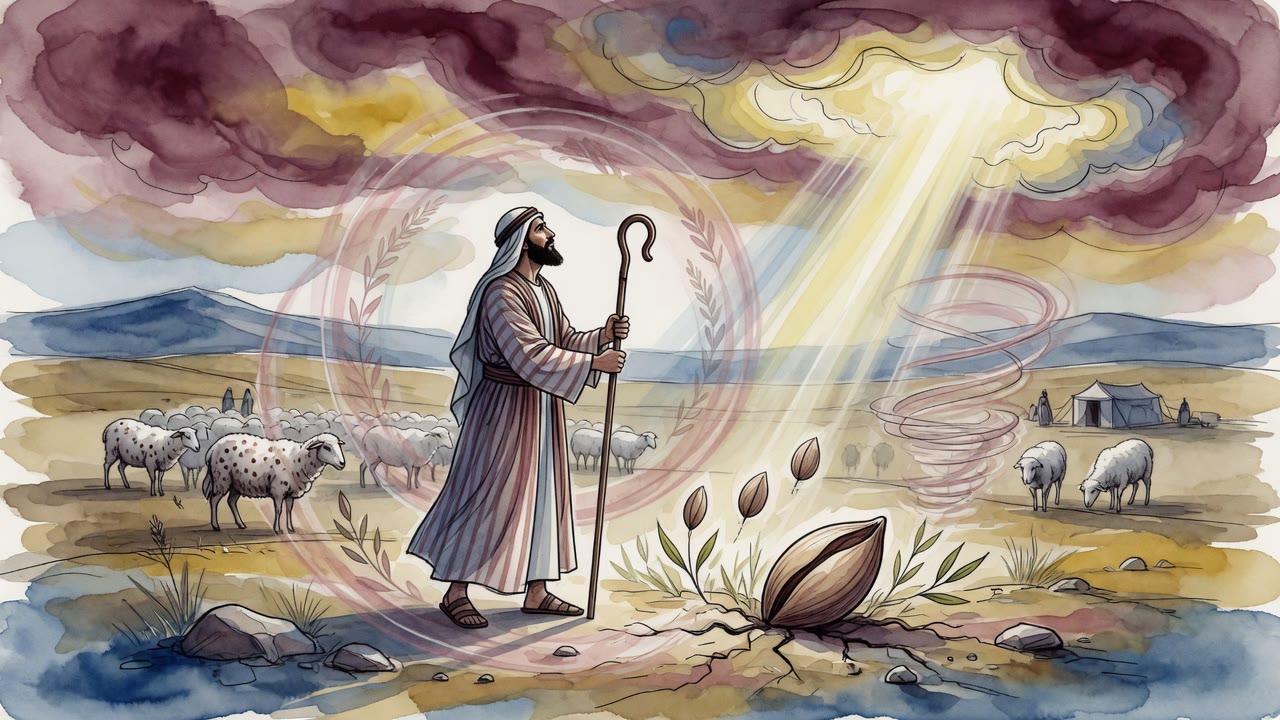
By the time Jacob prepared to leave Laban, the flocks he had earned were extraordinary. Bereshit Rabbah 73 preserves an accounting. Genesis says Jacob became exceedingly prosperous, and Rabbi Abba bar Kahana pressed that phrase until it opened: one million twenty-seven thousand two hundred flocks. A figure so large it sounds less like livestock inventory than like a theological statement.
Rabbi Shimon bar Abba reads Jacob's prosperity through Micah: the one who breaks through ascended before them. Jacob's abundance is not simply the reward for patience. It is a foretaste of the messianic age breaking into a pasture. The prosperity of this one man in Aram becomes a small version of the end of exile, a proof that faithfulness under Laban had not been wasted on Laban's account alone. It had been accumulating toward something larger.
Jacob worked in a foreign land for a man who cheated him. He produced more than he could count. The flocks moved around him in numbers that Rabbi Levi says God multiplied beyond ordinary measure, so that the dogs that guarded them could not be tallied. The abundance exceeded what any human arrangement could have generated from seven years of honest labor, let alone fourteen years of labor the second half of which was given to a man who had stolen the first half.
What Faithfulness Opened
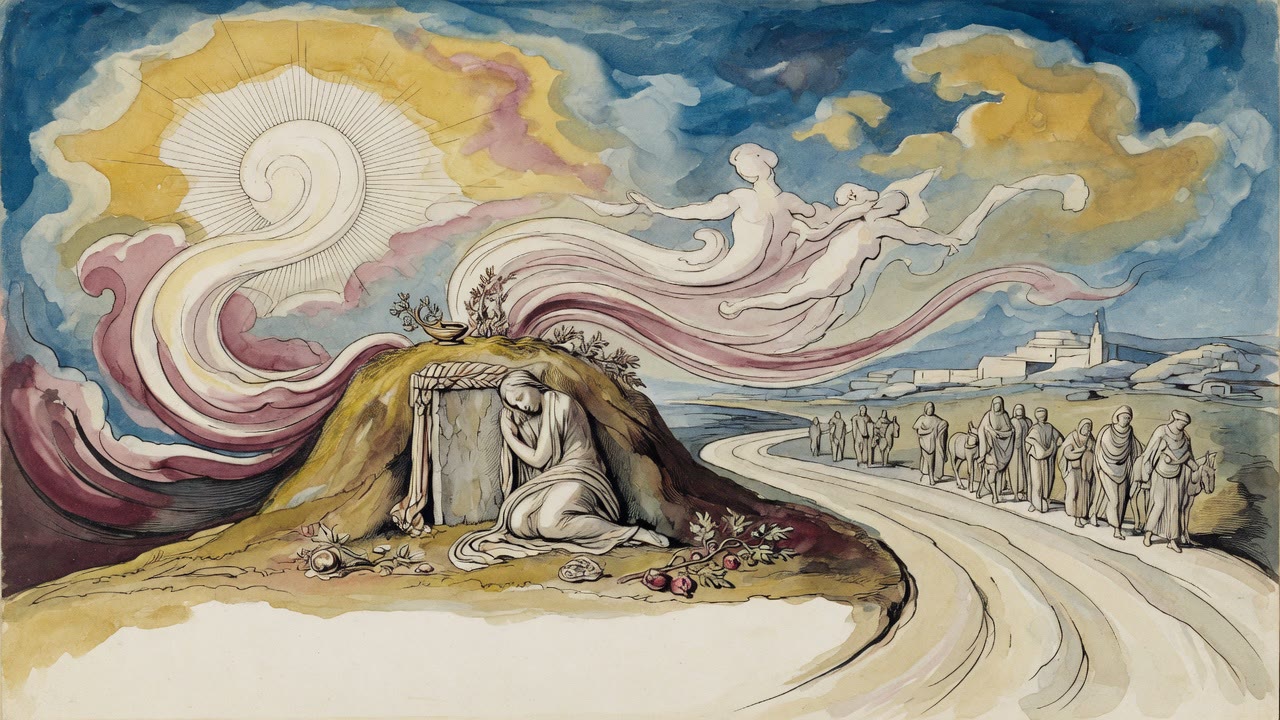
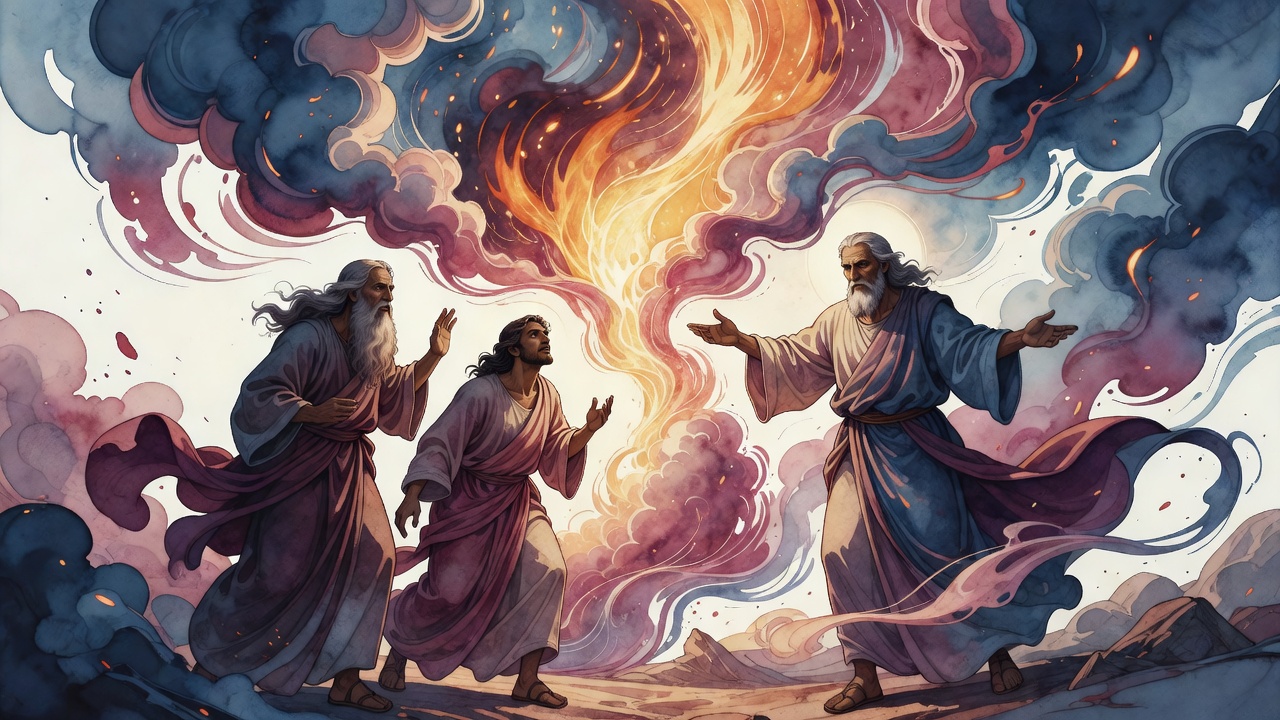
Bereshit Rabbah braids four passages together, doubled names, Jacob's labor, Asher's birth, Jacob's prosperity. And the braid has a single thread running through it. A person keeps faith through wrong and receives a future they could not have designed. Terah's doubled name carries him toward Abraham's blessing. Jacob's "also worked" carries him toward flocks beyond counting. Leah's happy naming carries her daughters toward kings. Each gesture of faithfulness in a moment that did not reward it opened something downstream.
The World to Come in Bereshit Rabbah is not only a destination after death. It is a quality that breaks into the present when someone acts with integrity while being wronged. Jacob did not receive Rachel on the morning after the wedding. He received her a week later, after agreeing to seven more years. He walked into those years with his word intact, and by the time he left Aram the flocks were beyond numbering, and his son's name was happiness, and even his grandfather's idolatrous father had been given a share in the world that was coming.
← All myths