Benjamin's Birth Was Written Before Rachel Went Into Labor
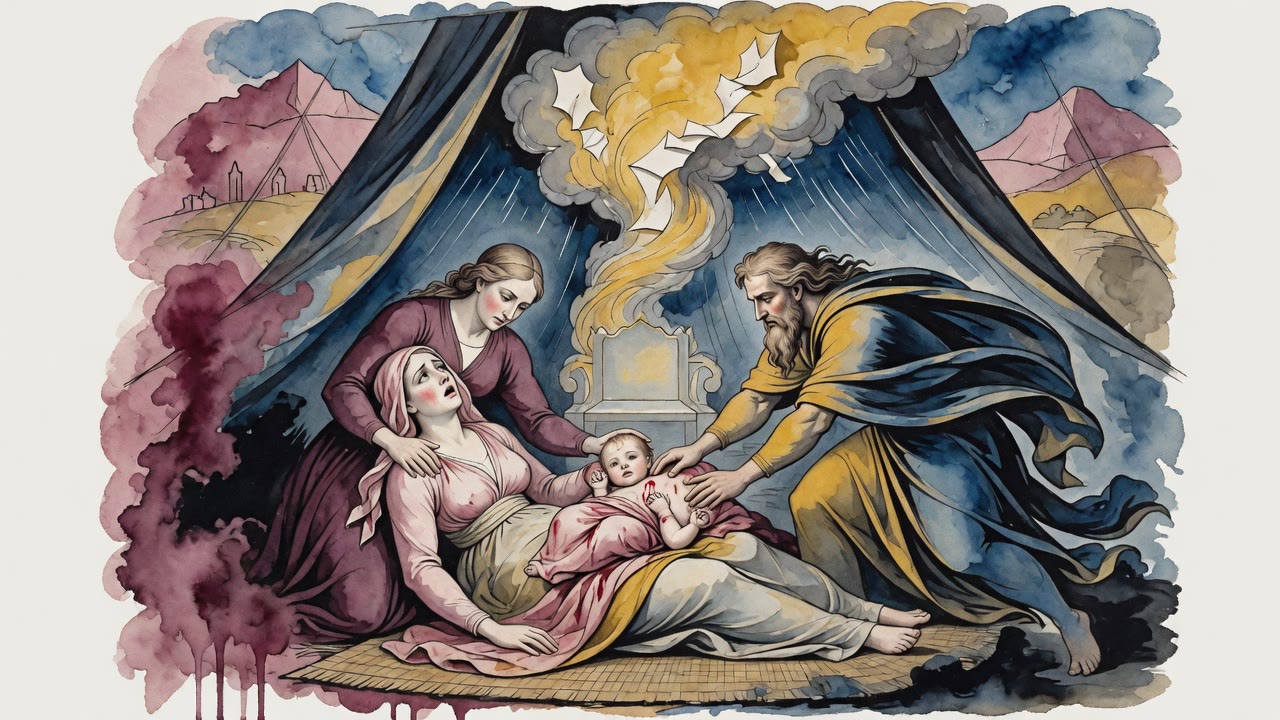
Rachel died in the night on the road to Bethlehem. She named the boy Ben Oni with her last breath. Jacob renamed him and built a pillar over her grave.
Table of Contents
 Click for full size
Before the World Had a Name for Him
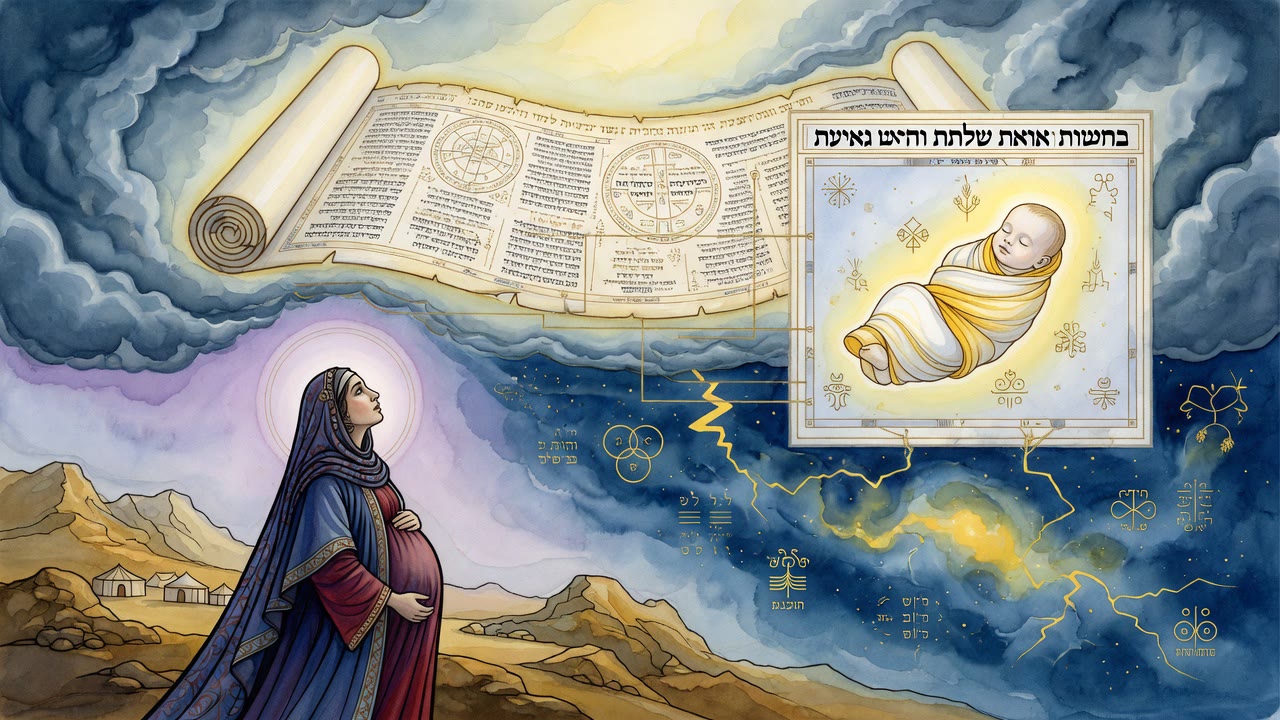
The Book of Jubilees does not begin with Abraham. It does not begin with the flood, or the garden, or the first day when light separated from darkness. It begins before all of that, with an angel dictating to Moses on Mount Sinai the history of the division of days, the testimony of years, the events inscribed on the heavenly tablets before any of them had occurred. Time in that framework is not a river you fall into. It is a structure. Every jubilee period, every sabbatical cycle, every week of years was planned and recorded before the first act of creation.
In that structure, Benjamin exists before Rachel does.
The Position in the Structure
This is not exactly what the text says. What it says, in its precise calendrical accounting, is that Rachel's death and Benjamin's birth fall within specific jubilee years and weeks that correspond to obligations and timings inscribed in heaven before the events themselves. The Jubilees account of Benjamin occurs most visibly in the scene of the brothers' search, when the cup is found in his sack. The brothers protest their innocence. They offer a collective surety. The steward searches and finds exactly what Joseph had planted. Benjamin, the youngest, the son of the right hand, is singled out in the drama with a precision that feels both arbitrary and destined.
Destined because every moment in this text was destined. The cup in Benjamin's sack was not an accident in the narrative or in the heavenly record. It happened in its correct jubilee, in its correct week. It had a place in the structure before it had a place in history.
What the Dates Mean
Rachel died giving birth to him in the night, on the road to Bethlehem. She had labored hard and the labor had cost her everything. She named him Ben Oni with her last breath. Jacob renamed him Benjamin where she lay. He built a pillar on her grave. All of this happened in a specific year of a specific jubilee cycle that the heavenly tablets had marked before the patriarchs were born.
The tradition that treated history this way was not merely interested in chronology for its own sake. It was arguing something about the nature of the covenant. If every event in the patriarchal narrative occupied a predetermined place in the structure of time, then nothing that happened to Abraham or Isaac or Jacob or Benjamin was accidental. The grief and the exile and the waiting and the reunion were all positions in a pattern whose completion was already written.
The Son of Days
His name contained this. Benjamin: son of the right hand, son of strength. But also, in one reading of the tradition, son of days, the child born to the patriarch in his old age, the last addition to the twelve, the one whose birth position was structural as much as biological. He was the final piece of something that had been building since before the world began. When he was born, the number that had been waiting to be filled was filled.
Rachel died for it. That too was written.
← All myths