Abraham, Jacob, and Moses Each Called God the Same Name
The knife was still in Abraham's hand when he named the mountain. Jacob woke on a stone and said the same word into the dark.
Table of Contents
 Click for full size
The Knife Left the Throat
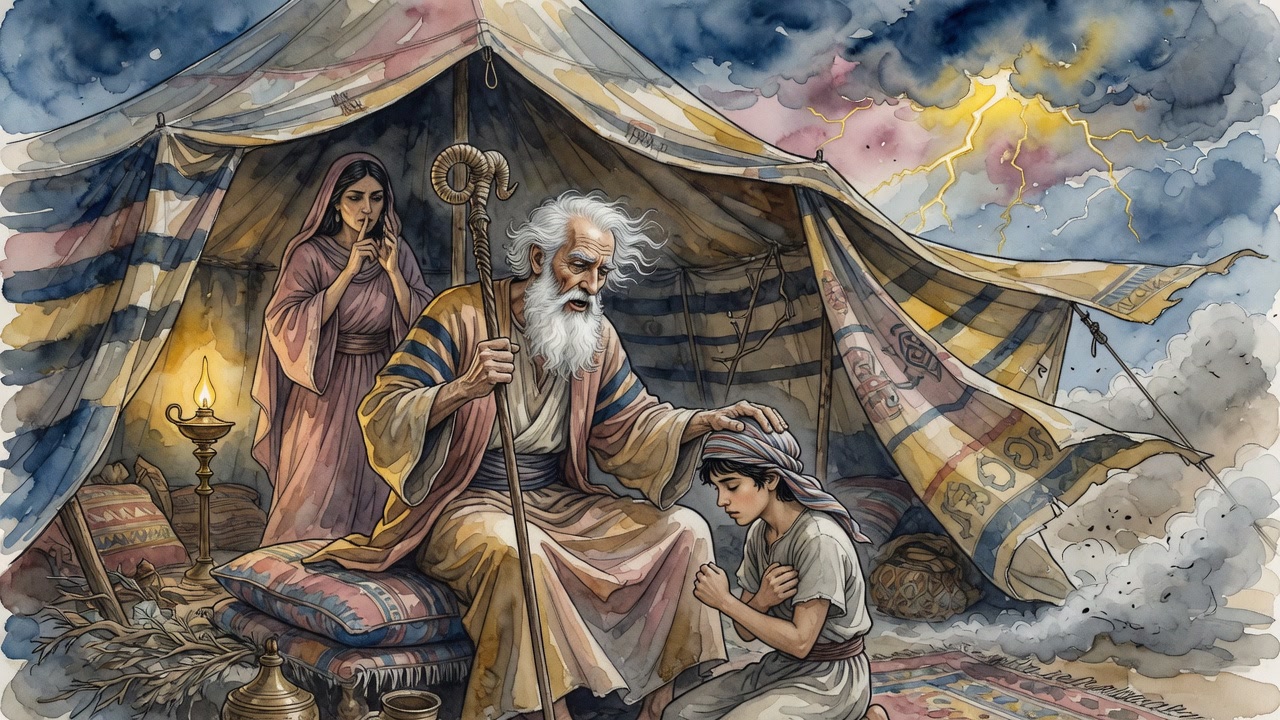
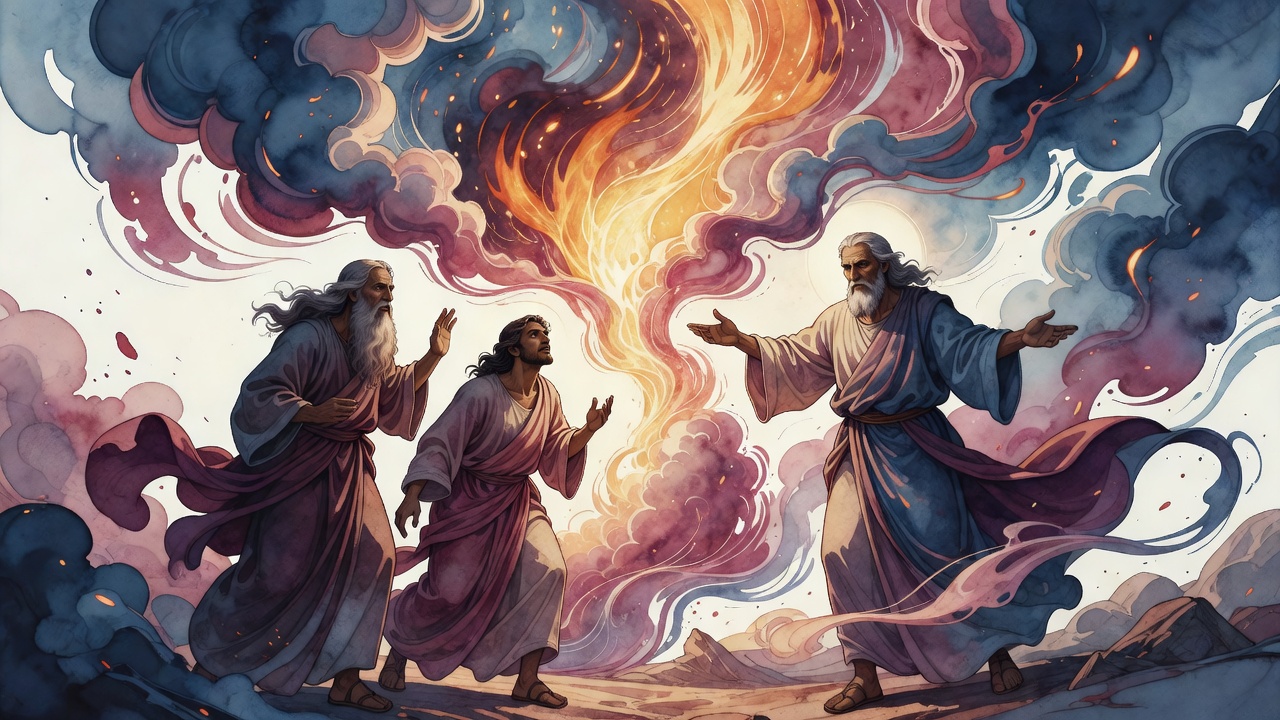
Abraham pulled the knife back from his son's neck. He loosed Isaac's ropes. Isaac stood. The wood on the altar was wet. The ram kicked in the thicket, horns still caught. It had been running toward the altar when something tangled it. Abraham fetched it out, brought it up onto the wood, and sprinkled its blood where Isaac's throat had been. His hands shook. He had to name a mountain where heaven had stopped his arm.
He named it: the Lord will see (Genesis 22:14). Not a hope. A report. The seeing had already happened, inside the moment, while the blade was still up.
Abraham looked at the ground under his feet and used a word that sounded like a place. A place was all he had to give it. He did not know two other men would speak that word without ever hearing him.
Jacob Sat Up in the Dark
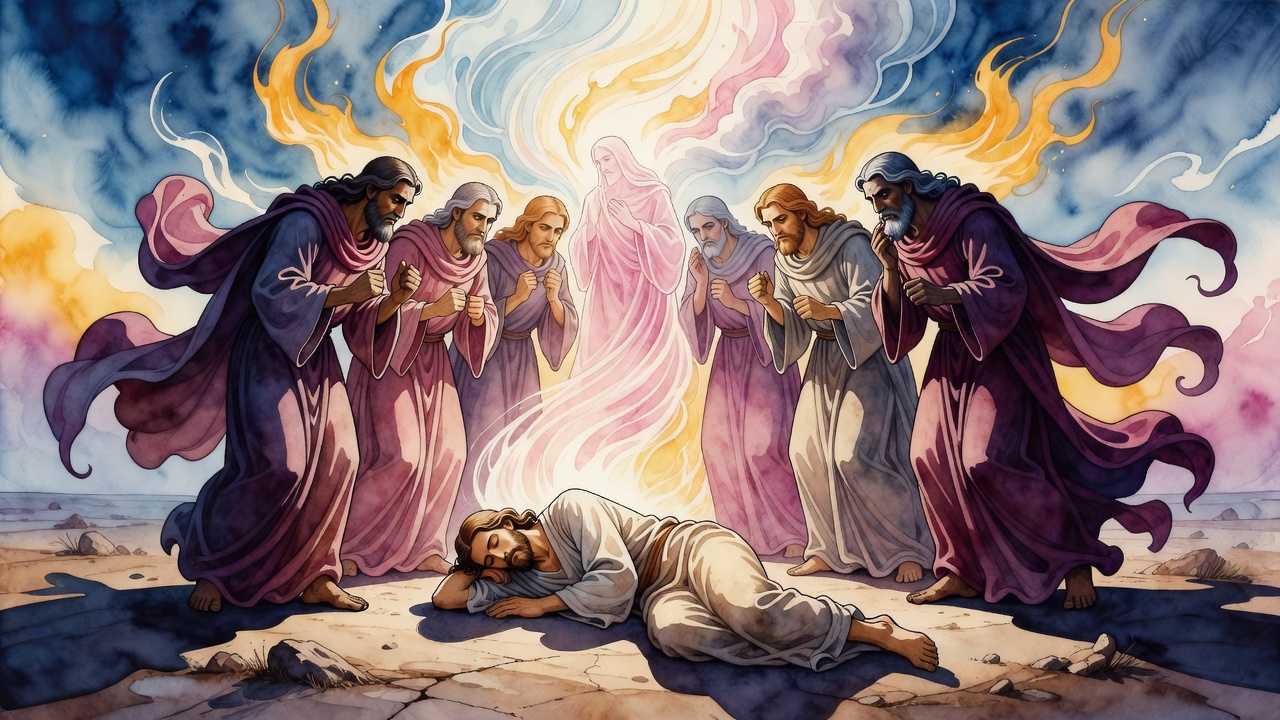
A generation later Jacob woke on a stone. He had been dreaming of a ladder, angels climbing and coming down, and God standing above it. The ground looked like any other ground. The hair on his arms rose anyway.
"How awesome is this place," he said (Genesis 28:17). He had not prepared a prayer. The sentence broke out of him the way a cry does. He had fallen asleep inside something and only named it when he sat up.
He poured oil on the stone. He set it as a pillar. Then he walked on, still frightened, toward a country that had not asked for him. He did not know he had added a second witness to a word Abraham had already used with a knife in his fist.
Moses Wrote From the Wilderness
Centuries later Moses sat in the wilderness with a psalm in his mouth. "Lord, You have been our dwelling place throughout all generations" (Psalm 90:1). He did not write that God lives in a house. He wrote that God is the house.
A dwelling is a place a person goes to. Moses wrote that there is nowhere to go that is not already inside God. He set the line down among the tents and the dust and the graves of the generation that would not cross. He did not know he had closed a count of three.
There Is a Place With Me
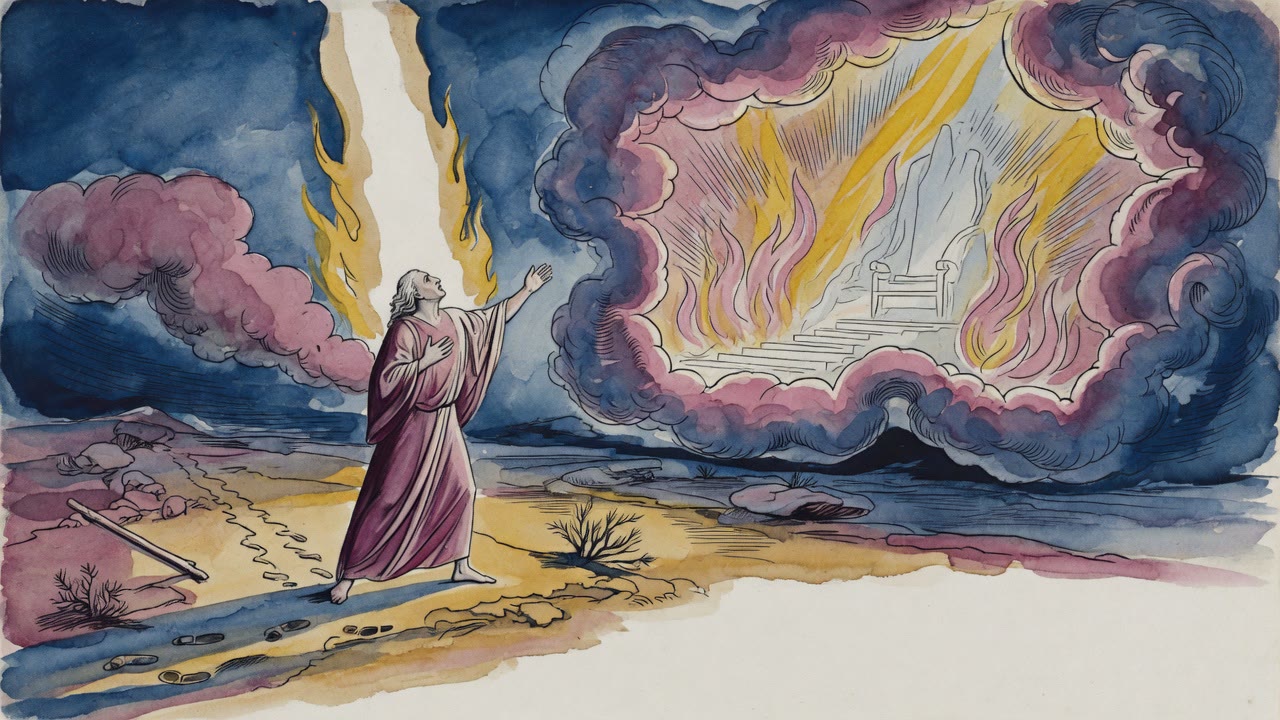
On the mountain Moses had asked to see God's glory. God put him in a cleft of rock and covered him. Then God said, "Behold, there is a place with Me" (Exodus 33:21). Moses stood in the cleft and heard it as a location, not as a riddle. A place with God. Not God stuffed into a place.
The world sits in God. God does not sit in the world. Dependence runs one way. Moses came down from the rock with that sentence in his bones. He had asked to visit what he was already inside.
Wherever the righteous stand, God is found standing with them (Exodus 20:21). They do not travel toward Him. They notice the ground they are already on. Jacob had arrived at "the place" and lodged there without knowing the name of the field (Genesis 28:11). The field had been holding him first.
The Fathers Wore One Name
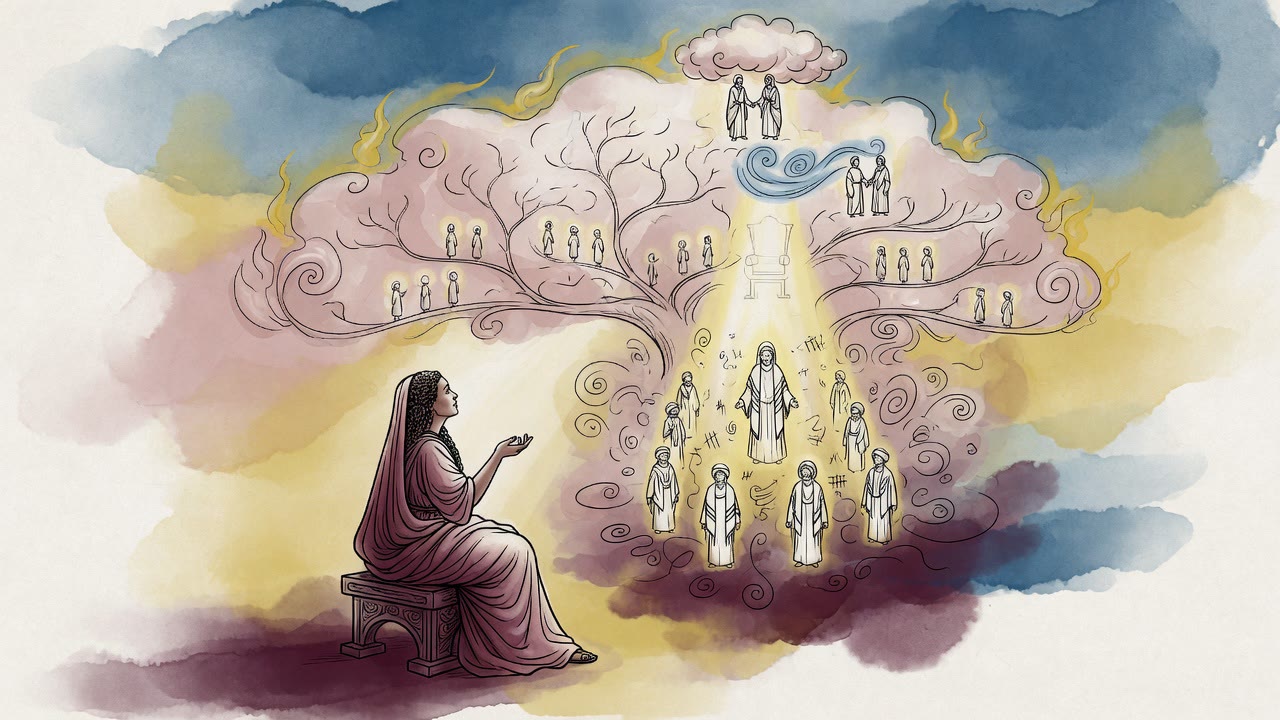
The names of the men ran together the same way. Abraham was called Abraham. Isaac was also called Abraham. The verse that opens his story says, "This is the legacy of Isaac, Abraham's son, Abraham." Jacob was renamed Israel at the river after he wrestled and would not let go. Isaac was called Israel too. The list of those who went down to Egypt says "the children of Israel who came with Jacob" (Exodus 1:1). If Jacob is among the children, the Israel in that line is his father.
Abraham was drawn into the name as well. "The dwelling of the children of Israel in Egypt was four hundred and thirty years" (Exodus 12:40). That clock did not start when Jacob went down. It started on a night when Abraham walked between split animals. A smoking furnace passed through in the dark (Genesis 15). Dread fell on him. A span of years was spoken over him before Isaac was born. The Torah calls that whole span the dwelling of the children of Israel. The name was already on the first of them.
Abraham called the mountain Place. Jacob called the ground Place. Moses called God Place. None of them had a letter from the others. The word was HaMakom (המקום), the Place that holds every other place. The oil on Jacob's stone dried. The knife went back into its sheath. Moses came down from the cleft. The Place had not moved.
← All myths