Jacob Built Peace From Stones and Distance
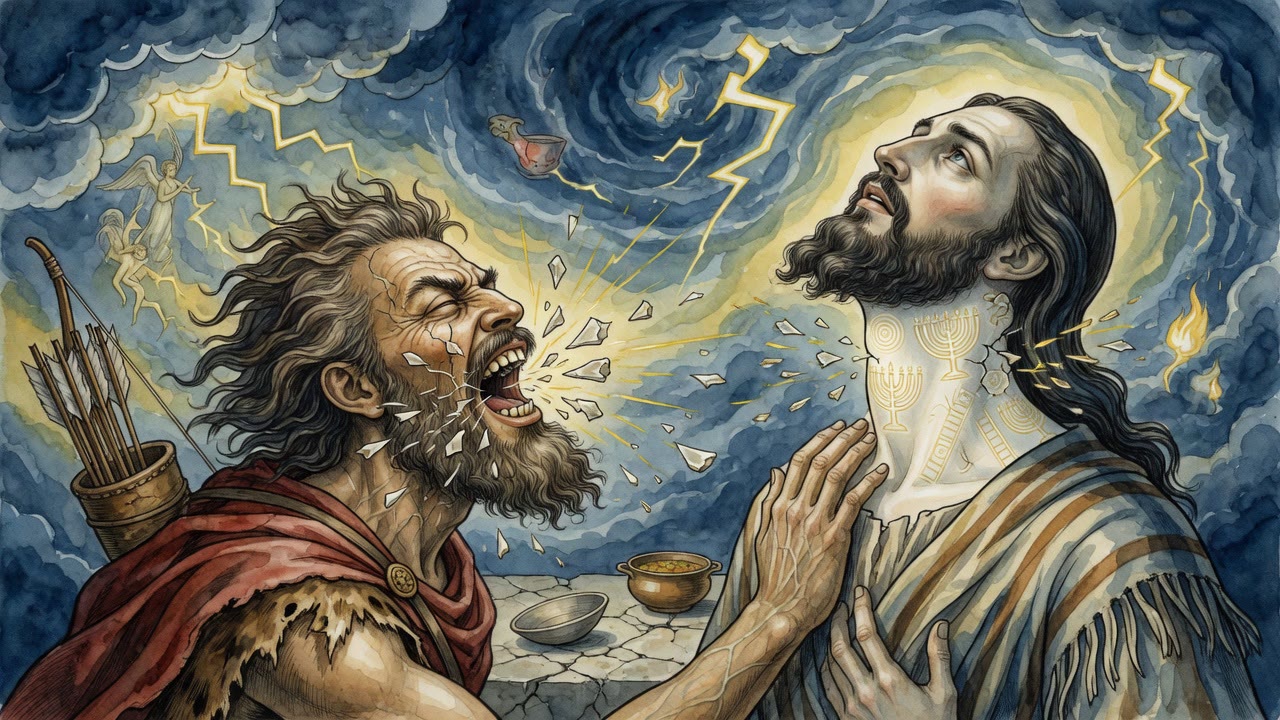
Isaac put a sword into Esau's hands and told him to keep it sheathed. Years later four hundred men waited on the road home.
Table of Contents
Isaac put a sword into Esau's hands and did not tell him to use it.
 Click for full size
"By your sword you shall live," he said, "and you shall serve your brother" (Genesis 27:40). Then he pressed the blade back toward the leather. Insert it. Leave it there. Live.
Esau took the weapon and the old grievance together. He had been cheated of a blessing in that same house. The steel was real. So was the condition attached to it. Draw it against Jacob and the blessing would turn. Keep it sheathed and he would live.
He walked out with the sword on his hip. Years later four hundred men would walk behind him on the road to Canaan, and the question would still be the same. Would the blade come out?
Two Names on One Heap
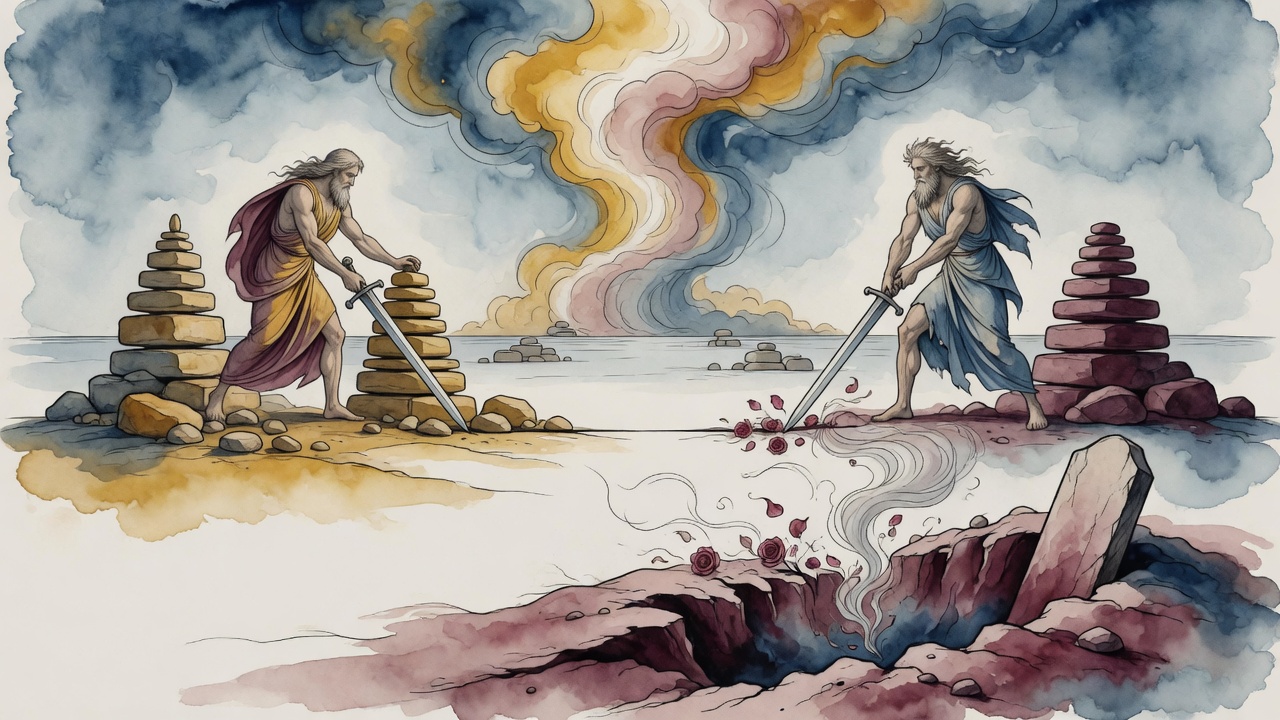
Before that meeting Jacob had another man at his back. Laban caught him in the hill country after the flight from Haran. They did not make peace with a feast. They gathered stones until the pile stood as high as a man's chest, dust on both pairs of hands, and each named it in the language he actually spoke.
Laban said Yegar Sahaduta. Jacob said Galed. Witness heap. Same meaning. Two mouths.
"This pile is a witness between me and you today," Laban said (Genesis 31:48). Then he named the Mizpah. The Lord will watch, because we will be hidden from one another (Genesis 31:49). Not one man ducking out of sight. Both of them. Until now we have been seeing each other. From now on we will not.
Jacob did not argue the Aramaic. He let the other name stand on the same stones. Distance was the agreement. Laban would not cross toward Jacob. Jacob would not cross toward Laban. Fourteen years of wages, swapped flocks, daughters, and night work ended in a border a hand could feel.
They turned. They walked opposite ways. The heap kept both names and neither friendship. Peace, on that hill, looked like a pile of rocks two men refused to climb.
Rachel Left at the Crossroads
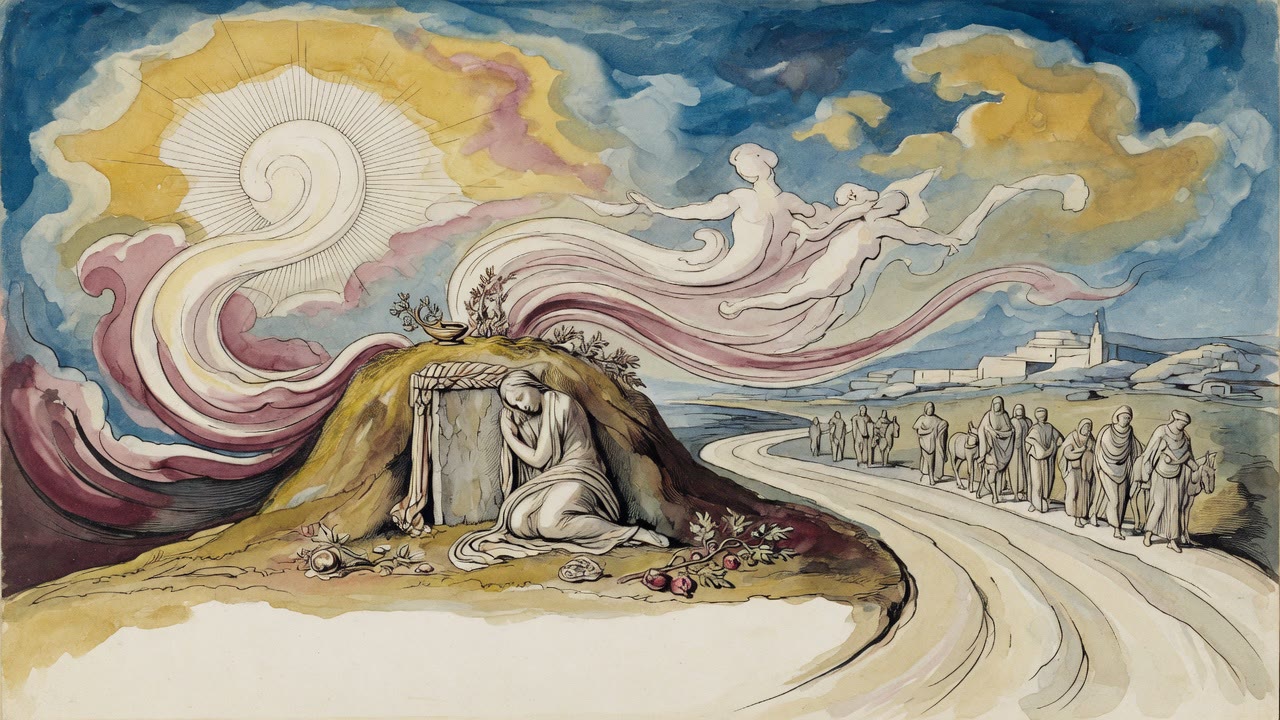
Rachel went into labor on the road to Efrat, near Bethlehem. There was no house. No family tomb waiting with the lamp lit. The pains took her in the open, and she named the boy Ben-oni, son of my sorrow, before the breath left her. Jacob named him Benjamin and had to keep moving.
He did not carry her to Machpelah. He buried her at the crossroads, where travelers would pass, and set a monument over her. Stone on a grave at the edge of the path. Anyone coming south would see it.
Some said the righteous do not need markers. Their words are enough. Jacob set the stone anyway.
He had seen something ahead of the burial. Columns of captives would one day be marched out of the land on that same road. Rachel would be there when they passed. She would hear them. She would weep for them. "A voice is heard in Ramah, wailing, bitter weeping, Rachel weeping for her children" (Jeremiah 31:15).
He put his palm on the monument and went on. The grave was not a failure of planning. It was a listening post, placed before the disaster arrived. Distance again. A body left where the living would need her later.
Four Hundred on the Road
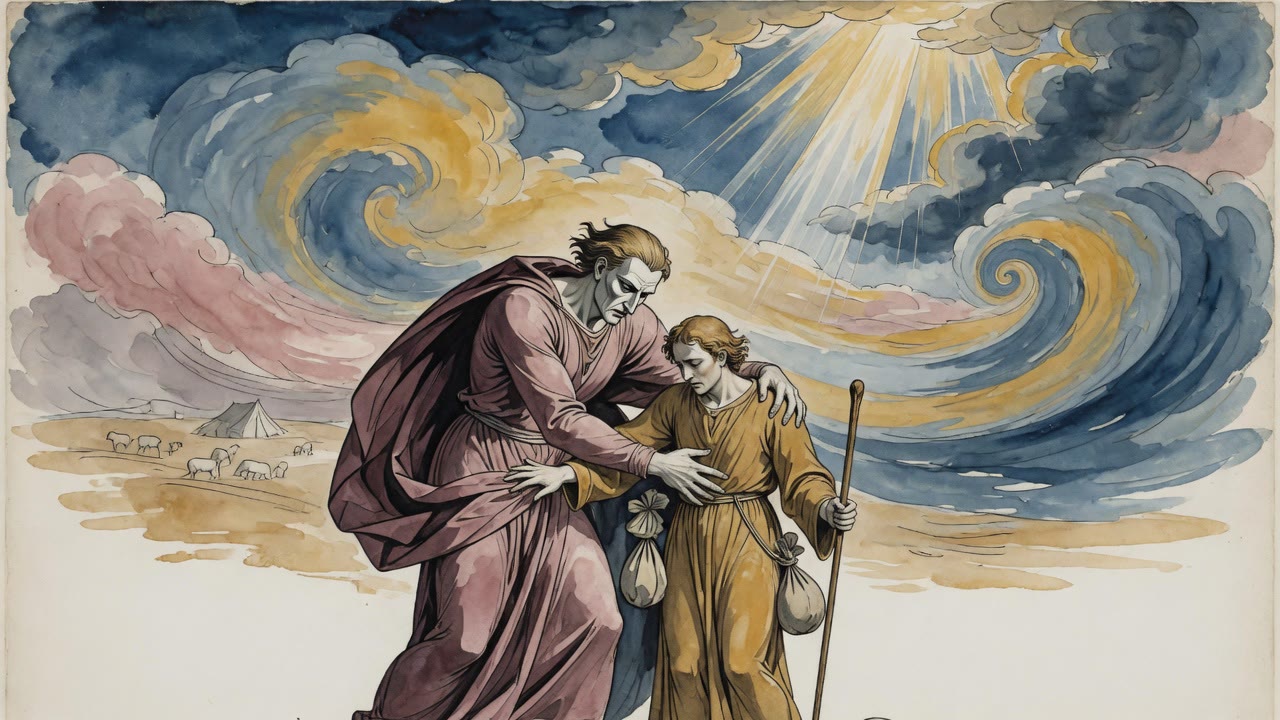
Esau came with four hundred. Jacob sent gifts ahead, bowed, arranged the children in the order he thought might spare them, and waited to see if the sheath would hold.
The sword stayed in. Esau looked at the household. Wives. Sons. Flocks. Servants. The ordinary weight of a life built in someone else's country. A man alone on a road can be stopped. A family standing in formation is harder to scatter.
He ran to Jacob and embraced him. He went home to Seir with his chiefs. Jacob went on to Shechem, then farther south, still not quite sitting down. The land of his father's sojournings was under his feet and not yet under his rest.
The Gathering That Let Him Sit
The Torah says Jacob settled in the land of Canaan (Genesis 37:1). He sat. He stopped.
The gathering did that. His sons collected around him until the household was one thing Esau could not simply take. "Your gathering will save you when you cry out" (Isaiah 57:13). Esau and his chiefs were the chaff the wind carries off. The one who trusts inherits the land. That one was Jacob, at last still, with children visible beside him.
He had built peace out of stones and distance. A sheathed sword. A heap with two names. A wife left at the roadside on purpose. A family close enough that a brother with four hundred men turned around.
He sat. The monument on Rachel's grave stayed standing, waiting for footsteps that had not yet come.
← All myths