70 myths · Page 1 of 2
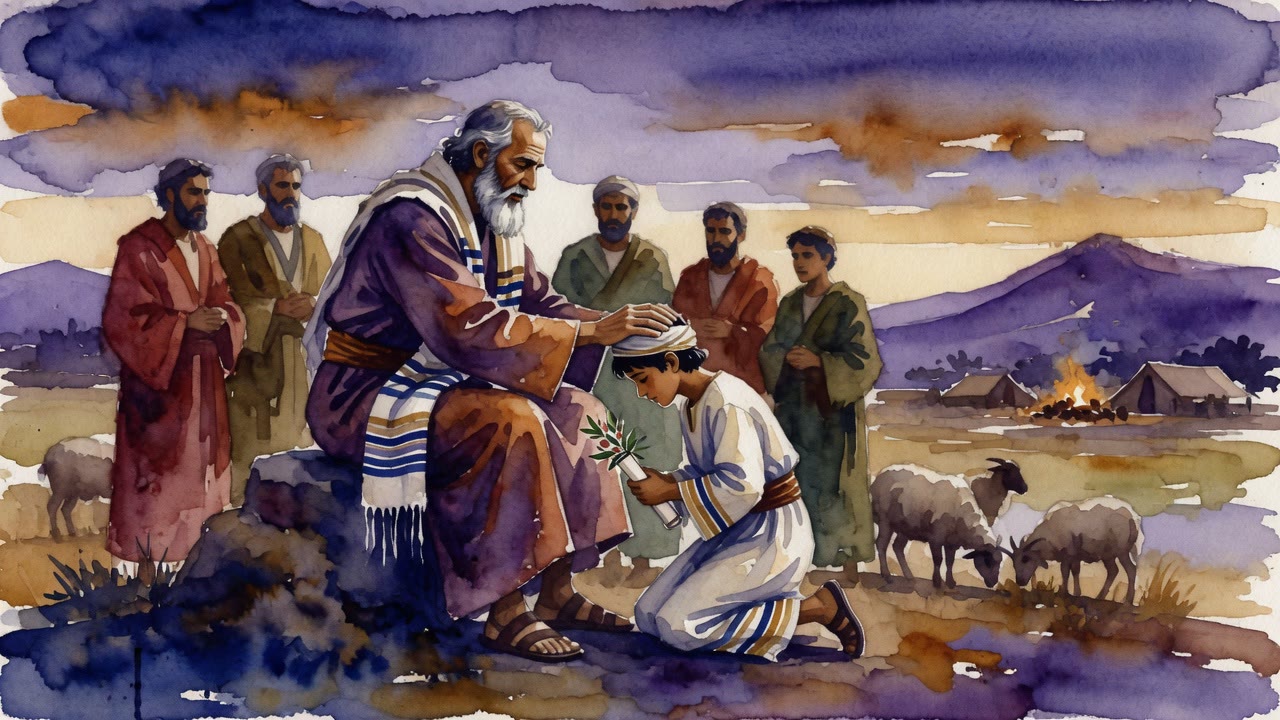
Centuries before a single Levite served in the Tabernacle, Jacob counted his sons at Bethel and picked one out for God. It was not the one you would expect.
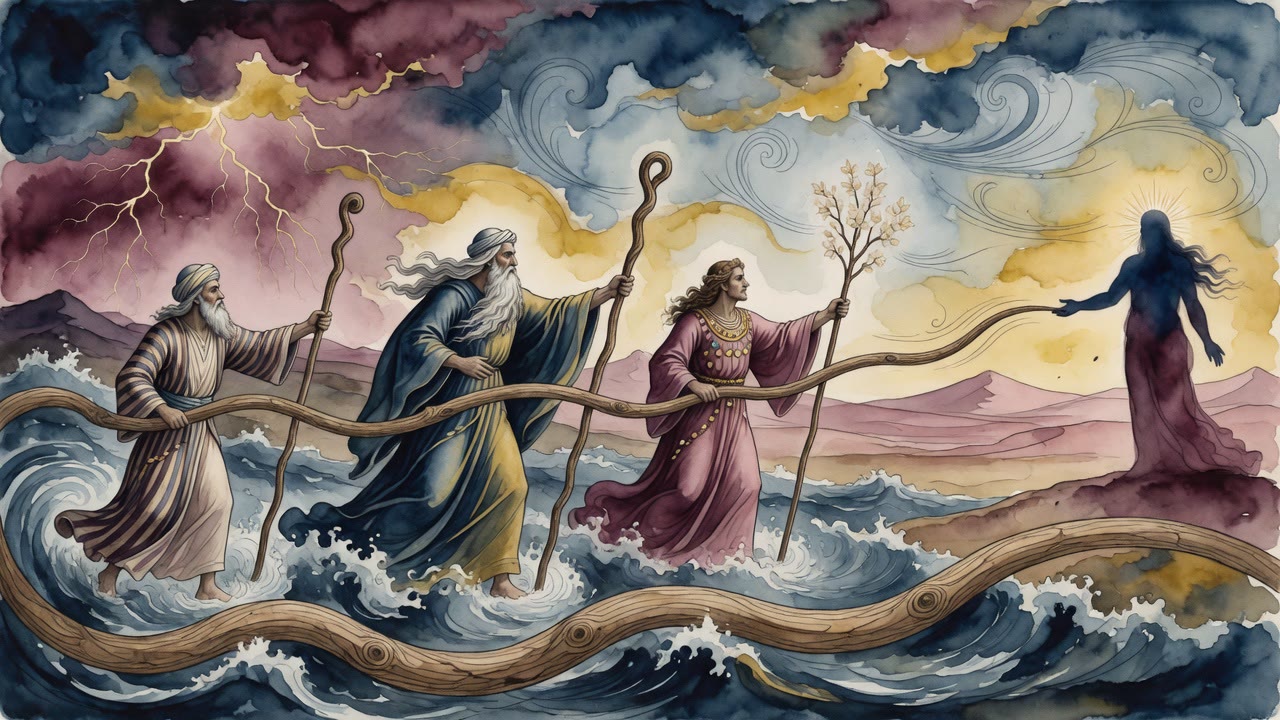
Jacob crossed the Jordan holding one staff. Centuries later that same wood was in Moses's hand, then Aaron's. The Messiah will hold it last.
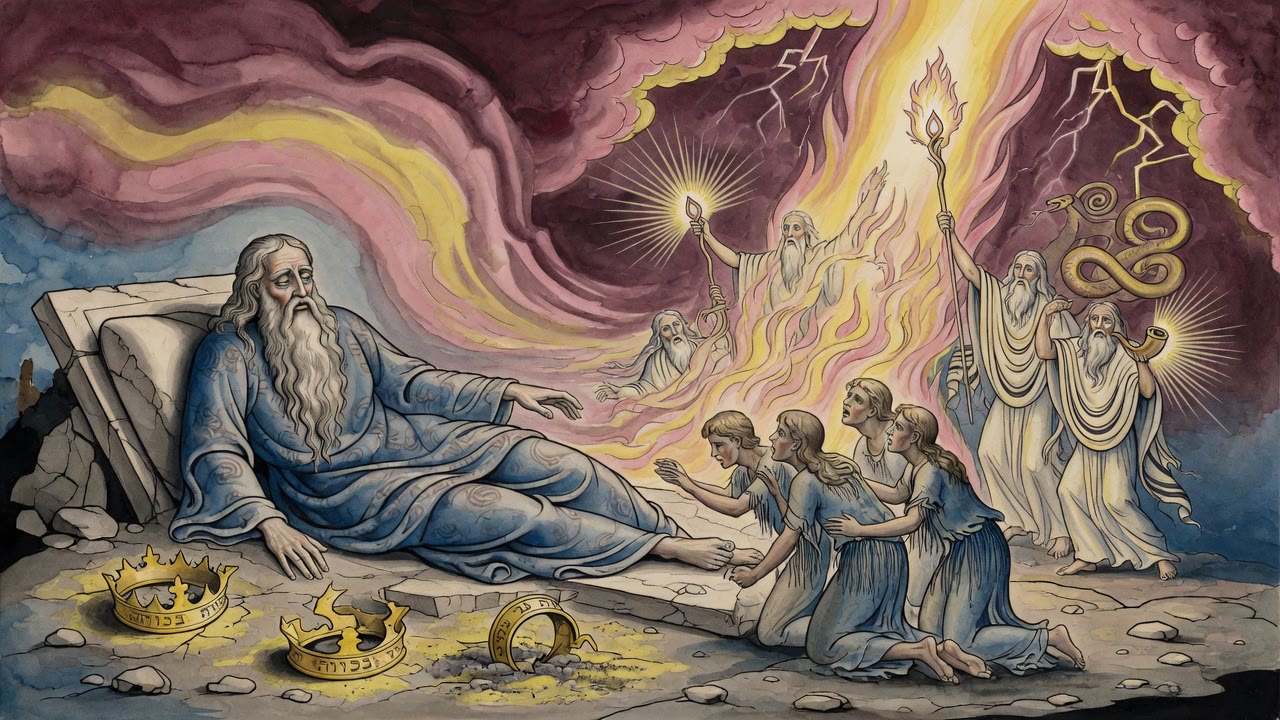
Reuben was born first and lost three crowns. Dying, he gathered his sons and told them to cleave to Levi, who would carry the priesthood.
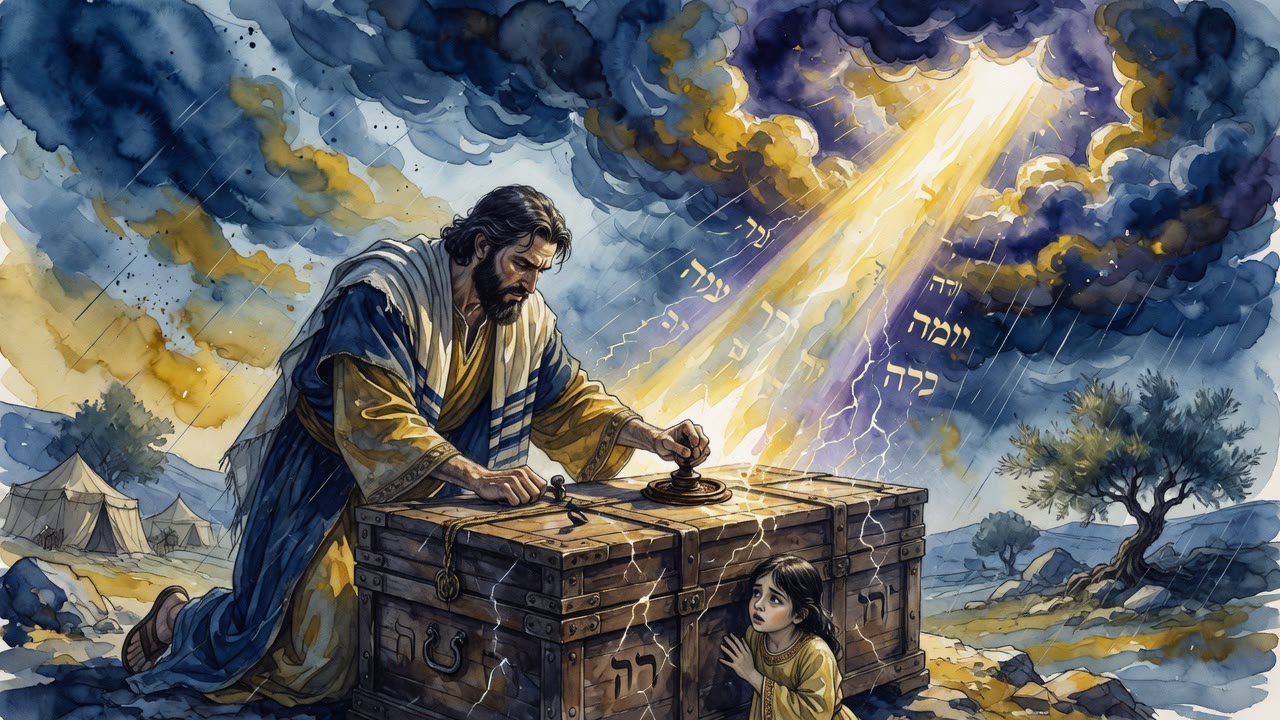
He went back and forth across the Jabbok all night moving his own freight, like a bridge. One of the things he carried over was a locked box.
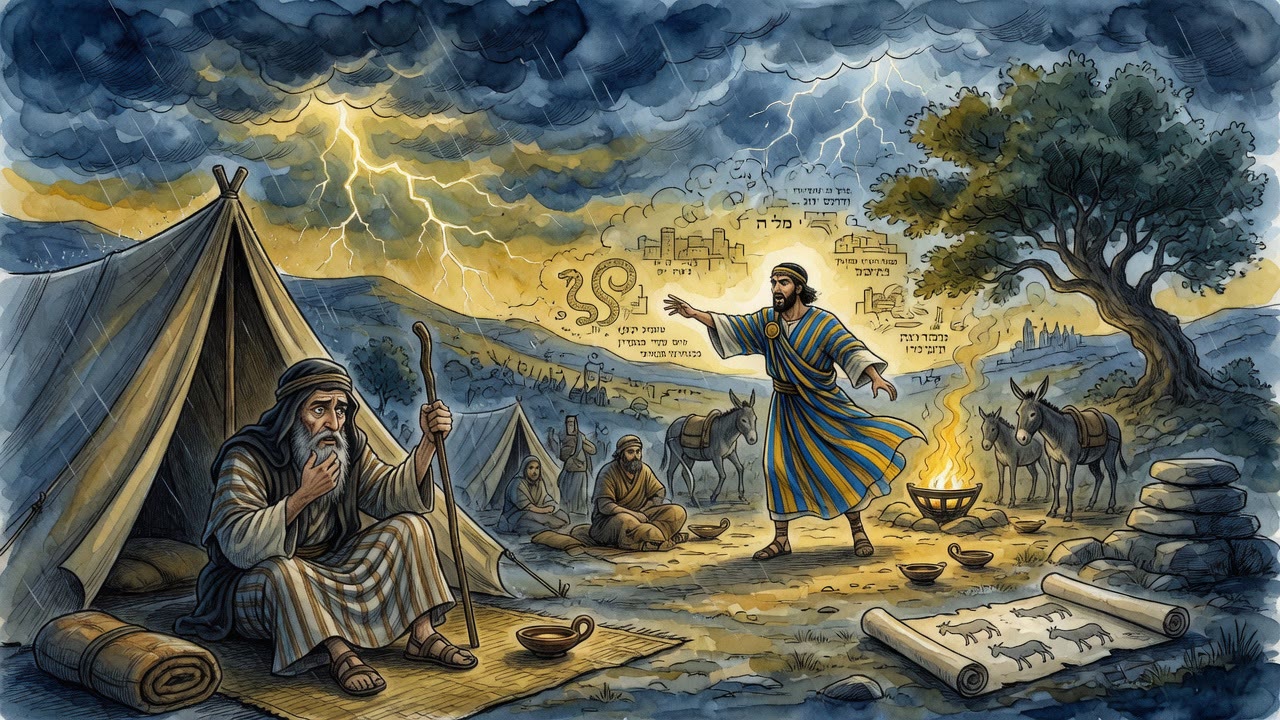
Seven Amorite kings march on Jacob's tents after Shechem burns, and only Judah's words about Noah stand between the family and the swords.
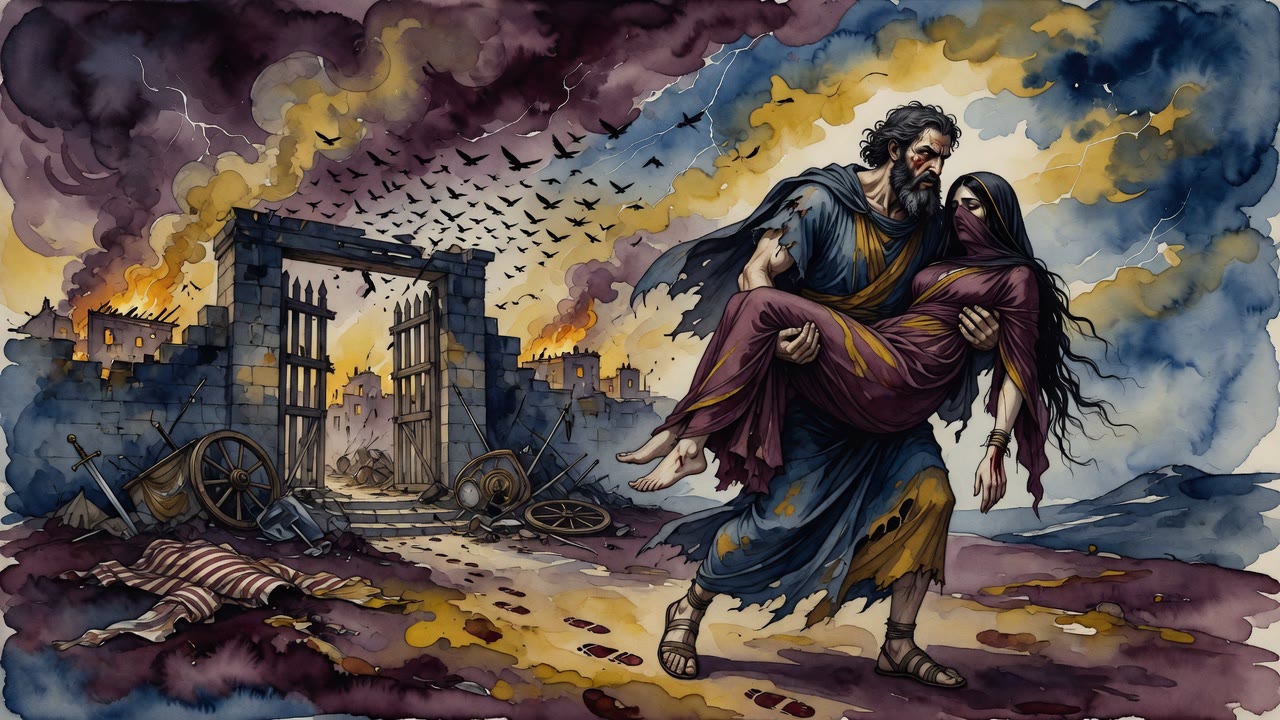
Her brothers killed every man in the city and pulled her out of the house. Then Dinah asked the question none of them had thought about.
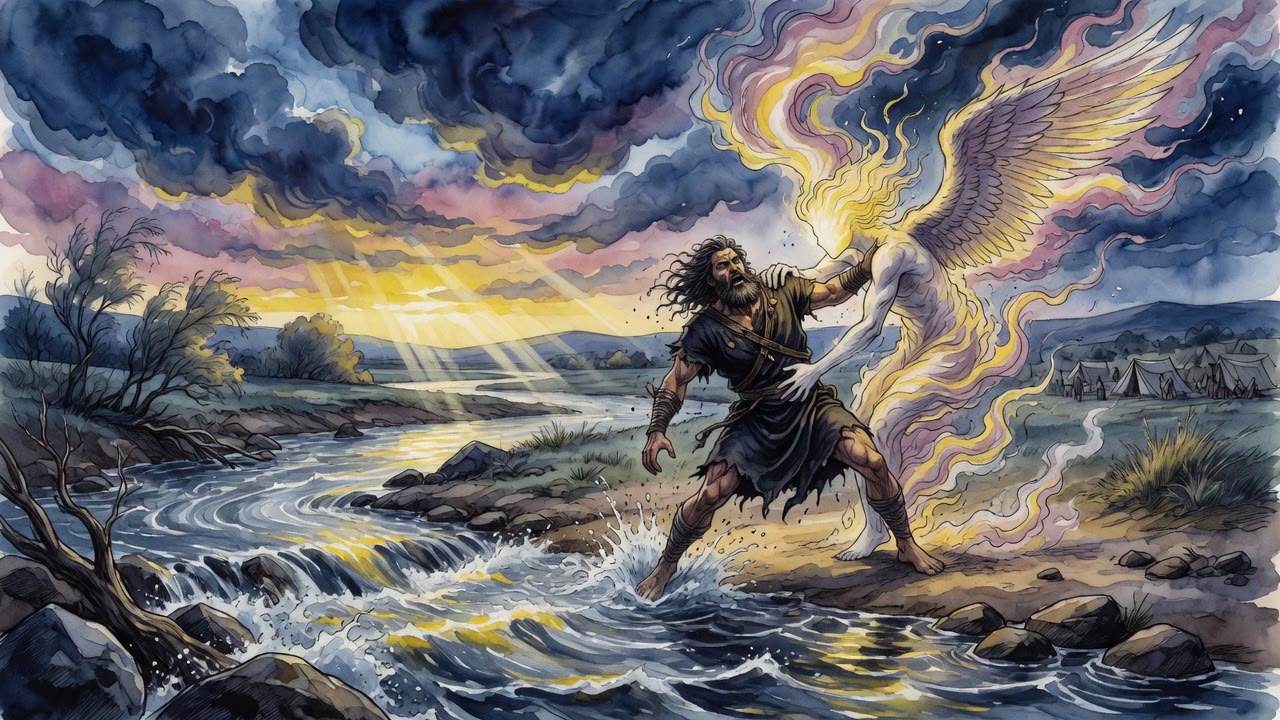
Jacob crosses the Jabbok alone at night and struggles until dawn with a being who will not say its name but gives him a new one.
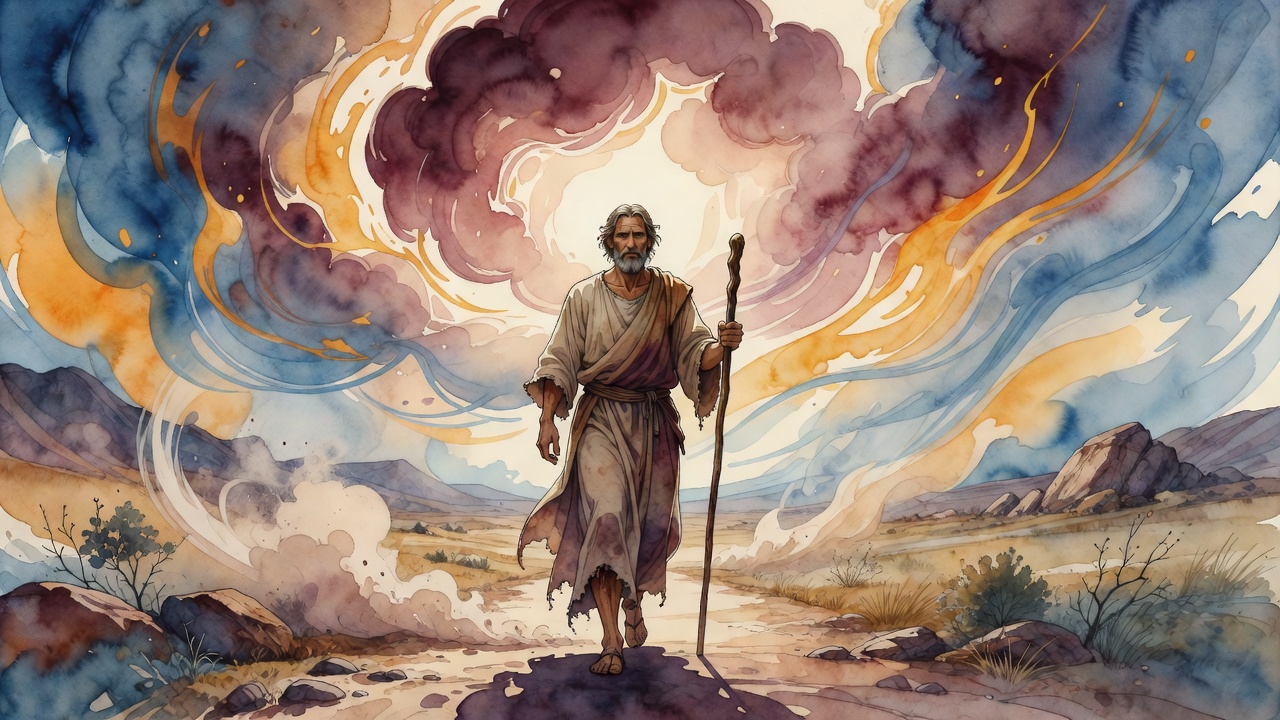
Twenty years in Laban's house. He worked seven of them for Rachel and got Leah instead. Jacob crossed back at the river limping, with his flocks and children.
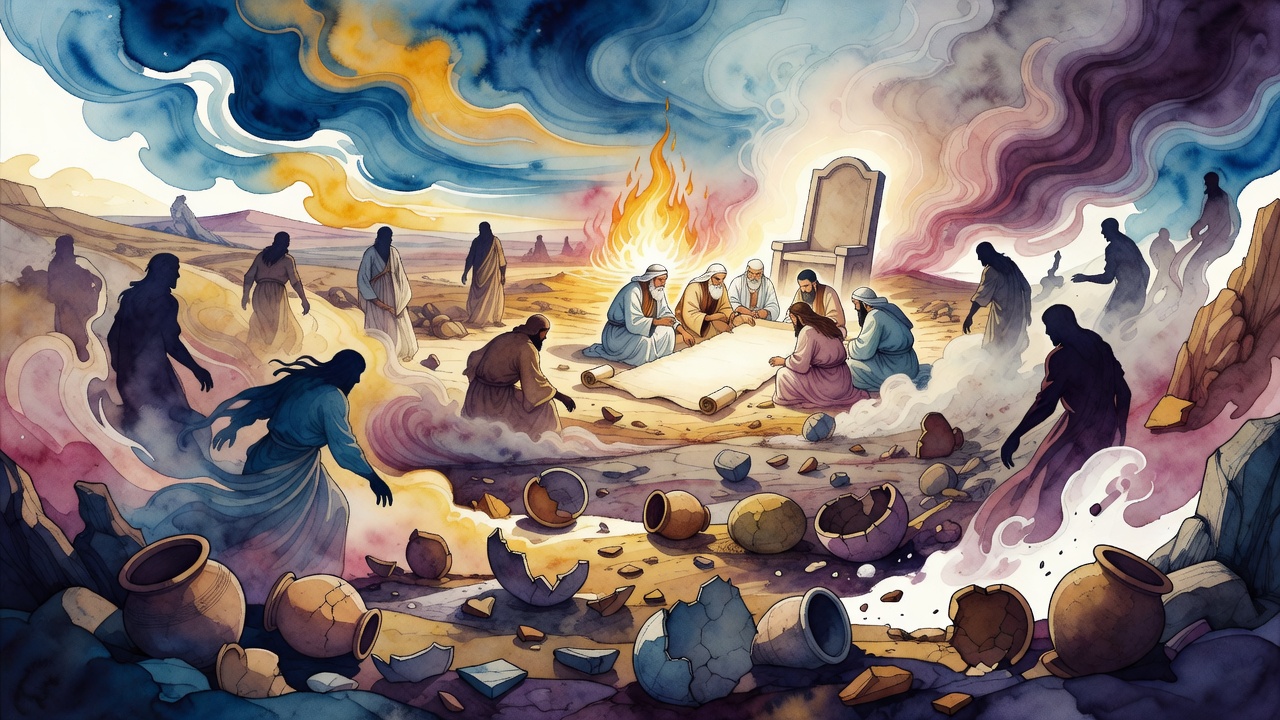
Bela sat in Dinhabah and died. The next king was not his son. Eight times the chair of Edom filled, and eight times it emptied.
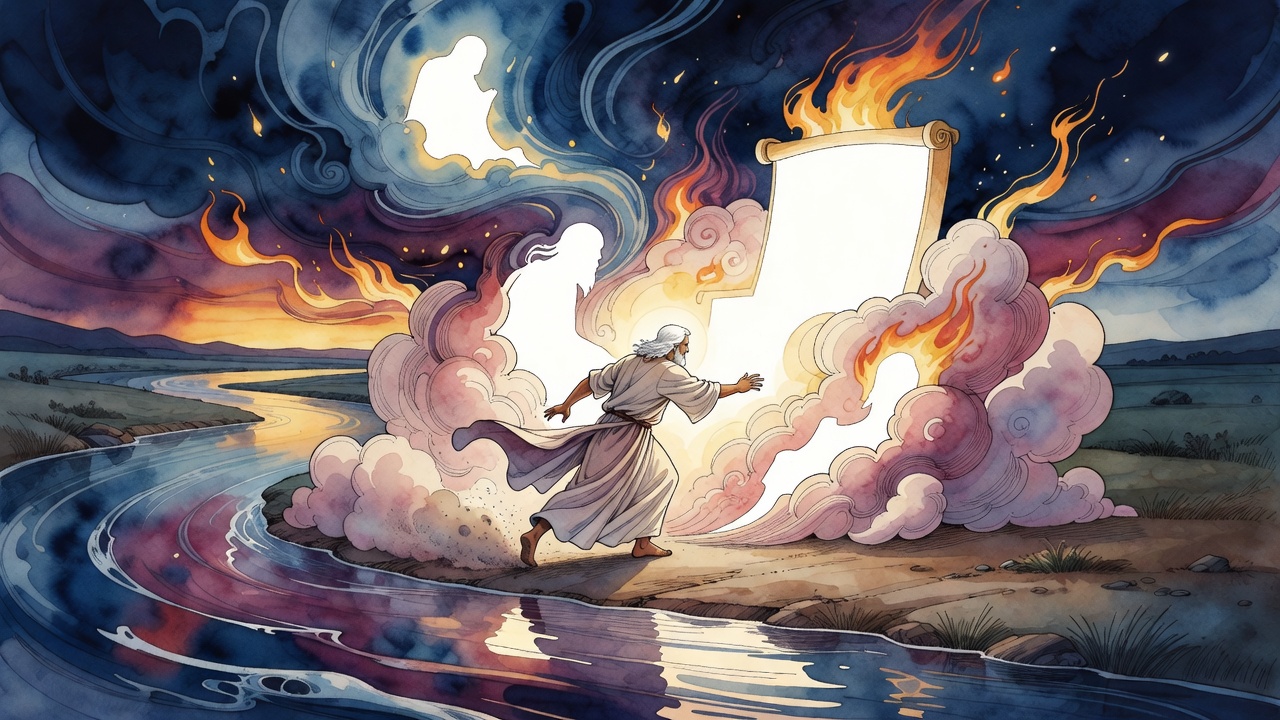
Four hundred armed men were a day away. Jacob sent everything ahead and stayed alone by the river, and something found him in the dark.
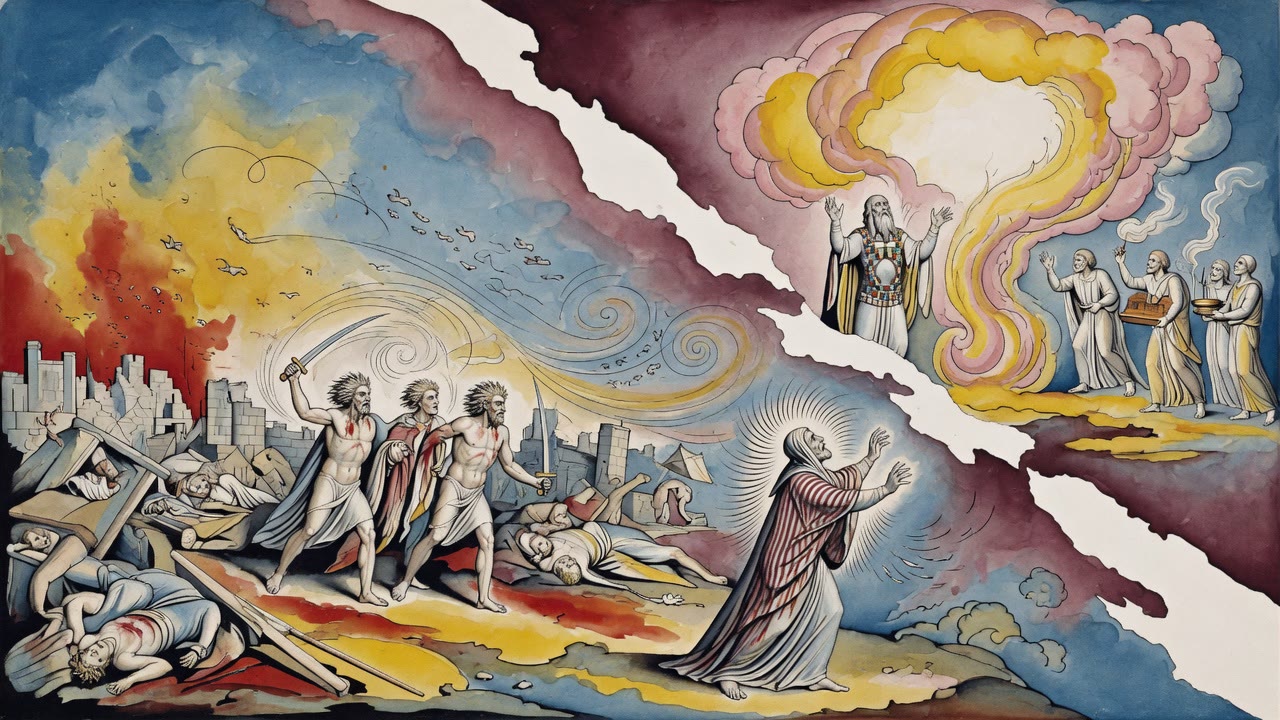
Levi and Simeon killed every man in Shechem and Jacob cursed them for it. Within a generation, God chose Levi for the priesthood. Jubilees explains why.
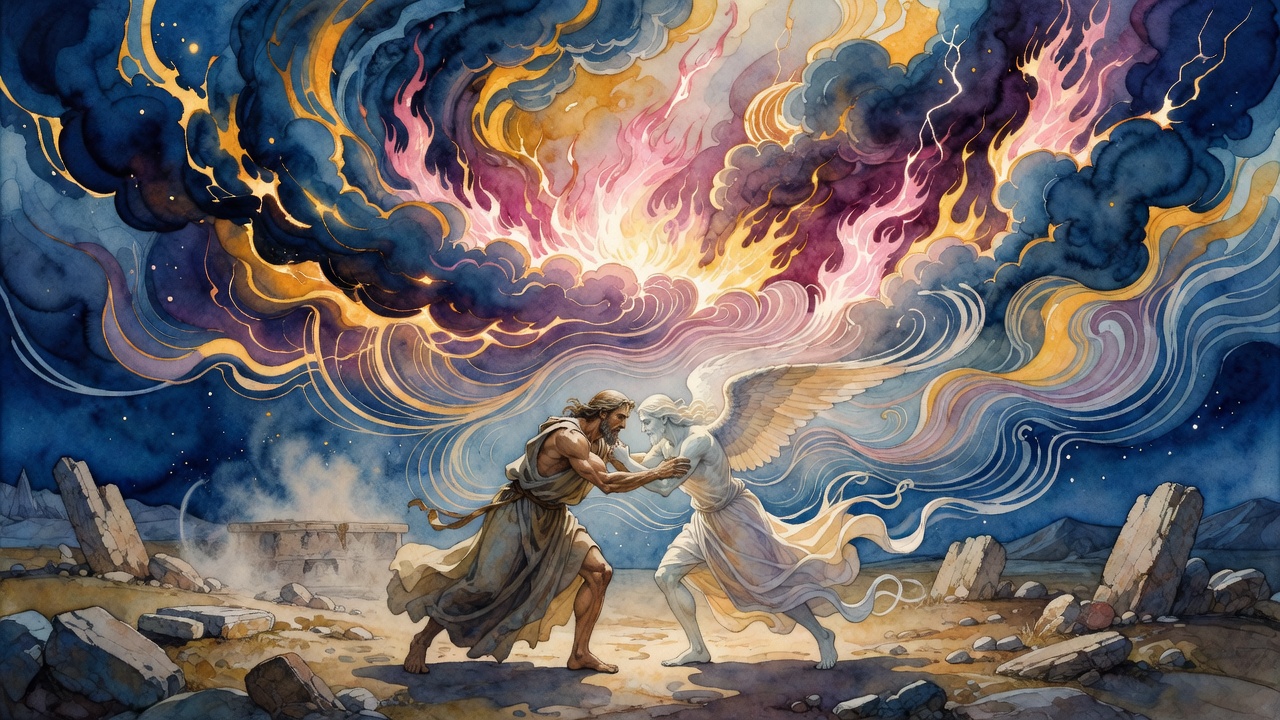
Jacob wrestles through the night over a forgotten tithe, a stolen blessing, and an angel whose first song waited since creation.
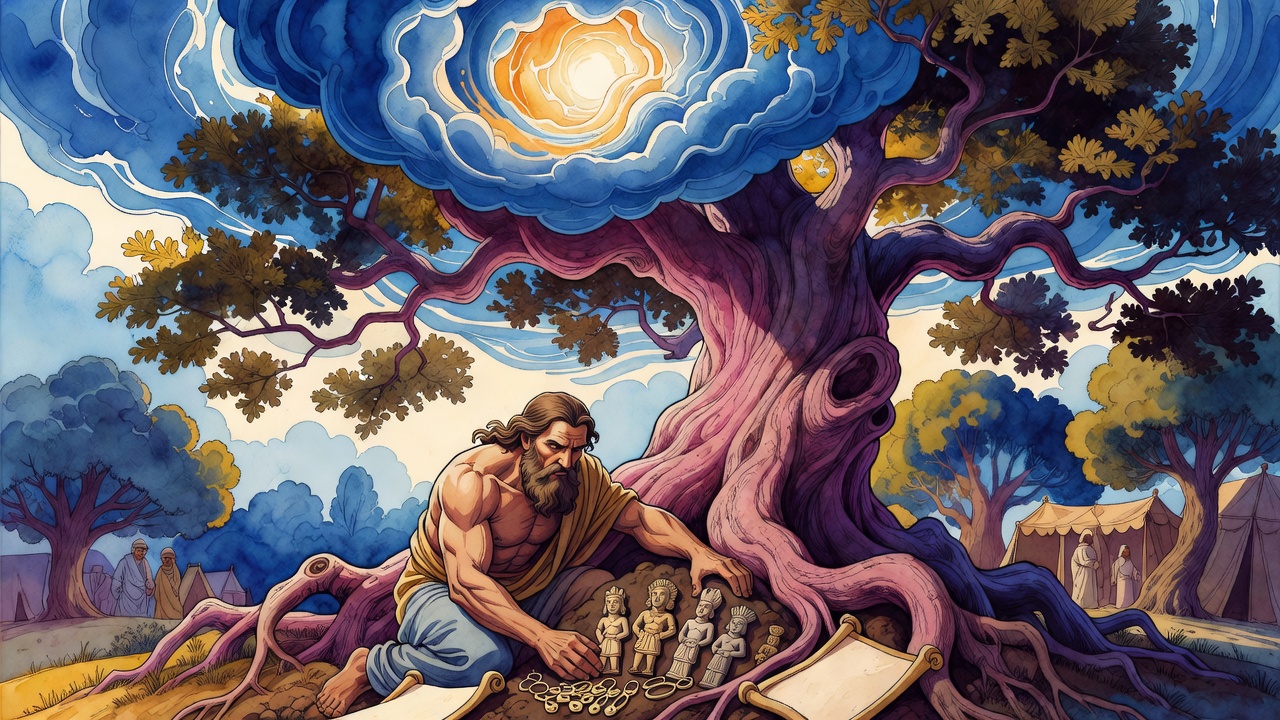
They were still bloody from Shechem. Jacob stopped the whole camp on the road. No one would walk toward Beth-El with a god in a sleeve.
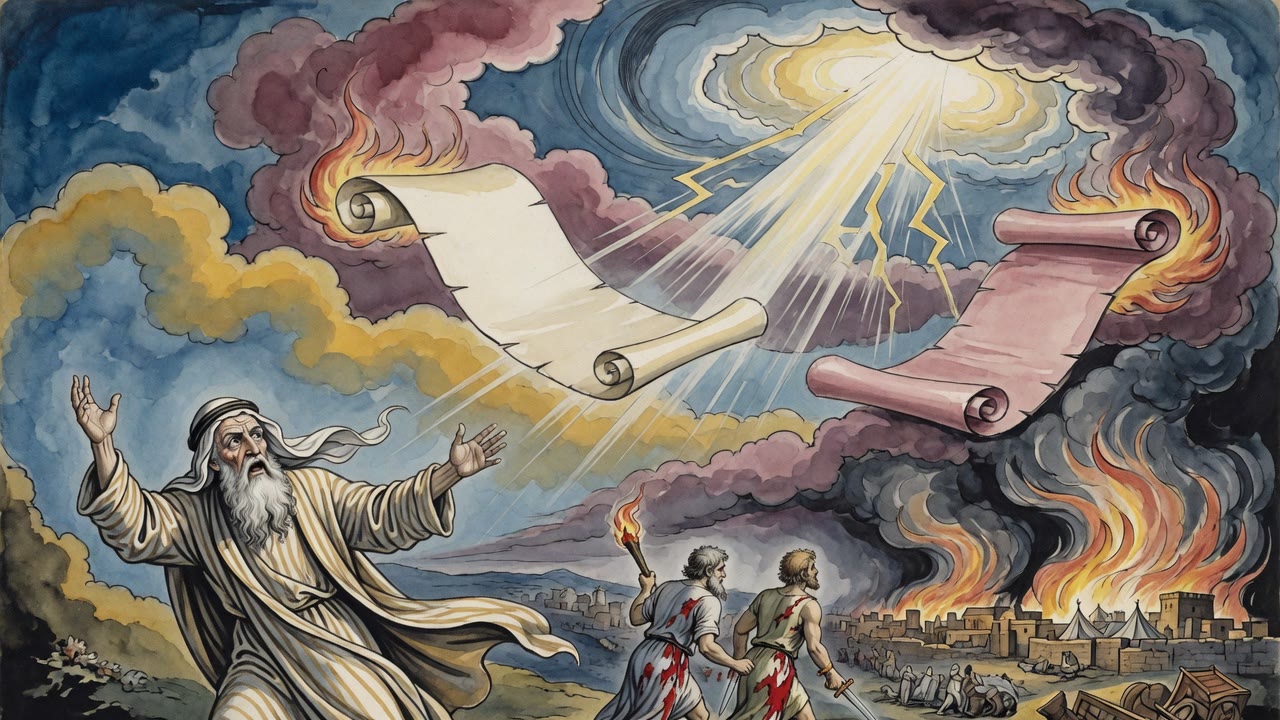
Jacob rebuked his sons for the slaughter at Shechem. A heavenly record reached a different verdict. Both accounts survived.
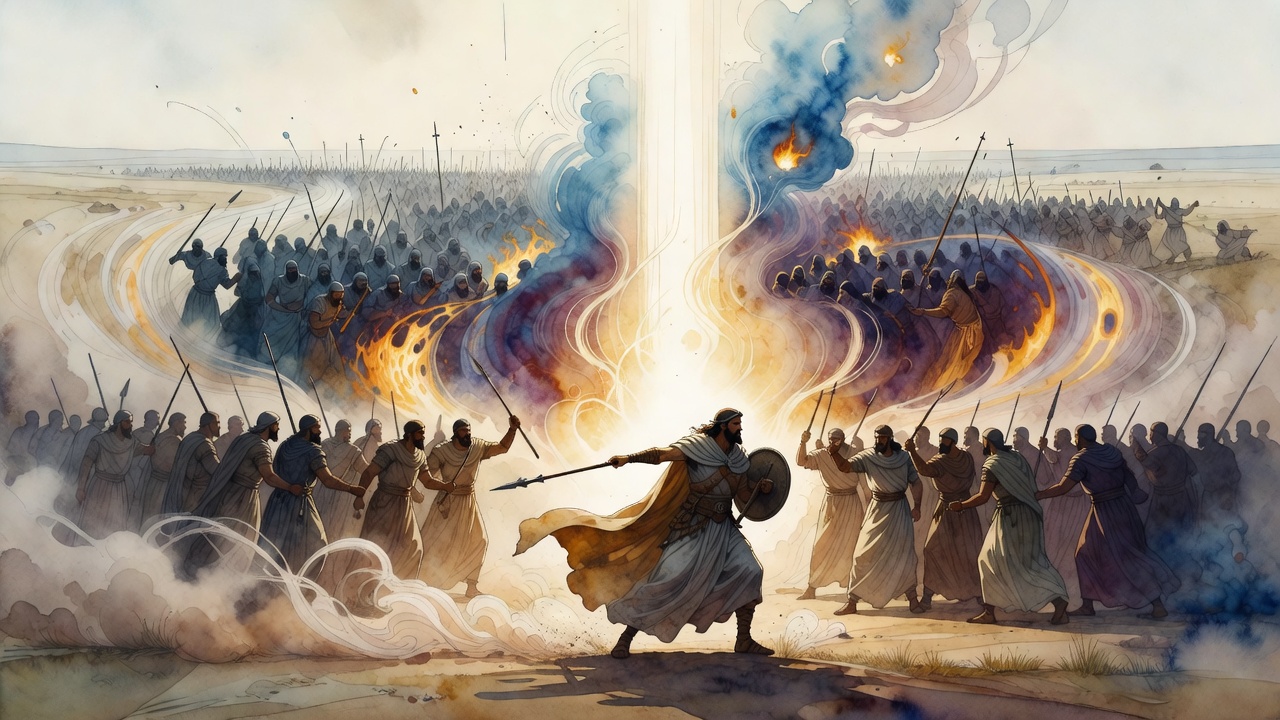
Esau came with four thousand men. Judah went out in front with fifty servants. The south side of the tower went quiet.
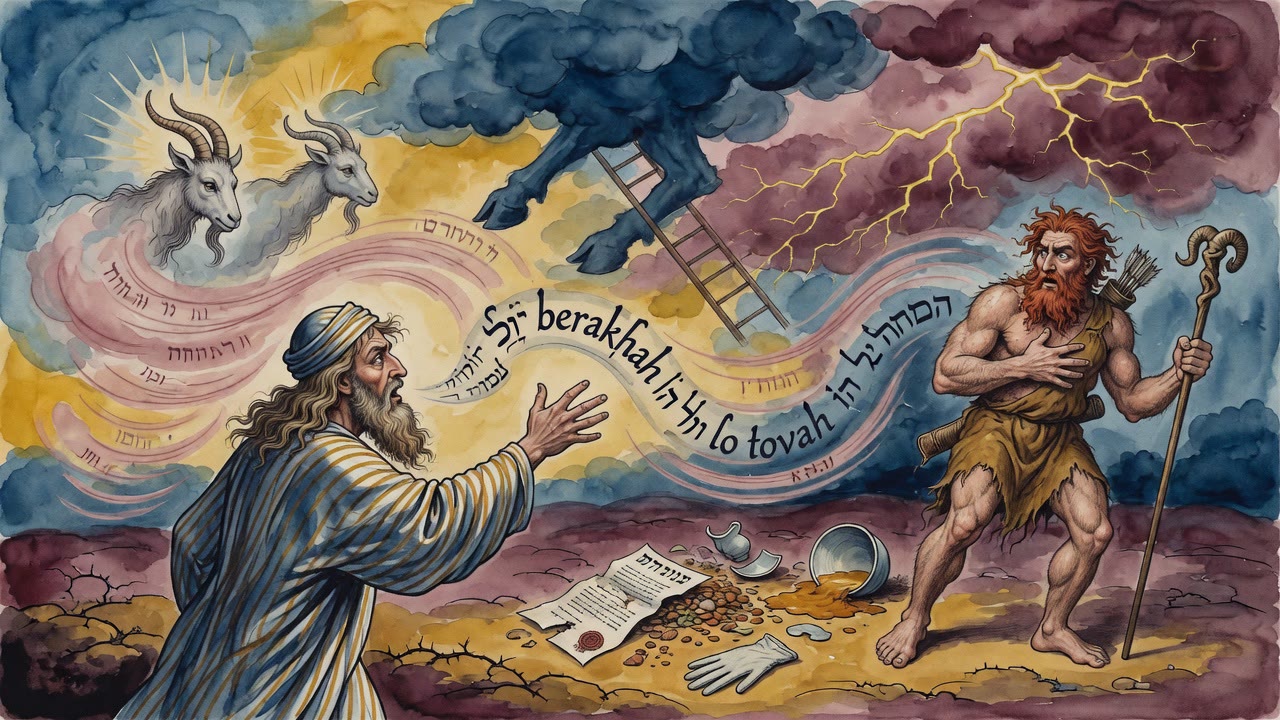
He looked at the host and said they were not Esau's men, and not Laban's. Then the messengers came back with four hundred riders.
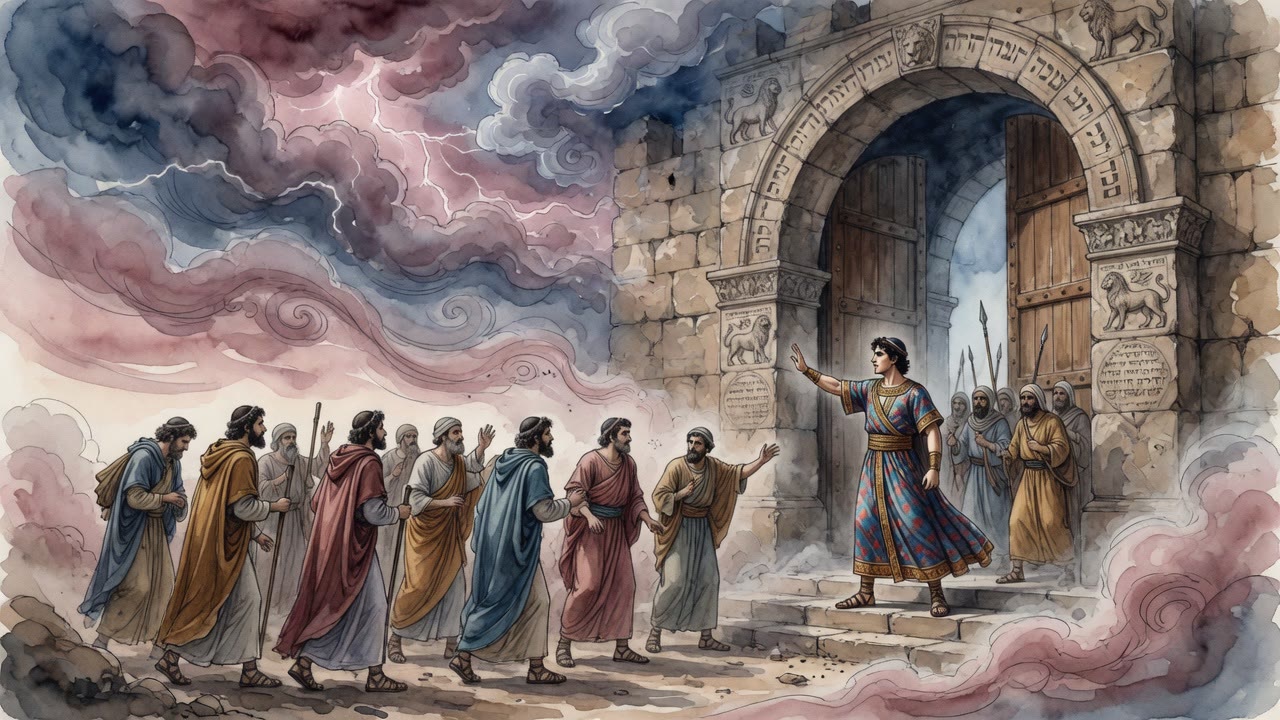
Shechem seized Dinah while his city watched. Jacob's sons invoked the covenant of Noah, and the tradition holds the whole city answered for it.
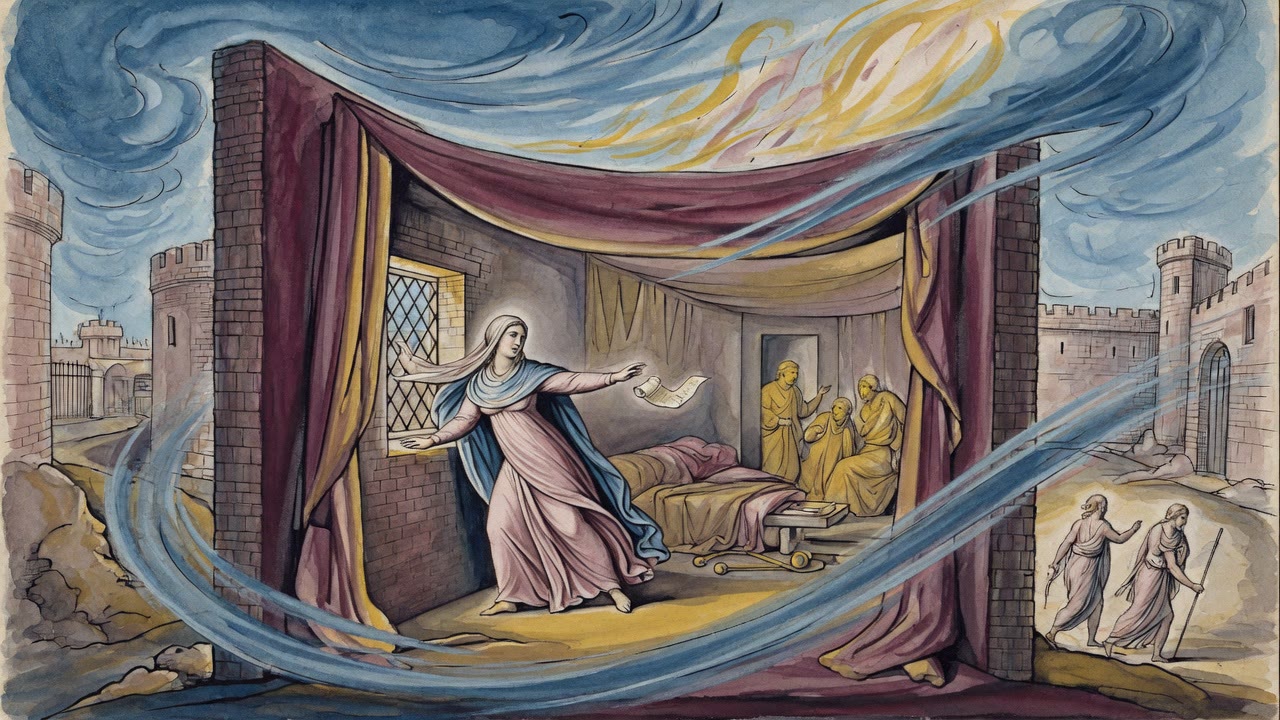
She was twelve and she was being held in the prince's house when she overheard what the men downstairs were planning to do to her family.
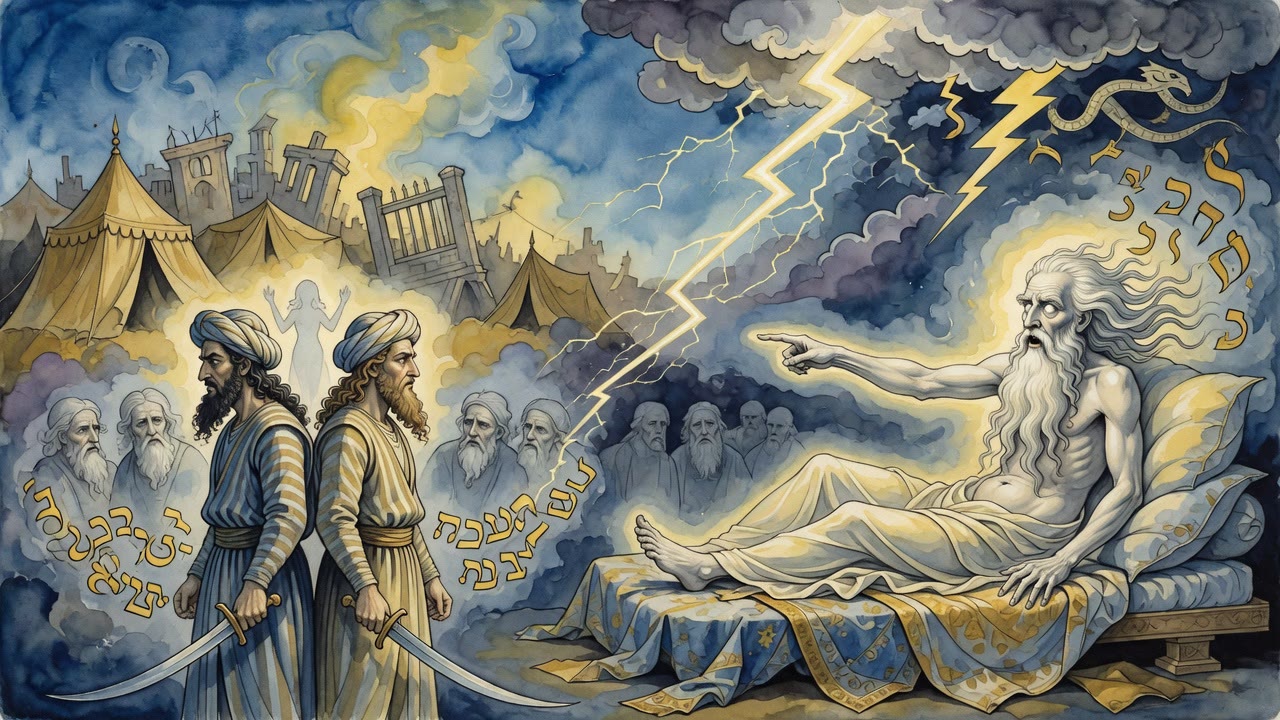
Simeon and Levi avenged Dinah at Shechem. Jacob cursed their anger at his deathbed, forty years after the swords were put away.
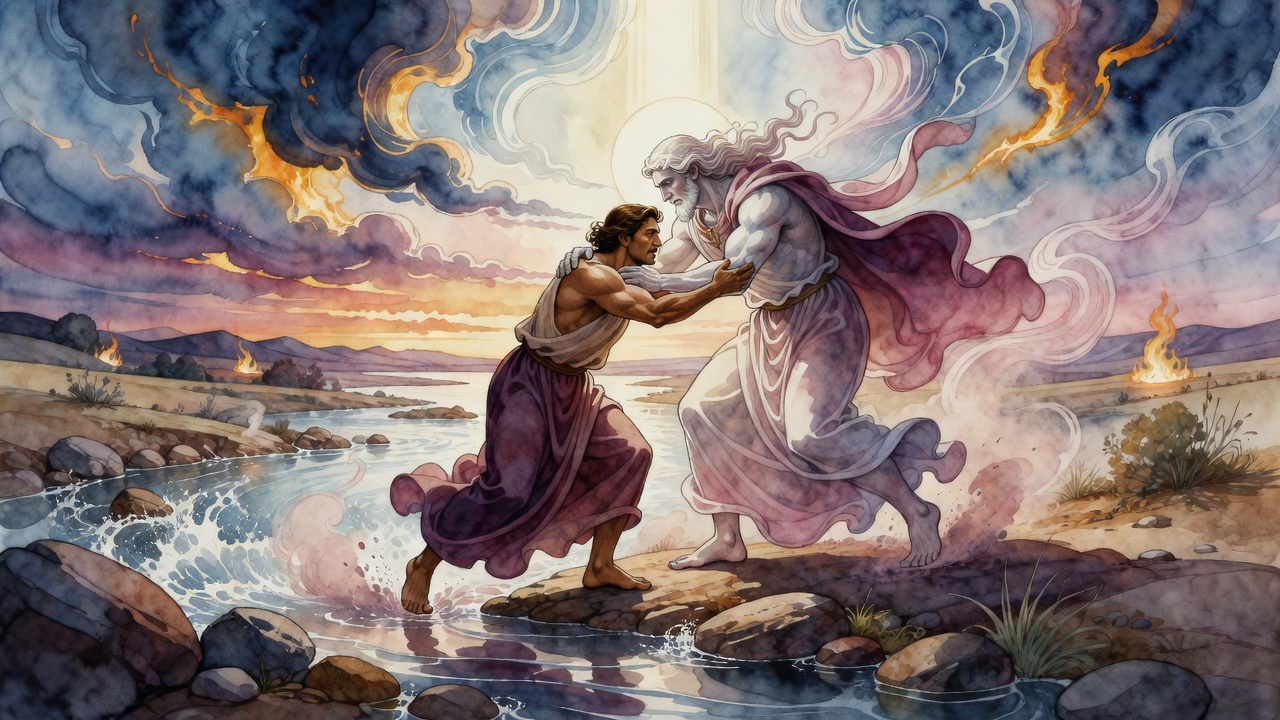
At the Jabbok ford a figure grips Jacob until dawn. Tradition names him precisely: Samael, Esau's angel, the prosecutor of Israel.
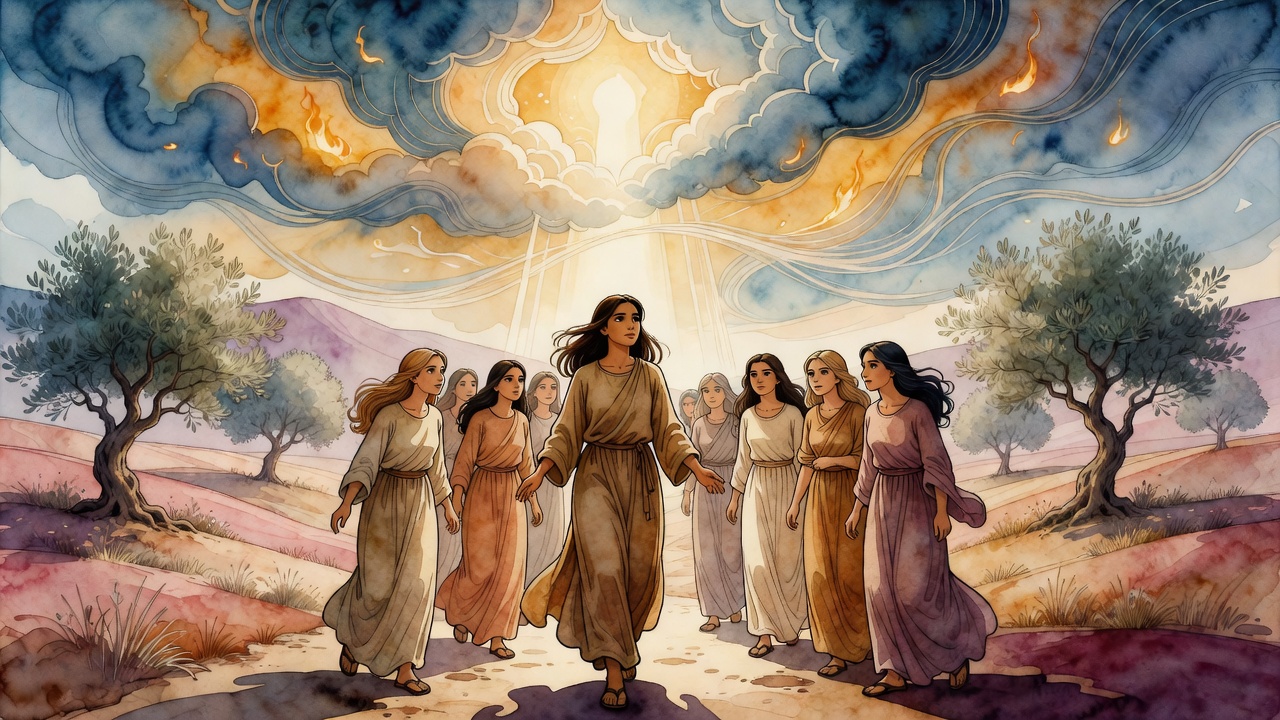
Dinah was twelve when she sat with her mother among the dancers at Shechem. The prince took her by force. Heaven still wrote Levi's name.
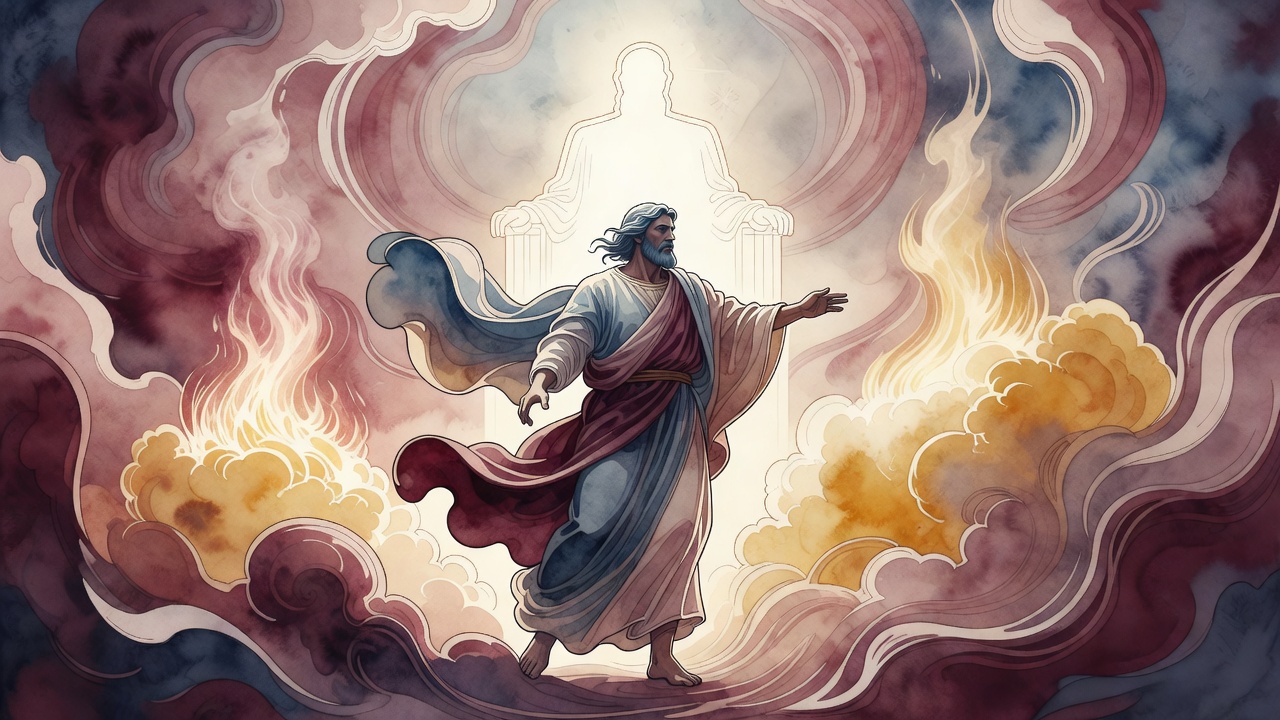
In the Prayer of Joseph, Jacob says he was an angel before the world was made. The man he wrestled at the Jabbok was Uriel, arguing over who descended first.
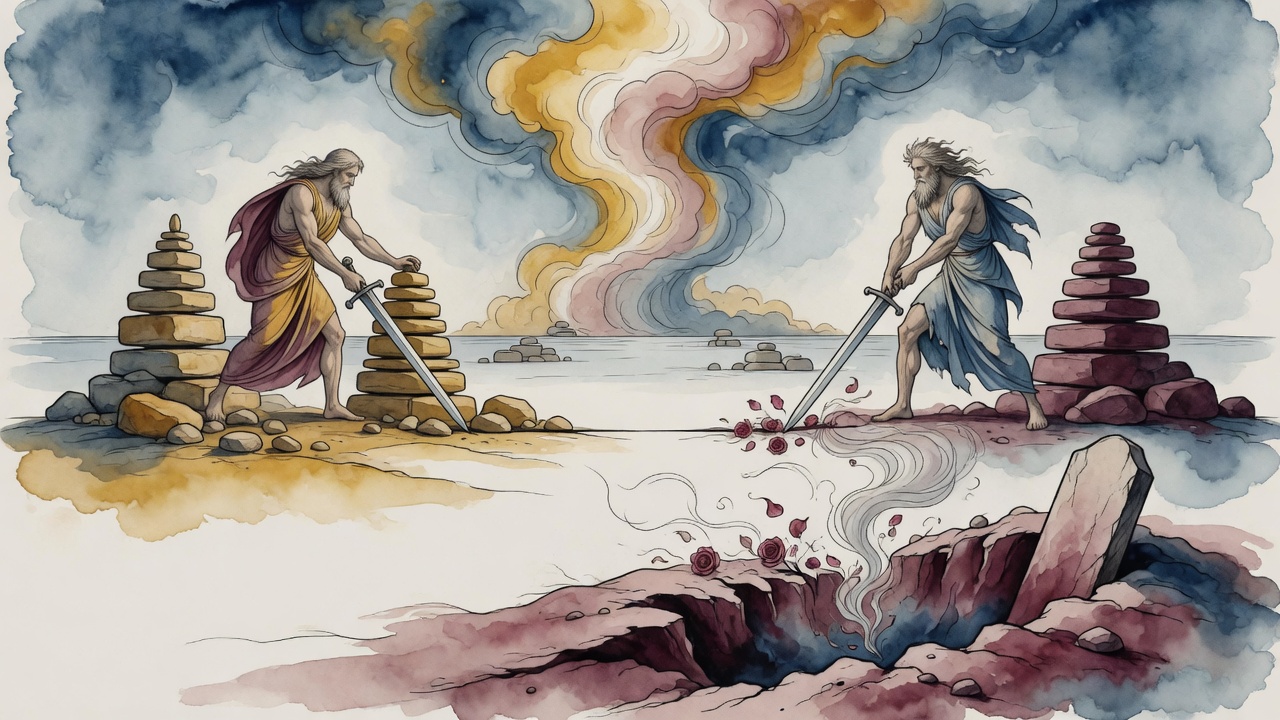
Isaac put a sword into Esau's hands and told him to keep it sheathed. Years later four hundred men waited on the road home.
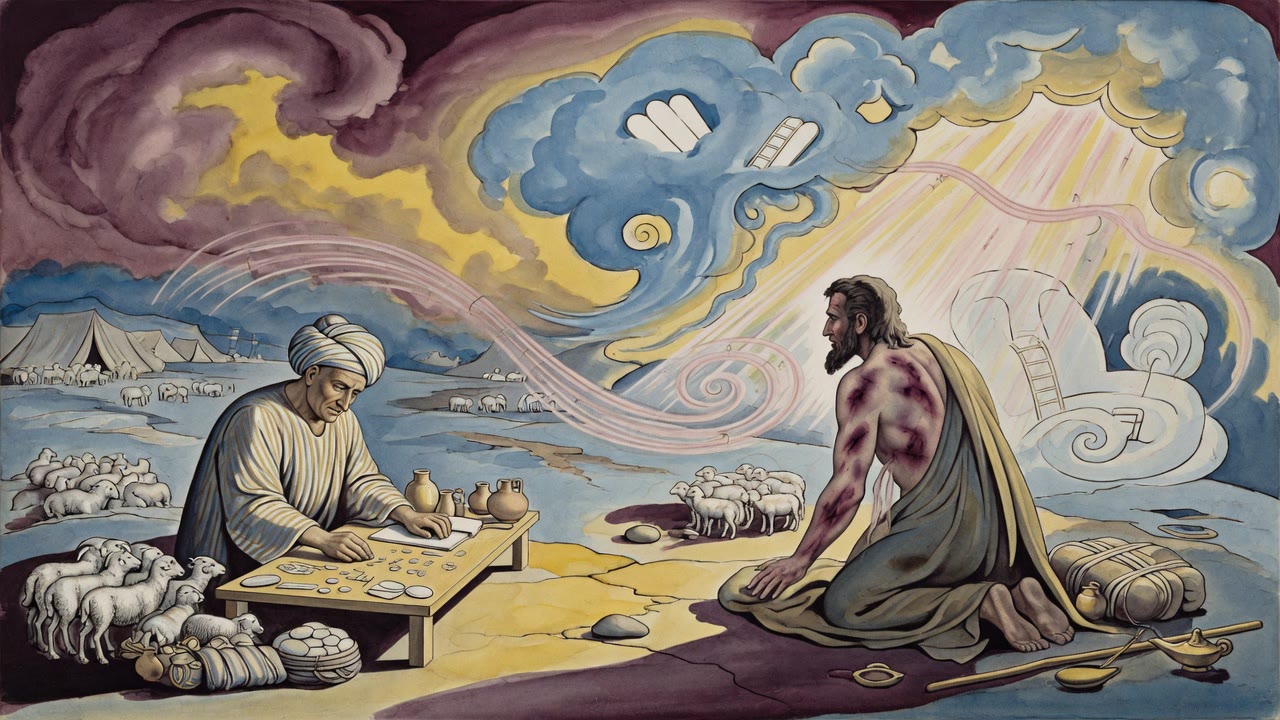
Laban ran out to embrace his nephew and found nothing on him worth taking. Twenty years later Jacob spent everything he had on his brother.
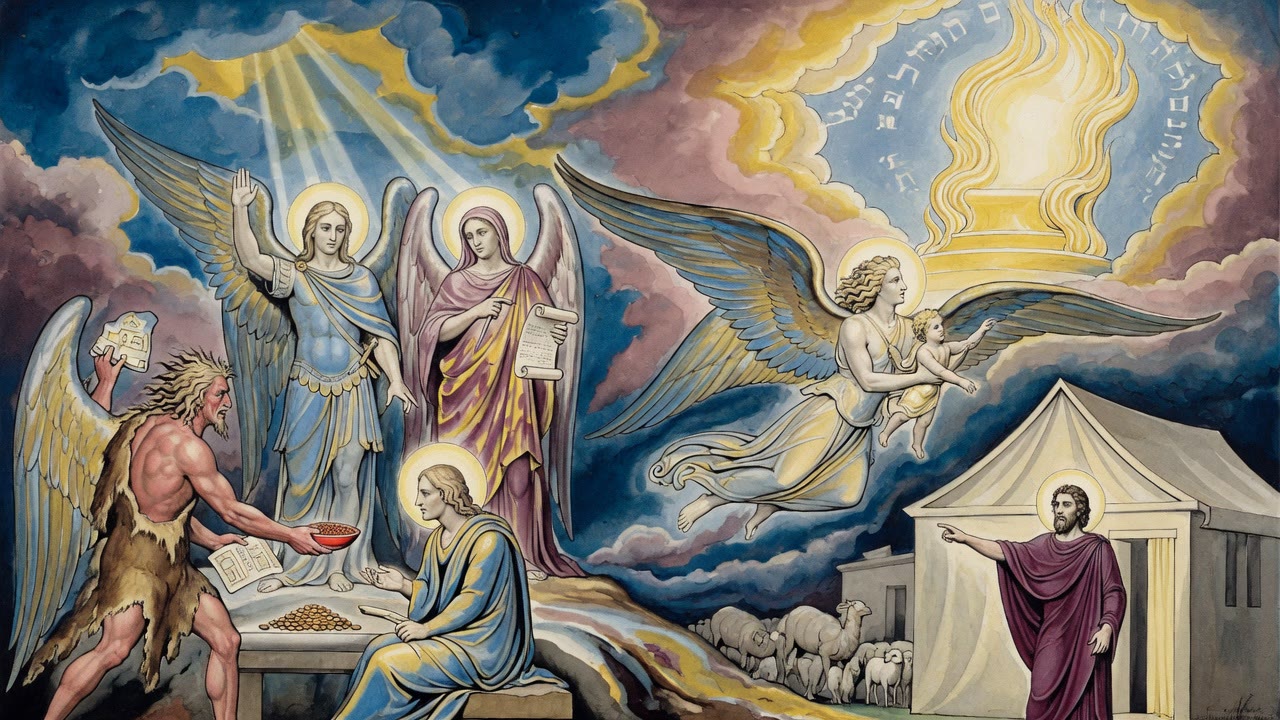
Michael and Gabriel served as witnesses when Esau sold the birthright, then Michael carried Levi to the Throne before Jacob sent him as tribute to his brother.
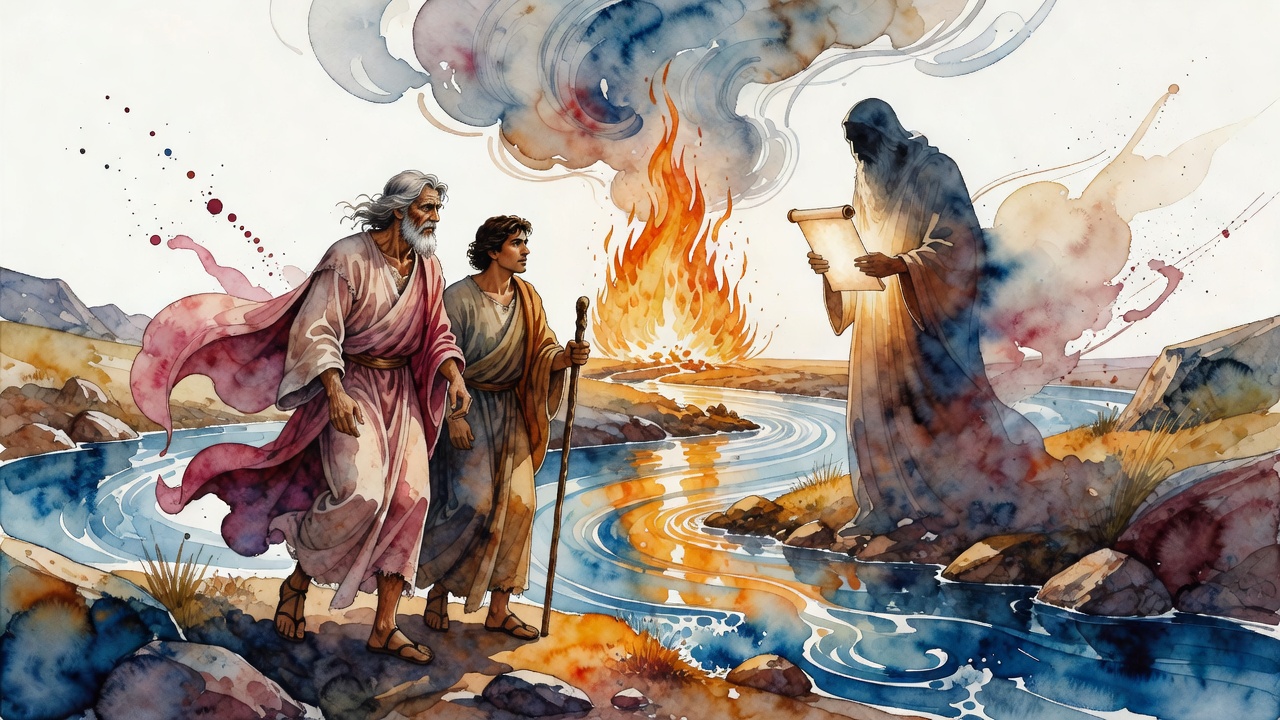
The angel who jumped Jacob in the dark had not come to test his character. He had come about an unpaid debt, and he wanted it settled by morning.
An angel wrestles Jacob all night, then pleads to be released at dawn. He has been waiting since creation for his single turn to sing before God.
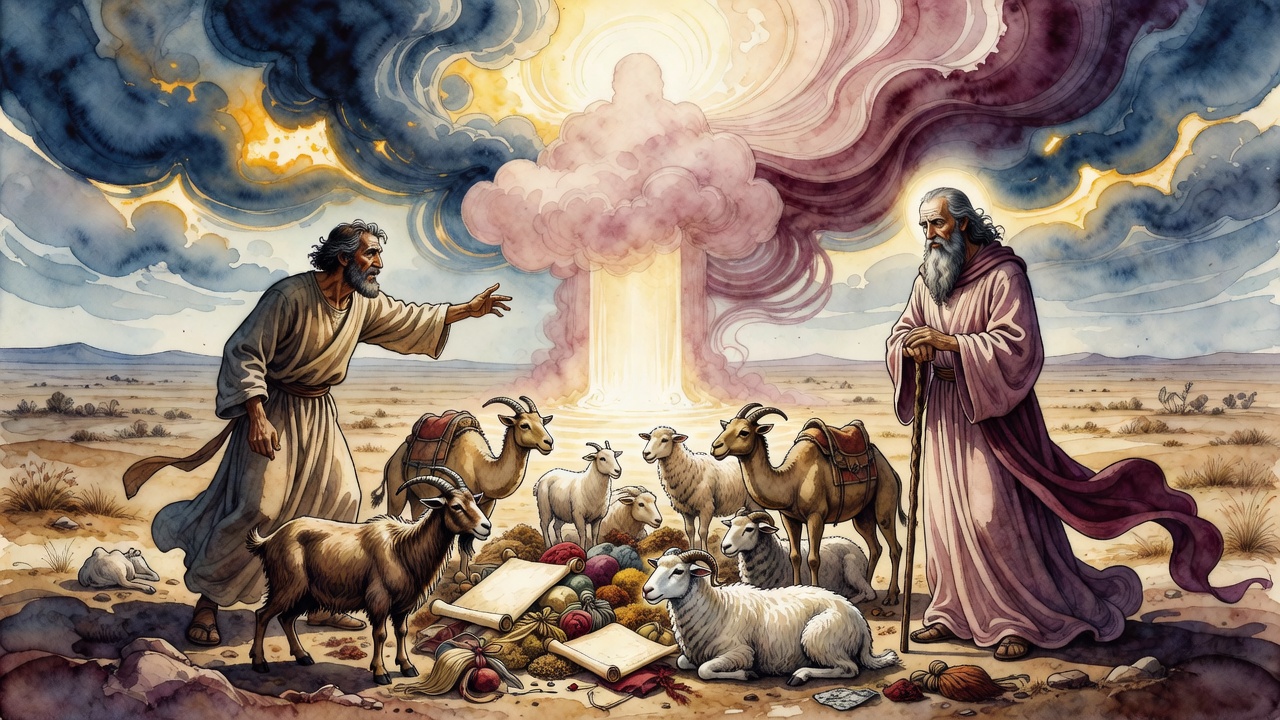
An unlearned man told a rabbi that Jacob's tribute to Esau was never really given away. It was lent, and it comes due in the days of the Messiah.
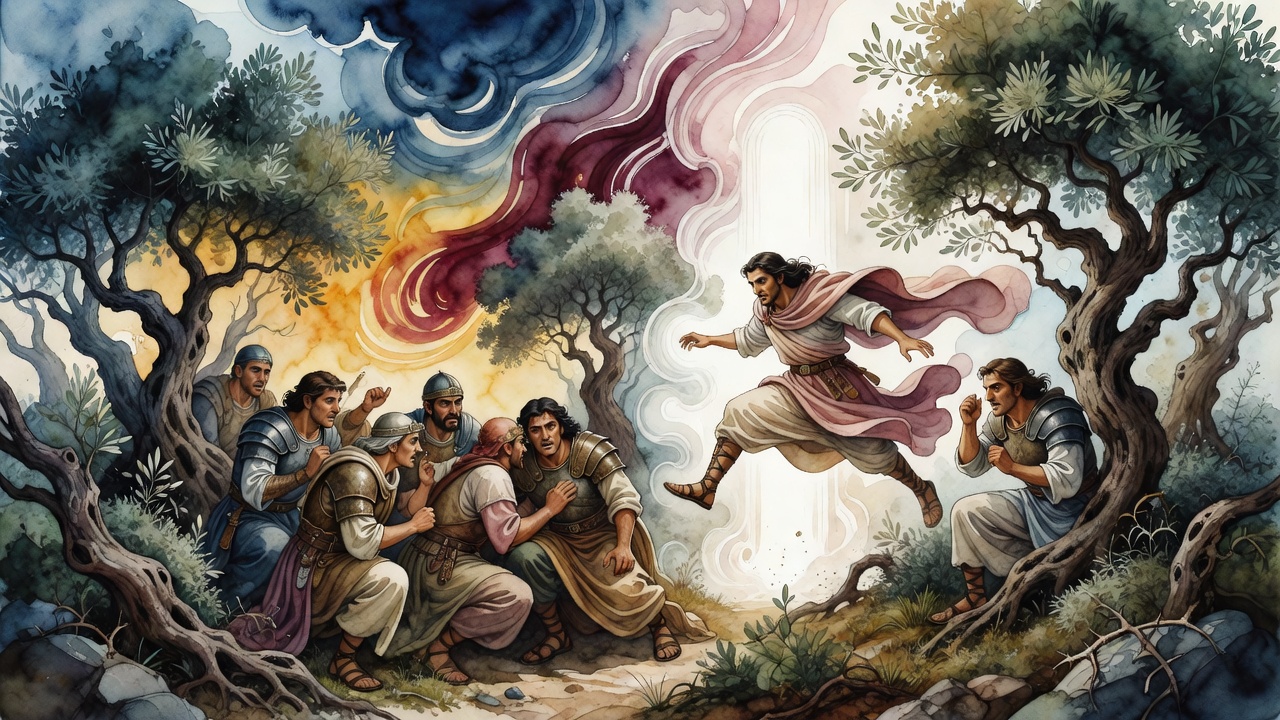
Seven Amorite kings crouch in the woods of Canaan plotting slaughter, until Judah leaps the battle line and the war the Torah left silent begins.
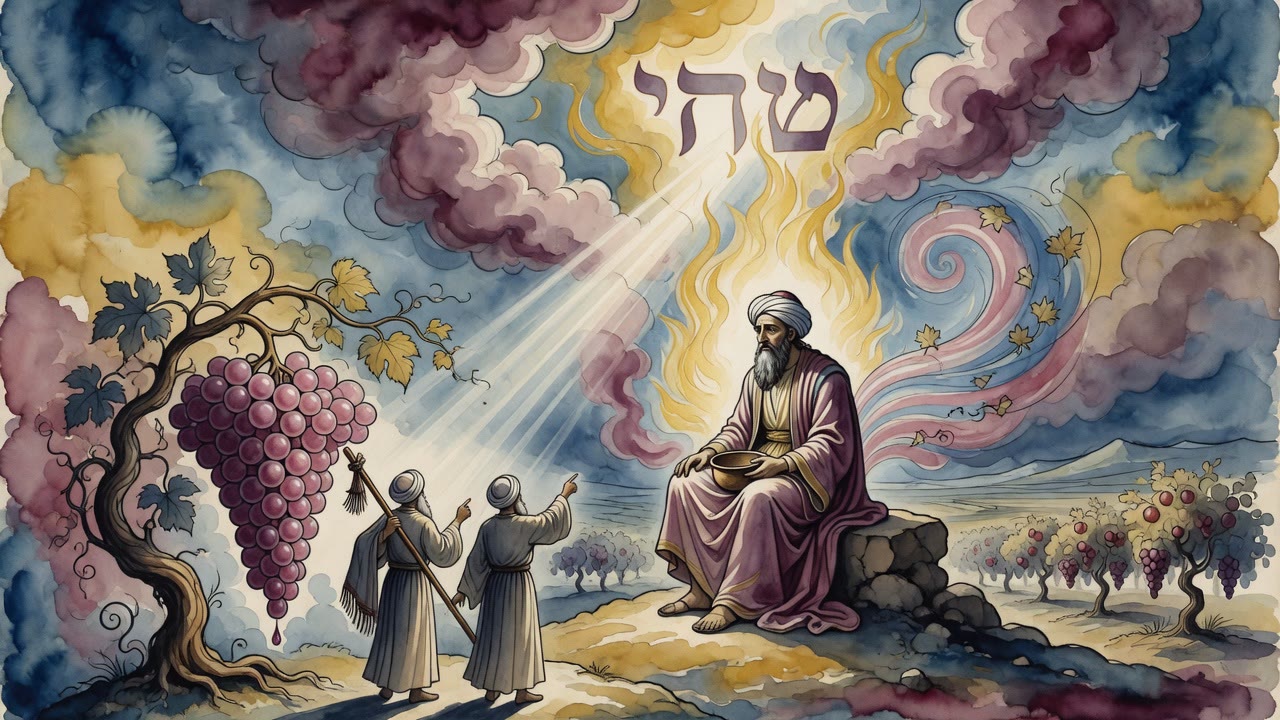
An infant condemned by her uncles, an amulet of the Holy Name at her throat, and an archangel who carried her to the priest of On in Egypt.
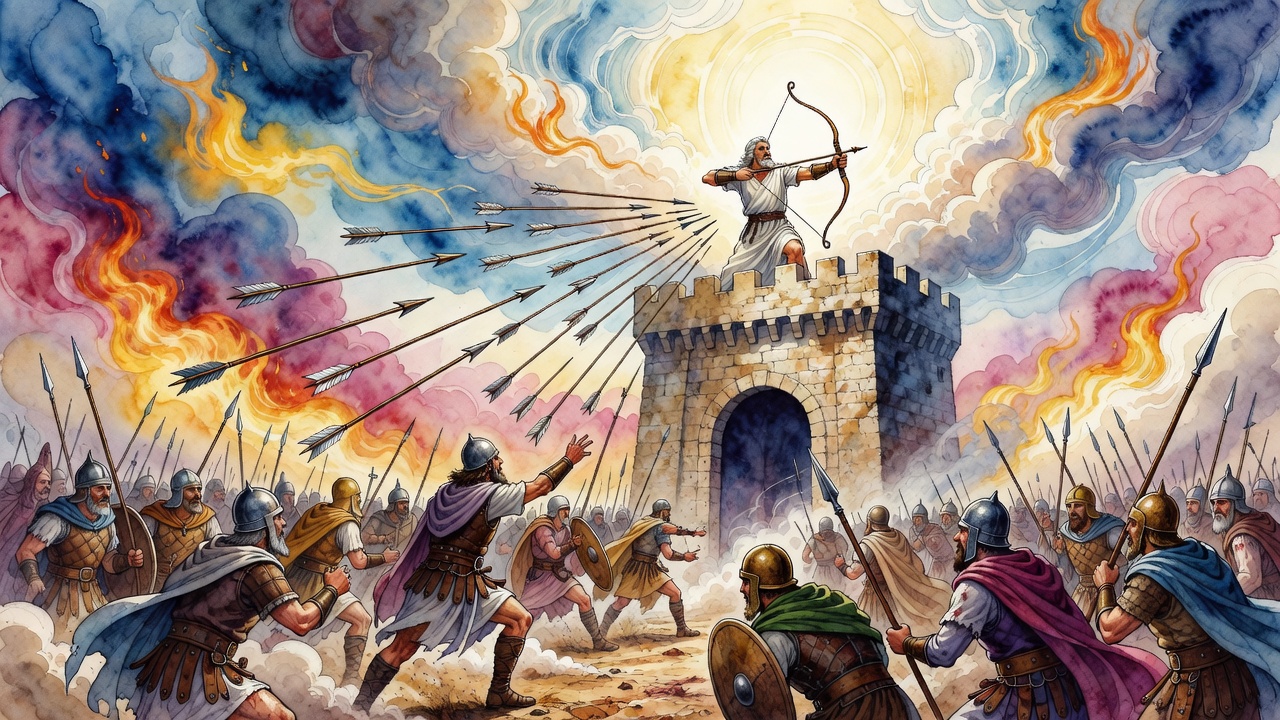
Esau brings a host to besiege the tower, deaf to every oath of peace, and Jacob looses twelve arrows that scatter the army and end the war.
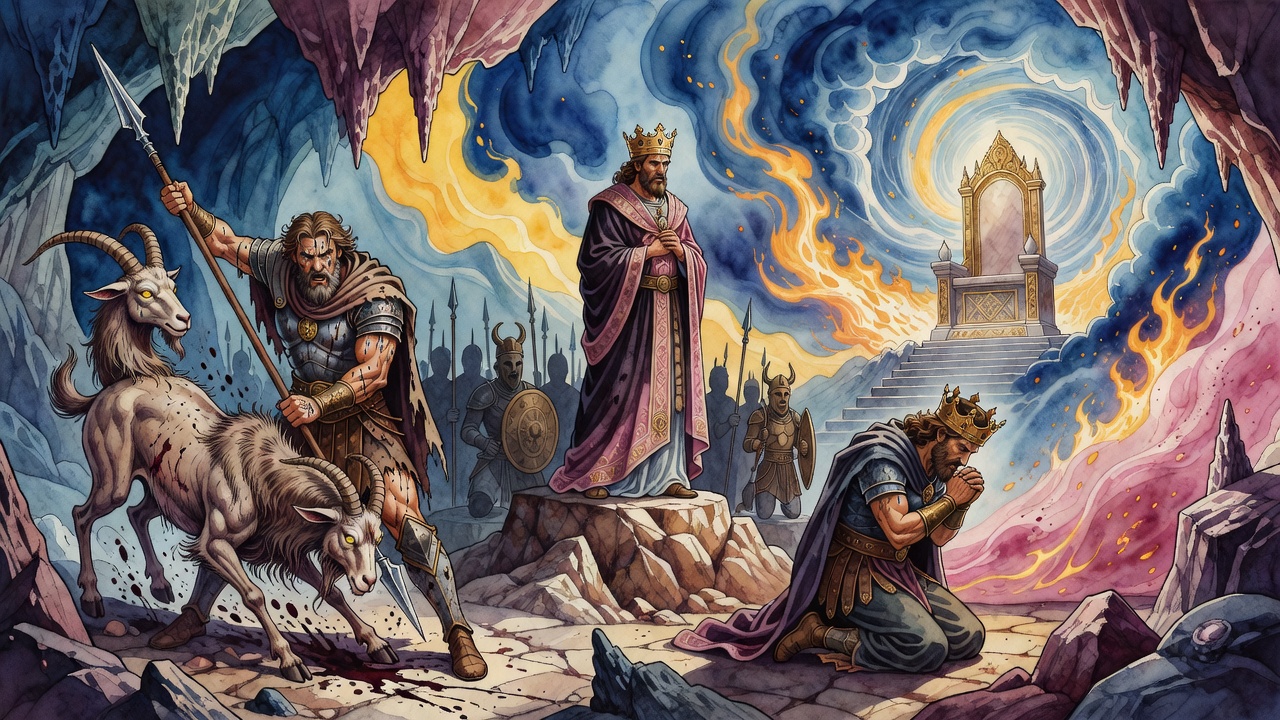
Esau's grandson Zepho slays a half-goat beast in a mountain cave, is crowned king of Kittim, then begs the God of Abraham to save his idol army.
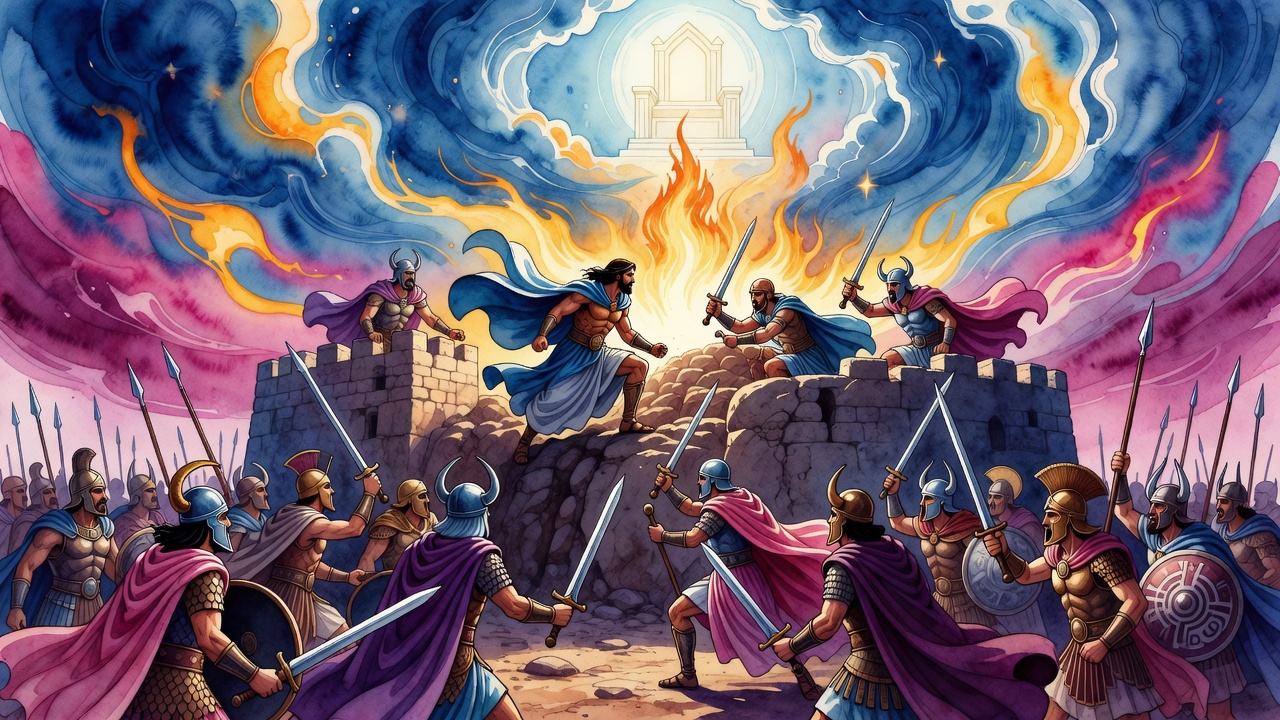
Their own advisors told the kings to remember what two of Jacob's sons did to Shechem. They marched anyway, and old Jacob killed twelve thousand.
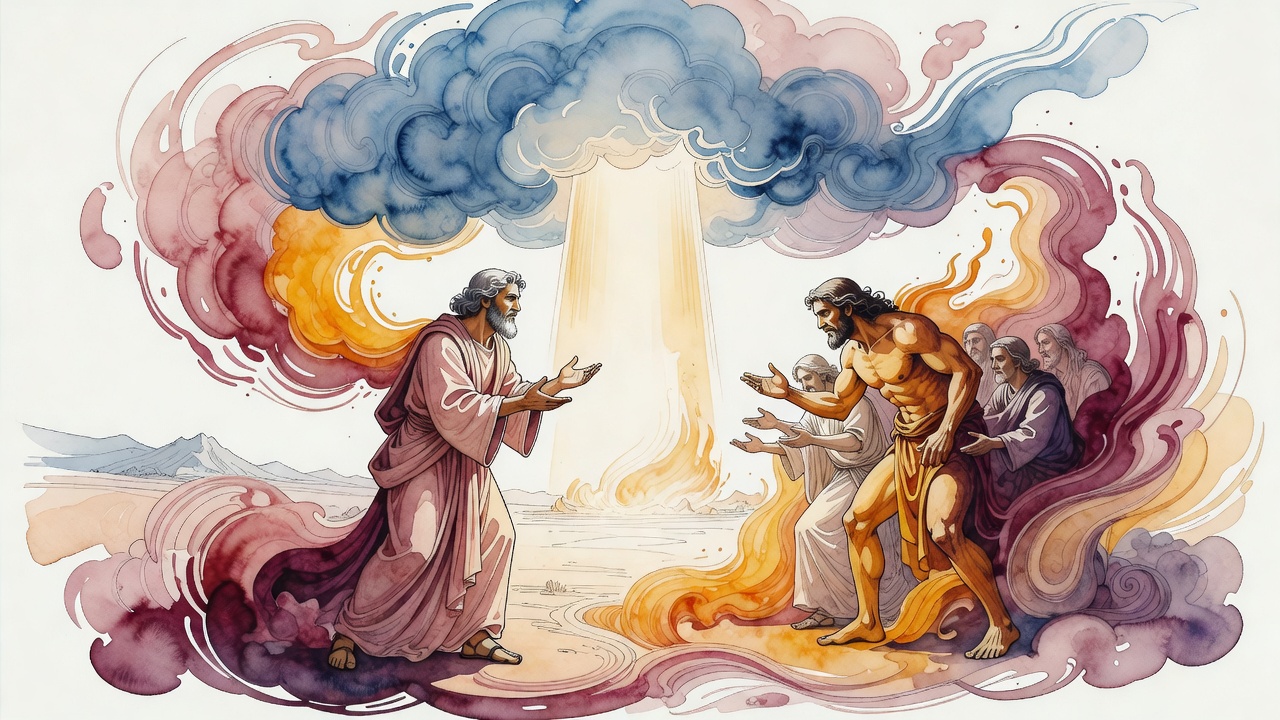
Jacob offered Esau the whole of this world for a share of the next, and Esau's friends counted the price in someone else's four hundred years.
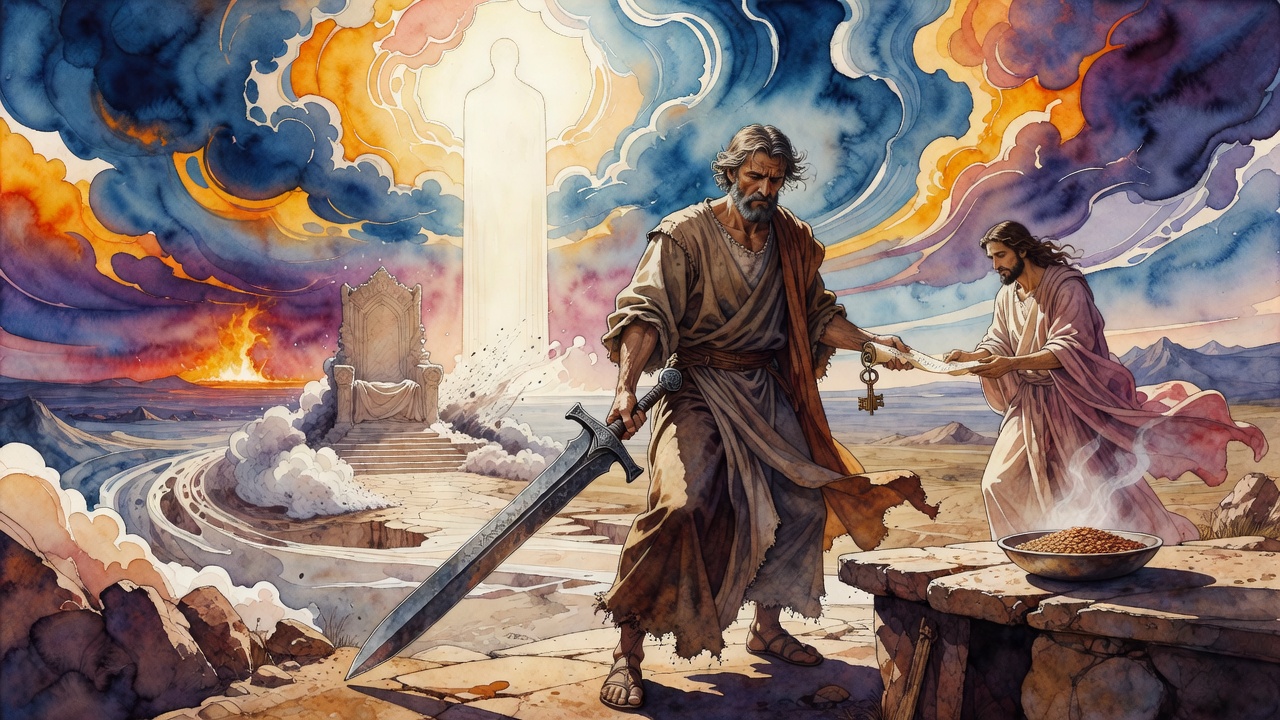
Esau sold the birthright for lentils and Methuselah's blade, then deeded the land and Machpelah to Jacob. Heaven repaid him with provinces ending at Rome.
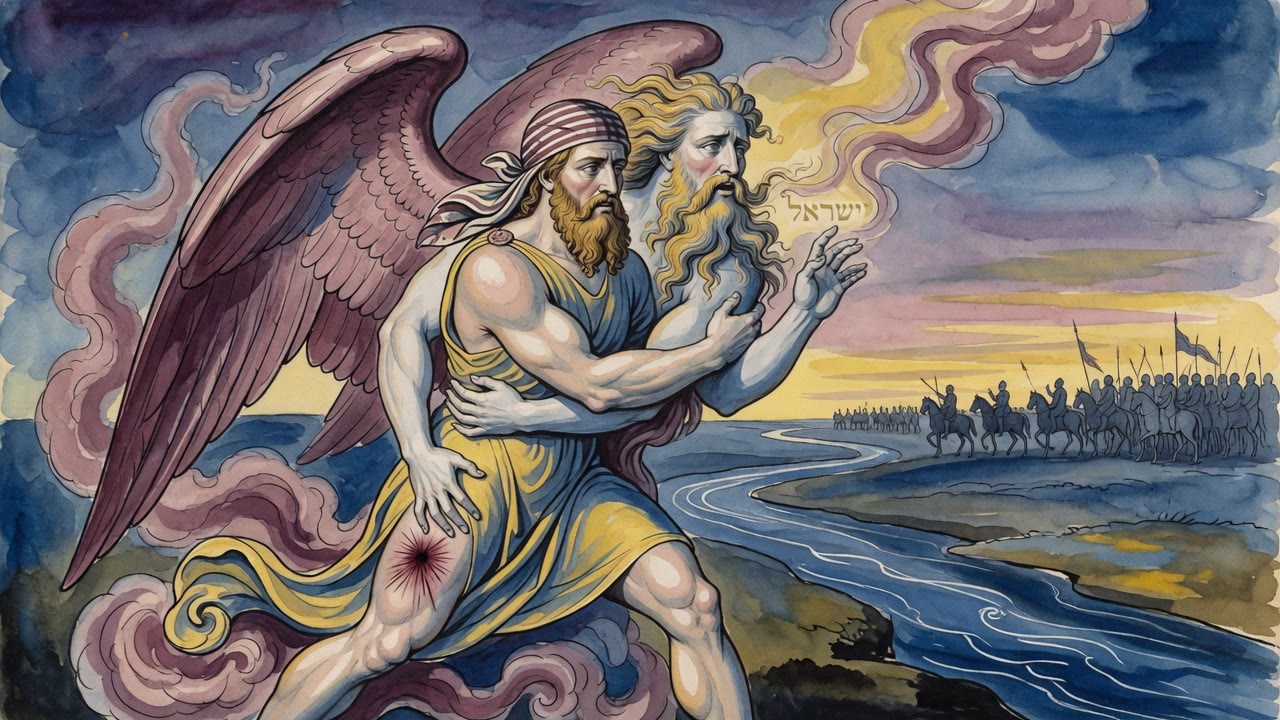
The camps were already across the water. Jacob stayed on the near bank. A man took hold of him in the dark and would not name himself.
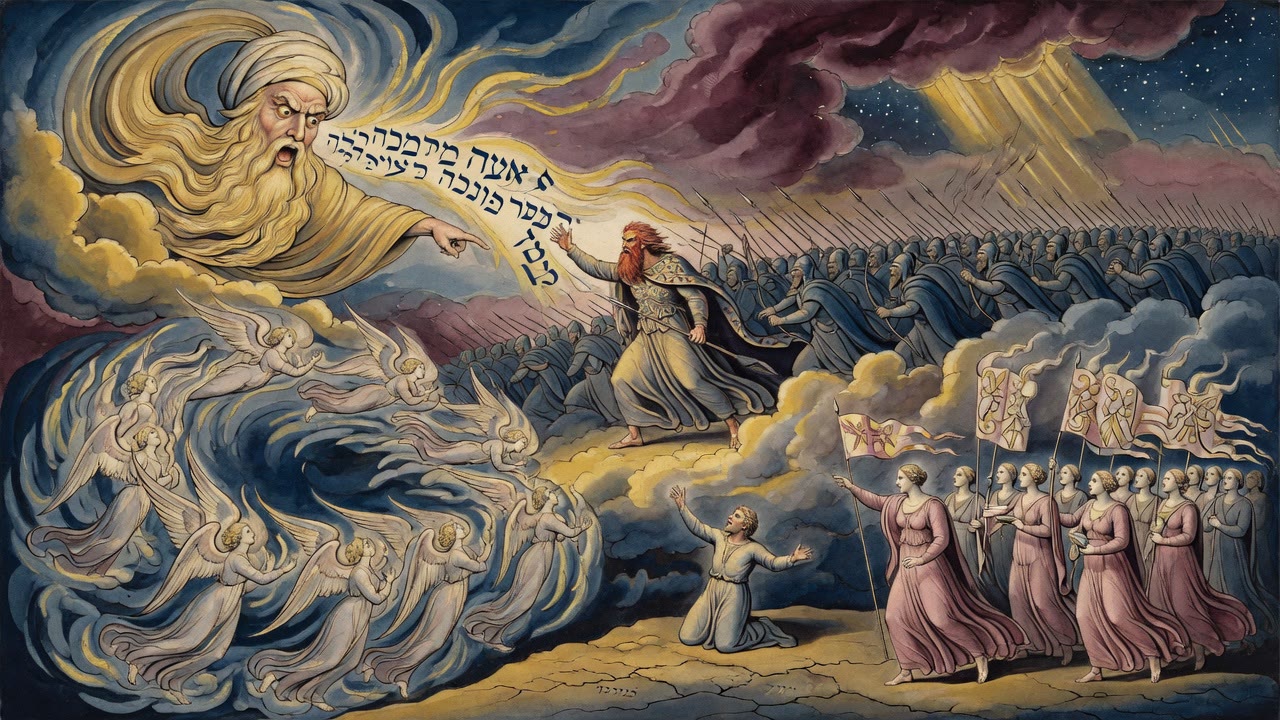
Laban's words rekindled Esau's old fury. Four hundred men marched while Rebekah sent seventy-two retainers, and Jacob named the place Mahanaim for God's host.
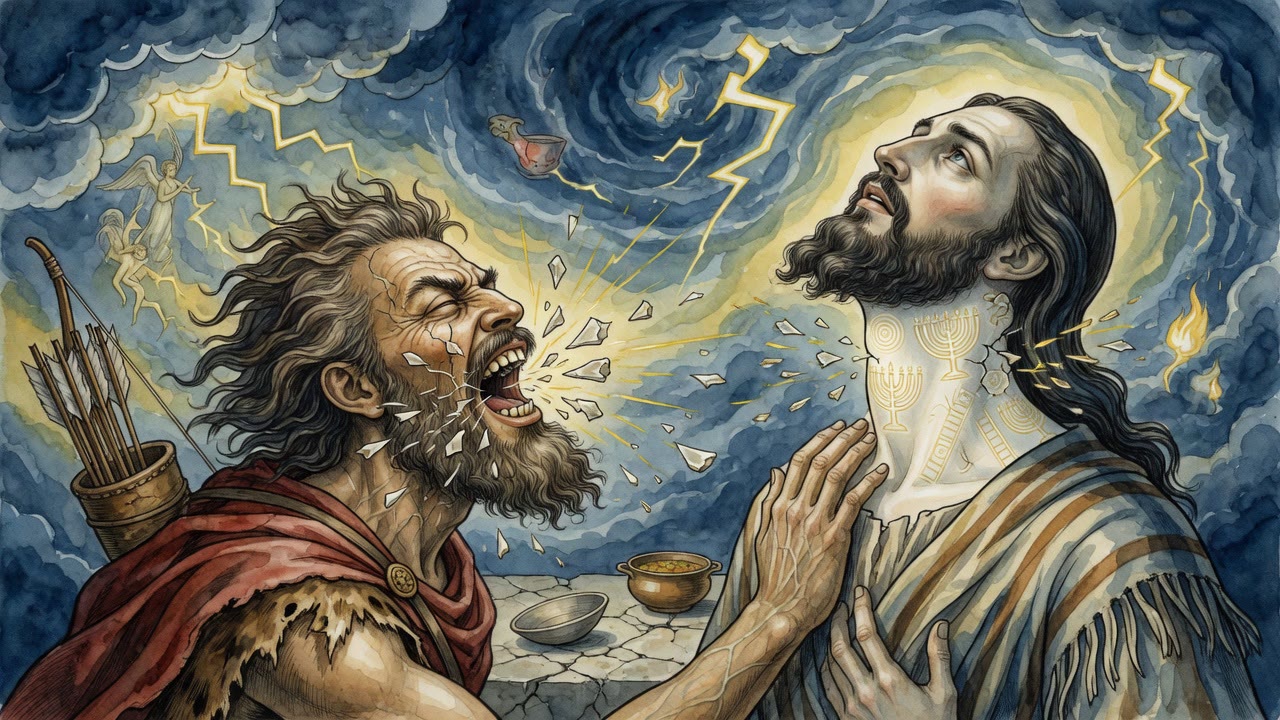
He had sworn not to use an arrow. He wanted his brother's throat in his mouth. The neck he bit turned hard, and his teeth failed.
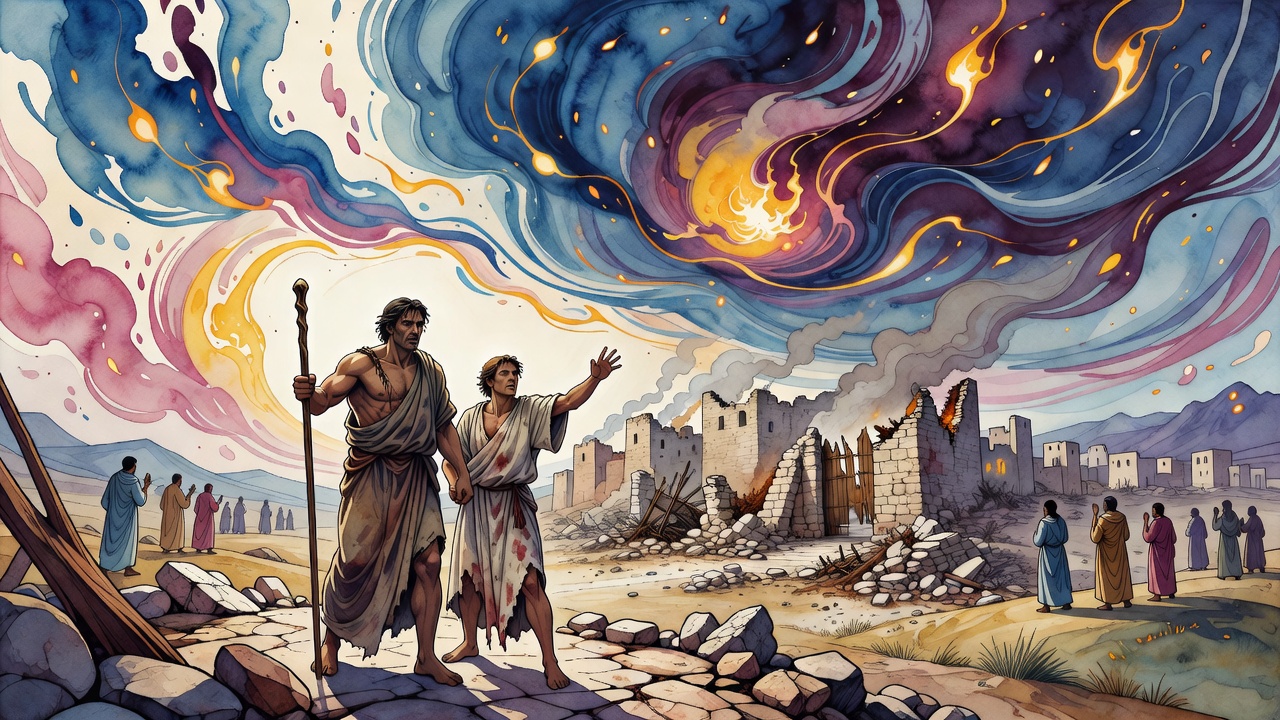
Simeon and Levi emptied a whole city after Dinah's shame, and surrounding nations whispered that if two sons could do this, twelve would end the world.
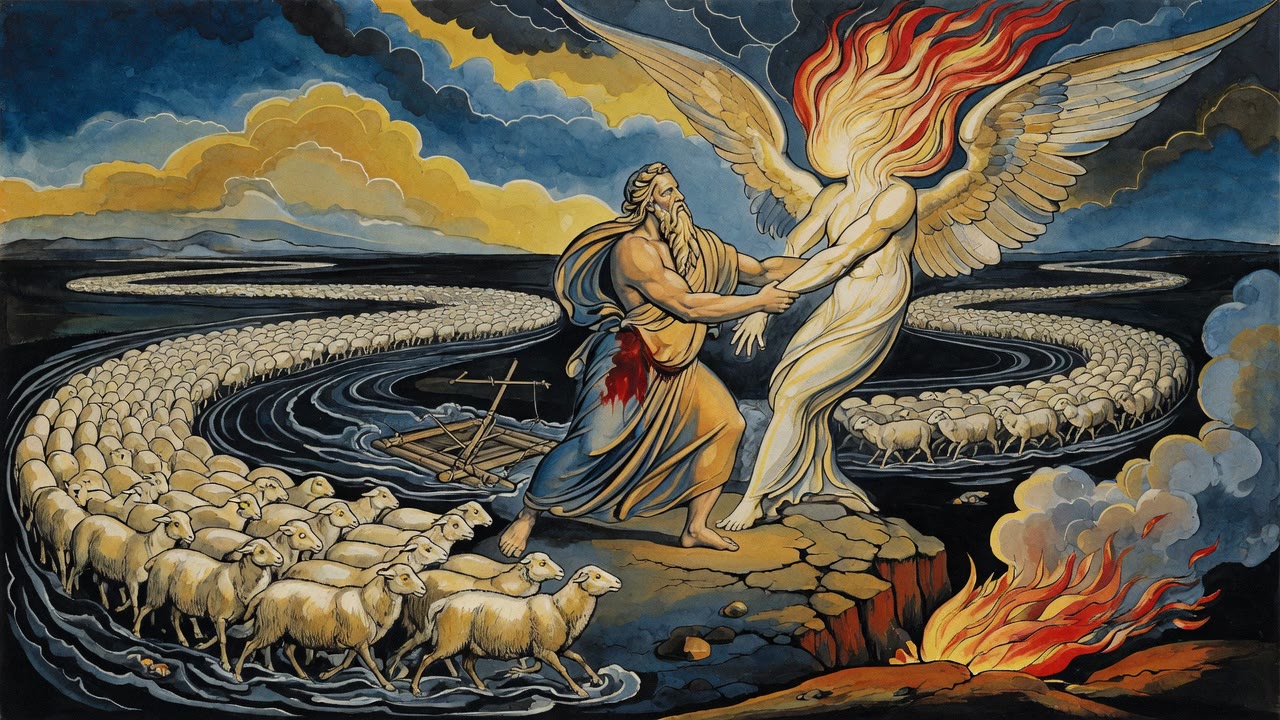
He ferried sheep that would not thin. A finger touched the earth, fire boiled up from the bank, and Jacob told the stranger he was not afraid.
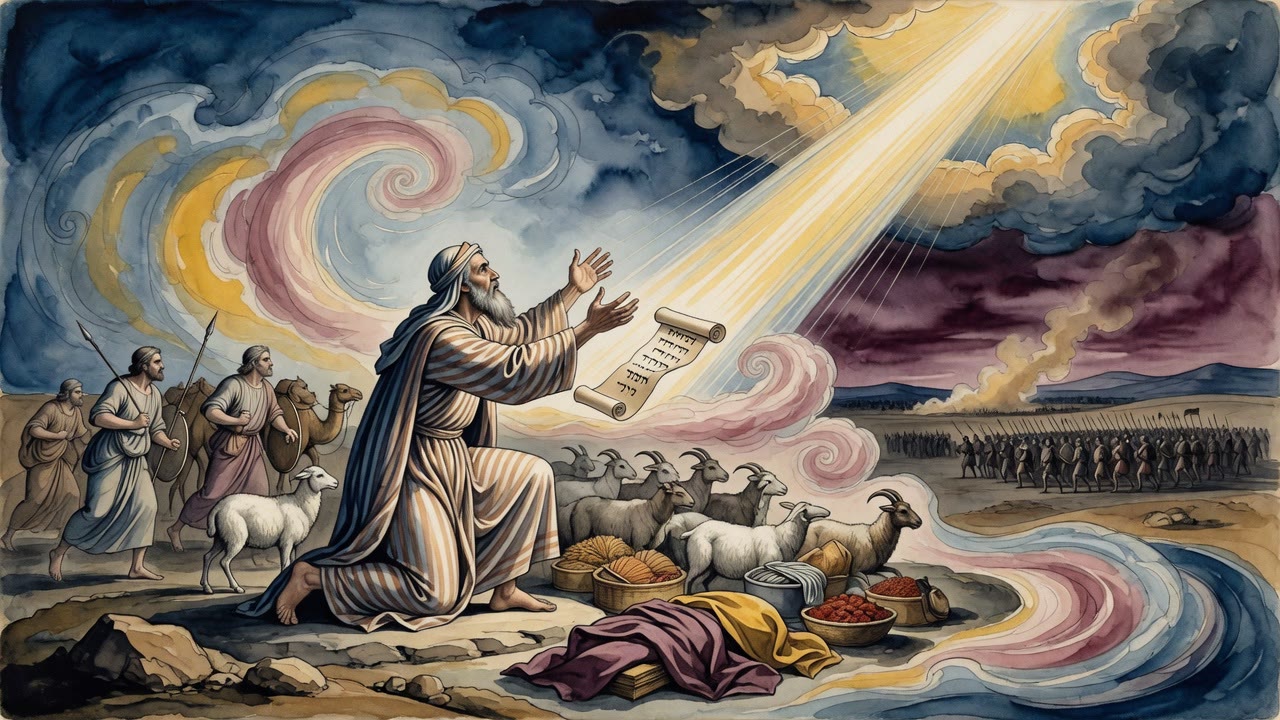
Before Esau's four hundred, Jacob prayed, sent gifts, and readied for war. He cited a future Torah law so God would not kill mothers with sons.
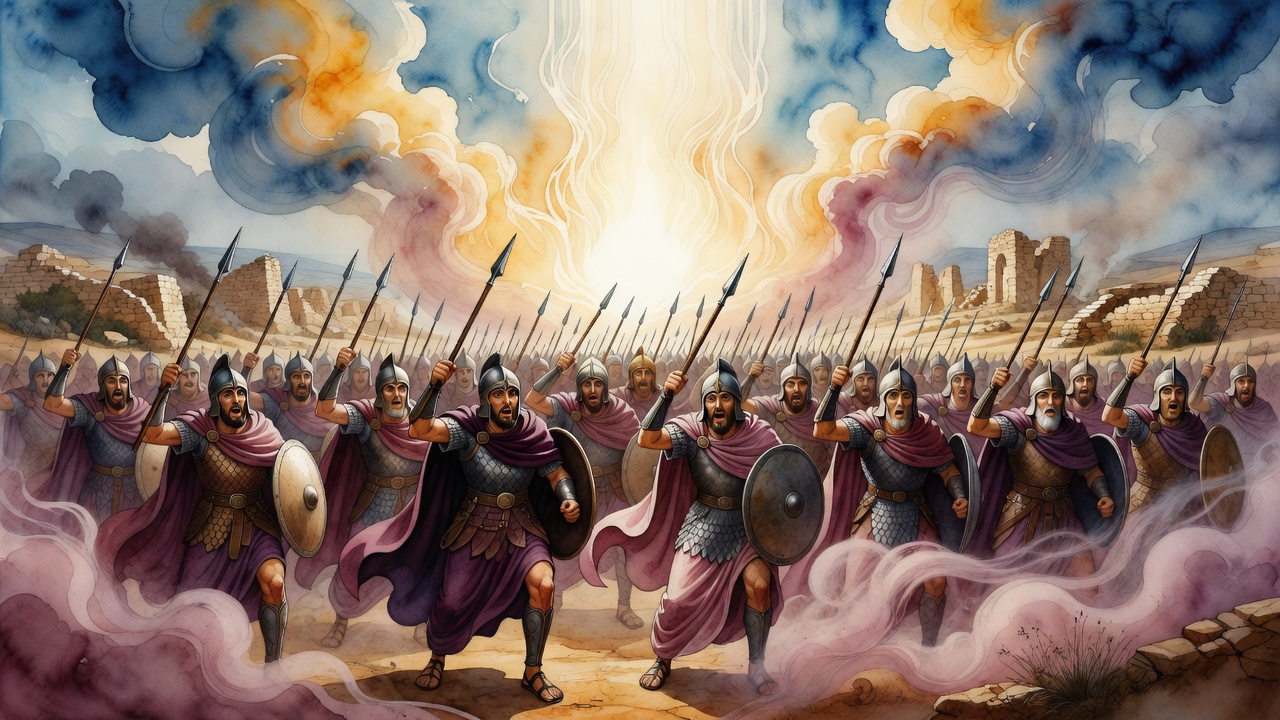
Counselors in the war tents listed every miracle done for Abraham. Kings who had come to avenge Shechem turned their horses around.
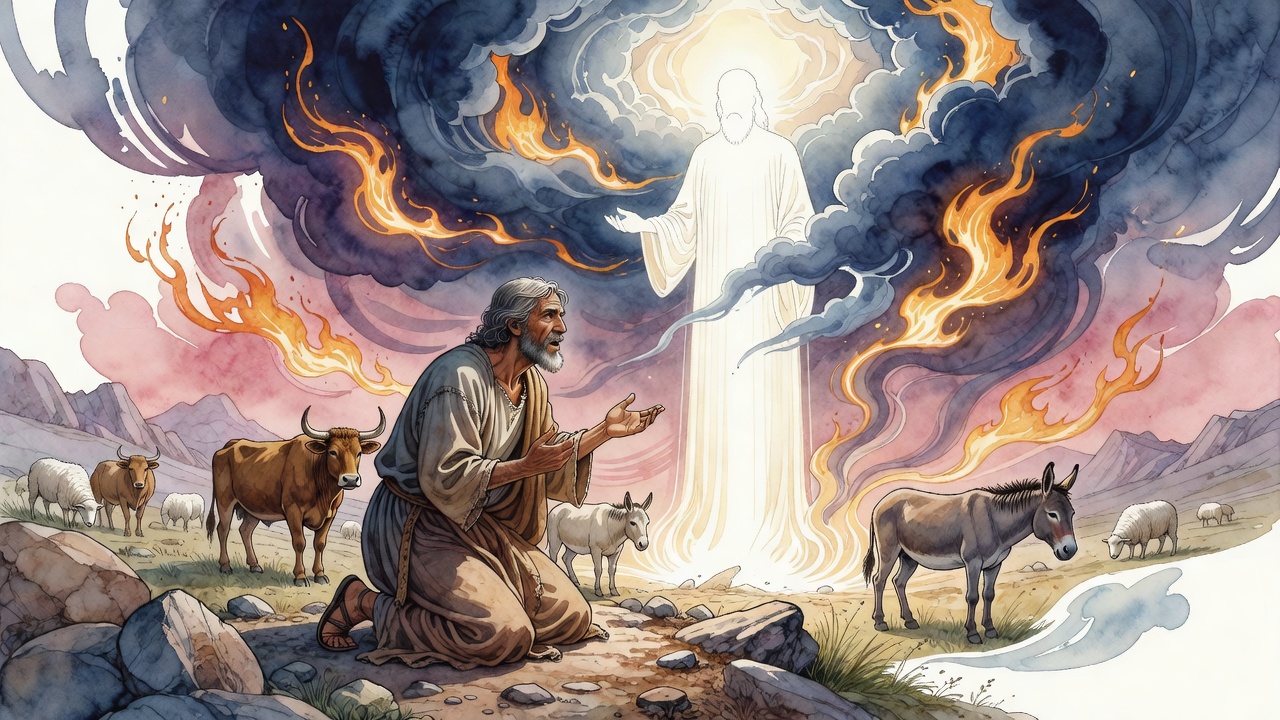
Twenty years earlier a frightened boy had asked for bread, a coat, and a road home. Now he was back, and four hundred men were riding toward him.
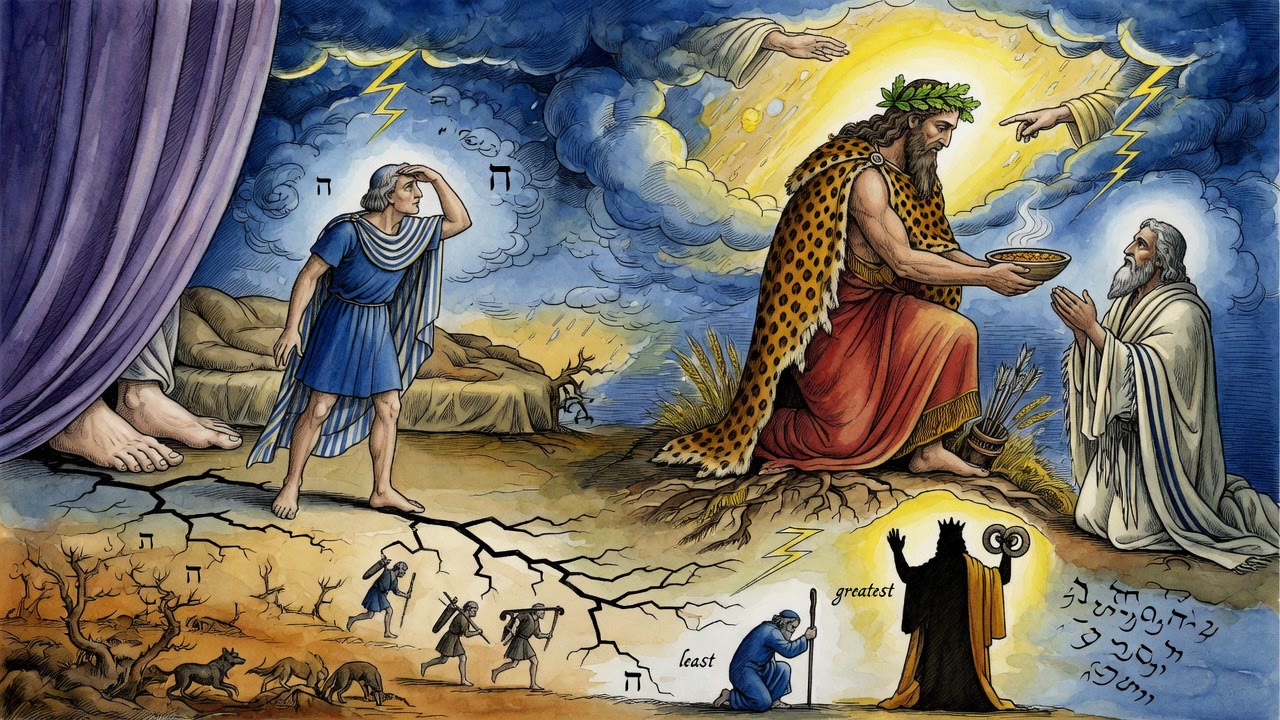
The stranger put a finger on a rock until it burst into flame. Jacob still held him. Dawn was coming, and the choir would not wait.
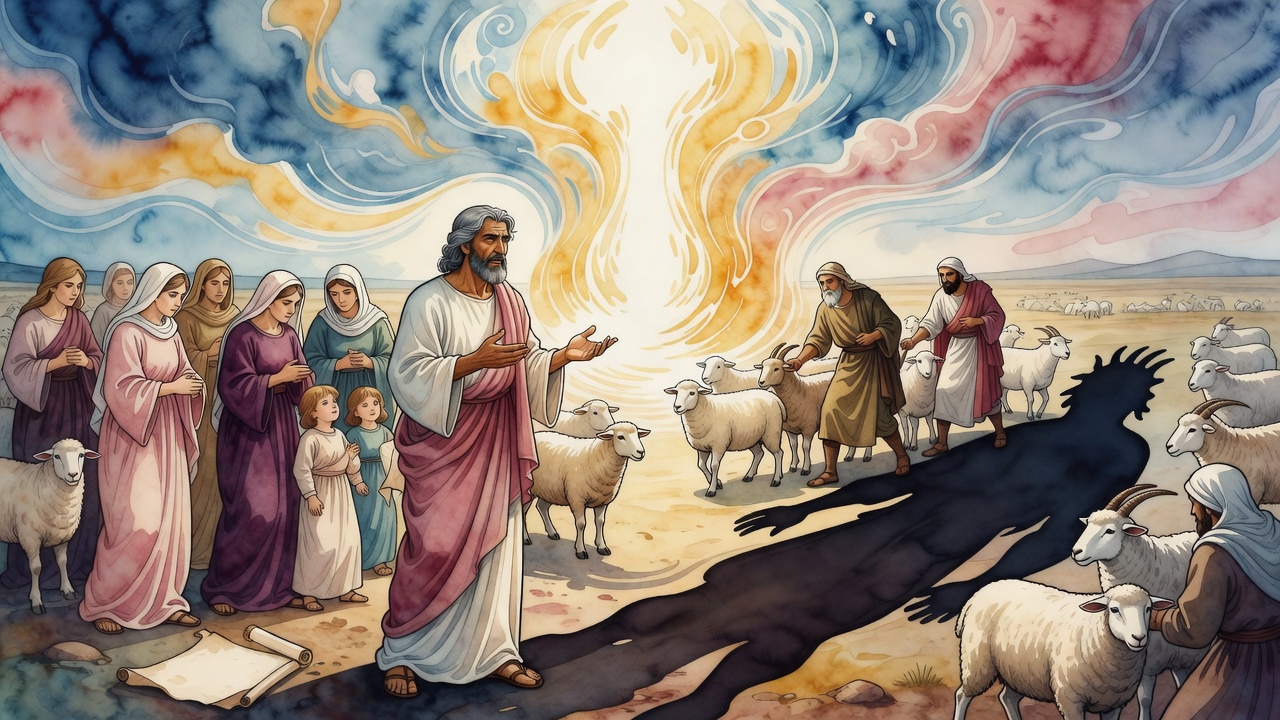
Jacob divided wives, children, and flocks into two camps. God's promise still rang in his ears, and fear still moved his hands.
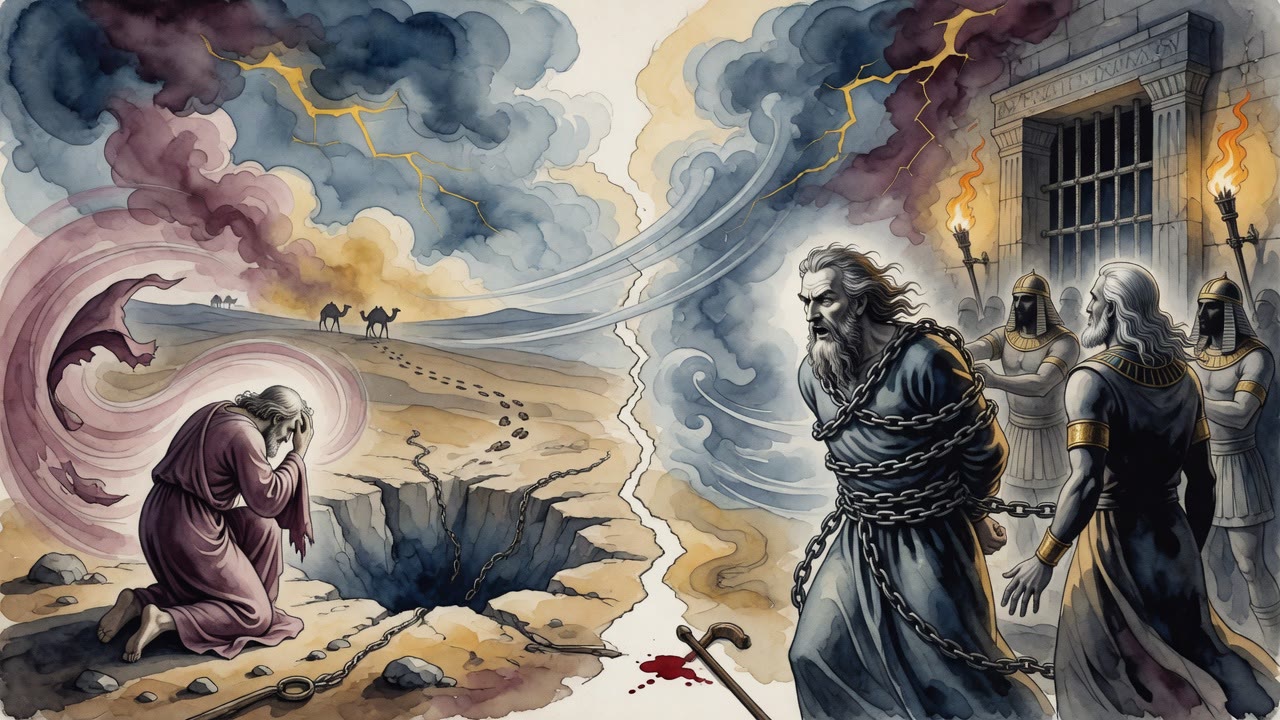
Jacob bought a field at Shechem and opened meat stalls. The stone at Bethel still waited for the altar he had promised on the run.
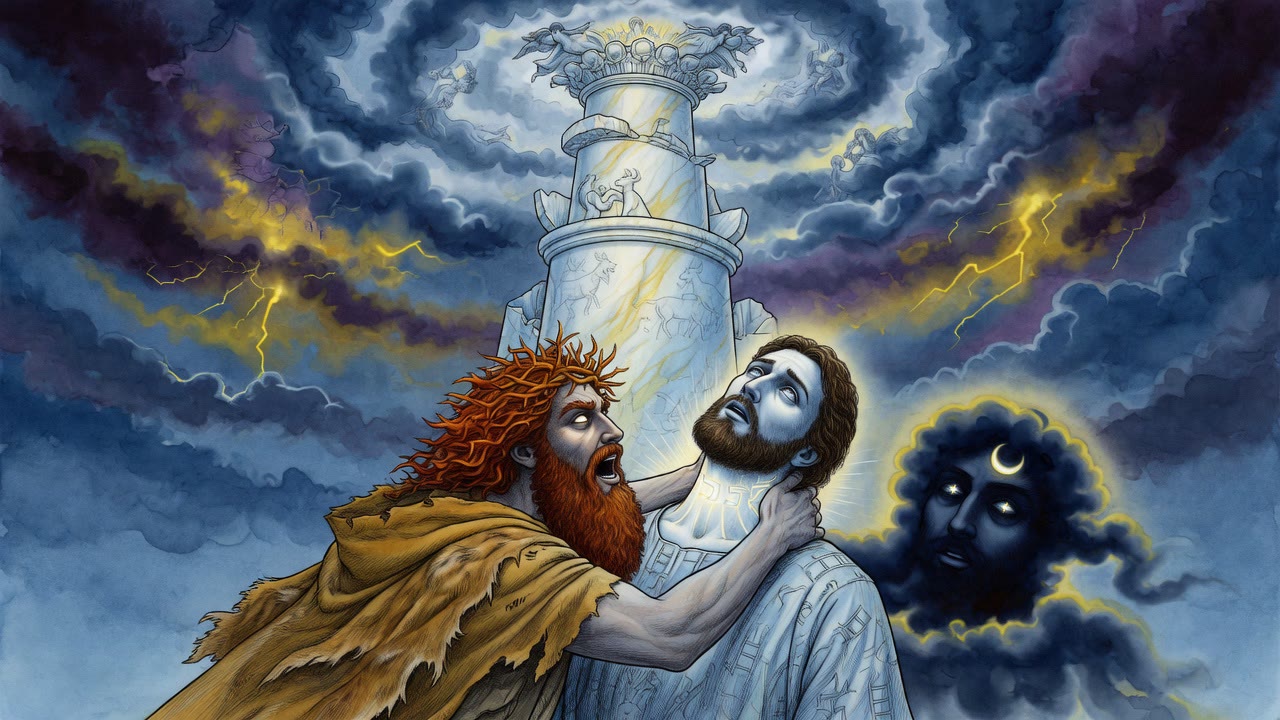
Jacob sent messengers toward Seir though God had already pledged safety. The bribe, the split camps, and a trampled spring followed that choice.
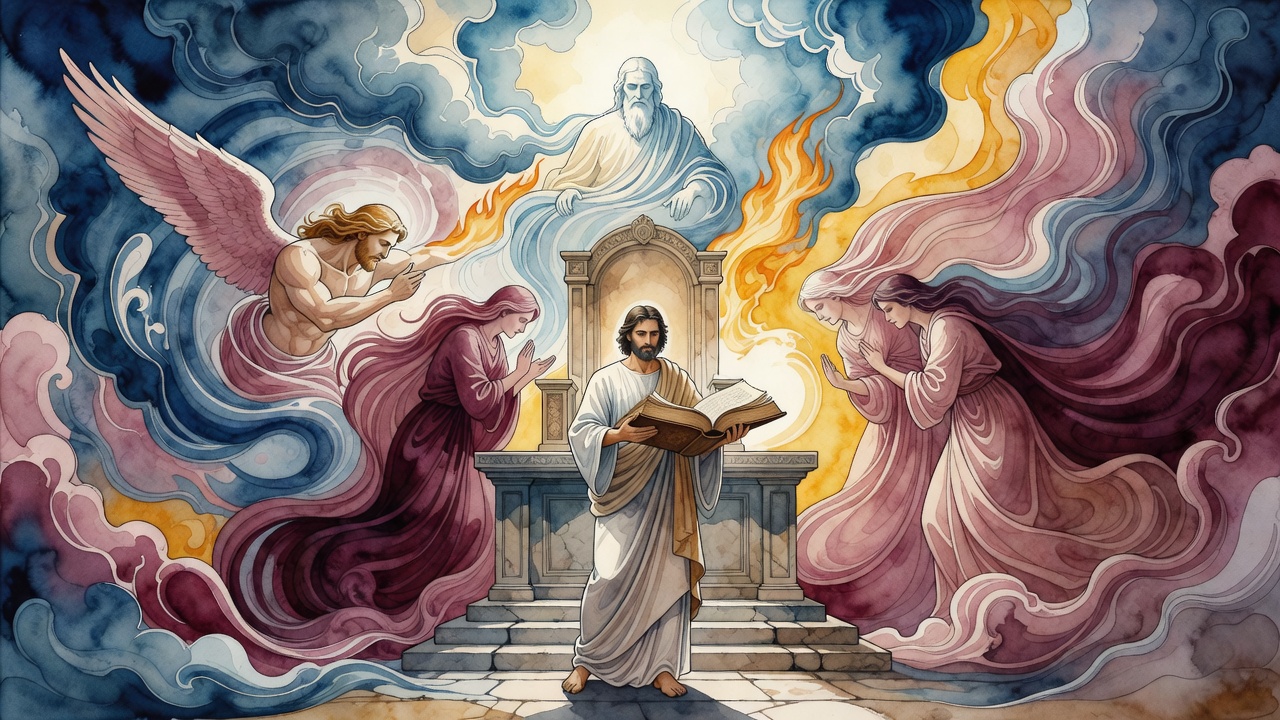
Jacob's unpaid vow opened his account book. Esau, a wrestling angel, Dinah's grief, and Rachel's death pressed him back to Bethel's altar.
