Samael Wrestled Jacob at the Jabbok Ford
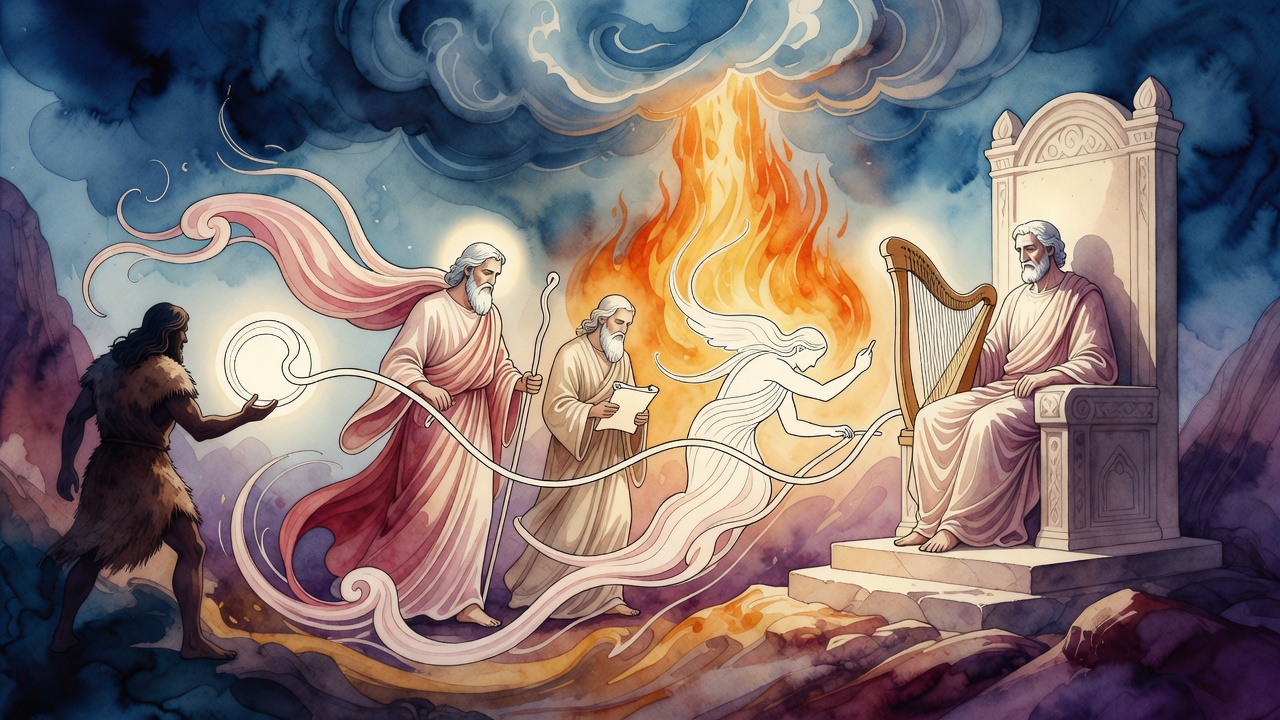
At the Jabbok ford a figure grips Jacob until dawn. Tradition names him precisely: Samael, Esau's angel, the prosecutor of Israel.
Table of Contents
 Click for full size
The Stranger at the Crossing
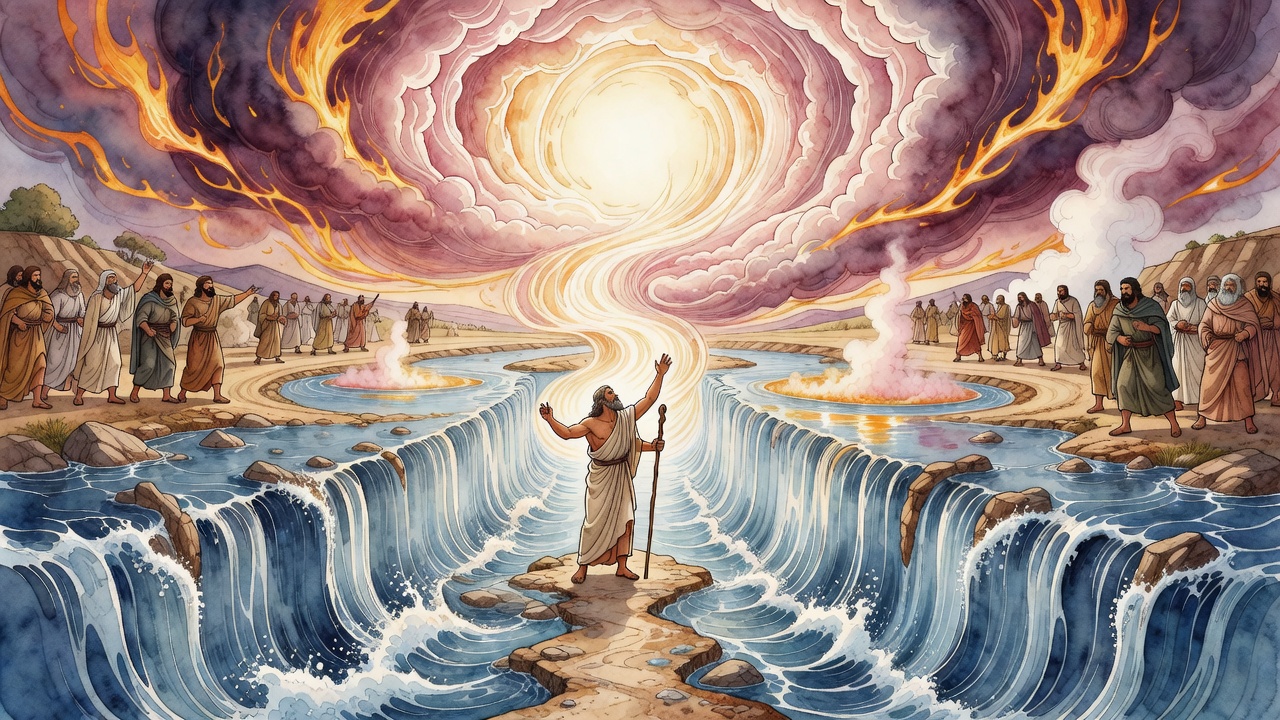
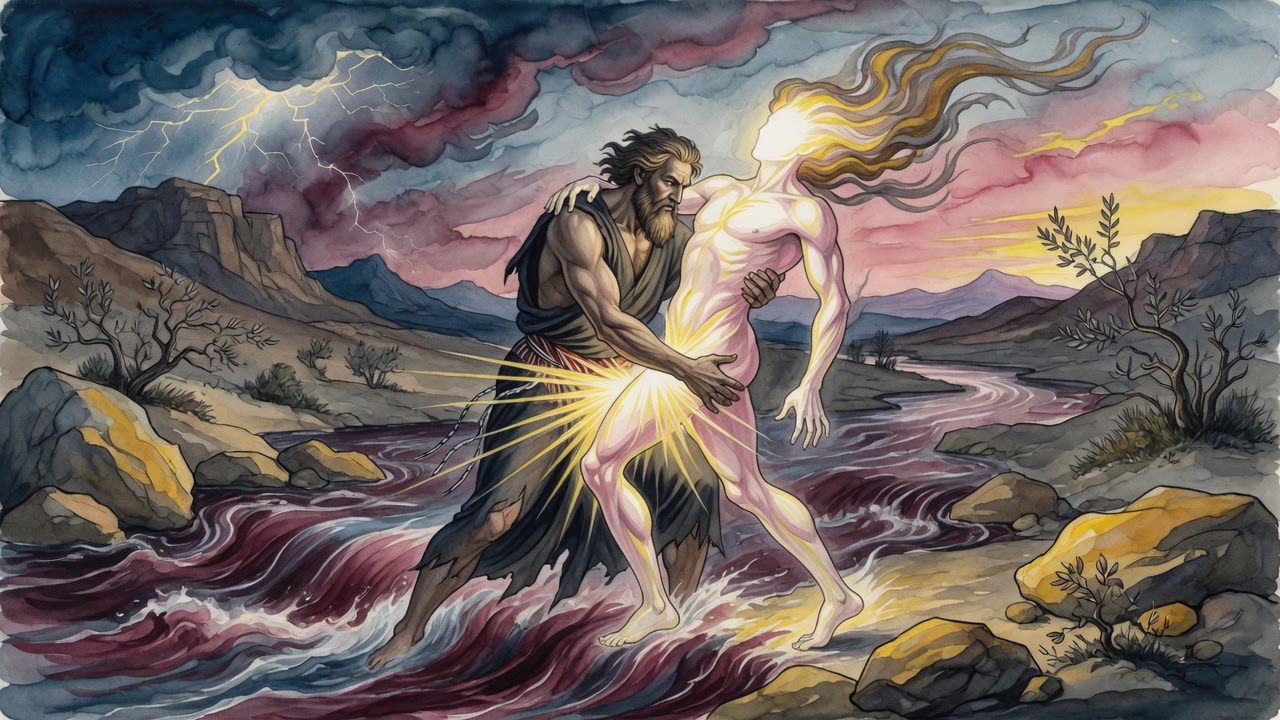
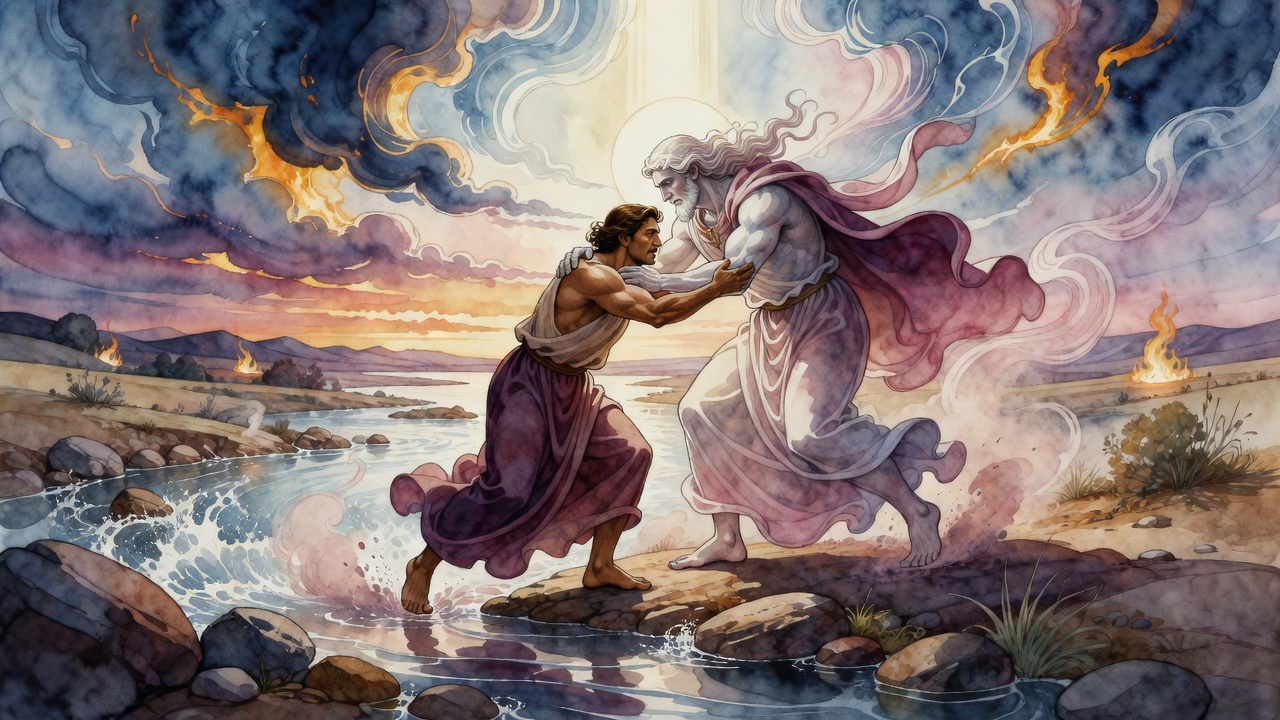
Jacob had sent everyone ahead. His wives, his children, his herds crossed the Jabbok while he stood alone in the dark on the far bank. He did not know what was coming. Then something seized him.
They wrestled through the night. The stranger could not break Jacob's grip. Jacob could not drive the stranger off. When the first grey of dawn spread across the ridge, the stranger touched Jacob's hip socket and wrenched it. Still Jacob did not let go. He demanded a blessing before he would release the man. The stranger gave it. He told Jacob that from now on his name would be Israel, because he had wrestled with God and with men and prevailed. Then he was gone.
The tradition never let that description stand as written. A man who appears from nowhere, who cannot defeat his opponent by force, who finally has to disable him through a touch, who refuses to speak his own name but grants a new one in exchange for release: this was not a man. The rabbis and mystics of later centuries identified the stranger precisely. He was Samael, the angel appointed over Esau, the figure who had been trying to prevent the covenant from passing to Jacob's line since before either of them was born.
Who Samael Is
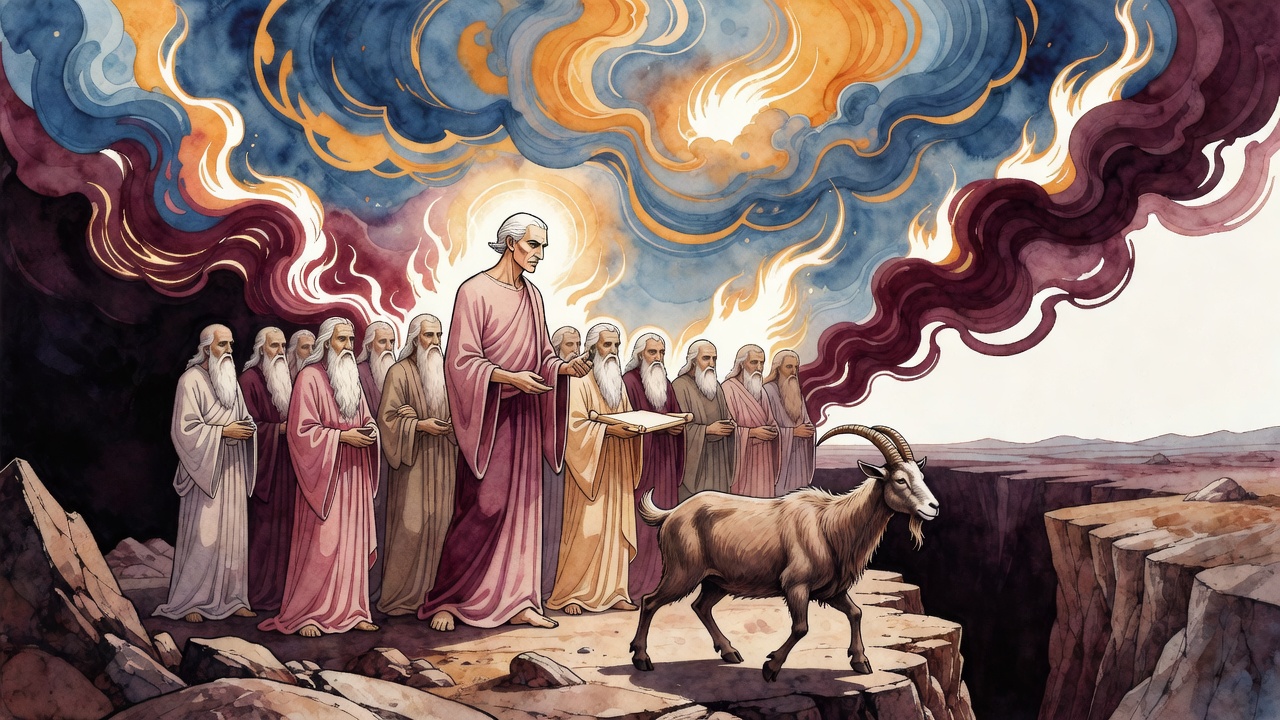
The Tikkunei Zohar describes Samael with a precision that distinguishes him from simple chaos. He is not a force running outside creation's order. He is a specific officer within it, assigned a specific function: guardian of Esau, heavenly prosecutor of Israel, and the figure the tradition associates with the pull toward harm that lives inside every person. He operates in the divine court. He brings accusations. He tests. He presses on whatever weakness he can find.
The Esh Kodesh tradition elaborates on why Samael was assigned to Esau at all. Esau was not simply Jacob's rejected twin. He was the other son of Isaac, the inheritor of Abraham's blood, the line that did not receive the covenant but carried a weight in the cosmic structure nonetheless. Samael as Esau's guardian was therefore also Samael as Israel's opposition, the force that kept Israel's integrity under constant examination.
This is why the fight at the Jabbok was not accidental. Samael had been Jacob's adversary since the moment Jacob entered the womb ahead of Esau's hand, since the moment Jacob received Isaac's blessing through deception, since Jacob fled to Laban and built a household and a fortune in spite of every obstacle Esau's world could put in his path. The night at the ford was not the first engagement. It was the final examination before Jacob could become Israel in earnest.
What the First Day Already Contained
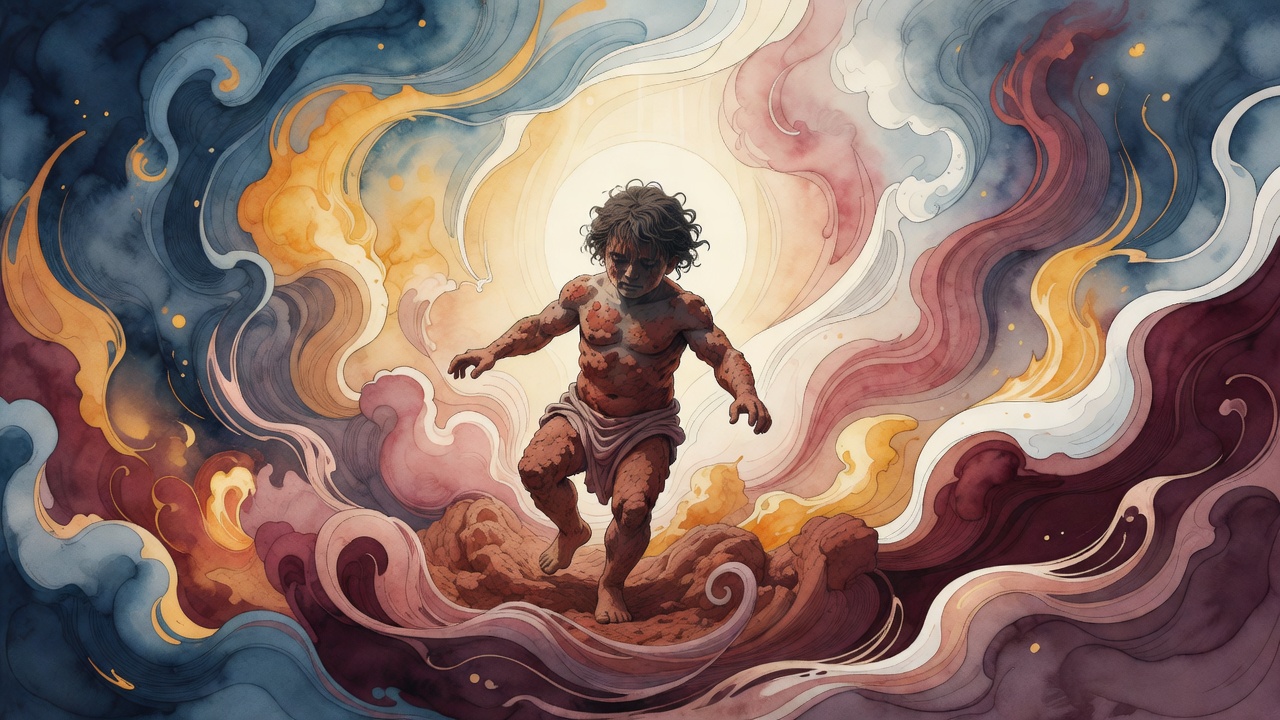
The Legends of the Jews opens the story of creation with a detail that places Samael inside the cosmic structure from the beginning. On the first day, God brought ten things into being simultaneously: the heavens and the earth together, like a pot and its cover. Light. The four winds. Fire of Gehinnom (the fiery place of punishment after death). The angels. And the deep places, the dark foundations under the world that would later be assigned to the powers that test human beings.
Samael, in the account from the Tikkunei Zohar, is associated with those dark foundations. He is tied to the serpent of Eden, to the adversarial principle that entered the world on the very day the world was made. He is not younger than creation. He is woven into its first layer. This is why he could appear at the Jabbok as though he had always been waiting there. He had been.
The Birth That Set the Contest in Motion
The Legends of the Jews describes the moment before Jacob and Esau were born as a moment of cosmic competition. Even in the womb they struggled. Esau was drawn toward temples of idolatry. Jacob was drawn toward Torah. Samael's appointment to Esau, in this framework, was not arbitrary. He was assigned to the son who carried the potential to become something destructive, and his task was to manage that potential, keep it directed, and use it against the covenant line whenever possible.
The name Esau means complete in the sense of arriving already finished, already committed to what he would become. Jacob's name, by contrast, meant the heel-gripper, the one who would have to fight for everything. Samael knew which name to stand against. The fight at the Jabbok simply made it physical.
What Jacob won was not just a blessing. He won the right to carry the name Israel through the rest of history without Samael being able to take it from him by force. The hip that was wrenched reminded him that the victory had a cost. He walked differently afterward. He was supposed to.
← All myths