Judah Took the South of the Tower and Left No Man Standing
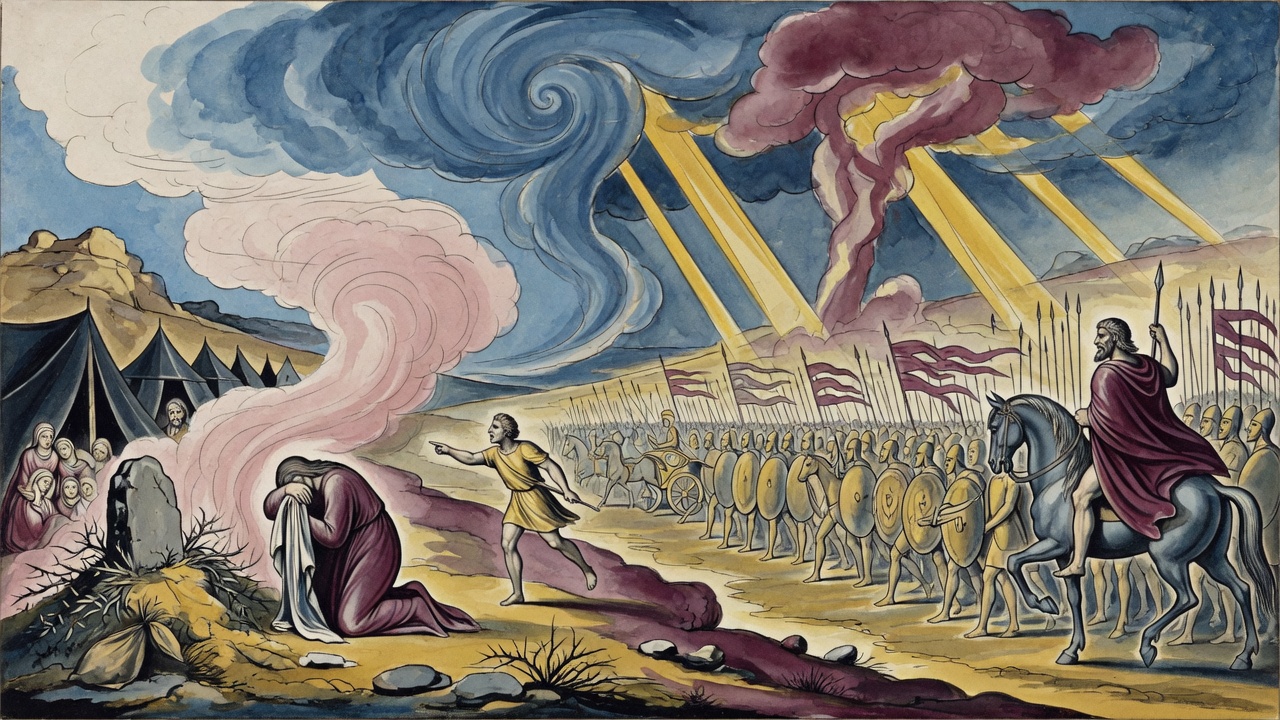
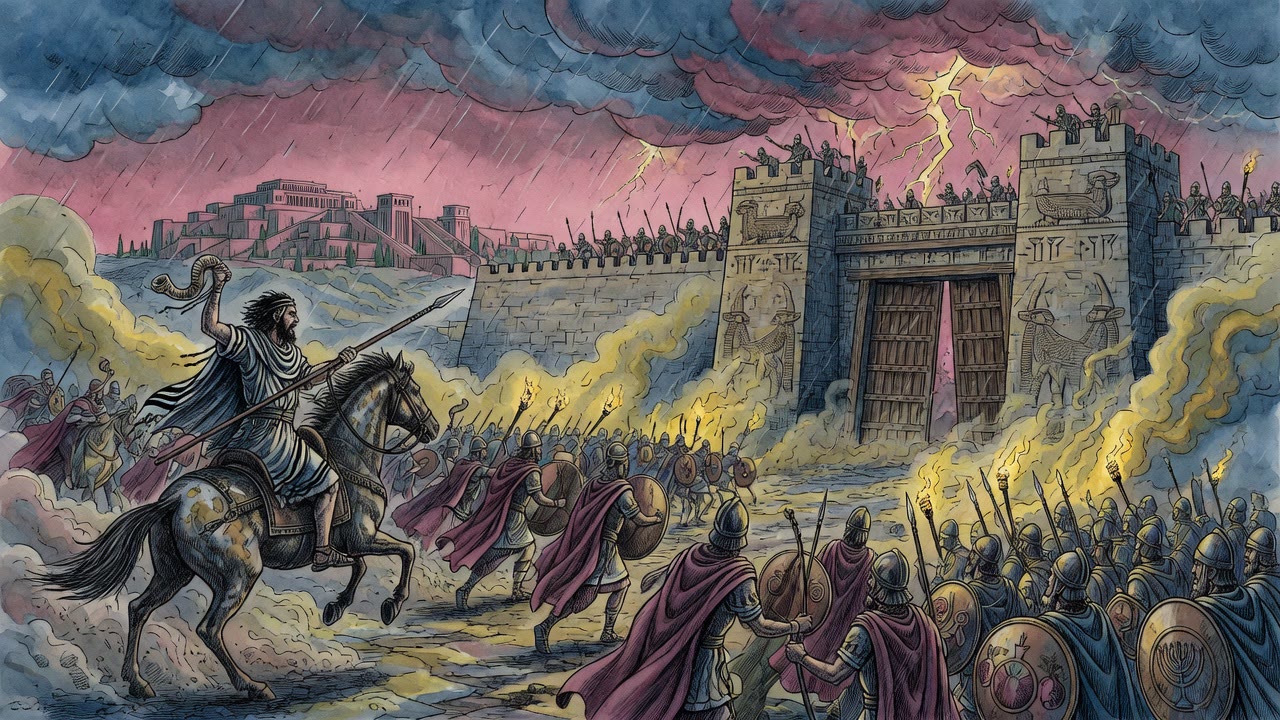
Esau came with four thousand men. Judah went out in front with fifty servants. The south side of the tower went quiet.
Table of Contents
Esau came with four thousand men. Jacob's sons did not wait on the walls. They went out.
 Click for full size
The tower sat over the household, cattle packed in the shadow of it, women and children behind the stone. Esau's host came in sight with the sun on their weapons. Waiting to be swallowed was one choice. The twelve men who had grown up watching their father prepare for conflict as if it were a prayer took the other.
Judah Took the South
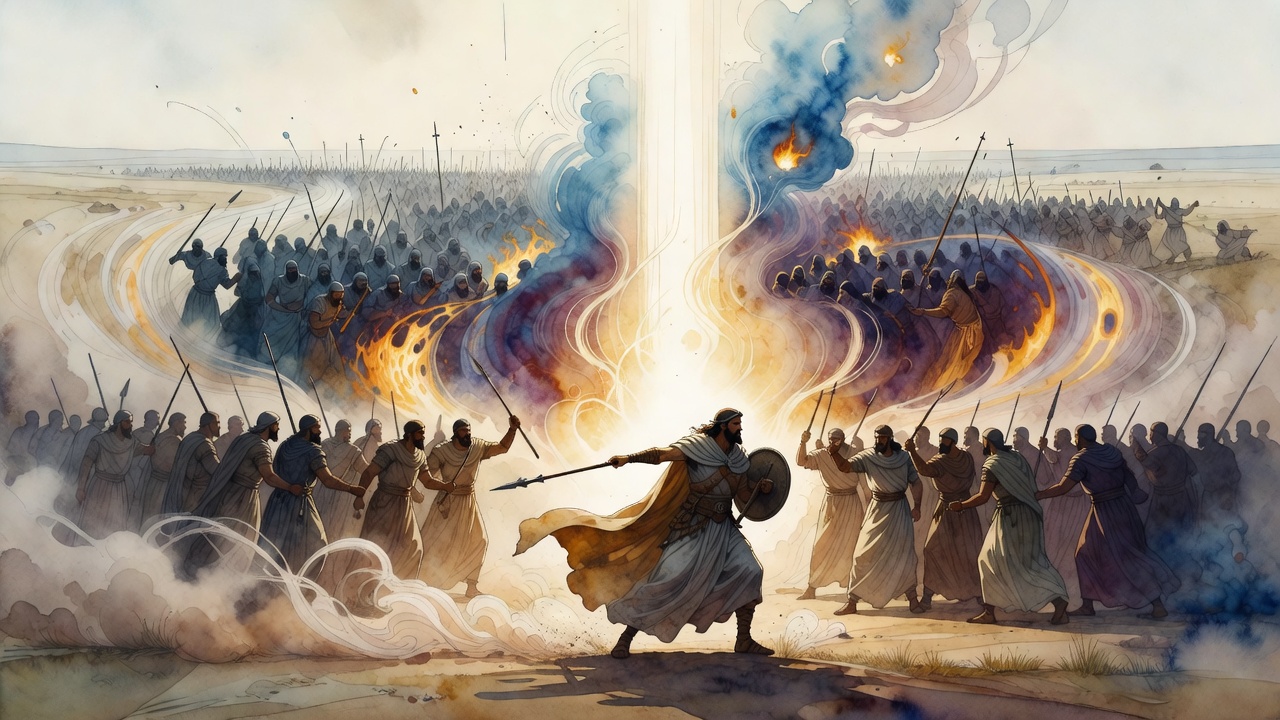
Judah went first. Naphtali and Gad with him, and fifty servants. They took the south side of the tower. Dust rose. The south became a lane of bodies. They slew everyone they found in front of them, and not one man facing that side escaped.
Judah did not send other men through the first door. He put his own body on the south and emptied it.
The Other Three Sides
Levi, Dan, and Asher went east with fifty men and killed the fighting men of Moab and Ammon who had joined Esau's coalition. Those nations had no quarrel of their own with Jacob's house. They had come for Esau's war and died in it.
Reuben, Issachar, and Zebulon went north with fifty and met the Philistines. The north side of the tower took the same count as the others: fifty men, named commanders, no speech from the wall.
Simeon, Benjamin, and Enoch son of Reuben went west with fifty. They killed four hundred of Edom and of the Horites, stout warriors. Six hundred more ran rather than stand. Four of Esau's sons ran with them and left their father lying where he had fallen.
Esau Fell at Aduram
Esau died on the hill at Aduram. The text of the fight is short about the blow and exact about the map that produced it. Four sides. Named brothers. Fifty on each. The work was done the way a harvest is done when the field has been divided in the morning.
Jacob buried his brother on that hill and went back to his house. The sons who had fled into Seir were still running. The pursuit went as far as the mountains and then stopped. There was a grave to dig, and it was Jacob who dug it.
Simeon Spent His Anger on the West
Simeon had led the killing at Shechem. His jealousy of Joseph had nearly ended in a pit and a lie. Jacob would curse that anger on his deathbed, fierce and undivided.
The anger had not gone. On the west side of the tower it had a new target, and it worked with the same totality. Four hundred trained men down. Six hundred in flight. The curse was still true. The west wall was clear.
Judah's south had been the first door of the battle. The men who were going to carry a scepter did not let other men take the first contact. He led. The south of the tower went quiet after he passed, and the hill at Aduram held a brother who had come with four thousand and gone into the ground.
← All myths