Jacob Arrived Empty-Handed and Left With Wounds That Became Law
Laban ran out to embrace his nephew and found nothing on him worth taking. Twenty years later Jacob spent everything he had on his brother.
Table of Contents
 Click for full size
Laban Priced Him During the Embrace
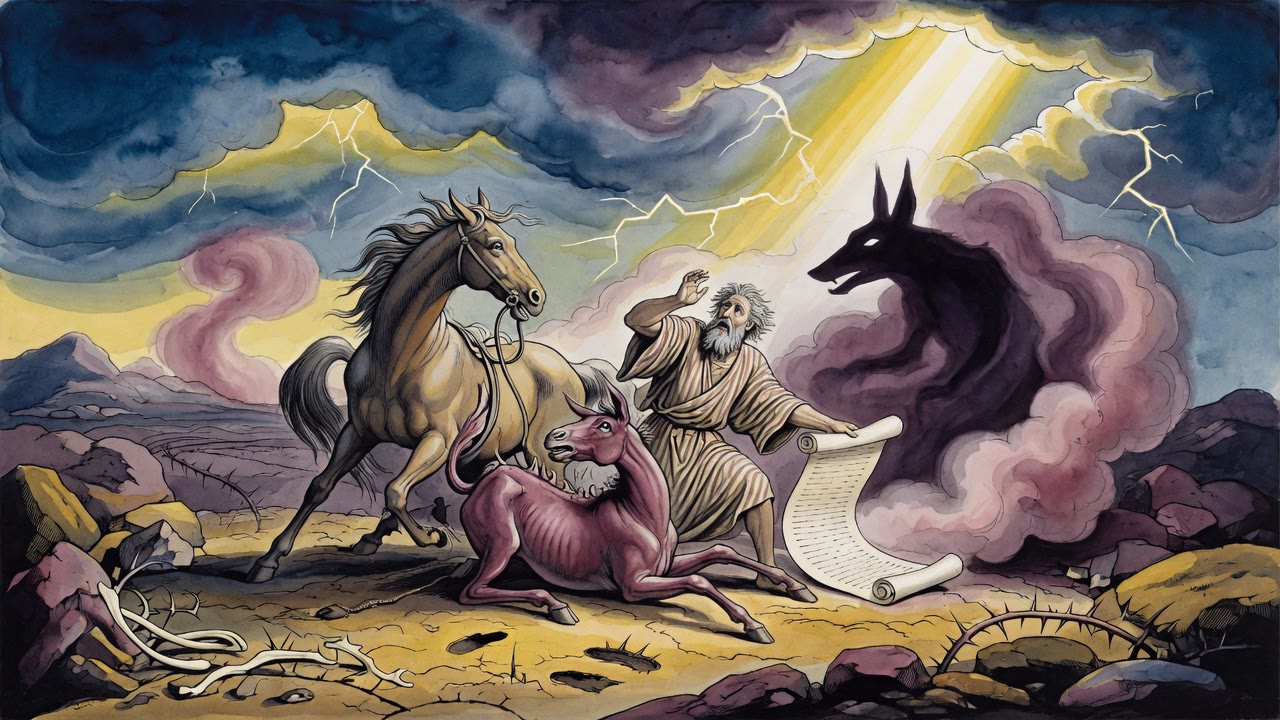
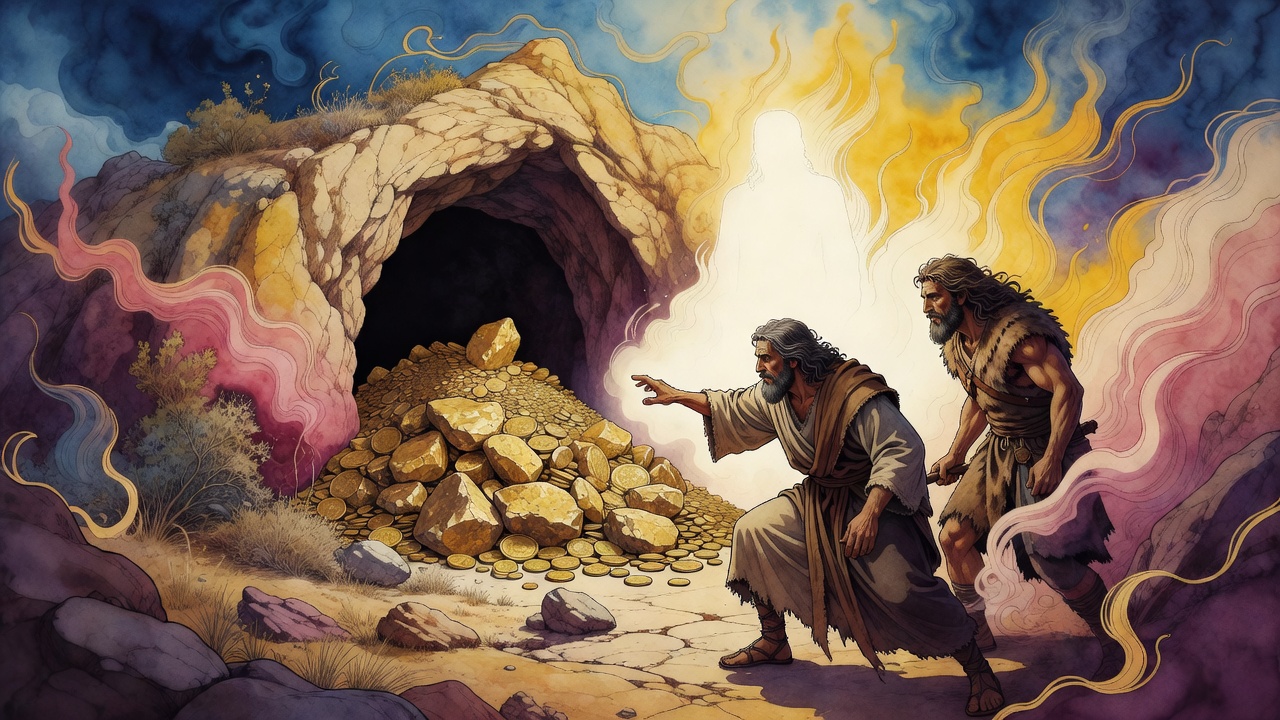
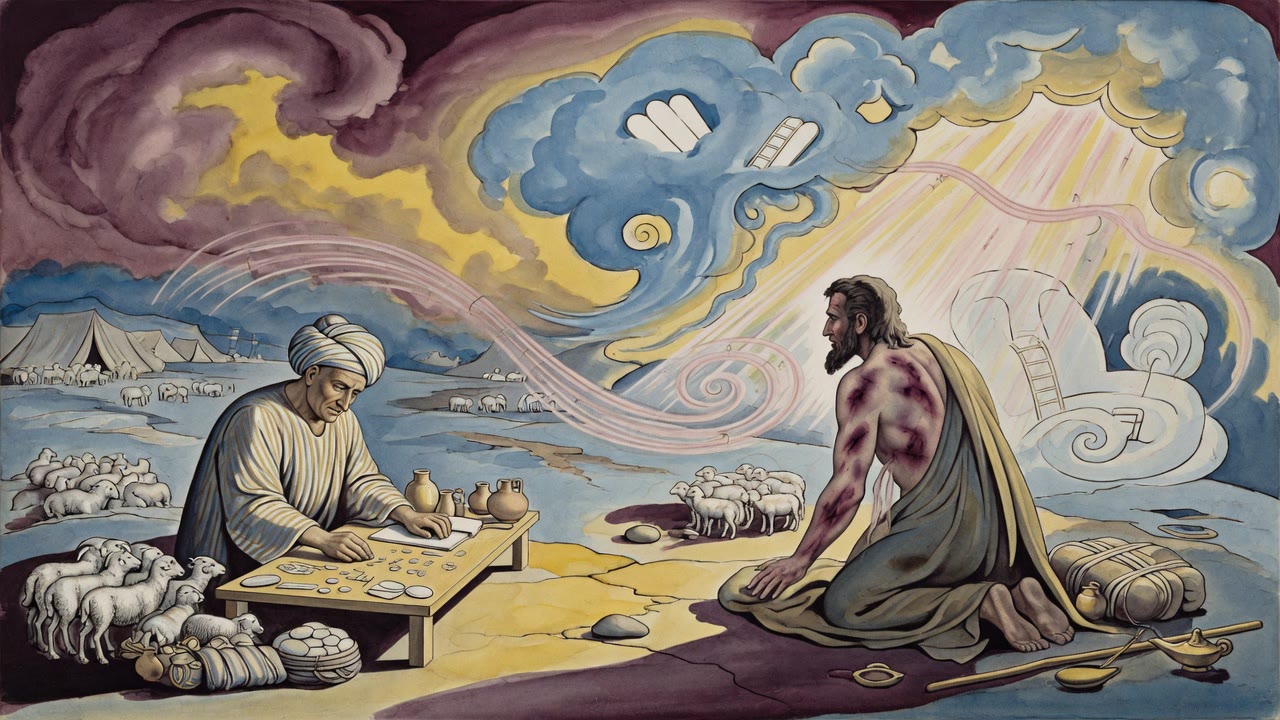
Laban came out at a run and got his arms around the boy, and by the time he let go he had done the arithmetic. Nothing on the belt. Nothing in the pack. Jacob had arrived empty-handed, across the desert with a stick and nothing else.
"Surely you are my bone and my flesh," Laban said.
Rabbi Ami heard a threat inside the compliment. I had been planning to make you a king over me, Laban means, and instead you show up like this, so you are my bone, and I will strip you the way a man strips a bone. Then he housed him for a month, which Rabbi Ami noted is exactly how long a person is obliged to carry a relative for nothing, and on the last day of it he opened the negotiation.
"Because you are my brother, should you work for me for free? Name your wages."
Nobody in the room believed that sentence. A job worth ten pieces of silver was going to get paid at five. A delivery worth six would be settled at three. Jacob answered him with the only leverage he had. I did not come here for your money, he said. I came for your two daughters.
The Herd Was Arranged So Esau Would Sit as a Judge
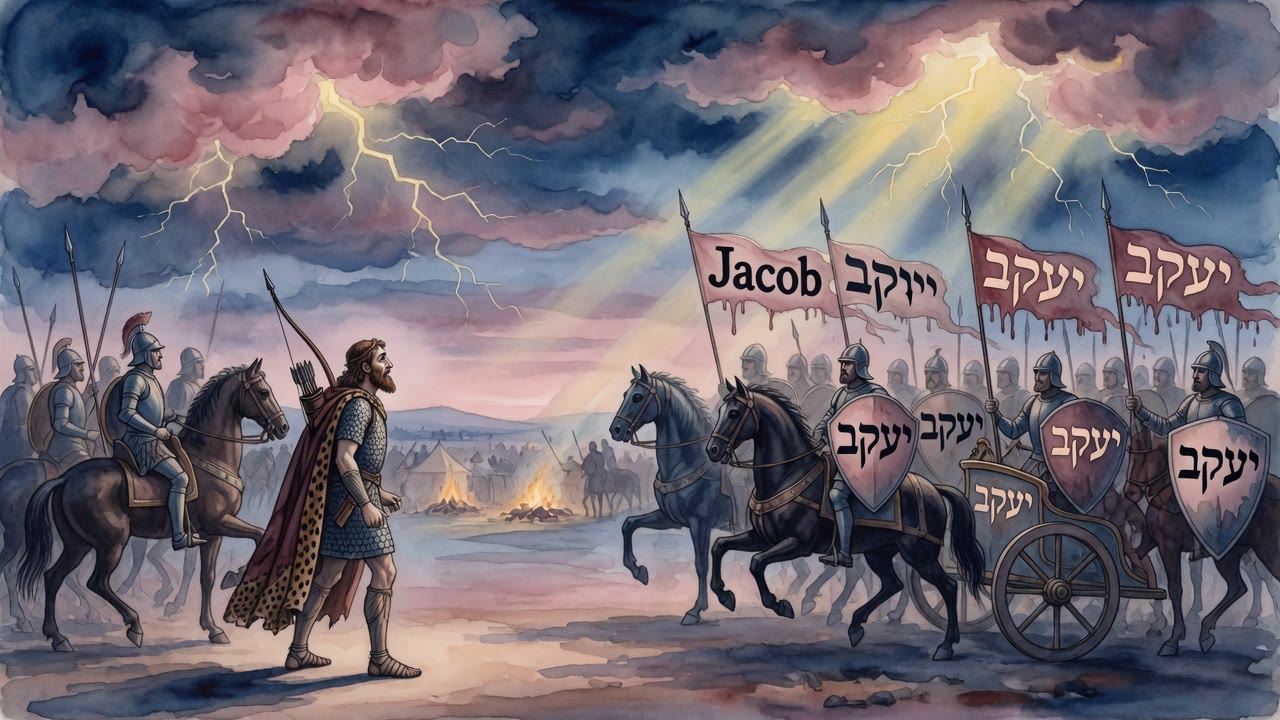
Twenty years and two wives and eleven sons later, Jacob was on the road home with a brother coming to meet him and four hundred men behind that brother. He spent the night cutting his wealth into a procession.
Two hundred she-goats, twenty he-goats. Two hundred ewes, twenty rams. Thirty nursing camels with their young. Forty cows, ten bulls. Twenty she-asses, ten he-asses.
Rabbi Elazar read the ratios and got a marriage law out of them. Two hundred females need twenty males, so a man of leisure owes his wife every day, a laborer twice a week, a sailor once in six months. Rabbi Berekhya noticed that the camels are the one animal in the list whose males go uncounted, and said the verse kept quiet out of respect, because a camel is private about such things.
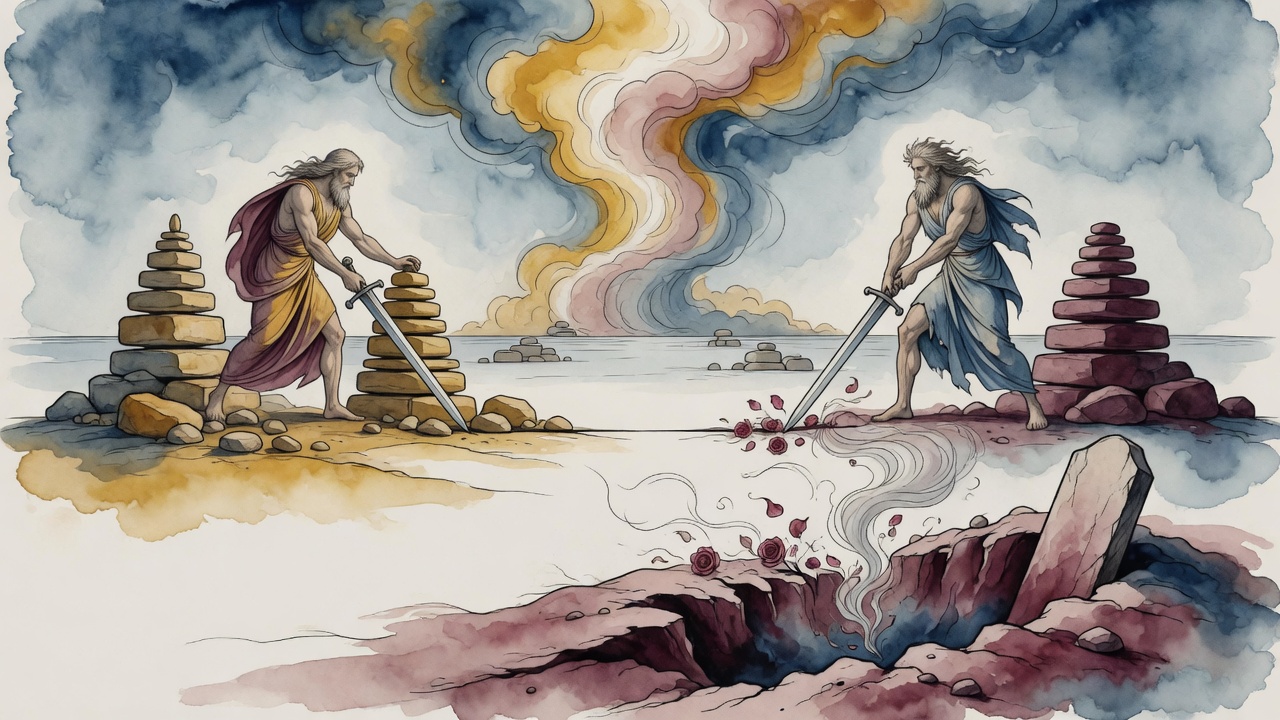
Then the placement. Why put the camels in the middle instead of at the front or the back? Because a camel stands taller than everything else in the line, and a row of tall animals coming over a rise looks like a bench. Esau would see the low herds part and the high ones rise up behind them and he would find himself, without deciding to, sitting where a magistrate sits. That was the whole design. Take the seat, Jacob was saying to him through the livestock. You are on the platform. I am the man standing below it. Now be merciful.
Something Fought Him All Night and Could Not Win
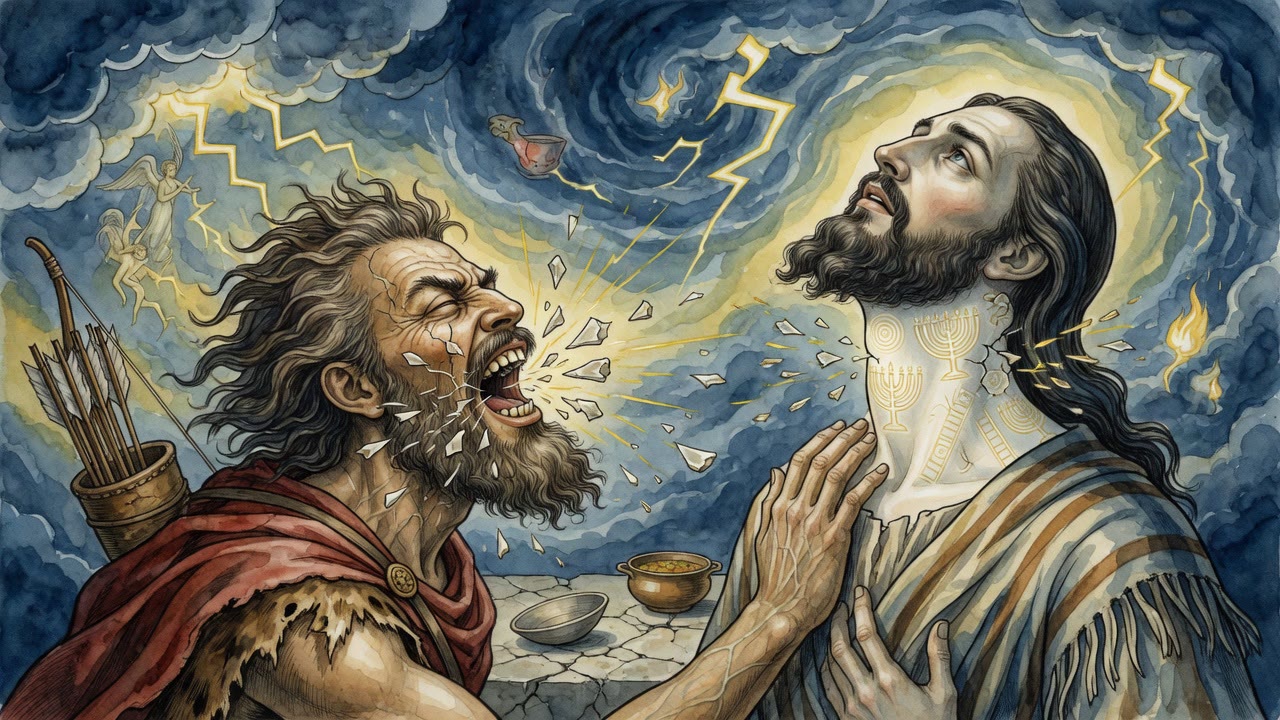
He sent the women and the children over the ford and stayed on the wrong bank alone, and something came out of the dark and took hold of him.
It could not throw him. That is the part the sources will not let go of. Whatever it was, it worked at him until the sky went grey and never got him down, and when it saw it was not going to, it reached and touched the socket of his hip, and the tendon came off its seat. The word for that nerve, gid hanashe, is built on the verb for a thing knocked out of place.
Rav Huna said something startling about it afterward. By the strict letter, those tendons are permitted. There is no verse forbidding them and no court forbade them. Israel is holy, and Israel put them off the table for itself. Rabbi Yehuda said the attacker touched one leg, so one leg is forbidden. Rabbi Yosei said he touched one leg, and both are forbidden, because nobody wrote down which. They argued the point out to the end. Some held for the right side, because the verse says his hip, meaning the strong one. Some held for the left. The argument has never closed, and every butcher in Israel since has cut both. Jacob carried two wounds out of Laban country, the twenty stolen years and the socket, and only one of them became law.
Timna Asked to Be a Servant in a House That Was Not Hers
There is a line in the family register that reads like bookkeeping. Timna was a concubine of Eliphaz son of Esau, and she bore Amalek to Eliphaz.
Rabbi Shimon ben Yohai asked why the verse bothers. It bothers, he said, to show how badly the world wanted in. Timna was not a servant girl. Her brother was Lotan, a chieftain of Seir, which made her a ruler's sister with a household of her own. She looked at the descendants of Abraham and decided she would rather be attached to that family at the lowest rung than stay where she was at the top. If I am not fit to be his wife, she said, I will be his maidservant.
And she went to Esau's line to do it. Esau, who in the whole ledger of his life had one commandment to his credit, that he honored his father. Kingdoms wanted to attach themselves to a man with one commandment. Rabbi Shimon left the obvious conclusion sitting there unspoken: what, then, about the brother who kept the whole of it, limping home over the ford with his hip out of joint and his herds gone ahead of him as a bribe.
The son Timna bore was Amalek.
← All myths