Jacob Fled from Esau, and Egypt Later Escorted Jacob's Coffin Home
Esau sharpened murder into a plan, but Jacob carried Isaac's blessing into exile. Years later, Egypt rose to escort his coffin home.
Table of Contents
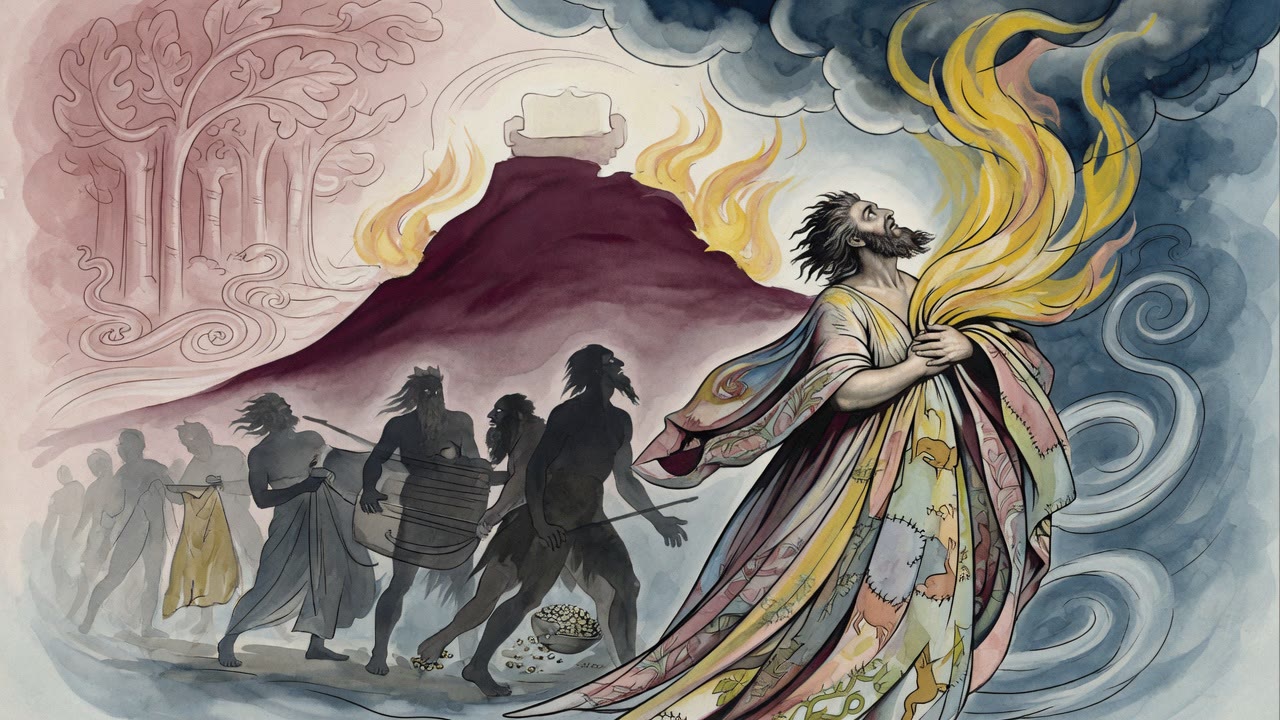
Esau had already chosen the order of death. His father first, then Jacob, because a living Isaac was the last wall still standing between anger and blood.
 Click for full size
Rebekah heard the plan before steel left its sheath. She did not waste breath softening the danger. Her elder son meant to kill her younger son, and the house of Isaac had become a place where blessing and murder were breathing the same air.
The Door Closed Before Esau Struck
She found Jacob and told him to leave. Not soon. Now. The blessing had already passed over him, and Esau's rage had hardened into decision. Jacob stood before his mother with the stubborn courage of a man who had wrestled for the birthright long before he understood its price.
"I am not afraid," he said. "If he wishes to kill me, I will kill him."
Rebekah refused the answer. She had not maneuvered through Isaac's tent, dressed Jacob in Esau's garments, and caught the blessing as it fell from a blind father's mouth only to watch one son kill the other in the yard. "Let me not be bereaved of both my sons in one day," she said. The sentence left her mouth like a shield. It would come true later in a way she could not yet name.
To Isaac, she gave the matter another shape. Jacob needed a wife from the family, not a woman from the daughters of Heth who had made the old couple's house bitter with idols and grief. It was not a lie. It was a door large enough for the truth to escape through.
The Blessing Went Into Exile
Isaac understood more than the words required. He called Jacob close and gave him the blessing again, this time with open eyes of the spirit, as if the first blessing had been a flame snatched in darkness and the second was the lamp set in a window. He sent him toward the family of Abraham, toward marriage, toward survival.
The father also looked farther than the road to Haran. He saw Jacob's children in a future land not their own. He saw exile tightening around them. He prayed that the blessing would not end in foreign soil, that the descendants who went down would one day come back up.
Then Jacob left the house where he had been son, rival, deceiver, and chosen heir. Behind him was Esau, heavy with rage. Ahead of him was the house of Eber, son of Shem, where he would vanish for fourteen hidden years and study the ways of God while Esau's anger had nowhere to land.
Fourteen Years Hidden From the Knife
Fourteen years is a long time to disappear. Long enough for a mother's voice to grow faint in the ear. Long enough for a brother's threat to become part of the weather of a life. Jacob stayed concealed in Eber's house, not as a coward but as a man carrying a blessing too dangerous to expose.
Then came fourteen more years with Laban in Haran. Work. Marriage. Bargains. Children. Another house full of deception, another set of doors closing and opening around him. The blessing survived all of it, but it did not make Jacob's life easy. It made his life impossible to discard.
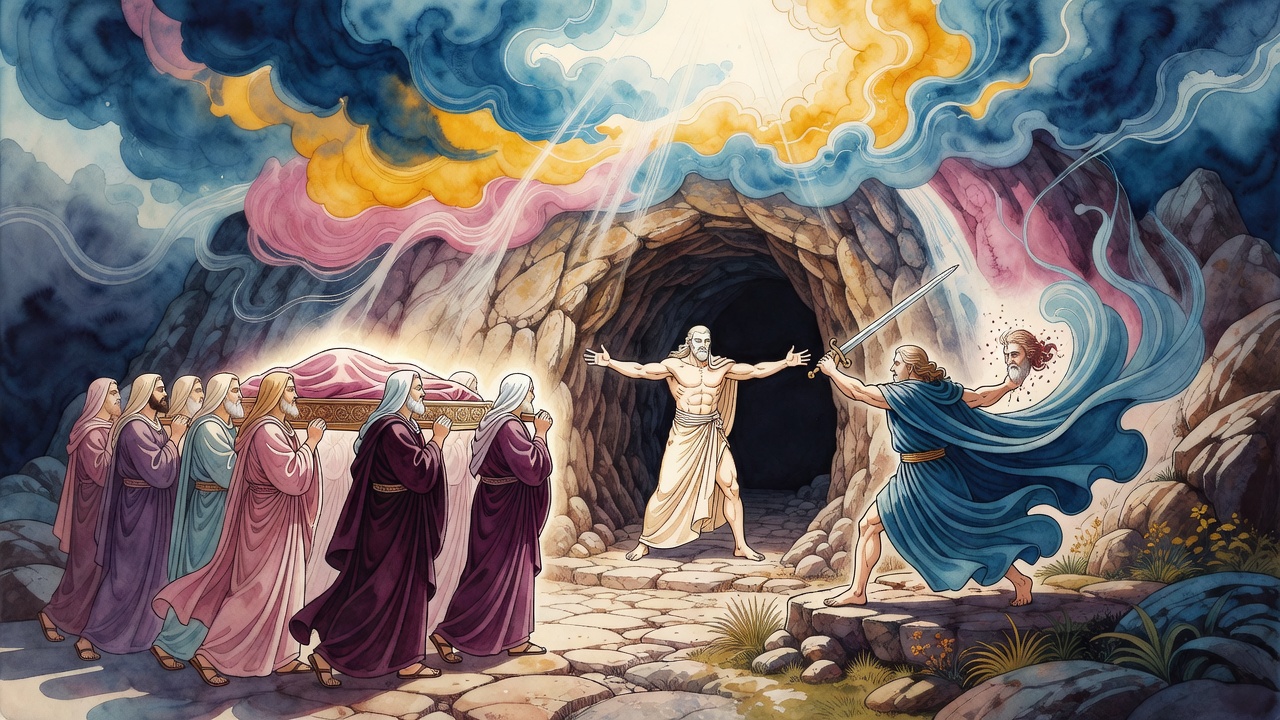
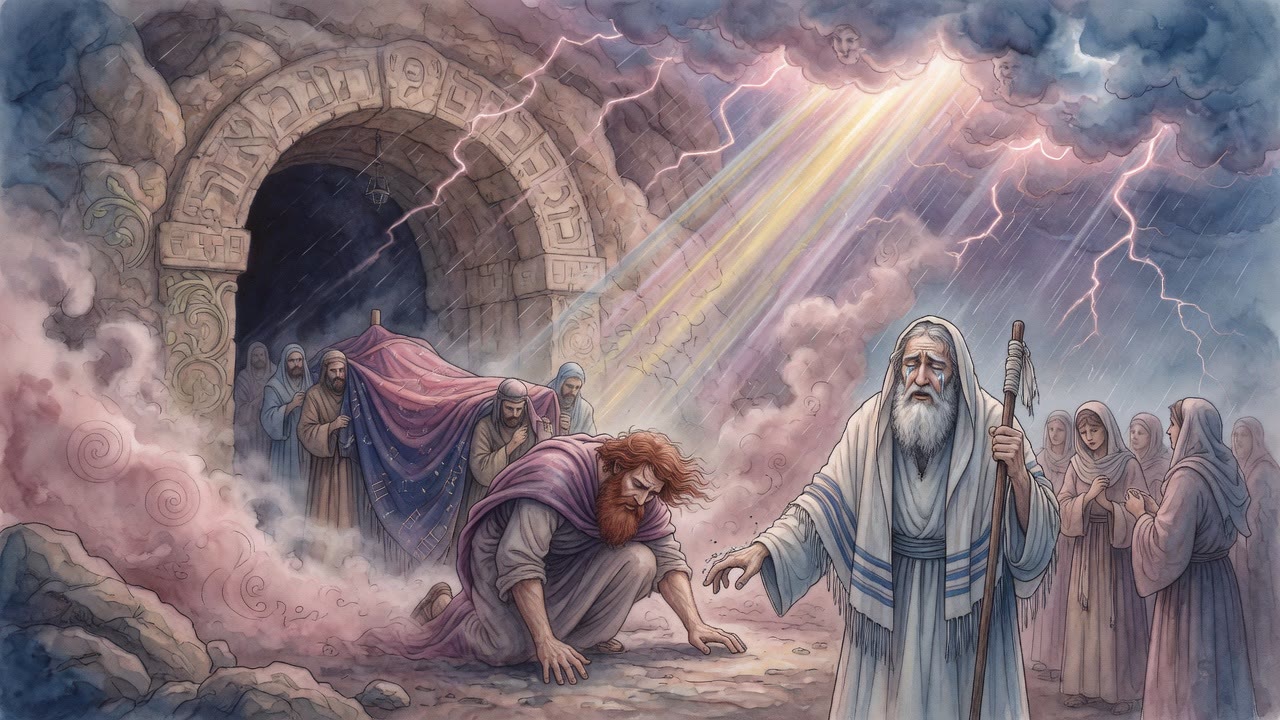
Rebekah's warning waited across the decades. When Jacob died at last, his sons carried him toward the cave of Machpelah. Esau came to block the procession at the mouth of the ancestral burial place. The old hatred had aged, but it had not died. There, at the threshold of the cave, the sentence Rebekah had spoken returned. Esau fell on the day Jacob was buried.
The Coffin Took the Road Home
Egypt did not treat Jacob like a fugitive when he died. Servants of Pharaoh and elders of the royal household joined the funeral escort. The man who had fled his brother under cover of a marriage errand went home surrounded by the honor of a kingdom.
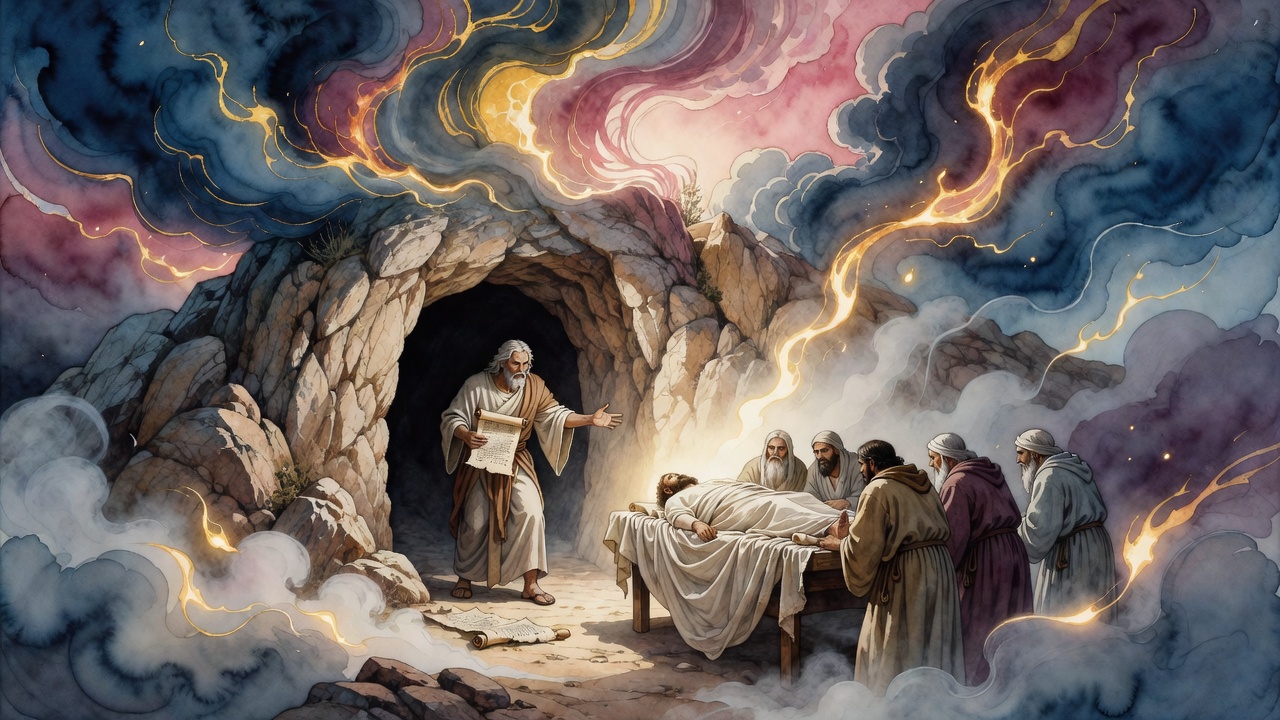
His son Joseph watched that honor and remembered it at his own deathbed. He had carried his father home whole. He would not ask the same for himself. The family tomb belonged to the patriarchs and their wives. Joseph asked for bones, not a body, and not even a place in Machpelah. "Bury me anywhere in the land," he told his brothers. "Only do not leave me in Egypt when God brings you out."
He made the oath with his brothers and told them to bind their sons to it as well. His own sons might be trapped by Egyptian politics. The court could claim respect as an excuse to keep him. The brothers had no such burden. They had sold him into Egypt once. Their descendants would have to carry him out.
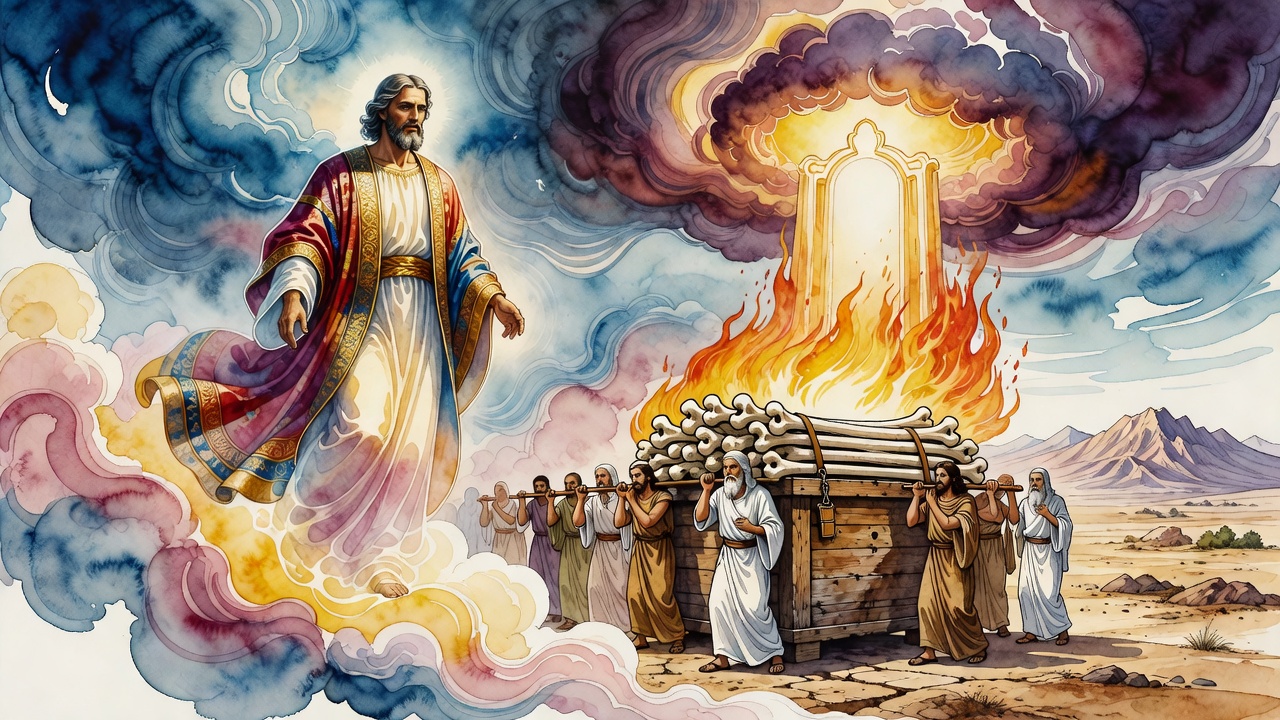
So two honors crossed the generations. Jacob's coffin moved under the eyes of Pharaoh's court. Joseph's coffin moved under a different canopy. When Israel walked into the wilderness, his bones traveled beside the ark of the covenant. Priests and Levites walked near it. All Israel surrounded it. Seven clouds of glory spread over the camp, and the Divine Presence went with the casket of the son who had refused to let Egypt become his grave.
The fugitive father came home in royal dignity. The son in a coffin came home with holiness marching at his side.
← All myths