The Ephraimites Left Egypt Too Early and Became Ezekiel's Dry Bones
Two hundred thousand Ephraimites left Egypt thirty years early, fought the Philistines, and died. Their bones became Ezekiel's valley.
Table of Contents
 Click for full size
The Men Who Read the Calendar Wrong
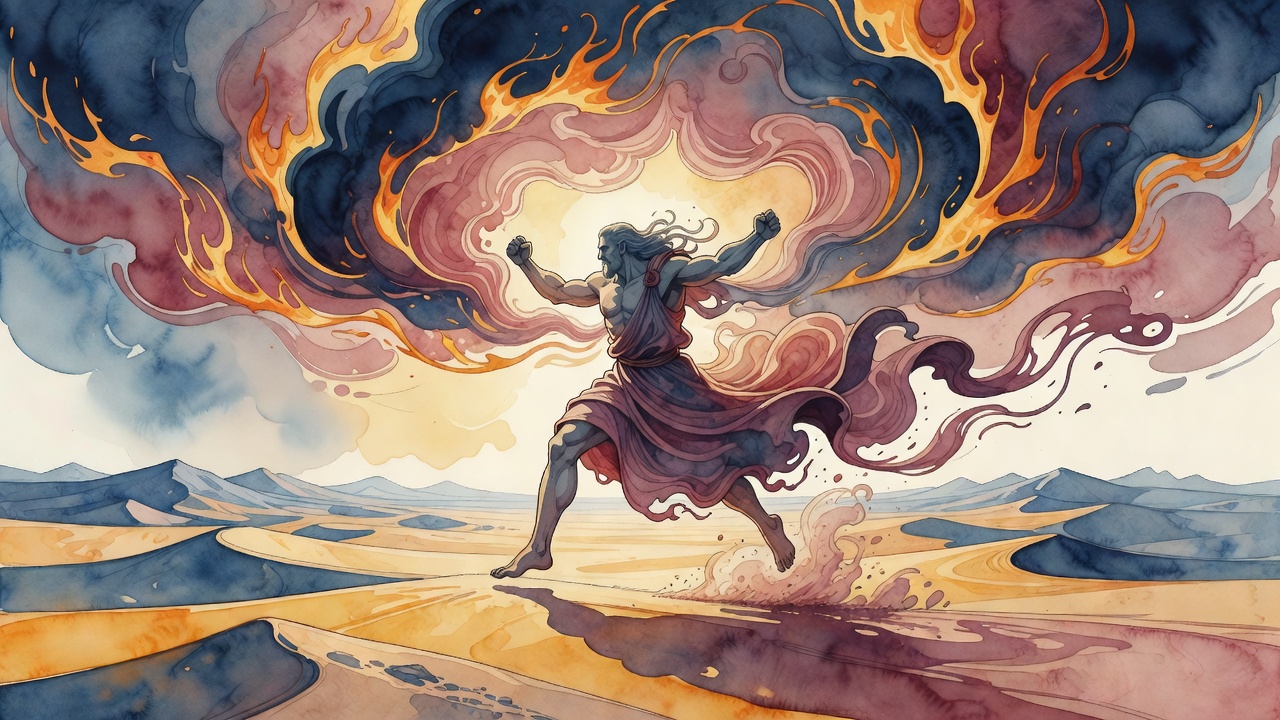
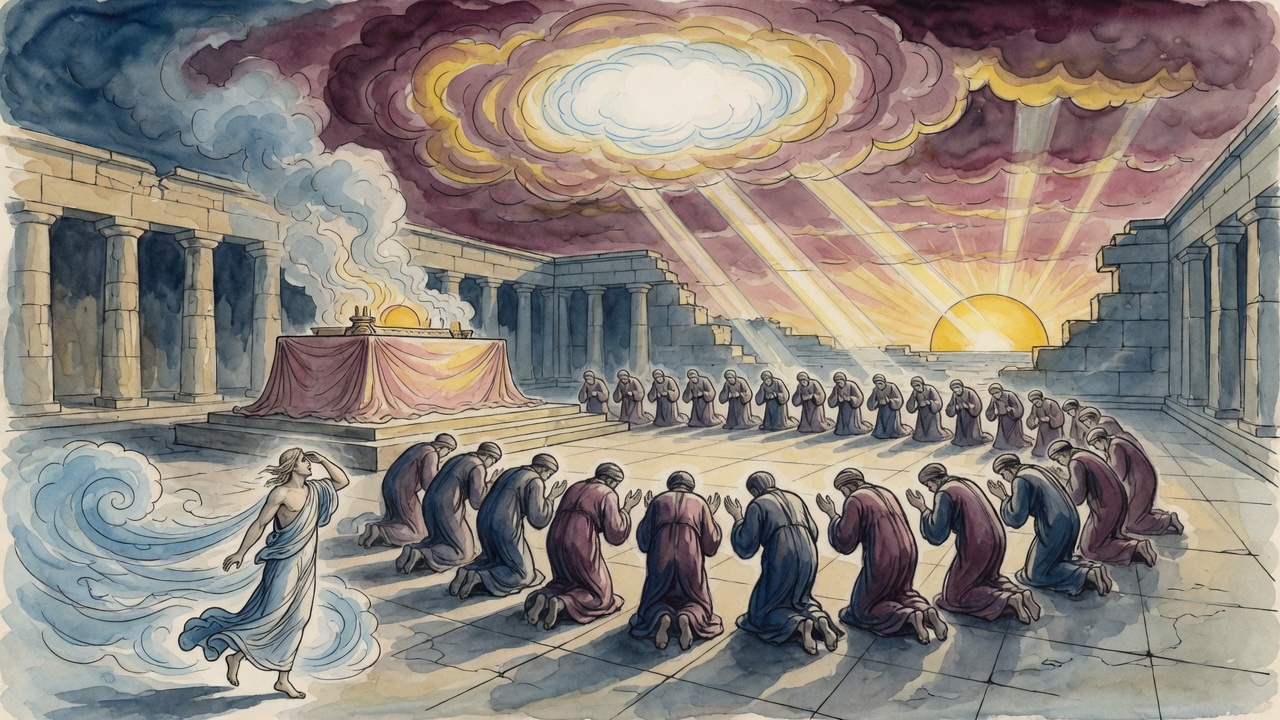
The tribe of Ephraim had a number. They knew the length of the promise God had made to Abraham about the slavery in Egypt, or they believed they knew it. Two hundred thousand armed warriors calculated the date themselves, decided the time had come, and formed up their ranks. Thirty years before Moses appeared at Pharaoh's court, this army left Egypt on its own initiative. They armed themselves, organized themselves, and marched toward the Promised Land without waiting for the signal they had not received.
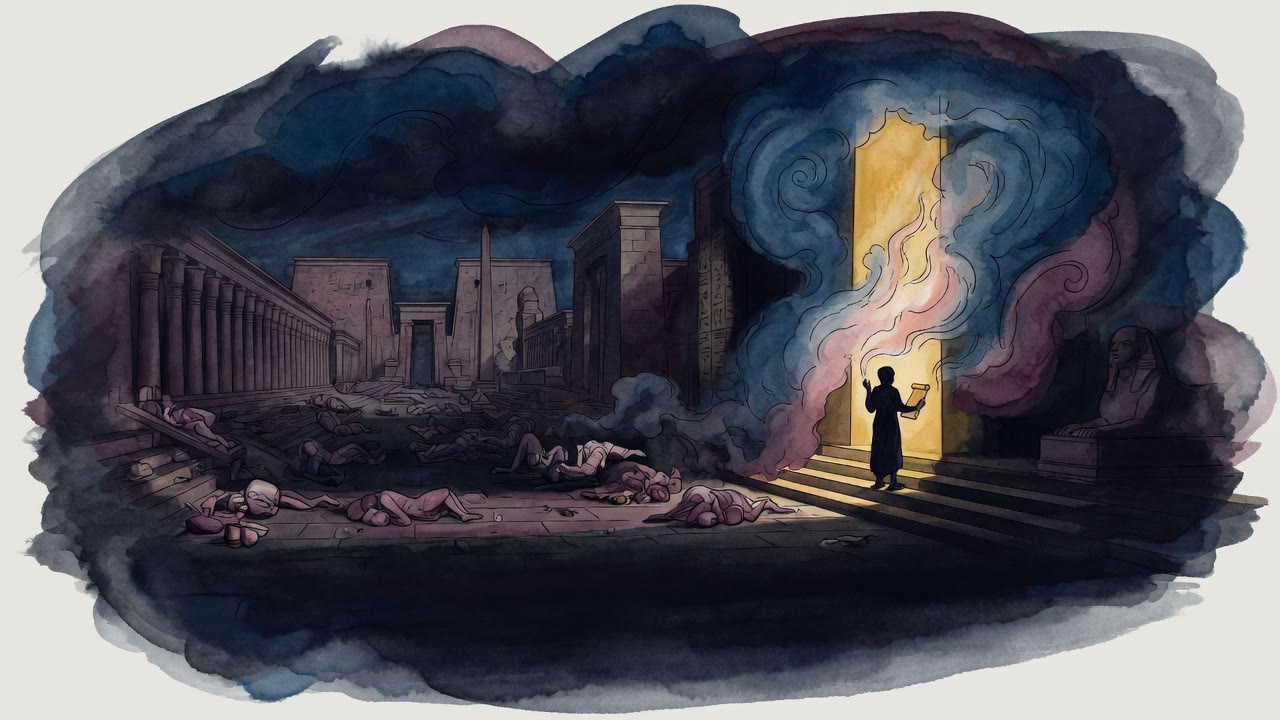
They fought the Philistines near Gath. They lost. Every one of them died. Their bones lay in the valley of Dura for thirty years before Moses led the actual Exodus, and when God planned the route out of Egypt, the path was laid so as not to pass through that valley. An entire generation would have seen the bones of their uncles and turned back.
What Targum Jonathan Adds to Exodus 13
The Hebrew Bible says God did not lead Israel by the way of the land of the Philistines, even though it was shorter, because the people might see war and return to Egypt (Exodus 13:17). The explanation in the plain text is about avoiding combat exposure. Targum Jonathan on Exodus 13, the Aramaic Torah paraphrase shaped in Palestine between the second and seventh centuries CE, throws out this explanation entirely.
In the Targum's reading, the shorter route is avoided because of a specific disaster already lying at the end of it. The armed Ephraimite warriors who left too early are the reason the road through Philistine territory is closed. God steers the Exodus around the evidence of what happens when a people decides its own timing before God has given the call. The bones are not only a battlefield. They are a lesson made out of bodies.
The Valley Ezekiel Entered
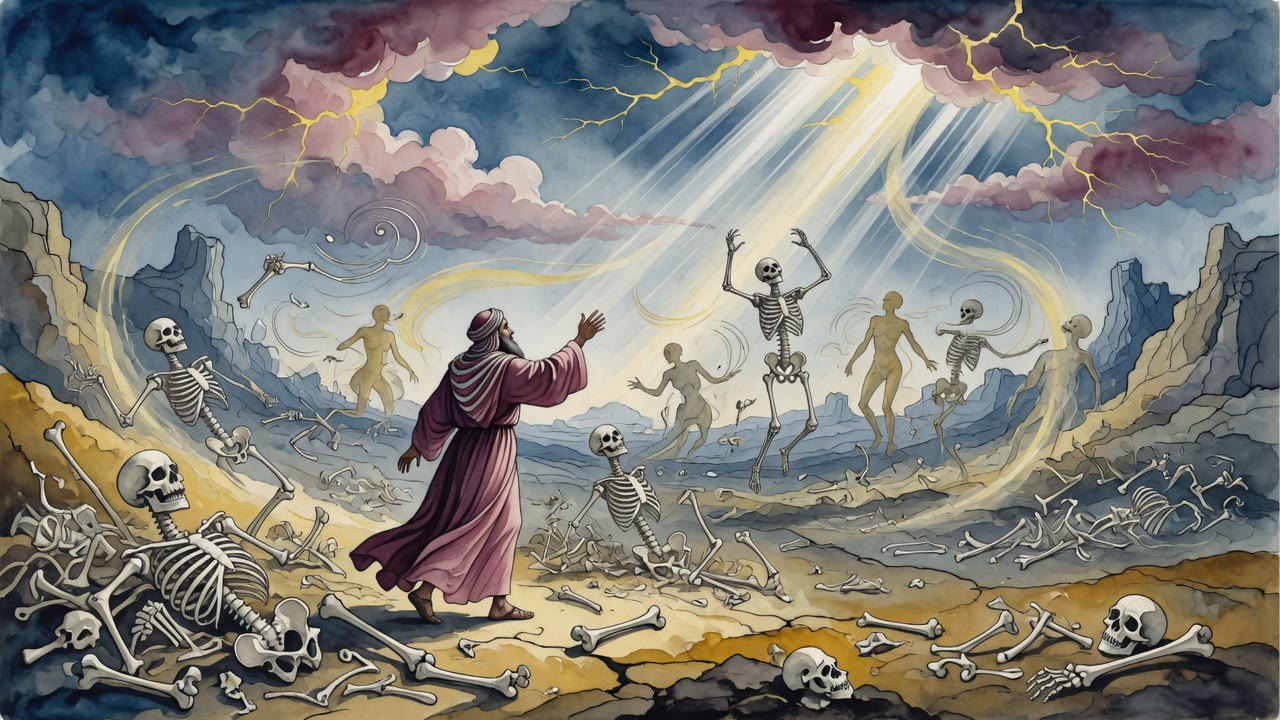
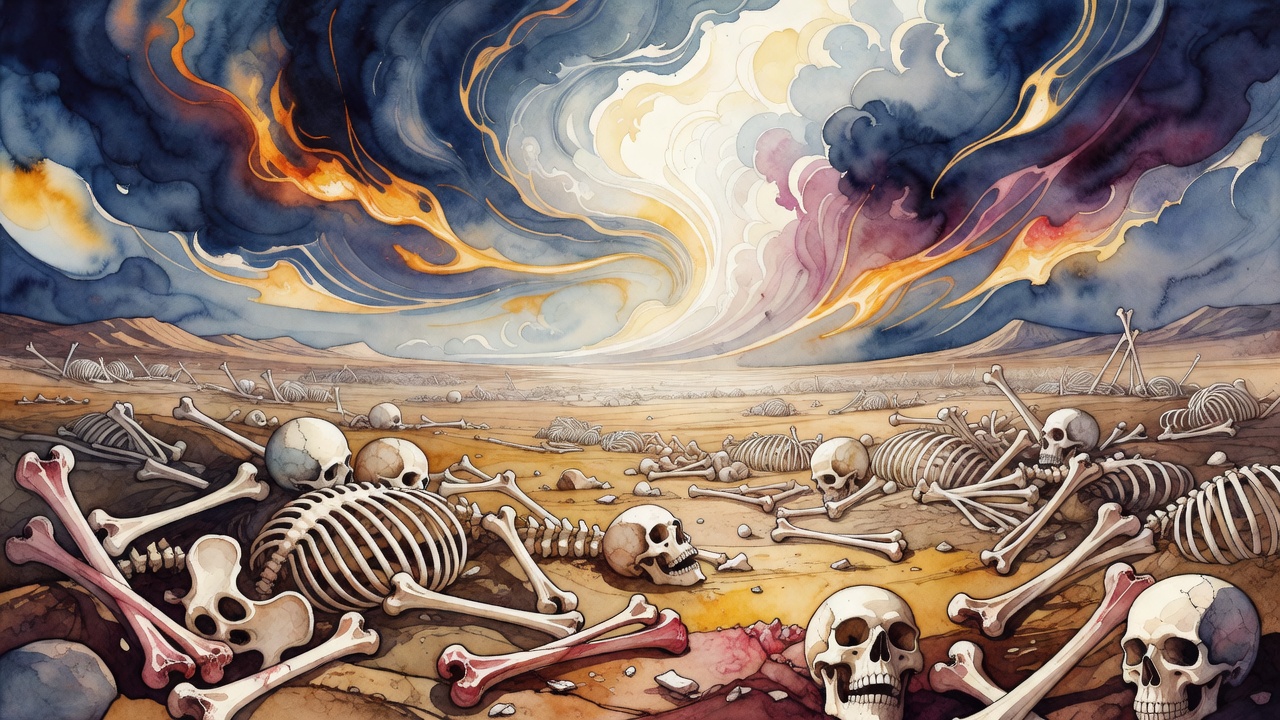
Centuries after the Exodus, the prophet Ezekiel stood in a valley full of dry bones (Ezekiel 37). He was shown these bones and asked if they could live, and he answered carefully: only God knows. Then he watched them reconnect. Sinew, flesh, skin, breath. The bones stood up as a great army.
Most readers of Ezekiel 37 take the vision as a metaphor for national restoration after the Babylonian exile. The tradition preserved in Targum Jonathan, following a line also developed in the Talmud (Sanhedrin 92b), insists the bones were specific. They were the Ephraimites. The same bones that had been scattered on the road near Gath for decades were the bones Ezekiel watched stand up and breathe again.
This identification does several things at once. It closes a story the Torah left open without resolution: the Ephraimites did not simply die and disappear. They died, they waited underground for centuries, and they were eventually restored. It also makes Ezekiel's vision less abstract. The valley is not a symbol. It is a place with a specific history, a defeat that happened on a specific morning thirty years before the Exodus because 200,000 men trusted their own arithmetic over divine timing.
Joseph's Bones and the Brothers' Oath
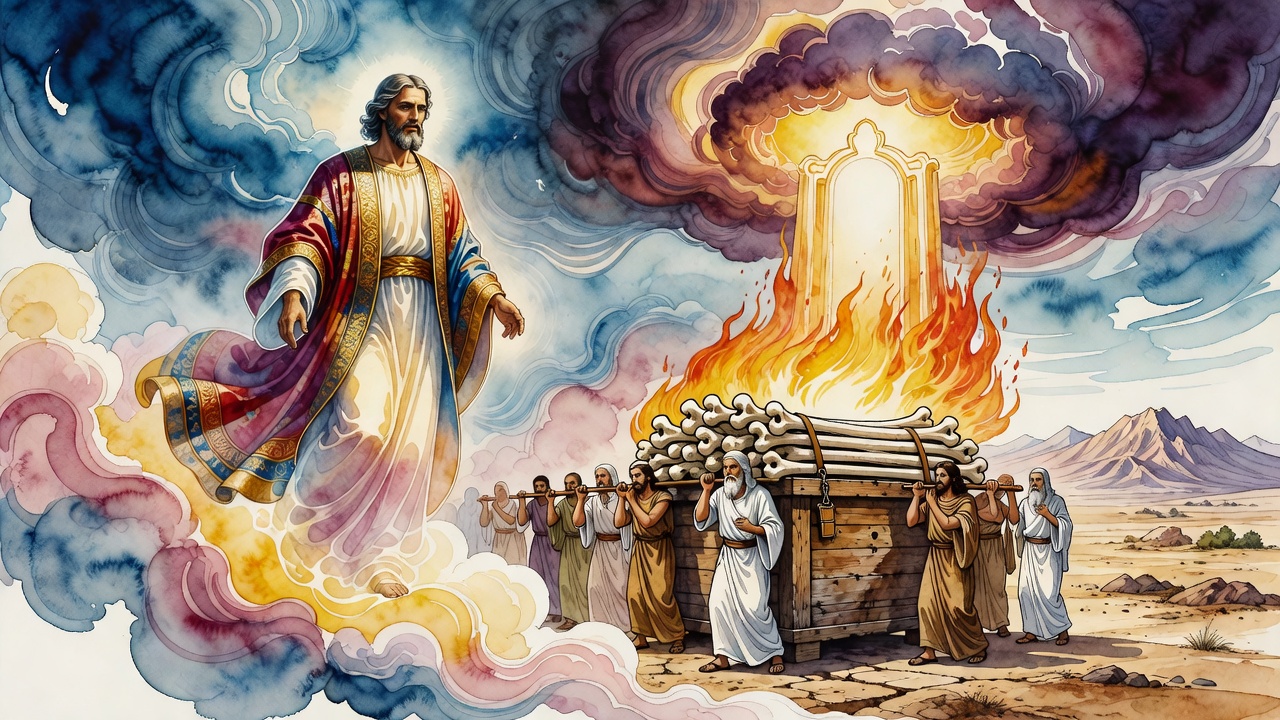
The tradition about the Ephraimites runs alongside another story about bones that the Exodus carried. Joseph had made his brothers swear that when God redeemed them, they would carry his bones out of Egypt and bury them in the Promised Land. He died insisting on this. The oath passed to the next generation. When Moses led Israel out, he was also carrying a coffin.
The connection between Joseph's carefully transported bones and the Ephraimites' scattered bones on the Philistine road is not stated explicitly in the sources, but it is impossible to miss. Joseph waited in a coffin, carried by a promise, and was eventually buried in the land. The Ephraimites charged out without the promise and were left to wait much longer, in the open, until a prophet centuries later watched them stand again. Patience and impatience, both arriving at the same place eventually, but by routes of very different length.
← All myths