Joseph's Bones Walked Beside the Ark for Forty Years
The brothers who sold him stood over the bed. He asked them for bones, not a tomb, because Egypt would trap his sons with honor.
Table of Contents
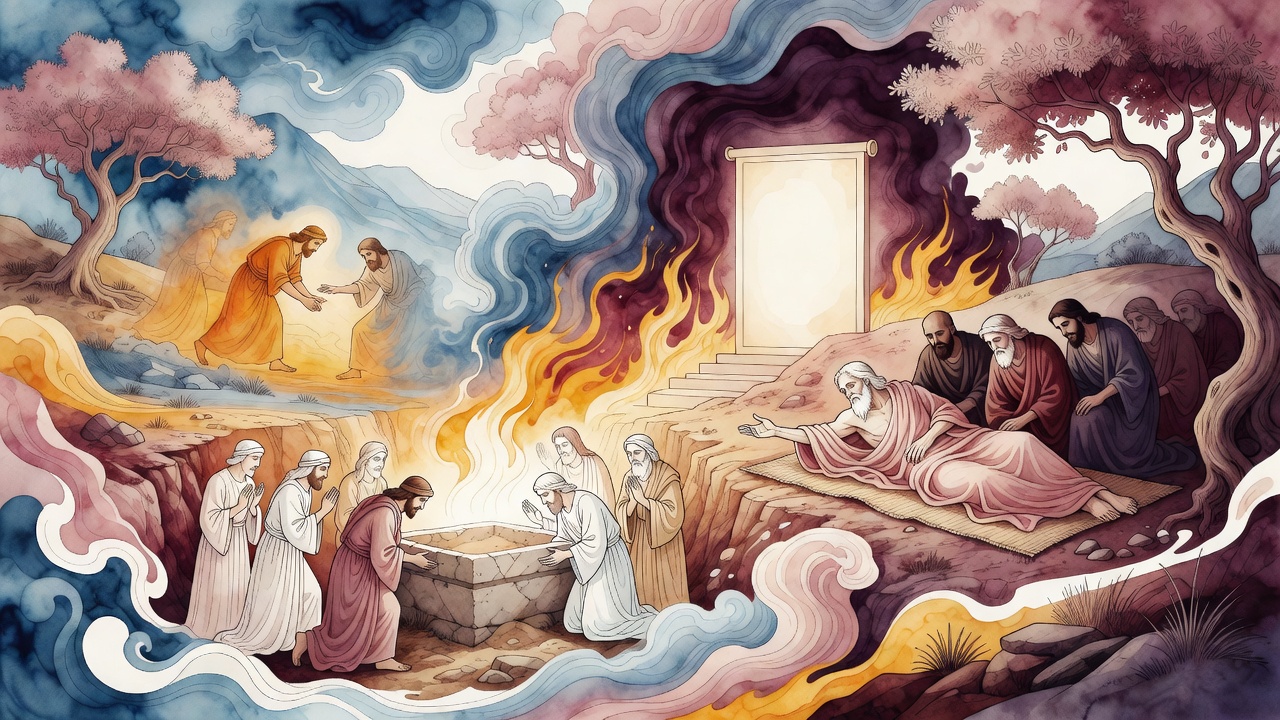
The brothers who had sold Joseph now stood over his bed. He could not sit up. Egypt's physicians had packed the oils and gone, and the room smelled of myrrh and fever. He asked for one thing, and it was smaller than a tomb. Carry my bones. Bury them anywhere in the land. The cave is for the three fathers and their wives.
 Click for full size
"Take my bones with you," he said, "when God visits you and brings you up out of this land."
He Made the Brothers Swear
He took the oath from the brothers, not from his sons, because he understood Egypt. If he asked only Manasseh and Ephraim, the court would call their refusal respect. A viceroy's sons do not haul a coffin through a palace gate. A viceroy's brothers, the same men who once lowered him into a pit, could not be refused so politely. Their line had brought him down. Their line would have to lift him out.
He made them swear it on their own deathbeds too, so the next generation would inherit the burden. He told them not to leave until a redeemer came speaking one word: pakod (פקד), "I have surely visited you." Abraham had given that word to Isaac, and Isaac to Jacob, and Jacob to him. Without it, Egypt would stay a grave with palaces on top.
He had carried Jacob home while the body was still whole. For himself he asked less and demanded more. Get me out, he said. The rest is dust.
The Coat Named the Road
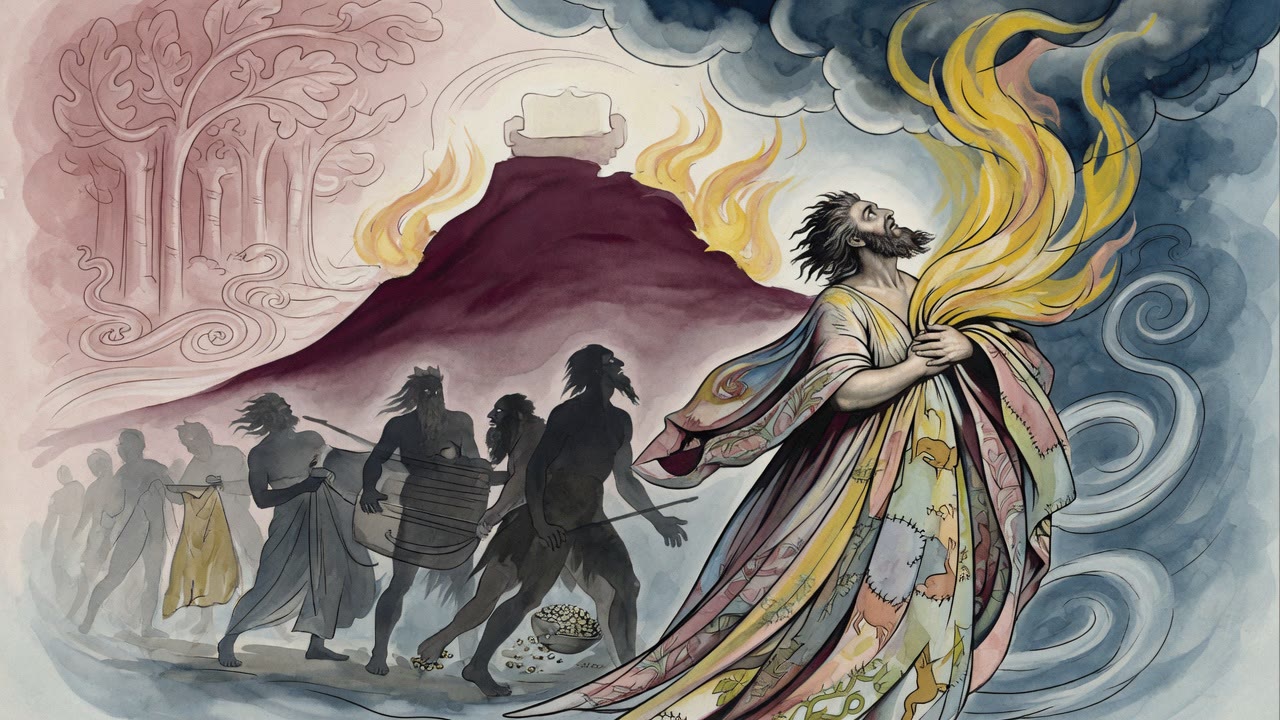
Years earlier Jacob had dressed the choice in wool. The coat was so light a man could crush it in one closed palm, but it flashed when Joseph walked, and every brother could read it. Jacob had looked at Rachel's face in the boy and been consoled, so he made the consolation visible. The sons of the handmaids already knew how ranking worked in that crowded house. Now the whole camp could see the sentence.
They called the garment passim. One of them spat the letters like a map. Pe for Potiphar. Samek for the merchants. Yod for the Ishmaelites. Mem for the Midianites who would sell him onward. The coat was a gift, but it was also a road folded over a boy's shoulders, and he did not know how to walk softly in it.
They knew another meaning too. Clefts. A sea would split one day for Joseph's sake, and that future made them smaller before any pit had opened. Joseph dreamed aloud because favored boys often mistake disclosure for innocence. In one dream their fruit rotted and his stayed sound. In another they bowed. He told both, so the field at Dothan was already prepared before he reached it.
Gad's Lamb Became a Charge
Gad kept the flock at night. When a beast came out of the dark he seized it by a leg, whirled it until it went slack, and flung it two stadia, far enough that the thud came late. Once a bear had a lamb in its mouth. Gad tore the lamb free, but the animal had been too terrified to live, so he killed it in the field rather than watch it shake itself to death.
Joseph was only thirty days with the flock. The heat made him sick, so he hurried back to Jacob and reported that the sons of the handmaids were slaughtering choice cattle and eating them without Judah or Reuben. He had seen one mercy and carried it as waste. Gad heard the charge and the house tightened, because a report that reaches a father first is a kind of crown.
That was how the pit found its tools. It did not need a single great crime. It needed a coat and a dream spoken twice. It needed a lamb that died after a rescue. They stripped him quickly. The future took longer.
Two Arks Moved Through the Dust
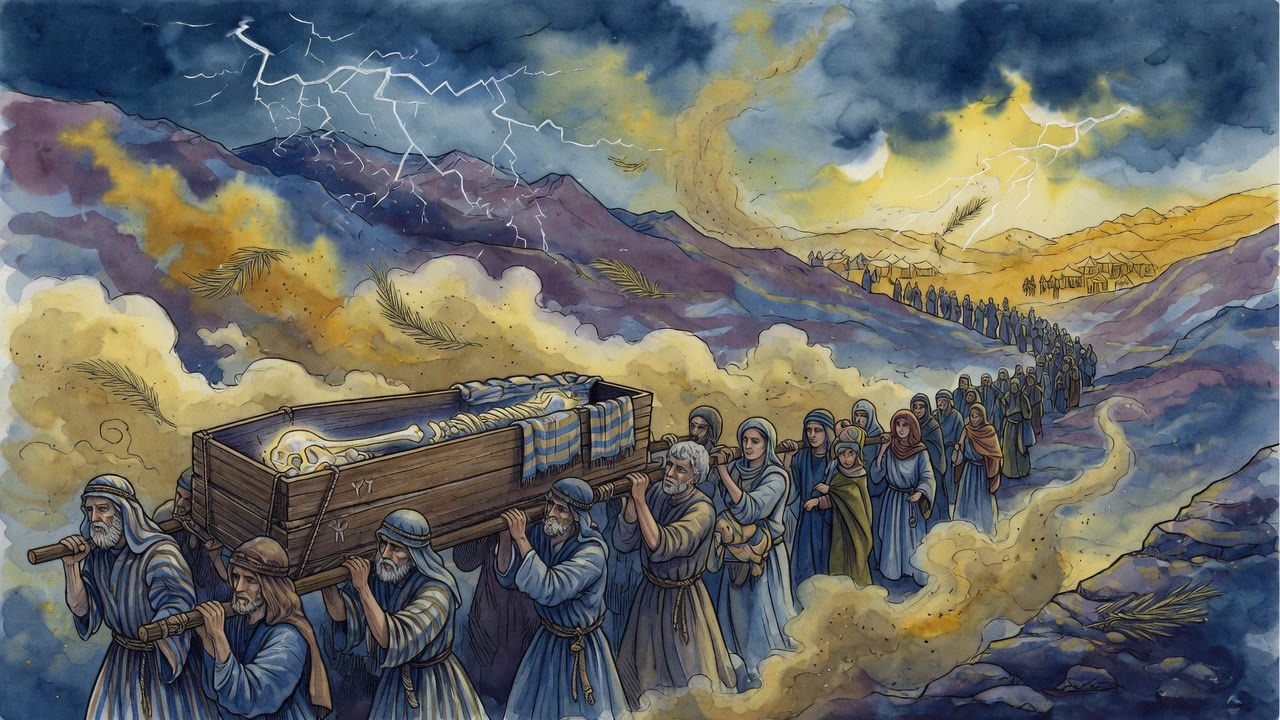
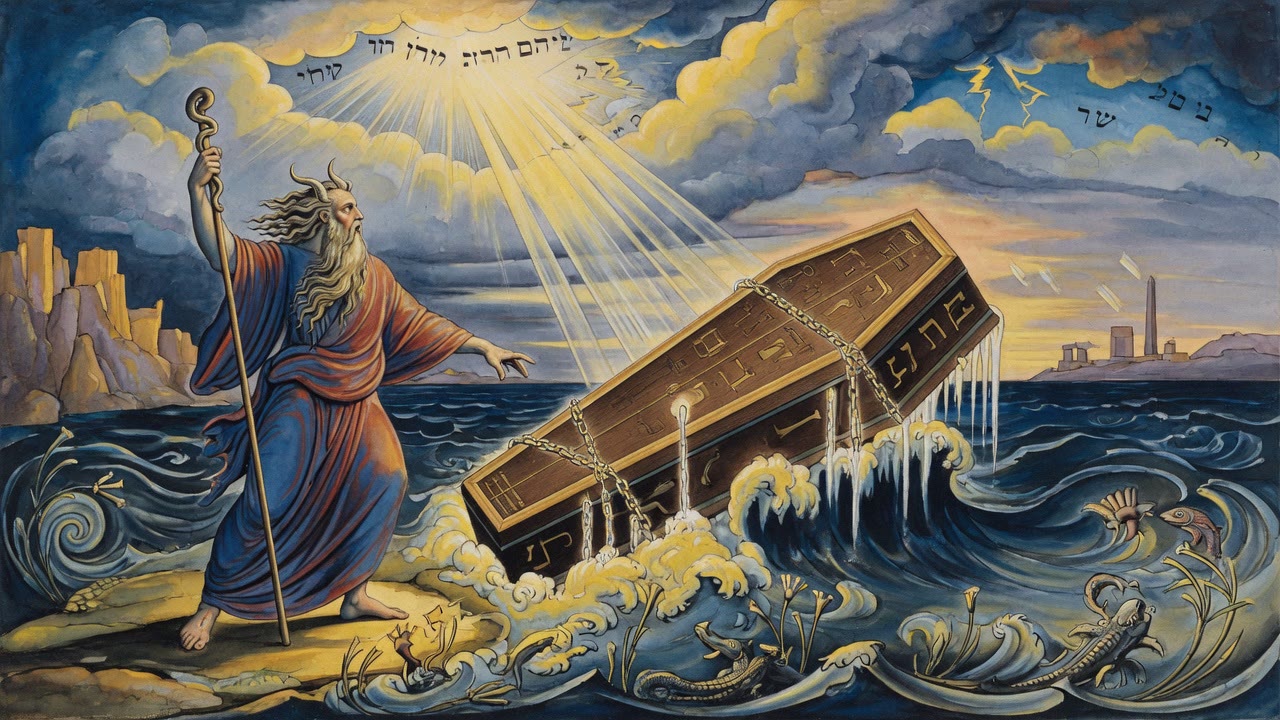
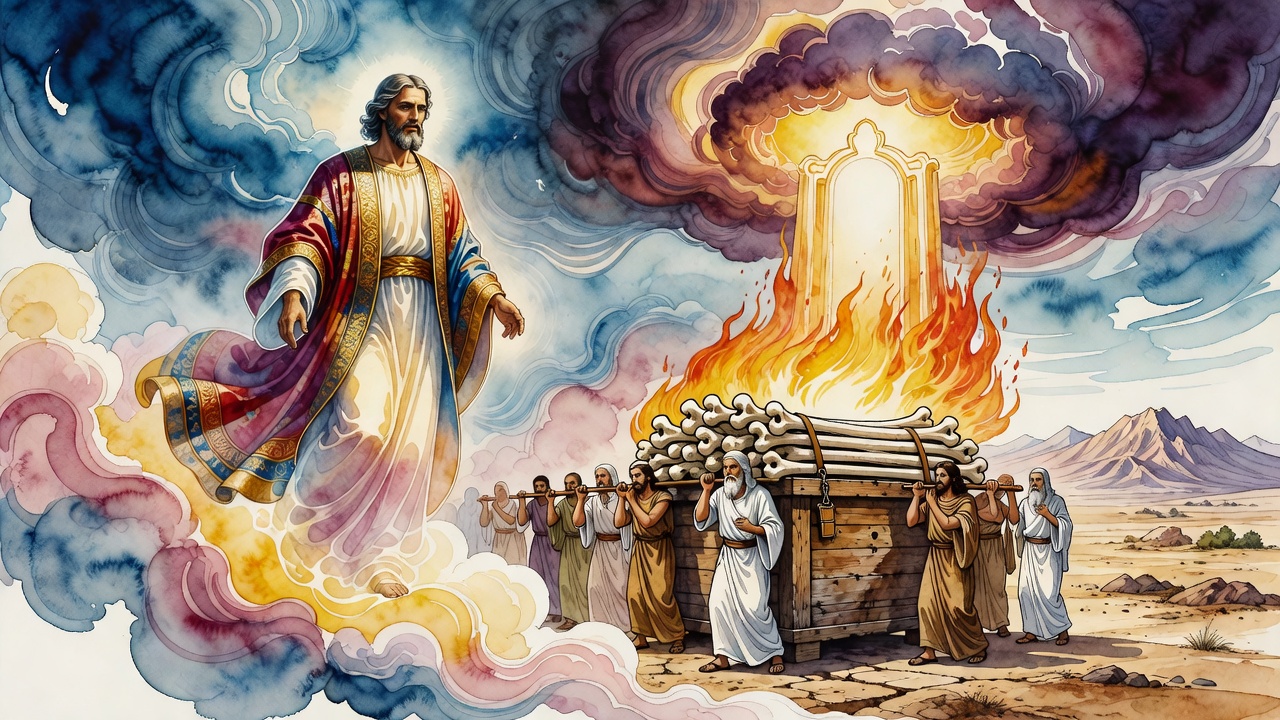
When the word finally came, Israel left with dough, flocks, children, fear, and a coffin. Moses would not march without it. For forty years Joseph's bones traveled in the camp, because he had once promised, "I will nourish you and take care of you," and Heaven answered in kind. As you lived, they will take care of your bones.
One box held the covenant. One held a dead man. They moved together through heat, hunger, complaint, cloud, and fire. Wayfarers who saw the two receptacles asked how the ark of the dead came next to the ark of the living God. The camp said the man in that box had kept what was written in the other.
The brother sold for silver became the burden Israel refused to set down. The coat had made his rank unbearable, so the coffin made their children carry him until the land opened, and the two boxes did not part until the wandering did.
← All myths